
Reviewed · PRIVATE CAR WITH DRIVER
Tokyo: Private Car Tour with Mai
Tokyo looks better with your own driver. This 3-hour private car tour with English guide Mai takes you from the political core to riverside neighborhoods, with upbeat talks and music rolling along as you go. You also get a local, Tokyo-fan lens, which is handy in a city that can feel overwhelming fast.
I love the way Mai ties history and culture to what you’re actually seeing, so landmarks don’t stay “on a map” for long. I also like that it’s truly private, with pickup included, so you do not burn time figuring out trains or scrambling for taxis. The main drawback is that the schedule is tight, and traffic can shift the timing within that 3 to 3.5 hour window, so plan for shorter stops rather than long wanderings.
In This Review
- Key highlights worth your attention
- Private car with Mai: what makes it feel different in Tokyo
- The 3 to 3.5 hour flow: an efficient loop, not a marathon
- National Diet Building and the political streets you’ll actually understand
- Imperial Palace area: guided walk plus scenic drive angles
- Rainbow Bridge and the waterfront story: Tokyo as a city of water
- Sumida and Asakusa: walking that turns landmarks into neighborhood life
- Taito City break time: using the pause well
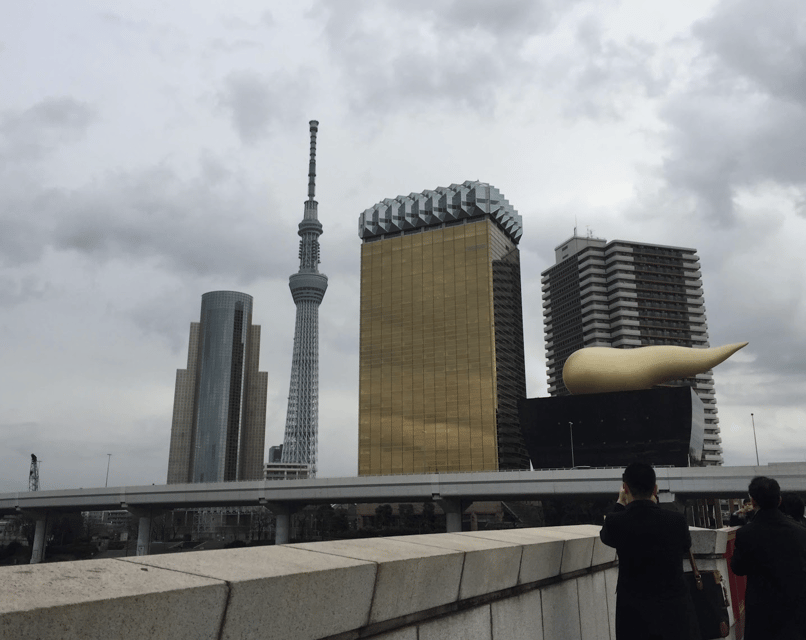
- Tokyo Skytree and the river-city skyline mindset
- Value and price: $161 per group up to 4, and why that can add up
- Tips to make this tour work smoothly for you
- Who this Tokyo tour with Mai is best for
- Should you book this Tokyo DD Tour with Mai?
- FAQ
- How long is the Tokyo private car tour?
- Is the tour guide available in English?
- What is the group size and price?
- Where does pickup happen?
- What places are typically included in the route?
- Are food and drinks included?
- What are the rules about alcohol?
Key highlights worth your attention
- A local guide (Mai) who keeps the ride fun with uplifting talk and music
- Private car + pickup so you start moving immediately
- Political area to old-downtown contrast in one efficient loop
- Imperial Palace area with a guided walk and scenic drive segments
- Sumida and Asakusa on foot for market-street and lifestyle atmosphere
- Time in the Taito City area plus a likely look at Tokyo’s famous skyline landmarks
Private car with Mai: what makes it feel different in Tokyo
Tokyo can be done two ways: rushing from stop to stop, or slowing down just enough to notice how the city actually works. This tour leans toward the second one, because the private car handles the logistics while your guide handles the “what am I looking at?” part.
Mai’s role matters. A friendly, in-demand style guide can turn Tokyo from a list of famous sights into a place with logic—why certain areas developed, what locals notice, and how history shows up in everyday streets. The ride itself is part of the experience, not just transportation. You’ll get uplifting talks and music along the way, which helps keep energy up before you hit the walking portion.
And because it’s private, the tone stays human. Up to four people in your group means you can ask questions without feeling like background noise. You can also share requests in advance—specific places you want to see or food you want to try—so it’s not locked into one rigid script for everyone.
Readers also shortlisted these Tokyo bookings:
- Tokyo 6hr Private Tour with Government-Licensed Guide
★ 5.0 · 3,902 reviews - Private Tour to Mt. Fuji and Hakone (Fully Licenced Operator)
★ 5.0 · 1,910 reviews - Tokyo Customized Private Tour (Must See Places in 1 Day)
★ 5.0 · 1,499 reviews - Mount Fuji Full-Day Private Tour from Tokyo (Customizable)
★ 4.9 · 1,470 reviews
The 3 to 3.5 hour flow: an efficient loop, not a marathon
This is a short tour by design. It runs about 3 hours, with a possible extension up to 3.5 depending on traffic. That matters because Tokyo driving times can swing, and you’ll feel it more on a half-day-length plan than a full-day excursion.
The itinerary also follows a sensible geographic rhythm:
- You start near the political core.
- Then you move toward the Imperial Palace area and central waterways.
- After that, you work your way into older, more traditional neighborhoods where walking adds the texture.
Because the time is limited, you should treat each stop as a guided introduction. You’re not trying to “finish” Tokyo in one go. You’re getting the kind of orientation that makes the rest of your trip easier and more interesting.
A small practical note: food and drinks are not included. That’s normal for a city like Tokyo, but it does mean you’ll want to plan snack breaks around the “break time” segment and any walking windows.
National Diet Building and the political streets you’ll actually understand
The tour kicks off with a pickup in Tokyo, then heads to the National Diet Building area. This is a guided segment, which is a big advantage here. Even if you’ve seen photos of government buildings, a local explanation helps you understand what you’re looking at and why it’s positioned where it is.
Think of this stop as your “Tokyo baseline.” Once you understand the political center’s role in shaping national life, other areas start to make more sense. For many first-timers, Tokyo’s scale feels confusing—this tour gives you a starting point that anchors the city.
You’ll also get scenic drive time afterward, which helps you transition without losing momentum. It’s a simple rhythm: learn a bit, move a bit, keep going.
Possible drawback? Government-area sightseeing can feel more “structured” than you expect. If you’re hoping for lots of hands-on market chaos right away, you may have to wait until the older downtown neighborhoods and street-life sections.
Imperial Palace area: guided walk plus scenic drive angles
Next is the Imperial Palace area. You’ll have a guided walk segment (about 30 minutes) along with scenic driving time. This is a sweet spot for a short tour: enough time to feel the place and soak in the atmosphere, without spending half the day tied up on longer routes.
Even if you’ve visited Tokyo’s big sights before, the Imperial Palace area has a different mood than commercial districts. It reads as ordered and ceremonial, and your guide’s context helps you connect that mood to Japan’s historical continuity.
The scenic drive around the area is also useful. Tokyo is full of sightlines that look better when you catch them from the right angle. Driving lets you cover distance and get those perspectives without rushing through streets on foot.
Rainbow Bridge and the waterfront story: Tokyo as a city of water
After the Imperial Palace area, you’ll head toward the Rainbow Bridge area and the waterfront zone connected with Tokyo’s fish market history—both the older and newer sides are part of the conversation in this route. You’ll get scenic views along the way, and that matters because this is where Tokyo starts feeling “bigger than you expected.”
Here’s a unique angle your guide brings: Tokyo’s growth is tied to smart irrigation from earlier times. That “city of water” idea isn’t just a fun fact—it’s a key to understanding why different districts formed where they did, and why waterways keep shaping daily life and logistics.
What you’ll likely enjoy most is the blend of modern skyline energy with a sense of older functions underneath. The bridge area isn’t about one single photo moment; it’s about the transition from the city’s ceremonial heart to the working waterfront that helped Tokyo function.
Tip for your planning brain: if the weather is clear, the views can be excellent for skyline photos. If it’s cloudy or rainy, you still get value from the explanation of how the waterfront fits into the city’s bigger story.
Readers also shortlisted these Tokyo bookings:
- Tokyo Private Tour by Vehicle with English-Speaking Chauffeur★ 5.0 · 504 reviews
- Mt FUJI Day Tour with Private Car and English Speaking Guide★ 5.0 · 433 reviews
- Private Car Tour to Mt. Fuji Lake Kawaguchiko or Hakone★ 5.0 · 360 reviews
- Tokyo Private Driving Tour by Car/Van with English Chauffeur★ 5.0 · 156 reviews
- Mt Fuji Exclusive Tour with Private Car English Guide★ 5.0 · 116 reviews
Sumida and Asakusa: walking that turns landmarks into neighborhood life
Sumida comes next, followed by Asakusa. This is where the tour shifts from “major landmark” energy into “local streets” energy.
In Sumida, you’ll have a guided walk segment. Expect the pace to feel more human: you’re in areas where you can notice everyday details—street layout, the feel of neighborhood blocks, and how the city’s history shows up in what people do and where they go.
Then comes Asakusa, with about an hour for visit, guided sightseeing, and walking. If you want Tokyo to feel less like a theme park and more like a place with layers, Asakusa is one of the best spots to start. Your guide’s explanations help you connect the visual cues you see (architecture, street patterns, the flow of visitors and locals) to the local identity of the area.
A practical advantage of doing this with a guide is timing. You’re not guessing where to stand for the best vantage points or where the “important streets” run. You’re also not stuck translating signs while everyone else moves around you.
If you dislike walking or you’re dealing with stiff legs, this is the one part to think about. You’ll be on foot in Sumida and then again in Asakusa. Wear comfortable shoes and plan for short breaks if you need them.
Taito City break time: using the pause well
After Asakusa, the tour includes a break time in the Taito City area, with about 20 minutes for sightseeing. This section is small, but it’s useful for two reasons.
First, it gives you a breathing window. Private car tours can still feel intense when you stack multiple guided segments back-to-back. This pause helps you reset before the skyline and final stretch.
Second, it’s your chance to adjust. Maybe you want extra time for one specific street photo, or maybe you’d rather ask Mai a few extra questions about what to do next. Because it’s private, this short “flex” moment can be more valuable than it sounds.
Tokyo Skytree and the river-city skyline mindset
Tokyo’s skyline can feel like background noise until someone explains how the city “frames” itself. In this tour’s route planning, Tokyo Skytree is part of the destination idea—most likely in the broader arc around Sumida and the river side where skyline views make sense.
Even if you don’t get a long stop to linger right under Skytree, you still get something worthwhile: a sense of scale. Seeing the skyline from the right direction helps you understand how Tokyo’s modern identity rises from the same geography that shaped earlier life.
This is also where the “city of water” theme lands. Waterways help define lines of sight, and that affects where modern landmarks feel prominent and where older areas still feel grounded. Your guide’s framing makes the skyline feel less random.
Value and price: $161 per group up to 4, and why that can add up
The price is $161 per group up to 4 people for about 3 hours. That means:
- For two people, you’re effectively paying about $80.50 per person.
- For four people, it drops to about $40.25 per person.
The value comes from combining two things that are often separate in Tokyo: a private car and a live English guide focused on culture and history. If you’re traveling with others, splitting the group cost can make this a very efficient way to avoid the “transport tax” of coordinating trains, taxis, and last-minute route changes.
It’s also a good fit if you care more about context than photo speed. A guide who connects history and culture to what you see can save you time later. You’ll walk away with a mental map of how Tokyo parts connect, which makes the rest of your trip less confusing.
Possible situation where it may not be the best deal: if you’re traveling solo and you don’t want to pay for a full private vehicle, a shared tour or a self-guided day might feel more economical. But if you want comfort, a private flow, and English guidance, the “per group” pricing can still feel reasonable.
Tips to make this tour work smoothly for you
A few practical choices can make the difference between a good half-day and a great one.
- Do send requests ahead of time: if there’s a place you care about or food you want to try, mention it before the tour. The route is set up to be flexible enough to consider preferences.
- Plan your shoes and pacing for walking days: you’ll have guided walks in Sumida and Asakusa. Comfortable footwear is the only real “must.”
- Have questions ready for Mai: the strongest moments tend to happen when you ask what something means. For example, the irrigation and water-development angle becomes much more interesting when you ask how it relates to what you’re seeing.
- Expect no included meals: if you’re the type who gets “hangry” at exactly the wrong time, plan snacks before the tour or at the break.
And a quick note on rules: alcohol and drugs are not allowed. If you’re thinking of treating this like a long leisurely drink day, it’s not that kind of tour.
Who this Tokyo tour with Mai is best for
This experience is built for people who want Tokyo to feel understandable. It fits especially well if you:
- want a private, low-stress plan with pickup and car transfer
- like guided context for history and culture
- enjoy a bit of upbeat energy during sightseeing (talk plus music)
- travel as a pair or small group up to four
It may be less ideal if you want long, slow time at only one neighborhood. This tour is about covering key areas in a short window and giving you the foundation to explore deeper on your own afterward.
Should you book this Tokyo DD Tour with Mai?
If your goal is to get oriented quickly and still feel like you’re seeing the real Tokyo—not just ticking boxes—then yes, I’d book it. The standout strengths are the private setup, English guidance, and Mai’s friendly approach that turns history and culture into something you can actually place in your day.
Book it if you value:
- efficient sightseeing without transportation headaches
- a guide who keeps the mood upbeat
- a route that balances political Tokyo, ceremonial space, and traditional street life
Skip it only if you prefer deep stays at a few sites rather than an efficient sampler loop. With Tokyo, you can’t do everything in one visit anyway. This tour is a smart way to set yourself up so your future exploring feels easier and more rewarding.
FAQ
How long is the Tokyo private car tour?
The tour is listed as 3 hours, and it may take about 2.5 to 3 hours. It can extend to around 3 to 3.5 hours depending on traffic.
Is the tour guide available in English?
Yes. The tour includes a live guide in English.
What is the group size and price?
It’s a private group with pricing per group up to 4 people for $161.
Where does pickup happen?
Pickup is included. After booking is confirmed, the provider will reach out to you to decide the pickup location.
What places are typically included in the route?
You’ll visit the National Diet Building area, the Imperial Palace area, and areas around Rainbow Bridge and Sumida, with guided time in Sumida and Asakusa. Tokyo Skytree may be part of the destination plan in the route.
Are food and drinks included?
No. Food and drinks are not included, so plan to buy your own.
What are the rules about alcohol?
Alcohol and drugs are not allowed on this tour.
If you tell me your travel dates and where you’re staying in Tokyo, I can help you judge whether the 3-hour loop matches your priorities (views, history, markets, or skyline time).
More Private in Tokyo
- Tokyo 6hr Private Tour with Government-Licensed Guide
★ 5.0 · 3,902 reviews - Private Tour to Mt. Fuji and Hakone (Fully Licenced Operator)
★ 5.0 · 1,910 reviews - Tokyo Customized Private Tour (Must See Places in 1 Day)
★ 5.0 · 1,499 reviews - Mount Fuji Full-Day Private Tour from Tokyo (Customizable)
★ 4.9 · 1,470 reviews - Tokyo: Private City Highlights Tour with Local Guide
★ 4.8 · 1,433 reviews
More Tours in Tokyo
- Mt Fuji and Hakone 1-Day Bus Tour Return by Bullet Train
★ 5.0 · 26,383 reviews - 1-Day Tokyo Bus Tour
★ 5.0 · 14,250 reviews - Tokyo: Shinjuku Food Tour (13 Dishes at 4 Local Eateries)
★ 5.0 · 6,603 reviews - Tokyo Mt Fuji 5th St & Hakone Cruise Bus Tour w/Bullet Train
★ 4.4 · 5,024 reviews - Flagship 2-Hours Official Street Go-Kart Tour – Tokyo Bay Shop
★ 5.0 · 4,974 reviews
More Tour Reviews in Tokyo
- Mt Fuji and Hakone 1-Day Bus Tour Return by Bullet Train
★ 5.0 · 26,383 reviews - 1-Day Tokyo Bus Tour
★ 5.0 · 14,250 reviews - Tokyo: teamLab Planets TOKYO Digital Art Museum Entry Ticket
★ 4.6 · 9,779 reviews - Mt Fuji & Hakone Cruise, Drum Show Bullet Train 1 Day from Tokyo
★ 4.0 · 7,413 reviews - Tokyo: Shinjuku Food Tour (13 Dishes at 4 Local Eateries)
★ 5.0 · 6,603 reviews
Latest Tokyo reviews off our desk






Private Car with Driver, compared.
 ★ 5.0Tokyo Private Sightseeing Tour by Car- English speaking chauffeurFrom $2681,004 reviews
 ★ 5.0Tokyo Private Tour by Vehicle with English-Speaking ChauffeurFrom $468504 reviews
 ★ 5.0Private Car Tour to Mt. Fuji Lake Kawaguchiko or HakoneFrom $1,286360 reviews
 ★ 5.0Tokyo Private Driving Tour by Car/Van with English ChauffeurFrom $320156 reviews
 ★ 5.0Mt Fuji Exclusive Tour with Private Car English GuideFrom $445116 reviews
 ★ 5.0Tokyo Private Customizable Tour with English Speaking ChauffeurFrom $27392 reviews
 ★ 5.0Tokyo City Tour by Private Car & English guideFrom $44591 reviews
Browse the lists this tour appears in