
Reviewed · MOUNT FUJI TOURS
Private Car Tour to Mt. Fuji Lake Kawaguchiko or Hakone
Fuji day, door-to-door from Tokyo. This private tour is built around the best viewpoints of Mt. Fuji and the surrounding lakes, with pickup and a guide handling the hard parts so you can focus on photos, smells, and quiet details. The one thing to plan for: when weather turns (clouds, rain, hail), you still keep moving, and some views may be limited without a refund.
I like how customizable the day is, even though you’re covering the classics. You can shape it toward Lake Kawaguchiko’s shrine-and-lake rhythm or toward Hakone’s volcanic steam, Lake Ashi cruises, and art stops. Guides you’ll see named a lot in these tours include Ken, Reiko, Hiroko, Bob, Tomomi, and Taiji, and the common thread is how they adjust timing to chase clear views when possible.
In This Review
- Key highlights to look for before you book
- What you get with a private car and a local guide
- Fuji vs Hakone: how to shape your 10-11 hour day
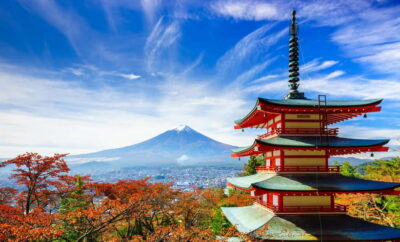
- Arakura Sengen Shrine and Chureito Pagoda: the classic Fuji angle
- Lake Kawaguchiko essentials: World Heritage vibes and flower time
- Panoramas, ropeways, and museums when Fuji is shy
- Aokigahara caves: the adventurous side of the Fuji region
- When you choose the 5th Station: timing and real costs
- Hakone add-ons: steam, shrine gates, and Lake Ashi cruises
- Seasonal magic: Shibazakura, Diamond Fuji, strawberries, and ski time
- Price and logistics: what $1,286.89 per group buys you
- Tips that make the day smoother (and help if Fuji hides)
- Should you book this Mt. Fuji or Hakone private tour?
- FAQ
- What is the price and group size?
- How long does the tour take?
- What’s included in the price?
- What isn’t included?
- Can the itinerary be customized?
- Is Mt. Fuji 5th Station always available?
Key highlights to look for before you book
- Hotel pickup and drop-off make this feel like a real day out of Tokyo, not a logistics project.
- A private group size up to 8 keeps the pace comfortable for families and mixed ages.
- Arakura Sengen Shrine and Chureito Pagoda deliver the iconic Fuji angle without crowd-hunting on your own.
- Aokigahara cave stops add an unexpected, slightly spooky adventure break from the postcard shots.
- Hakone options are truly built-in: ropeway views, Owakudani volcanic area, shrine gates, and Lake Ashi cruises.
- Seasonal add-ons (Diamond Fuji in winter, Shibazakura in spring, fruit tastings in Yamanashi) help the day feel less cookie-cutter.
What you get with a private car and a local guide
This is not a bus tour. You’re in a round-trip private vehicle (air-conditioned minivan) with a guide who helps you read the places, not just point at them. That matters around Mt. Fuji, because the most photogenic spots depend on weather and light, and you’ll want someone who can steer the day when skies shift.
The included basics are also practical: hotel pickup/drop-off, one bottled water per person, and a guide (English, French, Spanish, Chinese, Korean options are available). You also get a mobile ticket, which is a small thing that reduces stress at your first stop.
The trade-off is that this is a long day. Expect roughly 10 to 11 hours, and you’ll spend time in the car. A lot of people love that trade because you’re going door-to-door, but if you’re sensitive to travel time, plan your expectations around a full “one-day Japan field trip.”
More Fuji day trips our readers rated highly
- Mt Fuji and Hakone 1-Day Bus Tour Return by Bullet Train
★ 5.0 · 26,383 reviews - Mt Fuji & Hakone Cruise, Drum Show Bullet Train 1 Day from Tokyo
★ 4.0 · 7,413 reviews - Tokyo Mt Fuji 5th St & Hakone Cruise Bus Tour w/Bullet Train
★ 4.4 · 5,024 reviews - From Tokyo: Mount Fuji Full-Day Sightseeing Trip
★ 4.5 · 4,970 reviews
Fuji vs Hakone: how to shape your 10-11 hour day
Your tour can lean toward Lake Kawaguchiko (five lakes area) or toward Hakone. Since the day is customizable, you should think of it as building a theme rather than trying to check every box.
A smart way to plan is to pick about 4 to 6 stops that match your mood:
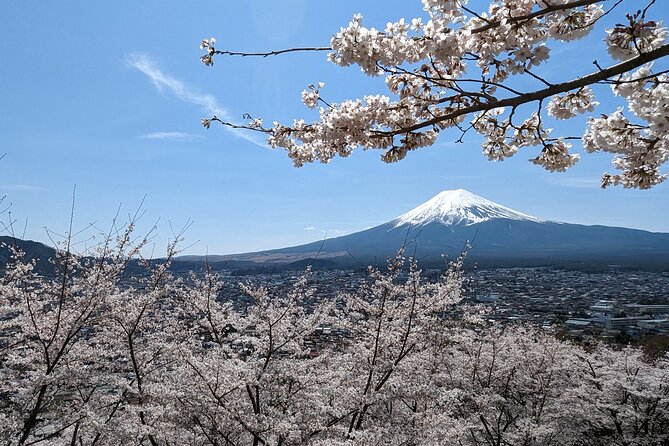
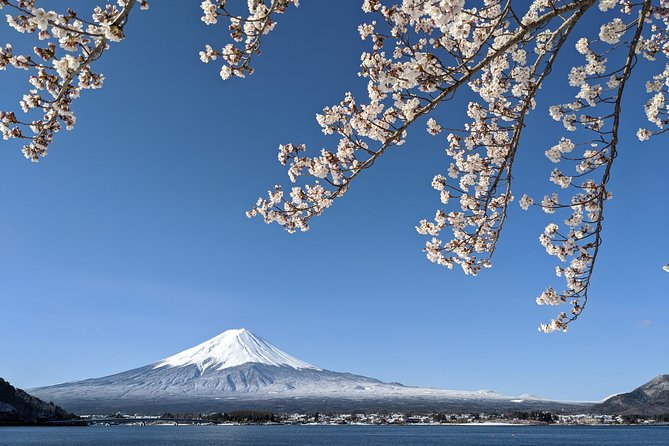
- If you want classic Mt. Fuji views and cultural stops, lean Lake Kawaguchiko: shrine viewpoints, lake walks, and iconic lakeside photo points.
- If you want geology, art, and lake scenery, lean Hakone: Owakudani volcanic activity, Hakone Shrine gate views, ropeway elevation, and Lake Ashi cruises.
One practical note: Mt. Fuji visibility is not guaranteed. The tour won’t be cancelled or refunded if some sights can’t be fully seen due to weather, so your “backup plan” should be stops that still feel worth it even on a grey day—caves, museums, villages, shrines, and panoramic rides that work whether Fuji is visible or not.
Arakura Sengen Shrine and Chureito Pagoda: the classic Fuji angle
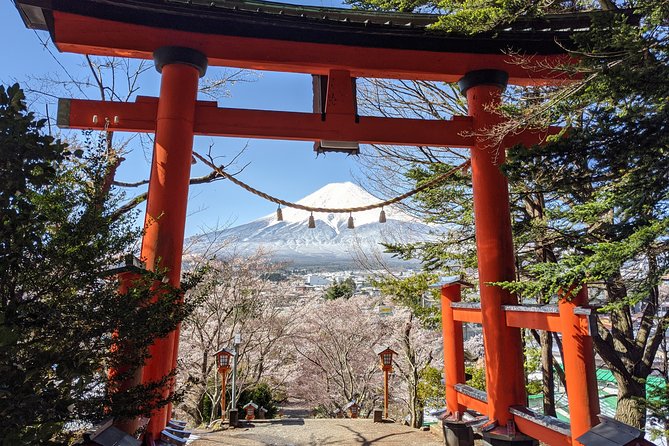
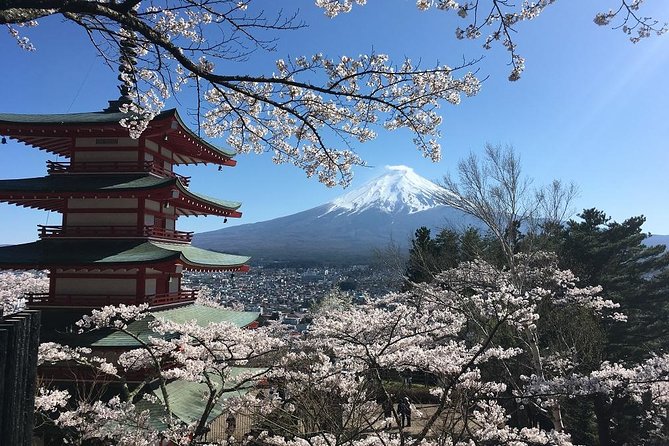
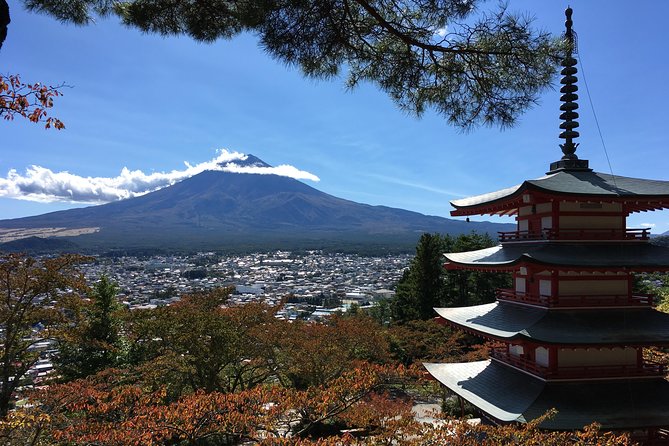
The day often starts with a big visual payoff: Arakura Sengen Shrine and the Chureito Pagoda area. This is where you go for the famous layered look: pagoda lines up with Mt. Fuji in the background, and you get that “Japan postcard” composition without doing your own puzzle.
What I like about this first cluster is how it sets the tone. You’re not just chasing a mountain view—you’re stepping into a sacred place that’s been part of Fujisan’s cultural story for a long time. The shrine area is also where you can get multiple angles close together, which helps if the sky is changing.
Expect shorter stop windows at the shrine and pagoda photo points, plus a park walk area nearby. The big tip: bring a flexible mindset. If Fuji hides in clouds, you’ll still get the shrine and pagoda views, and your guide can shift the day to maximize other scenic and cultural stops.
Lake Kawaguchiko essentials: World Heritage vibes and flower time
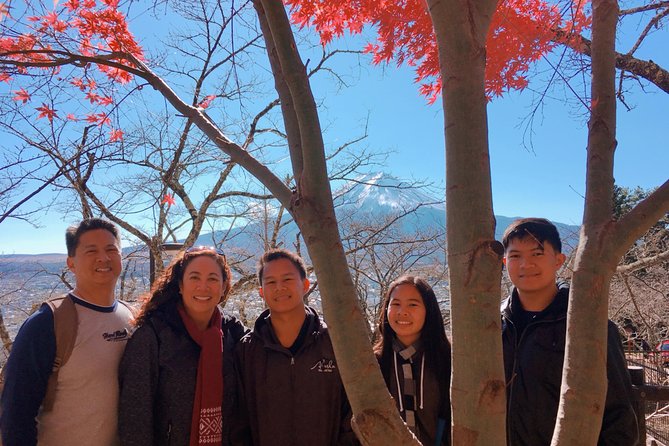
Once you move into the Lake Kawaguchiko region, the tour becomes a mix of World Heritage sites, lakeside culture, and seasonal color.
A few anchors to know:
- Mt. Fuji World Heritage Center: usually a video-based orientation that helps you understand the rituals and regional meaning behind what you’re seeing.
- Kitaguchi Hongu Fuji Sengen Jinja Shrine: a major shrine connected with the northern approach to Fujisan.
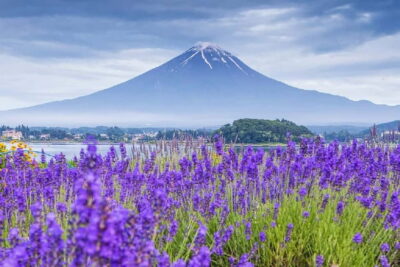
- Fuji Oishi Hana Terrace and Oishi Park: these are your “slow down and enjoy the view” stops. Oishi Park is especially known for lavender, but the point is the seasonal flower variety across the year.
Then you hit one of the most distinctive Kawaguchiko-area scenes: Oshino Hakkai. It’s a set of ponds fed by Mt. Fuji snowmelt, and it’s also a place where you’ll find street-food snacks and small shops. Even if the mountain is faint, the ponds still feel like a real, living water system tied to Fuji.
The tour also commonly includes Fuji Oishi / lakeside photo opportunities and optional breaks like Saiko Iyashi no Sato Nemba, a village-like area where you’ll see traditional straw-roof houses and meet local craftspeople. If you want something that feels less like sightseeing and more like stepping into everyday-era Japan, this is the kind of stop you’ll remember.
Panoramas, ropeways, and museums when Fuji is shy
When the mountain is hidden—or you just want views without walking in crowds—there are stops built for “still worth it” moments.
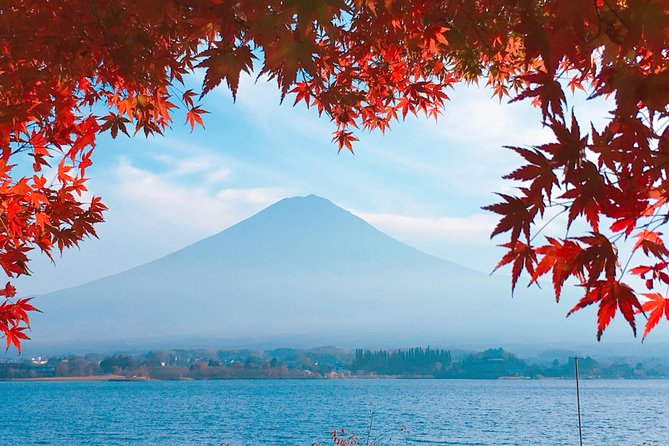
One is the Mt. Fuji Panoramic Ropeway. It rises you from Lake Kawaguchiko’s shoreline to an elevated viewpoint in just a few minutes. The time you’ll spend depends on queue length, but the point is simple: you get a broad look at Fuji, lake water, and the city in one go.
You may also choose cultural stops like:
- Itchiku Kubota Art Museum, known for rare kimonos in a cohesive design world by the same artist.
- Kawaguchiko Music Forest Museum, with an old-instrument collection (automatic musical instruments) and seasonal flower surroundings.
- Hoshino-like variety in shorter museum breaks such as gem collections, depending on your interests.
These places matter because they add texture. A full Mt. Fuji day can turn into one long photo line. Museums and indoor options break that up and make the day feel balanced, especially if you’re traveling with kids or older relatives.
Other Hakone loops worth the fare
- Tokyo: Mt. Fuji Tour, Hakone Ropeway, Owakudani, Lake Ashi★ 4.7 · 4,002 reviews
- Private Tour to Mt. Fuji and Hakone (Fully Licenced Operator)★ 5.0 · 1,910 reviews
- Mt Fuji & Hakone Cruise, Drum Show Bus 1 Day from Tokyo★ 4.0 · 1,287 reviews
- From Tokyo: Mt. Fuji & Hakone Tour w/ Return by Bullet Train★ 4.2 · 1,278 reviews
- Mt Fuji and Hakone 1-Day Bus Tour Return by Bus★ 4.5 · 929 reviews
Aokigahara caves: the adventurous side of the Fuji region
One of the most interesting ways this tour differs from the standard Fuji checklist is the chance to head into the Aokigahara Jukai forest area via caves.
You may see stops such as:
- Narusawa Ice Cave
- Fugaku Wind Cave
- Saiko Bat Cave
Each is timed as a short adventure block, and the admission fees are not included. The takeaway for you: this is where the day stops being only pretty and becomes memorable in a different way. It’s a good fit if you want something a bit offbeat and are okay with basic cave conditions.
Practical mindset: caves are not about long hikes here; they’re about a short, contained experience. If you’re heat-sensitive or weather changes fast, caves and ropeways can keep the day moving without forcing you to stand outside for long periods.
When you choose the 5th Station: timing and real costs
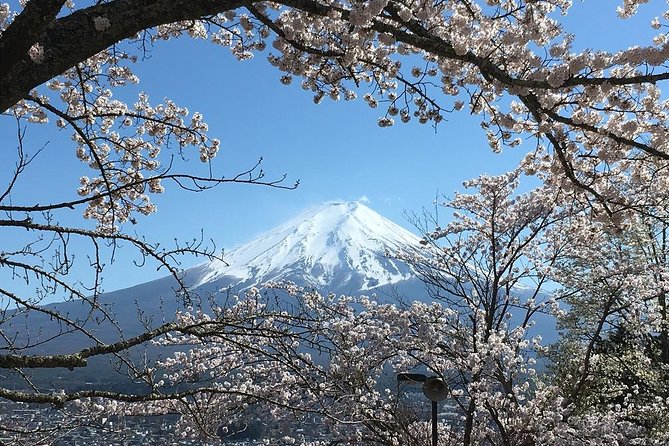
A big headline stop is the Mt. Fuji 5th Station. You go up by car to about the highest car-access point (the tour notes a closest point up to roughly 2300 meters), but there’s an on-the-spot toll: 2100 yen, paid at the time of your visit.
Also, it’s seasonal. Access is noted as closed from July to mid-September due to climbing season, and in winter season. The visit window is often planned for about 2 hours, which is significant in a 10-11 hour day—so it’s worth choosing intentionally.
If your goal is maximum mountain symbolism, this is the place. If your goal is broader variety (lakes + shrines + art + caves), you might skip it and still feel like you had a full Fuji experience.
Hakone add-ons: steam, shrine gates, and Lake Ashi cruises
If you opt for the Hakone side, the day gets more “geothermal and art” than “five lakes and flowers.”
Key Hakone stops you can build around include:
- Hakone Ropeway for elevated Fuji viewing over Lake Ashi and the surrounding area.
- Owakudani Valley to see volcanic activity, plus the famous idea of black eggs (the tour notes the black egg tradition).
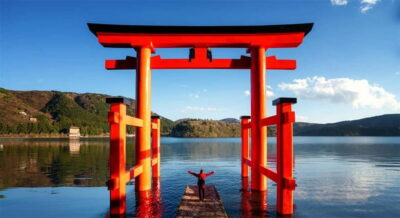
- Hakone Shrine / Kuzuryu Shrine for historic shrine space and the gate photo moment.
- Hakone Open-Air Museum, which is all about outdoor sculpture with photo-friendly scenery.
Then there’s the part a lot of people time carefully: Lake Ashi cruises. The tour offers a choice between the famous pirate-style ship and the regular option if you prefer less crowding. Either way, this is a classic way to see Hakone’s big water view without walking.
If you want history and old-world atmosphere, you may also include Odawara Castle and Hakone Sekisho / Hakone Sekisho Museum, which focuses on Edo-period-era duty and travel checkpoints.
More variety can come from optional stops such as Onshi Hakone Park (seasonal cherry blossoms or red maples) and even a hop toward Mishima Skywalk for a long suspended walkway and possible Fuji views on clear days.
Seasonal magic: Shibazakura, Diamond Fuji, strawberries, and ski time
This tour really earns its keep when you travel for a season-specific payoff.
A few seasonal options listed in the tour schedule:
- Mid-April to late May Shibazakura (moss phlox) at the Fuji Motosu resort area, timed around an hour.
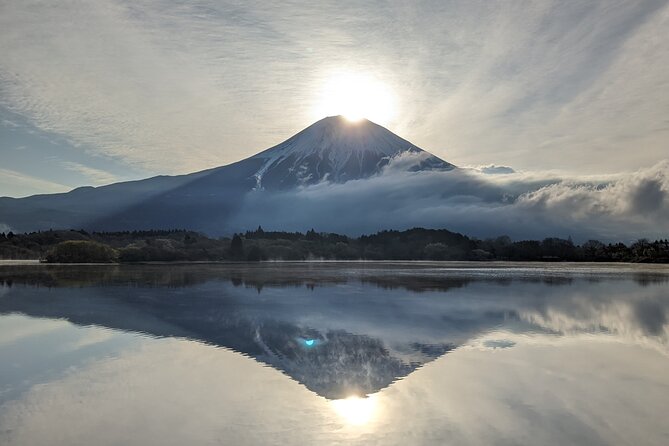
- Diamond Fuji in winter from Yamanakako Hananomiyako Park, where winter sunset light can line up for a special effect.
- Fruit season in Yamanashi: strawberries, cherries, peaches, grapes, and shine muscat are mentioned, but reservation is required for the tasting options.
- An optional all-you-can-eat sweet Japanese strawberries block (noted as 30 minutes).
- In winter, you may be able to plan easy beginner skiing or sledding options on Mt. Fuji with rentals available (time varies by what you choose).
These aren’t guaranteed all year because they depend on the calendar, but that’s exactly the point. Instead of repeating the same generic list in any month, the tour can match what the region is good at right now.
Price and logistics: what $1,286.89 per group buys you
The headline price is $1,286.89 per group, up to 8 people. That’s not cheap if you’re traveling solo, but value changes fast as your group fills the van.
Here’s the basic math idea:
- For 8 people, you’re around $161 per person for a full private day with pickup, a guide, and round-trip transportation.
- For 4 people, it becomes about $322 per person.
What you’re paying for is not just transportation. You’re paying for someone to:
- manage the day’s flow,
- pick the best-feeling sequence for weather and timing,
- and save you from ticket queues and route decisions.
Commonly, the day can include multiple places with paid entrances, plus food stops you’re responsible for. Entrance fees, museums, and many attractions aren’t included, and lunch is not included. You’ll also want to budget for gratuity (5% to 20%) and the extra costs tied to choices like the 5th Station toll.
My advice: if you’re a couple or a family of four, this becomes a “worth it” splurge when you want a smoother day and a guide who can steer you. If you’re traveling with more people, it gets a lot easier to justify.
Tips that make the day smoother (and help if Fuji hides)
- Pick a priority view first. If Fuji is clear, classic viewpoints shine. If Fuji disappears, plan your day around stops that still feel complete: caves, museums, shrines, villages, ropeways.
- Bring cash or payment access for extras. The 5th Station has a 2100 yen toll on the spot, and many entrance fees are not included.
- Wear practical shoes. Even when many stop windows are short, you may still walk around shrine areas, lake edges, and park paths.
- Hot springs rules apply if you add one. If your Hakone day includes hot springs, you’ll need to know that bathing suits and towels are not permitted inside, and tattoos/body paint are prohibited in hot spring facilities. Men’s and women’s tubs are separate.
- Expect traffic. Driving out of Tokyo can be fine, but return traffic can be heavy on holidays. A good driver keeps it safe and adjusts the pacing.
Should you book this Mt. Fuji or Hakone private tour?
I’d book this if you want a private, door-to-door Mt. Fuji day with real flexibility and a guide who can adjust when the mountain isn’t cooperative. It’s also a strong choice for families with mixed ages, because the pace is designed for comfort rather than a relentless sprint.
I’d hesitate if you’re traveling when you can’t handle a long day in the car, or if you only care about one specific Fuji image and would feel disappointed if clouds cut the view. Since the tour keeps going and doesn’t refund for reduced visibility, you’ll want to be the kind of traveler who can enjoy the region even when the mountain plays hide-and-seek.
If that sounds like you, this is a solid way to turn Tokyo downtime into a memorable Fuji-area day.
FAQ
What is the price and group size?
The tour is $1,286.89 per group and it’s set up for up to 8 people.
How long does the tour take?
Plan on about 10 to 11 hours for the full day.
What’s included in the price?
Included are hotel pickup/drop-off, round-trip private air-conditioned transportation, a private guide, and one bottled water per person.
What isn’t included?
Entrance fees, food and drinks, lunch, gratuity (5% to 20%), and Mt. Fuji 5th Station are not included.
Can the itinerary be customized?
Yes. The day is customizable, and you’ll be asked to select about 4 to 6 sites from the options.
Is Mt. Fuji 5th Station always available?
No. Access is noted as closed from July to mid-September and during winter season. If it’s available, there’s an on-the-spot 2100 yen toll, and the stop usually takes about 2 hours.
More Tour Reviews in Tokyo
- Mt Fuji and Hakone 1-Day Bus Tour Return by Bullet Train
★ 5.0 · 26,383 reviews - 1-Day Tokyo Bus Tour
★ 5.0 · 14,250 reviews - Tokyo: teamLab Planets TOKYO Digital Art Museum Entry Ticket
★ 4.6 · 9,779 reviews - Mt Fuji & Hakone Cruise, Drum Show Bullet Train 1 Day from Tokyo
★ 4.0 · 7,413 reviews - Tokyo: Shinjuku Food Tour (13 Dishes at 4 Local Eateries)
★ 5.0 · 6,603 reviews
Hakone, A Few More Ways
- Mt Fuji and Hakone 1-Day Bus Tour Return by Bullet Train
★ 5.0 · 26,383 reviews - Mt Fuji & Hakone Cruise, Drum Show Bullet Train 1 Day from Tokyo
★ 4.0 · 7,413 reviews - Tokyo Mt Fuji 5th St & Hakone Cruise Bus Tour w/Bullet Train
★ 4.4 · 5,024 reviews - Tokyo: Mt. Fuji Tour, Hakone Ropeway, Owakudani, Lake Ashi
★ 4.7 · 4,002 reviews - Private Tour to Mt. Fuji and Hakone (Fully Licenced Operator)
★ 5.0 · 1,910 reviews
More Mount Fuji Days We Have Reviewed
- Mt Fuji and Hakone 1-Day Bus Tour Return by Bullet Train
★ 5.0 · 26,383 reviews - Mt Fuji & Hakone Cruise, Drum Show Bullet Train 1 Day from Tokyo
★ 4.0 · 7,413 reviews - Tokyo Mt Fuji 5th St & Hakone Cruise Bus Tour w/Bullet Train
★ 4.4 · 5,024 reviews - From Tokyo: Mount Fuji Full-Day Sightseeing Trip
★ 4.5 · 4,970 reviews - Tokyo: Mt. Fuji Tour, Hakone Ropeway, Owakudani, Lake Ashi
★ 4.7 · 4,002 reviews
Latest Tokyo reviews off our desk






Mount Fuji Tours, compared.
 ★ 5.0Mt Fuji and Hakone 1-Day Bus Tour Return by Bullet TrainFrom $16326,383 reviews
 ★ 4.0Mt Fuji & Hakone Cruise, Drum Show Bullet Train 1 Day from TokyoFrom $1497,413 reviews
 ★ 4.4Tokyo Mt Fuji 5th St & Hakone Cruise Bus Tour w/Bullet TrainFrom $1545,024 reviews
 ★ 4.5From Tokyo: Mount Fuji Full-Day Sightseeing TripFrom $684,970 reviews
 ★ 4.7Mt. Fuji Tour, Hakone Ropeway, Owakudani, Lake AshiFrom $544,002 reviews
 ★ 4.4Mt.Fuji,Kawaguchiko Oishi Park,Arakurayama Sengen ParkFrom $542,682 reviews
 ★ 4.2Mt. Fuji 5th Station & Hakone Cruise 1-Day Bus TourFrom $1292,381 reviews
 ★ 4.7Mt Fuji Top 5 Spots Day Tour: Arakurayama Park,Oshino HakkaiFrom $532,066 reviews
Browse the lists this tour appears in