
Reviewed · SELF-GUIDED TOURS
Tokyo Self-Guided Audio Tour
Tokyo on your schedule beats a rushed day. This self-guided audio tour strings together 22 stops across classic temples, major museums, and modern viewpoints, so you can linger when something grabs you and skip what doesn’t. I like that it’s built for your pace, not a coach timetable.
I also like the interactive map approach: each location links directly to its matching audio, so you can tap your way from stop to stop without guessing. And I appreciate that you can start and stop anytime, which matters in a city where one detour can turn into a great hour. One possible drawback: this is phone-led, not staff-led—if your audio links or map access don’t work smoothly, you’ll have to troubleshoot yourself while you’re out.
In This Review
- Key highlights you’ll actually use
- Price and value: $9 for 22 stops in ~4 hours
- How the audio links work (and how to avoid the common frustration)
- Planning the best flow: where the route makes life easier
- Tokyo Central Railway Station to Imperial East Gardens: start with the big brain of the city
- Chidorigafuchi and Yasukuni-jinja: pretty scenery with heavy context
- Shinjuku Gyoen, Tokyo Metropolitan Government Buildings, and Meiji Jingu: gardens, governance, and the forest feel
- Shibuya Crossing to National Art Center: Tokyo’s street-level electricity and a museum concept
- Roppongi art and a skyline fix: Mori Art Museum, Tokyo Tower, and Zojo-ji
- Hama Rikyu, Rainbow Bridge, and Odaiba: garden calm, bay views, and future vibes
- Skytree and Senso-ji to Asakusa: height first, then incense and old streets
- Museums in Ueno: pick your day, not your whole life
- The best fit: who should book this audio tour
- Should you book this Tokyo self-guided audio tour?
- FAQ
- How much does the Tokyo Self-Guided Audio Tour cost?
- How long is the tour?
- Where can I start and end?
- Do I need an internet connection to use the audio?
- What do I receive after booking?
- Are entrance fees included?
- Is transportation included?
- Is there any kind of staff meeting point?
- Is it refundable if I cancel?
Key highlights you’ll actually use
- Interactive map with stop-to-audio links so you can jump around without losing your place
- Self-guided timing that lets you spend extra minutes at Meiji Jingu or Asakusa if the mood hits
- Many key sights have free entry along the route, keeping your total costs down
- A route that mixes old Tokyo and modern Tokyo in a smart geographic flow
- Audio is designed for use without constantly staying online, so you’re not tied to signal
Price and value: $9 for 22 stops in ~4 hours
At $9 per person, this is one of those deals that only makes sense when you compare it to what you’d pay for a normal guided tour plus “someone to explain what you’re looking at.” Here, you’re buying a simple translation layer and context for a dense run of attractions. Many stops are free to enter, which is a quiet win in Tokyo where ticketed attractions can add up fast.
The duration is listed as about 4 hours and the stops are roughly 10 minutes each. That doesn’t mean you’re forced to rush. It means the audio segments are short enough that you can do a stop, listen, take photos, and move on—then stretch time when you want.
Big reality check: this is not a guided walk. No one is herding you, and the audio experience depends on you using the links and map. If you’re the type who likes to wander first and research later, you’ll probably love the flexibility. If you hate troubleshooting on your phone, plan a little extra time at the start.
Readers also shortlisted these Tokyo bookings:
- Tokyo 6hr Private Tour with Government-Licensed Guide
★ 5.0 · 3,902 reviews - Tokyo: Shinjuku Local Bar and Izakaya Guided Walking Tour
★ 4.9 · 1,794 reviews - Tokyo: Private City Highlights Tour with Local Guide
★ 4.8 · 1,433 reviews - Tokyo: Tsukiji Fish Market Guided Walking Tour
★ 4.9 · 1,397 reviews
How the audio links work (and how to avoid the common frustration)
You’ll receive an email for your travel date with two links:
- A secure SoundCloud web link for the audio guides
- A secure Google My Maps link with an interactive route map
The idea is straightforward: use the map to locate each stop, then click the matching point to play the relevant audio. You can also click through the full playlist or individual attraction guides before you go, which is a smart move if you want to pick and choose.
Here’s the practical advice that will save you time:
- Test the links before you leave. Open the email, click one stop, and confirm audio plays.
- Bring headphones. It’s Tokyo—other people, other noise.
- Don’t wait until you’re standing at a crowded intersection to figure it out. Shibuya Crossing is not the time to debug your phone.
The tour is also described as not requiring you to stay online to use the audio. Since the audio is accessed through a web link, I’d still treat it like this: once you’ve checked access ahead of time, you’re far less likely to get stuck mid-walk.
Planning the best flow: where the route makes life easier
This route doesn’t try to do everything in Tokyo in one straight line. It layers sights in a way that feels walkable for a self-guided day: starting in central Tokyo, moving through imperial-area landmarks, then toward Shinjuku/Shibuya, down into Roppongi, and out toward the waterfront and the eastern cultural zones (Asakusa, Ueno).
Also, you’re not locked into a single start point. The tour is flexible: you can decide your starting and ending point because it’s self-guided.
Use that flexibility if your energy is low or the weather is rough. You can do the “classic temple loop” one day and the “modern city views + art” another day and still get value from the audio.
Tokyo Central Railway Station to Imperial East Gardens: start with the big brain of the city
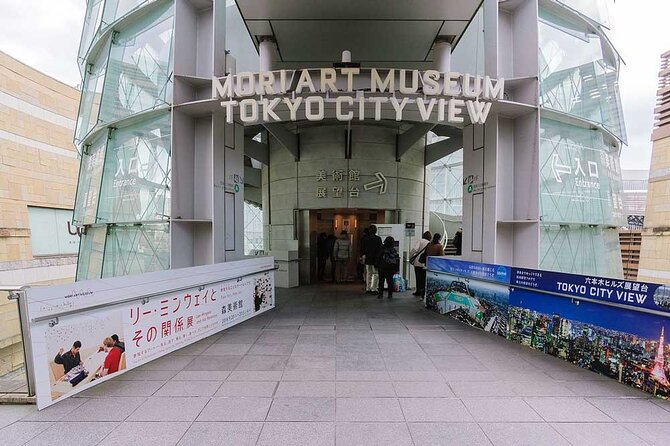
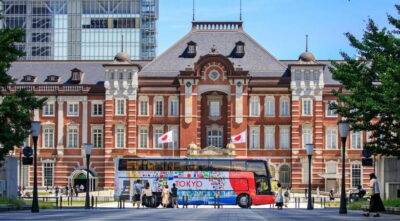
Stop 1: Tokyo Central Railway Station
You’ll start at a historic rail hub and get context for why this place matters in Japan’s modernization. The audio here is short and useful: it’s not just architecture talk, it’s about understanding why a station became a symbol of the country’s modern turn.
Stop 2: The East Gardens of the Imperial Palace (Edo Castle Ruin)
Then you shift into calmer territory. The East Gardens sit on ground tied to Edo Castle, so the audio helps you read the space as something older than the skyline around it. This is a great “temperature change” stop—listen, look around, and let your pace slow down.
Tip for timing: If you’re doing this in warm seasons, keep water handy. These areas reward lingering, but Tokyo heat can bully your schedule.
Chidorigafuchi and Yasukuni-jinja: pretty scenery with heavy context
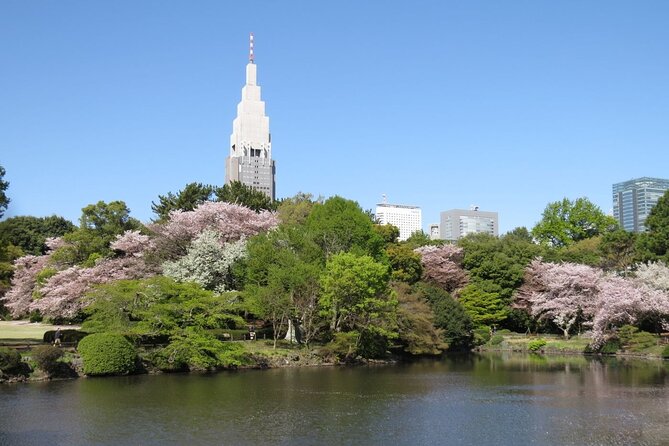
Stop 3: Chidorigafuchi
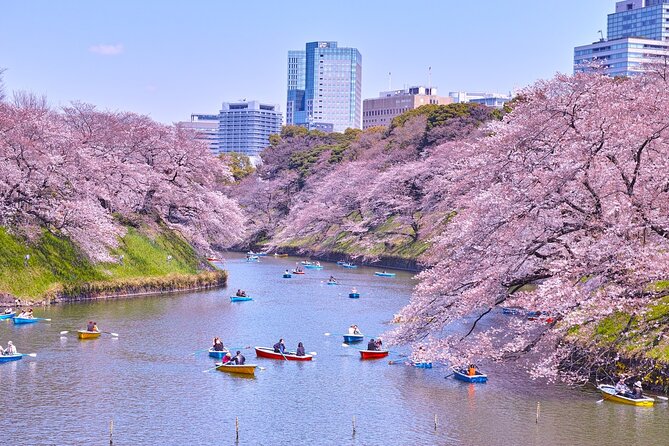
Chidorigafuchi is especially famous for cherry blossoms in spring. The audio adds another layer by explaining its role in feudal Japan’s defenses. Even when the blossoms aren’t present, you’ll still get a sense of why people care about this moat area.
Stop 4: Yasukuni-jinja Shrine
This is the controversial part of the day, and the audio doesn’t try to dodge it. You’ll hear about the shrine dedicated to Japan’s war dead and its complex history and cultural significance. It’s a stop you should treat like a thinking moment, not a quick photo stop.
Practical note: Expect the mood here to be more reflective than touristy. Slow down, keep your questions internal, and let the information you hear guide your interpretation.
Readers also shortlisted these Tokyo bookings:
- Tokyo: 60min Panoramic Open Top Bus Tour with Audio Guide★ 4.0 · 40 reviews
- Akihabara: Self-Guided Tour with a special brochure★ 3.7 · 11 reviews
- Tokyo Self-Guided Audio Tour★ 3.5 · 10 reviews
- Hakone: Self Guided Trip to Mt. Fuji // Made by Local Guides★ 4.6 · 7 reviews
Shinjuku Gyoen, Tokyo Metropolitan Government Buildings, and Meiji Jingu: gardens, governance, and the forest feel
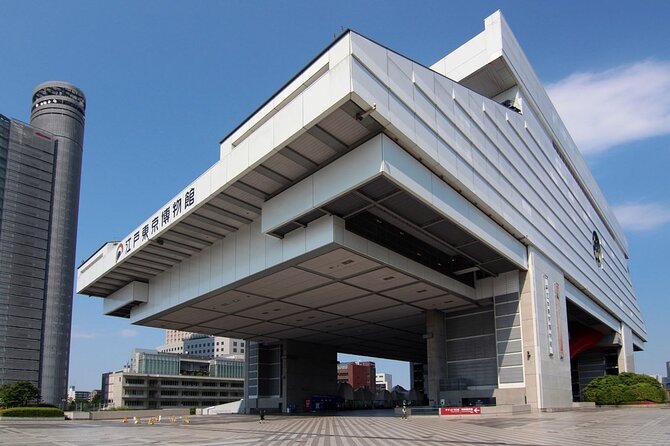
Stop 5: Shinjuku Gyoen National Garden
This garden blends Japanese, French, and English styles—exactly the kind of mix that makes Tokyo feel like a global city while still rooted in local tradition. The audio connects it to imperial roots and later transformation after the war. Admission is not included, so you’ll handle that on site.
Stop 6: Tokyo Metropolitan Government Buildings
Next: views. You’ll ascend for panoramic city sightlines and hear about Tokyo’s governance and modern architecture. This is one of the best “no-museum brain required” stops. You don’t need to be an art person to enjoy it.
Stop 7: Meiji Jingu Shrine
Then the city becomes quieter. Meiji Shrine’s grounds feel like a pocket of forest around a major Shinto site. The audio helps you understand Shinto traditions and the imperial figures tied to the shrine.
How to choose your order: If you want the most contrast, do Meiji Jingu later when you need a break from crowds. If you want a calm start, do it earlier.
Shibuya Crossing to National Art Center: Tokyo’s street-level electricity and a museum concept
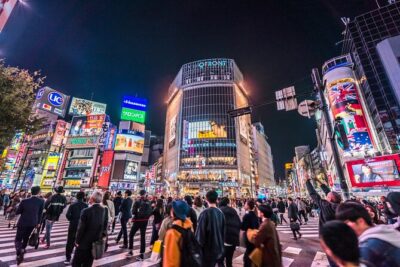
Stop 8: Shibuya Crossing
This is the “yes, I get it now” stop. The audio explains how the area evolved from residential space into a fashion hub, and it tells you what you’re seeing when you look at one of the world’s busiest intersections.
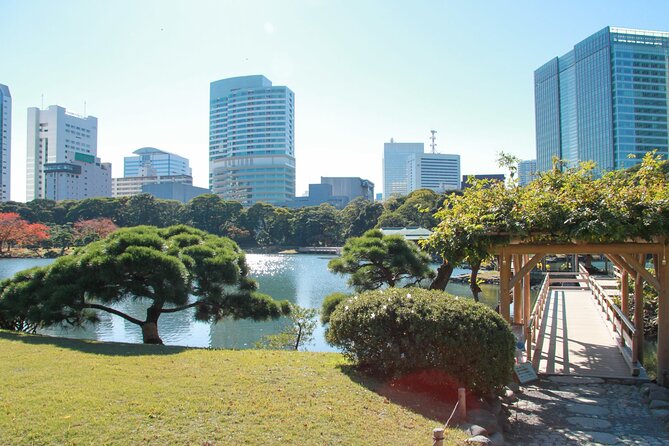
Stop 9: The National Art Center, Tokyo
Then you hit a more heady cultural stop: a unique design often described as an empty museum, mainly because the building space and changing exhibitions play the lead role. The audio covers temporary exhibitions and why the center matters culturally.
Advice: If you’re short on time or the exhibits aren’t your taste, you can treat this as a visual stop—architecture first, audio second.
Roppongi art and a skyline fix: Mori Art Museum, Tokyo Tower, and Zojo-ji
Stop 10: Mori Art Museum (admission not included)
This is a sky-high contemporary art museum in Roppongi Hills. Even if contemporary art isn’t your thing, the audio is still valuable because it explains its place in Tokyo’s art scene and you get dramatic city views.
Stop 11: Tokyo Tower (admission not included)
Tokyo Tower was inspired by the Eiffel Tower, and the audio connects its construction to post-war Japan. It’s a “symbol stop,” and it helps you see why Tokyo uses landmarks the way other cities use monuments.
Stop 12: Zojoji Temple
Now you get a striking visual mix: an ancient Buddhist temple paired with Tokyo Tower in the background. The audio links Zojoji to the Tokugawa shogunate, so you’re not just admiring the view—you’re placing it in historical time.
Photo tip: This is a great place to step back and frame both the temple and the tower together. It’s Tokyo’s layering in one shot.
Hama Rikyu, Rainbow Bridge, and Odaiba: garden calm, bay views, and future vibes
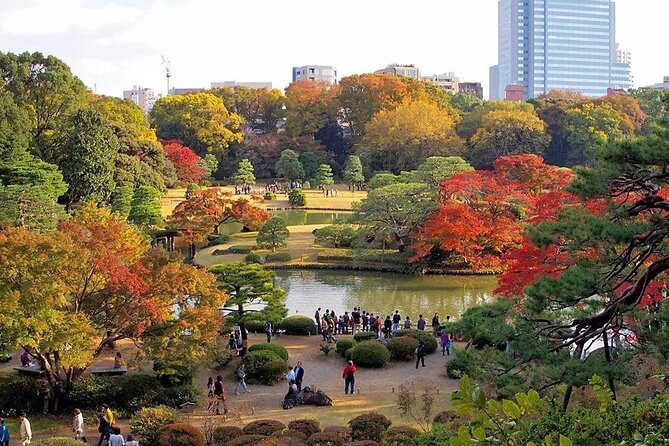
Stop 13: Hama Rikyu Gardens (admission not included)
Hama Rikyu started as a feudal lord’s residence. The audio explains how the gardens adapted through centuries of development. It’s a reflective stop that works well when you’ve been walking for hours.
Stop 14: Rainbow Bridge
This is your bay break. You’ll learn about the bridge’s construction and its nightly illumination. It’s an audio-friendly stop because the details are what make the bridge more than a roadside view.
Stop 15: Odaiba District (admission not included)
Odaiba is described as a futuristic entertainment district built on artificial islands. The audio gives the short historical story: it shifted from fortress to leisure destination. Even if you don’t spend time inside attractions, you’ll understand why Odaiba feels the way it does.
When to do this leg: If you can, aim for later in the day. Rainbow Bridge’s nighttime lights can turn a quick stop into a memorable one.
Skytree and Senso-ji to Asakusa: height first, then incense and old streets
Stop 16: Tokyo Skytree (admission not included)
Skytree is the world’s tallest tower, and the audio focuses on its design inspired by traditional Japanese aesthetics. If you like your Tokyo tall and photogenic, this one is worth building your timing around.
Stop 17: Senso-ji Temple (Senso-ji is the classic Asakusa headline)
You’ll visit Tokyo’s oldest temple and learn the founding legend and why it mattered during Edo period life. This is one of those stops where the story makes the crowd feel less random.
Stop 18: Asakusa
Then you linger in the neighborhood mood: the audio covers Asakusa’s evolution from an entertainment district to a cultural center. In other words, you’ll be reading the streets like a timeline.
Tip: If the crowds are intense, use the audio to slow yourself down. Move side streets, look up at signage, and keep the big sights as anchors.
Museums in Ueno: pick your day, not your whole life
Stop 19: Tokyo National Museum (admission not included)
This is Japan’s oldest and largest museum. The audio frames its vast collection of Japanese art and antiquities. You could spend all day here, so don’t feel pressured to do everything—use the audio to decide what to focus on, then commit to a smaller set of halls.
Stop 20: National Museum of Nature and Science (admission not included)
This stop gives you a science and technology angle. If you’re traveling with kids, this is a natural fit, but adults usually enjoy it too because it’s hands-on in spirit even when you’re just reading exhibits.
Stop 21: National Museum of Western Art (admission not included)
Here you’ll see Western masterpieces in a building designed by Le Corbusier, and the audio notes its UNESCO World Heritage status. Even if you only catch a few rooms, the architecture background helps you appreciate the museum as an object, not just a container.
Stop 22: Ueno Park
To close, the audio returns you to a public park with deep seasonal meaning, especially cherry blossom season. The audio also points you toward the park’s role during that time and why it’s become such a popular hangout.
Realistic strategy: If you’re museum-tired, still do Ueno Park. It gives you a release valve and a sense of place without forcing you to buy more tickets.
The best fit: who should book this audio tour
This tour fits you if you want:
- Control over pacing, photo stops, and breaks
- A simple context layer for major sights without hiring a guide
- A route that mixes temples, modern icons, art stops, and views
It may not be your best choice if:
- You hate phone-based navigation and audio controls
- You tend to rely on staff to solve problems on the spot
- You don’t want to manage entry tickets yourself at sites marked as not included
Should you book this Tokyo self-guided audio tour?
If you’re comfortable using a mobile map and you like the idea of paying $9 for 22 audio-linked stops, I think it’s worth considering—especially because so many stops are free and the listening is short enough to keep moving without feeling like you’re in a class.
My advice: commit to doing a quick link test before you start, then treat the day as a menu. Use it to understand what you’re seeing, not to squeeze in every last stop. If you do that, you’ll get the value you’re paying for and you’ll spend more time where Tokyo actually feels alive to you.
FAQ
How much does the Tokyo Self-Guided Audio Tour cost?
It costs $9.00 per person.
How long is the tour?
The tour is listed as about 4 hours.
Where can I start and end?
Because it’s self-guided, you can choose your own starting point and ending point in Tokyo.
Do I need an internet connection to use the audio?
The tour is described as not requiring you to be online to use the audio tour.
What do I receive after booking?
You receive two access links by email: one for the audio guide (SoundCloud web link) and one for an interactive Google My Maps map with stop-to-audio links. Links are valid for up to 6 days.
Are entrance fees included?
Not all admissions are included. Some stops are free, and others are marked as admission ticket not included.
Is transportation included?
No. Transportation (pick-up and drop-off) is not included.
Is there any kind of staff meeting point?
Since it’s self-guided, there is no staff-led meeting point. The start and end are flexible.
Is it refundable if I cancel?
The experience is non-refundable and cannot be changed for any reason.
More Guided in Tokyo
- Tokyo 6hr Private Tour with Government-Licensed Guide
★ 5.0 · 3,902 reviews - Tokyo: Shinjuku Local Bar and Izakaya Guided Walking Tour
★ 4.9 · 1,794 reviews - Tokyo: Private City Highlights Tour with Local Guide
★ 4.8 · 1,433 reviews - Tokyo: Tsukiji Fish Market Guided Walking Tour
★ 4.9 · 1,397 reviews - Tokyo 4hr Private Tour with Government-Licensed Guide
★ 5.0 · 1,394 reviews
More Tours in Tokyo
- Mt Fuji and Hakone 1-Day Bus Tour Return by Bullet Train
★ 5.0 · 26,383 reviews - 1-Day Tokyo Bus Tour
★ 5.0 · 14,250 reviews - Tokyo: Shinjuku Food Tour (13 Dishes at 4 Local Eateries)
★ 5.0 · 6,603 reviews - Tokyo Mt Fuji 5th St & Hakone Cruise Bus Tour w/Bullet Train
★ 4.4 · 5,024 reviews - Flagship 2-Hours Official Street Go-Kart Tour – Tokyo Bay Shop
★ 5.0 · 4,974 reviews
More Tour Reviews in Tokyo
- Mt Fuji and Hakone 1-Day Bus Tour Return by Bullet Train
★ 5.0 · 26,383 reviews - 1-Day Tokyo Bus Tour
★ 5.0 · 14,250 reviews - Tokyo: teamLab Planets TOKYO Digital Art Museum Entry Ticket
★ 4.6 · 9,779 reviews - Mt Fuji & Hakone Cruise, Drum Show Bullet Train 1 Day from Tokyo
★ 4.0 · 7,413 reviews - Tokyo: Shinjuku Food Tour (13 Dishes at 4 Local Eateries)
★ 5.0 · 6,603 reviews
Latest Tokyo reviews off our desk

Self-Guided Tours, compared.
 ★ 3.8Open Top Panoramic Sightseeing Bus with Audio GuideFrom $11254 reviews
 ★ 4.060min Panoramic Open Top Bus Tour with Audio GuideFrom $1440 reviews
 ★ 3.7Akihabara: Self-Guided Tour with a special brochureFrom $611 reviews
 ★ 4.6Hakone: Self Guided Trip to Mt. Fuji // Made by Local GuidesFrom $37 reviews
Browse the lists this tour appears in