
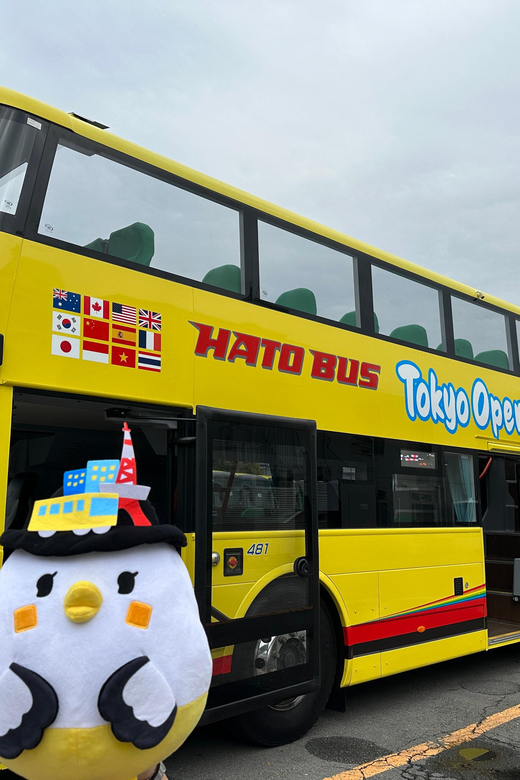
Reviewed · SELF-GUIDED TOURS
Tokyo: 60min Panoramic Open Top Bus Tour with Audio Guide
Open-top Tokyo is hard to beat for an hour. This ride gives you panoramic views plus GPS-based audio so you can follow the route without guessing.
I like the uninterrupted sightlines from a double-decker open-top bus, especially when the skyline keeps sliding by for the full loop. I also like that the tour stays focused and comfortable: no hop-on, no hop-off—just a smooth drive that starts and ends at Tokyo Station.
One thing to plan around is weather. If it rains heavily, the roof may close and the tour can even be canceled, so have a backup window in your schedule.
In This Review
- Key Highlights You’ll Feel Immediately
- Getting On at Tokyo Station: Hato Bus Stop, Timing, and What You Need
- How the GPS Audio Works (and Why It’s Worth It)
- The Double-Decker, Open-Top Experience: Views You Actually Get
- The 60-Minute Route: What You’ll See and Why It Works
- Hibiya Park to the National Diet Building: Start With a Big, Central View
- Toranomon and Tokyo Tower: The Angle Factor
- Rainbow Bridge and the Tokyo Bay Area Feeling: Wind + Scale
- Toyosu and Tsukiji Outer Market: Old Meets New from the Road
- Kabuki-za and Ginza: City Icons, Easy Viewing
- Back to Tokyo Station: Clean Exit Strategy
- Comfort, Rules, and Who This Tour Fits Best
- Weather and Cancellations: The One Factor That Changes Everything
- Is It Good Value at Around $14 for a 1-Hour Ride?
- Should You Book This Open-Top Bus Tour?
- FAQ
- How long is the Tokyo open-top bus tour?
- Where do I meet the bus?
- Is this a hop-on hop-off tour?
- What languages are included in the audio guide?
- Do I need my own earphones and smartphone?
- Can I eat or drink on the bus?
- What happens if it rains?
Key Highlights You’ll Feel Immediately
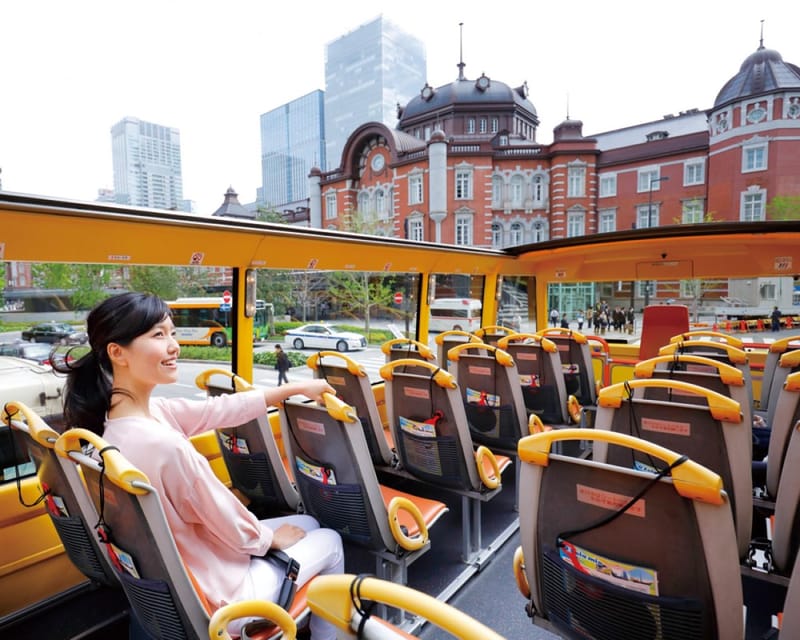
- Double-decker, open-top views: You get high-up angles that are tough to replicate from street level.
- GPS automated guidance in 8 languages: You can follow along even if you do not speak Japanese.
- A single nonstop loop: You avoid decision fatigue and get back to the same starting point.
- Tokyo Tower, Rainbow Bridge, and Odaiba from the road: Big-picture sightseeing, with that breezy “on the move” feel.
- Audio + a live Japanese guide: You get both narration and on-the-ground direction.
- Yellow Hato Bus stop near Tokyo Station: Easy to locate before you board.
Getting On at Tokyo Station: Hato Bus Stop, Timing, and What You Need
This tour is built around a simple meeting point: the Hato Bus stop at Tokyo Station. It’s near the JR Tokyo Station Marunouchi South Exit. When you exit there, you turn left, walk straight for about 2 minutes, and look for the yellow bus.
Because this is a one-hour ride and it does not hop on and off, being on time matters more than you’d think. You’ll want to give yourself a little buffer for getting your headphones and phone ready before boarding.
Bring what you’ll need in advance:
- A smartphone that can be used in Japan
- Your own earphones (earphones aren’t provided)
- If you’re relying on the GPS audio, check that your phone is charged before you arrive
Also note the food rule: no eating on the bus. Drinks in plastic bottles are permitted. If you’re the kind of person who likes to snack while sightseeing, this may feel restrictive for an hour—but it helps keep things clean and simple up top.
Readers also shortlisted these Tokyo bookings:
- Tokyo 6hr Private Tour with Government-Licensed Guide
★ 5.0 · 3,902 reviews - Tokyo: Shinjuku Local Bar and Izakaya Guided Walking Tour
★ 4.9 · 1,794 reviews - Tokyo: Private City Highlights Tour with Local Guide
★ 4.8 · 1,433 reviews - Tokyo: Tsukiji Fish Market Guided Walking Tour
★ 4.9 · 1,397 reviews
How the GPS Audio Works (and Why It’s Worth It)
The tour includes an audio guide plus GPS automated guidance. That matters because Tokyo traffic and turns can make it hard to follow landmarks by sight alone. With GPS guidance, the narration keeps pace with where the bus is, and you do not have to stare at a map the whole time.
Audio options include English, Chinese, Korean, Spanish, French, Thai, Indonesian, and Vietnamese. The live Japanese-speaking guide is also part of the experience, which is helpful if the bus needs to manage boarding flow or if instructions come up during the drive.
One practical heads-up: GPS devices and earphones are not provided for rental. The guidance system itself is described as free, but you should treat your setup as your responsibility. If your earphones malfunction, there’s no refund mentioned for technical issues, so use a pair you trust.
The Double-Decker, Open-Top Experience: Views You Actually Get
This is a double-decker open-top bus, and that is the point. You’re not stuck in a cramped lower deck looking through railings. Instead, you’re up high with wider views as the city slides by.
The best part is that the tour is designed for “through-the-window” sightseeing without interruptions. Since it’s not hop-on hop-off, the bus just keeps rolling for the full hour, which means you’re likely to stay mentally in sightseeing mode rather than constantly planning your next stop.
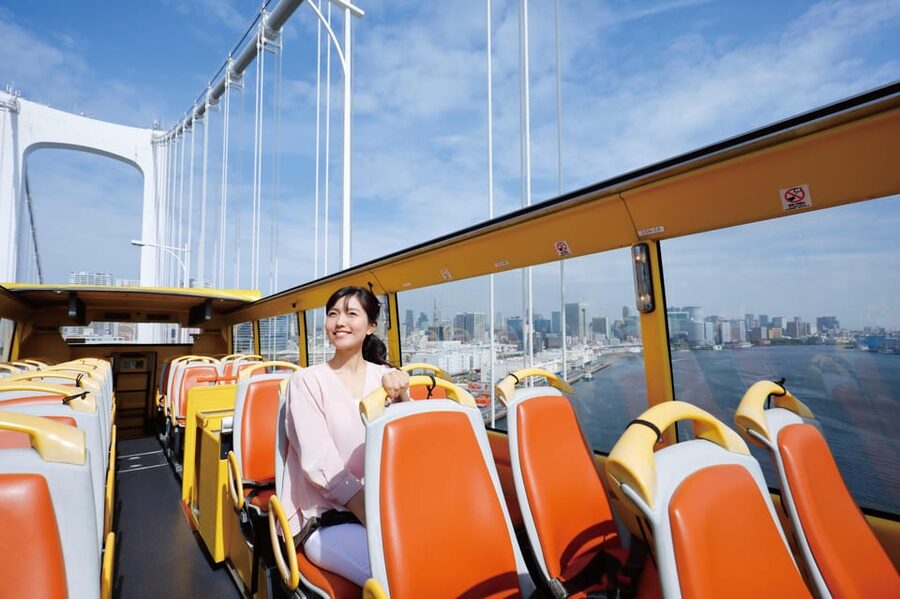
And yes, you’ll feel the movement. The route specifically includes passing Rainbow Bridge, and you can catch that Tokyo breeze feeling that only really happens when you’re out in the open air.
The 60-Minute Route: What You’ll See and Why It Works

The ride is a single loop that passes a sequence of major areas and landmarks, then returns to the Hato Bus stop at Tokyo Station. Here’s how to think about what each segment is doing for you.
Hibiya Park to the National Diet Building: Start With a Big, Central View
You begin at the Hato Bus Tokyo office and head toward Hibiya Park, passing by the park area early. Starting here is a good rhythm check. It gets you into Tokyo’s central layout quickly, and it’s a gentle warm-up to the heavier landmark stretch.
Next comes the National Diet Building. When you’re on a bus at street level-to-mid height, these civic landmarks can look more impressive than you expect because you’re seeing how they sit in the city grid as you pass.
Readers also shortlisted these Tokyo bookings:
- Tokyo: 60min Panoramic Open Top Bus Tour with Audio Guide★ 4.0 · 40 reviews
- Akihabara: Self-Guided Tour with a special brochure★ 3.7 · 11 reviews
- Tokyo Self-Guided Audio Tour★ 3.5 · 10 reviews
- Hakone: Self Guided Trip to Mt. Fuji // Made by Local Guides★ 4.6 · 7 reviews
Toranomon and Tokyo Tower: The Angle Factor
You’ll pass through Toranomon, then head toward Tokyo Tower. This is one of the strongest parts of the experience because bus views give you angles that are hard to recreate quickly on foot.
In particular, feedback highlights how you can see Tokyo Tower from different angles. That makes sense: you’re moving, the bus is positioned for sightlines, and you’re higher up than typical pedestrian viewpoints.
Rainbow Bridge and the Tokyo Bay Area Feeling: Wind + Scale
Then the route takes you to Rainbow Bridge, Tokyo, where the experience is specifically described as getting that Tokyo breeze. Even if you’re not a “bridge person,” this segment helps you switch from the city core vibe to something wider and more open-feeling.
After the bridge, the route continues toward Odaiba. This is a great “change of scenery” moment inside a short tour. You get the sense that Tokyo is not only streets and buildings—it also has big water-and-structures sightlines.
Toyosu and Tsukiji Outer Market: Old Meets New from the Road
The bus passes Toyosu and then Tsukiji Outer Market. From the road, this is a useful combo because you’ll notice how quickly Tokyo can shift in feel—one area’s energy pattern gives you context for the next.
One practical note: since this tour is not hop-on, you’ll be viewing from the bus rather than entering places. That’s fine if your goal is fast orientation and big-picture structure. If your goal is shopping or lingering, plan separate time around the areas you want to revisit.
Kabuki-za and Ginza: City Icons, Easy Viewing
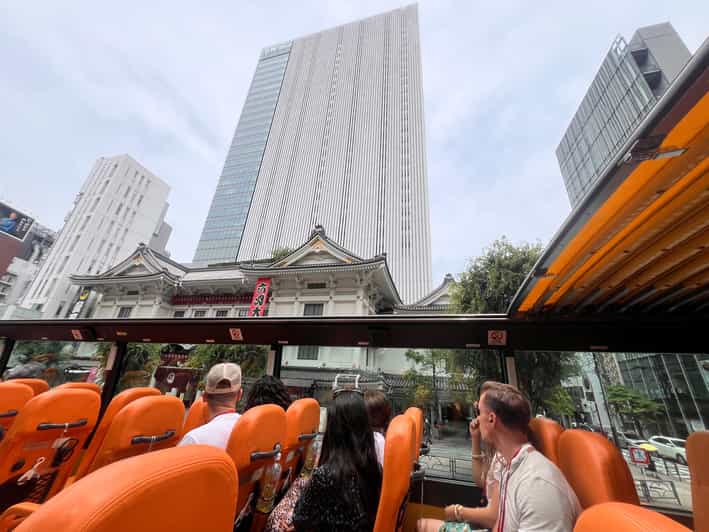
Next up: Kabuki-za, then Ginza. These are the kind of areas where it’s easy to feel you’re in the middle of the action when you’re there. On the bus, you get quick confirmation of location and style without committing to navigating crowds or transfers.
If you’ve ever felt overwhelmed trying to pick what to see in Tokyo, this segment is a good fix. You get the sense of where major cultural and shopping areas sit relative to Tokyo Tower and the bay side, all within an hour.
Back to Tokyo Station: Clean Exit Strategy
Finally, you return to the Hato Bus stop at Tokyo Station. This matters more than it sounds. After an hour of panoramic viewing, you do not have to figure out a complicated end point. You can walk into the station area and reset for your next plan.
Comfort, Rules, and Who This Tour Fits Best
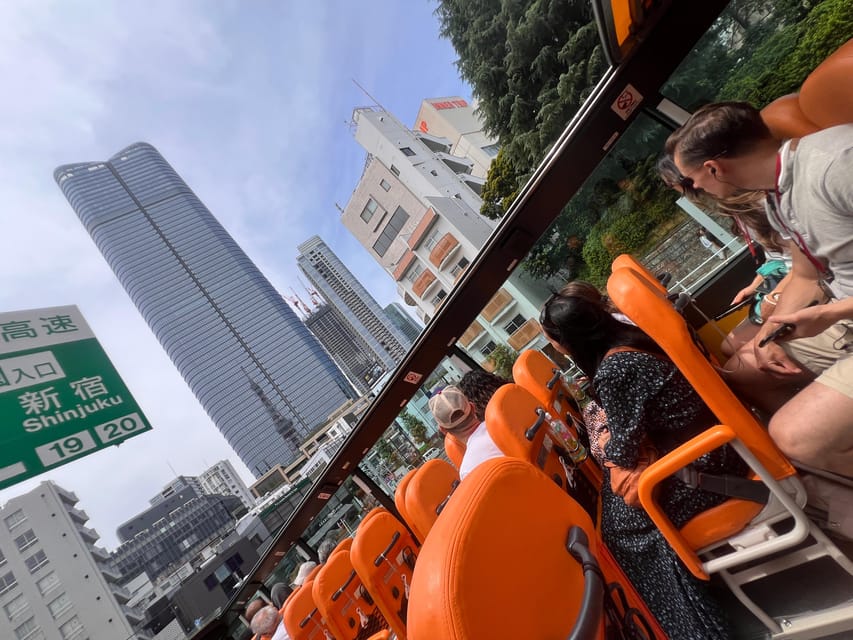
Comfort is a big part of why this works as a “first or middle-day” Tokyo activity. The ride is described as comfortable in feedback, and the setup (short duration, guided audio, no hop-on system) keeps things straightforward.
Who it fits best:
- First-timers who want to get bearings fast
- People who want a low-effort sightseeing hit without train hopping
- Anyone who likes open-air views but does not want to spend half a day chasing viewpoints
A few considerations:
- If you hate the idea of not stopping, you might feel limited. This is sightseeing while moving, not sightseeing while wandering.
- If you need flexible bathroom breaks or extended photo stops, you’ll likely want a different format than this strict one-hour loop.
- If you’re traveling with kids, children under 6 without a seat join for free (one child per adult). That’s useful for family planning.
Weather and Cancellations: The One Factor That Changes Everything
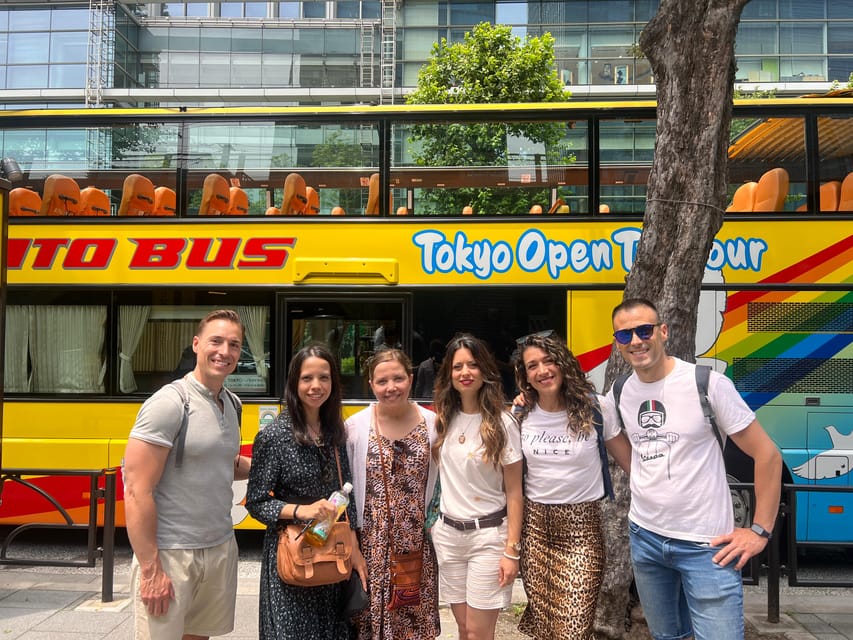
Tokyo weather can flip quickly, and this tour specifically warns you about heavy rain. If it rains, the bus roof may be closed, changing the open-air feel. In bad weather, the tour may be canceled.
So here’s the practical move: if you can, schedule this on a day when rain is less likely, or keep your next day flexible. A bus tour is simple, but it’s still at the mercy of conditions outside.
Is It Good Value at Around $14 for a 1-Hour Ride?

At about $14 per person for a 1-hour ride, you’re paying for three things: the open-top double-decker experience, the GPS audio in eight languages, and a route that strings together major Tokyo sights in one go.
Is it a bargain? It can feel like one, especially if it saves you time and energy. You’re getting a panoramic view from one seat and one time block, with multiple key landmarks passed along the way.
The value dips only if:
- You hate being in a vehicle for an hour without stops
- You’re hoping to enter places during the ride
- You arrive with technical issues (phone/audio/earphones), since technical problems are not described as refundable
If you’re using your hour to orient yourself and collect skyline photos, the price-to-time ratio makes a lot of sense.
Should You Book This Open-Top Bus Tour?
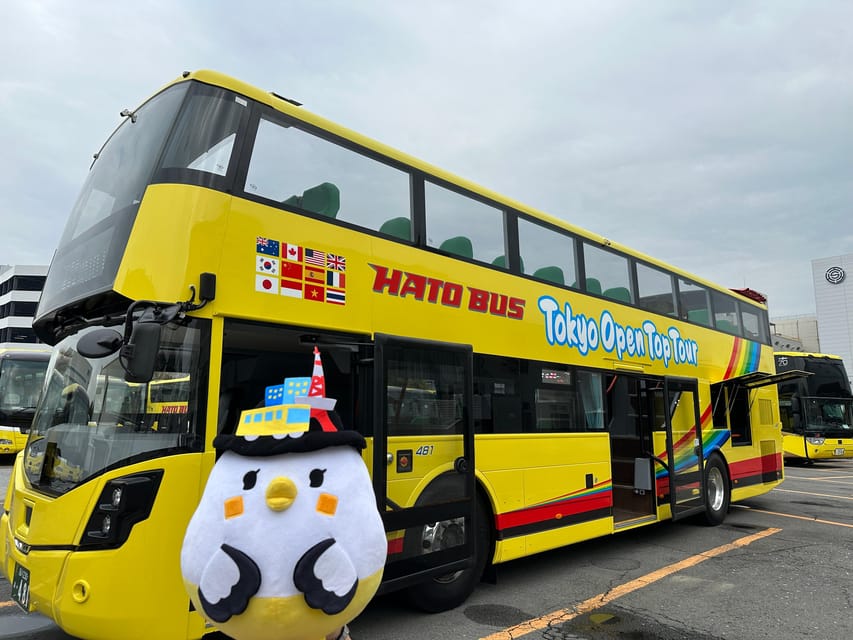
Book it if you want a clean, guided “big sights” loop that helps you understand Tokyo’s shape quickly—Tokyo Tower, the bay-side mood near Rainbow Bridge and Odaiba, and central icons like Ginza and Tsukiji Outer Market areas.
Skip it (or treat it as optional) if you’re very weather-sensitive or you want to linger at stops. Because it’s not hop-on and it’s tied to conditions, it’s best as a structured viewing hour, not a flexible explorer day.
If your plan is to see more than you can on foot, and you like open-air views with language support, this is a smart, straightforward way to do it.
FAQ

How long is the Tokyo open-top bus tour?
The tour duration is 1 hour.
Where do I meet the bus?
Meet at the Hato Bus Tokyo Office in Tokyo Station, near the JR Tokyo Station Marunouchi South Exit. It’s about a 2-minute walk; look for the yellow bus.
Is this a hop-on hop-off tour?
No. It is not a hop-on hop-off service. The bus follows a route and returns to the starting point.
What languages are included in the audio guide?
The audio guide is available in Chinese, English, French, Indonesian, Korean, Spanish, Thai, and Vietnamese.
Do I need my own earphones and smartphone?
Yes. You should bring a smartphone you can use in Japan and your own earphones. Earphones and GPS devices are not provided for rental.
Can I eat or drink on the bus?
Eating is not allowed on the bus. Drinks in plastic bottles are permitted.
What happens if it rains?
In case of rain, the bus roof may be closed. The tour may also be canceled due to bad weather or heavy rain.
More Guided in Tokyo
- Tokyo 6hr Private Tour with Government-Licensed Guide
★ 5.0 · 3,902 reviews - Tokyo: Shinjuku Local Bar and Izakaya Guided Walking Tour
★ 4.9 · 1,794 reviews - Tokyo: Private City Highlights Tour with Local Guide
★ 4.8 · 1,433 reviews - Tokyo: Tsukiji Fish Market Guided Walking Tour
★ 4.9 · 1,397 reviews - Tokyo 4hr Private Tour with Government-Licensed Guide
★ 5.0 · 1,394 reviews
More Tours in Tokyo
- Mt Fuji and Hakone 1-Day Bus Tour Return by Bullet Train
★ 5.0 · 26,383 reviews - 1-Day Tokyo Bus Tour
★ 5.0 · 14,250 reviews - Tokyo: Shinjuku Food Tour (13 Dishes at 4 Local Eateries)
★ 5.0 · 6,603 reviews - Tokyo Mt Fuji 5th St & Hakone Cruise Bus Tour w/Bullet Train
★ 4.4 · 5,024 reviews - Flagship 2-Hours Official Street Go-Kart Tour – Tokyo Bay Shop
★ 5.0 · 4,974 reviews
More Tour Reviews in Tokyo
- Mt Fuji and Hakone 1-Day Bus Tour Return by Bullet Train
★ 5.0 · 26,383 reviews - 1-Day Tokyo Bus Tour
★ 5.0 · 14,250 reviews - Tokyo: teamLab Planets TOKYO Digital Art Museum Entry Ticket
★ 4.6 · 9,779 reviews - Mt Fuji & Hakone Cruise, Drum Show Bullet Train 1 Day from Tokyo
★ 4.0 · 7,413 reviews - Tokyo: Shinjuku Food Tour (13 Dishes at 4 Local Eateries)
★ 5.0 · 6,603 reviews
Latest Tokyo reviews off our desk






Self-Guided Tours, compared.
 ★ 3.8Open Top Panoramic Sightseeing Bus with Audio GuideFrom $11254 reviews
 ★ 3.7Akihabara: Self-Guided Tour with a special brochureFrom $611 reviews
 ★ 3.5Tokyo Self-Guided Audio TourFrom $910 reviews
 ★ 4.6Hakone: Self Guided Trip to Mt. Fuji // Made by Local GuidesFrom $37 reviews
Browse the lists this tour appears in