
Reviewed · SHIBUYA EXPERIENCES
Tokyo: Shibuya Crossing & Hidden Streets Walking Tour
Shibuya looks chaotic until someone explains it. This Shibuya Crossing walk turns the district into a simple story: landmark art, old alleyways, modern hangout spots, and a memorable finish at Hachiko. In just two hours, you get the sense of how Shibuya became the Shibuya you see in photos.
I especially love starting with The Myth of Tomorrow, because the mural gives you a way to look beyond the crowds and into Japan’s modern reflections. I also like the contrast between Nonbei Yokocho’s old streets and the more youth-focused areas you hit after, with a park stop that lets your feet cool off.
One thing to consider: the meeting point is inside Mark City 3rd floor, and it’s easy to miss if it’s your first day in Tokyo. Build in a few extra minutes so you don’t feel rushed.
In This Review
- Key highlights you should care about
- The Myth of Tomorrow mural: art that changes how you look at Shibuya
- SABON Shibuya Mark City to Shibuya Crossing: how the guide helps you read the chaos
- Nonbei Yokocho: the old alley streets that feel like another Tokyo
- Miyashita Park: a multi-level break between street scenes
- Center Gai and Maruyama-cho: youth energy and night-friendly streets
- Ending at Hachiko: the loyalty symbol that lands after all the walking
- What makes the guides work (Loc, Rio, Kumi, Grey, and others)
- Price and value: why $22 for 2 hours makes sense here
- Practical tips so the tour feels smooth, not stressful
- Should you book this Shibuya Crossing & Hidden Streets tour?
- FAQ
- Where is the meeting point for this Shibuya walking tour?
- How long is the tour?
- Is the tour guided in English?
- How much does the tour cost?
- Where does the tour end?
- Is there free cancellation?
- Can I reserve and pay later?
Key highlights you should care about
- The route starts with the Myth of Tomorrow mural (Taro Okamoto) before you step into Shibuya’s loudest intersection.
- Shibuya Crossing includes photo-friendly guidance, including how to get great shots at the scramble.
- Old Tokyo meets modern Shibuya with Nonbei Yokocho and newer youth areas in the same loop.
- Miyashita Park is a real breather, not just a stop on a map.
- The tour finishes at Hachiko, so the last 10 minutes land with meaning.
- English live guides make it easy for first-timers, and they actually answer questions at each stop.
The Myth of Tomorrow mural: art that changes how you look at Shibuya
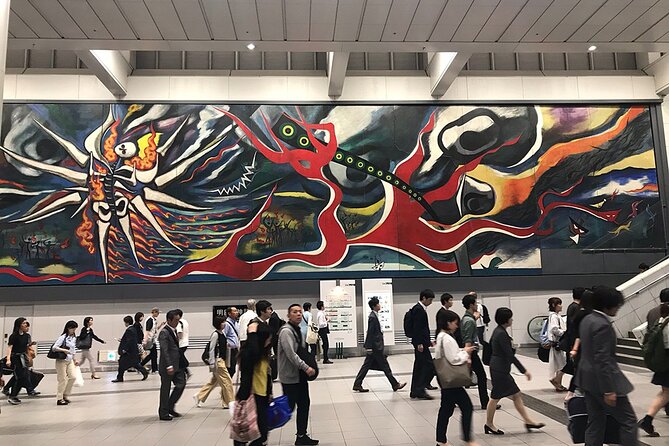
The tour begins at Shibuya Station’s orbit with a stop that’s easy to overlook if you’re rushing. The Myth of Tomorrow is a powerful mural by Taro Okamoto, and it’s tied to nuclear impacts while still pushing a message of hope. That matters, because Shibuya can feel like pure energy from a distance. This mural gives you context fast: you’re not only in a fashion and nightlife district, you’re also in a place where modern Japan grapples with heavy history.
Timing here is short and focused, which is exactly right for travelers who want meaning without turning the day into an all-day museum visit. You’ll get a chance to look closely and snap photos before the tour shifts into street-level Tokyo.
Practical tip: treat this like your warm-up. If you’re carrying a big bag, check where you can stand comfortably for pictures so you’re not blocking foot traffic. It sets the tone for the rest of the walk.
More booked around Shibuya Crossing
- Official Street Go-Kart in Shibuya
★ 5.0 · 3,435 reviews - Tokyo: Street Kart Experience in Shibuya
★ 4.9 · 1,484 reviews - Shibuya Meltdown Nightlife Tour: All-You-Can-Drink Bar Hopping
★ 5.0 · 1,058 reviews - Shibuya Official Street Go-Kart in Shibuya Annex
★ 5.0 · 972 reviews
SABON Shibuya Mark City to Shibuya Crossing: how the guide helps you read the chaos
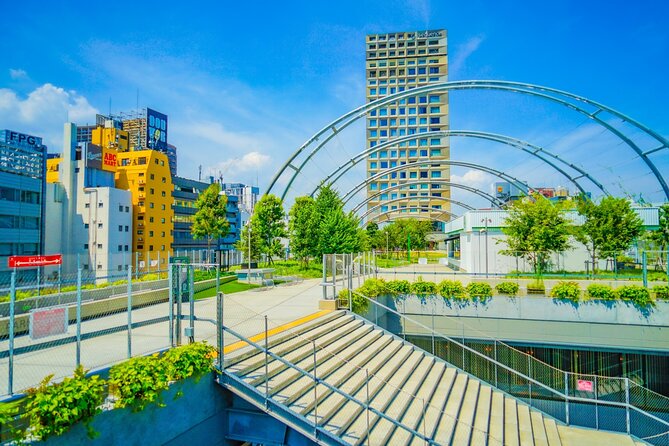
Your meeting point is SABON Shibuya Mark City, inside Mark City on the 3rd floor. Yes, it’s tucked into a busy shopping building. Yes, first-time visitors find it confusing. The good news is the guide will be holding a sign, so you’re not left guessing for long if you’re looking carefully.
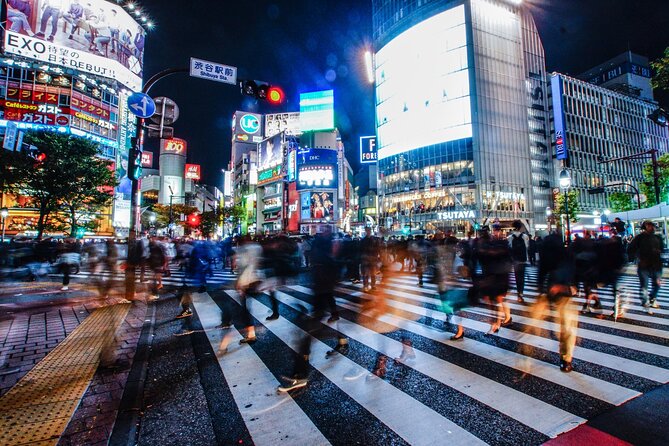
Once you’re together, the tour quickly moves into Shibuya Crossing itself, the world’s busiest intersection. You’ll experience that famous surge of pedestrians, but you’ll also be guided on what you’re actually seeing. When a guide explains the flow, it stops feeling random. You learn how people move through the crossing and how the choreography works from the ground.
This is where the tour earns its value if you’re seeing Shibuya for the first time. You don’t just get to stand at the corner and hope for good photos. You learn where to stand, when to raise your phone, and how to avoid the most frustrating photo positions where you’ll get cut off by the crowd.
If you’re traveling solo, this part is especially useful. One of the recurring themes from recent experiences is that guides are willing to help take photos of you clearly at the crossing, which can be hard to do on your own.
Nonbei Yokocho: the old alley streets that feel like another Tokyo
After the mega-intersection, you move into older lanes: Nonbei Yokocho, often called Drunkard’s Alley. The name alone grabs your attention, but the real point is atmosphere. This is the kind of Tokyo that survives alongside the tech and fashion shine, with narrow streets and a more human scale than Shibuya’s main arteries.
On this stop, you’ll get a guided look at what makes the alley special and how it fits into Shibuya’s past. You’ll probably notice the difference immediately: fewer tourists holding cameras overhead, more storefront texture, and a sense of Tokyo life that doesn’t depend on big visual spectacle.
Why this is worth your time: Shibuya can become a checklist of famous places. Nonbei Yokocho is a reminder that neighborhoods have routines. You get a chance to see how local life and history are layered into the district.
Good to know: alleyways can feel tight. Wear shoes you’re comfortable moving in, because even short guided stops can involve turning corners and repositioning for better viewpoints.
Miyashita Park: a multi-level break between street scenes
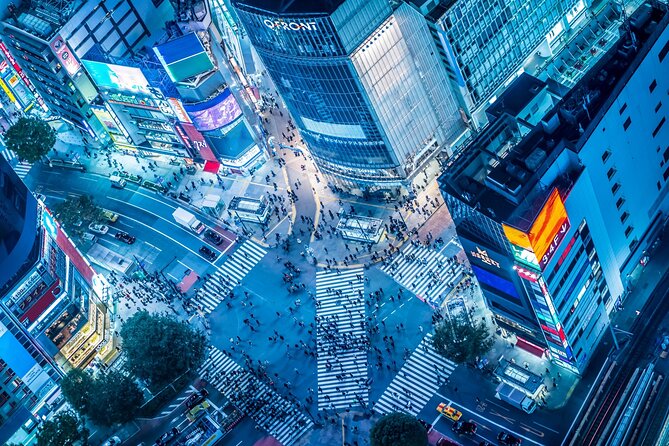
Next comes Miyashita Park, a multi-level urban oasis. This is a clever inclusion because it breaks the walk into “moving” and “resting” blocks. After the intensity of Shibuya Crossing and the tight lanes of Nonbei Yokocho, Miyashita Park gives you space—visually and physically.
The tour uses this stop to reset your pace. You’ll walk through and get the guided context for why this kind of park matters in a city like Tokyo, where open air and public space can be scarce. It also helps you understand how Shibuya isn’t only about nightlife and shopping; it’s also about places where people hang out, meet, and take a breather.
If you’re on a tight schedule in Tokyo, this stop is a win. It helps you stay comfortable without skipping meaningful sights. And yes, it’s also a good place to take photos that don’t involve a sea of bodies.
Center Gai and Maruyama-cho: youth energy and night-friendly streets
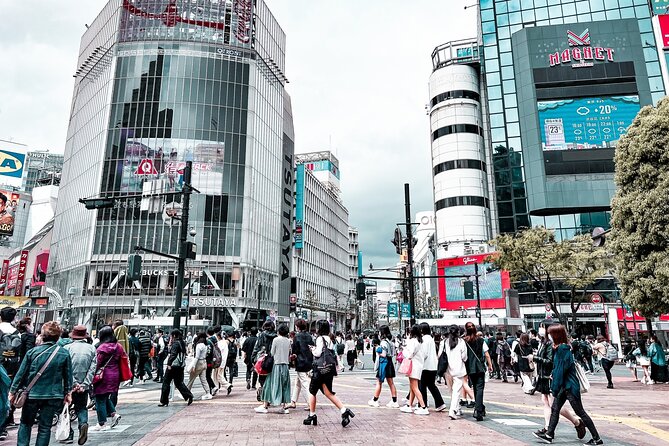
From Miyashita Park, the tour heads to Center Gai, a lively shopping area tied to youth culture. Center Gai is the kind of place where the district’s modern identity shows up instantly: signage, crowds, and the feeling that something is always happening. The guide helps you read it beyond just shopping storefronts, so you understand why Shibuya’s vibe became what it is.
Then you shift again to Maruyamacho, where the streets carry more historical weight and have become a hub for modern nightlife. This is a great pairing. You get one stop that feels loud and brand-forward, then another that feels more street-led and lived-in.
I like how this part of the walk gives you contrast without asking you to jump all over Tokyo. In one route, you see:
- a youth-focused commercial spine (Center Gai)
- older-street atmosphere that’s now geared toward nights out (Maruyamacho)
Possible drawback: this portion can feel very busy depending on the time of day. That’s not a fault of the tour, just a reality of Shibuya. If you’re easily overwhelmed by crowds, keep your expectations realistic and plan to focus on the guide’s directions rather than trying to wander freely.
Readers also shortlisted these Tokyo bookings:
- Tokyo Tsukiji Fish Market Food and Culture Walking Tour★ 5.0 · 3,184 reviews
- Tokyo: Imperial Palace and Shogun Historical Walking Tour★ 5.0 · 2,251 reviews
- Tokyo: Shinjuku Local Bar and Izakaya Guided Walking Tour★ 4.9 · 1,794 reviews
- Tokyo: Tsukiji Fish Market Food and Walking tour★ 5.0 · 1,724 reviews
- Tokyo: Asakusa Walking Tour with Sensoji Temple Visit★ 4.8 · 1,583 reviews
Ending at Hachiko: the loyalty symbol that lands after all the walking
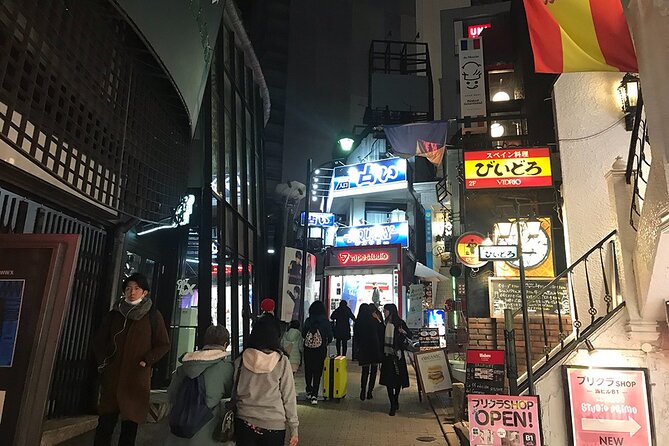
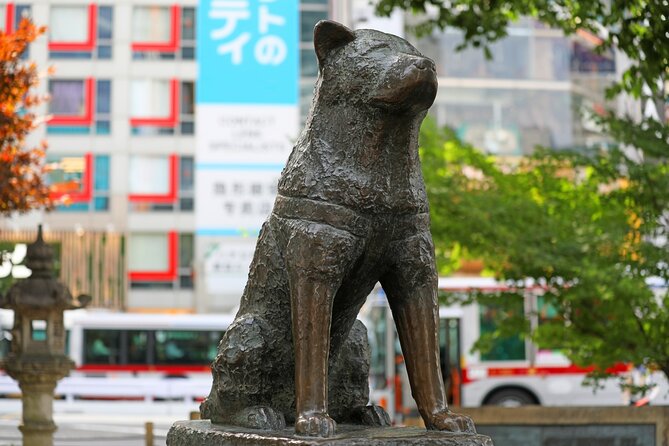
The tour finishes at the Hachiko Memorial Statue, a Shibuya icon tied to loyalty. Ending here is smart because by the time you reach Hachiko, you’ve already seen multiple sides of Shibuya—modern intersections, older alley streets, youth shopping zones, and night-oriented lanes.
That makes the statue feel less like a photo stop and more like a payoff. You’re not only seeing a famous point; you’re placing it into a bigger understanding of why people feel connected to this district.
For many first-timers, it also solves a common problem: Shibuya is crowded and easy to get turned around in. A guided route gives your day a clean finish line.
If you want to extend the day after the tour, Hachiko is a strong anchor point. You’ll likely find it easier to orient yourself and decide where to go next.
What makes the guides work (Loc, Rio, Kumi, Grey, and others)
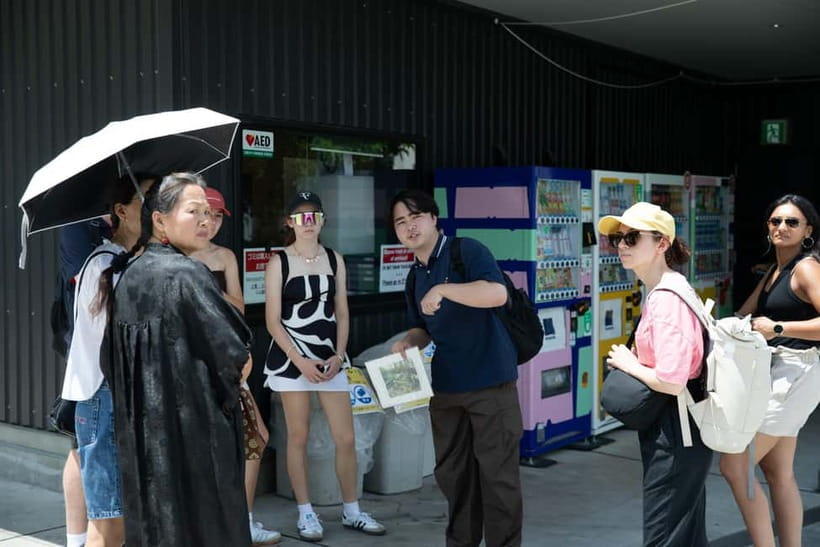
This tour’s biggest advantage is the human part: the guide. Across experiences, the pattern is consistent. Guides like Loc, Rio, Kumi, Grey, Zach, Daichi, and Ryo are praised for turning landmarks into explanations—facts, context, and practical Japan insights, not just where to stand.
Here’s what I’d pay attention to when choosing your mindset for this walk:
- You’ll get context at each stop, so you don’t just memorize sights.
- Guides tend to be flexible with questions and photo requests.
- Even when groups are small, the guide keeps the pace and attention practical.
- English is a real strength on this tour, which matters when you’re trying to understand the why behind Tokyo’s geography and culture.
One of the most useful themes: guides help you find the correct rhythm for a short visit. In one example, a solo traveler appreciated photo help at Shibuya Crossing, which is often where solo days fall apart. Another example praised a guide for adjusting the walk for teens, which tells me the tour style can handle different group needs.
Also, don’t be shy about asking questions. The tour is built for conversation, and the best outcomes come when you treat it like a guided chat plus walking.
Price and value: why $22 for 2 hours makes sense here
At $22 per person for a 2-hour guided walk, this sits in the budget-friendly zone for Tokyo tours. But the real value isn’t only the cost. It’s what you’re getting for the time:
- major Shibuya landmarks (Crossing + Hachiko)
- “in-between” texture (Nonbei Yokocho)
- a break stop (Miyashita Park)
- nightlife-oriented streets (Maruyamacho + Center Gai context)
- English live guiding throughout
Many Tokyo tours either focus on one famous site or bounce across the city. This one keeps you inside Shibuya, which is ideal if you want a concentrated understanding without eating your whole day.
Since the local guide fee is included, you’re not paying extra for the thing that makes a walking tour work. And with reserve & pay later, it’s easier to keep your schedule flexible when Tokyo days shift around.
Practical tips so the tour feels smooth, not stressful
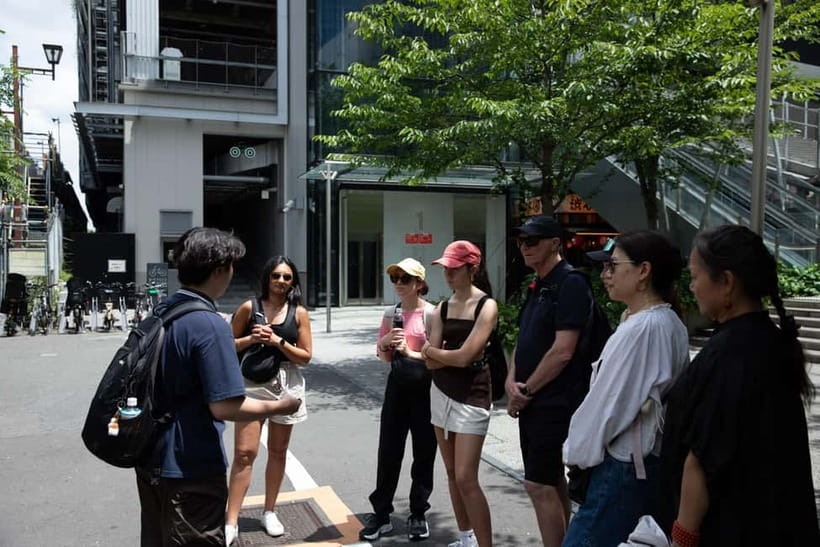
Shibuya rewards prepared travelers, even on a short walk. Here are the things that matter most:
Get to SABON Shibuya Mark City early. The start is inside Mark City on the 3rd floor. It can be tricky to locate on day one. The guide will hold a sign, but you still want time to navigate stairs/elevators and confirm you’re at the right spot.
Wear comfortable shoes. You’re walking through intersections, alleys, and shopping lanes. Even if each segment is short, your feet will feel it.
Bring a phone for photos, but listen for positioning tips. Shibuya Crossing photos can be a mess if you stand in the wrong place. Let the guide set the spot, then shoot.
Plan for crowd energy. Even with a guide leading you, Shibuya can be intense. Keep your pace steady and focus on the route rather than trying to freestyle it mid-tour.
If your schedule is uncertain, this is a low-risk way to see Shibuya. The experience offers free cancellation up to 24 hours in advance for a full refund, which is helpful when your Tokyo itinerary changes.
Should you book this Shibuya Crossing & Hidden Streets tour?
Book it if you want a fast, guided way to understand Shibuya beyond the obvious photo moments. This is especially good for first-timers who feel overwhelmed by crowd energy and want a clear route: art that adds meaning, a guided look at Shibuya Crossing, old alley texture in Nonbei Yokocho, a real rest stop in Miyashita Park, then youth and night streets before ending at Hachiko.
Skip it (or choose another style) if you prefer to wander entirely on your own with no structure. This tour is built around guidance, timing, and a focused loop. If you want long free exploration and lots of extra stops, you might feel a little limited.
If you’re checking one Shibuya activity to anchor your Tokyo visit, this is a strong pick. At $22 for 2 hours, the combination of landmark sights plus street-level context is exactly the kind of value walking tours are supposed to deliver.
FAQ
Where is the meeting point for this Shibuya walking tour?
The meeting point is SABON Shibuya Mark City. It’s inside the building called Mark City on the 3rd floor. The guide will be holding a sign.
How long is the tour?
The tour duration is 2 hours.
Is the tour guided in English?
Yes. The tour offers a live English-speaking guide.
How much does the tour cost?
The price is $22 per person.
Where does the tour end?
The tour ends at the Hachikō Memorial Statue.
Is there free cancellation?
Yes. You can cancel up to 24 hours in advance for a full refund.
Can I reserve and pay later?
Yes. There is a reserve now & pay later option, so you can book without paying right away.
More Tours in Tokyo
- Mt Fuji and Hakone 1-Day Bus Tour Return by Bullet Train
★ 5.0 · 26,383 reviews - 1-Day Tokyo Bus Tour
★ 5.0 · 14,250 reviews - Tokyo: Shinjuku Food Tour (13 Dishes at 4 Local Eateries)
★ 5.0 · 6,603 reviews - Tokyo Mt Fuji 5th St & Hakone Cruise Bus Tour w/Bullet Train
★ 4.4 · 5,024 reviews - Flagship 2-Hours Official Street Go-Kart Tour – Tokyo Bay Shop
★ 5.0 · 4,974 reviews
More Tour Reviews in Tokyo
- Mt Fuji and Hakone 1-Day Bus Tour Return by Bullet Train
★ 5.0 · 26,383 reviews - 1-Day Tokyo Bus Tour
★ 5.0 · 14,250 reviews - Tokyo: teamLab Planets TOKYO Digital Art Museum Entry Ticket
★ 4.6 · 9,779 reviews - Mt Fuji & Hakone Cruise, Drum Show Bullet Train 1 Day from Tokyo
★ 4.0 · 7,413 reviews - Tokyo: Shinjuku Food Tour (13 Dishes at 4 Local Eateries)
★ 5.0 · 6,603 reviews
More Around Shibuya Crossing
- Official Street Go-Kart in Shibuya
★ 5.0 · 3,435 reviews - Tokyo: Street Kart Experience in Shibuya
★ 4.9 · 1,484 reviews - Shibuya Meltdown Nightlife Tour: All-You-Can-Drink Bar Hopping
★ 5.0 · 1,058 reviews - Shibuya Official Street Go-Kart in Shibuya Annex
★ 5.0 · 972 reviews - Tokyo: Shibuya Food Tour (13 dishes and 4 Eateries)
★ 5.0 · 770 reviews
Latest Tokyo reviews off our desk






Shibuya Experiences, compared.
 ★ 5.0Official Street Go-Kart in ShibuyaFrom $763,435 reviews
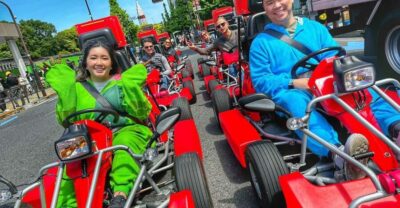 ★ 4.9Street Kart Experience in ShibuyaFrom $741,484 reviews
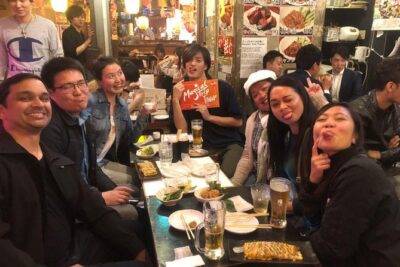 ★ 5.0Shibuya Meltdown Nightlife Tour: All-You-Can-Drink Bar HoppingFrom $1061,058 reviews
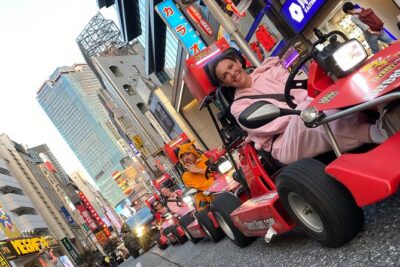 ★ 5.0Shibuya Official Street Go-Kart in Shibuya AnnexFrom $69972 reviews
 ★ 5.0Shibuya Food Tour (13 dishes and 4 Eateries)From $77770 reviews
 ★ 5.0Best of Shibuya Food TourFrom $217612 reviews
 ★ 4.8Shibuya Highlights Walking TourFrom $19601 reviews
 ★ 4.7Premium Go-Kart Tour with Tower & Shibuya CrossingFrom $116528 reviews
Browse the lists this tour appears in