
Reviewed · GUIDED
Tokyo Small Group Tour with Guide
Tokyo can feel like a pinball machine.
This small-group guided walk is a smart way to get your bearings fast, with a guide handling navigation and adding on-the-street context. I especially like how it mixes classic landmarks with modern Tokyo scenes, so the city starts making sense instead of staying a blur. Let someone else do the figuring and you can focus on what’s in front of you.
Second, I like the max 15-person size, which keeps things personal. You’re not just shuttled from one photo spot to the next; you get commentary that explains customs and daily life, and guides can tailor how the streets feel as you go.
One caution: expect a lot of walking. The day is built for moderate stamina, and shoes matter more than you think—some people clock well over 20,000 steps.
In This Review
- Key things to know before you go
- A Tokyo starter day that keeps you from getting lost
- Meeting at Kokyo Gaien: simple start, easy orientation
- Imperial Palace East Gardens and Nijubashi Bridge photos that matter
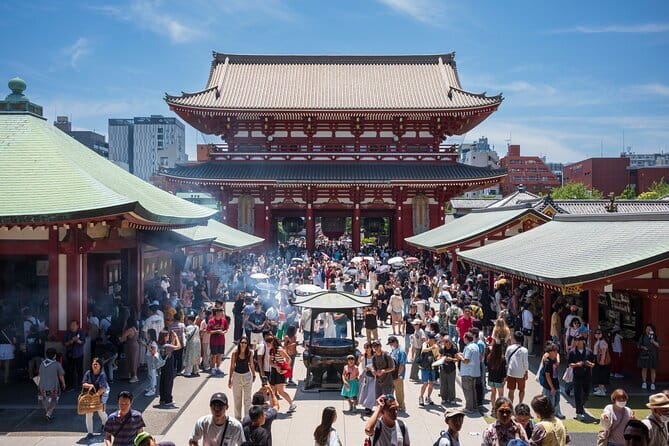
- Asakusa and Nakamise-dori: Senso-ji without the overwhelm
- Harajuku around Harajuku Station: style watching with street sense
- Shibuya Crossing: the photo moment plus real street rhythm
- Meiji Jingu Shrine: the quiet reset after the big city pulse
- How the guide turns landmarks into meaning
- Price and value: what $99 buys you in practice
- Walking reality: 7–8 hours, shoes first, phone after
- Where this tour fits best (and where it doesn’t)
- Should you book this Tokyo Small Group Tour?
- FAQ
- How long is the Tokyo Small Group Tour with Guide?
- Where do we meet the guide for the tour?
- What is the starting time and where does the tour end?
- Is the tour admission ticket cost included?
- What should I wear or bring?
- What happens if the weather is bad?
Key things to know before you go
- Max 15 people means more chances to ask questions and get unstuck
- Free admission stops at the scheduled sights keeps costs simple
- A well-paced loop from the Imperial Palace area to Asakusa, Harajuku, Shibuya, then Meiji Jingu
- Guide commentary you can actually use for understanding Tokyo’s customs and neighborhoods
- Shibuya Crossing is watched in action as part of the route, not just from a distance
A Tokyo starter day that keeps you from getting lost
If Tokyo is your first big city in Japan, you’ll feel it immediately: it’s orderly, but it’s also loud, fast, and layered. This tour helps you read the city instead of just passing it. You’ll start with the Imperial Palace area and gradually move outward into Asakusa’s temple district, Harajuku’s youth culture, then Shibuya’s high-energy crossroads, ending at Shibuya Station.
The big value here is that you’re walking a route that makes sense in one day. Instead of spending your trip time cross-checking trains and opening maps every ten minutes, you follow a plan and learn why each place matters. That’s how you turn a day of sightseeing into a real sense of direction.
Also, the tour is built for efficiency: a start time of 9:00 am, roughly 7 to 8 hours total, and a sequence of stops that avoids the classic Tokyo mistake—trying to cram too much into too little.
Readers also shortlisted these Tokyo bookings:
- Tokyo 6hr Private Tour with Government-Licensed Guide
★ 5.0 · 3,902 reviews - Tokyo: Shinjuku Local Bar and Izakaya Guided Walking Tour
★ 4.9 · 1,794 reviews - Tokyo: Private City Highlights Tour with Local Guide
★ 4.8 · 1,433 reviews - Tokyo: Tsukiji Fish Market Guided Walking Tour
★ 4.9 · 1,397 reviews
Meeting at Kokyo Gaien: simple start, easy orientation
You meet at Starbucks Coffee in Kokyo Gaien Wadakura Fountain Park, at 3-1 Kōkyogaien, Chiyoda. It’s a handy setup because Starbucks is easy to spot, and the meeting point is near public transportation.
Aim to arrive a few minutes early. Not because you’ll need time to buy anything—you get a mobile ticket—but because it helps you start calm. Tokyo mornings can be crisp and crowded at the same time, and a relaxed start makes the rest of the day feel smoother.
From the first walk onward, the tour’s rhythm matters: you’re moving continuously, with each stop giving you enough time to look around before the next neighborhood. The route is designed so you’re not just standing still for a landmark postcard. You’ll feel how Tokyo changes block by block.
Imperial Palace East Gardens and Nijubashi Bridge photos that matter
The day starts in the East Gardens of the Imperial Palace, in the Edo Castle ruin area. This is a great first stop because it sets a tone—space, formality, and that distinct Tokyo “old-meets-new” contrast.
You’ll spend about an hour here, with free admission, and you’ll get to enjoy views from Nijubashi Bridge. That bridge view is the kind of sight that looks beautiful in photos, but it feels even better in person because you can take in the layout and symmetry that define the area.
Practical tip: take a moment at the bridge area to slow down. The surroundings are calmer than later stops, so it’s a good time to get your bearings, spot landmarks, and notice how the city’s design signals importance and order.
If you’re the type who likes context before chaos, this stop is a win. It makes the rest of the route easier to understand, because you’re starting with how Tokyo organizes power and space.
Asakusa and Nakamise-dori: Senso-ji without the overwhelm
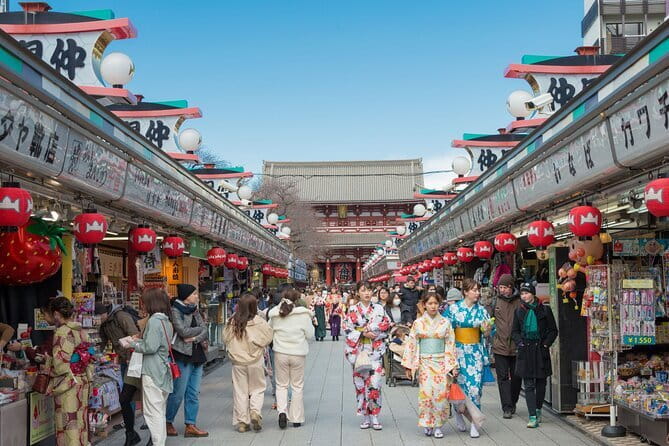
Asakusa is where Tokyo turns tactile. You’ll walk down Nakamise-dori Street—one of the city’s liveliest retail lanes—and then head into Senso-ji, Tokyo’s oldest Buddhist site.
You get about 3 hours total in this part of the day, with free admission. That time is important. Asakusa isn’t a quick look-and-leave neighborhood. Even if you’re not shopping, the sights are built for wandering: temple views, busy side lanes, and lots of small details that don’t scream for attention until you’re close.
What I like about having a guide here is that you’re not stuck figuring out what you’re looking at. A good guide turns the temple visit into something you can actually interpret—customs, what people are doing, and why the place holds meaning beyond the obvious main hall.
There’s also a nice balance here: it’s old Tokyo with modern visitor energy. That contrast is exactly why Asakusa works on a first-day tour.
Harajuku around Harajuku Station: style watching with street sense
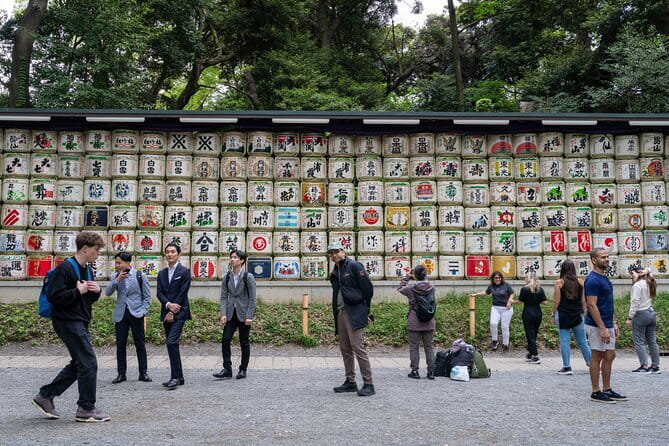
Next up is Harajuku Station for about 1.5 hours. This is your shift from temple calm to youth-culture energy. Harajuku is known for colorful street style and big personality, and the tour gives you enough time to walk around and absorb the atmosphere without feeling rushed.
One thing to know: Harajuku works best when you don’t over-plan. Follow the street flow, look up and around, and let your guide point out what’s going on culturally rather than trying to memorize every shop.
If you’re curious about how Japan’s pop culture fits alongside its traditions, Harajuku is a good checkpoint. It’s one of the places that makes Tokyo feel current, not just historic.
Also, it’s a relief to have guidance here because Harajuku can feel like a maze of side streets and crosswalk timing. Your guide keeps you moving in the right direction so you still arrive at Shibuya without feeling like you spent your day on detours.
- Tokyo: Shinjuku Food Tour (13 Dishes at 4 Local Eateries)★ 5.0 · 6,603 reviews
- Tokyo Mt Fuji 5th St & Hakone Cruise Bus Tour w/Bullet Train★ 4.4 · 5,024 reviews
- Flagship 2-Hours Official Street Go-Kart Tour – Tokyo Bay Shop★ 5.0 · 4,974 reviews
- From Tokyo: Mount Fuji Full-Day Sightseeing Trip★ 4.5 · 4,970 reviews
- Tokyo: Hop-On Hop-Off Sightseeing Bus Ticket★ 3.9 · 4,207 reviews
Shibuya Crossing: the photo moment plus real street rhythm
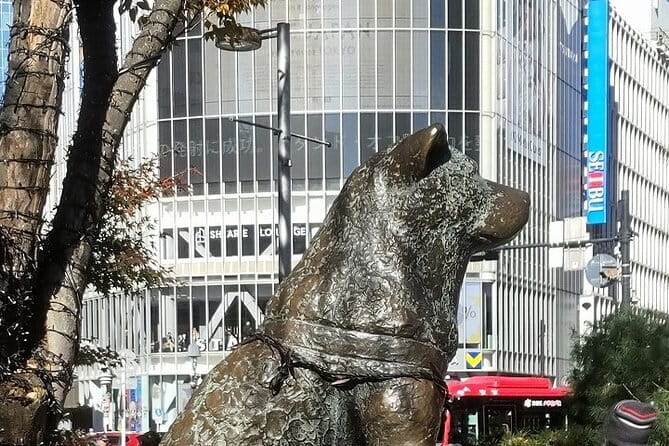
Then comes the iconic Shibuya Crossing. You’ll spend about 30 minutes here, and the tour ends at Shibuya Station after watching the crossing in action.
This is one of those sights where the real experience is the movement. You see people stream across in multiple directions, and it looks almost choreographed. From street level, it’s more chaotic and more impressive than most photos capture.
Your guide’s role matters here because the crossing is also a great teaching moment. You learn what to watch for—how people flow, how the space is organized, and what makes this kind of intersection possible in a city that runs like a system.
Practical advice: wear shoes you can stand in. Shibuya is short on “sitting down and resting” opportunities, and you’ll want your legs to be happy for the later shrine portion of the day.
Meiji Jingu Shrine: the quiet reset after the big city pulse
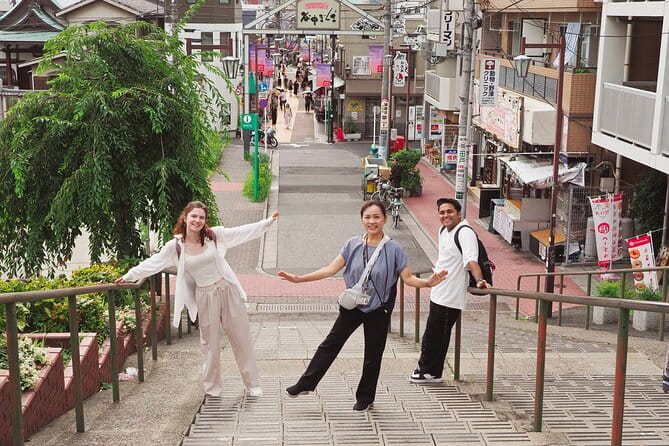
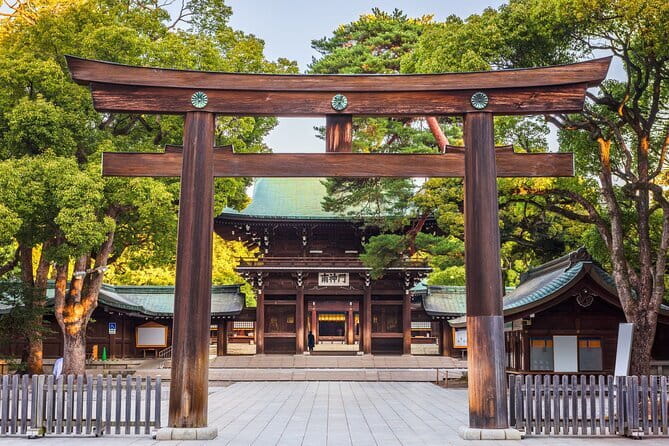
After Shibuya’s energy, you’ll head to Meiji Jingu Shrine for about 1.5 hours. This is a meaningful contrast: a famous Shinto shrine that slows your senses down.
You’ll walk through a calmer setting after being surrounded by the city’s noise and density. That rhythm shift is not an accident. Tokyo’s variety is the whole point, and the itinerary uses Meiji Jingu as a reset button.
If you’ve been sprinting visually through neighborhoods, this stop gives your brain time to catch up. You can actually observe details—how visitors behave, the mood of the grounds, and how the shrine space changes your pace.
For me, this is where the tour feels most rewarding. Not because it’s the most dramatic, but because it gives you a different side of Tokyo that you’d be less likely to seek out on your own if you’re focused only on the top “big names.”
How the guide turns landmarks into meaning

The tour is led by a hand-picked expert guide, and the difference shows. Across many guides, a clear pattern shows up: they’re not just reciting facts. They explain how people live, what customs mean, and what you’re supposed to notice as you walk.
Names that come up with this tour include Mary, Coral, Daniel, Suzana, and Tomas—each described as friendly, engaging, and willing to go beyond a basic walking script. One guide-style strength is cultural context: customs, beliefs, and what Japanese people are trying to communicate through everyday behavior.
Another useful perk: some guides point out elements of Tokyo’s infrastructure and daily movement, including railway lines. That’s small, but it helps you understand Tokyo as a working machine, not just a sightseeing backdrop.
This matters because Tokyo’s real magic is in the details—how neighborhoods feel, how people behave, and how the city functions. A guide helps you read those details quickly, which is exactly what you want when you’re only in town for a short time.
Price and value: what $99 buys you in practice
At $99 per person for a 7 to 8 hour guided outing, the value is about planning savings and context—not admission deals. The scheduled stops are marked as free admission, so you’re not paying extra just to get inside.
The other value piece is group size. With a limit of 15 people, you get a more human experience than the mass-tour format. That’s useful when you want explanations at the right moment—like what you’re looking at on Nakamise-dori, or why the shrine area feels different from the streets outside.
Is it worth it if you love self-guided travel? Maybe not. If you already know how to navigate Tokyo efficiently and you prefer to explore without stopping, you might feel constrained by a set route.
But if you want to reduce stress and come away with a real sense of Tokyo after one day, this is the kind of price that buys clarity. You trade a chunk of your day for a guide-led route that does the thinking for you.
Walking reality: 7–8 hours, shoes first, phone after
This is a walking tour. The physical requirement is moderate, and the day is long enough that you should plan for real leg work. One person noted over 20,000 steps.
So here’s what you should do:
- Wear comfortable walking shoes that can handle lots of pavement.
- Bring water and a light layer, because Tokyo weather can swing.
- Don’t plan to do heavy shopping right after; your feet will need the rest.
If you get tired easily or have mobility limits, this may not be the best match. The route is active, and the best parts come from walking and looking—so pacing yourself is key.
Where this tour fits best (and where it doesn’t)
This tour is best for first-time Tokyo visitors who want orientation without micromanaging transit. It’s also a strong choice if you want variety in one day: Imperial Palace gardens, Asakusa’s temple atmosphere, Harajuku’s youth culture, Shibuya’s signature street energy, and Meiji Jingu’s peaceful reset.
It may not be ideal if you:
- Want lots of time at a single site rather than covering many areas
- Prefer slower days with minimal walking
- Expect ticketed attractions beyond what’s on the route
If you’re the kind of traveler who likes learning why places feel the way they do, this tour will likely feel satisfying. If you mostly want photos and quick stops, you might find the walking time more intense than you expected.
Should you book this Tokyo Small Group Tour?
I’d book it if you want a first-day plan that works. The route is logical, the group size keeps things manageable, and the guide adds meaning that helps Tokyo click sooner. The free-admission stops also make the day feel straightforward and less nickel-and-dime.
I’d hesitate if you’re traveling with limited stamina or you strongly dislike long walking days. This is not a sit-and-glide experience.
If your goal is to leave Tokyo with your bearings and a clear mental map of how the city shifts from old to new, this tour is a solid, practical pick.
FAQ
How long is the Tokyo Small Group Tour with Guide?
The tour runs about 7 to 8 hours.
Where do we meet the guide for the tour?
You meet at Starbucks Coffee – Kokyo Gaien Wadakura Fountain Park (3-1 Kōkyogaien, Chiyoda City, Tokyo 100-0002).
What is the starting time and where does the tour end?
The tour starts at 9:00 am and ends at Shibuya Station after watching Shibuya Crossing in action.
Is the tour admission ticket cost included?
The scheduled stops are marked as free admission, and the tour includes the guide.
What should I wear or bring?
Bring comfortable walking shoes. The tour involves a considerable amount of walking, and travelers should have moderate physical fitness.
What happens if the weather is bad?
The experience requires good weather. If it’s canceled due to poor weather, you’ll be offered a different date or a full refund.
More Guided in Tokyo
- Tokyo 6hr Private Tour with Government-Licensed Guide
★ 5.0 · 3,902 reviews - Tokyo: Shinjuku Local Bar and Izakaya Guided Walking Tour
★ 4.9 · 1,794 reviews - Tokyo: Private City Highlights Tour with Local Guide
★ 4.8 · 1,433 reviews - Tokyo: Tsukiji Fish Market Guided Walking Tour
★ 4.9 · 1,397 reviews - Tokyo 4hr Private Tour with Government-Licensed Guide
★ 5.0 · 1,394 reviews
More Tours in Tokyo
- Mt Fuji and Hakone 1-Day Bus Tour Return by Bullet Train
★ 5.0 · 26,383 reviews - 1-Day Tokyo Bus Tour
★ 5.0 · 14,250 reviews - Tokyo: Shinjuku Food Tour (13 Dishes at 4 Local Eateries)
★ 5.0 · 6,603 reviews - Tokyo Mt Fuji 5th St & Hakone Cruise Bus Tour w/Bullet Train
★ 4.4 · 5,024 reviews - Flagship 2-Hours Official Street Go-Kart Tour – Tokyo Bay Shop
★ 5.0 · 4,974 reviews
More Tour Reviews in Tokyo
- Mt Fuji and Hakone 1-Day Bus Tour Return by Bullet Train
★ 5.0 · 26,383 reviews - 1-Day Tokyo Bus Tour
★ 5.0 · 14,250 reviews - Tokyo: teamLab Planets TOKYO Digital Art Museum Entry Ticket
★ 4.6 · 9,779 reviews - Mt Fuji & Hakone Cruise, Drum Show Bullet Train 1 Day from Tokyo
★ 4.0 · 7,413 reviews - Tokyo: Shinjuku Food Tour (13 Dishes at 4 Local Eateries)
★ 5.0 · 6,603 reviews
Latest Tokyo reviews off our desk






Guided, compared.
 ★ 5.0Tokyo 6hr Private Tour with Government-Licensed GuideFrom $1553,902 reviews
 ★ 4.9Shinjuku Local Bar and Izakaya Guided Walking TourFrom $341,794 reviews
 ★ 4.8Private City Highlights Tour with Local GuideFrom $1061,433 reviews
 ★ 4.9Tsukiji Fish Market Guided Walking TourFrom $221,397 reviews
 ★ 5.0Tokyo 4hr Private Tour with Government-Licensed GuideFrom $1091,394 reviews
 ★ 5.0Tokyo Guided Small-Group Biking TourFrom $1061,250 reviews
 ★ 4.6Samurai Ninja Museum Guided tour and ExperienceFrom $271,010 reviews
 ★ 5.0Tsukiji Fish Market Guided Tour and Sushi Making with Pro ChefFrom $104775 reviews