
Reviewed · PRIVATE
10-Day Private Tour with more than 60 Attractions in Japan
Japan packs a lot into 10 days.
What makes this tour work is the combination of private car convenience and a guide who tells the story behind the stops. I like how fast the plan starts (7:00am in Shinjuku) and how much variety you get, from Tsukiji and Senso-ji in Tokyo to shrines and castles in Kyoto, Nara, and Osaka. One drawback to consider: you’ll pay extra for a lot of key entrances, especially the paid big-name attractions.
The tour also scored well for something simple but important: in hot weather, the air-conditioning in the car makes the long days feel manageable. In the reviews, guide Newton is repeatedly praised as cheerful and focused on everyone, even sharing background stories that make places like Senso-ji feel clearer. Still, the schedule is tight—about 10 hours each day including commuting—so you’ll want good energy and a flexible mindset about adjusting stops if crowds or traffic hit.
If you like your sightseeing with fewer logistics headaches, this is a strong value for a small group. If you’re hoping for one or two days to slow down, you might find the pace a bit intense because there are 60+ attractions across multiple regions.
In This Review
- Key points I’d bank on
- Private, air-conditioned logistics from Shinjuku to Kobe
- Day 1 Tokyo power day: Tsukiji, Senso-ji, Shibuya, Harajuku, Skytree and teamLab
- Day 2 Kamakura and Yokohama: Bamboo Temple, Great Buddha, Chinatown and Minatomirai
- Day 3 Mount Fuji sights around Lake Kawaguchiko, plus Gotemba tea country
- Day 4 Hakone: shrine, Lake Ashi, ropeway, Owakudani black eggs, and open-air sculpture
- Day 5 Nikko’s Toshogu carvings, Shinkyo Bridge, and Lake Chuzenji + Kegon Falls
- Days 6–7 Kyoto classics plus Arashiyama and Gion nights
- Day 8 Osaka: Castle, Kuromon Market, Dotonbori, and teamLab Botanical Garden at night
- Day 9 Nara deer, Todai-ji, Kofuku-ji, and a quieter garden museum stop
- Day 10 Kobe: Nunobiki Falls, Ikuta Shrine, Chinatown, and Rokko views
- Who this tour fits best (and who should adjust expectations)
- Should you book this 10-day private Japan tour?
- FAQ
- What is the price and group size for this tour?
- Where does the tour start and what time does it begin?
- Where does the tour end, and can I be dropped off elsewhere?
- Is this a private tour?
- What’s included in the price?
- Are tickets and entry fees included?
- How long is the tour each day?
- Can the itinerary change during the tour?
- Do you receive a mobile ticket?
- Is the tour dependent on weather?
- FAQ
- What is the cancellation window?
- What attractions are specifically listed as free on the schedule?
- What are some of the major paid attractions to budget for?
Key points I’d bank on
- Private, air-conditioned driving between regions so you’re not juggling long train transfers
- Guide Newton’s storytelling style, with upbeat, group-aware attention
- Tokyo-to-Kobe route that hits iconic temples, neighborhoods, markets, and modern art
- Paid attractions are clearly listed, so you can budget for the big add-ons
- Weather matters, since the tour notes good-weather requirements
- Flexibility built in if traffic or crowds cause waiting time
Private, air-conditioned logistics from Shinjuku to Kobe
This is a private tour for up to five people, starting in Shinjuku at 7:00am and ending in Kobe (with drop-off possible in Kobe, Kyoto, Nara, or Osaka on the last day). You’re not self-driving, and you’re not piecing together long-distance public transport. Instead, you ride in a private air-conditioned vehicle with a driver, which matters a lot when you’re moving Tokyo-to-Fuji-to-Hakone-to-Kyoto-to-Osaka-to-Nara-to-Kobe.
Value-wise, the price is $9,000 per group. If you max out at five people, that’s about $1,800 per person before you add attraction entrances and any meals. That sounds steep until you compare it with the alternative: multi-leg planning, station transfers, and time lost in logistics—especially when you’re trying to see a lot. Here, your time is spent on sights, not schedules.
What you control is part of the appeal. The tour description says you can customize the tour, with the note that entry fees and accommodation are extra. You also get bottled water and assistance for picture/video, which is a small thing that helps when you’re out all day.
The pacing is the trade-off. Each day runs about 10 hours including commuting, and you’ll likely be on the move from morning into evening.
Readers also shortlisted these Tokyo bookings:
- Tokyo 6hr Private Tour with Government-Licensed Guide
★ 5.0 · 3,902 reviews - Private Tour to Mt. Fuji and Hakone (Fully Licenced Operator)
★ 5.0 · 1,910 reviews - Tokyo Customized Private Tour (Must See Places in 1 Day)
★ 5.0 · 1,499 reviews - Mount Fuji Full-Day Private Tour from Tokyo (Customizable)
★ 4.9 · 1,470 reviews
Day 1 Tokyo power day: Tsukiji, Senso-ji, Shibuya, Harajuku, Skytree and teamLab
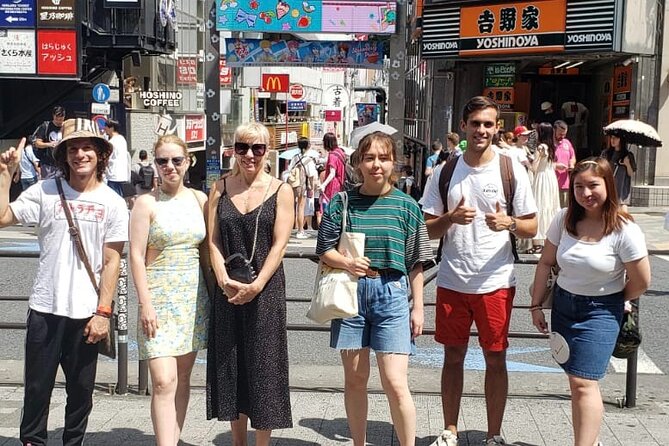
Tokyo day is designed to help you get oriented fast. You start at Tsukiji Fish Market, where the morning energy is the whole point. Next comes Senso-ji Temple in Asakusa, Tokyo’s oldest religious building and a great first taste of shrine-and-temple atmosphere.
Then you shift into modern viewpoints and neighborhoods. Tokyo Skytree is on the schedule, with observation decks at 45th floor level; it’s not included (3,100 yen per person). You also get Meiji Jingu (a quiet forested break inside the city), Shibuya Crossing (one of the world’s busiest intersections), and Takeshita Street in Harajuku for candy stops and youth fashion.
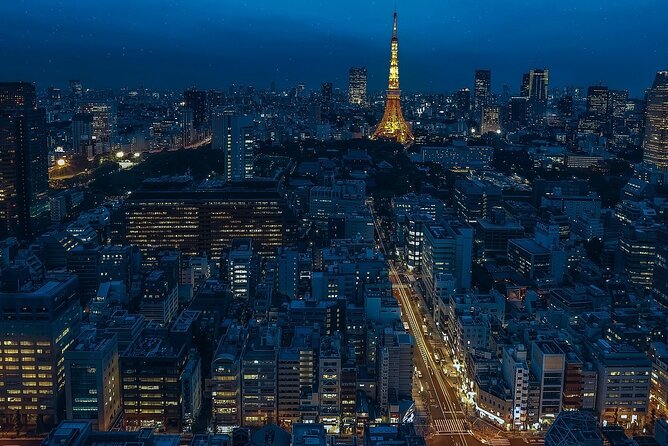
A few optional-feel additions help you shape the day. The Statue of Liberty replica at Odaiba is listed as possible if there’s time, and teamLab Planets TOKYO is also possible, but not included (3,800 yen per person). You’ll also see Akihabara for electronics and pop-culture browsing, plus Tokyo Tower for that retro skyline silhouette.
What I like about this day is the mix: temple oldness, shrine calm, big-city motion, and at least one high-tech art experience if your timing works out. The main consideration is stamina. With multiple districts and long walks, wear shoes you can handle.
Day 2 Kamakura and Yokohama: Bamboo Temple, Great Buddha, Chinatown and Minatomirai
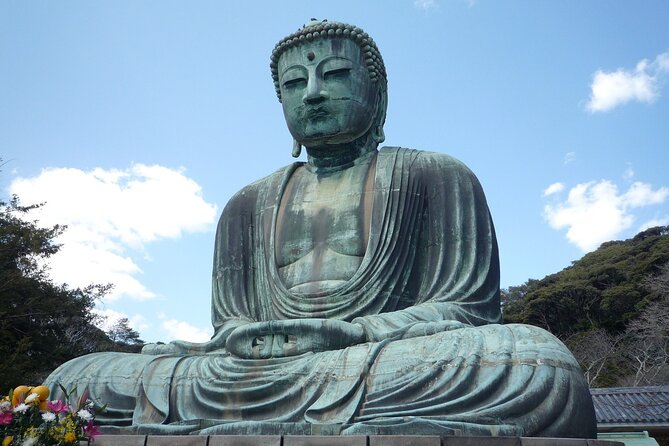
Day 2 stretches from Kamakura into Yokohama, and it’s a smart way to change gears from Tokyo’s pace. You begin at Hōkoku-ji, known as the Bamboo Temple, famous for its bamboo garden. Nearby are the classic Kamakura temple hits: Hase-dera with the huge wooden Kannon statue, and Kotoku-in to see the Great Buddha (all listed as not included).
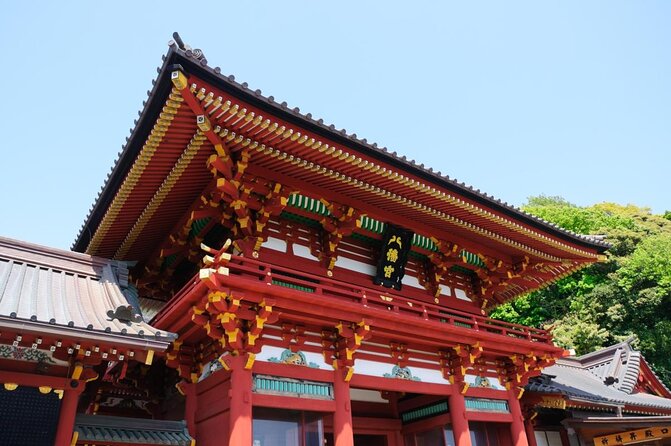
Tsurugaoka Hachimangu Shrine adds cultural context, with ponds representing the Taira and Minamoto clans. Then you get Kamakura Komachidori, a long pedestrian street where browsing and snacks come easy.
From there, you head into Yokohama Chinatown, where the area’s long heritage shows up in food and shopfronts. You’ll also pass Sankeien Gardens (not included) if time permits, plus Minatomirai, the futuristic waterfront district with observation views tied to its Landmark Tower area.
This day is all about variety within one region: zen-garden sights, major religious landmarks, then markets and city scenery. The only thing to watch is entrance fees. Many of the big Kamakura pieces are ticketed, so set aside budget before you go.
Day 3 Mount Fuji sights around Lake Kawaguchiko, plus Gotemba tea country
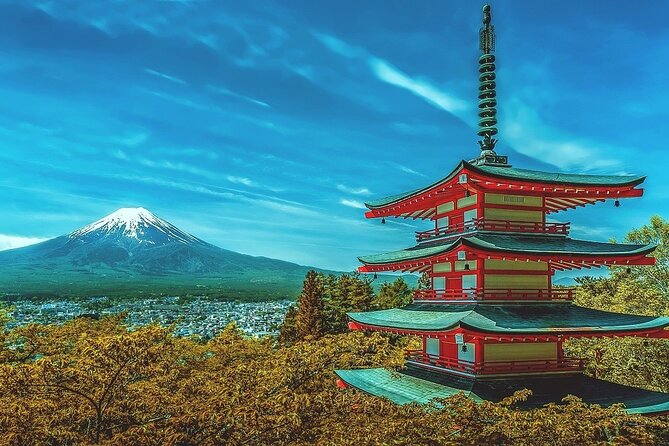
Day 3 is your Mount Fuji day, and it’s built for people who want the famous photo viewpoints without driving. You start with Oshino Hakkai, the eight springs fed by Mount Fuji aquifer water—simple to see, but special because it’s a “Fuji at eye level” kind of place. Then you hit Chureito Pagoda, a key Fuji landscape viewpoint with a pagoda in front.
You continue to Lake Kawaguchiko, one of the most accessible of the Fuji Five Lakes. From there, you have options that affect your view time and budget: the Mt. Fuji Panoramic Ropeway is not included, and the Saiko Iyashi no Sato Nemba thatched-village stop is also ticketed.
If you want iconic angles, Oishi Park is listed as a free stop with Fuji framed against the lake and flower fields. Arakura Fuji Sengen Shrine is another popular viewpoint, and then you have Mt. Fuji 5th Station as a longer, ticketed experience.
The day ends with Gotemba, described as premium green tea growing land at the foot of Fuji. It’s a nice change of pace from shrines and lookout decks and gives you a sense of how the region feeds itself.
One practical note: Fuji views depend on weather, and the tour later says good weather is required. So if you’re going in winter or a foggy season, plan to be flexible with expectations and timing.
Day 4 Hakone: shrine, Lake Ashi, ropeway, Owakudani black eggs, and open-air sculpture
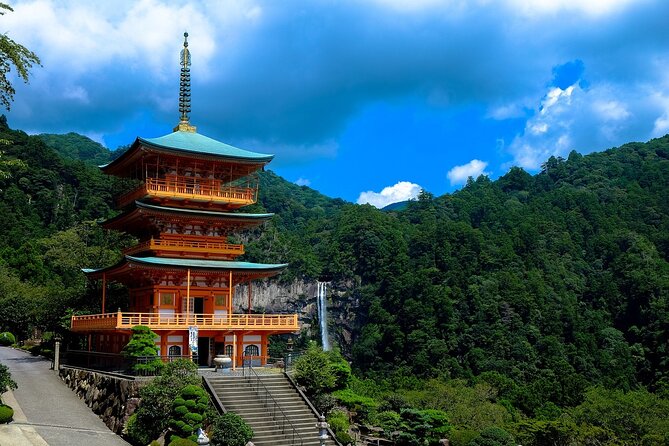
Hakone is the region where the tour shifts from “temple sightseeing” to “volcanic scenery and slow views.” You begin at Hakone Shrine / Kuzuryu Shrine at the base of Mount Hakone, tucked by the forests near Lake Ashi. Then you move to Lake Ashinoko, a crater lake tied to the area’s volcanic story.
You’ll likely ride at least one major transport feature: Hakone Ropeway is listed and is not included. That gets you toward Owakudani Valley, where you see the sulfur boil-zone vibe and the famous Kuro-tamago black eggs. Even if you’re not focused on food, the setting explains why Hakone is so different from most parts of Japan.
There are also calmer, scenic stops. Gora Park gives you a western-style garden feel, and Hakone Open-Air Museum adds sculpture in the mountains (ticketed). A tea stop is included in the schedule too: Amazake-chaya Tea House, noted as 400 years old, famous for amazake (sweet rice wine). That’s a good mid-day reset if the weather turns.
If you’re budgeting, this day has multiple ticketed parts (ropeway, open-air museum). But I like the payoff: you get a full Hakone flavor, not just one viewpoint.
- Tokyo: Shinjuku Food Tour (13 Dishes at 4 Local Eateries)★ 5.0 · 6,603 reviews
- Tokyo Mt Fuji 5th St & Hakone Cruise Bus Tour w/Bullet Train★ 4.4 · 5,024 reviews
- Flagship 2-Hours Official Street Go-Kart Tour – Tokyo Bay Shop★ 5.0 · 4,974 reviews
- From Tokyo: Mount Fuji Full-Day Sightseeing Trip★ 4.5 · 4,970 reviews
- Tokyo: Hop-On Hop-Off Sightseeing Bus Ticket★ 3.9 · 4,207 reviews
Day 5 Nikko’s Toshogu carvings, Shinkyo Bridge, and Lake Chuzenji + Kegon Falls
Nikko day has a “wow” rhythm. You start with Toshogu Shrine, listed as the most famous Nikko attraction, known for colorful buildings with heavy carvings. The tour includes plenty of time for the shrine complex, but the entrance is not included (Nikko Tosho-gu is listed as ticketed).
Right after, you visit Shinkyo Bridge, one of Nikko’s best-known sights. It’s listed as free, and it’s a great place to slow down and look at the river crossing in context. Then there’s Narabi Jizo, a stop with small statues made for travelers and children, which adds heart to the big-stone shrine day.
You also have a scenic arc beyond the shrines. Nikko Tamozawa Imperial Villa Memorial Park is included as a retreat-era architecture stop (ticketed). Then you head to the viewpoints: Akechidaira Observation Area looks out over Kegon Falls, Lake Chuzenji, and Mt. Nantai. After that comes Kegon Falls and then Lake Chuzenji itself, described as Sea of Happiness.
The drawback? Ticket costs add up. Toshogu, observation points, and several waterfall viewpoints are all listed as paid entries. The upside is that Nikko gives you both ornate culture and real nature scenery in one day, without you having to plan separate transport.
Days 6–7 Kyoto classics plus Arashiyama and Gion nights
Kyoto is split into two sightseeing days, and that’s the smart way to handle it. The first Kyoto day focuses on major religious and neighborhood staples.
You begin with Kiyomizu-dera Temple, a huge crowd magnet, but worth it for the temple scale and dramatic views over the city (ticketed). Next is Sanjūsangen-dō, known for long halls and a striking visual display (ticketed). Yasaka Shrine adds a living, festival-linked atmosphere and is listed as free.
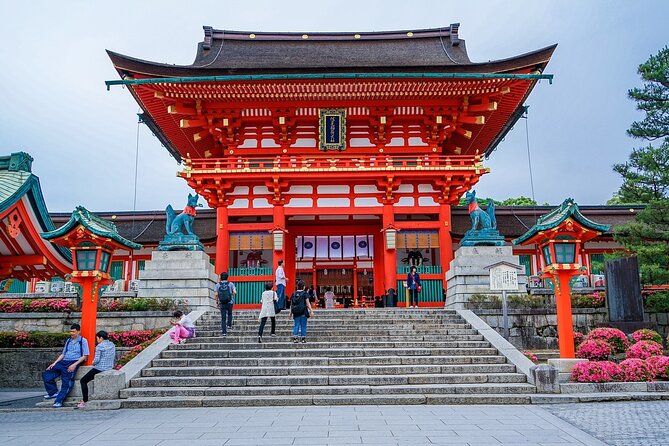
Then you shift into shopping streets and shrine tunnels. Nishiki Market is your break for snacks and browsing, and it’s a perfect place to eat without committing to a full restaurant. Fushimi Inari-taisha follows, famous for orange torii gate tunnels (free). Finally, Nijo Castle brings back feudal-fortress energy (ticketed).
Day 7 turns west to Arashiyama and rounds out with Gion. You start with Kinkaku-ji (Golden Pavilion), a temple covered in gold leaf at the top stories (ticketed). Then you walk through the Arashiyama Bamboo Forest (free), plus Tenryuji Temple (ticketed). There’s an Arashiyama observation deck listed too, plus Monkey Park Iwatayama for a different kind of viewpoint and wildlife-style experience (both ticketed).
You also get a cultural browsing stop: Arashiyama Kimono Forest is free, and it gives you a sense of modern Kyoto style without needing to buy anything. You end with Gion, listed as perfect at night for the geisha district mood, with time for a night walk and traditional food options.
Kyoto’s main consideration is crowds and walking distance. A private guide helps because you can aim for the right entrances and reduce wasted time, and Newton’s review-style praise for group awareness fits that need well.
Day 8 Osaka: Castle, Kuromon Market, Dotonbori, and teamLab Botanical Garden at night
Osaka day is where the tour leans into food energy and big city sights. You start with Osaka Castle (ticketed), a major landmark tied to Japan’s unification era. Then you visit Shitennoji, a temple complex with claims to being one of the oldest officially administered Buddhist temples (ticketed).
You also stop at Sumiyoshi Taisha Shrine, listed as the main shrine for Sumiyoshi shrines in Japan (free). After that comes the art-and-nature mix: teamLab Botanical Garden Osaka (ticketed). The schedule suggests it works especially well after dark, since the garden’s interactive visuals continue into nighttime.
Then you hit two Osaka classics. Kuromon Market is your street-food and produce browsing stretch (free). Dotonbori is next, famous for canal-side energy and neon scenes (free) and built for strolling.
This day is a strong value if you like variety. You get history in Osaka Castle and Shitennoji, then real-life eating in markets, then the city’s famous neon walk.
The main drawback: teamLab Botanical Garden is a major ticket add-on. If you skip it, the day still works, but you’ll lose one of the tour’s more modern, different-feeling experiences.
Day 9 Nara deer, Todai-ji, Kofuku-ji, and a quieter garden museum stop
Nara is a calmer day compared with Kyoto’s pace, but it’s still packed with big names. You start at Todai-ji Nigatsudo, a key structure connected to the Great Buddha Hall complex (ticketed). Then you go to Kofuku-ji, once one of Nara’s powerful Seven Great Temples (ticketed).
Next is the heart of the city’s iconic vibe: Nara Park. It’s known for free-roaming deer and famous temples, and it’s listed as free. Sanjo dori Street follows, described as a boulevard running through the center of Nara.
To balance the temples and deer with something less “crowd-attraction,” you end at Isuien Garden and Neiraku Museum (ticketed). It’s a garden-and-museum stop with a collection described as totaling over 2,000 items.
If you’re sensitive to deer attention, you might want to keep an eye on bags and snacks. Otherwise, Nara is a great reset before Kobe.
Day 10 Kobe: Nunobiki Falls, Ikuta Shrine, Chinatown, and Rokko views
Kobe is a gentle landing after the Kyoto/Osaka push. You start with Nunobiki Falls, listed as free and described as a divine falls with literary and art significance. Next is Ikuta Shrine, noted as possibly among the oldest in the country, with an “Ikuta Forest” landmark mentioned.
Then you head into city flavor with Kobe Chinatown Nankin-machi (free). It’s south of Motomachi station area and described as Kobe’s Chinatown, packed with shops and food. From there, you can ride to Rokko Cable Shita Station for views from Mount Rokko, with the Mount Rokko Cable Car listed as ticketed.
The day also includes a quieter historic house stop: Weathercock House (Former Thomas House) (ticketed). The tour ends in Kobe, with drop-off options in Kobe, Kyoto, Nara, or Osaka.
The main consideration is weather. Views from Rokko Cable Car can be disappointing in haze, so you’ll want flexibility on the day’s timing.
Who this tour fits best (and who should adjust expectations)
This tour fits best if you want a private, high-effort route that covers Tokyo, Fuji area, Hakone, Nikko, Kyoto, Osaka, Nara, and Kobe in about 10 days. It’s ideal for first-timers who don’t want to spend their vacation navigating trains, lines, and transfers.
It also works well for people who like their sightseeing explained. The reviews highlight guide Newton as cheerful, attentive, and story-focused—sharing history in a way that helps you understand what you’re seeing instead of just walking past it.
Consider a different setup if you prefer lots of free time, slower pacing, or if you strongly dislike entrance fees. While many stops are free, a long list of big-ticket sights is not included (things like Skytree, teamLab, major temples, castles, ropeways, and museum gardens).
Also, if you’re hoping for a purely outdoors trip, the schedule balances paid temples with nature stops like Lake Chuzenji and Kegon Falls, but it’s still a multi-city sightseeing plan.
Should you book this 10-day private Japan tour?
I’d book it if you’re traveling as a small group (up to five), you want a private driver to handle the moving parts, and you like a schedule with both famous landmarks and structured storytelling. The best part is that the logistics don’t eat your day, and the guide-style praise for Newton (cheerful, group-aware, story sharing) matches the exact kind of tour where that matters.
I would hesitate if your goal is a relaxed trip with lots of downtime, or if the idea of paying separate entrances every day feels stressful. In that case, you might prefer fewer regions and more time per base.
FAQ
What is the price and group size for this tour?
The price is $9,000.00 per group, and the group size can be up to 5 people.
Where does the tour start and what time does it begin?
The tour starts in Shinjuku, Tokyo, with a start time of 7:00 am.
Where does the tour end, and can I be dropped off elsewhere?
The tour ends in Kobe. On the last day, the provider says they can drop customers off in Kobe, Kyoto, Nara, or Osaka.
Is this a private tour?
Yes. It’s a private tour/activity, and only your group participates.
What’s included in the price?
Included items are an air-conditioned vehicle, private transportation, bottled water, fuel charges plus parking and toll charges, and free picture taking/video making assistance if needed.
Are tickets and entry fees included?
No. Many attractions list admission fees separately, including Tokyo Skytree, teamLab Planets TOKYO, major temples and castles, ropeways, and museum gardens.
How long is the tour each day?
Each day tour duration is listed as about 10 hours including commuting time.
Can the itinerary change during the tour?
Yes. The provider notes there’s a possibility to change the itinerary or skip stops due to traffic congestion or to avoid long waiting times in crowded situations.
Do you receive a mobile ticket?
Yes. Mobile ticket is listed as a feature.
Is the tour dependent on weather?
Yes. The experience requires good weather. If it’s canceled due to poor weather, you’ll be offered a different date or a full refund.
FAQ
What is the cancellation window?
Free cancellation is available up to 24 hours in advance of the experience for a full refund.
What attractions are specifically listed as free on the schedule?
The data includes multiple free stops such as Tsukiji Fish Market, Senso-ji Temple, Shibuya Crossing, Takeshita Street, Meiji Jingu, and several others across the days.
What are some of the major paid attractions to budget for?
Major paid items listed include Tokyo Skytree, teamLab Planets TOKYO, Mt. Fuji Panoramic Ropeway, Mt. Fuji 5th Station, Hakone Ropeway, Toshogu Shrine, Kinkakuji Temple, Nijo Castle, Osaka Castle, teamLab Botanical Garden Osaka, and Todai-ji Nigatsudo.
More Private in Tokyo
- Tokyo 6hr Private Tour with Government-Licensed Guide
★ 5.0 · 3,902 reviews - Private Tour to Mt. Fuji and Hakone (Fully Licenced Operator)
★ 5.0 · 1,910 reviews - Tokyo Customized Private Tour (Must See Places in 1 Day)
★ 5.0 · 1,499 reviews - Mount Fuji Full-Day Private Tour from Tokyo (Customizable)
★ 4.9 · 1,470 reviews - Tokyo: Private City Highlights Tour with Local Guide
★ 4.8 · 1,433 reviews
More Tours in Tokyo
- Mt Fuji and Hakone 1-Day Bus Tour Return by Bullet Train
★ 5.0 · 26,383 reviews - 1-Day Tokyo Bus Tour
★ 5.0 · 14,250 reviews - Tokyo: Shinjuku Food Tour (13 Dishes at 4 Local Eateries)
★ 5.0 · 6,603 reviews - Tokyo Mt Fuji 5th St & Hakone Cruise Bus Tour w/Bullet Train
★ 4.4 · 5,024 reviews - Flagship 2-Hours Official Street Go-Kart Tour – Tokyo Bay Shop
★ 5.0 · 4,974 reviews
More Tour Reviews in Tokyo
- Mt Fuji and Hakone 1-Day Bus Tour Return by Bullet Train
★ 5.0 · 26,383 reviews - 1-Day Tokyo Bus Tour
★ 5.0 · 14,250 reviews - Tokyo: teamLab Planets TOKYO Digital Art Museum Entry Ticket
★ 4.6 · 9,779 reviews - Mt Fuji & Hakone Cruise, Drum Show Bullet Train 1 Day from Tokyo
★ 4.0 · 7,413 reviews - Tokyo: Shinjuku Food Tour (13 Dishes at 4 Local Eateries)
★ 5.0 · 6,603 reviews
Latest Tokyo reviews off our desk






Private, compared.
 ★ 5.0Tokyo 6hr Private Tour with Government-Licensed GuideFrom $1553,902 reviews
 ★ 5.0Private Tour to Mt. Fuji and Hakone (Fully Licenced Operator)From $4971,910 reviews
 ★ 5.0Tokyo Customized Private Tour (Must See Places in 1 Day)From $1451,499 reviews
 ★ 4.9Mount Fuji Full-Day Private Tour from Tokyo (Customizable)From $3931,470 reviews
 ★ 4.8Private City Highlights Tour with Local GuideFrom $1061,433 reviews
 ★ 5.0Private Custom Tour: Tokyo in a DayFrom $1591,432 reviews
 ★ 5.0Tokyo 4hr Private Tour with Government-Licensed GuideFrom $1091,394 reviews
 ★ 5.0Tokyo Customized Private Tour: See Top Attractions in 1 DayFrom $1451,351 reviews