
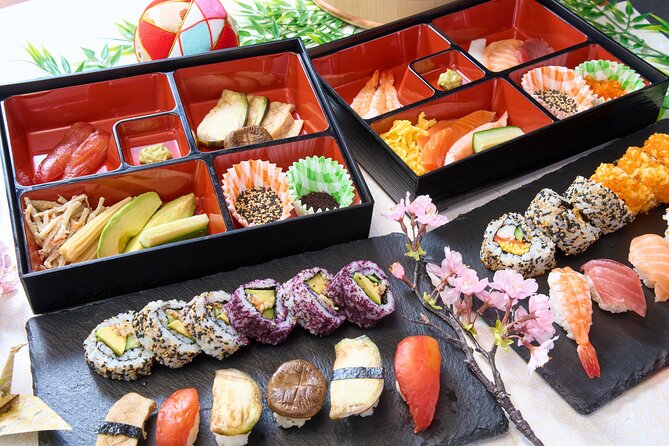
Reviewed · SHIBUYA EXPERIENCES
Best Sushi Making Class in Tokyo: Sushi Making Class Shibuya
Sushi starts with your hands. In Shibuya, this small-group class teaches you the basics of California rolls and nigiri with step-by-step help, not just a meal-and-leave experience. I love that you get guided practice plus a bit of sushi know-how, including a history quiz, so the food makes sense instead of feeling like a mystery box.
If you’ve got diet needs, you’re in good shape: vegan, vegetarian, and halal options are available on request. The vibe is friendly too—Kaito comes up in standout feedback—and you get to eat your creations at the end, so nobody leaves hungry. The only real caution: at about $31.63 per person, the value depends on whether you’re excited to pay for the lesson and experience, not just a big pile of sushi.
Key highlights worth your attention
- Max 14 people keeps the class from turning into a production line
- You’ll make California rolls first, then move to traditional nigiri
- A short sushi history quiz helps you learn while you’re still fresh
- You eat at the end with soy sauce, wasabi, and pickled ginger
- Options for vegan/vegetarian/halal are available if you request ahead
In This Review
- Shibuya Sushi Lessons That Stay Small (Max 14)
- Check-In in Nanpeidaichō: Simple Start, Clean Hands
- The Warm-Up Quiz: Sushi History You Can Actually Use
- California Roll Practice: A Friendly First Win
- Nigiri Sushi Crafting: The Technique That Changes Everything
- What You Eat at the End (So You’re Not Stuck Hungry)
- Vegan, Vegetarian, and Halal Options: Ask First, Enjoy Freely
- Price and Value: Paying for the Experience, Not a Takeaway Tray
- Location and Timing: 1.5 Hours in Shibuya
- Who This Sushi Class Fits Best (And Who Might Want Something Else)
- Should You Book Sushi Making Class Shibuya?
- FAQ
- How long is the sushi making class?
- Where does the class take place?
- What sushi types will I make?
- Are vegan, vegetarian, and halal options available?
- Is the meal included?
- What’s the group size limit?
- Do I need private transportation?
- Is there free cancellation?
Shibuya Sushi Lessons That Stay Small (Max 14)
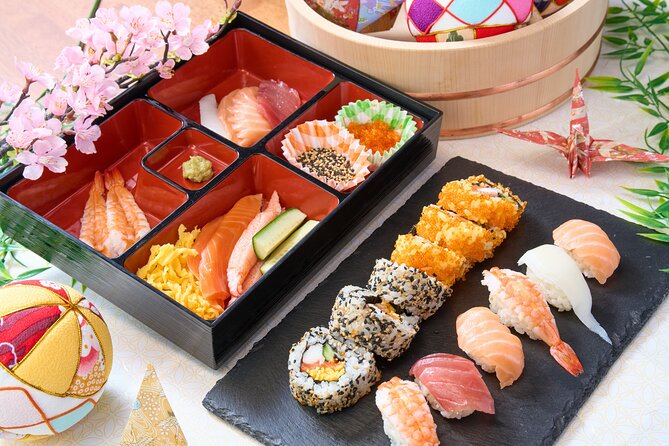
Tokyo can be intense. This is the opposite. The group size tops out at 14, which matters more than it sounds. In a bigger class, you often watch, then shape a couple of bites with weak feedback. Here, you should get closer to real coaching: how to press the rice, where to place toppings, and how to avoid the classic problem of rice that sticks to everything.
That small size also changes the feel. It’s easier to ask questions, and the instructor can notice when your roll is too tight (or too loose) before it becomes a sad rectangle. If you like learning by doing, you’ll likely enjoy the hands-on flow.
Check-In in Nanpeidaichō: Simple Start, Clean Hands
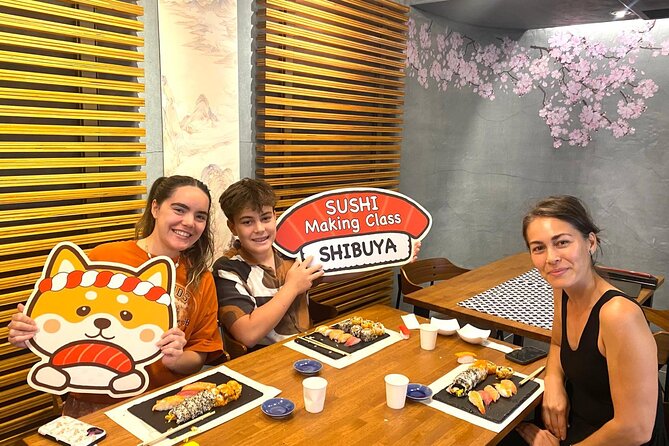
The experience begins at a meeting point in Shibuya, Nanpeidaichō, at 25 A-bandsビル (near public transportation). When you arrive, staff confirm your reservation and guide you to wash your hands before anything food touches rice.
That might sound basic, but it’s practical. Sushi relies on clean, controlled handling. The fact that they build handwashing into the start helps you concentrate on technique rather than worrying about whether your prep is acceptable.
After check-in, you’ll be ready for the first activity, which is designed to get you moving without pressure.
More booked around Shibuya Crossing
- Official Street Go-Kart in Shibuya
★ 5.0 · 3,435 reviews - Tokyo: Street Kart Experience in Shibuya
★ 4.9 · 1,484 reviews - Shibuya Meltdown Nightlife Tour: All-You-Can-Drink Bar Hopping
★ 5.0 · 1,058 reviews - Shibuya Official Street Go-Kart in Shibuya Annex
★ 5.0 · 972 reviews
The Warm-Up Quiz: Sushi History You Can Actually Use
Before you pick up rice, you get a quick quiz covering sushi history and some surprising facts. The point isn’t to test you. It’s to help you pay attention.
Why I like this: when you make sushi later, the quiz gives you mental hooks. You’re not just repeating steps. You’re connecting what you’re doing—rice style, topping balance, and presentation—to why sushi looks the way it does today.
It also helps the group settle in. If you’re traveling solo, a quiz is a low-stress way to break the ice. If you’re traveling with family, it turns the class into something more than instruction.
California Roll Practice: A Friendly First Win
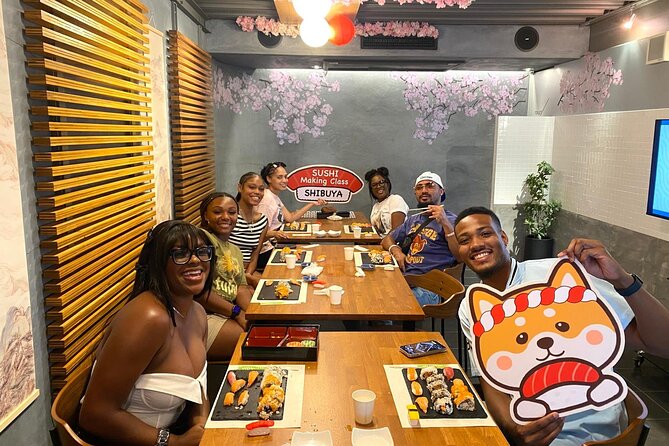
You start with making California rolls, a modern style that’s popular worldwide. This first stop is smart. It gives you a win early, and it’s less intimidating than jumping straight into traditional nigiri.
In practical terms, California rolls teach you the fundamentals:
- how to handle the rice without making it a sticky mess
- how to spread ingredients evenly
- how to roll so it holds together when you cut it
The class structure is also helpful. You’re not left alone with a cutting board and hope. Staff demonstrate techniques, then support you while you shape your own roll.
One thing to keep in mind: if you love spontaneity, you might notice a structured format in the earlier parts. Some sessions may run with clear instruction and short visual support. That’s not bad. Just know it may feel more like guided teaching than open-ended conversation.
Nigiri Sushi Crafting: The Technique That Changes Everything
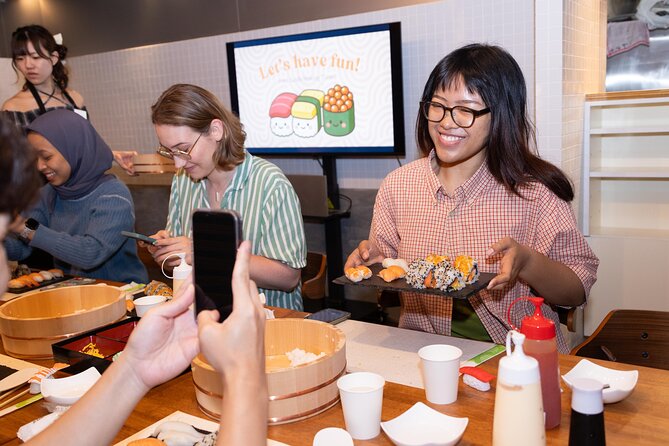
Next comes traditional nigiri, where hand-shaped rice gets topped with fish or other toppings. This is the heart of sushi craft, and it’s where technique really shows.
Nigiri is easy to describe and harder to master. The challenge isn’t just placing the topping. It’s shaping rice so it stays cohesive and forms a clean base. If the rice is too wet or pressed too hard, your pieces can lose their texture. Too light a touch, and the shape won’t hold.
This part of the class is where staff support becomes most valuable. You’ll likely get guidance on:
- shaping the rice consistently
- topping placement so it sits neatly
- handling fish/toppings in a way that keeps pieces looking good
Even if you don’t nail it perfectly, the process makes you understand why good nigiri looks effortless in restaurants. After class, you’ll probably notice details you used to ignore.
What You Eat at the End (So You’re Not Stuck Hungry)
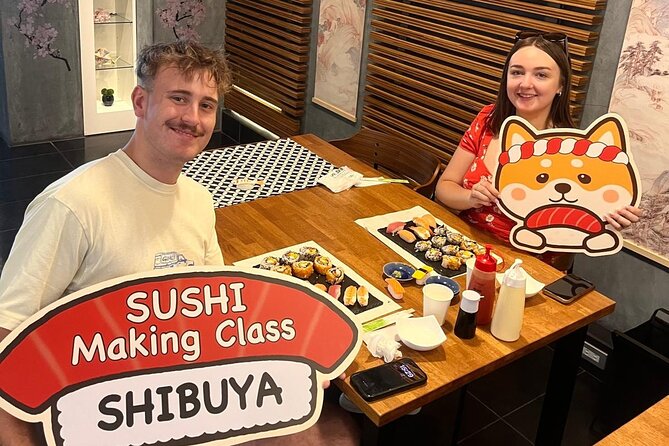
Here’s a big practical advantage: you eat your sushi at the end of the class. That matters because sushi lessons can run long enough to work up an appetite, especially if you started the day with sightseeing.
They provide the classic condiments: soy sauce, wasabi, and pickled ginger. So you can try your own creations the way you’d eat them out in Tokyo.
Also, because you make multiple types (California rolls plus nigiri), you’re not just getting a sample bite. You’ll have enough to feel like you completed something. That’s a better outcome than classes where the food portion feels like a demonstration prop.
More sushi counters to book, ranked
- Sushi Making Tokyo Roll and Authentic Japanese Sushi Class★ 5.0 · 3,971 reviews
- Tokyo: Roll and Authentic Sushi Making Class in Asakusa★ 4.9 · 1,957 reviews
- Make Sushi and Create Unforgettable Memories in Tokyo★ 5.0 · 1,413 reviews
- Tokyo: Sushi Making Class in a Happi Coat near a Famous Spot★ 4.9 · 1,377 reviews
- Tokyo: Tsukiji Fish Market Sushi Making Class with Pro Chef★ 4.9 · 506 reviews
Vegan, Vegetarian, and Halal Options: Ask First, Enjoy Freely
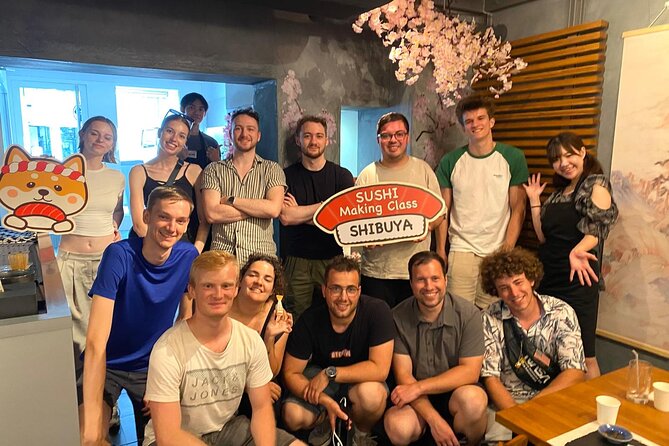
This class offers vegan, vegetarian, and halal options on request. That’s genuinely useful in Tokyo, where menu language can be tricky and where fish-based sushi is the default assumption.
What I’d recommend: request your option when booking, not the day-of. That reduces the chance of scrambling and helps the staff plan ingredients and steps so the experience still feels complete.
The bigger point: having options doesn’t turn this into a compromise class. You’re still learning rice handling and sushi assembly. The topping may change, but the technique stays the same.
Price and Value: Paying for the Experience, Not a Takeaway Tray
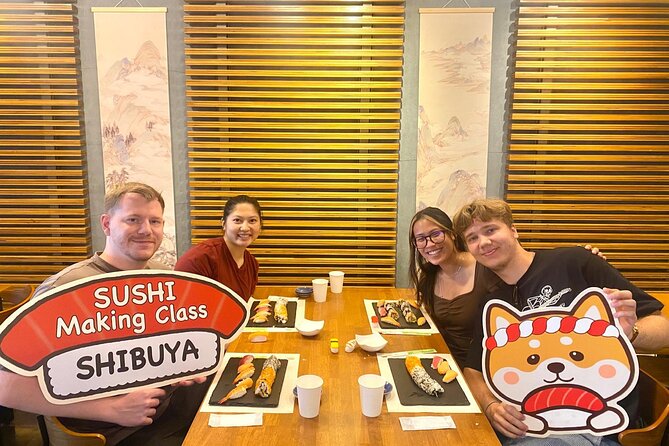
At $31.63 per person, it’s not a budget snack. One review concern is that it can feel pricey for the quantity of food you get. I get that. If your expectation is a large meal, this class won’t match that.
But if your expectation is technique plus a guided lesson, the price starts to make sense. You’re paying for:
- instructor time during hands-on shaping
- a small-group setting (max 14)
- all ingredients and meal included
- a structured path: quiz → roll → nigiri → eating
Think of it less as food purchase and more like a culinary workshop with dinner built in. For many people, that’s exactly the value sweet spot.
If you’re strict about cost per bite, you may feel underfed. If you’re there for the skills and the fun of making it yourself, you’ll likely view it as fair.
Location and Timing: 1.5 Hours in Shibuya
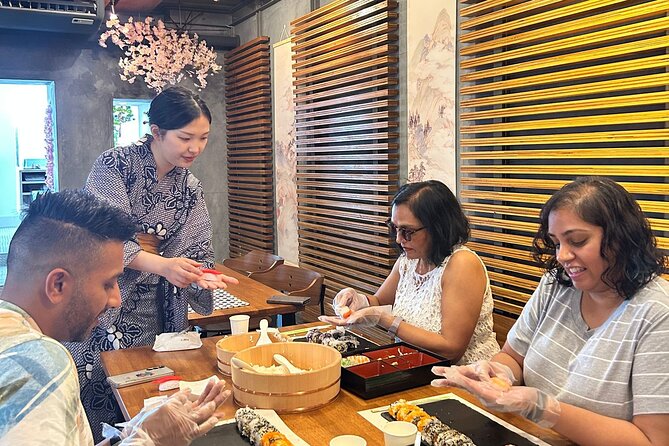
The class runs about 1 hour 30 minutes. That’s a comfortable length: long enough to learn real technique, short enough that it doesn’t hijack your whole day.
It’s also in Shibuya, and the meeting point is near public transportation. That matters for Tokyo trips, where transit logistics can quietly eat time. A class with an easy-to-find start helps you keep your schedule sane.
Also, because it ends back at the meeting point, you don’t need to plan a complicated transition afterward. You can roll right back into your sightseeing day.
Who This Sushi Class Fits Best (And Who Might Want Something Else)
This is a strong fit if you:
- want hands-on instruction in a small group
- enjoy learning food basics you can use at restaurants
- need vegan/vegetarian/halal flexibility
- like practical cultural activities early in a trip
It may be less ideal if you:
- want a big meal rather than a lesson-focused experience
- prefer a totally free-form class with lots of unscripted chatting
- are very cost-sensitive and only judge by food quantity
A nice middle ground: treat it as a skills day. You’ll come out knowing how sushi is built, not just eating sushi that someone else made.
Should You Book Sushi Making Class Shibuya?
I’d book it if you want to leave Tokyo with more than photos—if you want a real skill and a clear understanding of how sushi pieces come together. The best reason to choose it is the small-group, hands-on structure, plus the fact that you make and eat what you create.
But if you’re mainly hungry and mostly want quantity, you’ll probably compare it to a restaurant meal and feel underwhelmed. In that case, save your budget for sushi dining and keep this class for when you’re in a learning mood.
If that sounds like you, go for it.
FAQ
How long is the sushi making class?
It lasts about 1 hour 30 minutes.
Where does the class take place?
The meeting point is in Shibuya, Nanpeidaichō, at 25 A-bandsビル, Tokyo.
What sushi types will I make?
You’ll make California rolls and nigiri sushi during the class.
Are vegan, vegetarian, and halal options available?
Yes. Vegan, vegetarian, and halal options are available on request.
Is the meal included?
Yes. Meals are included, and you eat the sushi you make at the end of the class.
What’s the group size limit?
The class has a maximum of 14 travelers.
Do I need private transportation?
No private transportation is included.
Is there free cancellation?
Yes. You can cancel for a full refund up to 24 hours before the experience’s start time.
More Tour Reviews in Tokyo
- Mt Fuji and Hakone 1-Day Bus Tour Return by Bullet Train
★ 5.0 · 26,383 reviews - 1-Day Tokyo Bus Tour
★ 5.0 · 14,250 reviews - Tokyo: teamLab Planets TOKYO Digital Art Museum Entry Ticket
★ 4.6 · 9,779 reviews - Mt Fuji & Hakone Cruise, Drum Show Bullet Train 1 Day from Tokyo
★ 4.0 · 7,413 reviews - Tokyo: Shinjuku Food Tour (13 Dishes at 4 Local Eateries)
★ 5.0 · 6,603 reviews
More Sushi Counters to Book
- Sushi Making Tokyo Roll and Authentic Japanese Sushi Class
★ 5.0 · 3,971 reviews - Tokyo: Roll and Authentic Sushi Making Class in Asakusa
★ 4.9 · 1,957 reviews - Make Sushi and Create Unforgettable Memories in Tokyo
★ 5.0 · 1,413 reviews - Tokyo: Sushi Making Class in a Happi Coat near a Famous Spot
★ 4.9 · 1,377 reviews - Tokyo Sushi Making Class in Tsukiji with Professional Chef
★ 5.0 · 1,177 reviews
More Around Shibuya Crossing
- Official Street Go-Kart in Shibuya
★ 5.0 · 3,435 reviews - Tokyo: Street Kart Experience in Shibuya
★ 4.9 · 1,484 reviews - Shibuya Meltdown Nightlife Tour: All-You-Can-Drink Bar Hopping
★ 5.0 · 1,058 reviews - Shibuya Official Street Go-Kart in Shibuya Annex
★ 5.0 · 972 reviews - Tokyo: Shibuya Food Tour (13 dishes and 4 Eateries)
★ 5.0 · 770 reviews
Latest Tokyo reviews off our desk






Shibuya Experiences, compared.
 ★ 5.0Official Street Go-Kart in ShibuyaFrom $763,435 reviews
 ★ 4.9Street Kart Experience in ShibuyaFrom $741,484 reviews
 ★ 5.0Shibuya Meltdown Nightlife Tour: All-You-Can-Drink Bar HoppingFrom $1061,058 reviews
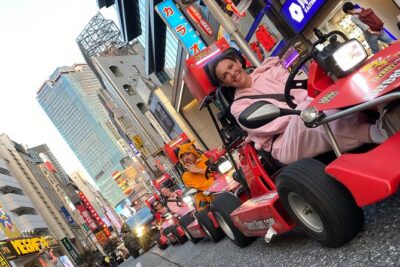 ★ 5.0Shibuya Official Street Go-Kart in Shibuya AnnexFrom $69972 reviews
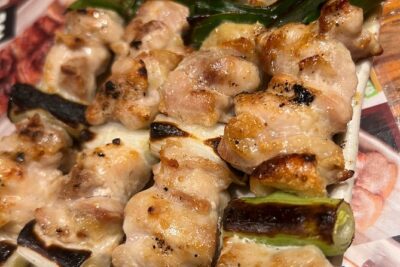 ★ 5.0Shibuya Food Tour (13 dishes and 4 Eateries)From $77770 reviews
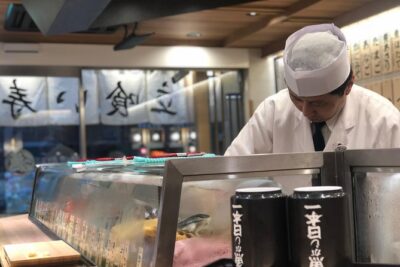 ★ 5.0Best of Shibuya Food TourFrom $217612 reviews
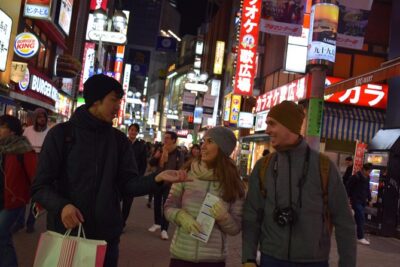 ★ 4.8Shibuya Highlights Walking TourFrom $19601 reviews
 ★ 4.7Premium Go-Kart Tour with Tower & Shibuya CrossingFrom $116528 reviews
Browse the lists this tour appears in