
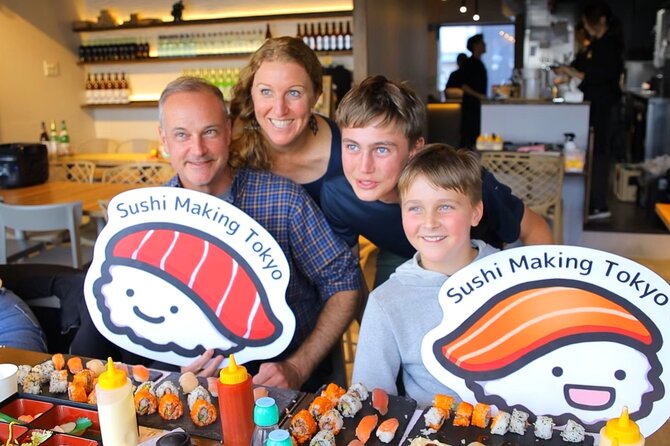
Reviewed · SUSHI MAKING CLASSES
Make Sushi and Create Unforgettable Memories in Tokyo
Sushi lessons beat most Tokyo tours. This class turns Asakusa sightseeing into a hands-on food skill you can actually use later. You’ll learn how to make both rolled sushi and nigiri, right near Sensoji Temple.
I love how the instruction stays friendly and step by step, even if sushi feels intimidating. The English support and cultural trivia help it feel less like a factory and more like a small workshop.
One possible drawback: the class is designed for beginners and families, so if you want a high-level, chef-style masterclass, you may feel it stays more basics-first. And while the max group size is 30, it can still feel busy when everyone’s rolling at once.
In This Review
- Key highlights at a glance
- Asakusa and sushi class: a Tokyo pairing that feels right
- The real schedule: rice, shaping, rolling, then the best part
- Nigiri and maki: beginner steps that still feel satisfying
- A practical tip you’ll hear in class
- English instruction that stays calm under pressure
- You eat your own sushi: fresh ingredients and real portion value
- Dietary needs: what you can plan for
- Photo-ready results
- Price and value: does $79.59 make sense in Tokyo?
- Who should book this class, and who might not love it
- Quick before-you-go checklist for a smoother session
- Should you book Sushi Making Tokyo?
- FAQ
- How long is the sushi making class?
- Do I need prior sushi making experience?
- What’s included in the price?
- Is hotel pickup included?
- Where do I meet for the class?
- Can the class accommodate dietary restrictions like gluten-free or avoiding raw fish?
Key highlights at a glance
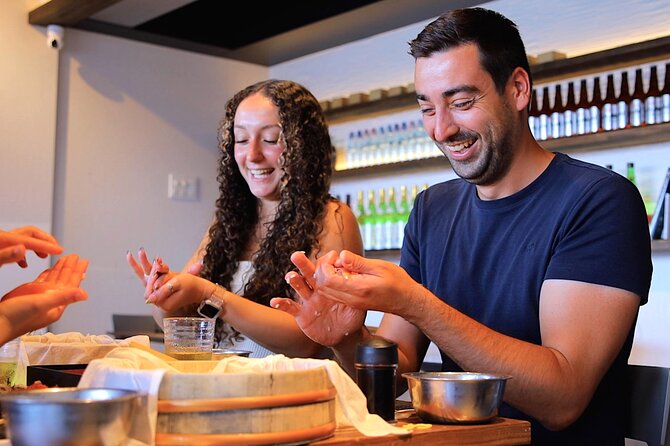
- Asakusa meeting point near Sensoji Temple makes it easy to tie into your day
- Nigiri and maki in the same session, so you leave with real range
- English-speaking instructors help the steps land clearly
- You eat what you make, with fresh ingredients and generous portions
- Accommodations you can ask about, including gluten-free and avoiding raw fish
- Small sub-groups inside a max-30 class, so you can get help
Asakusa and sushi class: a Tokyo pairing that feels right
Asakusa is the part of Tokyo where you can still feel the old rhythm. The meeting point is at 2-chōme-17-9 Kaminarimon in Taito City, just a short walk from the Sensoji Temple area. That location matters because you can start your day with temple sights, then do something practical and delicious before you head elsewhere.
I like that the class is a focused 1 hour 40 minutes activity. It’s long enough to learn technique, but short enough that it won’t hijack your whole afternoon. For many people, it’s one of the best ways to turn a neighborhood stop into a lasting Tokyo story.
Also, it uses a mobile ticket, so you’re not wasting time with paper confirmations. Bring your phone, and you’re good.
More sushi counters to book, ranked
- Tokyo: Roll and Authentic Sushi Making Class in Asakusa
★ 4.9 · 1,957 reviews - Make Sushi and Create Unforgettable Memories in Tokyo
★ 5.0 · 1,413 reviews - Tokyo: Sushi Making Class in a Happi Coat near a Famous Spot
★ 4.9 · 1,377 reviews - Tokyo Sushi Making Class in Tsukiji with Professional Chef
★ 5.0 · 1,177 reviews
The real schedule: rice, shaping, rolling, then the best part
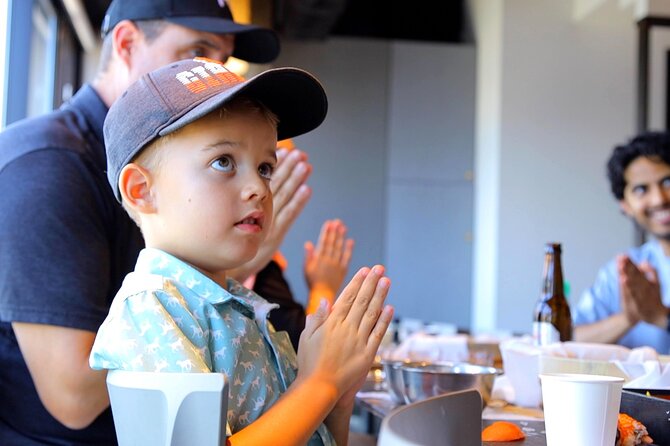
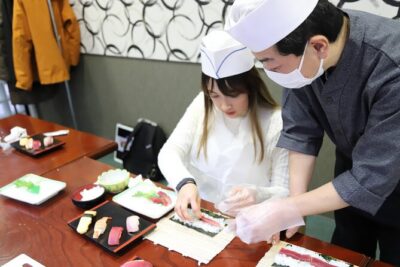
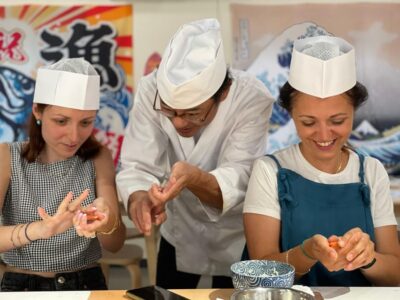
This experience is paced like a hands-on workshop. You’re not just watching. You’re making sushi in stages, with the instructor guiding your hands as you go.
Expect a first section that covers what sushi rice should feel like and how to handle it without it turning into a sticky mess. Then the class moves into forming nigiri and building rolled pieces. By the time you’re ready to eat, you’ve usually practiced enough that you can see the improvement right away.
The class ends back at the meeting point, so you don’t have to plan your return route from a random neighborhood. That is a small thing that adds up when your schedule is already packed.
Nigiri and maki: beginner steps that still feel satisfying
Nigiri looks simple until you try it. The instruction breaks down the steps so you’re not left guessing how hard to press or how to shape the rice. Even kids can manage it with the right pacing, and the class is built to make that happen.
Rolling maki is the other big skill. You’ll learn how to assemble the roll so it holds together, then you’ll cut it into pieces. Some people enjoy practicing one easier style first, then moving to a more involved roll once they feel confident.
From what you’ll see people making, the class covers more than just one “boring” roll. There are mentions of inside-out styles and temari-style sushi in different moments, depending on the session. Either way, the key takeaway is technique: you’re learning how sushi components come together, not just copying a finished product.
A practical tip you’ll hear in class
If you decide to order drinks like sake, keep in mind it may cost extra. One helpful note: a sake set is not the same thing as a sake-only drink, so double-check what you’re ordering before paying.
English instruction that stays calm under pressure
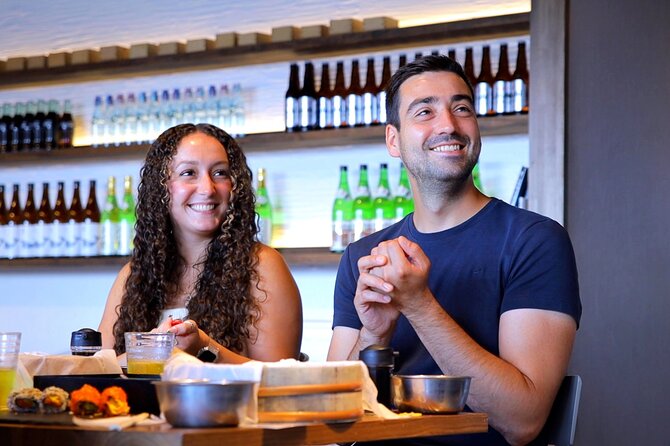
What makes this class work for non-Japanese speakers is the tone. The instructors are friendly, and the directions are clear enough that you don’t need sushi jargon to follow along.
You’ll likely meet different instructors across dates. Some names mentioned include Rino, Yuto, Ken, Sato, Momo, Yui, Emi, Madoka, Yusuke, Yuhi, Kento, Matti, and Ayu. What matters isn’t the exact name—it’s the fact that they guide in English and help you fix mistakes quickly.
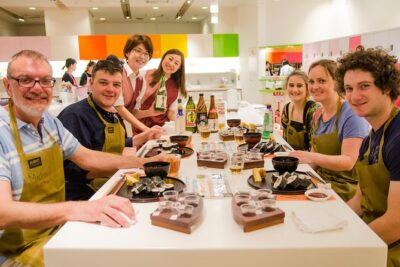
Group size is capped at 30, which is good, but it can still feel like a crowd when everyone is rolling at once. Many classes break into smaller sub-groups so you can get closer attention. That setup is ideal for questions, especially for first-timers who don’t know what they’re doing with their hands yet.
And yes, the vibe is playful. People talk about the instructors being funny, warm, and attentive. That matters because sushi is one of those activities where confidence is half the battle.
- Tokyo: Shinjuku Food Tour (13 Dishes at 4 Local Eateries)★ 5.0 · 6,603 reviews
- Tokyo Mt Fuji 5th St & Hakone Cruise Bus Tour w/Bullet Train★ 4.4 · 5,024 reviews
- Flagship 2-Hours Official Street Go-Kart Tour – Tokyo Bay Shop★ 5.0 · 4,974 reviews
- From Tokyo: Mount Fuji Full-Day Sightseeing Trip★ 4.5 · 4,970 reviews
- Tokyo: Hop-On Hop-Off Sightseeing Bus Ticket★ 3.9 · 4,207 reviews
You eat your own sushi: fresh ingredients and real portion value
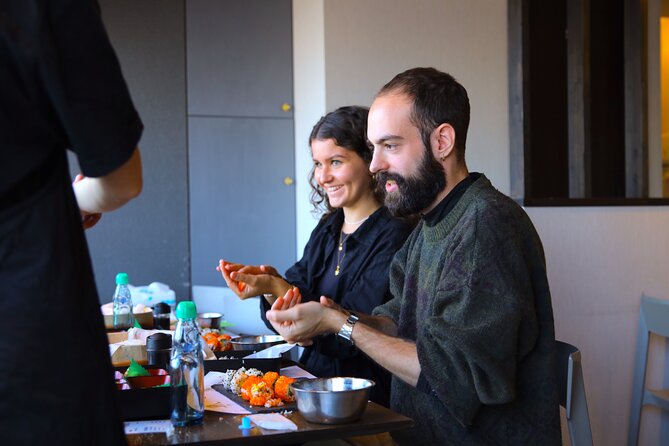
This is not a “watch and snack” class. You eat what you make. That turns the lesson from an entertainment product into a meal with a purpose.
The ingredients are set up in an organized way, which saves you time and helps you focus on technique. People specifically mention the fish and ingredients feeling fresh and the portion being filling. If you’re thinking, I’ll pay for a meal anyway, this class often makes that logic work better because you’re paying for instruction plus food, not just food.
Dietary needs: what you can plan for
The class includes meal components, and there are options that avoid raw fish. Some people also mention a gluten-free option. There’s also at least one example of a shellfish allergy being accommodated without changing the overall portion size.
The most practical approach for you: if you have dietary restrictions, mention them during booking or as early as possible. That way, the kitchen can match you to the right substitute ingredients.
Photo-ready results
You’ll have the chance to take photos during the class after you finish your sushi. And the final look matters. Temari-style sushi and neatly cut rolls photograph well, so your output feels like something you can share, not just something you quickly eat.
Price and value: does $79.59 make sense in Tokyo?
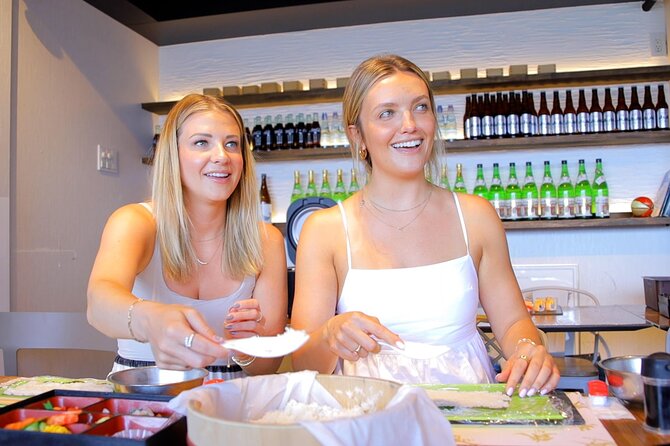
At $79.59 per person, this is not the cheapest thing you can do in Tokyo. But it’s also not just a meal.
You’re paying for:
- An English-speaking instructor
- Ingredients for the sushi you make
- The meal you eat
- A structured, step-by-step experience (so you’re not wandering aimlessly with a kit)
In Tokyo, a decent sushi meal can run high, especially if you go sit-down. Here, the “value math” is that you get both the meal and the skill. If you’re the type who likes to learn one hands-on thing per trip, this class fits that pattern well.
The other value point is location. It’s near Sensoji Temple and close to public transport, which reduces the hidden costs of time and transfers. There’s no hotel pickup included, so you’ll want to plan to reach the address on your own.
Who should book this class, and who might not love it
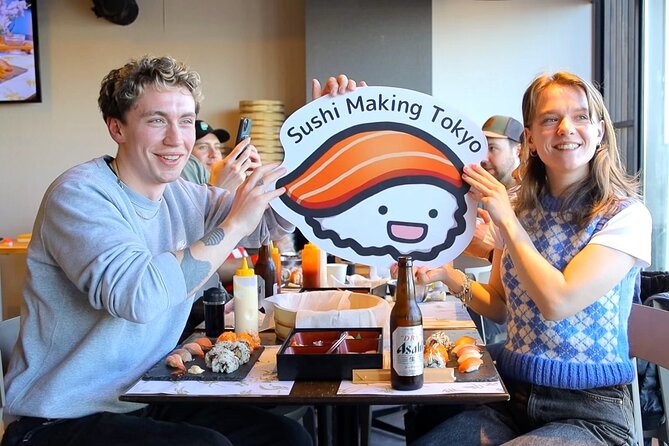
This class is ideal if you’re traveling with:
- Teens who want something hands-on
- Solo travelers who want an easy social activity
- Families with kids who need a structured, guided activity
- Anyone who feels stuck in “eat-only” mode in Tokyo
It’s also a good fit if you want to go beyond generic tourist food. Sushi making teaches you about rice handling, rice texture, shaping, and roll construction. Even if you never become a home sushi pro, you’ll understand what makes sushi feel right.
One caveat: the experience is beginner-friendly by design. One negative note points to instruction that may not satisfy people expecting a more advanced, professional masterclass level. If your goal is chef-level technique, you might be happier with a more specialized course.
Quick before-you-go checklist for a smoother session
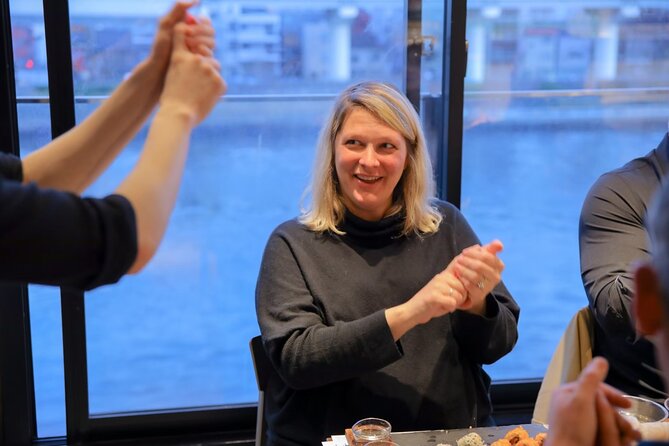
A few things will help your afternoon flow:
- Wear clothes you don’t mind getting a little rice on. Sushi is messy in the fun way.
- Arrive a few minutes early so you can settle in before the first steps.
- If you plan to take sake or other drinks, expect additional charges for alcohol.
- If you have allergies or you avoid raw fish, make sure you’ve communicated that clearly ahead of time.
Service animals are allowed, and the location is near public transportation. That makes it easier to fit into a day that includes temples and wandering in Asakusa.
Should you book Sushi Making Tokyo?
Yes, I’d book it if you want a Tokyo activity that ends with you eating your own work. The price gets you English instruction, fresh ingredients, and a meal with real portion value. The Asakusa location also helps because you can wrap it around a temple visit without complicated logistics.
Skip it only if you’re chasing an advanced, chef-level technique session. If you’re there to learn the basics well and go home with sushi skills you can repeat, this class fits the bill.
FAQ
How long is the sushi making class?
The experience runs about 1 hour 40 minutes.
Do I need prior sushi making experience?
No experience is needed. The instructors guide you step by step, in English.
What’s included in the price?
You get an English-speaking instructor plus the ingredients for the class and the meal.
Is hotel pickup included?
No. Hotel pickup and drop-off are not included.
Where do I meet for the class?
The meeting point is 2-chōme-17-9 Kaminarimon, Taito City, Tokyo 111-0034, Japan. The class ends back at the meeting point.
Can the class accommodate dietary restrictions like gluten-free or avoiding raw fish?
There are options mentioned for gluten-free needs, and there are also options that do not involve raw fish. Shellfish allergy accommodation has also been mentioned, so it’s worth sharing details in advance.
More Tour Reviews in Tokyo
- Mt Fuji and Hakone 1-Day Bus Tour Return by Bullet Train
★ 5.0 · 26,383 reviews - 1-Day Tokyo Bus Tour
★ 5.0 · 14,250 reviews - Tokyo: teamLab Planets TOKYO Digital Art Museum Entry Ticket
★ 4.6 · 9,779 reviews - Mt Fuji & Hakone Cruise, Drum Show Bullet Train 1 Day from Tokyo
★ 4.0 · 7,413 reviews - Tokyo: Shinjuku Food Tour (13 Dishes at 4 Local Eateries)
★ 5.0 · 6,603 reviews
More Sushi Counters to Book
- Sushi Making Tokyo Roll and Authentic Japanese Sushi Class
★ 5.0 · 3,971 reviews - Tokyo: Roll and Authentic Sushi Making Class in Asakusa
★ 4.9 · 1,957 reviews - Tokyo: Sushi Making Class in a Happi Coat near a Famous Spot
★ 4.9 · 1,377 reviews - Tokyo Sushi Making Class in Tsukiji with Professional Chef
★ 5.0 · 1,177 reviews - Tsukiji Fish Market Guided Tour and Sushi Making with Pro Chef
★ 5.0 · 775 reviews
Latest Tokyo reviews off our desk






Sushi Making Classes, compared.
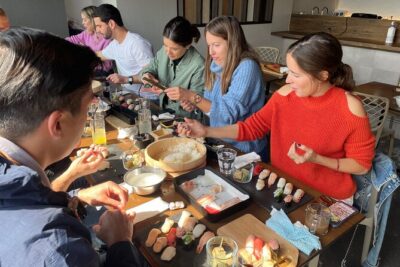 ★ 5.0Sushi Making Tokyo Roll and Authentic Japanese Sushi ClassFrom $593,971 reviews
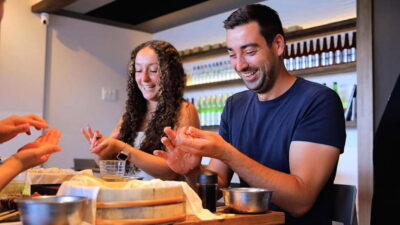 ★ 4.9Roll and Authentic Sushi Making Class in AsakusaFrom $581,957 reviews
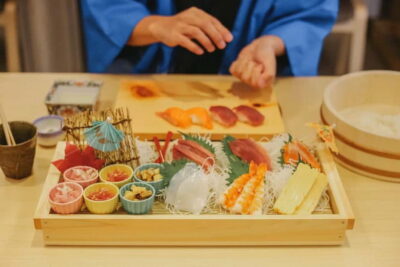 ★ 4.9Sushi Making Class in a Happi Coat near a Famous SpotFrom $421,377 reviews
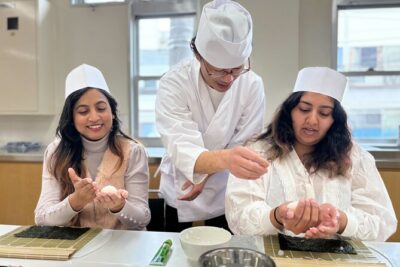 ★ 5.0Tokyo Sushi Making Class in Tsukiji with Professional ChefFrom $491,177 reviews
 ★ 5.0Tsukiji Fish Market Guided Tour and Sushi Making with Pro ChefFrom $104775 reviews
 ★ 4.9Tsukiji Fish Market Sushi Making Class with Pro ChefFrom $63506 reviews
 ★ 5.0Tokyo Tsukiji Fish Market Tour and Sushi Making LessonFrom $99390 reviews
 ★ 4.9Sushi Making ClassFrom $67390 reviews
Browse the lists this tour appears in