
Reviewed · SHINJUKU FOOD & BAR TOURS
Japanese Home Styled Cooking Class in or around Shinjuku, Tokyo
Japanese home cooking in Tokyo is hands-on and real. The appeal here is simple: you learn home-style Japanese dishes and eat them right away, with recipe sheets to bring the flavors home.
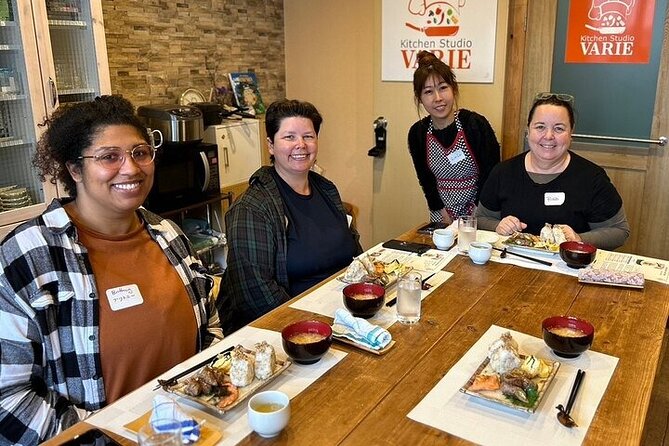
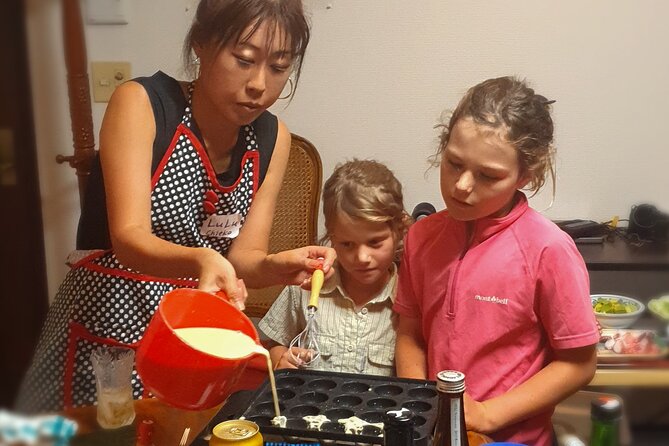
You’ll do this in or around Shinjuku with a group that stays small (up to 12), which makes it easier to ask questions and actually follow what’s happening at the counter. In the past, hosts and helpers such as Lulu, Erica, and Chieko-San have been praised for keeping the experience friendly and easy to understand.
One thing to consider: menu choices can be restricted. If you’re not the only group attending that day, you might not be able to pick from all options, so check how your booking is handled before you’re counting on a specific menu.
In This Review
- Key highlights to know before you go
- Japanese Home-Style Cooking in Shinjuku: What You Actually Learn
- The Yoyogi Meeting Point: Getting Started Without Stress
- Choosing Your Menu Option: Simple at Booking, Tricky on Busy Days
- From Prep to Plate: How the Class Usually Unfolds
- Dishes You’ll Recognize, Techniques You Can Recreate
- The Cultural Notes That Actually Help You Cook
- The Recipe Sheets: Your Take-Home Advantage
- Price and Value: What $89.99 Really Buys You
- Practical Notes That Affect Your Evening
- Who This Cooking Class Suits Best
- Should You Book This Shinjuku Cooking Class?
- FAQ
- How many dishes will I cook?
- How long is the experience?
- What’s included in the price?
- Can I choose the menu when I book?
- What if I have food allergies?
- How many people are in the group?
- Where does the class meet, and does it end nearby?
- Is transportation included?
- Is there free cancellation?
Key highlights to know before you go
- Hands-on cooking with tools and ingredients included so you can focus on learning, not shopping
- 3–4 authentic dishes that Japanese people actually eat
- Menu options at booking time (with a note that choices may depend on how many groups attend)
- English-friendly teaching and lots of helper support, with names like Lulu, Erica, and Chieko-San showing up in guidance
- Small group size (max 12) for better interaction and less waiting
- Recipe sheets to take home, so the class keeps paying off after your flight
Japanese Home-Style Cooking in Shinjuku: What You Actually Learn
This class is built around a very practical idea: if you can cook Japanese comfort food at home, you’ll remember Tokyo every time you cook it. You’ll prepare 3–4 dishes that are designed to feel doable, not like a cooking show stunt.
What makes it especially useful is that it’s not just technique for technique’s sake. You’ll also get context about Japanese cuisine and the culture behind it, which helps you understand why ingredients are handled the way they are. That knowledge matters when you try to recreate the flavors later with what you can find locally.
If you’re craving the Tokyo experience but don’t want another meal where you just watch and guess, this is a strong pick. You’re hands-on, you’re working with real ingredients, and you’re eating what you make together.
More Shinjuku plates and pours our readers rated
- Tokyo: Shinjuku Food Tour (13 Dishes at 4 Local Eateries)
★ 5.0 · 6,603 reviews - Tokyo Bar Hopping Tour in Shinjuku (All-You-Can-Drink + Dinner)
★ 5.0 · 3,587 reviews - Tokyo: Shinjuku Food Tour (15 Dishes and 4 Eateries)
★ 4.9 · 2,033 reviews - Best of Shinjuku: Izakaya Food Tour (4 Stops, 14+ Tastings)
★ 5.0 · 1,863 reviews
The Yoyogi Meeting Point: Getting Started Without Stress
The meeting point is in Yoyogi (Shibuya), Tokyo at 2-chōme-5-1 Yoyogi, Tokyo 151-0053. The good news is it’s near public transportation, which helps on a city day when you don’t want to waste time transferring.
Plan to arrive a little early so you can settle in, get oriented, and start the food prep without feeling rushed. The class runs about 2 hours 30 minutes, so once you’re inside, you’ll move at a steady pace from ingredient prep to cooking and then eating.
Also note the practical bits: this uses a mobile ticket, so have your ticket ready on your phone when you arrive.
Choosing Your Menu Option: Simple at Booking, Tricky on Busy Days
When you book, you can select one of four different menu options. Ingredients are prepared ahead of time, which keeps the class flowing and reduces the wait while you hunt for supplies.
Here’s the catch that can affect expectations: menu selection may depend on group size. If you or your group is the only attendee(s) that day, you’re more likely to be able to choose freely. If another group also attends, the menu options might get limited.
So if there’s a dish you really want, don’t just rely on the first click and assume it’s guaranteed. In your booking check, look for the exact wording about menu availability and how it’s handled when there are multiple groups.
From Prep to Plate: How the Class Usually Unfolds
The structure is straightforward, and that’s a compliment. This isn’t the kind of class where you spend half the time waiting for someone to explain something you don’t need. You’ll get cooking tools and ingredients, and then you’ll do the work with guidance.
Typically, you’ll start with prep: setting up ingredients, learning what’s important for the dish you’re making, and getting basic techniques right. Since ingredients are prepared beforehand, you won’t be stuck doing heavy chopping for an hour before anything resembles a finished meal.
As you cook, expect a supportive setup where helpers circulate. Past participants specifically praised the presence of multiple helpers who help things run smoothly and keep each station on track. If you like a class where you can ask a quick question and get a clear answer without feeling like you’re slowing everyone down, this approach is a big plus.
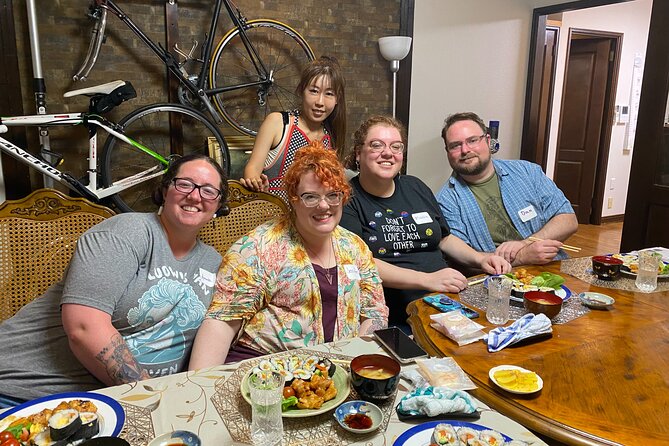
Then comes the best part: you eat what you cooked together. The meal is not an afterthought. It’s part of the learning loop, so you can judge seasoning and texture while the food is still fresh.
And yes, photos tend to be part of the experience. One review mentioned that the team took lots of pictures, which matters if you want proof you learned more than just how to say delicious in Japanese.
Dishes You’ll Recognize, Techniques You Can Recreate
The class is designed around popular home-style Japanese dishes that make sense to cook in a group setting. You’ll learn to cook 3–4 dishes, which is a good range: enough variety to feel like a real meal, but not so many that you never master anything.
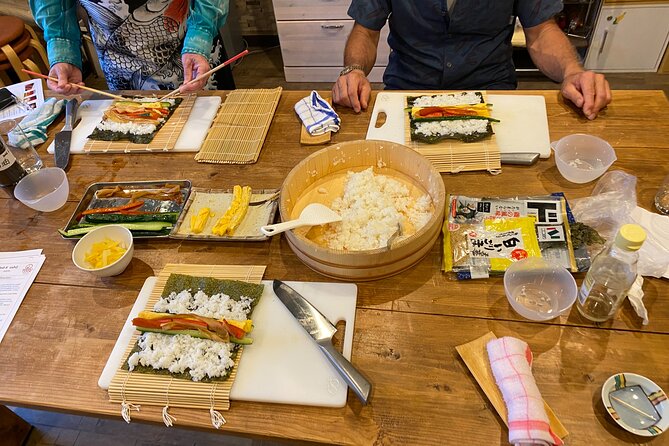
Two dish examples came through in participant experiences: sushi and a green bean salad. Those are good clues about the style of teaching. Sushi can teach rice handling and basic assembly steps, while a green bean salad highlights balance in dressing and seasoning.
Even if your exact menu is different, the learning pattern is similar: you’ll practice core Japanese flavors and handling. That’s where the class pays off later. When you cook again at home, you’ll recognize the ingredients and understand what each step is trying to accomplish.
If you enjoy food that feels familiar when you’ve eaten it in Japan but still challenging to reproduce, this is a practical bridge. You’ll leave with a stronger sense of Japanese taste than you’d get from reading a recipe alone.
Readers also shortlisted these Tokyo bookings:
- Ramen & Gyoza Cooking Class in Tokyo with Local Supermarket Visit★ 5.0 · 823 reviews
- Tokyo: Easy Ramen Cooking Experience in Kabukicho, Shinjuku★ 4.6 · 321 reviews
- Ramen and Sushi Cooking Class with Sake Pairing Set in Tokyo★ 5.0 · 291 reviews
- Tokyo: Wagyu and 7 Japanese Dishes Cooking Class★ 4.9 · 273 reviews
- Tokyo Washoku 4-hour Cooking Class: From Market to Table★ 5.0 · 253 reviews
The Cultural Notes That Actually Help You Cook
You’re not just following steps. You’ll also learn about the history and culture behind Japanese cuisine, and the aim is to make the food feel less random.
Why this is valuable: Japanese home cooking often relies on small decisions. The balance of salty, sweet, and tangy notes, the way textures contrast, and the role of simple ingredients all matter. Cultural context helps you understand why a dish tastes the way it does, even if your local ingredients aren’t identical to what you had in Tokyo.
This part is also what makes the experience more than a one-off evening. If you’re the type who likes to understand what you’re eating, these notes make the cooking experience stick in your memory.
The Recipe Sheets: Your Take-Home Advantage
One of the most practical takeaways is that you’ll get recipe sheets to take home. This is more useful than souvenirs that only look pretty in a drawer.
Think of them as a bridge between your hands-on learning in Tokyo and your real-world cooking at home. You’ll have a reference for ingredient amounts, basic steps, and the overall structure of the dishes you made.
If you’ve ever tried to recreate a travel meal later, you know the problem: you remember the feeling, but the details fade. Recipe sheets solve that. They keep the class alive past your return flight.
Price and Value: What $89.99 Really Buys You
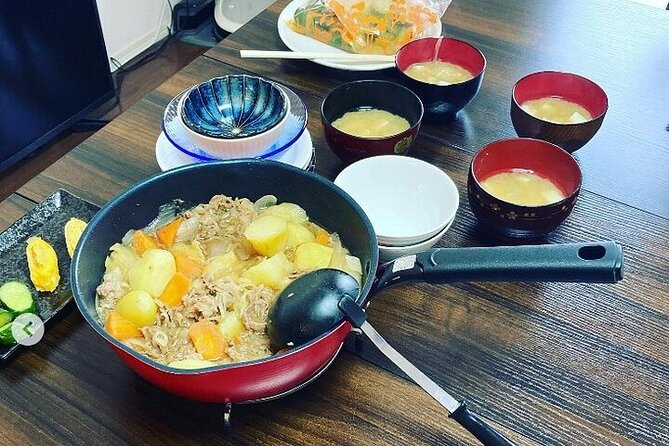
At $89.99 per person, this isn’t the cheapest thing you can do in Tokyo. But it’s also not overpriced when you look at what’s included.
You get:
- All fees and taxes
- Cooking tools and ingredients
- A guided, hands-on class that produces a shared meal
- Recipe sheets you can use later
In other words, you’re paying for instruction, ingredients, and a structured cooking evening, not just a ticket to watch someone else cook. For a hands-on activity, that’s a fair exchange—especially with a small group size that helps you get support while you’re learning.
Also, this experience has a track record of high satisfaction, with an overall rating of 4.8 and a strong recommendation rate. That tends to matter because cooking classes rise or fall on whether the guidance is clear and whether the experience stays friendly.
One more value note: the class tends to book up, with an average booking window around 37 days in advance. If you want a specific time slot, it’s smart to plan ahead.
Practical Notes That Affect Your Evening
Before you go, here are the practical realities that will shape your experience.
First, timing. The class is about 2 hours 30 minutes, so it works well as an evening plan after you’ve done a daytime neighborhood walk. Just don’t book something tight right after, since you’ll want time to eat, relax, and pack up your recipe sheets.
Second, allergies. If you have food allergies, you should let the organizers know in advance. They say they can discuss the menu and what options will be available. That’s important, because Japanese cuisine includes common ingredients that can be hard to swap without guidance.
Third, transportation. Private transportation is not included, but the meeting point is near public transportation. So budget your time for the subway or rail system rather than expecting a pickup.
And finally, weather and scheduling. The experience requires good weather, and there’s also a minimum traveler requirement. If something changes, you’ll be offered another date or a full refund, depending on the situation.
Who This Cooking Class Suits Best
This class is a great fit if you want:
- A hands-on way to understand Japanese food beyond restaurants
- A small-group setting where questions are actually manageable
- A practical souvenir in the form of recipe sheets
- A meal you can realistically repeat at home
It may be less ideal if you’re looking for a private, tailored experience. Even though it stays small, it’s still a shared class. Also, your menu preference might be limited if multiple groups attend the same session.
If you’re traveling as a couple or small group and want a memorable evening that isn’t just walking and shopping, this is one of those Tokyo experiences that makes the city feel personal.
Should You Book This Shinjuku Cooking Class?
If you like learning by doing, I’d say yes. This class checks the key boxes: it’s small, it’s hands-on, you cook multiple dishes, and you take home recipe sheets that help you recreate what you learned.
Book it especially if you:
- Want an authentic home-style cooking experience in Tokyo
- Like getting cultural context alongside technique
- Prefer guided help over guessing from a recipe online
- Are traveling on a schedule and want a plan with a set duration
Skip it or be cautious if:
- You’re depending on a specific menu and your day may include other groups
- You have complex allergies and want maximum confirmation of substitutions before committing
- You’re trying to minimize costs and would rather spend on meals you can repeat elsewhere
Overall, this is one of the better ways to turn a Tokyo memory into something you can actually cook again. And that’s the rare souvenir that keeps working long after you’re home.
FAQ
How many dishes will I cook?
You’ll prepare 3–4 dishes during the class.
How long is the experience?
It takes about 2 hours 30 minutes to cook everything and then enjoy the meal you made.
What’s included in the price?
The price includes all fees and taxes, plus cooking tools and ingredients.
Can I choose the menu when I book?
Yes. You can select one of four menu options when booking, but menu choices may be limited depending on whether other groups attend the same class.
What if I have food allergies?
Let the organizers know in advance. You can discuss the menu and what options will be available to you.
How many people are in the group?
The class has a maximum group size of 12 travelers.
Where does the class meet, and does it end nearby?
The meeting point is 2-chōme-5-1 Yoyogi, Shibuya, Tokyo 151-0053, Japan, and the activity ends back at the meeting point.
Is transportation included?
Private transportation is not included, but the meeting point is stated to be near public transportation.
Is there free cancellation?
Yes. You can cancel up to 24 hours in advance for a full refund.
More Cooking Classes in Tokyo
- Ramen & Gyoza Cooking Class in Tokyo with Local Supermarket Visit
★ 5.0 · 823 reviews - Tokyo: Easy Ramen Cooking Experience in Kabukicho, Shinjuku
★ 4.6 · 321 reviews - Ramen and Sushi Cooking Class with Sake Pairing Set in Tokyo
★ 5.0 · 291 reviews - Tokyo: Wagyu and 7 Japanese Dishes Cooking Class
★ 4.9 · 273 reviews - Tokyo Washoku 4-hour Cooking Class: From Market to Table
★ 5.0 · 253 reviews
More Tour Reviews in Tokyo
- Mt Fuji and Hakone 1-Day Bus Tour Return by Bullet Train
★ 5.0 · 26,383 reviews - 1-Day Tokyo Bus Tour
★ 5.0 · 14,250 reviews - Tokyo: teamLab Planets TOKYO Digital Art Museum Entry Ticket
★ 4.6 · 9,779 reviews - Mt Fuji & Hakone Cruise, Drum Show Bullet Train 1 Day from Tokyo
★ 4.0 · 7,413 reviews - Tokyo: Shinjuku Food Tour (13 Dishes at 4 Local Eateries)
★ 5.0 · 6,603 reviews
More Shinjuku Food and Drink
- Tokyo: Shinjuku Food Tour (13 Dishes at 4 Local Eateries)
★ 5.0 · 6,603 reviews - Tokyo Bar Hopping Tour in Shinjuku (All-You-Can-Drink + Dinner)
★ 5.0 · 3,587 reviews - Tokyo: Shinjuku Food Tour (15 Dishes and 4 Eateries)
★ 4.9 · 2,033 reviews - Best of Shinjuku: Izakaya Food Tour (4 Stops, 14+ Tastings)
★ 5.0 · 1,863 reviews - Tokyo: Shinjuku Local Bar and Izakaya Guided Walking Tour
★ 4.9 · 1,794 reviews
Latest Tokyo reviews off our desk






Shinjuku Food & Bar Tours, compared.
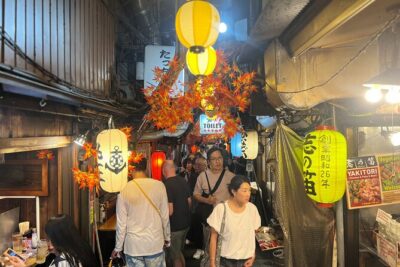 ★ 5.0Shinjuku Food Tour (13 Dishes at 4 Local Eateries)From $866,603 reviews
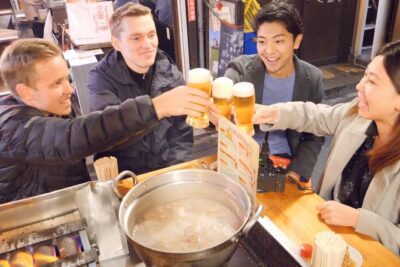 ★ 5.0Tokyo Bar Hopping Tour in Shinjuku (All-You-Can-Drink + Dinner)From $1063,587 reviews
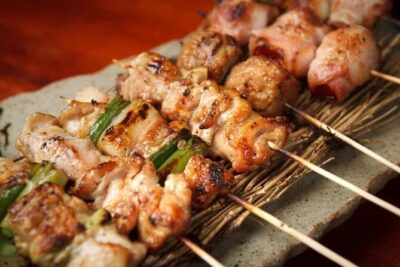 ★ 4.9Shinjuku Food Tour (15 Dishes and 4 Eateries)From $852,033 reviews
 ★ 5.0Best of Shinjuku: Izakaya Food Tour (4 Stops, 14+ Tastings)From $921,863 reviews
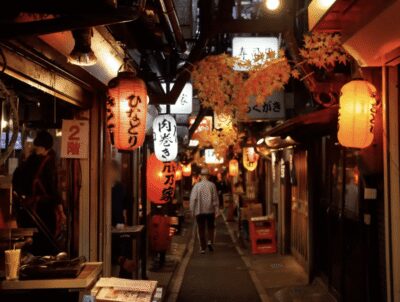 ★ 4.9Shinjuku Local Bar and Izakaya Guided Walking TourFrom $341,794 reviews
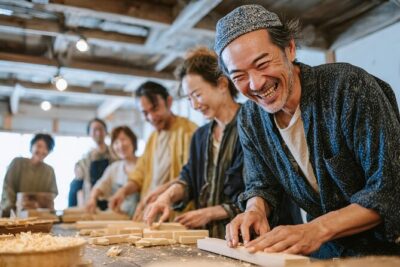 ★ 5.0Tokyo Shinjuku Chopsticks Making ClassFrom $201,763 reviews
 ★ 5.0Tokyo Shinjuku Sumo Show & Experience with PhotoFrom $791,750 reviews
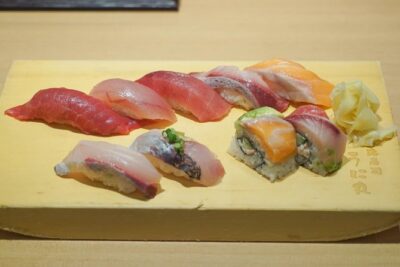 ★ 5.0Tokyo Night Foodie Tour in Shinjuku – Seasonal Sushi, Wagyu BeefFrom $1111,161 reviews
Browse the lists this tour appears in