
Reviewed · SHOW
Japanese Traditional Music Show in Tokyo
Some songs you hear once, then you keep replaying them.
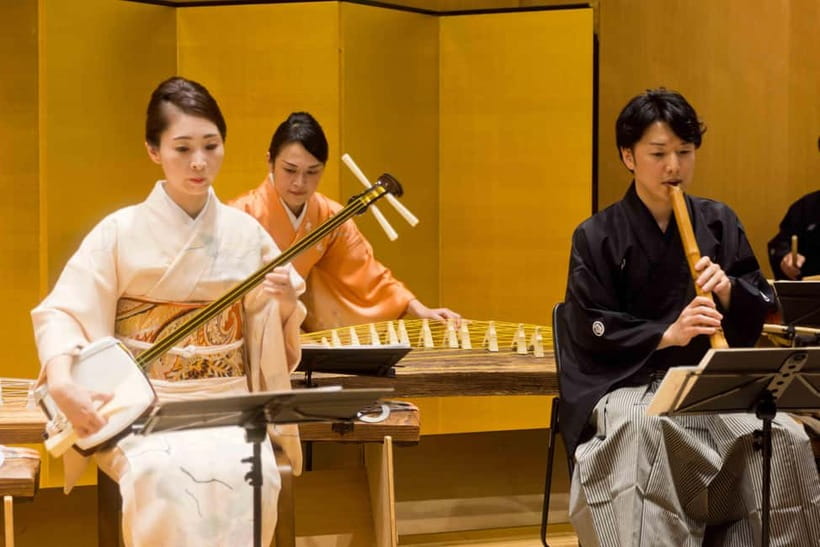
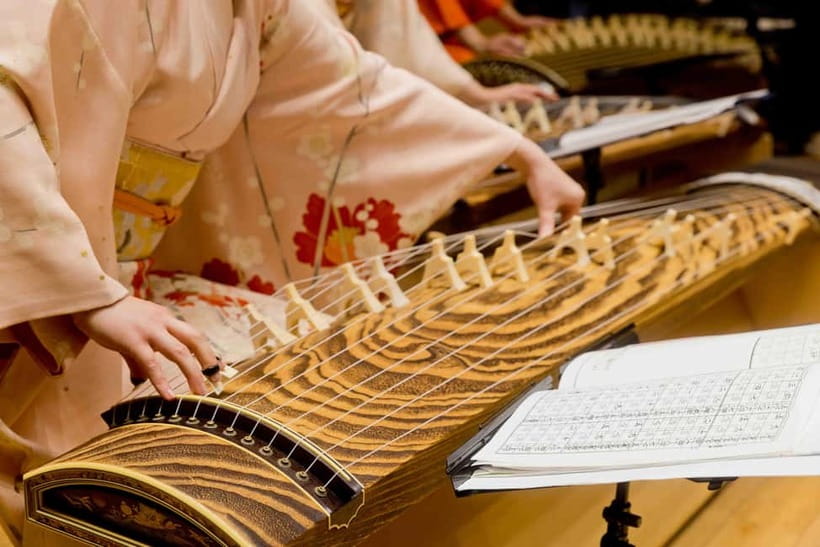
That’s the vibe I get from ZAKURO SHOW, a Japanese traditional music concert in Tokyo built around close-up playing of wagakki instruments. You’re seated in a limited, numbered space, with the musicians in kimono right in front of you, and the host fills in the story behind the sound—so it’s more than just a performance.
I especially like two things. First, the show teaches you what you’re hearing—history of the instruments and context for each piece—without making it feel like a lecture. Second, the set list mixes ancient and modern Japanese traditional music and even throws in a western hit cover as a fun contrast to how these instruments translate melody.
One thing to consider: since this is a single, focused 1-hour show (no food, no extra experiences listed), it’s best if you’re looking for quality time with the music rather than a longer evening with multiple stops.
In This Review
- Key things to know before you go
- Finding Hall 60 near Meiji-Jingumae and Harajuku
- A small numbered audience turns the concert into something you can feel
- The instruments: koto, shamisen, shakuhachi, and taiko in one hour
- How the hour flows: context, old-to-new, and a western surprise
- The host and translation: English and Japanese support that actually helps
- Photos, video, and the chance to meet the musicians
- Price and value: $38 for a reserved seat close to the music
- Who should book ZAKURO SHOW (and who might skip)
- Should you book this Japanese traditional music show in Tokyo?
- FAQ
- How long is the Japanese Traditional Music Show in Tokyo?
- Where is the meeting point?
- What does the $38 ticket include?
- Which instruments will I hear?
- Are English and Japanese explanations provided?
- Can I take photos and videos?
- Is there hotel pickup, and what about food and drinks?
Key things to know before you go
- Very close, small numbered seating keeps the show feeling personal, not like a big auditorium event
- Wagakki instrument history between pieces helps you connect the sound to the culture
- Expect koto, shamisen, shakuhachi, and taiko in one program (different textures, fast variety)
- The program includes ancient + modern traditional music, plus a western cover
- English and Japanese hosts translate and guide the experience
- You can take videos/photos and also photograph with the musicians afterward
Finding Hall 60 near Meiji-Jingumae and Harajuku
ZAKURO SHOW meets at Hall 60, a short walk from Meiji-Jingumae Station and Harajuku (both are very doable on foot). If you’re coming from Meiji-Jingumae Station, Exit 7, it’s about a 1-minute walk. From JR Harajuku Station (Omotesando Exit), plan roughly 5 minutes.
I like this location for two reasons. One, you can pair it with an evening around Harajuku/Omotesando without complicated transit. Two, getting there is straightforward, which matters in Tokyo when you’re already in “walk and find” mode.
Readers also shortlisted these Tokyo bookings:
- Mt Fuji & Hakone Cruise, Drum Show Bullet Train 1 Day from Tokyo
★ 4.0 · 7,413 reviews - Tokyo: Sumo Show and Dining Experience
★ 4.8 · 2,742 reviews - the SUMO show
★ 5.0 · 1,960 reviews - Tokyo Shinjuku Sumo Show & Experience with Photo
★ 5.0 · 1,750 reviews
A small numbered audience turns the concert into something you can feel
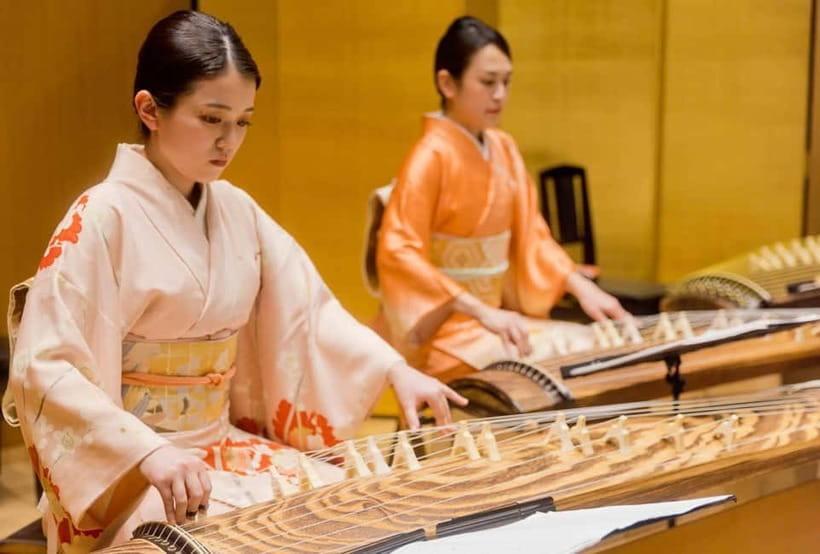
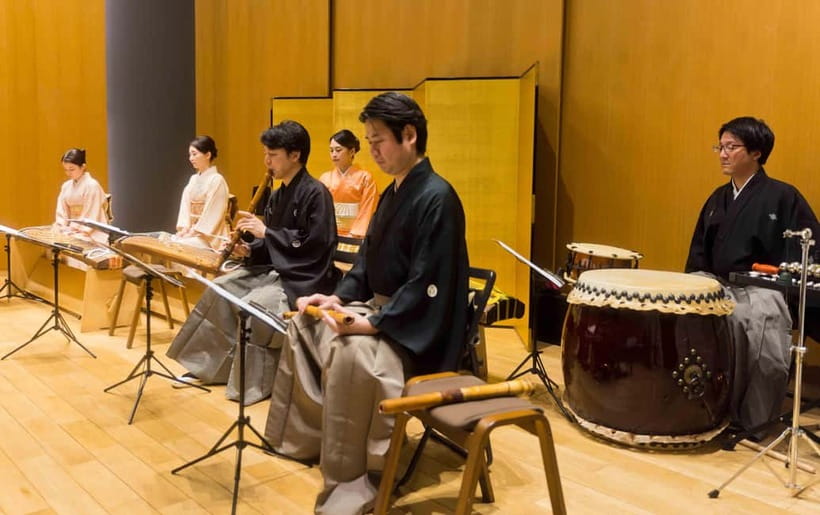
The biggest practical difference with this show is the setup. Seats are reserved and the audience area is limited. That means the musicians aren’t performing from far away. They’re right there—kimono, instruments, and all the small movements that make each instrument sound the way it does.
In a big venue, you only catch the audio. Here, you can catch the physical details too: how the shamisen’s plucking lands, how the taiko hits feel visually as well as sonically, and how the shakuhachi’s breath-driven control shapes the phrasing. Even if you’re new to Japanese music, that closeness helps your brain map the sound to the motion.
Tip: bring your phone fully charged. The show is designed to be filmed and photographed, so you’ll probably want to capture at least a couple of moments.
The instruments: koto, shamisen, shakuhachi, and taiko in one hour
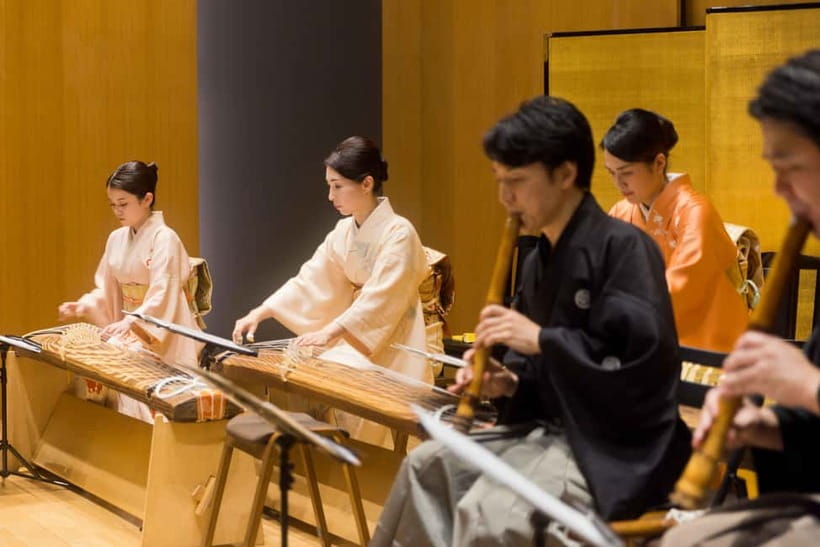
This concert focuses on wagakki—Japanese traditional instruments—and it gives you a mix that keeps your ears awake the whole time.
Here’s what you should expect to hear:
- Japanese harp (koto): a bright, articulate sound that can feel both delicate and rhythmic
- Shamisen: plucked strings with a punchy presence that can go from steady groove to dramatic emphasis
- Shakuhachi flute: a breath-led style where tone and timing carry the emotion
- Taiko drums: power, tempo, and impact—often the easiest to feel instantly even if you’re totally new to the genre
What makes this more than a “watch and listen” experience is that the host talks through the history of the instruments and explains what’s going on as each piece comes up. You start to understand that the instruments aren’t just traditional objects; they’re built for specific musical jobs and cultural expressions.
If you’re the type who likes to know why something sounds the way it does, this show will scratch that itch.
How the hour flows: context, old-to-new, and a western surprise
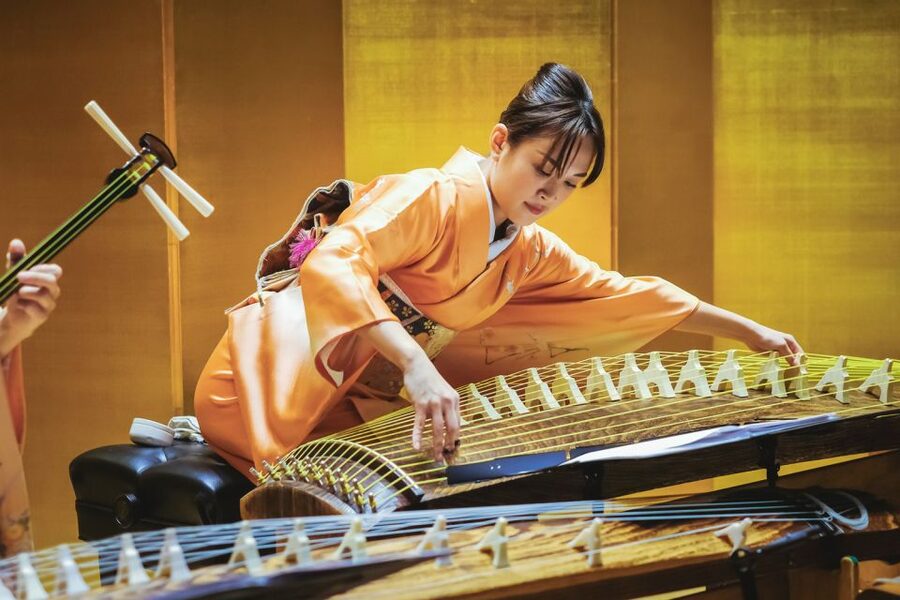
The concert runs 1 hour, and it’s paced like a guided story told through music. The program is designed so you learn in small chunks between pieces rather than getting one long explanation at the start.
What the set list gives you:
- Ancient and traditional pieces alongside modern Japanese traditional music
- A cover of a western hit that’s picked to showcase how these instruments reshape familiar melodies
- A mix of tunings, rhythms, and playing styles so the concert never “levels out” into one mood
That western cover matters more than it sounds. It gives your brain an anchor—something you recognize—then immediately shows how wagakki instruments change the emotional color. In other words: it’s easier to follow the beauty when you start from a familiar melody, even if the texture becomes completely Japanese.
Also, the host selection of tunes is thoughtful. You’re not just being fed random songs; the program is meant to provide context for each piece, so your listening feels intentional.
The host and translation: English and Japanese support that actually helps
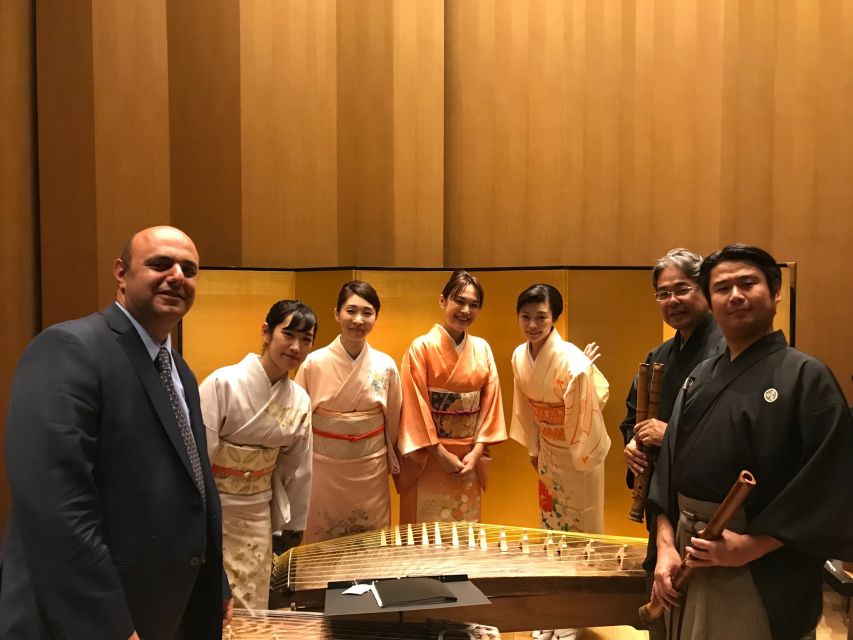
You’ll have an English/Japanese host or greeter, and the show runs in English and Japanese. That matters because the historical context and instrument explanations are part of what you’re paying for—not just the instruments themselves.
From the way the show is described, the host keeps you oriented:
- translating what’s happening
- explaining instruments and their roles
- connecting the pieces to their background
This is a big deal if you don’t speak Japanese. You can enjoy the sound without understanding the words—but you’ll get a lot more out of the show when you can follow the why behind the performance.
If you’re bringing teens or friends who usually assume concerts are boring, this format helps. The program’s structure—music plus explanation plus a recognizable western cover—gives people something to latch onto quickly.
- Tokyo: Shinjuku Food Tour (13 Dishes at 4 Local Eateries)★ 5.0 · 6,603 reviews
- Tokyo Mt Fuji 5th St & Hakone Cruise Bus Tour w/Bullet Train★ 4.4 · 5,024 reviews
- Flagship 2-Hours Official Street Go-Kart Tour – Tokyo Bay Shop★ 5.0 · 4,974 reviews
- From Tokyo: Mount Fuji Full-Day Sightseeing Trip★ 4.5 · 4,970 reviews
- Tokyo: Hop-On Hop-Off Sightseeing Bus Ticket★ 3.9 · 4,207 reviews
Photos, video, and the chance to meet the musicians
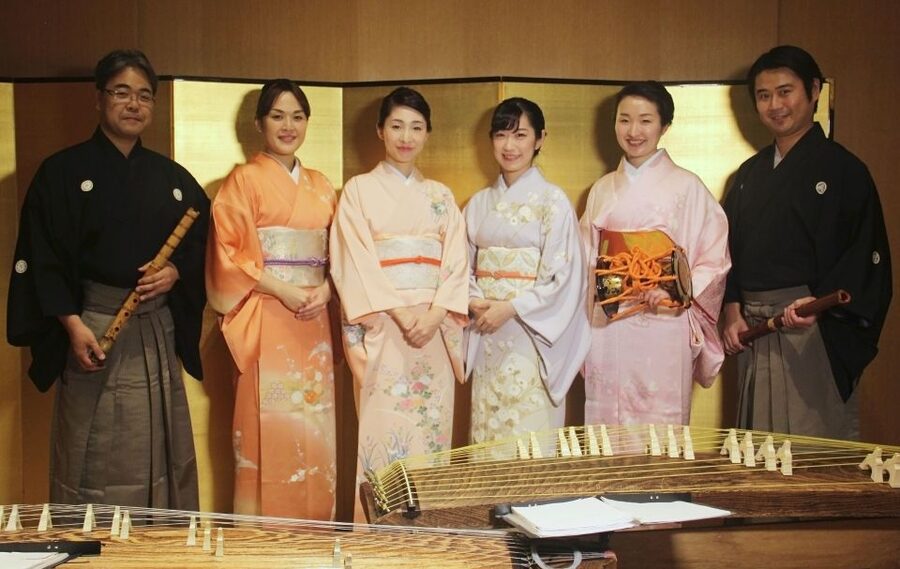
This is one of those Tokyo experiences where you can actually document what you saw. The show encourages you to take photos and videos during the performance.
Then there’s a nice extra moment afterward: you can also take photos together with the musicians. That’s a great way to turn the evening into something tangible—especially if you want proof of the instruments’ scale and how close everything really is.
Practical note: be respectful with filming. Keep your phone low and brief during the quieter segments. In an intimate space, your screen can become a distraction for the person next to you. Quick clips are usually enough.
Price and value: $38 for a reserved seat close to the music
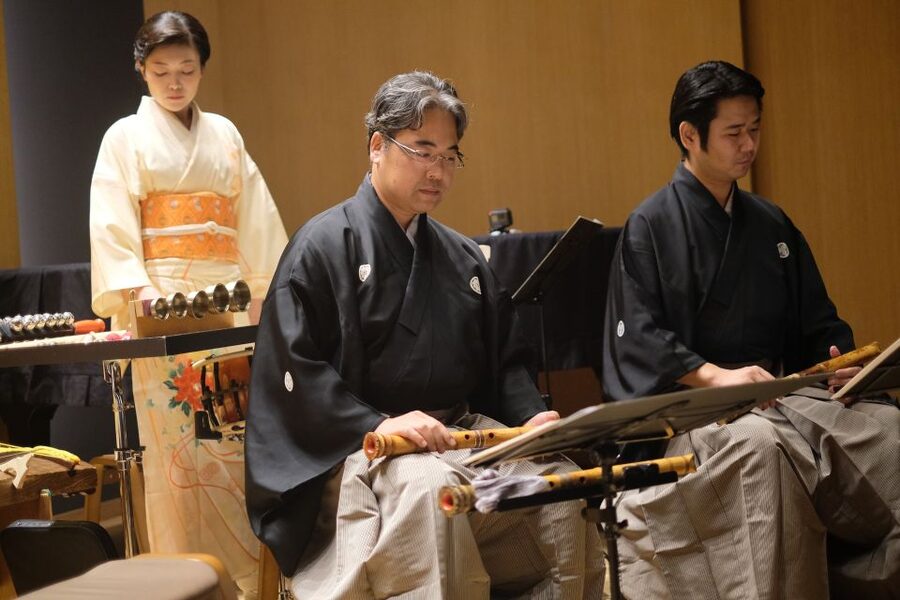
At $38 per person for a 1-hour reserved seat concert, this is priced in the sweet spot for Tokyo: not a budget bus tour, not a high-end “rare” art-ticket that’s impossible to justify.
Why I think it’s good value:
- You’re paying for live musicians playing multiple wagakki instruments, not just one act
- The show includes seat reservation and the musicians are positioned for a close viewing experience
- The host component adds structured learning: history and context between performances
- You get both photos/videos and the option to photo with the musicians afterward
If your goal is to understand Japanese traditional music in a short time, this tends to deliver more “meaning per minute” than many longer, less focused cultural options.
Who should book ZAKURO SHOW (and who might skip)
This show fits best if you:
- want Japanese traditional music without needing prior knowledge
- like concerts where you learn something while you listen
- enjoy instruments with strong visual character—koto strings, shamisen energy, shakuhachi breath control, taiko impact
- want a compact evening that’s easy to reach near Meiji-Jingumae / Harajuku
You might consider another option if you’re looking for a long cultural program with multiple activities, or if you prefer concerts where the audience gets zero commentary. Here, the explanations are part of the design.
Also, if you know you’ll want to film extensively, be sure you’re comfortable with a small space where you’ll share room with other phones and cameras.
Should you book this Japanese traditional music show in Tokyo?
I’d book it if you want a short, high-signal evening: wagakki instruments in a close-up setting, clear explanations in English and Japanese, and a set list that mixes traditional roots, modern touches, and a western cover for perspective.
Book it soon if you like the idea of a limited, numbered audience—intimate shows are often easier to enjoy when you don’t gamble on availability.
If you’re on the fence, here’s my quick decision rule: if you’d be happy spending one hour focused on music and instrument storytelling, ZAKURO SHOW is a strong choice.
FAQ
How long is the Japanese Traditional Music Show in Tokyo?
The concert program lasts 1 hour.
Where is the meeting point?
Meet at Hall 60. It’s about a 1-minute walk from Meiji-Jingumae Station Exit 7, or about a 5-minute walk from JR Harajuku Station Omotesando Exit.
What does the $38 ticket include?
Your ticket includes entry to the venue, a reserved seat, and the one-hour concert program.
Which instruments will I hear?
You’ll hear Japanese traditional instruments including the Japanese harp (koto), shamisen, shakuhachi flute, and taiko drums.
Are English and Japanese explanations provided?
Yes. The host or greeter provides English and Japanese, and the show operates in both languages.
Can I take photos and videos?
Yes, you can take photos and videos during the show. You can also take photos together with the musicians afterward.
Is there hotel pickup, and what about food and drinks?
Hotel pickup and drop-off aren’t included. Food and drinks aren’t included either.
More Show in Tokyo
- Mt Fuji & Hakone Cruise, Drum Show Bullet Train 1 Day from Tokyo
★ 4.0 · 7,413 reviews - Tokyo: Sumo Show and Dining Experience
★ 4.8 · 2,742 reviews - the SUMO show
★ 5.0 · 1,960 reviews - Tokyo Shinjuku Sumo Show & Experience with Photo
★ 5.0 · 1,750 reviews - Mt Fuji & Hakone Cruise, Drum Show Bus 1 Day from Tokyo
★ 4.0 · 1,287 reviews
More Tour Reviews in Tokyo
- Mt Fuji and Hakone 1-Day Bus Tour Return by Bullet Train
★ 5.0 · 26,383 reviews - 1-Day Tokyo Bus Tour
★ 5.0 · 14,250 reviews - Tokyo: teamLab Planets TOKYO Digital Art Museum Entry Ticket
★ 4.6 · 9,779 reviews - Mt Fuji & Hakone Cruise, Drum Show Bullet Train 1 Day from Tokyo
★ 4.0 · 7,413 reviews - Tokyo: Shinjuku Food Tour (13 Dishes at 4 Local Eateries)
★ 5.0 · 6,603 reviews
Latest Tokyo reviews off our desk



Show, compared.
 ★ 4.0Mt Fuji & Hakone Cruise, Drum Show Bullet Train 1 Day from TokyoFrom $1497,413 reviews
 ★ 4.8Sumo Show and Dining ExperienceFrom $792,742 reviews
 ★ 5.0the SUMO showFrom $891,960 reviews
 ★ 5.0Tokyo Shinjuku Sumo Show & Experience with PhotoFrom $791,750 reviews
 ★ 4.0Mt Fuji & Hakone Cruise, Drum Show Bus 1 Day from TokyoFrom $1221,287 reviews
 ★ 4.8Sumo Show and Experience in ShinjukuFrom $691,001 reviews
 ★ 4.7Yakatabune Dinner Cruise with Japanese Show & DrinksFrom $100871 reviews
 ★ 4.7Luxury Sumo Show Experience & Japanese cuisine & DrinkFrom $103577 reviews