
Reviewed · MOUNT FUJI TOURS
Mt. Fuji and Hakone Private Tour with English Speaking Guide
Fuji views from private stops, not cramped trains. This private 10-hour day links Mt. Fuji viewpoints with classic Hakone scenery, guided by an English-speaking driver who can adjust the pacing to your day.
I love that you get true door-to-door ease: an air-conditioned vehicle with parking fees and tolls handled. I also like the flexibility to decide what matters most when clouds or crowds make fixed schedules feel silly.
One caution: this is a long route. With weekend traffic or poor visibility, you may lose minutes at each stop, so build the right expectations for a full day.
In This Review
- Key Highlights You’ll Actually Feel
- Why Combine Mt. Fuji and Hakone in One Private Day?
- Price and Logistics: What’s Included vs What You’ll Add
- The English-Speaking Driver/Guide: Convenience Plus Real Flexibility
- Fuji First: Arakurayama Sengen Park, Kawaguchiko, and Oishi Park
- Stop 1: Arakurayama Sengen Park (about 45 minutes)
- Stop 2: Lake Kawaguchiko (about 2 hours)
- Stop 3: Oishi Park (about 30 minutes)
- The Hakone Shift: Shrines, Lake Ashi, and Old-School Scenic Time
- Stop 4: Hakone Shrine / Kuzuryu Shrine area (about 30 minutes)
- Stop 5: Lake Ashinoko sightseeing cruise (about 1 hour total, with cruise time around 25–40 minutes)
- Hakone Ropeway and Owakudani: Volcanic Views and the Famous Black Eggs
- Stop 6: Hakone Ropeway (about 1 hour)
- Stop 7: Owakudani Valley (about 1 hour)
- How to Personalize This Day When the Weather Turns
- Who This Tour Fits Best (and Who Might Want a Different Plan)
- Should You Book This Mt. Fuji and Hakone Private Tour?
- FAQ
- How many people are in a group for this tour?
- Does the tour include pickup from Tokyo?
- Are entrance tickets included?
- What’s the approximate duration?
- Is the guide/driver English-speaking?
- What happens if weather is bad for Mt. Fuji views?
Key Highlights You’ll Actually Feel
- Private transport from Tokyo: you skip trains, transfers, and timetable stress.
- Classic Fuji vantage points: Arakurayama Sengen Park plus Lake Kawaguchiko and Oishi Park.
- Hakone hits in one day: Lake Ashi cruise, Hakone Ropeway, and Owakudani.
- English-speaking communication: you can ask for photo spots and explanations on the fly.
- Mostly all-in transportation costs: gas, highway tolls, and parking are included; admission fees are not.
Why Combine Mt. Fuji and Hakone in One Private Day?
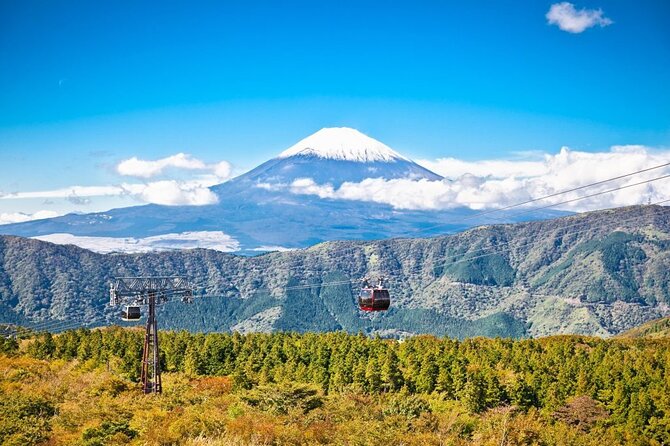
This route is popular for a reason: you’re not just seeing one view. You’re stacking “Fuji moments” (parks and lake viewpoints) with “Hakone moments” (Lake Ashi, ropeway views, and volcanic Owakudani). In a shared group day, this can feel like a rushed shuffle. In a private format, you can slow down when something hits, like a rare clear-sky sighting.
The private part matters most for families, couples, and anyone trying to avoid peak-hour stress. You’re still driving a lot, but you’re not changing trains with luggage or sprinting between stations. You also get an English-speaking driver/guide to help you move efficiently and interpret what you’re seeing as you go.
More Fuji day trips our readers rated highly
- Mt Fuji and Hakone 1-Day Bus Tour Return by Bullet Train
★ 5.0 · 26,383 reviews - Mt Fuji & Hakone Cruise, Drum Show Bullet Train 1 Day from Tokyo
★ 4.0 · 7,413 reviews - Tokyo Mt Fuji 5th St & Hakone Cruise Bus Tour w/Bullet Train
★ 4.4 · 5,024 reviews - From Tokyo: Mount Fuji Full-Day Sightseeing Trip
★ 4.5 · 4,970 reviews
Price and Logistics: What’s Included vs What You’ll Add
At $579 per group (up to 3), you’re paying for private transportation and a dedicated English-speaking driver/guide. That can be good value if you’re splitting cost between two or three people, or if you’d rather pay for comfort than time and effort.
Here’s what the tour includes:
- Air-conditioned vehicle
- Private transportation
- Parking fees
- Gas/petrol
- Highway/tolls
- English speaking driver/guide
And here’s what’s not included:
- Entrance pass/fees for sights
- Food and beverage
So in practice, your total day cost depends on which optional add-ons you choose at Lake Kawaguchiko and Hakone (like ropeways/cruises/observation tickets) and how many snacks you grab. My practical advice: budget for admission and plan to eat outside the car, even if it’s just a simple lunch. Food isn’t included, and some stops are time-boxed.
One more logistics note: this is listed as a mobile ticket experience, which usually means less paperwork and smoother pickup.
The English-Speaking Driver/Guide: Convenience Plus Real Flexibility
The headline is “English speaking driver,” but what you get in the real world depends on how interactive you make the day. The tour is built for customization: your driver can help you choose which attractions or photo stops to prioritize, based on your time and the weather.
This is where private tours often win. If your group wants more shrine context, ask. If you’re chasing the best Fuji photo angles, ask. If your timing is tight, ask for a plan that protects the stops you care about most.
Even in a perfect world, Fuji visibility is never guaranteed. People who had standout days credit their guides for maximizing every chance—like re-planning around cloud breaks and adding an extra favorite spot when possible. If you’re serious about seeing Mt. Fuji clearly, treat your morning like it’s prime time and be ready to move when you get a window.
Fuji First: Arakurayama Sengen Park, Kawaguchiko, and Oishi Park
This day is arranged so you start with Fuji viewpoints and then expand outward into Hakone. That’s smart. If you save Fuji for late afternoon, you may end up with only gray skies and long drives.
Stop 1: Arakurayama Sengen Park (about 45 minutes)
This is the spot most people recognize for the view: Mt. Fuji framed by the park’s iconic pagoda and seasonal color. It’s free admission, so you’re not paying to enter—just paying attention and time.
What I like here is the “quick hit” format. Forty-five minutes is enough to walk to the main viewpoints, get a few photo angles, and still stay on schedule. If clouds roll in early, you’ll at least get a chance to appreciate how the pagoda and viewpoint look even without perfect visibility.
Other Hakone loops worth the fare
- Tokyo: Mt. Fuji Tour, Hakone Ropeway, Owakudani, Lake Ashi★ 4.7 · 4,002 reviews
- Private Tour to Mt. Fuji and Hakone (Fully Licenced Operator)★ 5.0 · 1,910 reviews
- Mt Fuji & Hakone Cruise, Drum Show Bus 1 Day from Tokyo★ 4.0 · 1,287 reviews
- From Tokyo: Mt. Fuji & Hakone Tour w/ Return by Bullet Train★ 4.2 · 1,278 reviews
- Mt Fuji and Hakone 1-Day Bus Tour Return by Bus★ 4.5 · 929 reviews
Stop 2: Lake Kawaguchiko (about 2 hours)
Lake Kawaguchiko is one of the key Fuji areas, and it’s the second largest of the Fuji Five Lakes. The route includes time around the lake, and you can also take the panoramic ropeway up toward an observation point (admission not included).
This stop is useful because it gives you choices:
- Stay at a lake viewpoint for classic “Fuji across the water” photos
- Add a ride like the ropeway/observation option if the sky is cooperating
A practical note: ropes and boats can eat time if queues are heavy. If the weather is good, the ropeway/observation option can be worth it because you’re higher and often see more detail around the lake. If weather turns, spend time at the best accessible viewpoint rather than burning the whole window on a ticketed ride.
Stop 3: Oishi Park (about 30 minutes)
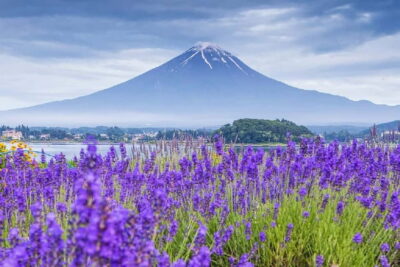
Oishi Park is a shorter stop, and that’s a good thing. It’s on the north shore of Lake Kawaguchiko with sweeping Mt. Fuji views, plus a 350-meter walking path lined with seasonal flowers.
What makes it special is how the garden changes through the year:
- Moss phlox from early April to late May
- Lavender from late June into late July
- Kokia shrubs in mid to late October
Even if you only have half an hour, you’ll likely catch the “big picture” view and a quick walk along the flower path. If your group loves nature photos, this is a strong use of time because it’s visually clear even when Fuji is partly obscured.
Oishi Park also sits near a natural living center where you might find food experiences like fruit jam making and cherry/blueberry picking courses, plus a café (not included). If you want to do that, tell your driver early so the schedule can accommodate it.
The Hakone Shift: Shrines, Lake Ashi, and Old-School Scenic Time
Once you cross into Hakone, the vibe changes from lakeside Fuji parks to heritage sights and volcanic scenery. This is where many people start feeling like they’re really out of Tokyo.
Stop 4: Hakone Shrine / Kuzuryu Shrine area (about 30 minutes)
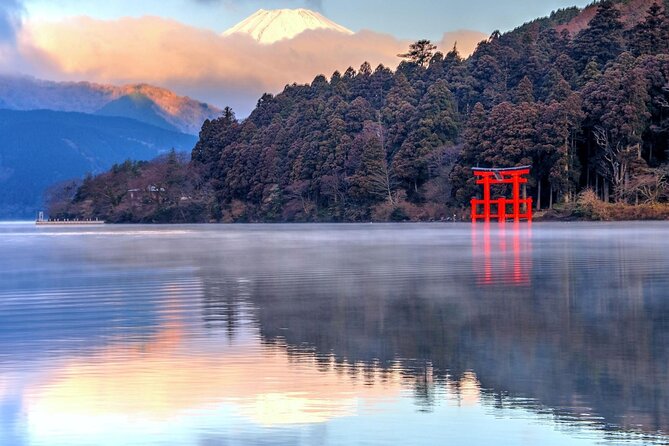
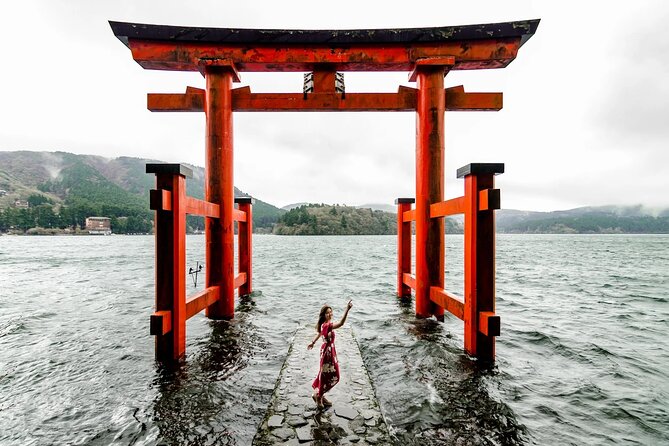
This shrine stop brings you to Lake Ashi’s shoreline area, including a well-known red torii connected to a Shinto shrine tradition. It’s free, and thirty minutes gives you enough time to see the setting, take photos, and keep moving.
Why it works: shrine architecture makes good “slow travel” moments. You don’t need perfect visibility for it to feel atmospheric. Even on a cloudy day, the red elements against the water and greenery help your photos look intentional.
Stop 5: Lake Ashinoko sightseeing cruise (about 1 hour total, with cruise time around 25–40 minutes)
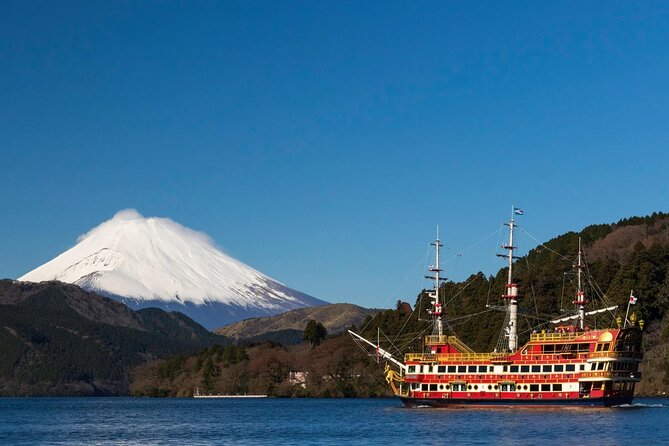
Lake Ashi is a classic in Hakone, and the cruise is one of those experiences that feels more “holiday” than “sightseeing checklist.” The boat route runs from Togendai-ko to Hakone-machi-ko or Moto-Hakone-ko, and it’s designed for views of the lake and shrine torii imagery.
What’s fun here is the ship style: it’s themed like a pirate ship, and there are different designs. The result is that kids often enjoy it, but adults usually do too because it breaks up the day with something light and scenic rather than another queue and viewpoint.
Admission is not included, so factor that into your budget. Also plan that you may spend some of your 1-hour block boarding, disembarking, and positioning for photos.
Hakone Ropeway and Owakudani: Volcanic Views and the Famous Black Eggs
If Mt. Fuji is the “why we came,” Owakudani is the “wow we didn’t expect.” This is the volcanic core of Hakone, where the air carries sulfur notes and the scenery looks like it belongs on another planet.
Stop 6: Hakone Ropeway (about 1 hour)
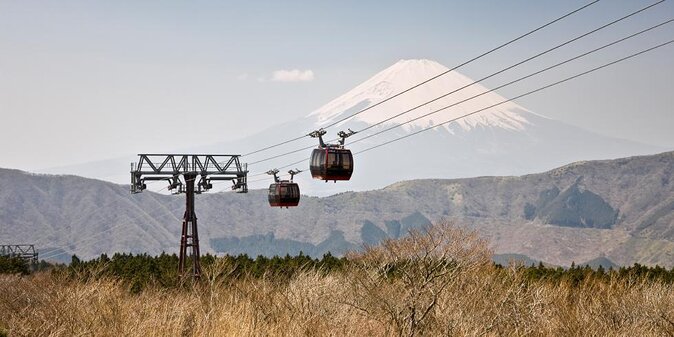
The ropeway takes you above Owakudani. From the observation platform, you’ll see the desolate, smoky mountainside that’s why the area has been nicknamed Hell Valley.
This stop can be hit-or-miss depending on weather. In clear conditions, the views can include Mt. Fuji and Lake Ashi angles. In low visibility, you’ll still get the volcanic sense of place, but your photo payoff may drop.
The key is how you use the time: don’t just ride and rush. Take a few minutes on the platform to watch the valley shapes and smoke activity.
Stop 7: Owakudani Valley (about 1 hour)
This is the main event. You’ll smell the sulfur, see active geothermal areas, and be near the white steam/smoke activity that gives the viewpoint its drama. It’s known for its local specialty: black eggs, which turn black due to geothermal energy reactions.
Even if you skip the food, this is a powerful sensory stop. The ground looks altered, and the air feels hotter or sharper than nearby areas.
A realistic expectation: the walk and viewpoints here are part of the experience, and it’s not just a photo spot. If your group has moderate physical fitness only, you’ll want to pace yourselves and be mindful of stairs and uneven areas around viewpoints and egg vendors.
How to Personalize This Day When the Weather Turns
This tour works best when you treat weather as part of the plan, not a problem. Mt. Fuji visibility changes fast. Clouds can appear, break, or drift in ways that feel unfair—especially on a tight schedule.
Here’s how I’d play it, using what this tour is set up to do:
- Protect your “must-see” Fuji stop early. If Arakurayama Sengen Park goes gray, don’t wait to see if Fuji improves later. Ask your driver how they’d reorder time if the sky doesn’t cooperate.
- Use your driver as a planner. When you get in the car, tell them what you care about: ropeway views, lake cruising, flower season, shrine time, or a Mount Fuji station experience if you want it.
- Build snack time into your reality. Food and beverage aren’t included, and long weekend traffic can squeeze meal breaks. Bring small snacks and water if you want a buffer.
A few reviews highlight that the “guide vs driver” balance can vary. If you want more context than just directions, say so early. Ask for short stories about shrines and the Fuji/lake region. That simple push can turn seat time into actual experience.
Also note that this experience is described as requiring good weather. If conditions are poor, you may be offered a different date or a full refund, so keep an eye on the forecast for your travel day.
Who This Tour Fits Best (and Who Might Want a Different Plan)
This private day trip is a great fit if you:
- Want to avoid public transport transfers from Tokyo
- Care about comfort (air-conditioned vehicle) and a dedicated driver
- Travel as a group of up to three and want to split the cost
- Like flexibility, especially around weather and timing
It’s also a strong option for people who want a lot of “big sights” without waiting around for group schedules.
You might hesitate if:
- You’re extremely price-sensitive and don’t plan to use the private value (for example, if you’d rather handle transfers yourself)
- Your group needs long stops at every location
- You have tight mobility limitations, since some areas involve walking and viewpoint stairs
Should You Book This Mt. Fuji and Hakone Private Tour?
If your goal is a smooth day with private transport, English support, and a route that covers both Fuji and Hakone highlights, I’d say this is worth considering. The biggest strength is that you’re not stuck doing everything the same way as strangers on a fixed loop. You can steer the day.
Before you book, do two practical checks:
- Confirm your budget for admission fees and whatever you want to add at Kawaguchiko and Hakone.
- Decide your priority order: Fuji photo time first, then lake/cruise, then Owakudani. That mindset helps you stay happy even if clouds play tricks.
If Fuji visibility and timing are your top priorities, this private format gives you the best chance to manage them. Just treat the day as a plan with room for weather, not a guarantee.
FAQ
How many people are in a group for this tour?
The tour price is per group for up to 3 travelers.
Does the tour include pickup from Tokyo?
Pickup is offered, and the tour includes private transportation in an air-conditioned vehicle.
Are entrance tickets included?
No. Entrance passes or fees are not included, and you’ll also pay for food and beverage on your own.
What’s the approximate duration?
The tour runs for about 10 hours.
Is the guide/driver English-speaking?
Yes. An English-speaking driver is included to help with communication.
What happens if weather is bad for Mt. Fuji views?
This experience requires good weather. If it’s canceled due to poor weather, you’ll be offered a different date or a full refund.
More Tour Reviews in Tokyo
- Mt Fuji and Hakone 1-Day Bus Tour Return by Bullet Train
★ 5.0 · 26,383 reviews - 1-Day Tokyo Bus Tour
★ 5.0 · 14,250 reviews - Tokyo: teamLab Planets TOKYO Digital Art Museum Entry Ticket
★ 4.6 · 9,779 reviews - Mt Fuji & Hakone Cruise, Drum Show Bullet Train 1 Day from Tokyo
★ 4.0 · 7,413 reviews - Tokyo: Shinjuku Food Tour (13 Dishes at 4 Local Eateries)
★ 5.0 · 6,603 reviews
Hakone, A Few More Ways
- Mt Fuji and Hakone 1-Day Bus Tour Return by Bullet Train
★ 5.0 · 26,383 reviews - Mt Fuji & Hakone Cruise, Drum Show Bullet Train 1 Day from Tokyo
★ 4.0 · 7,413 reviews - Tokyo Mt Fuji 5th St & Hakone Cruise Bus Tour w/Bullet Train
★ 4.4 · 5,024 reviews - Tokyo: Mt. Fuji Tour, Hakone Ropeway, Owakudani, Lake Ashi
★ 4.7 · 4,002 reviews - Private Tour to Mt. Fuji and Hakone (Fully Licenced Operator)
★ 5.0 · 1,910 reviews
More Mount Fuji Days We Have Reviewed
- Mt Fuji and Hakone 1-Day Bus Tour Return by Bullet Train
★ 5.0 · 26,383 reviews - Mt Fuji & Hakone Cruise, Drum Show Bullet Train 1 Day from Tokyo
★ 4.0 · 7,413 reviews - Tokyo Mt Fuji 5th St & Hakone Cruise Bus Tour w/Bullet Train
★ 4.4 · 5,024 reviews - From Tokyo: Mount Fuji Full-Day Sightseeing Trip
★ 4.5 · 4,970 reviews - Tokyo: Mt. Fuji Tour, Hakone Ropeway, Owakudani, Lake Ashi
★ 4.7 · 4,002 reviews
Latest Tokyo reviews off our desk






Mount Fuji Tours, compared.
 ★ 5.0Mt Fuji and Hakone 1-Day Bus Tour Return by Bullet TrainFrom $16326,383 reviews
 ★ 4.0Mt Fuji & Hakone Cruise, Drum Show Bullet Train 1 Day from TokyoFrom $1497,413 reviews
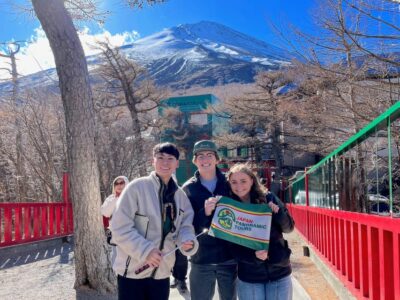 ★ 4.4Tokyo Mt Fuji 5th St & Hakone Cruise Bus Tour w/Bullet TrainFrom $1545,024 reviews
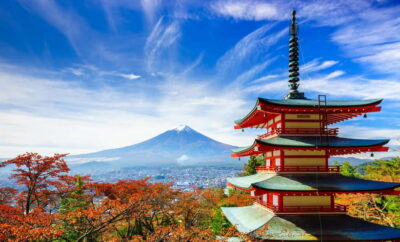 ★ 4.5From Tokyo: Mount Fuji Full-Day Sightseeing TripFrom $684,970 reviews
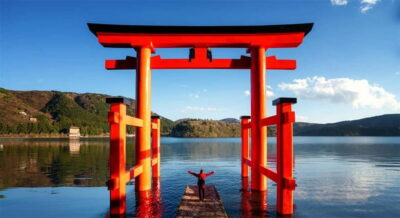 ★ 4.7Mt. Fuji Tour, Hakone Ropeway, Owakudani, Lake AshiFrom $544,002 reviews
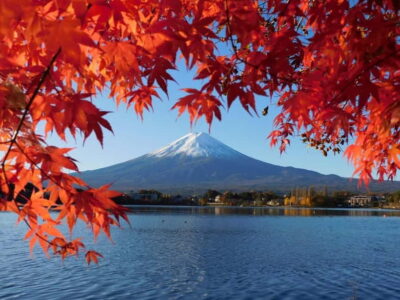 ★ 4.4Mt.Fuji,Kawaguchiko Oishi Park,Arakurayama Sengen ParkFrom $542,682 reviews
 ★ 4.2Mt. Fuji 5th Station & Hakone Cruise 1-Day Bus TourFrom $1292,381 reviews
 ★ 4.7Mt Fuji Top 5 Spots Day Tour: Arakurayama Park,Oshino HakkaiFrom $532,066 reviews
Browse the lists this tour appears in