
Reviewed · MOUNT FUJI TOURS
Mt. Fuji & Hakone Bus Tour Bullet Train Return & 28-Hotel Pick-up
Fuji and Hakone in one packed day. This Mt. Fuji & Hakone bus tour is built for people who want big sights without managing trains, tickets, and timing all day.
I love the plain-helpfulness: hotel pickup and an English guide who keeps the group moving. I also love the mix of classic Japan stops—Mt. Fuji 5th Station and a real Lake Ashinoko boat ride.
One consideration: it’s a long day, and time at each stop can feel short, especially if you hit clouds or weather limits.
In This Review
- Key points at a glance
- From Tokyo pickup to Fuji views: why this route works
- The long bus day trade-off (and how to use it)
- Mt. Fuji 5th Station: your best accessible peak viewpoint
- If roads close or conditions are rough
- What to do at the station
- Gotemba lunch and the transition into Hakone
- Hakone Ropeway to Owakudani: sulfur vents and black eggs
- The black eggs moment
- Weather matters here
- Lake Ashinoko pirate-ship cruise and Hakone Shrine torii photos
- If weather flips the plan
- Return to Tokyo: Shinkansen option is the smart finish
- Who should book this Mt. Fuji and Hakone day trip
- What I’d bring (so the day feels easier)
- Should you book this tour or not?
- FAQ
- What time does the tour start?
- Does this tour include hotel pickup in Tokyo?
- What’s included besides the guide?
- Is lunch vegetarian-friendly?
- Where does the tour end if I choose the bullet train return?
- What happens if Mt. Fuji 5th Station is inaccessible?
- What if Hakone activities are affected by weather?
- Can I cancel for free?
- How large is the group?
Key points at a glance
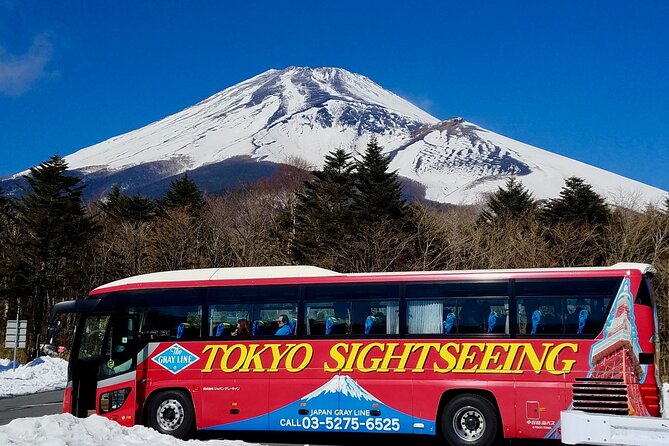
- Hotel pickup in Tokyo with a professional English-speaking guide
- Mt. Fuji 5th Station visit plus a backup plan if road access is restricted
- Hakone Ropeway over to Owakudani Valley for the sulfur vents and black eggs
- Lake Ashinoko cruise with the iconic torii gate in the photo mix
- Bullet Train return option to Tokyo Station to save precious evening time
- Small group feel with a max of 45 people
From Tokyo pickup to Fuji views: why this route works
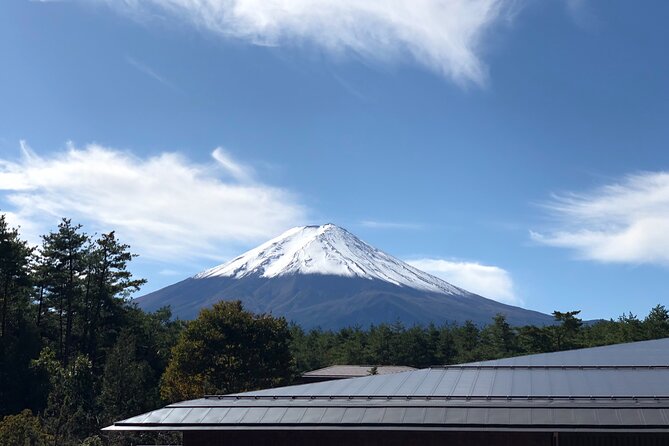
This is the kind of day trip you book when you’re short on time but still want the “greatest hits” of the Fuji and Hakone area. You start with pickup from designated hotels in Tokyo and then shift into a guided bus rhythm—less scrambling, more looking out the window.
The itinerary is designed around two realities. First, you can’t guarantee a clear view of Mt. Fuji. Second, Hakone activities often depend on weather. This tour builds in enough variety that even if one element gets weather-capped, you still get a full day of sights.
The guide you’ll meet is an English-speaking, national licensed guide-interpreter. In the experiences I reviewed, guides like Izumi (sometimes mentioned as Spring), Yuki, Yoshi, and others were singled out for making the day feel organized and informative, not just “drive-by sightseeing.”
More Fuji day trips our readers rated highly
- Mt Fuji and Hakone 1-Day Bus Tour Return by Bullet Train
★ 5.0 · 26,383 reviews - Mt Fuji & Hakone Cruise, Drum Show Bullet Train 1 Day from Tokyo
★ 4.0 · 7,413 reviews - Tokyo Mt Fuji 5th St & Hakone Cruise Bus Tour w/Bullet Train
★ 4.4 · 5,024 reviews - From Tokyo: Mount Fuji Full-Day Sightseeing Trip
★ 4.5 · 4,970 reviews
The long bus day trade-off (and how to use it)
You’re on the road a lot. The tour is about 10 hours, starting around 8:30 am, and most of that time is travel plus guided transitions. On clear weather days, that’s fine—you’ll stay patient because you can feel the payoff coming.
On tight-timing days (clouds, traffic, or last-minute substitutions), the “long bus” feeling gets stronger. A few people noted that they wanted more time at Mt. Fuji specifically, and they noticed that the group still had to keep moving to hit the rest of the stops.
My practical advice: treat the bus time as part of the experience. Keep your camera accessible. Wear layers (buses can swing from warm to cool). And if you’re hoping to browse gift shops or buy postcards, plan for that to be a bonus, not a guaranteed slot.
Also note: the schedule can shift due to heavy traffic and weather, and the tour won’t cancel just because the day is messy. That’s normal for day trips out of Tokyo, but it’s good to know before you lock in expectations.
Mt. Fuji 5th Station: your best accessible peak viewpoint
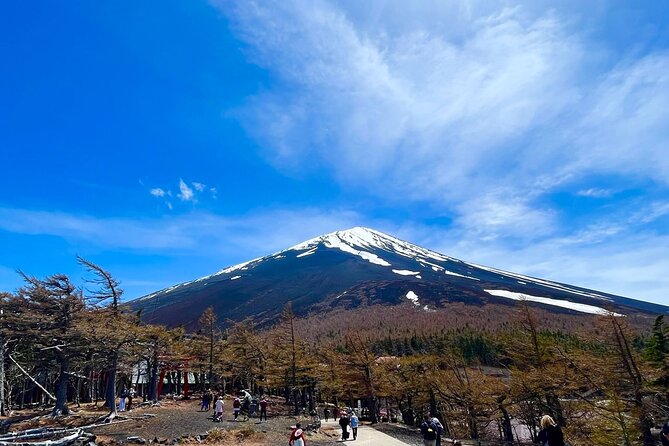
Your first major stop is Mt. Fuji 5th Station, with admission included. This is the highest spot the tour is aiming for that’s accessible during the season window. The goal is simple: give you a real sense of scale and (if conditions cooperate) a view that feels like the mountain is right there in front of you.
Here’s the key point: even when Mt. Fuji is visible, it may not be “postcard-perfect.” Clouds, wind, and seasonal conditions can change what you see at ground level and on the platforms. Multiple guides handled this type of day with humor and extra context, which matters because your time at the station is still limited compared to doing it on your own pace.
If roads close or conditions are rough
The tour has a safety-and-access fallback. If the road to the 5th Station is closed due to snow or other reasons—or if the tour is running behind—you may be driven to the highest accessible point instead. That keeps the day from stalling, but it can reduce the “top-level” feeling.
What to do at the station
- Bring warm layers and a rain layer. This is high elevation and weather can change fast.
- If Fuji is visible, spend your time standing still first, then take photos. You’ll be able to spot the best angle faster.
- Expect stairs and some outdoor walking. There’s also walking involved to reach the restaurant during the lunch portion.
Other Hakone loops worth the fare
- Tokyo: Mt. Fuji Tour, Hakone Ropeway, Owakudani, Lake Ashi★ 4.7 · 4,002 reviews
- Private Tour to Mt. Fuji and Hakone (Fully Licenced Operator)★ 5.0 · 1,910 reviews
- Mt Fuji & Hakone Cruise, Drum Show Bus 1 Day from Tokyo★ 4.0 · 1,287 reviews
- From Tokyo: Mt. Fuji & Hakone Tour w/ Return by Bullet Train★ 4.2 · 1,278 reviews
- Mt Fuji and Hakone 1-Day Bus Tour Return by Bus★ 4.5 · 929 reviews
Gotemba lunch and the transition into Hakone
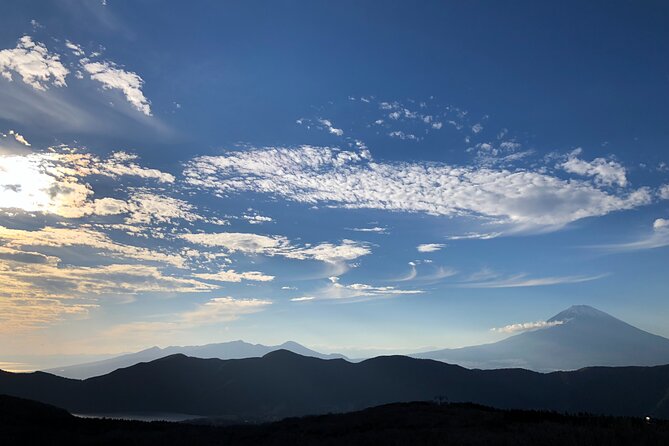
After Fuji, the day shifts toward Hakone territory. You stop in Gotemba for a Japanese-style lunch. Admission here is included in the lunch option, and there’s a vegetarian option.
Two useful notes from what you’re told upfront:
- The tour doesn’t provide special meals for allergies or dietary restrictions. If you have food allergies, you’re asked to choose the tour option without lunch.
- The lunch stop involves stairs to access the restaurant, so wear shoes you can handle comfortably.
Lunch timing is also part of the pacing equation. You only get about 40 minutes here. It’s long enough for a full sit-down meal, but it’s not long enough for lingering shopping or slow sightseeing. Think of this meal as fuel, not a lunch getaway.
Hakone Ropeway to Owakudani: sulfur vents and black eggs
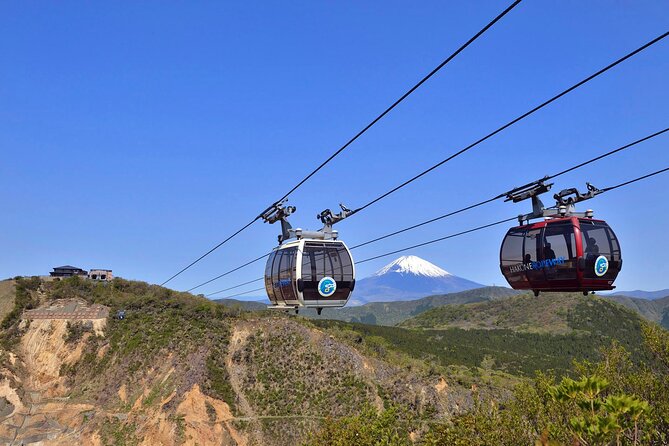
Hakone is one of Japan’s most famous “volcanic amusement parks” in the best way—steam, views, and the weirdly satisfying ritual of trying a local snack.
After lunch, you head to Hakone Ropeway for a sky gondola ride (included), typically one way to Owakudani Valley. Then you visit the volcanic valley area where the sulfur vents are active and you’ll see the legend in action.
The black eggs moment
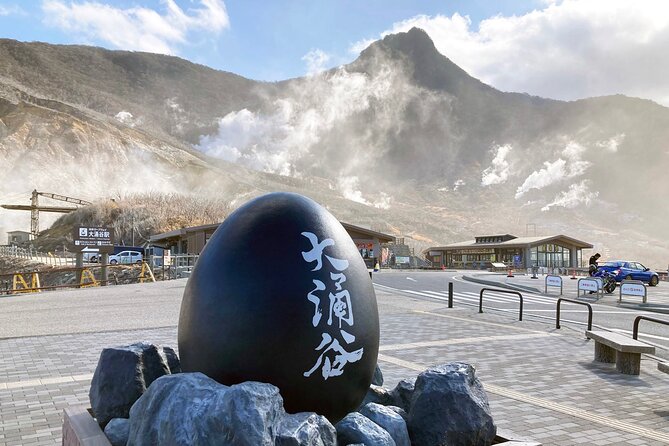
At Owakudani, you can experience the “great boiling valley” vibe: the tour includes time around the area known for sulfur activity and the famous black eggs (eggs cooked in hot spring water). Even if you’ve heard the story before, seeing the setting makes it real.
Weather matters here
The tour explicitly warns that the Ropeway and Owakudani area may be excluded or substituted due to weather, restricted entry, heavy traffic, or other operational reasons. If that happens, your guide takes you to one or two alternatives, such as Peace Park in Gotemba, Hakone Shrine, Hakone Geo Museum, Hakone Komagatake Ropeway, Mt. Komagatake, and other nearby sightseeing options.
One important caution: people with certain health conditions should avoid outdoor activity at Owakudani Valley. The tour guidance flags allergic asthma, bronchial/respiratory complaints, heart complaints, and pacemaker equipment as reasons to skip that portion.
Lake Ashinoko pirate-ship cruise and Hakone Shrine torii photos
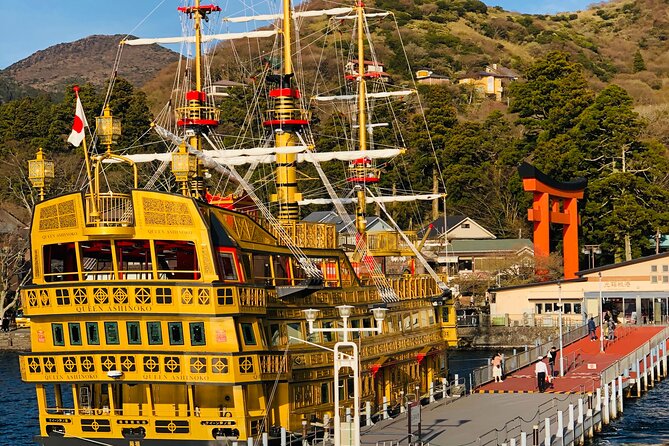
Lake Ashinoko is the “slow down for scenery” part of the day, and it’s one of the best values on the schedule because you get the water views without needing to figure out transport.
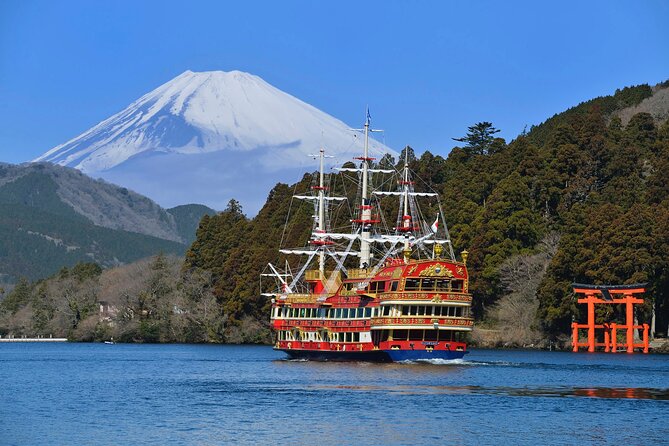
You take a 30-minute lake cruise on a pirate-ship-style boat (ticket included). It’s timed to give you the classic sights: Lake Ashinoko, the iconic torii gate, surrounding mountains, and sometimes Mt. Fuji if conditions are right.
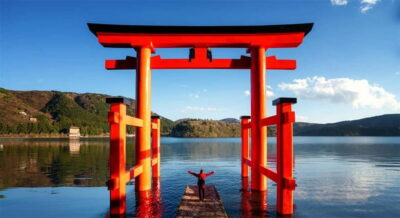
Then you visit Hakone Shrine, known for its historic Shinto setting and the red torii gate by the lake. You get about 30 minutes here, which is typically enough for photos and a short look around.
If weather flips the plan
Even the cruise can change. If conditions don’t allow the boat ride, the tour may swap in alternative lake cruises (like Lake Kawaguchi) or other Mt. Fuji-related panoramic options. The point is you won’t be left with nothing—just a different version of the same theme: views and iconic locations.
Return to Tokyo: Shinkansen option is the smart finish
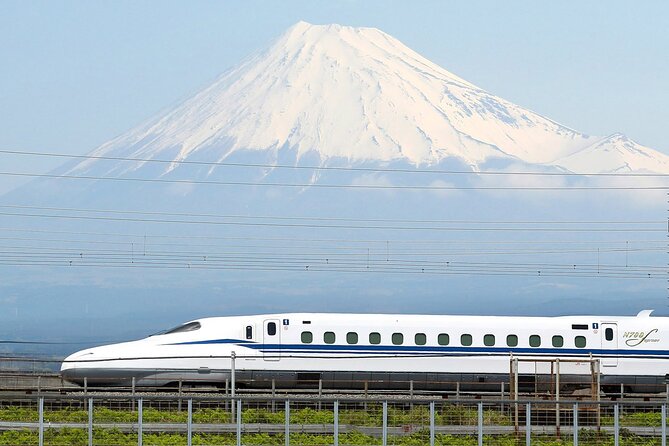
The itinerary includes an Odawara Station stop and then a return to Tokyo by bullet train option (included only if you choose it). The Shinkansen ride to Tokyo Station takes about 35 minutes, and arrival is between 6:30 and 7:00 pm, ending at Tokyo Station Marunouchi Ekimae Hiroba.
This is a big deal for value, not just convenience. Day trips from Tokyo often eat your evening on slow connections. A Shinkansen return lets you end in a major hub, which makes it easier to keep dinner plans intact and reduces stress if you’re trying to reach your next hotel.
If you stick with a bus return instead, expect it to take longer. One review comparison even suggested bus time can run closer to a couple hours. Since you’re already spending a lot of the day on a bus, the bullet train option is the most “stop-start fatigue” reducer.
Who should book this Mt. Fuji and Hakone day trip
This works especially well if:
- You want a guided Mt. Fuji + Hakone day without juggling train transfers.
- You like a full checklist itinerary and don’t mind short stops.
- You’d rather pay for built-in tickets (Sky Gondola, Lake Ashi cruise, and the guide) than buy everything separately.
It might not be the best match if:
- You’re the type who wants a long, slow Fuji experience at one location.
- You need lots of free time for shopping or extra wandering.
- You’re traveling on a very strict timetable where a long day out of Tokyo could throw you off.
One more practical point: it’s capped at 45 travelers, so it’s not a private car situation. You’ll be in a group with scheduled times, which is why the experience is so efficient.
What I’d bring (so the day feels easier)
Even if you’re excited, Fuji and Hakone can be physically annoying if you show up unprepared.
Bring:
- Warm clothing (it can be chilly, especially at higher elevation)
- Rain gear: raincoat and an umbrella are strongly recommended
- Comfortable shoes for outdoor walking and any stairs
- A plan for charging your phone (you’ll be taking photos)
The tour uses a mobile ticket, so keep your phone battery alive and your ticket accessible.
Should you book this tour or not?
Book it if your goal is a well-paced, guided Fuji and Hakone highlights day with minimal logistics. At $145.35 per person, the price feels reasonable because you’re paying for a licensed English guide, multiple included tickets (Sky Gondola and Lake Ashinoko cruise), and potentially a Shinkansen return plus hotel pickup.
Skip it or adjust expectations if you’re chasing an uninterrupted, long Mt. Fuji session. This tour is built for seeing the key icons and moving on. If weather hides the peak, the day still delivers Hakone’s volcanic and lake scenery, but it won’t replace a slow, on-your-own Fuji plan.
My rule of thumb: if you’re thinking, I want one great day that hits Fuji and Hakone without planning headaches, this is a strong choice.
FAQ
What time does the tour start?
The tour start time is listed as 8:30 am.
Does this tour include hotel pickup in Tokyo?
Yes. The tour offers pickup service at designated hotels in Tokyo.
What’s included besides the guide?
Included admissions/tickets are Sky Gondola and the Lake Ashinoko cruise. The bullet train ride to Tokyo Station is included only if you choose the bullet train option. Lunch is included only if you choose the option with lunch.
Is lunch vegetarian-friendly?
The lunch stop states that a vegetarian option is available. If you have food allergies or special dietary restrictions, the tour notes it can’t provide special meals, and you may need to choose the tour option without lunch.
Where does the tour end if I choose the bullet train return?
It ends at Tokyo Station Marunouchi Ekimae Hiroba, with arrival between 6:30 and 7:00 pm.
What happens if Mt. Fuji 5th Station is inaccessible?
If the road to Mt. Fuji 5th Station is closed (for example due to snow) or the tour is behind schedule, you’ll drive to the highest accessible point. The tour says it won’t be canceled in these cases and there won’t be a refund.
What if Hakone activities are affected by weather?
The Sky Gondola, Owakudani Valley, or the boat cruise may be excluded or substituted due to weather, traffic, or restricted entry. Your guide will take you to one or two alternative sightseeing spots.
Can I cancel for free?
Yes. There is free cancellation up to 24 hours in advance for a full refund.
How large is the group?
The tour has a maximum of 45 travelers.
More Tour Reviews in Tokyo
- Mt Fuji and Hakone 1-Day Bus Tour Return by Bullet Train
★ 5.0 · 26,383 reviews - 1-Day Tokyo Bus Tour
★ 5.0 · 14,250 reviews - Tokyo: teamLab Planets TOKYO Digital Art Museum Entry Ticket
★ 4.6 · 9,779 reviews - Mt Fuji & Hakone Cruise, Drum Show Bullet Train 1 Day from Tokyo
★ 4.0 · 7,413 reviews - Tokyo: Shinjuku Food Tour (13 Dishes at 4 Local Eateries)
★ 5.0 · 6,603 reviews
Hakone, A Few More Ways
- Mt Fuji and Hakone 1-Day Bus Tour Return by Bullet Train
★ 5.0 · 26,383 reviews - Mt Fuji & Hakone Cruise, Drum Show Bullet Train 1 Day from Tokyo
★ 4.0 · 7,413 reviews - Tokyo Mt Fuji 5th St & Hakone Cruise Bus Tour w/Bullet Train
★ 4.4 · 5,024 reviews - Tokyo: Mt. Fuji Tour, Hakone Ropeway, Owakudani, Lake Ashi
★ 4.7 · 4,002 reviews - Private Tour to Mt. Fuji and Hakone (Fully Licenced Operator)
★ 5.0 · 1,910 reviews
More Mount Fuji Days We Have Reviewed
- Mt Fuji and Hakone 1-Day Bus Tour Return by Bullet Train
★ 5.0 · 26,383 reviews - Mt Fuji & Hakone Cruise, Drum Show Bullet Train 1 Day from Tokyo
★ 4.0 · 7,413 reviews - Tokyo Mt Fuji 5th St & Hakone Cruise Bus Tour w/Bullet Train
★ 4.4 · 5,024 reviews - From Tokyo: Mount Fuji Full-Day Sightseeing Trip
★ 4.5 · 4,970 reviews - Tokyo: Mt. Fuji Tour, Hakone Ropeway, Owakudani, Lake Ashi
★ 4.7 · 4,002 reviews
Latest Tokyo reviews off our desk






Mount Fuji Tours, compared.
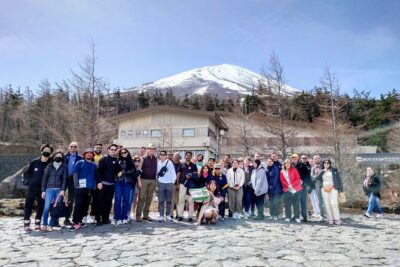 ★ 5.0Mt Fuji and Hakone 1-Day Bus Tour Return by Bullet TrainFrom $16326,383 reviews
 ★ 4.0Mt Fuji & Hakone Cruise, Drum Show Bullet Train 1 Day from TokyoFrom $1497,413 reviews
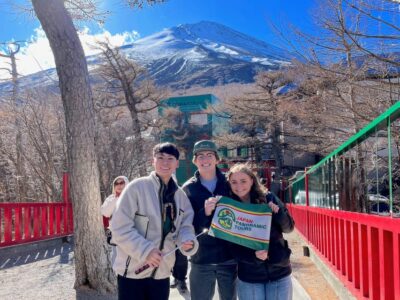 ★ 4.4Tokyo Mt Fuji 5th St & Hakone Cruise Bus Tour w/Bullet TrainFrom $1545,024 reviews
 ★ 4.5From Tokyo: Mount Fuji Full-Day Sightseeing TripFrom $684,970 reviews
 ★ 4.7Mt. Fuji Tour, Hakone Ropeway, Owakudani, Lake AshiFrom $544,002 reviews
 ★ 4.4Mt.Fuji,Kawaguchiko Oishi Park,Arakurayama Sengen ParkFrom $542,682 reviews
 ★ 4.2Mt. Fuji 5th Station & Hakone Cruise 1-Day Bus TourFrom $1292,381 reviews
 ★ 4.7Mt Fuji Top 5 Spots Day Tour: Arakurayama Park,Oshino HakkaiFrom $532,066 reviews
Browse the lists this tour appears in