
Reviewed · SHIBUYA EXPERIENCES
Tokyo Cherry Blossom Matcha Experience in Yoyogi Park (Shibuya)
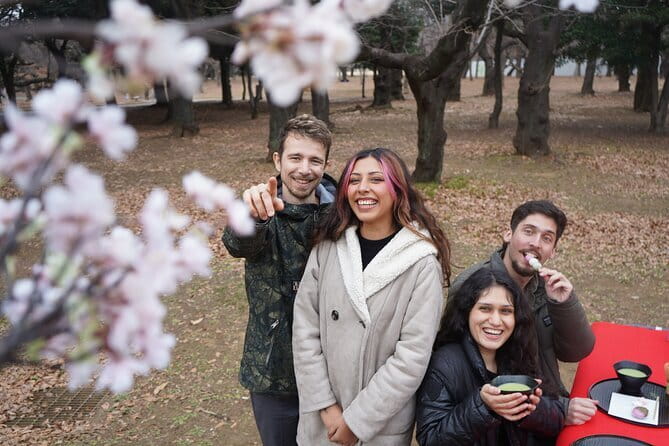
Cherry blossoms plus matcha beats most Tokyo plans. This Yoyogi Park picnic-style experience is built around whisking your own bowl of rare Uji matcha and tasting seasonal wagashi while sakura trees do their thing. I really liked how it’s guided by a certified Matcha Hospitality Adviser and how relaxed it feels—no formal ceremony stress.
Two things I found especially appealing: you learn hands-on matcha basics with traditional tools, and you get an English-speaking local host keeping things clear and friendly. The setting also does work for you, with Yoyogi Park located minutes from major areas like Shibuya and Shinjuku, so it fits naturally into a first trip.
One possible drawback to keep in mind: it runs only during a short cherry blossom window (roughly starting around March 23 for about two weeks, depending on conditions), and it needs good weather. If the sakura peak or weather is off, the experience can shift dates or be canceled.
In This Review
- Key things to know before you go
- Cherry blossoms plus matcha: the real point of this experience
- When it runs: the short cherry blossom window
- Where you meet in Harajuku and how the timing works
- The route feels local: Shibuya to Harajuku to Omotesando
- Yoyogi Park sakura time: the atmosphere you’re really paying for
- Whisking Uji matcha: what you’ll learn in plain English
- Wagashi sweets: seasonal bites that pair with tea
- Not a formal tea ceremony: the comfort level is intentional
- Photos in sakura season: how to get good shots without slowing everything down
- Small group size: why the max 6 matters
- Price and value: what you’re really buying for $100.80
- Who should book this matcha picnic in Yoyogi Park?
- Should you book this Tokyo cherry blossom matcha experience?
- FAQ
- How long is the Tokyo cherry blossom matcha experience?
- When is this experience available?
- What is the price per person?
- Where does the experience start and end?
- Is it a formal tea ceremony?
- What’s included in the experience?
- How many people are in the group?
- What if the weather is bad?
Key things to know before you go
- Certified Matcha Hospitality Adviser-led: you’re not just tasting, you’re learning with a qualified guide.
- Sakura-season only: the timing matters, so plan around late March/early April when conditions allow.
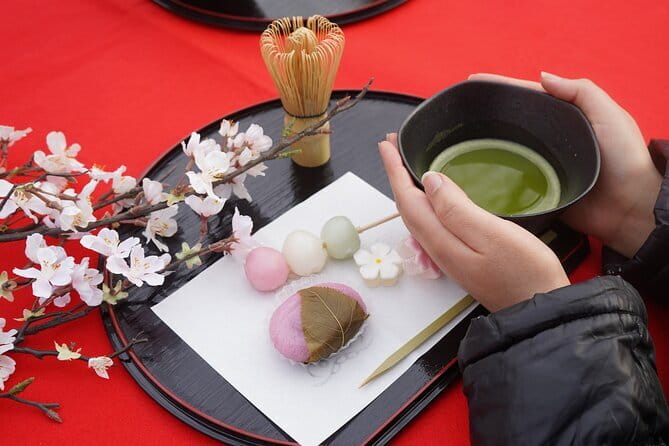
- Whisk-your-own Uji matcha: traditional tools, beginner-friendly steps, and a rare tea you likely won’t hunt down alone.
- Seasonal wagashi included: you’ll taste Japanese sweets designed for the season.
- Small group (max 6): you get attention and an easy pace for photos and questions.
- Optional photo time: the matcha + sakura combo is very photogenic.
Cherry blossoms plus matcha: the real point of this experience
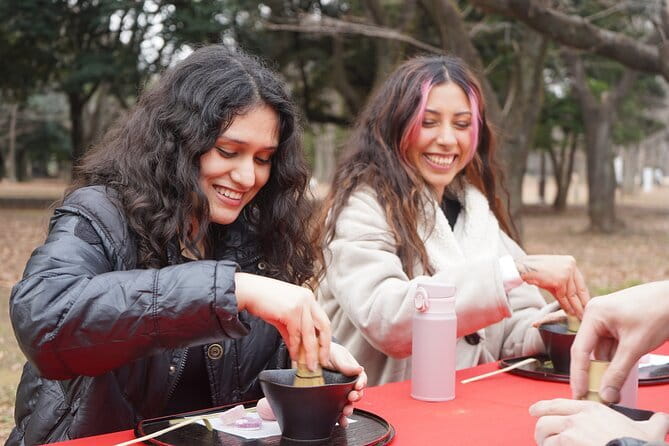
This is one of those Tokyo activities that works because it’s simple and focused. You’re in Yoyogi Park for a short, seasonal moment—sakura blooms overhead—then you turn that mood into something you can taste. Instead of watching a performance from the sidelines, you make matcha yourself.
The host’s approach is what makes it feel authentic. You’re learning Japanese tea culture in plain English, with a hands-on rhythm: you’ll see how matcha is prepared, then you’ll do the steps. That matters because matcha can look intimidating until someone breaks it down.
I also like that it’s not trying to turn spring into a rigid “perfect etiquette” lesson. You do not need special clothing or prior tea knowledge. You can show up like a normal visitor and still get a meaningful cultural experience.
More booked around Shibuya Crossing
- Official Street Go-Kart in Shibuya
★ 5.0 · 3,435 reviews - Tokyo: Street Kart Experience in Shibuya
★ 4.9 · 1,484 reviews - Shibuya Meltdown Nightlife Tour: All-You-Can-Drink Bar Hopping
★ 5.0 · 1,058 reviews - Shibuya Official Street Go-Kart in Shibuya Annex
★ 5.0 · 972 reviews
When it runs: the short cherry blossom window
This is a spring-only experience. It’s available only during cherry blossom season, typically starting around March 23 and running for about two weeks, depending on how the blossoms behave that year.
That seasonal limitation is part of the value. You’re not buying matcha in a random month—you’re buying matcha during the one time the park looks like a postcard. Just remember that timing is outside your control to a degree. If the blooms are late or early, your best move is booking with flexibility.
If weather is poor, the experience can be canceled and you’ll be offered a different date or a full refund. This is one of those tours where checking the forecast close to your date isn’t optional.
Where you meet in Harajuku and how the timing works
You’ll meet near Harajuku Station (address listed as 1 Chome-18 Jingumae, Shibuya, Tokyo). The experience ends back at the meeting point, and it runs about 1 hour total.
That one-hour length is a big plus for real-life itineraries. Tokyo is busy. You can fit this into your schedule without losing a half day to transit and lines. If you’re doing a first-day plan, it’s the kind of activity that helps you slow down right away.
Also, you’ll be with a small group—maximum 6 travelers. That keeps the pace relaxed and makes questions possible. It’s not a lecture, and it’s not a rushed photo stop either.
The ticket is mobile, which is handy if you’re using your phone for everything. And because the tour is near public transportation, you’re not stuck planning a complicated route.
The route feels local: Shibuya to Harajuku to Omotesando
Even though Yoyogi Park is the star, the experience is placed in a spring corridor you’ll recognize: Shibuya, Harajuku, and Omotesando.
Here’s how I’d think about it practically: you’re not taking a long coach ride out to a far suburb. You’re moving through neighborhoods that are already on your Tokyo map. That makes it easier to stitch into the rest of your day—especially if you’re already exploring around Shibuya and Harajuku.
You’ll spend time around Shibuya, then head to Yoyogi Park, then it connects back toward Harajuku Station and Omotesando. The tour isn’t about ticking off famous buildings. It feels more like: start in a lively area, step into a calmer park moment, then return to the city’s energy when you’re done.
One small detail I appreciated from prior participants is the kind of casual, curious talk the host encourages. That showed up as a fun question about the lack of trash cans you notice in busy areas. It’s a good reminder: the guide doesn’t just do tea facts—they talk like a real local teaching you how the city works.
Yoyogi Park sakura time: the atmosphere you’re really paying for
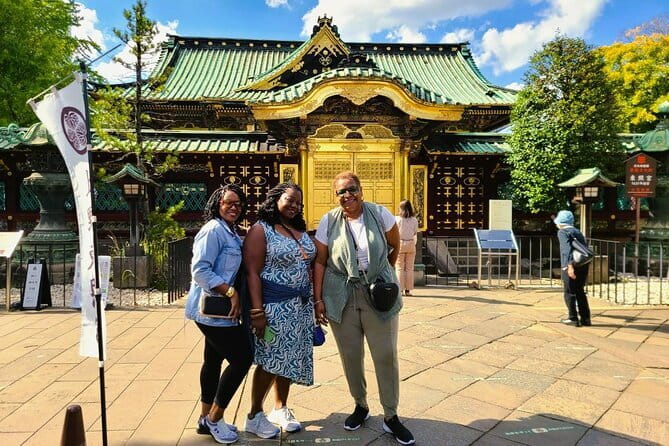
When you reach Yoyogi Park, the experience clicks into place. This is one of Tokyo’s most famous sakura areas, and it’s close enough to Shibuya that you get the best of both worlds: city access, park quiet.
The session is designed around the park moment. The idea is that you’re making and tasting matcha while the blossoms are around you—not after the bloom season has faded. That timing is why this works so well as a spring memory. It’s not just food. It’s food in context.
Because it’s a beginner-friendly format, you’re not waiting around for complicated setup. You’ll be guided through making matcha with traditional tools and then you’ll settle into tasting and conversation. The park gives you that breathing room where spring feels slower.
More tea rooms our readers rated
- Matcha Making Class in Tokyo with Authentic Japanese Sweets Set★ 5.0 · 744 reviews
- Tokyo: Traditional Tea Ceremony with a Tea Master★ 5.0 · 528 reviews
- Tokyo: Matcha Making Experience with Mochi Sweets in Asakusa★ 4.9 · 388 reviews
- Tokyo: Matcha and Kimono Experience★ 4.7 · 219 reviews
- Tea Ceremony Workshop in Tokyo by the Experienced Instrucor★ 5.0 · 189 reviews
Whisking Uji matcha: what you’ll learn in plain English
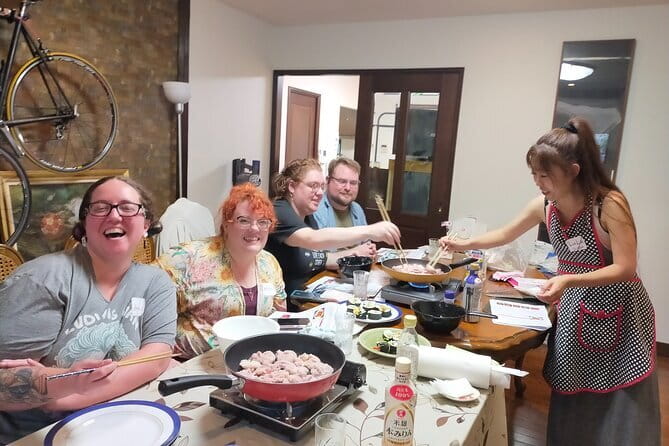
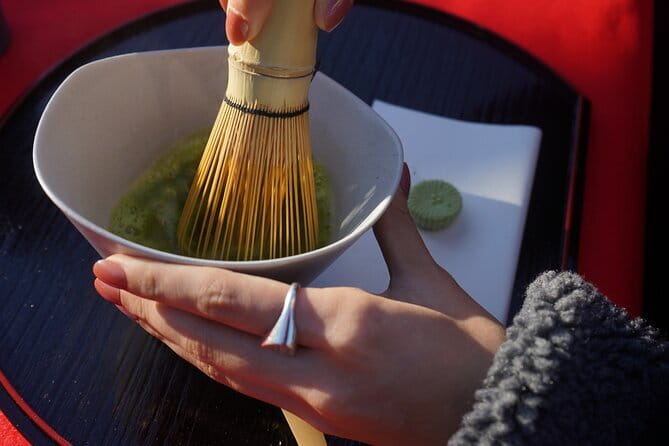
The core of the experience is matcha preparation. You’ll whisk your own bowl using traditional tools, with instruction from a certified Matcha Hospitality Adviser.
Why I think this is worth it: lots of “food tours” give you a bite and then move on. Here, the important part is the skill. Even if you never become the type who practices matcha at home, you’ll walk away understanding what you’re tasting—how it’s prepared, and what changes in texture and aroma.
You’re also served rare Uji matcha that’s normally not easy for visitors to find on their own. That matters because Uji is known for tea quality, but most tourists end up buying whatever is easiest. This experience does the sourcing work for you.
And it’s not a performance. It’s a teaching moment. If you’re the kind of person who asks questions (good move in Japan), you’ll likely enjoy the exchange. The vibe stays warm and simple.
Wagashi sweets: seasonal bites that pair with tea
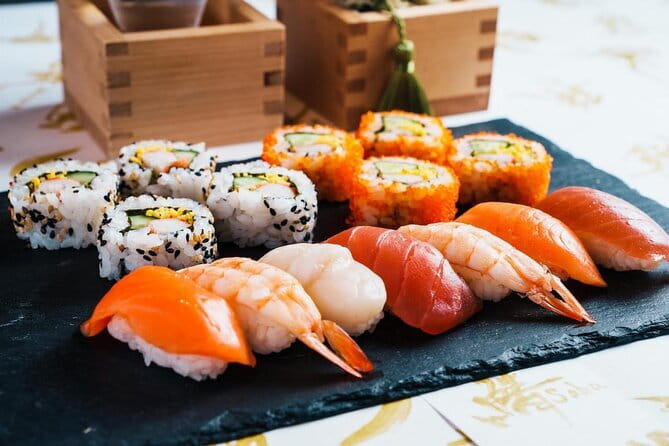
Included with the tea are seasonal Japanese wagashi sweets (plus snacks described as both traditional and modern Japanese sweets).
This is a practical inclusion, not a random add-on. Wagashi is part of how tea culture is experienced in Japan—sweetness designed to complement bitterness and matcha’s earthy notes. Since the sweets are seasonal, they also connect directly to sakura season, which makes the experience feel more “of the moment.”
You don’t need to be a sweets expert. Think of it like this: you’ll taste matcha, then you’ll taste the sweets that were chosen to match it, and you’ll learn to notice how they work together. That’s one of the quickest ways to understand Japanese tea culture without needing a full course.
Not a formal tea ceremony: the comfort level is intentional
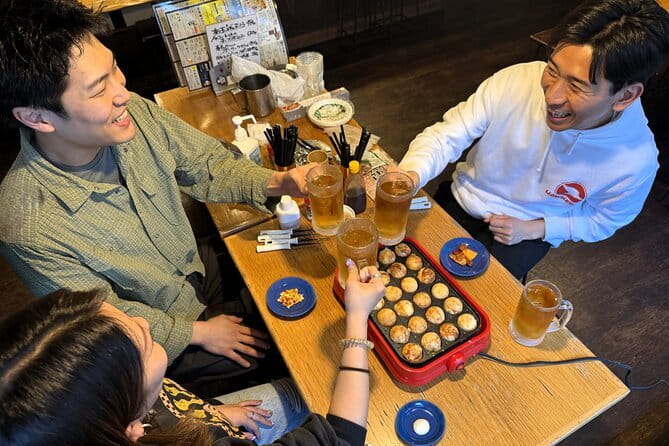
This is explicitly not a formal tea ceremony. That distinction is more important than it sounds.
A formal ceremony can be beautiful, but it can also feel strict if you’re new. Here, it’s designed to be relaxed and beginner-friendly. No dress code. No experience required. You can focus on learning how to whisk matcha and enjoying the sakura setting.
That also means the experience should feel less intimidating if you’re traveling solo or if you don’t want your plans to depend on “getting it right.” You’re there to taste and learn at a comfortable pace.
Photos in sakura season: how to get good shots without slowing everything down
The experience is naturally photo-worthy. Sakura + matcha + traditional tools is a strong visual combo, even if you’re not chasing professional images.
There’s also optional photo sessions. I like options like this because you can keep moving at the group’s pace and only take extra time if you really want it. Bring your normal spring-day gear: a charged phone/camera and a small light layer. Yoyogi Park can feel cooler than you expect depending on the day.
If you care about photos, this is the moment to get them—once the park mood fades, it’s harder to recreate the same feeling.
Small group size: why the max 6 matters
A maximum of 6 travelers might sound like a tiny detail, but it changes the whole experience.
With a small group, you’re more likely to get direct help as you whisk the matcha. That reduces the common “I’m doing it wrong” anxiety. It also means you can ask follow-up questions without feeling like you’re holding up a classroom.
It also helps the host keep the tone personal. This is where I think the experience earns its high rating. When the group is small, the guide’s energy feels human instead of scripted.
Price and value: what you’re really buying for $100.80
The price is listed as $100.80 per person, for about 1 hour.
To judge value, I’d break it down into what’s included versus what you’d pay on your own:
- Uji matcha and matcha-making tools (the sourcing is hard for most visitors)
- Seasonal wagashi sweets
- A certified adviser-led lesson, in English
- A sakura-season setting where the timing is the main “ingredient”
If you tried to DIY, you could buy matcha pretty easily. But getting rare Uji matcha, learning preparation properly, and pairing it with seasonal wagashi under prime sakura conditions is a different task. This tour bundles those pieces into one hour without requiring you to research tea gear, find the right sweets, and coordinate timing in the park.
So while it’s not cheap, the cost-to-experience ratio makes sense if you want an authentic cultural moment rather than a quick snack stop.
Also consider that cherry blossom season is busy. Being a shorter, guided session with a small group is often better value than spending the same time searching for the right place while you’re rushed by crowds.
Who should book this matcha picnic in Yoyogi Park?
I’d steer you toward this experience if you:
- Want a Tokyo spring activity that’s also hands-on
- Like learning small cultural details you can actually use later
- Prefer relaxed guidance over strict etiquette
- Are visiting around late March to early April and want to use that sakura timing well
- Want a solo-friendly plan that doesn’t feel awkward or locked into a big group
It’s also a solid choice for couples and families, since the pace is beginner-friendly and the setting is comfortable for casual sightseeing.
If you’re already a hardcore matcha nerd and you need deep technical theory, you might find it shorter than what you want. But if you want an enjoyable matcha introduction with real Uji quality and sakura atmosphere, this fits.
Should you book this Tokyo cherry blossom matcha experience?
If your travel dates line up with the sakura window and you’re okay with the reality that weather and bloom timing can affect the plan, I think it’s an easy yes.
Here’s my decision rule: book it if you want your Tokyo cherry blossom experience to include more than photos—specifically, if you want to whisk matcha yourself and taste seasonal wagashi in a guided, small-group setting. Skip it if your schedule is inflexible or you’re traveling with no wiggle room for a weather-dependent change.
One more practical tip: since the experience is small-group and spring-only, don’t wait until the last minute. Booking earlier gives you a better chance of landing the exact date you want.
FAQ
How long is the Tokyo cherry blossom matcha experience?
It lasts about 1 hour.
When is this experience available?
It’s available only during cherry blossom season, typically starting around March 23 for about two weeks depending on cherry blossom conditions.
What is the price per person?
The price is $100.80 per person.
Where does the experience start and end?
It starts at Harajuku Station (listed address: 1 Chome-18 Jingumae, Shibuya, Tokyo 150-0001) and ends back at the meeting point.
Is it a formal tea ceremony?
No. It’s a relaxed, beginner-friendly matcha picnic experience and not a formal tea ceremony.
What’s included in the experience?
It includes matcha making with traditional tools, seasonal Japanese wagashi sweets, several cups of matcha tea, and snacks (traditional and modern Japanese sweets). Coffee and/or tea are also included.
How many people are in the group?
The experience has a maximum of 6 travelers.
What if the weather is bad?
The experience requires good weather. If it’s canceled due to poor weather, you’ll be offered a different date or a full refund.
More Tour Reviews in Tokyo
- Mt Fuji and Hakone 1-Day Bus Tour Return by Bullet Train
★ 5.0 · 26,383 reviews - 1-Day Tokyo Bus Tour
★ 5.0 · 14,250 reviews - Tokyo: teamLab Planets TOKYO Digital Art Museum Entry Ticket
★ 4.6 · 9,779 reviews - Mt Fuji & Hakone Cruise, Drum Show Bullet Train 1 Day from Tokyo
★ 4.0 · 7,413 reviews - Tokyo: Shinjuku Food Tour (13 Dishes at 4 Local Eateries)
★ 5.0 · 6,603 reviews
More Tea and Matcha Rooms
- Matcha Making Class in Tokyo with Authentic Japanese Sweets Set
★ 5.0 · 744 reviews - Tokyo: Traditional Tea Ceremony with a Tea Master
★ 5.0 · 528 reviews - Tokyo: Matcha Making Experience with Mochi Sweets in Asakusa
★ 4.9 · 388 reviews - Tokyo: Matcha and Kimono Experience
★ 4.7 · 219 reviews - Tea Ceremony Workshop in Tokyo by the Experienced Instrucor
★ 5.0 · 189 reviews
More Around Shibuya Crossing
- Official Street Go-Kart in Shibuya
★ 5.0 · 3,435 reviews - Tokyo: Street Kart Experience in Shibuya
★ 4.9 · 1,484 reviews - Shibuya Meltdown Nightlife Tour: All-You-Can-Drink Bar Hopping
★ 5.0 · 1,058 reviews - Shibuya Official Street Go-Kart in Shibuya Annex
★ 5.0 · 972 reviews - Tokyo: Shibuya Food Tour (13 dishes and 4 Eateries)
★ 5.0 · 770 reviews
Latest Tokyo reviews off our desk






Shibuya Experiences, compared.
 ★ 5.0Official Street Go-Kart in ShibuyaFrom $763,435 reviews
 ★ 4.9Street Kart Experience in ShibuyaFrom $741,484 reviews
 ★ 5.0Shibuya Meltdown Nightlife Tour: All-You-Can-Drink Bar HoppingFrom $1061,058 reviews
 ★ 5.0Shibuya Official Street Go-Kart in Shibuya AnnexFrom $69972 reviews
 ★ 5.0Shibuya Food Tour (13 dishes and 4 Eateries)From $77770 reviews
 ★ 5.0Best of Shibuya Food TourFrom $217612 reviews
 ★ 4.8Shibuya Highlights Walking TourFrom $19601 reviews
 ★ 4.7Premium Go-Kart Tour with Tower & Shibuya CrossingFrom $116528 reviews
Browse the lists this tour appears in