
Reviewed · TEA CEREMONY & MATCHA
Tea Ceremony Workshop in Tokyo by the Experienced Instrucor
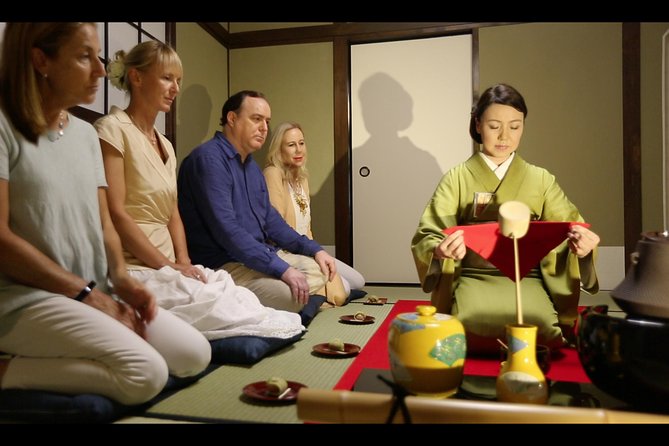
Tea, quiet, and matcha with real technique. This Tokyo workshop teaches Chado through a school licensed by the Urasenke Chado School in Kyoto, so you’re learning from a legit lineage, not just a quick demo. I also like that you start with a Sakura tea welcome and a short intro video that frames what you’re about to do.
The hands-on part is the payoff: you practice serving in both roles, host and guest, then make usucha (thin matcha) yourself after a formal look at koicha. This is the kind of class where you leave with a real sense of how the ritual works, not just a photo-op.
One practical catch: the tea room sits on the second floor of an older 1940s building with steep stairs, and socks are required inside. If stairs and foot rules are an issue, plan ahead before you book.
In This Review
- Key Highlights at a Glance
- Entering Chado in Asakusa, Not Just Trying Matcha
- Sakura Tea Welcome and the 10-Minute Chado Setup Video
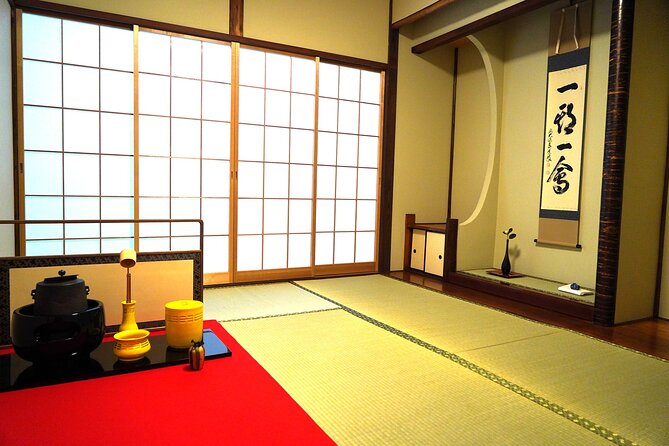
- The Tea Room Rules: Socks, Second-Floor Stairs, and Tatami Options
- How Koicha and Usucha Fit Together (Strong vs Thin Matcha)
- Your Role Matters: Host-Style Serving and Guest-Style Tasting
- Tea Bowl Talk, Matcha Powder Basics, and Why Foam Matters
- Confections and Tasting Moments That Keep You Grounded
- Dress Code and What to Bring (So You Don’t Get Stuck in the Hall)
- Location Details: The Address Confusion You Should Know About
- Price and Value: Why $38.47 Feels Fair for a Real Ceremony
- Timing, Group Size, and How to Pick the Right Slot
- Who Should Book This Tea Ceremony Workshop
- Quick FAQ Before You Go
- FAQ
- Is this tea ceremony workshop long or short?
- Where is the meeting point in Tokyo?
- What’s the dress code?
- Do I have to sit in seiza on the tatami mats?
- What if I can’t sit on the tatami?
- Is the tea room on the ground floor?
- How big is the group?
- Will there be English explanations?
- Can I get a full refund if my plans change?
- Should You Book This Tokyo Tea Ceremony Workshop?
Key Highlights at a Glance
- Urasenke-linked instruction from a school licensed in Kyoto
- Two matcha styles: koicha (strong) and usucha (thin)
- Hands-on serving practice in both host and guest moments
- Tatami tea room with meditation time (more calm than class)
- Small group size (max 6 people) for a more personal pace
Entering Chado in Asakusa, Not Just Trying Matcha
If you’ve tried matcha in Tokyo, you already know the flavor can be good. This experience is about something else: the way tea becomes a lived-in form of attention. Chado isn’t only what you taste. It’s how you move, how you pause, and how you treat the people across from you.
I like that this workshop is run through a school licensed by the Urasenke Chado School in Kyoto. That matters. A lot of tea experiences stop at “here’s how you whisk.” This one keeps returning to the structure and meaning behind the steps, which makes the whole hour-and-a-half feel more coherent.
And since it’s in the Asakusa area (meeting point in Taito City, near public transportation), it’s an easy fit. You’re not taking a half-day detour out of the city. You’re tying it into a normal Tokyo day.
More tea rooms our readers rated
- Matcha Making Class in Tokyo with Authentic Japanese Sweets Set
★ 5.0 · 744 reviews - Tokyo: Traditional Tea Ceremony with a Tea Master
★ 5.0 · 528 reviews - Tokyo: Matcha Making Experience with Mochi Sweets in Asakusa
★ 4.9 · 388 reviews - Tokyo: Matcha and Kimono Experience
★ 4.7 · 219 reviews
Sakura Tea Welcome and the 10-Minute Chado Setup Video
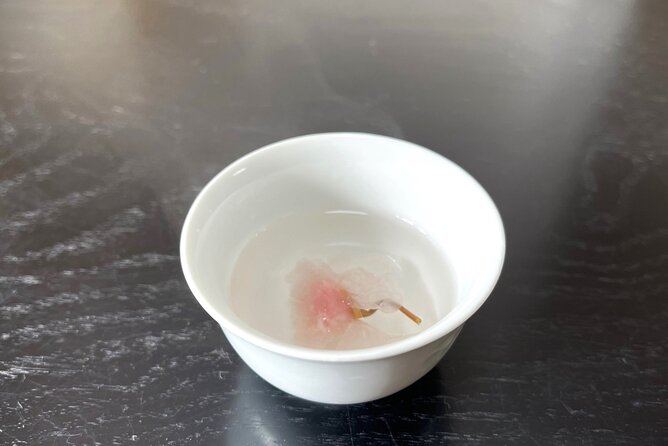
The flow starts gently, not with a sudden burst of technical terms. You begin with a Sakura tea welcome drink served by the host. It’s a small moment, but it works like a reset button. Cherry blossom flavor is often playful in Japan, but in this context it’s used to set a soft tone before the ritual begins.
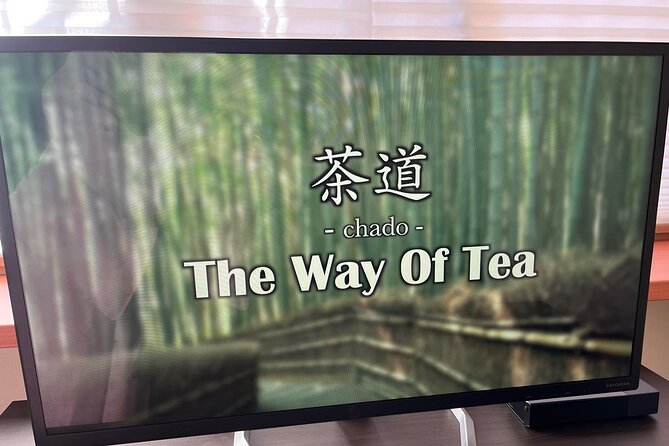
Then you get an intro video (about 10 minutes) covering the history and core concepts of Chado. You don’t need to be a Japan-history expert to follow. The goal is to give you a mental map: why tea is treated as more than a beverage, and what the ceremony is trying to cultivate—calm, respect, and presence.
This also helps you appreciate the later parts. When you understand the “why,” koicha and usucha stop feeling like random matcha variations and start feeling like two purposeful stages of the same tradition.
The Tea Room Rules: Socks, Second-Floor Stairs, and Tatami Options
This is the part you should check twice before you book. The tea room is on the second floor in an older Japanese house built in the 1940s. The staircase is described as very steep, and there’s no machinery to help with going up. If you have mobility concerns, don’t just assume you’ll manage it.
Inside, socks are required. That means you’ll want to show up prepared with clean socks you don’t mind wearing for the lesson. Bare feet aren’t allowed in the tea room, so plan for that too.
Seating is another thing to be aware of. You do not have to sit in seiza (bending knees style) on tatami mats. And if you can’t sit on tatami in any way, the workshop can provide a chair. That flexibility is a big deal for comfort. It lets you focus on the ceremony instead of fighting your body.
One more practical wrinkle: the tea room is in an old house, and there’s a weight capacity. Even if a group is listed as a certain size, the host may ask your group to shift workshop time to balance safety. If that’s a concern for your plans, you can ask ahead of time.
How Koicha and Usucha Fit Together (Strong vs Thin Matcha)
Most matcha experiences stop at taste. This one builds a comparison.
First comes the formal performance for koicha, the main matcha tea in the ceremony. Koicha is the strong, traditional form. The experience description also frames it historically as the style originally drunk by samurai. Whether or not you connect with the samurai angle, you’ll still notice the difference in the tea’s feel and intensity.
After koicha, you move into the tea bowl education, which I found genuinely useful. You learn about the variety of tea bowls from different regions, and how a bowl’s shape can change the tasting experience. That’s one of those details that’s easy to miss in casual classes. But it’s exactly what makes the ceremony more than “matcha with a whisk.”
Then you land on usucha, thin matcha. Here’s where the workshop shifts from watching to doing.
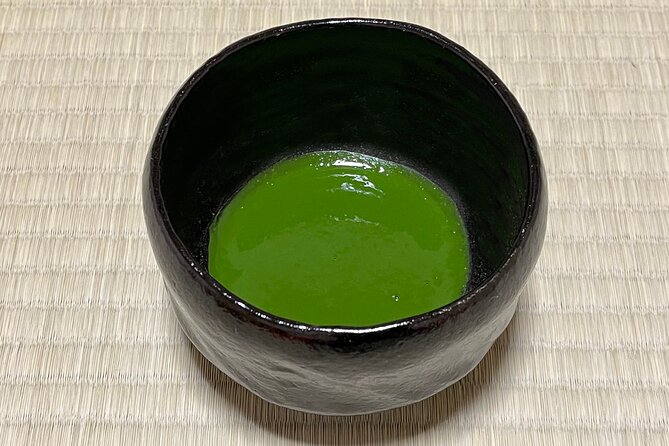
You make a bowl of usucha yourself during the hands-on lesson, learning how the matcha powder and water come together, and how a thick foam forms on top. You’ll also get time to taste and experience what you made, not just admire someone else’s technique.
Your Role Matters: Host-Style Serving and Guest-Style Tasting
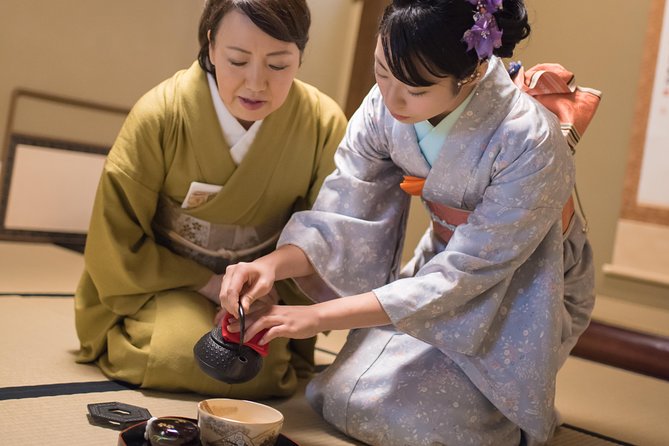
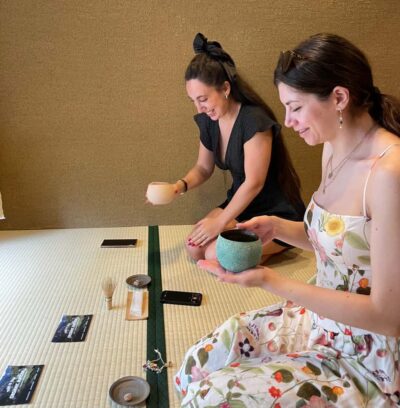
A strong reason to book is that the lesson isn’t only about mixing matcha. You practice serving as both a host and a guest. That changes your mindset fast.
Host moments teach you the ceremony’s rhythm: when to move, how to present, and how to handle the tea tools with care. Guest moments teach you how to receive: how to watch, how to taste, and how to participate without rushing.
In a small setting, these roles become easier to learn. If you’re in a group where everyone is paying attention, you’ll feel the shift from “lesson” to “shared ritual.” And because the workshop caps at a maximum of 6 people, the pace stays manageable. You’re not stuck waiting your turn while someone else gets all the attention.
Readers also shortlisted these Tokyo bookings:
- Sushi Making Tokyo Roll and Authentic Japanese Sushi Class★ 5.0 · 3,971 reviews
- Tokyo: Roll and Authentic Sushi Making Class in Asakusa★ 4.9 · 1,957 reviews
- Tokyo Shinjuku Chopsticks Making Class★ 5.0 · 1,763 reviews
- Tokyo: Sushi Making Class in a Happi Coat near a Famous Spot★ 4.9 · 1,377 reviews
- Chopstick Making Workshop in Ginza★ 4.8 · 1,366 reviews
Tea Bowl Talk, Matcha Powder Basics, and Why Foam Matters
There’s a clear sequence to what you learn, and it helps you understand what you’re tasting.
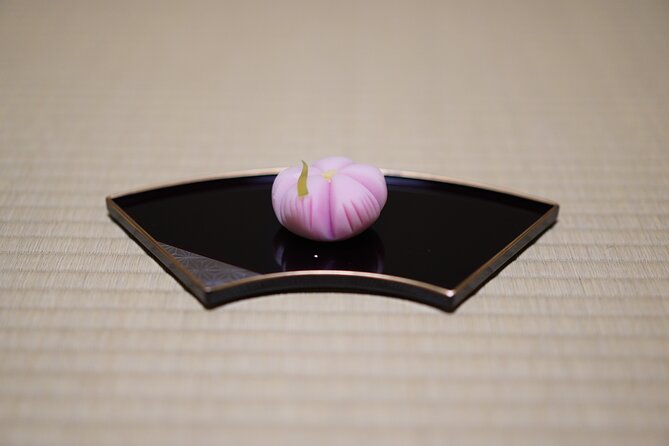
You get a matcha overview—what matcha powder is, how it behaves, and why whisking changes the result. Then you focus on the foam. In usucha, that foam matters because it affects how the tea feels in your mouth and how the flavor carries.
The tea bowl lesson adds another layer. Even without being a ceramics fan, you can start noticing how bowl shape influences the experience. You’re not just collecting information; you’re building a sensory checklist for when you buy matcha later and want to compare.
If you’re the type who likes small, concrete learning goals, this workshop is very “doable.” You’re not handed a book. You’re given just enough structure to make the tasting meaningful.
Confections and Tasting Moments That Keep You Grounded
Food in a tea ceremony can be a distraction if it’s treated like a snack table. Here it’s timed to support the pacing.
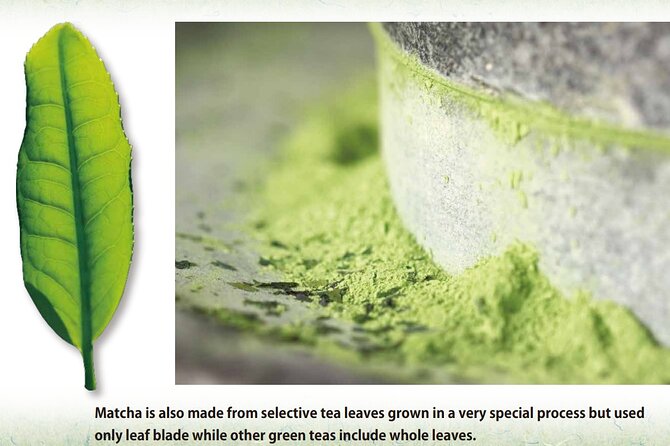
You enjoy traditional Japanese confectionery, including three kinds of local Japanese sweets. Before the usucha, you also get dry sweets. Then you drink usucha and matcha.
That matters because sweetness resets your palate. It also adds to the feeling of ceremony: a sequence rather than a single heavy drink. And if you prefer tea without sugar, you can still enjoy the contrast in a controlled, ceremonial way.
In the tone of the workshop, there’s also a meditation moment. It’s not presented as a performance. It’s more like a short pocket of stillness where you stop mentally multitasking and just pay attention to what’s happening in front of you.
Dress Code and What to Bring (So You Don’t Get Stuck in the Hall)
This is where small preparation saves you stress.
The workshop asks for clothing that’s practical for a tea room setting. Miniskirts and tight pants are not recommended. That’s about movement and comfort on the floor and around the ceremony setup.
Also: no bare feet. Bring socks. If you’re prone to forgetting small things, put socks in your day bag the night before.
If you plan on wearing shoes for walking around Tokyo, keep it simple. You’ll switch into socks for the tea room, then back out after.
Location Details: The Address Confusion You Should Know About
One of the most helpful bits of info here is the exact address correction. The note says the new address is 2-3-12 (and that some maps may show 2-3-3).
Meet at: 2-chōme-3-12 Kotobuki, Taito City, Tokyo 111-0042, Japan. The activity ends back at the meeting point.
Because this is a “find the building” kind of workshop (and the tea room is on the second floor), I recommend doing this: screenshot the address and also check what the closest station is for your route. Then arrive a little earlier than you think you need. In old Tokyo neighborhoods, one wrong turn can add walking time.
Price and Value: Why $38.47 Feels Fair for a Real Ceremony
At $38.47 per person, this isn’t priced like a luxury five-course tea experience. It’s also not priced like a basic matcha tasting.
Here’s what you’re really paying for:
- instruction through a Urasenke-linked program
- a structured sequence that includes koicha performance and usucha hands-on practice
- tasting: multiple matcha experiences plus three kinds of local sweets and a Sakura welcome drink
- a small group limit that keeps the class from turning into a big assembly line
For many people, the best value isn’t the matcha itself. It’s the ability to participate. You leave with the memory of how the ceremony flows and the muscle memory of making usucha.
And since it offers multiple workshop times, you can usually fit it around a busy Tokyo schedule. That flexibility is part of the value, even when you’re paying a fixed price.
Timing, Group Size, and How to Pick the Right Slot
The workshop runs about 1 day, 1 hour 30 minutes (approx.). That’s a comfortable length: long enough to learn the sequence, short enough that you won’t feel like your day got swallowed.
It’s designed for participants age 10 and above. If you’re traveling with kids in that range, this can be a calmer alternative to a louder activity.
Group size matters here. The experience has a maximum of 6 travelers, and many people have described the setting as intimate and interactive. In a group that small, you’re less likely to feel ignored, and the instructor can correct details.
Also, dress and comfort rules help keep things smooth. If you plan to sit on tatami, pick clothing that won’t irritate you when you’re kneeling or shifting. If you prefer a chair, know that option exists.
Who Should Book This Tea Ceremony Workshop
This class fits best if you want:
- an authentic Chado structure rather than a quick matcha demo
- hands-on practice with usucha
- a quiet, meditative break in your Tokyo day
- a small group setting where the instructor can explain each step
It may be less ideal if:
- you don’t want to deal with steep stairs to a second-floor tea room
- you hate rules like socks-only inside
- you’re looking for a very long, multi-hour formal ceremony (this is a workshop format)
Quick FAQ Before You Go
FAQ
Is this tea ceremony workshop long or short?
It runs about 1 hour 30 minutes (approx.), so it’s a good fit if you want a meaningful cultural activity without taking over your whole day.
Where is the meeting point in Tokyo?
You meet at 2-chōme-3-12 Kotobuki, Taito City, Tokyo 111-0042, Japan, and the activity ends back at the same meeting point.
What’s the dress code?
Miniskirts and tight pants are not recommended. You also can’t go barefoot in the tea room, so bring socks.
Do I have to sit in seiza on the tatami mats?
No. You don’t have to sit in the seiza style on tatami.
What if I can’t sit on the tatami?
If you can’t sit on the tatami mats in any way, the workshop can provide a chair.
Is the tea room on the ground floor?
No. The tea room is on the second floor, and the staircase is described as very steep.
How big is the group?
The experience has a maximum of 6 people.
Will there be English explanations?
Yes. The instructor is described as fluent in English.
Can I get a full refund if my plans change?
Yes. There is free cancellation, and you can cancel up to 24 hours in advance for a full refund.
Should You Book This Tokyo Tea Ceremony Workshop?
Yes, if you want a real Chado experience with hands-on practice and a calm pace. The combination of Urasenke-linked instruction, koicha-to-usucha structure, and a small group size makes it feel like you’re learning something you can actually carry with you.
But check your comfort first. The second-floor tea room in a 1940s house with steep stairs is the biggest “be sure” factor. If you’re fine with that and you’re willing to wear socks and dress appropriately, you’ll likely come away feeling calmer, more informed, and oddly proud of your own cup of usucha.
More Workshops in Tokyo
- Sushi Making Tokyo Roll and Authentic Japanese Sushi Class
★ 5.0 · 3,971 reviews - Tokyo: Roll and Authentic Sushi Making Class in Asakusa
★ 4.9 · 1,957 reviews - Tokyo Shinjuku Chopsticks Making Class
★ 5.0 · 1,763 reviews - Tokyo: Sushi Making Class in a Happi Coat near a Famous Spot
★ 4.9 · 1,377 reviews - Chopstick Making Workshop in Ginza
★ 4.8 · 1,366 reviews
More Tour Reviews in Tokyo
- Mt Fuji and Hakone 1-Day Bus Tour Return by Bullet Train
★ 5.0 · 26,383 reviews - 1-Day Tokyo Bus Tour
★ 5.0 · 14,250 reviews - Tokyo: teamLab Planets TOKYO Digital Art Museum Entry Ticket
★ 4.6 · 9,779 reviews - Mt Fuji & Hakone Cruise, Drum Show Bullet Train 1 Day from Tokyo
★ 4.0 · 7,413 reviews - Tokyo: Shinjuku Food Tour (13 Dishes at 4 Local Eateries)
★ 5.0 · 6,603 reviews
More Tea and Matcha Rooms
- Matcha Making Class in Tokyo with Authentic Japanese Sweets Set
★ 5.0 · 744 reviews - Tokyo: Traditional Tea Ceremony with a Tea Master
★ 5.0 · 528 reviews - Tokyo: Matcha Making Experience with Mochi Sweets in Asakusa
★ 4.9 · 388 reviews - Tokyo: Matcha and Kimono Experience
★ 4.7 · 219 reviews - Tokyo: Asakusa Kimono Dressing and Matcha Experience
★ 4.9 · 173 reviews
Latest Tokyo reviews off our desk




Tea Ceremony & Matcha, compared.
 ★ 5.0Matcha Making Class in Tokyo with Authentic Japanese Sweets SetFrom $21744 reviews
 ★ 5.0Traditional Tea Ceremony with a Tea MasterFrom $38528 reviews
 ★ 4.9Matcha Making Experience with Mochi Sweets in AsakusaFrom $22388 reviews
 ★ 4.7Matcha and Kimono ExperienceFrom $57219 reviews
 ★ 4.9Asakusa Kimono Dressing and Matcha ExperienceFrom $56173 reviews
 ★ 4.9Asakusa: Kimono Tea Ceremony with Matcha and SweetFrom $66153 reviews
 ★ 5.0Make Traditional Nerikiri Sweets & Matcha experience in ShibuyaFrom $60130 reviews
 ★ 4.9Tea Ceremony Experience in a Private Tea Room in ShibuyaFrom $30125 reviews
Browse the lists this tour appears in