
Reviewed · SHINJUKU FOOD & BAR TOURS
Tokyo: Dark Side of Tokyo Shinjuku Red Light Walking Tour
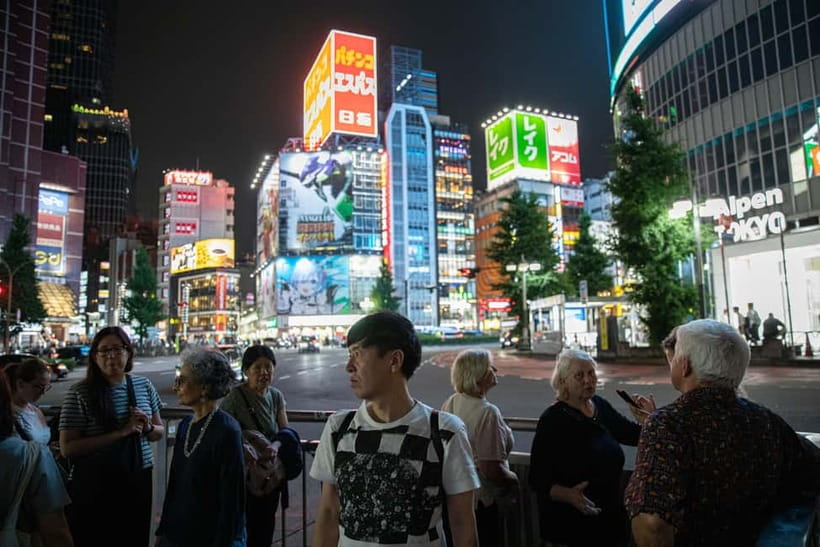
Neon streets with a backstory. This 2-hour Shinjuku Red Light Walking Tour puts you right into Kabukicho nightlife and helps you understand what you’re seeing, while a live guide shares food recommendations in English or Spanish. You’ll move from bright neon zones toward more traditional corners, with guides like Dani and Gray mentioned for their humor and clear storytelling.
One key consideration: the meeting point can be tricky if it’s your first day in Tokyo, and the tour does not wait for late arrivals. Plan to arrive early so you can start smoothly instead of hunting for the group at Shinjuku Station.
In This Review
- Key highlights to look forward to
- Kabukicho after dark: why this tour feels different from just sightseeing
- Getting oriented at Shinjuku: the start matters more than you think
- Omoide Yokocho: narrow alleys and the street-food mindset
- Kabukicho: neon signage, red-light roots, and modern entertainment
- Golden Gai: why tiny bar lanes feel like a different city
- Hanazono Shrine: a traditional break inside the nightlife zone
- Shinjuku 2 Chome: finishing your bearings near the action
- Price and value: why $29 for a guided night can be worth it
- Who this tour suits best (and who should skip it)
- Practical tips so you enjoy the night (without stress)
- Should you book this Shinjuku Red Light Walking Tour?
- FAQ
- How long is the Tokyo Shinjuku Red Light Walking Tour?
- What does the tour cost?
- Where do I meet for the tour?
- Where will the tour end?
- What languages are the guides?
- What’s included in the price?
- Is alcohol allowed during the tour?
- Is the tour suitable for children?
- Can I cancel and do I pay right away?
Key highlights to look forward to
- Kabukicho after dark: the big Shinjuku entertainment area, explained as more than just signage and street noise
- Omoide Yokocho alley stop: a classic narrow-street vibe with a strong food-focus feel
- Golden Gai bar lanes: smaller nooks and lanes that make Shinjuku feel like a maze (in a good way)
- Hanazono Shrine pause: a calmer, traditional moment inside a nightlife-heavy evening
- A guide who points you toward next steps: ideas for drinks and what to eat after the tour
- An orientation for first-time Shinjuku visitors: you leave with a better sense of where everything is and how it all connects
Kabukicho after dark: why this tour feels different from just sightseeing
Shinjuku is loud in every sense of the word. But this tour helps you read the area like a local: you’re not just looking at neon, you’re learning how the district’s reputation and spaces evolved over time. That turns the evening from random wandering into a guided “orientation” you can build on for the rest of your trip.
I also like that the tour is short enough to fit your schedule but still covers several distinct areas. In two hours you get a mix of neon entertainment streets plus a shrine stop, which is a smart way to understand why Shinjuku is both modern and deeply Japanese at the same time.
The route also has an adult edge. It’s aimed at nightlife culture, and you should go with curiosity and common sense. If you’re easily uncomfortable with red-light district topics, this may not be your best first pick.
More Shinjuku plates and pours our readers rated
- Tokyo: Shinjuku Food Tour (13 Dishes at 4 Local Eateries)
★ 5.0 · 6,603 reviews - Tokyo Bar Hopping Tour in Shinjuku (All-You-Can-Drink + Dinner)
★ 5.0 · 3,587 reviews - Tokyo: Shinjuku Food Tour (15 Dishes and 4 Eateries)
★ 4.9 · 2,033 reviews - Best of Shinjuku: Izakaya Food Tour (4 Stops, 14+ Tastings)
★ 5.0 · 1,863 reviews
Getting oriented at Shinjuku: the start matters more than you think
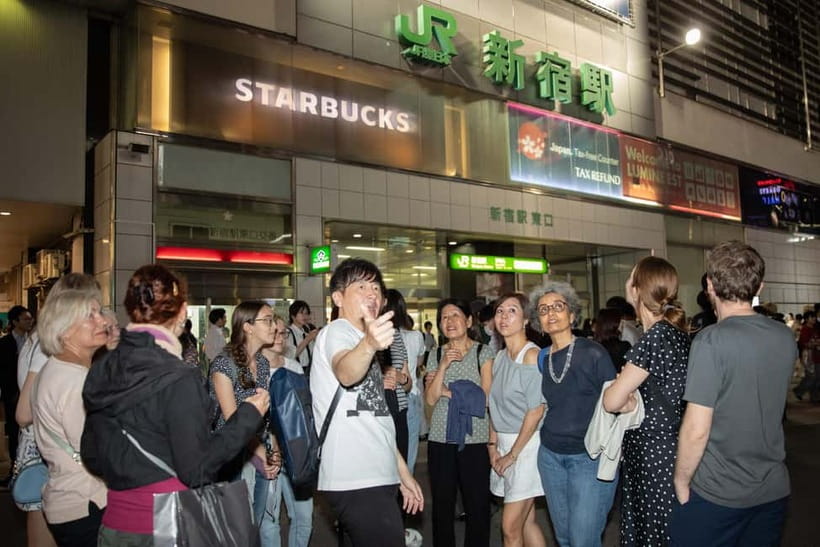
Your start is either at the Shinjuku Tourist Information Center or at the Shinjuku Station East Exit Police Box. The exact meeting point depends on what you booked, and the organizer notes that it can be hard to find if you’re new to Tokyo.
Shinjuku Station is one of the world’s biggest stations, so arriving early is not a small detail here. If you miss the group, they do not wait for late customers. I’d treat this like a tight flight connection: find your exact meeting point, then give yourself extra buffer time to avoid stress.
Once the group connects, you get a brief guided start before you move into the main alley and entertainment areas. That early structure helps because the later streets can feel confusing fast, especially when you’re surrounded by signs, crowds, and side streets.
Omoide Yokocho: narrow alleys and the street-food mindset
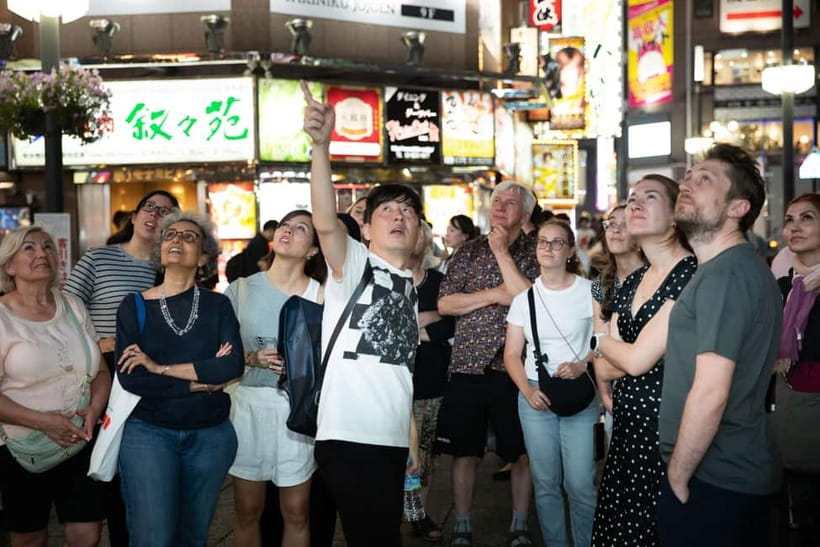
The tour includes a guided visit to Omoide Yokocho for about 20 minutes. This is the kind of place where the space does the talking: narrow lanes, intense energy, and a strong “grab a bite” atmosphere.
What I like about adding Omoide Yokocho to a red-light area tour is the balance. Instead of treating the nightlife theme like one long party street, you get a sense of how food culture anchors the experience. Even if you’re not planning to eat during the walk, you’ll come away with a clear idea of the kind of places you want to return to later.
One practical thought: because it’s a tight alley area, expect slower movement and plenty of people around. Wear shoes that can handle crowds, and keep your phone ready for photos only when you can do it without blocking others.
Kabukicho: neon signage, red-light roots, and modern entertainment
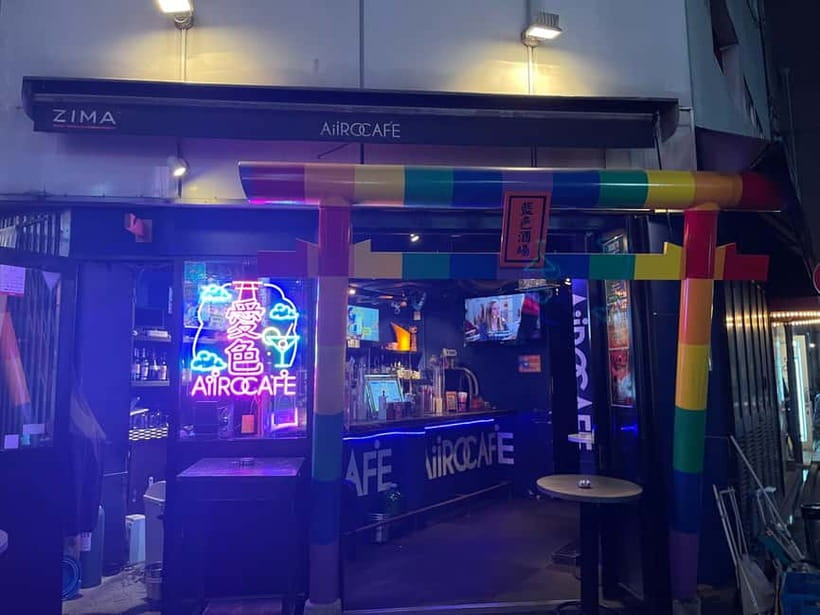
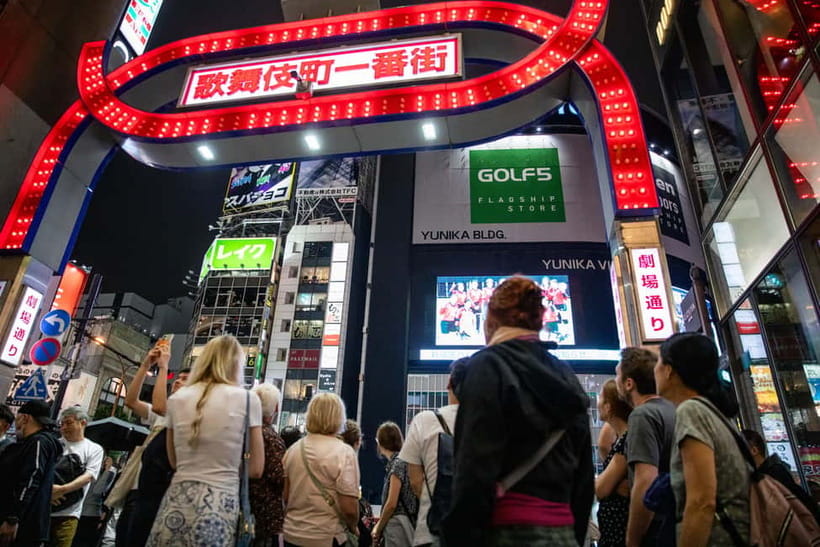
Kabukicho gets the biggest time block on the walk, with about 40 minutes of guided time. This is Shinjuku’s best-known entertainment district, and it’s also where the tour’s theme really shows up.
You’ll walk through the alleys and streets where lights come alive as the evening progresses. The guide’s job here isn’t just pointing out bars and venues. It’s explaining the cultural significance of Kabukicho—how it started with red-light district roots and how it became a wider entertainment destination.
I find that context changes everything. Without it, it’s easy to see Kabukicho as just chaos. With the guide, you start noticing patterns: how the district’s identity is written into its streets, its crowds, and even the types of nightlife options you pass along the way.
This is also the part of the tour that overlaps with LGBTQ nightlife energy in Shinjuku, since the tour highlights the neon around that scene. You don’t need to be part of that community to enjoy the stop, but you should go with respect and an open, observant attitude.
Golden Gai: why tiny bar lanes feel like a different city
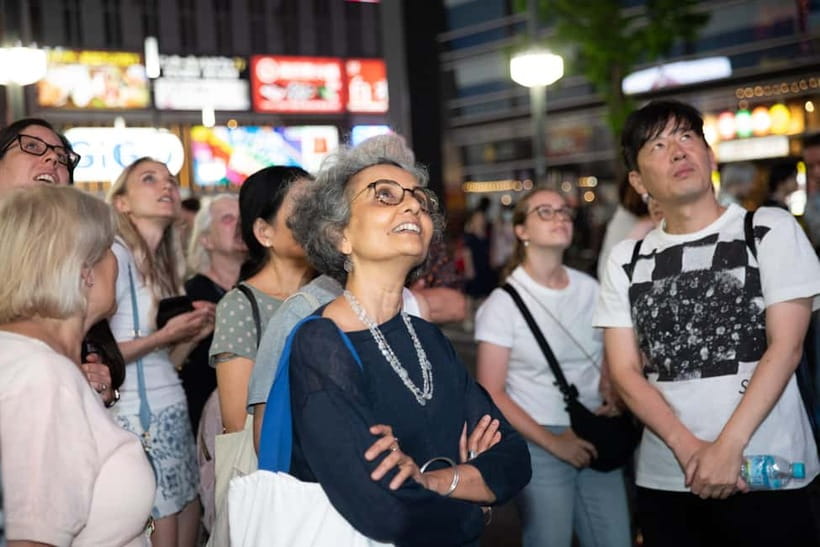
Golden Gai is included for about 20 minutes. If you’ve ever seen photos of the place—rows of small doors, narrow lanes, and stacked signage—this is where your mental map clicks.
Golden Gai can feel like a puzzle box inside Shinjuku. The tour’s guided approach matters because it helps you understand how the lanes work and what they’re known for. Instead of just counting bars, you get the sense of how the area is structured for nightlife browsing.
A big plus here is momentum. After Kabukicho’s larger streets, Golden Gai’s tighter scale makes the district feel more personal. You slow down naturally, notice details more, and get better ideas for where you might want to go later in the evening.
Just remember: it’s a nightlife spot, so keep your voice level and your movements smooth. If a door is closed or a lane feels crowded, step aside and let the flow happen. You’ll enjoy it more.
Readers also shortlisted these Tokyo bookings:
- Tokyo Tsukiji Fish Market Food and Culture Walking Tour★ 5.0 · 3,184 reviews
- Tokyo: Imperial Palace and Shogun Historical Walking Tour★ 5.0 · 2,251 reviews
- Tokyo: Shinjuku Local Bar and Izakaya Guided Walking Tour★ 4.9 · 1,794 reviews
- Tokyo: Tsukiji Fish Market Food and Walking tour★ 5.0 · 1,724 reviews
- Tokyo: Asakusa Walking Tour with Sensoji Temple Visit★ 4.8 · 1,583 reviews
Hanazono Shrine: a traditional break inside the nightlife zone
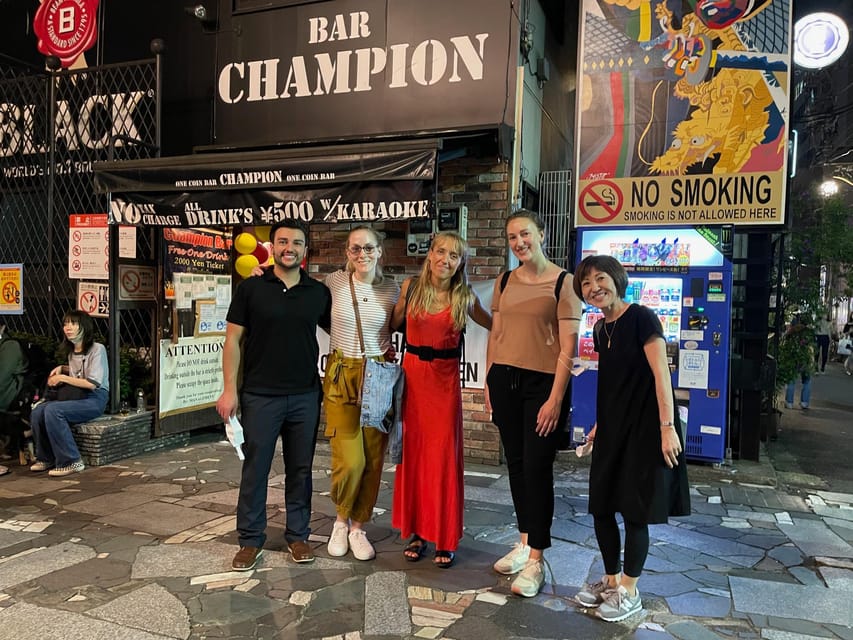
About 20 minutes are set aside for Hanazono Shrine. This stop is important because it gives you a contrast point. In a night dominated by neon and entertainment, you get a more traditional setting to balance out the sensory overload.
Think of it as a mental reset. You’re still in Shinjuku, still close to the adult nightlife scene, but the atmosphere changes. A shrine stop also helps you see that Tokyo isn’t one-dimensional at night; old and new share the same city streets.
If you’re the kind of traveler who likes meaning behind place names, this is a good moment to ask questions. The guide can connect what you’re seeing in the entertainment districts to broader ideas about Japanese customs and how public spaces behave.
Shinjuku 2 Chome: finishing your bearings near the action
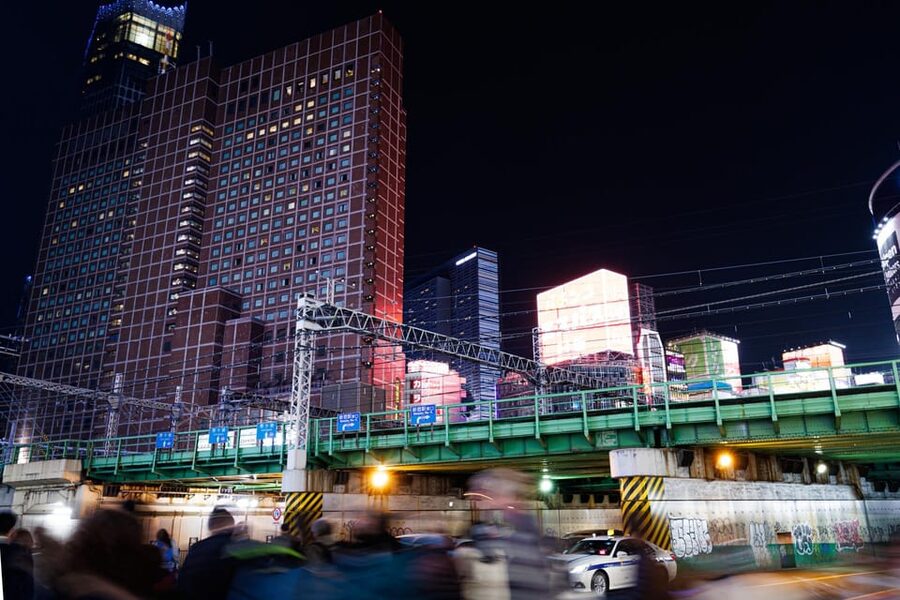
The walk also includes a visit to 2 Chome for about 20 minutes, and the tour offers two possible drop-off areas: Shinjuku Golden-Gai or 3 Chome. That gives you flexibility depending on where you’d rather continue your evening.
2 Chome is a smart final zone because it helps you round out the map. By the time you reach this part of the route, you’ve already seen the big Kabukicho area, worked your way through Omoide Yokocho’s alley feel, and explored Golden Gai’s lane network. So 2 Chome becomes the link between what you learned and what you can try next.
If you want to keep exploring after the tour, this is the kind of ending that reduces guesswork. You’ll know which streets to head toward for drinks, and you’ll have a clearer sense of how to navigate without constantly checking your map.
Price and value: why $29 for a guided night can be worth it
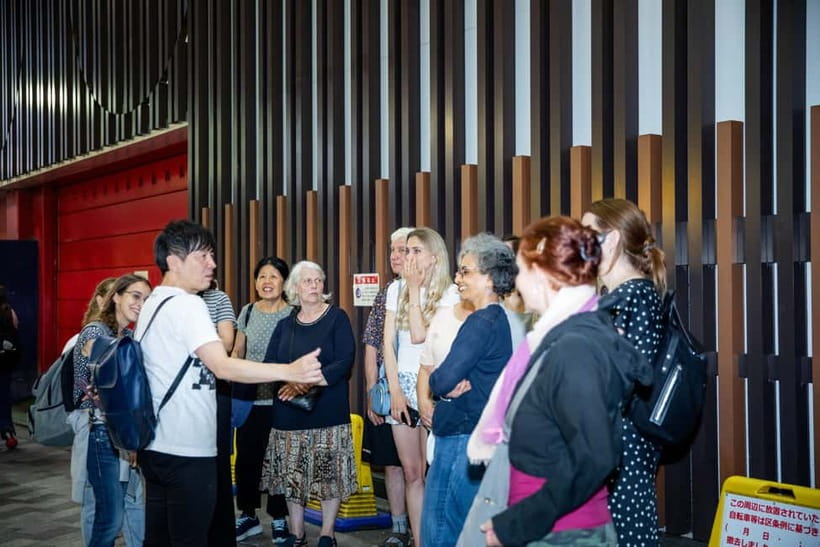
At $29 per person for a two-hour guided walk, the value depends on what you want from Tokyo at night. If your goal is simply to see neon, you can do it on your own. But if you want interpretation—why these districts look and behave the way they do—this price can make sense quickly.
You’re paying for three things:
- A live guide who manages the route through busy nightlife areas
- Cultural context around Kabukicho’s evolution and Shinjuku’s nightlife culture
- Practical recommendations for where to eat and drink afterward
Reviews attached to this experience strongly emphasize the guide factor. Names like Dani, Gray, Loc, and Polina show up in the feedback, and the consistent theme is that guides keep things fun while explaining what you’re seeing. Food suggestions also come up often, like recommendations that lead people straight to okonomiyaki or ramen after the tour.
So the deal isn’t a meal included—it’s clarity. In a place as complex as Shinjuku, “clarity” is what you’re buying.
Who this tour suits best (and who should skip it)
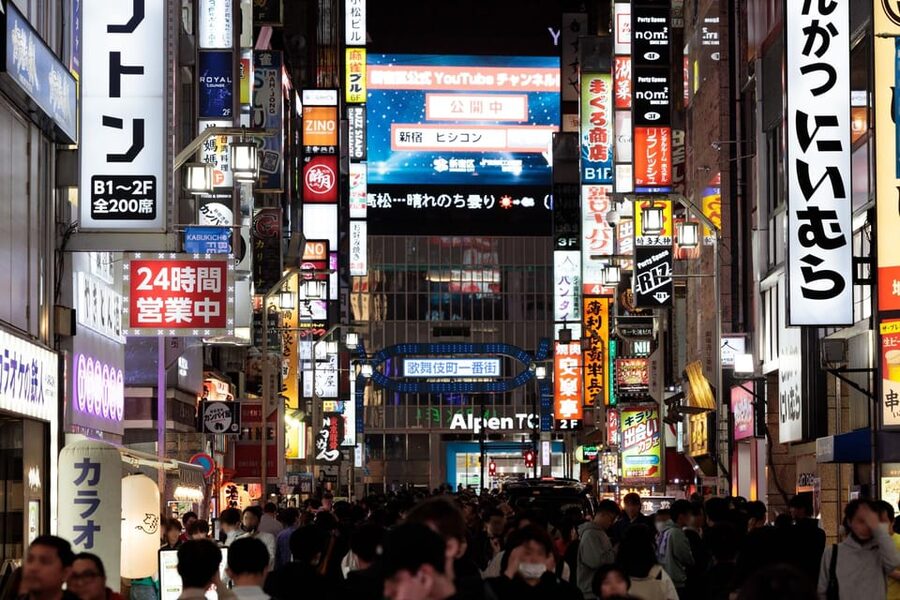
This tour fits best if you want a first-night orientation to Shinjuku’s adult nightlife zone. It’s also a good pick if you like walking tours with storytelling, not just photos. If you’re coming in on your first day in Tokyo, it can help you avoid wandering blindly in the most chaotic parts of the city—just plan carefully for the meeting point.
It is not suitable for children under 18. Also, alcohol and drugs are not allowed during the experience. That doesn’t mean it’s boring, but it does mean it stays focused on guided walking and cultural context.
If you’re uncomfortable with red-light district themes, or you prefer tours that avoid adult-adjacent areas entirely, you might choose a different Tokyo neighborhood instead.
Practical tips so you enjoy the night (without stress)
- Arrive early: the meeting point is hard to find, and the group doesn’t wait for late arrivals
- Bring comfortable shoes: tight lanes and crowded sidewalks are part of the package
- Keep your phone low until you’re not blocking people: Golden Gai and alley streets can get congested
- Go with questions: the route is built for conversation with the guide
- Treat it as learning plus strolling: you’re walking through nightlife zones with context, not hunting for a club
Should you book this Shinjuku Red Light Walking Tour?
I’d book it if you want a structured way to experience Shinjuku after dark without getting lost in noise. The mix of Kabukicho, Omoide Yokocho, Golden Gai, Hanazono Shrine, and 2 Chome gives you multiple “faces” of the area in just two hours, and the guide-led food and nightlife recommendations can extend the value well beyond the end of the walk.
I wouldn’t book it if you need a family-friendly tour, if you hate adult themes, or if you know you’ll struggle to meet a fixed time and location in Shinjuku Station. The tour is clear about not waiting for late customers, so you need to be organized.
If you’re ready for Tokyo’s not-so-secret nightlife side—with cultural context and practical pointers—this is a smart, cost-friendly start.
FAQ
How long is the Tokyo Shinjuku Red Light Walking Tour?
The tour lasts 2 hours.
What does the tour cost?
It costs $29 per person.
Where do I meet for the tour?
The meeting point may vary depending on the option booked. It can be at the Shinjuku Tourist Information Center or at the Shinjuku Station East Exit Police Box.
Where will the tour end?
The tour has two possible drop-off locations: Shinjuku Golden-Gai and 3 Chome.
What languages are the guides?
The live tour guide speaks Spanish and English.
What’s included in the price?
The guide is included.
Is alcohol allowed during the tour?
No. Alcohol is not allowed, and drugs are also not allowed.
Is the tour suitable for children?
No. It is not suitable for children under 18.
Can I cancel and do I pay right away?
You can cancel up to 24 hours in advance for a full refund. You can also reserve now and pay later, meaning you can book without paying today.
More Tours in Tokyo
- Mt Fuji and Hakone 1-Day Bus Tour Return by Bullet Train
★ 5.0 · 26,383 reviews - 1-Day Tokyo Bus Tour
★ 5.0 · 14,250 reviews - Tokyo: Shinjuku Food Tour (13 Dishes at 4 Local Eateries)
★ 5.0 · 6,603 reviews - Tokyo Mt Fuji 5th St & Hakone Cruise Bus Tour w/Bullet Train
★ 4.4 · 5,024 reviews - Flagship 2-Hours Official Street Go-Kart Tour – Tokyo Bay Shop
★ 5.0 · 4,974 reviews
More Tour Reviews in Tokyo
- Mt Fuji and Hakone 1-Day Bus Tour Return by Bullet Train
★ 5.0 · 26,383 reviews - 1-Day Tokyo Bus Tour
★ 5.0 · 14,250 reviews - Tokyo: teamLab Planets TOKYO Digital Art Museum Entry Ticket
★ 4.6 · 9,779 reviews - Mt Fuji & Hakone Cruise, Drum Show Bullet Train 1 Day from Tokyo
★ 4.0 · 7,413 reviews - Tokyo: Shinjuku Food Tour (13 Dishes at 4 Local Eateries)
★ 5.0 · 6,603 reviews
More Shinjuku Food and Drink
- Tokyo: Shinjuku Food Tour (13 Dishes at 4 Local Eateries)
★ 5.0 · 6,603 reviews - Tokyo Bar Hopping Tour in Shinjuku (All-You-Can-Drink + Dinner)
★ 5.0 · 3,587 reviews - Tokyo: Shinjuku Food Tour (15 Dishes and 4 Eateries)
★ 4.9 · 2,033 reviews - Best of Shinjuku: Izakaya Food Tour (4 Stops, 14+ Tastings)
★ 5.0 · 1,863 reviews - Tokyo: Shinjuku Local Bar and Izakaya Guided Walking Tour
★ 4.9 · 1,794 reviews
Latest Tokyo reviews off our desk






Shinjuku Food & Bar Tours, compared.
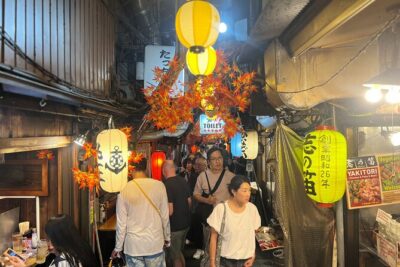 ★ 5.0Shinjuku Food Tour (13 Dishes at 4 Local Eateries)From $866,603 reviews
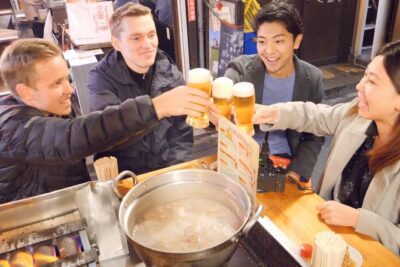 ★ 5.0Tokyo Bar Hopping Tour in Shinjuku (All-You-Can-Drink + Dinner)From $1063,587 reviews
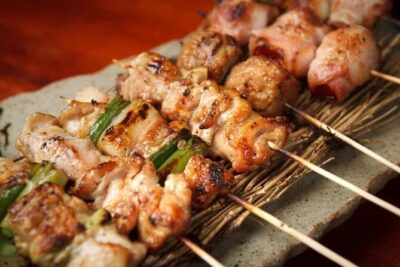 ★ 4.9Shinjuku Food Tour (15 Dishes and 4 Eateries)From $852,033 reviews
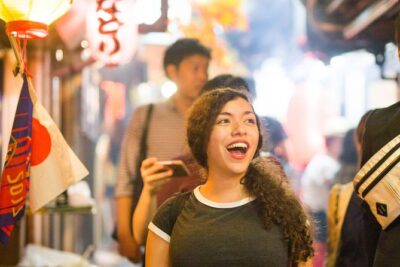 ★ 5.0Best of Shinjuku: Izakaya Food Tour (4 Stops, 14+ Tastings)From $921,863 reviews
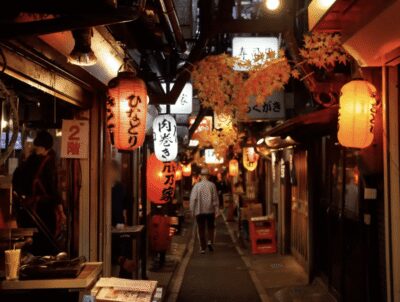 ★ 4.9Shinjuku Local Bar and Izakaya Guided Walking TourFrom $341,794 reviews
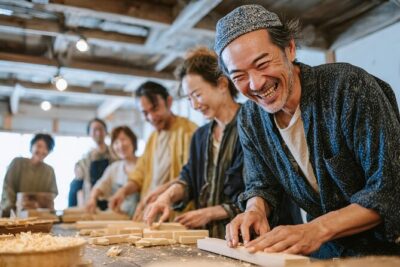 ★ 5.0Tokyo Shinjuku Chopsticks Making ClassFrom $201,763 reviews
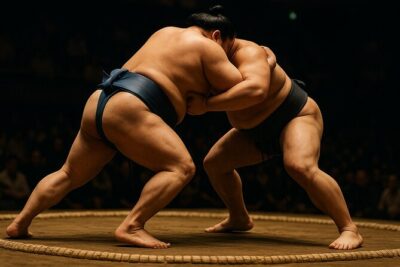 ★ 5.0Tokyo Shinjuku Sumo Show & Experience with PhotoFrom $791,750 reviews
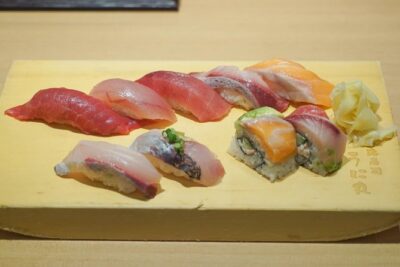 ★ 5.0Tokyo Night Foodie Tour in Shinjuku – Seasonal Sushi, Wagyu BeefFrom $1111,161 reviews
Browse the lists this tour appears in