
Reviewed · SUMO TOURNAMENTS & SHOWS
Tokyo: Exclusive Access to Sumo Morning Practice with Photos
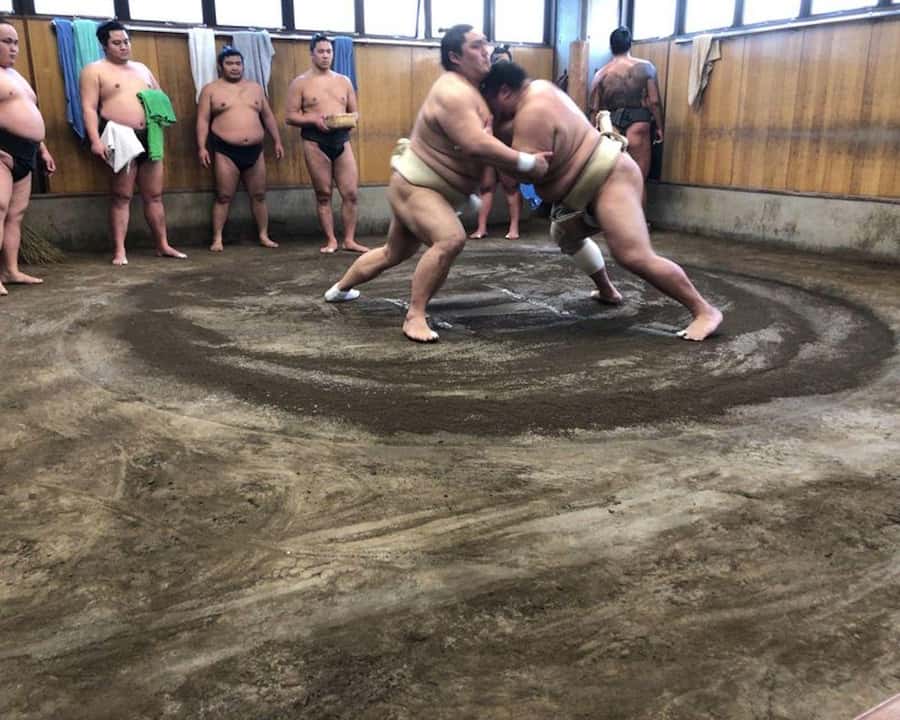
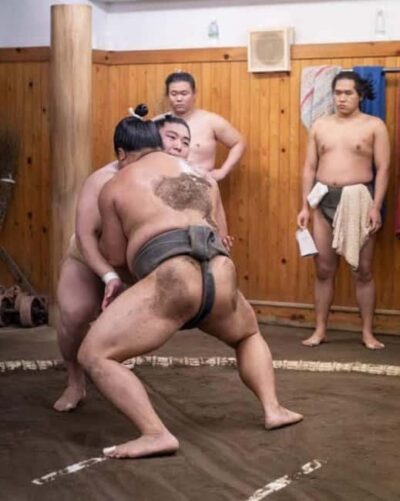
A sumo training session is a different kind of entertainment. This one takes you into a real stable where you can see the work up close, not from far-away seats. It’s Tokyo, it’s early, and it’s surprisingly intimate.
Two things I really like: the small group size (limited to 10) that keeps the experience feeling personal, and the fact that you’re watching morning practice from very close range. The vibe is focused and lively at the same time.
One thing to consider: you’ll be sitting on tatami without chairs for about two hours, and photography or even how long practice runs can depend on the stable’s situation. So it’s not the best pick if you need lots of comfort or guaranteed long viewing.
In This Review
- Key highlights you’ll feel right away
- Why a Tokyo sumo morning practice feels better than a stadium seat
- Meeting at Oshiage: the spot you need to find fast
- Inside the stable: what the two hours really mean
- Your English guide and the sumo info document that keeps you from guessing
- Photos with wrestlers: what’s included and what might affect timing
- Price and value: what $96 buys you in Tokyo
- Who should book this sumo morning practice (and who should skip it)
- Small comfort and etiquette tips that save your morning
- The bottom line: should you book this tour?
- FAQ
- Is this tour only for adults?
- Where do I meet the guide?
- Is there seating and are there chairs?
- Are there restrooms during the tour?
- Can I take photos?
- What if the practice is canceled or shortened?
Key highlights you’ll feel right away
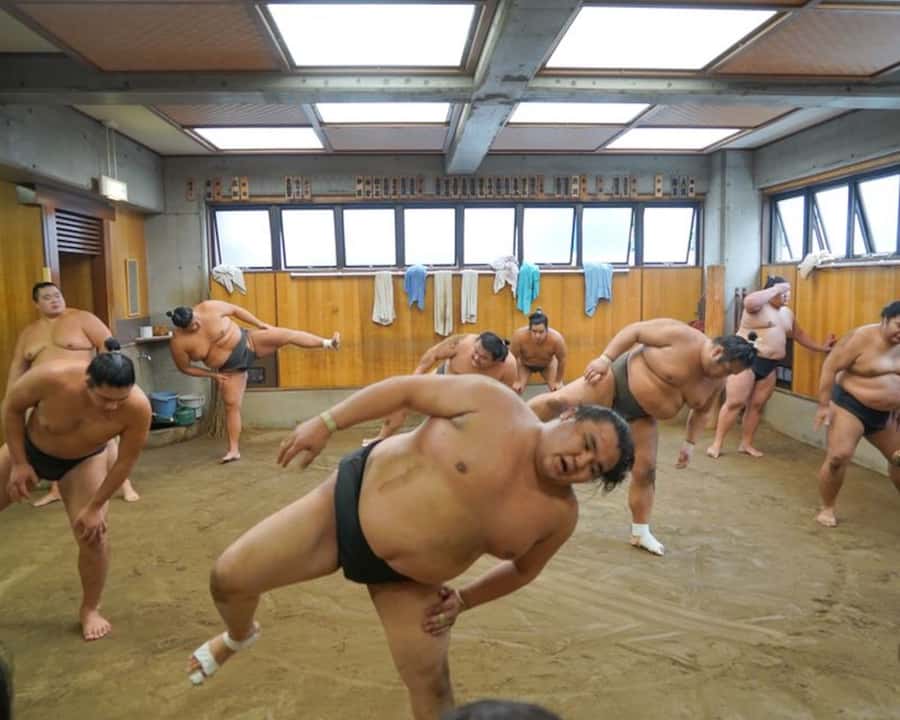
- Close-up stable viewing: you watch training from a very near distance, which is hard to replicate in a stadium
- English guidance that makes it click: your guide explains the rules, rituals, and even diet while you’re there
- Small group atmosphere: limited to 10 participants, often split into seating groups
- End-of-practice photos: a photoshoot with the sumo wrestlers is included
- Learning tools: a special sumo info document with visual cards and quizzes helps you understand what you’re seeing
Why a Tokyo sumo morning practice feels better than a stadium seat
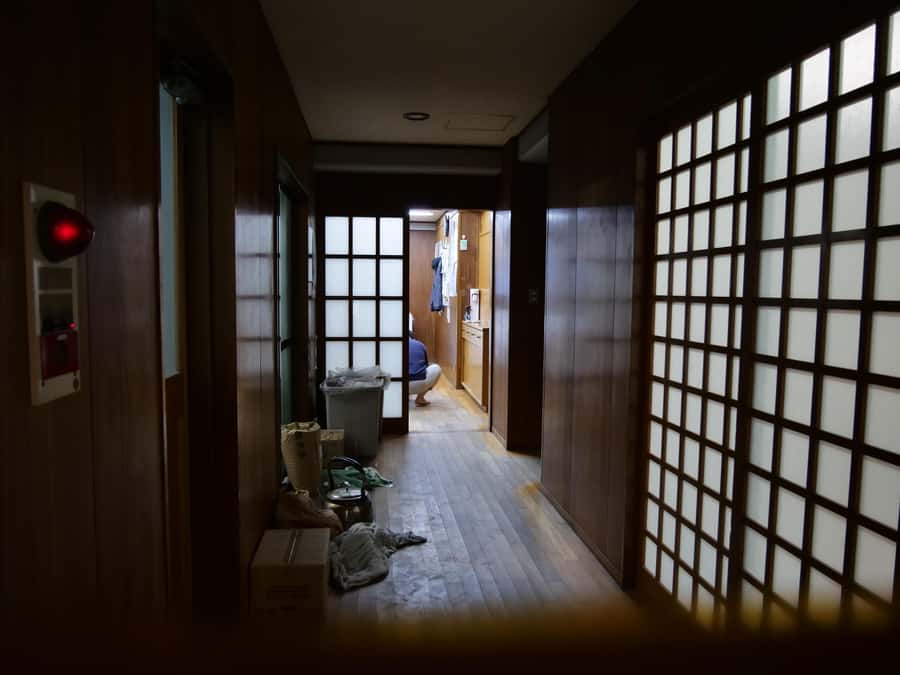
If you’ve only seen sumo on TV or in a big arena, you might picture it as pure action. In real life, the morning looks more like craft and discipline. You get to see the part that happens before the spotlight: the build-up, the training routine, and the rhythm of a stable’s day.
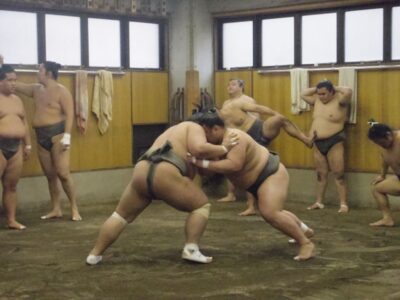
What makes this work for you is the distance. In a stadium, close seating is tough and often expensive. Here, you’re set up to watch practice up close from tatami seating. That changes what you notice. You can see the wrestlers’ focus, how they move as a unit, and the sheer size that you can’t fully appreciate until you’re near the ring.
And there’s another benefit: a guide helps you connect the details to the sport. You’re not just staring at bodies. You’re learning the basic rules of sumo and why certain rituals matter. One guide from past tours, Marie, was described as living and breathing sumo, and I get why that matters. If someone can answer questions fast, you spend less time guessing and more time understanding.
Other ringside bookings readers scored
- Tokyo: Sumo Show and Dining Experience
★ 4.8 · 2,742 reviews - the SUMO show
★ 5.0 · 1,960 reviews - Tokyo Shinjuku Sumo Show & Experience with Photo
★ 5.0 · 1,750 reviews - Tokyo: Sumo Show and Experience in Shinjuku
★ 4.8 · 1,001 reviews
Meeting at Oshiage: the spot you need to find fast
This tour starts on time, and late arrivals can’t join or reschedule. So I’d treat the meeting point like a flight check-in: early is calm, late is chaos.
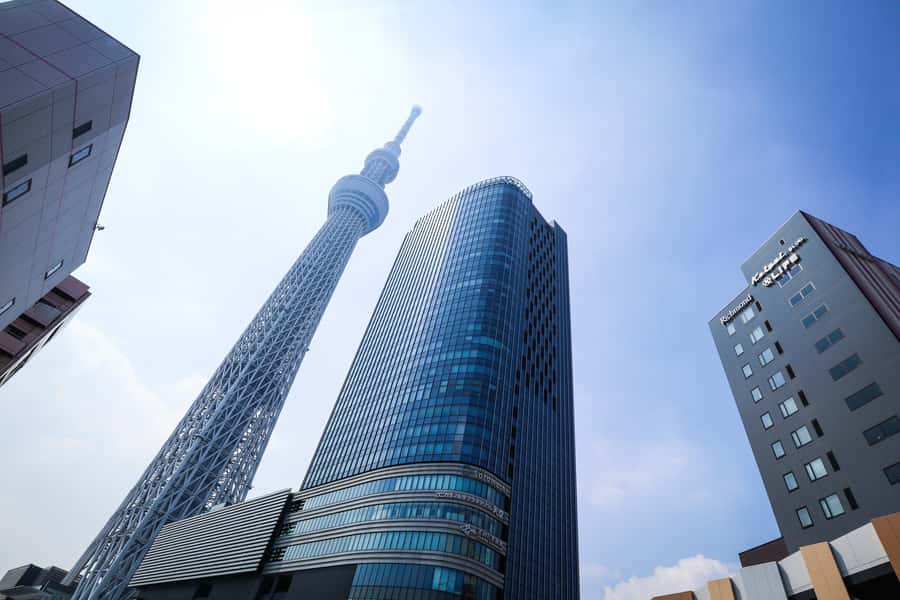
You’ll meet in front of the Oshiage taxi stop on the ground level outside Oshiage Station, Exit B3. Your guide will be holding a red/orange sign saying MagicalTrip. From that exact area, you can spot landmarks like Skytree, plus the Uniqlo LIFE and Sizzler signs, which helps when you’re trying to orient yourself.
A practical tip: use your phone map to get to Oshiage Station, then switch to “ground-level mode.” The tour specifically notes the meeting place is on the ground. Tokyo stations can be a maze, and you’ll waste time if you’re still in train-concourse-land when you should be outside.
Inside the stable: what the two hours really mean
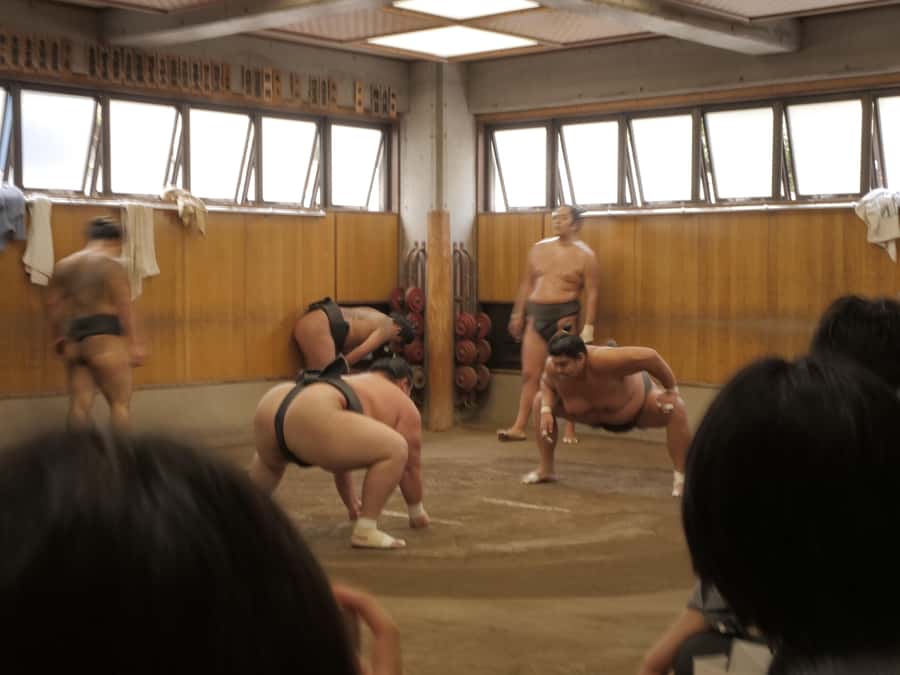
Once you arrive, you settle in on tatami. No chairs are provided. That sounds simple, but it affects your comfort a lot over time. One review also mentioned how cross-legged seating can make legs go numb. Translation: wear layers, bring a thin layer if you run cold, and plan for the first 20 to 30 minutes to feel your thighs and ankles getting opinionated.
The payoff is that stable seating gives you a different viewpoint than most sightseeing. You’re right there while training is going on as normal. The experience can feel quiet in a good way, because people generally know they’re in someone’s real workplace, not a stage show.
You also need to follow stable rules. Disruptive behavior or entering restricted areas can lead to removal without refund. That’s not meant to be dramatic—it’s standard for places with rules, and stables are no different. In other words: behave like you’d want your own home treated. Watch, listen, and keep your distance where you’re asked.
Two more logistics points that matter:
- Seating may be split into groups, and seating can be first-come, first-served.
- Practice may be canceled or shortened without notice. If it’s canceled, you get a full refund.
So while you’re planning for a smooth two-hour session, keep a little flexibility in your morning schedule.
Your English guide and the sumo info document that keeps you from guessing
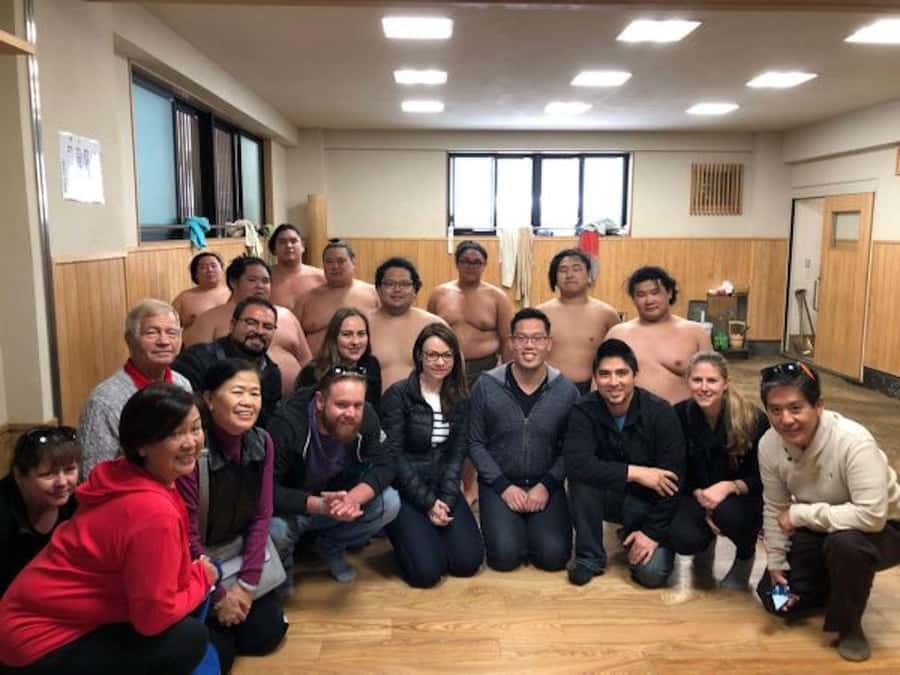
The tour isn’t just about watching. It’s about understanding what you’re seeing, and the guide is the engine.
Your local guide leads the session in English and explains things during the practice. The tour details specifically mention coverage of the rules of sumo matches and the wrestlers’ diet. That’s smart because diet and routine are part of why sumo works the way it does. When you connect that to what you observe, everything feels less random.
Past groups also highlighted strong guide knowledge and strong Q&A afterward. One traveler even wished for more opportunity for Q&A during the visit, which tells me the guide may answer questions after certain moments, but you should still come in ready to ask. If something looks confusing—what they’re doing, who’s who, why a ritual happens—ask when there’s an opening.
There’s also a special sumo info document included. It uses visual cards and quizzes, which is a great trick when you’re dealing with an unfamiliar sport. You’re not trying to cram sumo history in your head while sitting on tatami. You’re picking up the basic framework as you watch.
And it helps that the guide tone is practical. Reviews mention guides like Max, Kazu, and Ken Take as friendly and informative. If your guide can explain without overloading you, the session stays enjoyable instead of turning into a lecture.
Photos with wrestlers: what’s included and what might affect timing
Here’s one of the main reasons I think this tour is worth your money: the photoshoot with sumo wrestlers at the end is included.
In practice, the chance to talk or take photos can depend on the situation and the wrestlers’ condition. The tour description is clear that meeting or photo opportunities after training may be possible depending on circumstances. That’s normal—stables have schedules, and wrestlers have their own bodies and routines.
Still, the included photoshoot means you’re not relying on luck. One review noted pictures with a coach and team after practice, which aligns with the idea that you’ll get a structured photo moment rather than a free-for-all.
Photography rules are also worth knowing. Photography may be limited depending on the stable. So if you care about photos, be ready for restrictions and follow whatever instructions you receive on-site. Don’t assume you can shoot freely the whole time.
My practical advice: treat your phone/camera like a tool, not a distraction. Take a few good shots, then put it away. A stable visit works best when you’re actually watching.
Readers also shortlisted these Tokyo bookings:
- Tokyo: Kimono Dressing, Walking, and Photography Session★ 4.9 · 427 reviews
- Best Go Kart Experience in Shibuya Crossing with Iconic Photos★ 5.0 · 348 reviews
- Tokyo Go-Karting Experience: Shibuya Crossing with Photos★ 4.8 · 190 reviews
- Tokyo Cyberpunk Street Photo Tour★ 5.0 · 165 reviews
- Tokyo by Night Photography Tour (Private Option Available)★ 5.0 · 151 reviews
Price and value: what $96 buys you in Tokyo
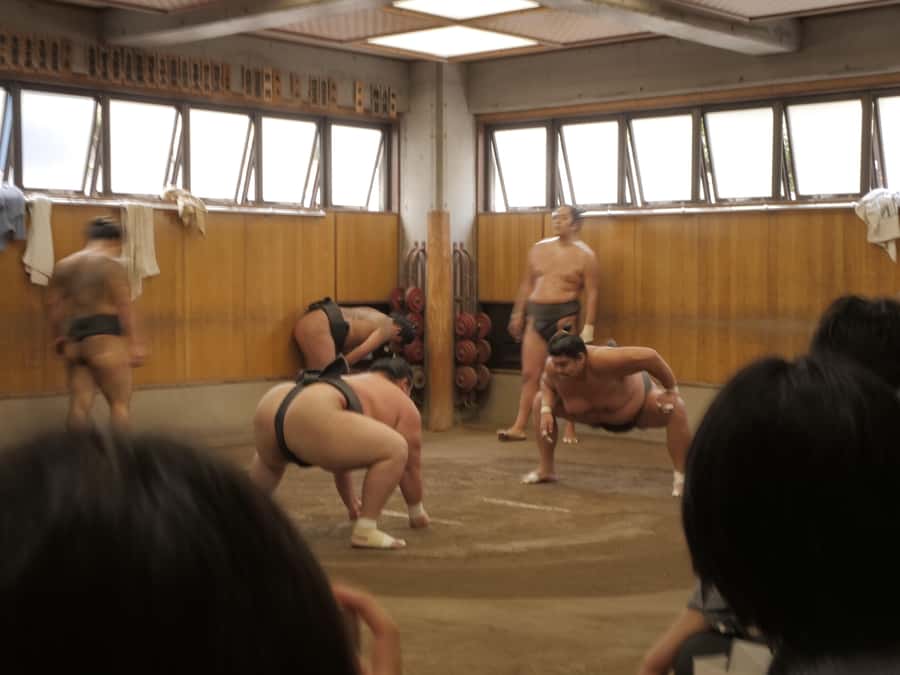
At $96 per person for about two hours, the price isn’t low. So you should ask: what are you paying for?
You’re paying for three big things:
- Access to a real stable morning practice, with entry for that session
- A local English guide who helps you understand rules, rituals, and diet as you watch
- A photoshoot with the wrestlers at the end
Also, the tour includes skip-the-ticket-line entry. That part matters when you’re on a schedule, even if you’re not dealing with huge crowds.
Is it worth it? For many first-time sumo visitors, yes—because the alternative is usually either far-away arena seating or a more general museum-style look at sumo. This is close, live, and guided.
That said, two reviews raise valid concerns you should consider:
- One person felt it was expensive because the practice lasted less than an hour.
- Another said the tour felt a bit rushed, and they wanted more history and interesting facts.
So your value depends on how long practice runs and how much time your guide spends answering questions. The tour does warn that practice can be canceled or shortened without notice, and you’ll receive a full refund if canceled—but shortened practice means you might not get the full expected amount of viewing time.
If you want a long, uninterrupted show, this may feel short. If you want a close, real look at how training works, it’s strong value.
Who should book this sumo morning practice (and who should skip it)
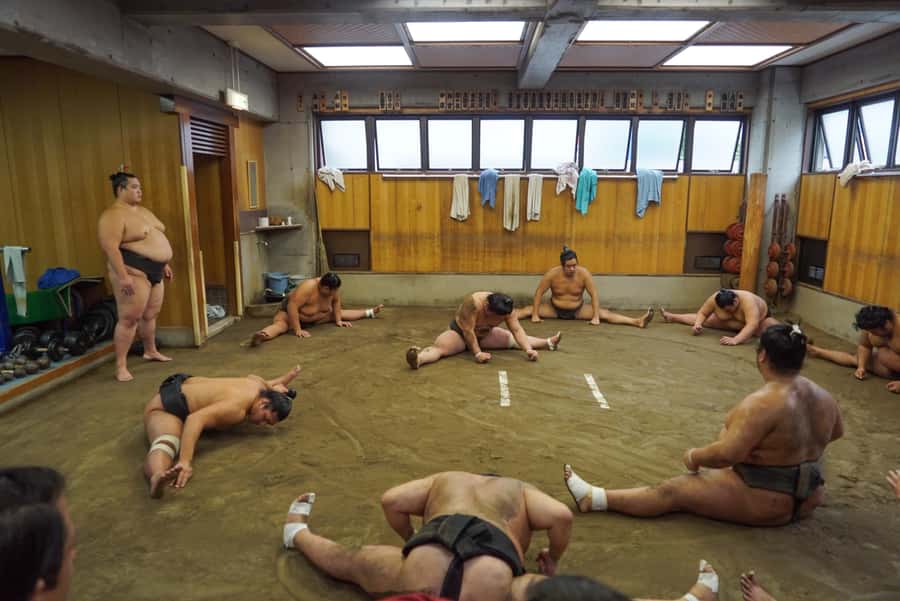
This tour is for guests aged 12 and over. Kids under 12 can’t join and will be denied entry without refund. So it’s built more for teenagers and adults who can handle quiet stable etiquette and tatami seating.
It’s a great match if:
- You’re in Tokyo and you want something that feels local, not just touristy
- You want to see sumo in a training context, not just the match-day spectacle
- You like having an English guide who can explain what you’re watching while you’re watching it
- You want end photos with the wrestlers included
It may not be ideal if:
- You need chairs or wheelchair/stroller access is essential, since some stables aren’t wheelchair/stroller accessible
- You don’t do well with cross-legged or tatami seating for two hours
- You want guaranteed, unlimited photography—limitations can apply
If you’re the kind of person who likes craft details and routines, you’ll likely enjoy this more than the average “big event” sightseeing plan.
Small comfort and etiquette tips that save your morning
A few practical points make the difference between a smooth experience and a miserable one:
- Go to the restroom before you start. There are no restrooms during the tour.
- Dress for the weather. No extra fee is required, so plan normal Tokyo layers and rain protection if needed.
- Arrive early. The tour starts on time, and late arrivals can’t join or reschedule.
- Bring a tolerance for silence. A stable is a workplace. The experience works best when you’re calm and respectful.
- Assume photography rules can change. If you’re told not to shoot or to limit photos, follow it. Don’t argue on-site.
- Follow the stable rules. Restricted areas are restricted for a reason.
Also, consider that groups may be split and seating can be first-come, first-served. If you want the best viewpoint, get there early so you’re not shuffled into the least convenient seat.
The bottom line: should you book this tour?
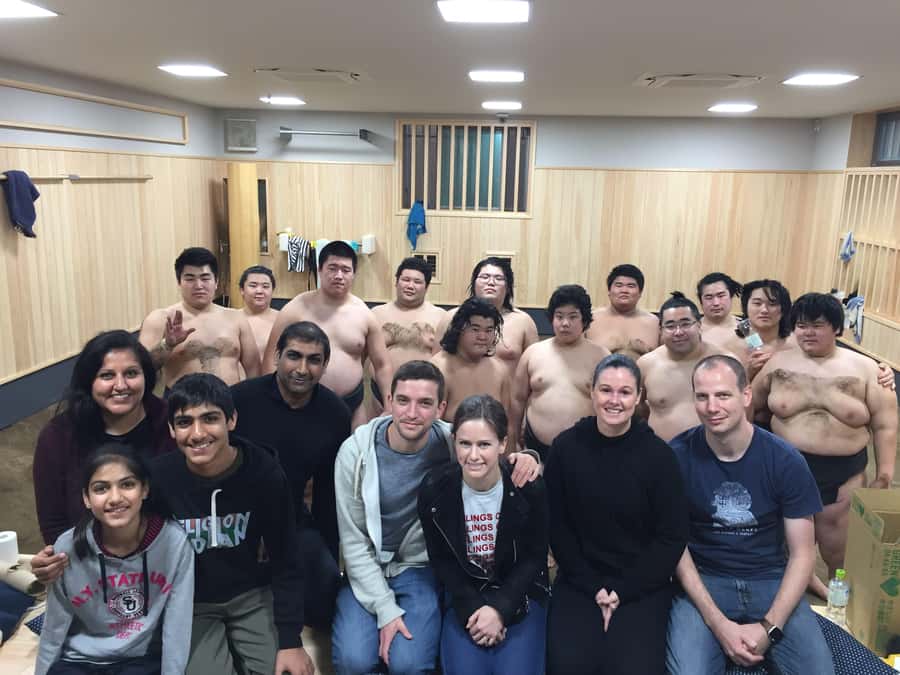
I’d book it if you want a real Tokyo sumo experience that’s close, structured, and guided. The combination of small group size, English instruction, and the end photoshoot is a strong package for $96, especially if you’re trying sumo for the first time.
I’d think twice if tatami seating sounds miserable for you, if you need restroom access during the session, or if you’re the type who needs long, guaranteed practice length. The tour warns practice may be canceled or shortened, and limited photography is possible depending on the stable.
If you’re flexible, respectful, and curious, this is one of those Tokyo mornings that turns into a story you’ll keep telling.
FAQ
Is this tour only for adults?
The tour is for guests aged 12 and over. Children under 12 cannot join and will be denied entry without refund.
Where do I meet the guide?
You meet in front of the Oshiage taxi stop on the ground level in front of Exit B3 at Oshiage Station. The guide holds a red/orange MagicalTrip sign.
Is there seating and are there chairs?
Guests sit on tatami. No chairs are provided.
Are there restrooms during the tour?
No. There are no restrooms during the tour, so you should go beforehand.
Can I take photos?
Photography may be limited depending on the stable. A photoshoot with sumo wrestlers at the end is included.
What if the practice is canceled or shortened?
Practice may be canceled or shortened without notice. If the tour is canceled, you get a full refund.
More Photography Sessions in Tokyo
- Tokyo: Kimono Dressing, Walking, and Photography Session
★ 4.9 · 427 reviews - Best Go Kart Experience in Shibuya Crossing with Iconic Photos
★ 5.0 · 348 reviews - Tokyo Go-Karting Experience: Shibuya Crossing with Photos
★ 4.8 · 190 reviews - Tokyo Cyberpunk Street Photo Tour
★ 5.0 · 165 reviews - Tokyo by Night Photography Tour (Private Option Available)
★ 5.0 · 151 reviews
More Tour Reviews in Tokyo
- Mt Fuji and Hakone 1-Day Bus Tour Return by Bullet Train
★ 5.0 · 26,383 reviews - 1-Day Tokyo Bus Tour
★ 5.0 · 14,250 reviews - Tokyo: teamLab Planets TOKYO Digital Art Museum Entry Ticket
★ 4.6 · 9,779 reviews - Mt Fuji & Hakone Cruise, Drum Show Bullet Train 1 Day from Tokyo
★ 4.0 · 7,413 reviews - Tokyo: Shinjuku Food Tour (13 Dishes at 4 Local Eateries)
★ 5.0 · 6,603 reviews
More Sumo, Ringside and Rated
- Tokyo: Sumo Show and Dining Experience
★ 4.8 · 2,742 reviews - the SUMO show
★ 5.0 · 1,960 reviews - Tokyo Shinjuku Sumo Show & Experience with Photo
★ 5.0 · 1,750 reviews - Tokyo: Sumo Show and Experience in Shinjuku
★ 4.8 · 1,001 reviews - Tokyo Grand Sumo Tournament Viewing Tour with Tickets
★ 5.0 · 692 reviews
Latest Tokyo reviews off our desk






Sumo Tournaments & Shows, compared.
 ★ 4.8Sumo Show and Dining ExperienceFrom $792,742 reviews
 ★ 5.0the SUMO showFrom $891,960 reviews
 ★ 5.0Tokyo Shinjuku Sumo Show & Experience with PhotoFrom $791,750 reviews
 ★ 4.8Sumo Show and Experience in ShinjukuFrom $691,001 reviews
 ★ 5.0Tokyo Grand Sumo Tournament Viewing Tour with TicketsFrom $124692 reviews
 ★ 5.0Tokyo Sumo Wrestling Tournament ExperienceFrom $124660 reviews
 ★ 4.7Luxury Sumo Show Experience & Japanese cuisine & DrinkFrom $103577 reviews
 ★ 4.8Sumo Morning Practice Viewing TourFrom $81570 reviews
Browse the lists this tour appears in