
Reviewed · SUMO TOURNAMENTS & SHOWS
Tokyo: Sumo Morning Practice Viewing Tour
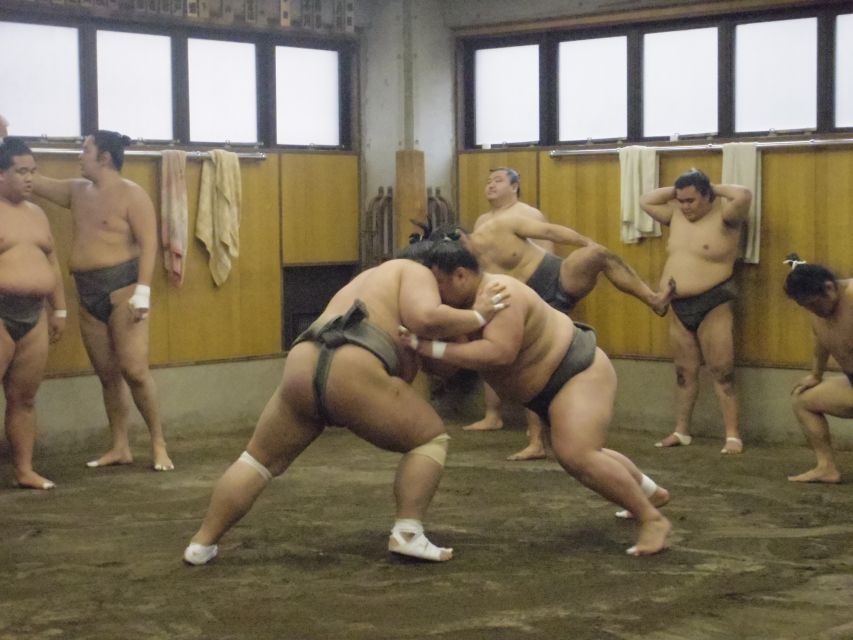
Morning sumo has real thunder. I like that you get access to a working sumo stable in Ryogoku and watch rikishi train at close range, not from a big arena. I also love how the licensed guide turns the practice into something you can actually follow. One drawback to plan for: you’ll sit still, keep your phone silent, and stay for the whole session.
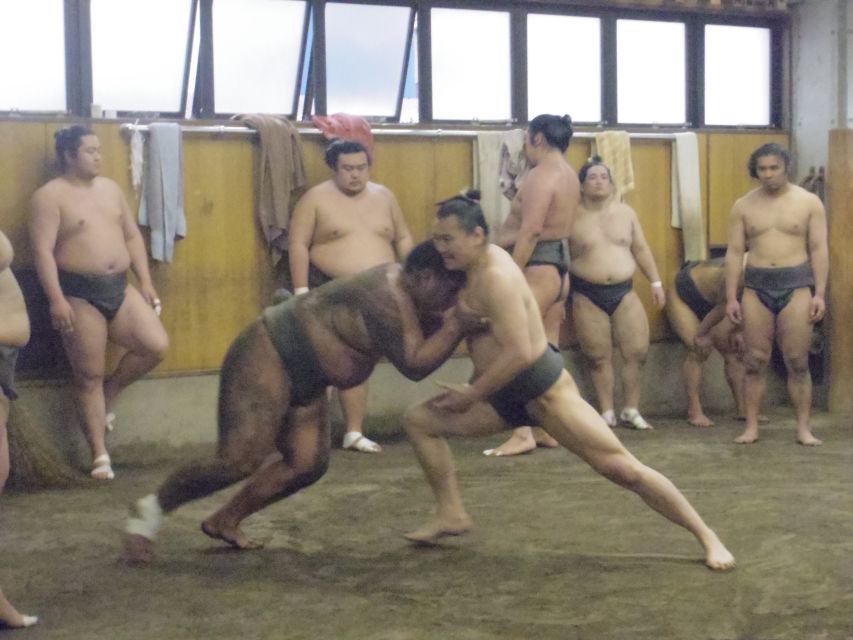
This is an early-morning look at a sport built on discipline, Shinto beliefs, and brute timing. Sumo practice isn’t calm or casual; it’s hard work aimed at tournaments held six times a year, and you’ll see younger wrestlers living the daily routine together.
Photo ops can happen, but it depends on the day and what the stable allows. And if you’re tempted to film, move around, or bring hats/sunglasses/food, the rules are strict—this is a place of work first, sightseeing second.
In This Review
- Key highlights you’ll feel from the start
- Ryogoku Morning: Why Practice Feels Different Than a Match
- Entering a Working Sumo Stable: The Rules That Protect the Moment
- Meet Your Guide, Then Get Ready to Watch (Not Just Look)
- What You’ll Actually See in Sumo Morning Training
- The sound is part of the show
- Names you might recognize
- How the Guide Makes Sense of the Ritual and the Strategy
- The Best Seats: Why Timing Matters Before Practice Starts
- Photos With Wrestlers: What to Expect Without Assuming
- After the Tour: Ryogoku Food and What to Do Next
- Price and Value: What $81 Buys You (and Why It Can Be Worth It)
- Who This Tour Fits Best (and Who Should Skip It)
- Should You Book This Sumo Morning Practice Tour?
- FAQ
- How long is the Sumo Morning Practice Viewing Tour?
- Where does the tour take place?
- Is the tour guided in English?
- Are photos with the sumo wrestlers included?
- Can I record video or use flash photography?
- What clothing and items should I avoid?
- Do I need to stay for the full practice session?
- Is the tour suitable for children?
- Is the tour suitable for people with mobility impairments?
- Can I cancel and get a refund?
Key highlights you’ll feel from the start
- Real stable access (Ryogoku) instead of a themed show
- Licensed guide explanations so practice makes sense
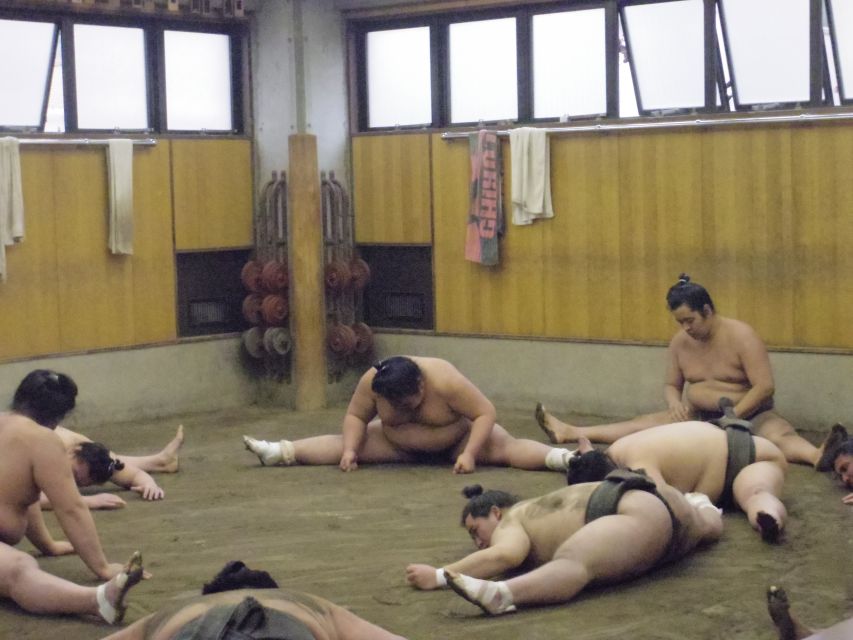
- Close-range training where you can hear the impact
- Rules-first experience: quiet, still seats, no flash or video
- Photo with wrestlers when the stable permits
- You leave understanding why sumo bouts are so fast and technical
Ryogoku Morning: Why Practice Feels Different Than a Match
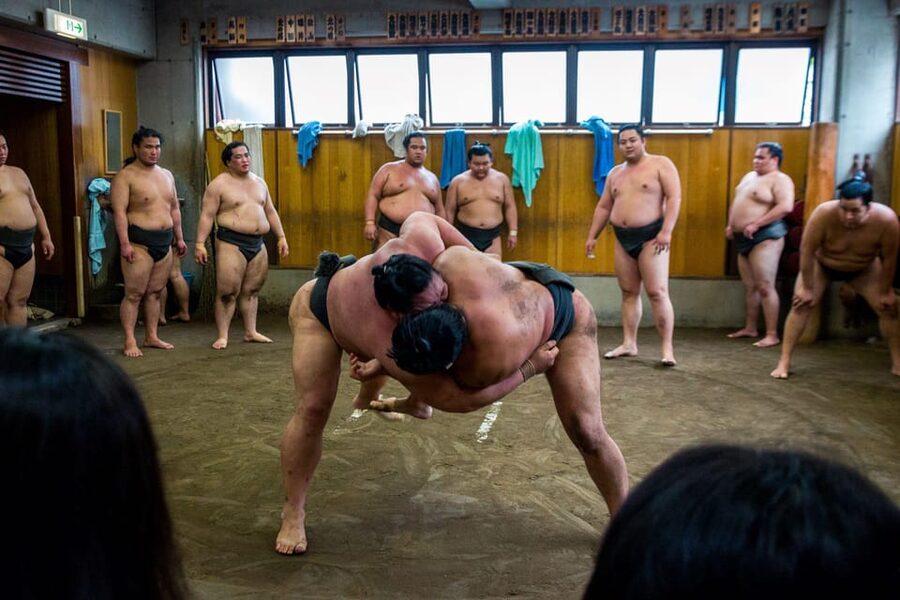
If you only ever see sumo on TV, you’re watching the final score. This morning tour gives you the lead-up: the drills, the repetition, the ritual, and the way athletes test timing before anyone counts points.
You’ll be in Ryogoku, Tokyo’s sumo neighborhood, where the sport is part of daily life. It’s a strong location choice because you can sense the culture before and after the training. After the tour, you can also get to sumo meal spots without a long commute, so the day still feels connected to what you just watched.
This is not a slow museum visit. The practice session runs about an hour to 90 minutes, and you’ll stay until it ends around 09:00 to 10:00. For me, that matters because you get the rhythm of training instead of catching only a few quick moments.
Other ringside bookings readers scored
- Tokyo: Sumo Show and Dining Experience
★ 4.8 · 2,742 reviews - the SUMO show
★ 5.0 · 1,960 reviews - Tokyo Shinjuku Sumo Show & Experience with Photo
★ 5.0 · 1,750 reviews - Tokyo: Sumo Show and Experience in Shinjuku
★ 4.8 · 1,001 reviews
Entering a Working Sumo Stable: The Rules That Protect the Moment
The best part of this tour is also the part that asks the most from you: you’re stepping into someone’s workplace. That’s why the experience has rules, and why those rules make the whole thing feel respectful and real.
Plan on modest clothing only. Hats and sunglasses are not allowed, and you should think “simple and quiet,” not “fashion and photos.” During the practice, you shouldn’t stand up or move around. Phone on silent. No flash photography, and video recording is off the table.
Here’s the practical upside: if you follow these rules, you’ll see more. In a still room, it’s easier to focus on what wrestlers are doing—hand placement, footwork, pushing and pulling, and how quickly attention shifts when two rikishi line up again.
One more rule that catches people: once you leave the stable, there’s no re-entry. So if you need a restroom, sort it before you go in. Treat the session like a short ceremony: you’re there for the whole thing.
Meet Your Guide, Then Get Ready to Watch (Not Just Look)
The tour starts with a short transfer and orientation. You’ll head toward the stable—sometimes by train after you meet—and you’ll get a briefing before the training begins. That first chunk is where the guide earns their keep.
A big reason this tour works is the way guides translate sumo into plain language. In past groups, guides like Oku San, Yoko, Yuko, Noriko, Nobu, and Taku have been credited with clear, engaging explanations. Some guides also share written help sheets or cards, and a few groups mention pencil-and-paper time to write questions.
Don’t expect nonstop talking. One review experience notes the guide kept explanations controlled so the group could watch without constant interruption. I like that approach because it lets you absorb the sounds and the pace, then learn what you’re seeing right as it happens.
Also, accept that silence matters. The wrestlers train best when the room is calm, and the whole group works to keep quiet. Some people find it a little harder to hear instructions during active duels, so watch the guide’s timing and follow any on-the-spot cueing.
What You’ll Actually See in Sumo Morning Training
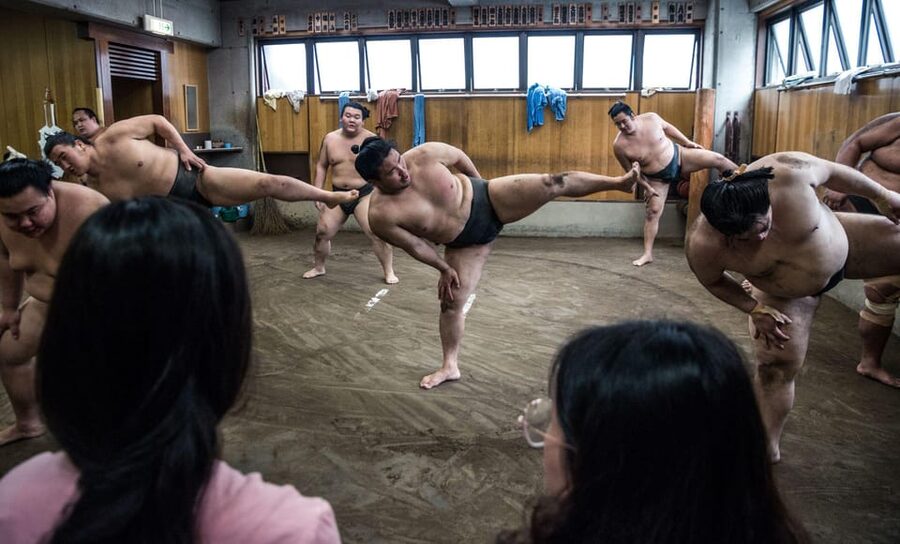
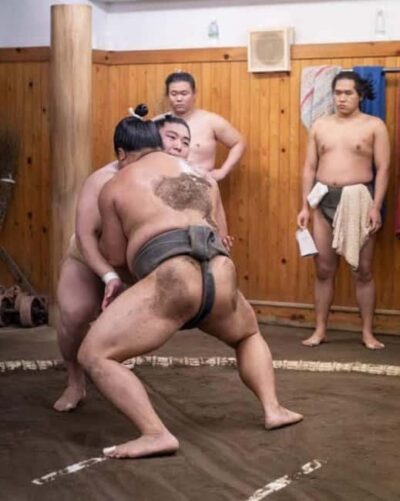
Sumo can look simple from far away, but up close it’s fast, physical, and technical. You’ll watch athletes practice a mix of grappling, pushing, and getting leverage—classic wrestling skills—plus the unique sumo habits that come with the sport’s traditions.
The basic goal is the same every time: force your opponent out of the ring, or make any part of their body touch the ground. In practice, you’ll see wrestlers chase balance and control first. Then you’ll see bouts and test-ups that end quickly.
One theme that came up repeatedly is intensity. This isn’t a casual hobby session. Even when young rikishi are still climbing the ranks, the training is serious and repetitive because tournament life is demanding. The practice is also a window into how stables raise athletes: they live and train together, day after day, to pursue the highest rank.
The sound is part of the show
Up close, impacts can be loud—enough that some first-timers describe a shock moment until they adjust. That’s normal. You’re hearing power transferred through bodies and mats, and you’re watching bursts of strength that can finish in seconds.
One review even noted bouts can be over in about 10 seconds on average. Whether the timing matches every session or not, the takeaway is the same: watch for momentum and small changes. In sumo, one grip and one step can flip everything.
Readers also shortlisted these Tokyo bookings:
- Tokyo: Sumo Morning Practice Viewing Tour★ 4.8 · 570 reviews
- Tokyo: Sumo Morning Training Visit★ 4.4 · 370 reviews
- Tokyo: Visit Sumo Morning Practice with English Guide★ 4.7 · 343 reviews
- Tokyo: Sumo Morning Practice Tour at Sumida City★ 4.8 · 308 reviews
- Tokyo Sumo Morning Practice Tour at Stable★ 5.0 · 298 reviews
Names you might recognize
Because stables differ by day, you can’t promise specific wrestlers. But several groups have reported seeing well-known rikishi during training. Examples mentioned in experiences include Terunofuji, Enho, and Takerufuji. Sometimes you may also spot prominent wrestlers or high-level presence in the stable space, depending on the training lineup.
Think of it like this: the tour isn’t just about star power. It’s about the training system. Still, if a famous rikishi is present that morning, you’ll feel it.
How the Guide Makes Sense of the Ritual and the Strategy
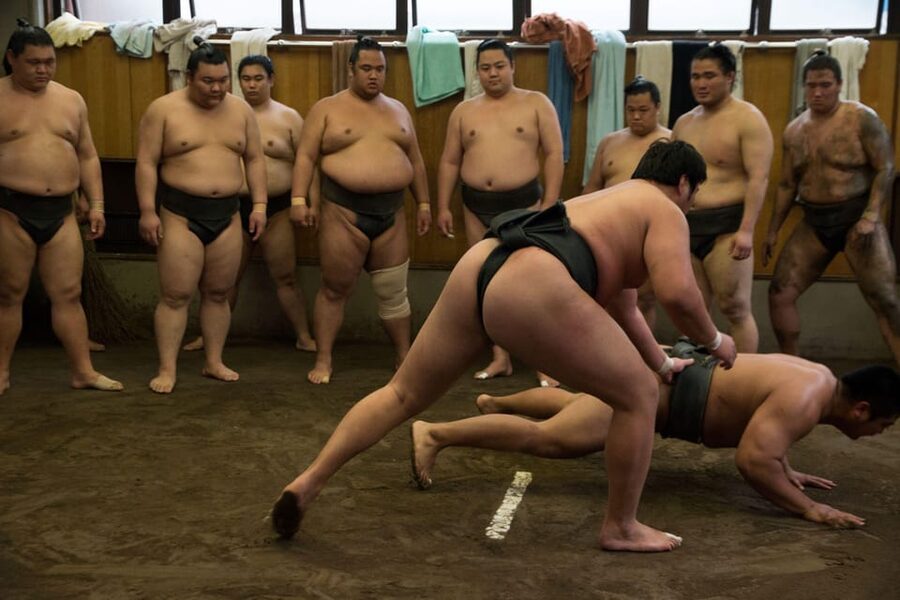
Watching practice is one thing. Understanding why it looks the way it does makes the experience click.
Good guidance covers:
- the meaning behind training choices
- the rules and customs around bouts
- how tournaments shape what you’ll see in the session
From the experiences you shared, guides have been praised for being funny and informative, like Oku San, and for being organized and attentive to safety and group cohesion. Many also help you know where to sit and what not to do so you don’t accidentally disrupt the athletes.
If you’re new to sumo, this part saves you. You won’t just watch two people push and hope. You’ll start to recognize patterns: when a wrestler is testing posture, when they’re creating space for a forceful move, and how they try to break the other side’s balance.
The Best Seats: Why Timing Matters Before Practice Starts
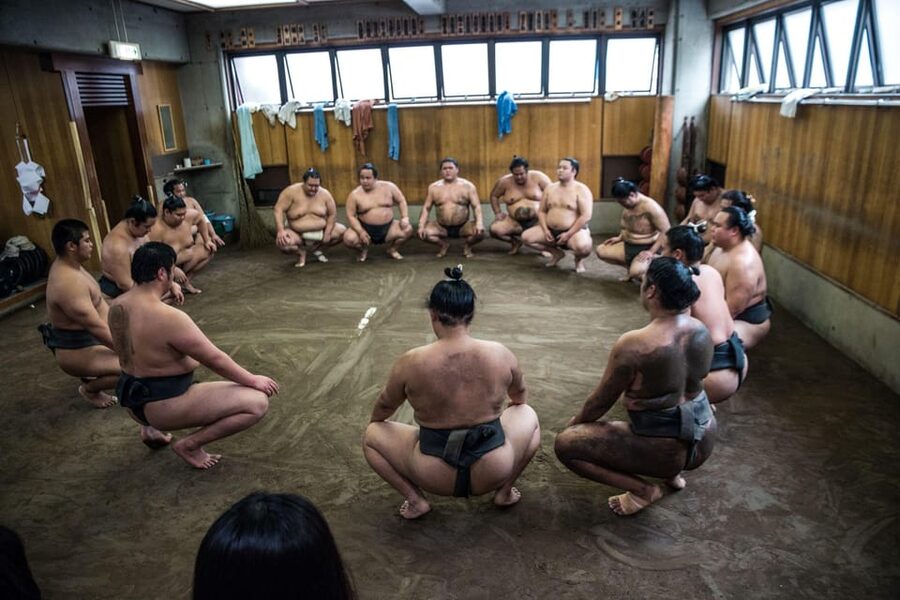
You don’t control which stable opens, and you don’t control the daily schedule. But you can control one big thing: how early you arrive to the meeting point and how quickly you get seated once you’re inside.
Multiple experiences note that arriving first can mean front-row access. Since you have to stay seated and quiet for a long session, your viewing angle matters. If you end up farther back, you can still enjoy the training, but you’ll lose some of the detail.
This is also where the length range matters. The practice ends around 09:00 to 10:00, and the training time can run a bit shorter or longer depending on the day. If you have another commitment right after, tell the operator in advance so they can plan your timing.
Photos With Wrestlers: What to Expect Without Assuming
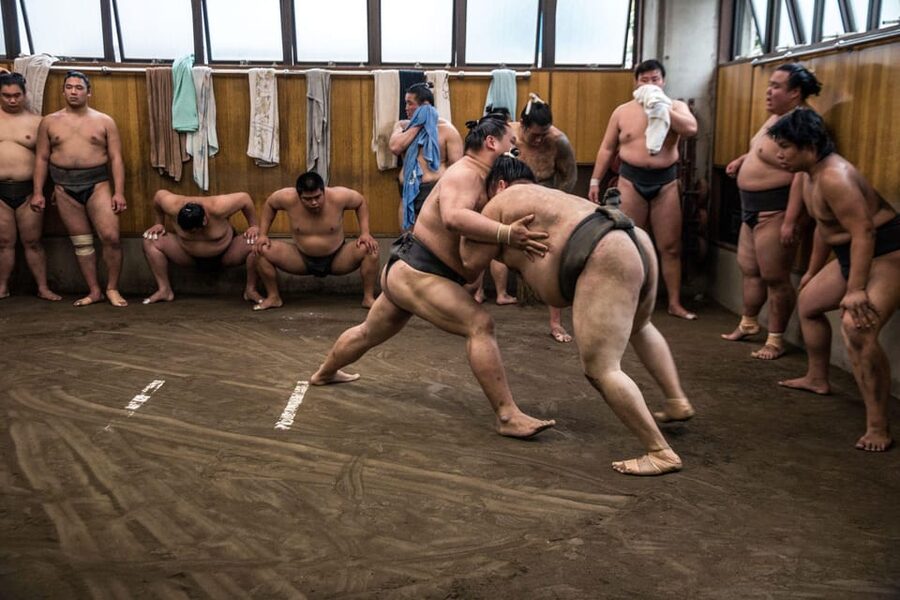
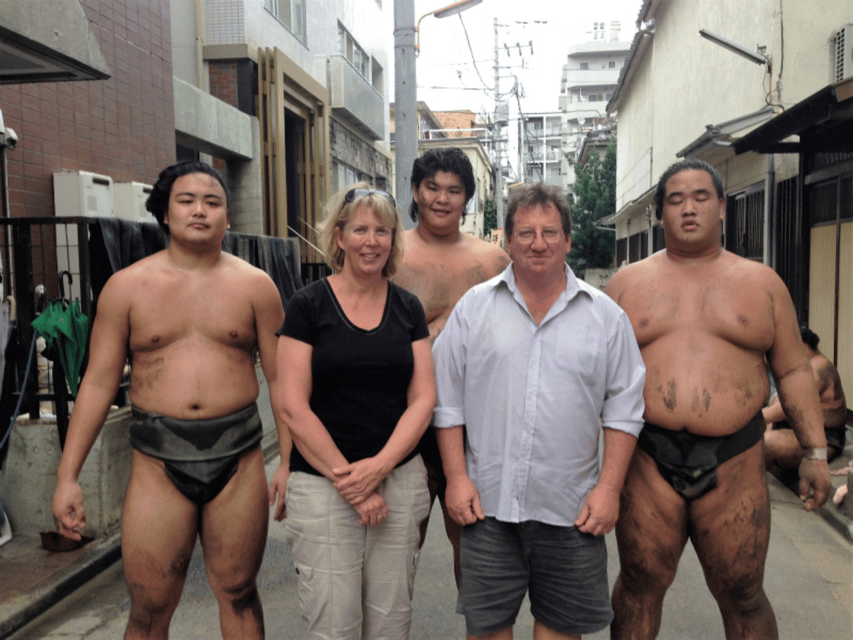
Photo opportunities are listed as included when available. That matches what you shared: some days allow photos with wrestlers after training; other days may not.
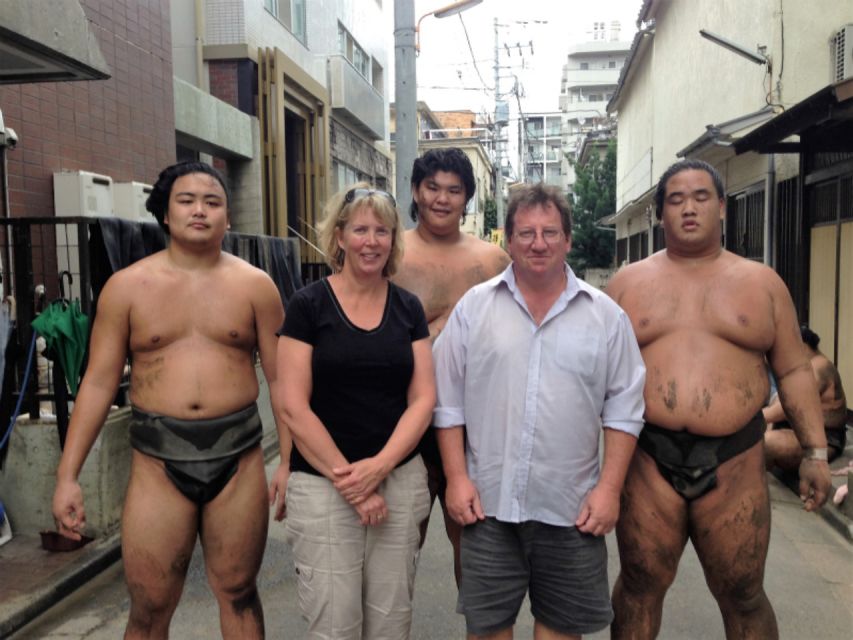
So I recommend you treat photos as a bonus, not a guarantee. If the stable offers it that morning, you’ll likely get a chance after the practice session ends. If they don’t, you still get the main event: close-up training inside the stable.
And please remember the photo rules of the room. No flash. No video. Follow what the guide and stable staff ask you to do.
After the Tour: Ryogoku Food and What to Do Next
Once the practice ends, you’re in Ryogoku with a better understanding of what you just watched. That makes the next steps more fun. Instead of feeling like you need to study sumo for hours, you can connect dinner and walking around to real training culture.
You’ll also find it easier to choose what to see next if you’re already oriented to sumo’s geography. Ryogoku is the sumo town, and you’ll notice other stables on the way in and out. One experience even described walking past multiple stables en route.
A practical note: the ending location may differ from the meeting place depending on the schedule. Keep that in mind so you don’t plan a tight connection right away.
Price and Value: What $81 Buys You (and Why It Can Be Worth It)
At $81 per person, this tour isn’t the cheapest Tokyo morning activity. But you’re paying for something hard to replicate on your own: entry into a real sumo stable where wrestlers live and train.
Most sumo experiences in Tokyo are either:
- major arena events (tournament days), or
- tourist-friendly shows
This tour sits in a rare middle ground. You’re seeing training up close, with a licensed guide translating what you’re seeing, in a format that’s small and controlled. Several experiences highlight an intimate feel, like a quieter, closer setup rather than a big show crowd.
You’re also paying for access plus context. The guide isn’t just a translator; they help you understand rules, customs, and what matters in training sessions. That’s why many people call it a highlight even when they couldn’t get tickets to a tournament.
So is it worth it? If you like sports but also care about culture, yes. If you need nonstop entertainment and you hate sitting still in silence for a full hour-plus, you’ll probably find it less fun.
Who This Tour Fits Best (and Who Should Skip It)
This experience is best for you if:
- you’re genuinely curious about sumo beyond the match outcome
- you like seeing training and technique, not just spectacle
- you can sit quietly and follow directions for an extended period
- you want a morning activity that feels genuinely local and uncommon
It’s not a match for you if:
- you have mobility impairments, since it’s not suitable per the tour info
- you’re bringing children under 11
- you want a relaxed, snack-and-chat style outing
- you’re planning to film or take lots of photos during practice
One more honesty point: if you expect the session to feel like a performance, plan to adjust. This is practice. The pace comes in bursts, and it can be repetitive by design. When you appreciate that discipline, the experience lands hard—in a good way.
Should You Book This Sumo Morning Practice Tour?
Book it if you want the best kind of sumo souvenir: understanding. You’ll come away knowing how the sport is trained day to day, not just how it looks in 30-second clips.
I’d also book it if you’re in Tokyo when tournament tickets are hard to find. This gives you a close enough taste of the real thing that you’ll feel ready for Ryogoku’s sumo atmosphere afterward.
Skip it if you can’t follow the practice-room rules. This tour depends on quiet attention and respect for the stable’s daily work. If that’s your vibe, you’ll get a rare view of Japan’s national sport from the inside.
FAQ
How long is the Sumo Morning Practice Viewing Tour?
The duration is 90 minutes to 2 hours, and you must stay until the end of the practice session, typically around 09:00 to 10:00.
Where does the tour take place?
The stable you visit is located in Ryogoku, Tokyo, one of the city’s key sumo areas.
Is the tour guided in English?
Yes. The tour includes a live English-speaking guide.
Are photos with the sumo wrestlers included?
Photos are included when available, depending on the day and the stable’s rules.
Can I record video or use flash photography?
No. Flash photography is not allowed, and video recording is not allowed.
What clothing and items should I avoid?
Hats and sunglasses are not allowed. You should wear modest clothing only. Food and drinks are not allowed.
Do I need to stay for the full practice session?
Yes. You must stay until the end of the practice. Once you leave the stable, there is no re-entry.
Is the tour suitable for children?
The tour is not suitable for children under 11 years old.
Is the tour suitable for people with mobility impairments?
No. It is not suitable for people with mobility impairments.
Can I cancel and get a refund?
Free cancellation is available up to 24 hours in advance for a full refund.
More Tours in Tokyo
- Mt Fuji and Hakone 1-Day Bus Tour Return by Bullet Train
★ 5.0 · 26,383 reviews - 1-Day Tokyo Bus Tour
★ 5.0 · 14,250 reviews - Tokyo: Shinjuku Food Tour (13 Dishes at 4 Local Eateries)
★ 5.0 · 6,603 reviews - Tokyo Mt Fuji 5th St & Hakone Cruise Bus Tour w/Bullet Train
★ 4.4 · 5,024 reviews - Flagship 2-Hours Official Street Go-Kart Tour – Tokyo Bay Shop
★ 5.0 · 4,974 reviews
More Tour Reviews in Tokyo
- Mt Fuji and Hakone 1-Day Bus Tour Return by Bullet Train
★ 5.0 · 26,383 reviews - 1-Day Tokyo Bus Tour
★ 5.0 · 14,250 reviews - Tokyo: teamLab Planets TOKYO Digital Art Museum Entry Ticket
★ 4.6 · 9,779 reviews - Mt Fuji & Hakone Cruise, Drum Show Bullet Train 1 Day from Tokyo
★ 4.0 · 7,413 reviews - Tokyo: Shinjuku Food Tour (13 Dishes at 4 Local Eateries)
★ 5.0 · 6,603 reviews
More Sumo, Ringside and Rated
- Tokyo: Sumo Show and Dining Experience
★ 4.8 · 2,742 reviews - the SUMO show
★ 5.0 · 1,960 reviews - Tokyo Shinjuku Sumo Show & Experience with Photo
★ 5.0 · 1,750 reviews - Tokyo: Sumo Show and Experience in Shinjuku
★ 4.8 · 1,001 reviews - Tokyo Grand Sumo Tournament Viewing Tour with Tickets
★ 5.0 · 692 reviews
Latest Tokyo reviews off our desk






Sumo Tournaments & Shows, compared.
 ★ 4.8Sumo Show and Dining ExperienceFrom $792,742 reviews
 ★ 5.0the SUMO showFrom $891,960 reviews
 ★ 5.0Tokyo Shinjuku Sumo Show & Experience with PhotoFrom $791,750 reviews
 ★ 4.8Sumo Show and Experience in ShinjukuFrom $691,001 reviews
 ★ 5.0Tokyo Grand Sumo Tournament Viewing Tour with TicketsFrom $124692 reviews
 ★ 5.0Tokyo Sumo Wrestling Tournament ExperienceFrom $124660 reviews
 ★ 4.7Luxury Sumo Show Experience & Japanese cuisine & DrinkFrom $103577 reviews
 ★ 4.8Tokyo Sumo Experience: Chanko & Mochi with a Former ProFrom $103567 reviews
Browse the lists this tour appears in