
Reviewed · IMPERIAL PALACE TOURS
Tokyo: Imperial Palace, the history of Japan (ENGLISH GUIDE)
A quiet walk can still teach you a lot. This Tokyo Imperial Palace history tour takes you through the eastern gardens of the former Edo Palace, with a guide who explains how Japan became Japan today. I especially like two things: the history-focused guidance (I’m thinking of guides like Nicolas, who field questions well) and the calm, photo-friendly pace through the grounds. One thing to consider: the tour does not include the inner palace, so you’ll be seeing the outer areas and ruins, not the main interior.
You start the experience at a familiar landmark (Starbucks near the palace) and finish back there, which makes it easy to plug into a day in Tokyo without stress. I also like that you’ll get specific “what to look for” moments—like the special koi fish found here and the best spots for photos—rather than just a general wander. The main drawback is simple: you must be on time, or the tour starts without you, and that can waste your morning.
In This Review
- Key things you’ll notice on this Imperial Palace tour
- Meeting Point and the Quick Setup That Makes It Easy
- Heading to Otemon: Getting Oriented Before the Grounds Get Big
- The Eastern Gardens: Where the History Feels Like a Stroll
- Koi Fish: A Small Detail With a Big Payoff
- Edo Castle Base Ruins: Connecting Old Power to Japan’s Story
- Trees From Different Prefectures: The Gardens as a Living Map
- Photo Stops: Where to Point the Camera Without Guessing
- The Guide Experience: French/English Clarity and Why Small Groups Help
- What’s Not Included (And How That Affects Your Expectations)
- Practical Tips: Rules, Timing, and How to Avoid Friction
- Price and Value: Is $40 Fair for What You Get?
- Should You Book the Tokyo Imperial Palace History Tour?
- FAQ
- Where is the meeting point for this tour?
- How do I get to the meeting point?
- Does the tour include access to the inner palace?
- What language is the guide?
- What can’t I bring or do during the tour?
- What happens if I’m late to the meeting time?
Key things you’ll notice on this Imperial Palace tour
- Otemon gate entry and a guided route that makes the grounds make sense fast
- Eastern garden stroll with ruins, including a miniature structure of the former palace
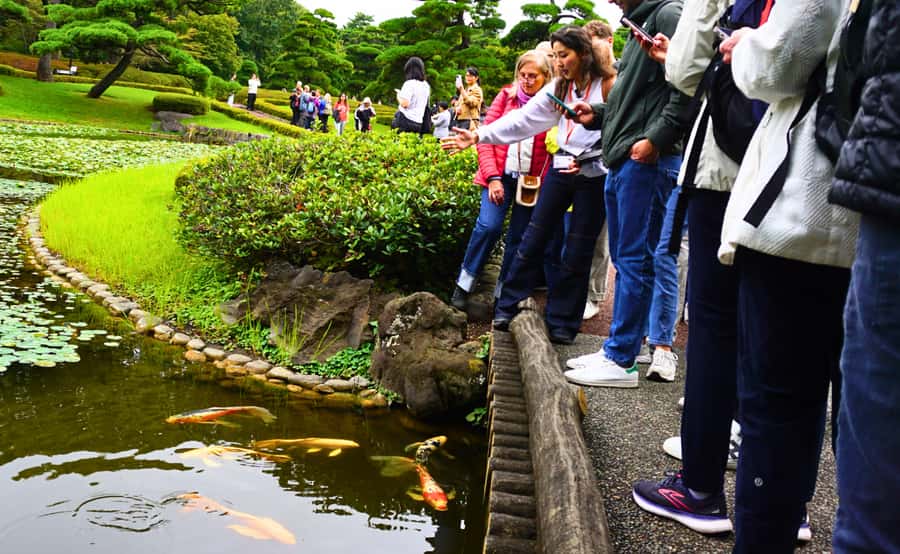
- Special koi fish that are unique to this location
- Edo Castle remnants tied to the story of Japan’s earlier political center
- Trees from different prefectures of Japan that turn the gardens into a living map
- Photo stops planned into the walk, not left to chance
Meeting Point and the Quick Setup That Makes It Easy
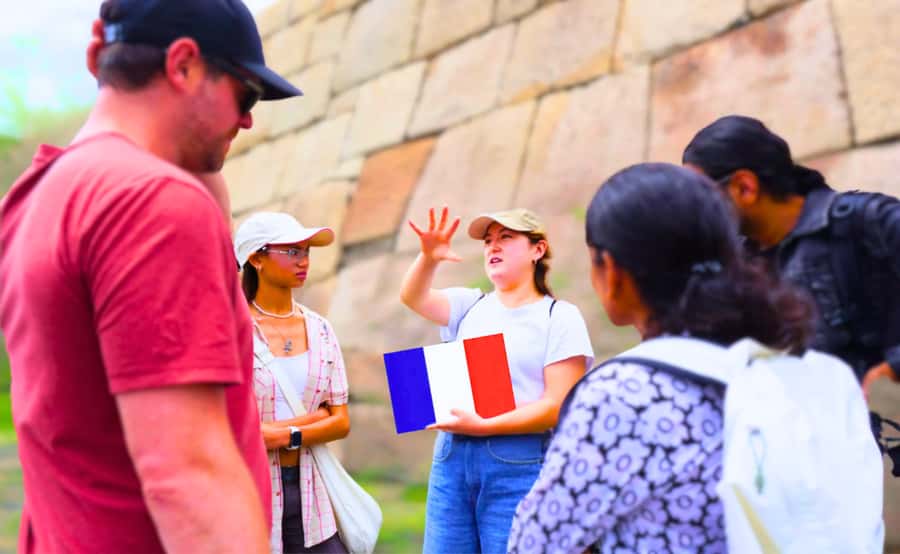
Tokyo tours can fall apart at the start, but this one is built for clarity. You meet your guide at Starbucks near the Tokyo Imperial Palace, specifically in Wadakuramon Fountain Park. Your guide holds a sign with the Sunrise Adventure logo, so you can spot them quickly and avoid the usual group-hunt around big landmarks.
From there, you head to the main gate area on foot. The meeting point is easy to reach by train: you’ll aim for Tokyo Station or Otemachi Station, then walk about 5–10 minutes. For planning, this matters because it keeps your day flexible—you’re not committing to a complicated “find a side street at 7:45am” situation.
If you’re traveling with kids, you’ll still want to think about pace and attention. The experience is a walking history tour, not a hands-on activity. It should be fine for families who enjoy learning, but it’s not designed like a playground stop.
More walks around the Imperial grounds
- Tokyo: Imperial Palace and Shogun Historical Walking Tour
★ 5.0 · 2,251 reviews - Tokyo: Imperial Palace Japanese History Walking Tour
★ 4.9 · 987 reviews - Tokyo: Imperial Palace and Shogun Walking Tour
★ 4.9 · 935 reviews - Imperial Palace East Garden and Edo Castle Walking Tour in Tokyo
★ 5.0 · 510 reviews
Heading to Otemon: Getting Oriented Before the Grounds Get Big
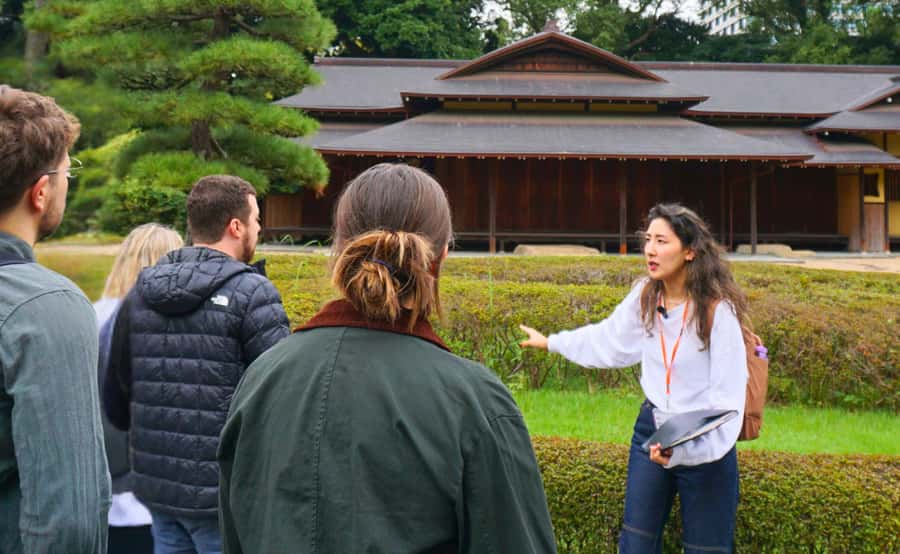
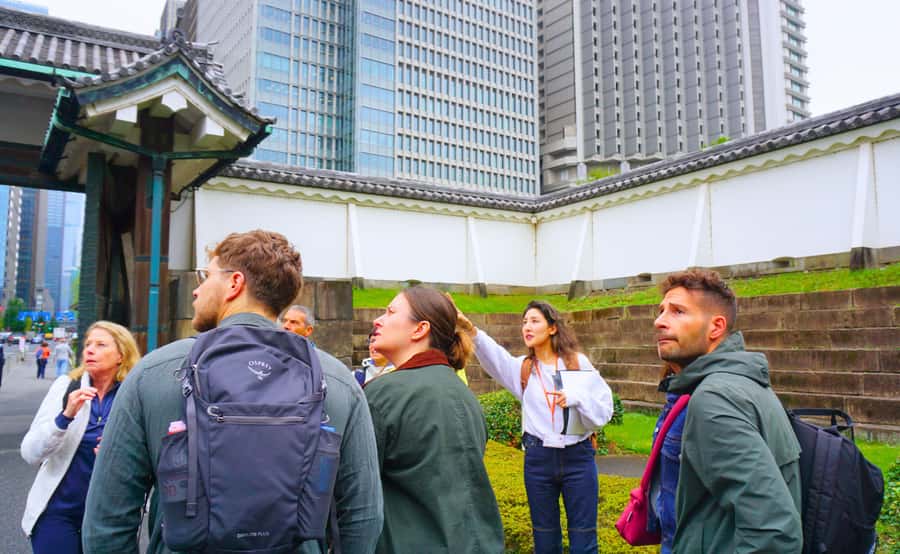
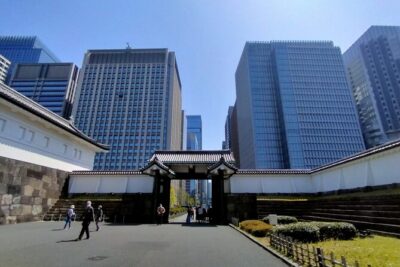
The first big “check” of the tour is arriving at the palace’s main gate (otemon). Walking in with your guide means you don’t just see walls and paths—you understand why the layout matters and what you’re looking at. The route takes you through the palace grounds at a calm, historical pace that’s ideal if you don’t want a rushed checklist tour.
A key moment here is the explanation around the missing main castle. The guide points out that the main castle no longer exists, and they explain why during the tour. That might sound like a small detail, but it changes your whole perspective: you stop thinking of the site as “damaged” and start thinking of it as “purposefully changed,” which makes the later ruins and structures easier to interpret.
Also, this is where the guide’s role really shows. In a small group, you can ask questions and get answers that stay on your level. In one tour I experienced, the group was just five people, which made it easier to talk and keep the conversation going.
The Eastern Gardens: Where the History Feels Like a Stroll
Once you’re inside the grounds, the main event is a walking route through the oriental/eastern gardens and palace ruins. This is where the tour earns its value: you’re not just moving from one sign to the next. You’re learning how the gardens function in the bigger story of the former Edo Palace.
The atmosphere is part of the point. The palace grounds are serene, and the guide helps you notice details instead of treating the place as a static postcard. You’ll stroll at a pace that makes it comfortable to look up at structures, scan paths, and pause for photos.
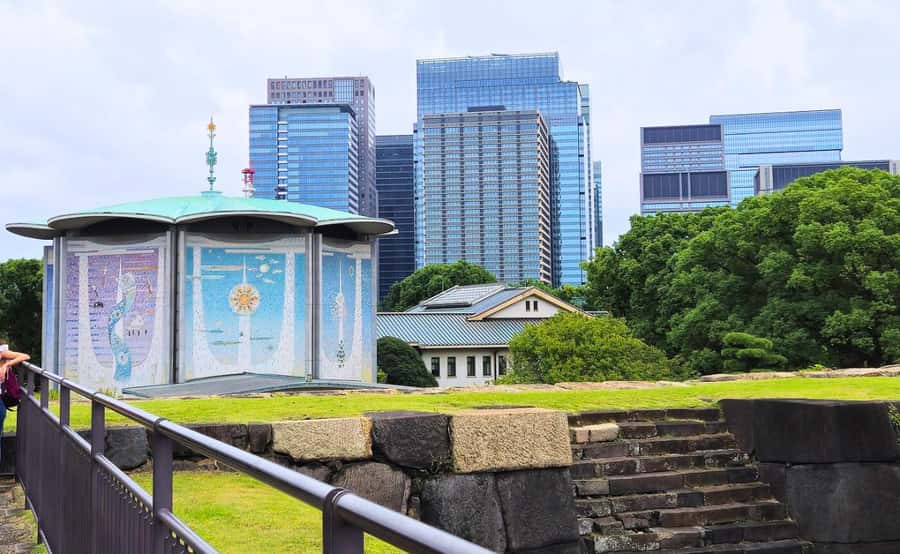
You’ll also see a miniature structure of the former palace. That’s an important stop because the real main castle is gone, and the miniature helps you build a mental picture. It’s not a replacement for the original building, but it works as a way to understand scale and layout without guessing.
Koi Fish: A Small Detail With a Big Payoff
Not every history tour includes a living “wow moment,” but this one does. You get to meet special koi fish—an unusual variety that can only be found here.
This matters because it breaks the typical museum pattern. Instead of only reading or listening, you also get something visual and specific you can watch. In a quiet garden environment, koi become more than decoration; they’re a living feature that makes the space feel cared for and intentional.
If you like nature details, this is one of the most memorable parts. It also gives you a natural reason to slow down. You’ll take photos, look for movement, and just enjoy the calm before the tour shifts back to story and ruins.
Edo Castle Base Ruins: Connecting Old Power to Japan’s Story

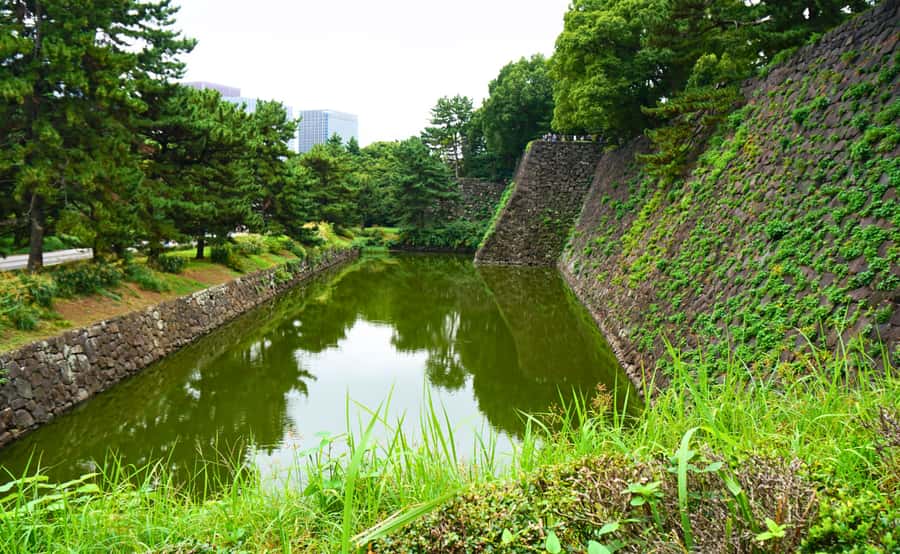
One of the most meaningful segments of the walk is the visit to the former base of Edo Castle, more than 350 years ago. That timeframe is big, but your guide makes it digestible by connecting the place to how Japan evolved into the country it is today.
This is where the tour earns its “history of Japan” promise. You’re not just hearing dates. You’re standing in a space that served as a political center, and you’re learning how that earlier power shaped what came after. Even if you already know the basics, the guided framing helps you connect the dots more clearly.
You’ll also explore the history of the former soldiers’ barracks. That stop adds texture. It shifts the story from royal symbolism to everyday structures—rooms, functions, and the real machinery of power. It’s the kind of context that makes the site feel less like a monument and more like a functioning place.
Readers also shortlisted these Tokyo bookings:
- Tokyo 6hr Private Tour with Government-Licensed Guide★ 5.0 · 3,902 reviews
- Tokyo: Shinjuku Local Bar and Izakaya Guided Walking Tour★ 4.9 · 1,794 reviews
- Tokyo: Private City Highlights Tour with Local Guide★ 4.8 · 1,433 reviews
- Tokyo: Tsukiji Fish Market Guided Walking Tour★ 4.9 · 1,397 reviews
- Tokyo 4hr Private Tour with Government-Licensed Guide★ 5.0 · 1,394 reviews
Trees From Different Prefectures: The Gardens as a Living Map
Another standout detail is the chance to see trees from different prefectures of Japan. This turns the garden into more than scenery. It becomes a sort of living exhibit that ties the imperial grounds to the wider country.
I like this kind of stop because it changes what you pay attention to. Instead of only focusing on buildings and gates, you’re also looking at plant variety. In practice, it means you’ll slow down and ask questions like what makes these trees different, and why you’re seeing them here.
Even if you don’t know tree names, you’ll still get value. Your guide helps you interpret the meaning of these features as part of how the grounds reflect Japan’s identity and history.
Photo Stops: Where to Point the Camera Without Guessing
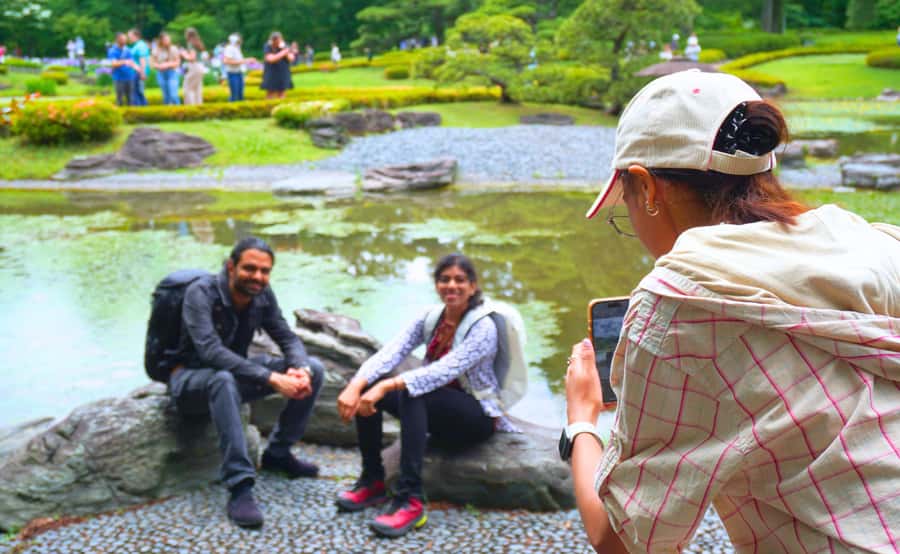
The tour is built with “best spots” for photos in mind. That doesn’t mean you’ll have endless free time for selfies; it means you’ll know when the view will be worth it.
I recommend traveling with a fully charged battery and taking a few minutes to wipe your lens before key pauses. Palace gardens can be bright or shaded depending on the path, and the best moments come quickly. If you’re holding a phone camera, keep an eye on shadows and try not to block other visitors during photo stops.
If you care about composition, the mixture of gates, garden paths, and ruins gives you variety. You won’t be stuck shooting the same angle over and over.
The Guide Experience: French/English Clarity and Why Small Groups Help
Your experience includes a guide. The provided info lists languages as French, and it also describes an English-guide tour in the title. To avoid surprises, I’d treat this as something to confirm when you book—especially if you want English.
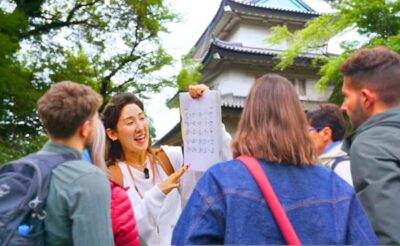
In the reviews, the guide Nicolas stands out as a strong communicator, mixing history with answers that go beyond the walking route. It’s not just facts. It’s the way the tour becomes a conversation about Japanese mythology, Japan in general, and even language questions. If you enjoy asking questions, that kind of back-and-forth can turn a standard tour into a memorable one.
Group size can also change the experience. One tour I saw described was a small group of five, which made it friendly and easy to talk. If you prefer a less crowded feel—where you can actually hear answers—that’s a good sign for you.
What’s Not Included (And How That Affects Your Expectations)

This tour does not include access to the inner palace. So if your dream is walking into the main interior areas, you’ll need to look for a different option.
That said, the outer grounds and gardens are still substantial. You’ll cover the main gate area, the eastern gardens, ruins, barracks history, special koi, trees, and photo points. In other words, you’re not paying for “a quick loop around the fence.” You’re paying for a guided interpretation of what you can actually see from the public grounds.
Also, the tour runs on good weather or bad weather. Wear clothing that matches the forecast and the fact that you’ll be walking outside for a while.
Practical Tips: Rules, Timing, and How to Avoid Friction
A few rules are posted for the experience: no smoking, no drones, no alcohol and drugs, no littering, and no skateboards. They’re standard for major sites, but it’s worth knowing so you’re not thinking about it mid-tour.
Timing is strict. If you don’t show up within 10 minutes of the meeting time, the tour can start without you. That matters because the tour is walking-based; skipping the start means you’re likely missing the first explanations and orientation.
Finally, bring your curiosity. This is the kind of tour where your questions improve the value. If you enjoy learning how places connect to the wider story of Japan’s development, you’ll get more out of the visit than if you treat it like a photo-only stop.
Price and Value: Is $40 Fair for What You Get?
At $40 per person, this sits in the “guided sightseeing” range, not the “budget museum ticket” category. The value comes from three things you can feel during the tour: a focused walking route, a guide who explains the missing main castle and the site’s evolution, and time spent on specific features like koi fish and the Edo Castle base area.
If you’re the type who likes to read and research on your own, you might think you could do this independently. But the tour’s strength is interpretation—how the guide turns garden paths and ruins into a coherent story of Japan’s transformation.
I’d also consider your pace preference. If you want a calm morning walk with opportunities to ask questions (especially in a small group), $40 can feel like money well spent.
Should You Book the Tokyo Imperial Palace History Tour?
Book it if you want a guided walk through the eastern gardens of the former Edo Palace, with real storytelling that helps the site click—especially if you care about how earlier power structures connect to modern Japan. You’ll like it if photo stops and a serene pace matter to you, and if the idea of seeing koi fish unique to this location sounds fun.
Skip it if your top priority is inner palace access, because this tour doesn’t include that. Also, if language is a deal-breaker for you, confirm whether you’ll get French or English before you go.
If you like your Tokyo history calm, specific, and easy to follow, this one is a solid bet.
FAQ
Where is the meeting point for this tour?
You meet your guide at Starbucks near the Imperial Palace, in Wadakuramon Fountain Park. Your guide will be holding a sign with the Sunrise Adventure logo.
How do I get to the meeting point?
Take the train to Tokyo Station or Otemachi Station, then walk about 5–10 minutes to Wadakuramon Fountain Park and Starbucks.
Does the tour include access to the inner palace?
No. This tour does not include access to the inner palace.
What language is the guide?
The tour is listed as having a French guide, though the title also mentions an English guide. If language matters to you, it’s worth confirming before booking.
What can’t I bring or do during the tour?
Smoking, drones, alcohol and drugs, littering, and skateboards are not allowed.
What happens if I’m late to the meeting time?
If you don’t show up within 10 minutes of the meeting time, the tour can start without you.
More Guided in Tokyo
- Tokyo 6hr Private Tour with Government-Licensed Guide
★ 5.0 · 3,902 reviews - Tokyo: Shinjuku Local Bar and Izakaya Guided Walking Tour
★ 4.9 · 1,794 reviews - Tokyo: Private City Highlights Tour with Local Guide
★ 4.8 · 1,433 reviews - Tokyo: Tsukiji Fish Market Guided Walking Tour
★ 4.9 · 1,397 reviews - Tokyo 4hr Private Tour with Government-Licensed Guide
★ 5.0 · 1,394 reviews
More Tour Reviews in Tokyo
- Mt Fuji and Hakone 1-Day Bus Tour Return by Bullet Train
★ 5.0 · 26,383 reviews - 1-Day Tokyo Bus Tour
★ 5.0 · 14,250 reviews - Tokyo: teamLab Planets TOKYO Digital Art Museum Entry Ticket
★ 4.6 · 9,779 reviews - Mt Fuji & Hakone Cruise, Drum Show Bullet Train 1 Day from Tokyo
★ 4.0 · 7,413 reviews - Tokyo: Shinjuku Food Tour (13 Dishes at 4 Local Eateries)
★ 5.0 · 6,603 reviews
More Imperial Palace Walks
- Tokyo: Imperial Palace and Shogun Historical Walking Tour
★ 5.0 · 2,251 reviews - Tokyo: Imperial Palace Japanese History Walking Tour
★ 4.9 · 987 reviews - Tokyo: Imperial Palace and Shogun Walking Tour
★ 4.9 · 935 reviews - Imperial Palace East Garden and Edo Castle Walking Tour in Tokyo
★ 5.0 · 510 reviews - Tokyo: Imperial Palace East Gardens Walking Tour
★ 4.8 · 353 reviews
Latest Tokyo reviews off our desk




Imperial Palace Tours, compared.
 ★ 5.0Imperial Palace and Shogun Historical Walking TourFrom $222,251 reviews
 ★ 4.9Imperial Palace Japanese History Walking TourFrom $32987 reviews
 ★ 4.9Imperial Palace and Shogun Walking TourFrom $16935 reviews
 ★ 5.0Imperial Palace East Garden and Edo Castle Walking Tour in TokyoFrom $25510 reviews
 ★ 4.8Imperial Palace East Gardens Walking TourFrom $19353 reviews
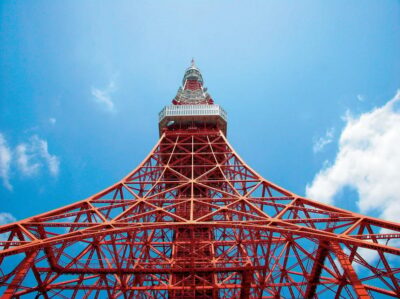 ★ 4.5Imperial Palace, Sensō-ji Temple, & Tokyo Tower TourFrom $40339 reviews
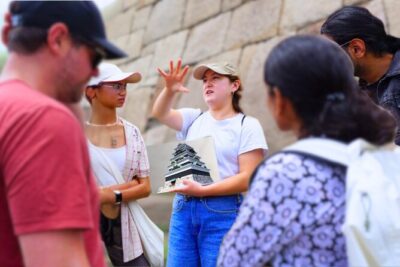 ★ 5.0Tokyo Castle, Imperial Palace, Shogun & Garden Walking TourFrom $31211 reviews
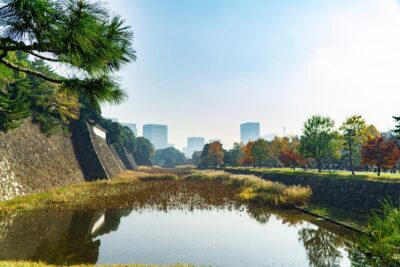 ★ 4.7Edo Castle & East Garden of the Imperial Palace TourFrom $42112 reviews
Browse the lists this tour appears in