
Reviewed · MOUNT FUJI TOURS
Tokyo: Mount Fuji & Hakone Private Tour with Guide
Mount Fuji looks different from every distance.
This private day tour is built for maximum sight-time: you start with unblocked Fuji views from the Subaru 5th Station area, then roll straight into Hakone’s lake and valley scenery for Lake Ashi cruising. The pace is structured but flexible, so you can actually slow down for photos (and still make the key rides).
Two things I especially like: you get a full circuit of the classic Fuji-and-Hakone highlights in one go, and you’re traveling in an air-conditioned vehicle with WiFi and bottled water, which matters on a long day. The main drawback is simply time and timing: with a 10-hour schedule, you need to accept a packed route and possible line-ups—especially around the ropeway and lake boat.
In This Review
- Key highlights to expect
- Private van, 10 hours: what the day really feels like
- Subaru 5th Station: the best chance for clear Fuji crater views
- Two shrine stops: Kitaguchi-hongu and the red-torii calm
- Oshino Hakkai: pond-side Fuji magic and snack time
- Hakone by ropeway and cable car: Owakudani views, with time kept in mind
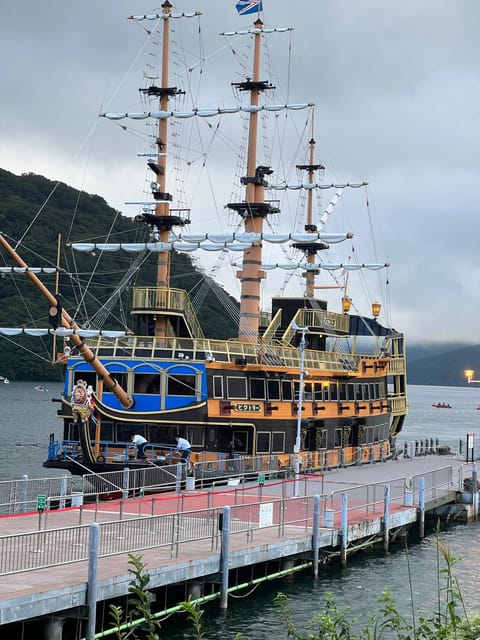
- Lake Ashi cruise and the pirate ship ride: the best photos need a schedule buffer
- Chureito Pagoda in Fujiyoshida: the iconic Fuji framing
- Food and lunch: plan for separate spending, not a full meal included
- Price and value: $761 per group up to 5 for a full “Fuji + Hakone” circuit
- Weather reality: when Fuji hides, your day can still stay strong
- Small logistics that can save your day
- Should you book this Mount Fuji and Hakone private tour?
- FAQ
- How long is the tour, and does it include pickup and drop-off?
- Is lunch included in the price?
- What costs are not included besides lunch?
- What language support do I get during the tour?
- Can the route be changed to match what you want to see?
- Are there any age limits?
Key highlights to expect
- Subaru 5th Station at 2,300 meters for wide, crater-area views when clouds cooperate
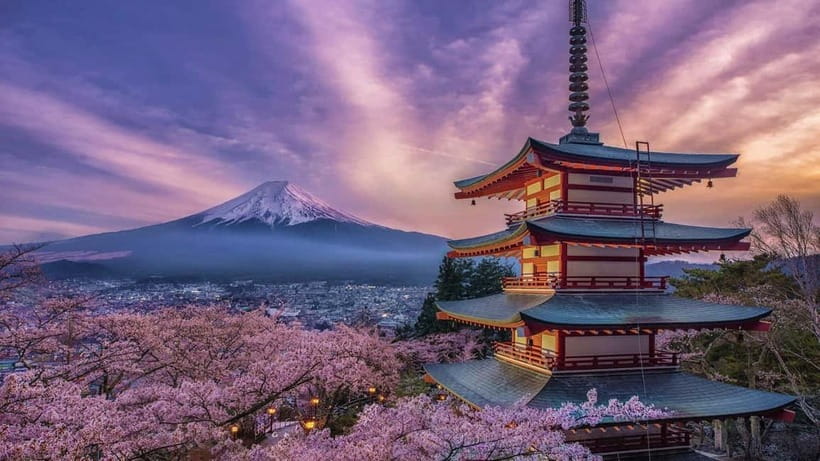
- Chureito Pagoda with the Mount Fuji photo-famous framing in Fujiyoshida
- Oshino Hakkai ponds fed by melting snow from Fuji, plus tea and snack stops
- Hakone ropeway/cable car up toward panoramic views over Lake Ashi and the surrounding region
- Lake Ashi cruise and pirate ship ride for a scenic loop with big mountain backdrops
Private van, 10 hours: what the day really feels like
This is a true day-trip format: hotel pickup in Tokyo, then a long stretch of mountain scenery that keeps moving. You’re not hopping trains with luggage stress, and you’re not stuck waiting in line with everyone else at the same time. Instead, you have an air-conditioned vehicle and a driver who can handle the logistics while you focus on what you came for.
In the feedback, English-speaking drivers and tour hosts (names like Imran and Moon come up often) are praised for punctual pickup and keeping things on track without feeling like you’re being shoved along. That’s the sweet spot for a Fuji day: you want time at the viewpoints, but you also want to hit the right rides while schedules still work.
The schedule is still ambitious. You should expect a full, continuous day with stops that range from about half an hour to a couple of hours. If your idea of a perfect day is slow café hopping, this one may feel like you’re constantly getting in and out of the car. But if you want an efficient, high-scenic “greatest hits” day, the structure is strong.
More Fuji day trips our readers rated highly
- Mt Fuji and Hakone 1-Day Bus Tour Return by Bullet Train
★ 5.0 · 26,383 reviews - Mt Fuji & Hakone Cruise, Drum Show Bullet Train 1 Day from Tokyo
★ 4.0 · 7,413 reviews - Tokyo Mt Fuji 5th St & Hakone Cruise Bus Tour w/Bullet Train
★ 4.4 · 5,024 reviews - From Tokyo: Mount Fuji Full-Day Sightseeing Trip
★ 4.5 · 4,970 reviews
Subaru 5th Station: the best chance for clear Fuji crater views
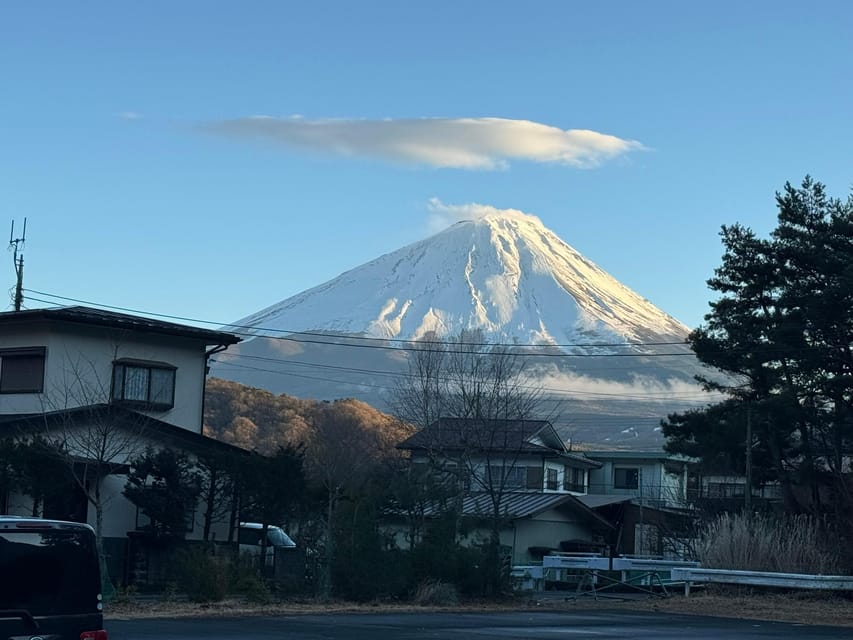
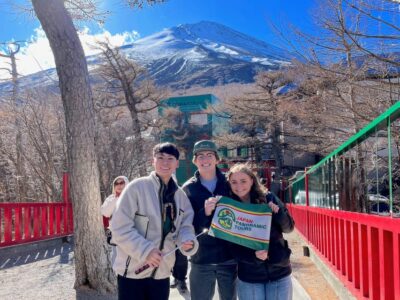
The day starts building toward that moment when Fuji shows itself cleanly. The stop at Fuji Subaru Line 5th Station puts you at roughly 2,300 meters—high enough that, on clear days, you can look across the Fuji Five Lakes area and see the mountain’s broader volcanic terrain.
Why this stop matters: at lower elevations, trees and buildings can block your sightlines. Here, you’re positioned to see the crater area and the surrounding mountains. You’re also far enough up that clouds can sit lower than you, turning a “bad weather day” into a workable one.
There’s also a cultural pause: you visit the Tenjosan Komitake Shrine at the station area. Even if you’re not a shrine person, it’s worth stepping into the quiet for the view—small sacred spots in Japan often double as the place locals go when they want a clean horizon.
Practical tip: bring comfortable shoes. This is a “walk and look” stop, and you’ll want room for short walks and photo angles. Also bring cash—Fuji-related entry fees (and other add-ons later) aren’t included, and you’ll likely want to pay for small extras on the spot.
Two shrine stops: Kitaguchi-hongu and the red-torii calm
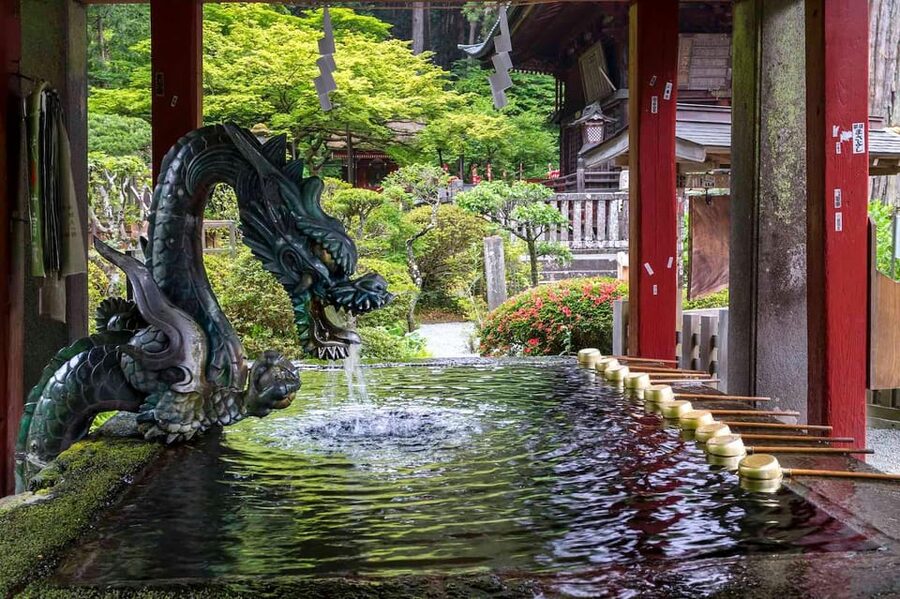
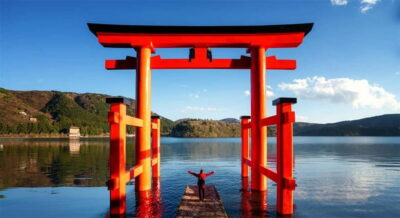
From the 5th Station, the route shifts into the quieter, less “tour bus” side of Fuji worship. Next up is Kitaguchi-hongu Fuji Sengen Shrine, known for its red torii gates and peaceful atmosphere.
What you’re really getting here is contrast. Fuji Subaru Station is dramatic and high. This shrine stop is about stillness, old paths, and the sense that Fuji isn’t just a mountain to photograph—it’s a presence people have long treated with reverence. The walk along cedar trees said to be over 1,000 years old, lined with stone lanterns, is the kind of detail that makes the day feel more like Japan than just sightseeing.
This is also a smart timing stop. You often find that shrine visits are easier when you’re not fighting the strict “only during daylight” timing pressure. If crowds build later (they can, around the most famous photo points), this calmer segment helps balance the day.
If you enjoy history and symbolism, take an extra minute here. If you’re moving quickly, at least get through the torii-gate area and the cedar-lined path so the stop doesn’t feel like a photo checkpoint only.
Oshino Hakkai: pond-side Fuji magic and snack time
Then the route turns to Oshino Hakkai, a village famous for its eight ponds. These aren’t just pretty water features: they’re traditionally described as being formed from melting snow from Mount Fuji. Even if you don’t care about the science angle, the atmosphere is what makes it work—stone edges, traditional houses, and a walk that feels like you’re moving through a preserved pocket of the area.
You’ll have time here for browsing and a simple meal setup: tea and lunch/snack time are commonly part of this segment. In one day-trip experience, people also highlighted eating hoto noodles locally as a tasty fuel-up. It’s a practical choice because it’s warm, filling, and easy to eat before the next round of walking.
A heads-up you can plan around: this is one of those stops where you’ll want small cash for snacks. It’s also a place where the line for the most popular food can eat into your time if you’re not strategic. I’d treat Oshino as both a sightseeing moment and a “get your energy sorted” stop, then move on without over-staying.
Hakone by ropeway and cable car: Owakudani views, with time kept in mind
Hakone is where the tour stops feeling like “Fuji pictures” and starts feeling like “volcanic Japan.” You’ll make a stop involving the Hakone ropeway/cable car experience, and the route is designed so you get sweeping sightlines over the Lake Ashi area and the surrounding volcanic terrain.
A key point: the ride involves separate ticketing for the gondola/ropeway portion. Those ride tickets are not included in the base package cost, so plan a little budget for them and keep some cash handy. (Even if you pay with a card sometimes, you don’t want to be stuck hunting for an ATM during a tight day.)
Why this part is worth it: Hakone’s dramatic topography doesn’t translate well from a car window. Ropeway and cable car elevation gets you above the congestion and into the wide-angle “valley and water” views. You’re also set up for the lake portion, which is one of the day’s most scenic payoffs.
Other Hakone loops worth the fare
- Tokyo: Mt. Fuji Tour, Hakone Ropeway, Owakudani, Lake Ashi★ 4.7 · 4,002 reviews
- Private Tour to Mt. Fuji and Hakone (Fully Licenced Operator)★ 5.0 · 1,910 reviews
- Mt Fuji & Hakone Cruise, Drum Show Bus 1 Day from Tokyo★ 4.0 · 1,287 reviews
- From Tokyo: Mt. Fuji & Hakone Tour w/ Return by Bullet Train★ 4.2 · 1,278 reviews
- Mt Fuji and Hakone 1-Day Bus Tour Return by Bus★ 4.5 · 929 reviews
Lake Ashi cruise and the pirate ship ride: the best photos need a schedule buffer
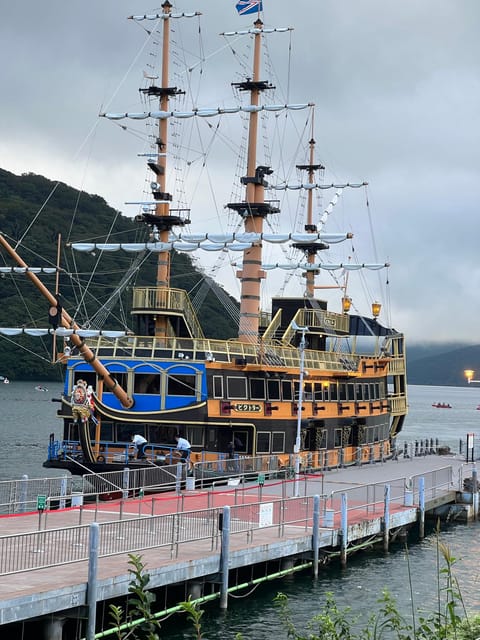
Next comes Lake Ashi, with time for both sightseeing and a boat experience. This is one of the most photogenic stretches of the day because the lake provides a natural frame: mountains in the background, Fuji possibilities in clear weather, and a moving viewpoint that feels different from the fixed platforms.
The tour includes a cruise on Lake Ashi, and many schedules feature a pirate ship ride across the lake. The important catch is that ride tickets aren’t included, so you’ll need to account for them separately.
Here’s the practical advice I’d take from the pattern in feedback: don’t underestimate lines. Ropeway lines and boat departures can stack up fast during peak periods. If you’re aiming to catch a later crossing, you risk losing the chance if you don’t leave buffer time. Plan to move promptly through the transfer stages, even if you want one extra photo stop along the way.
Also, dress for changing air. Mountain-adjacent lakes can feel cooler than city Tokyo, and waiting in lines is time outside.
Chureito Pagoda in Fujiyoshida: the iconic Fuji framing
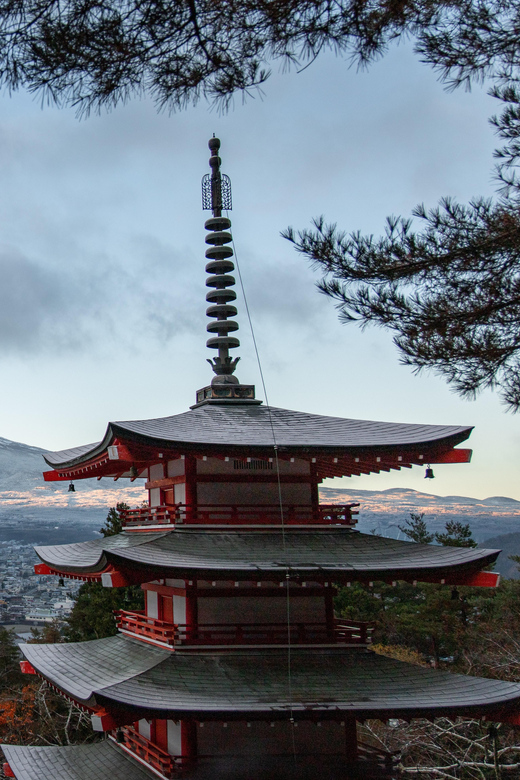
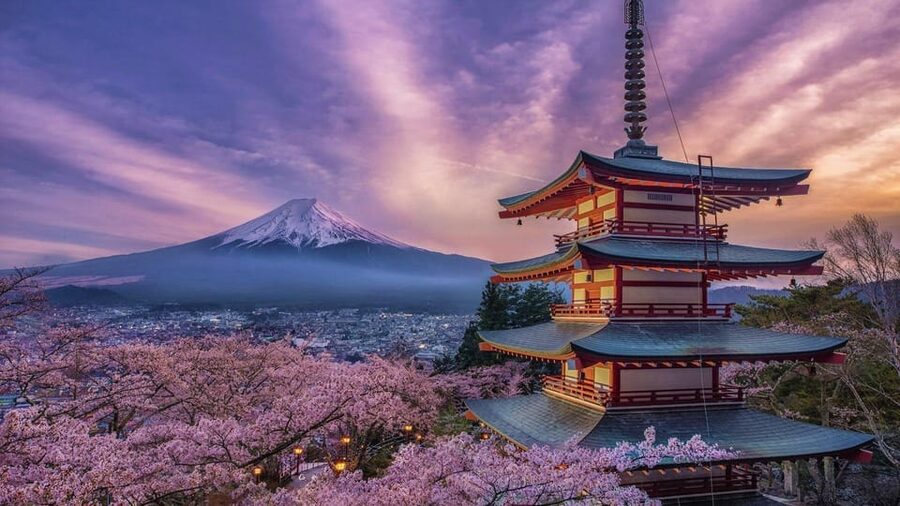
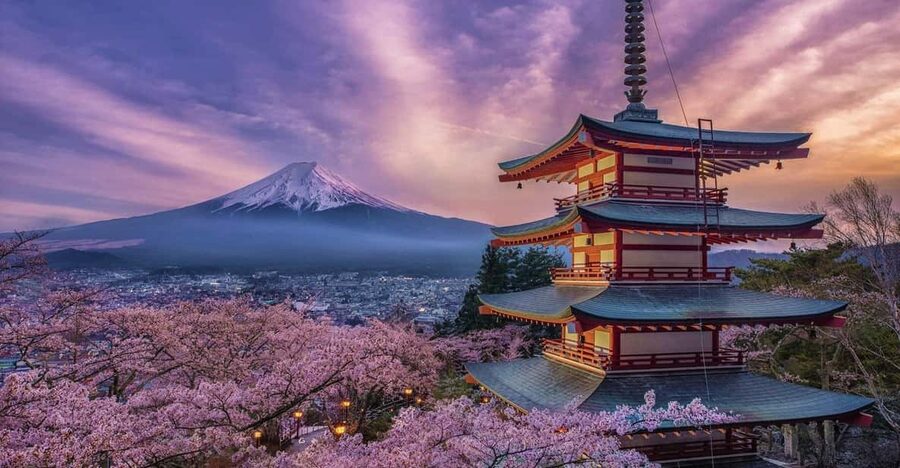
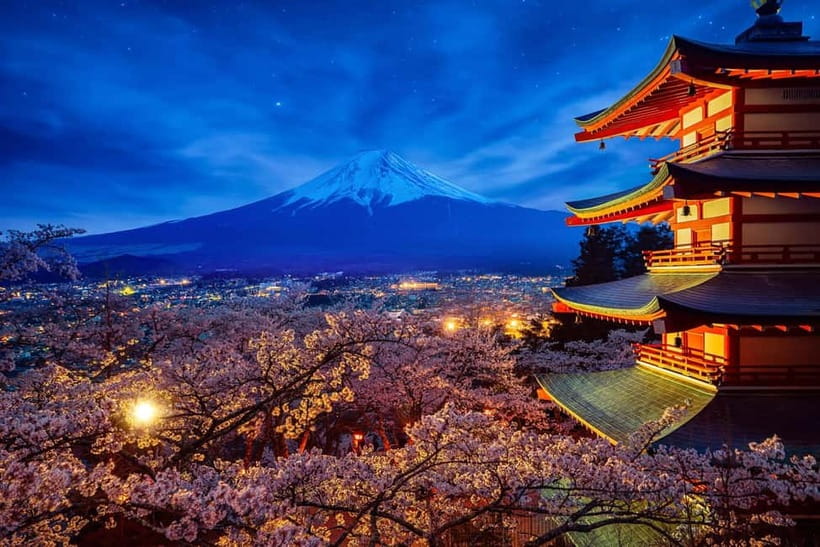
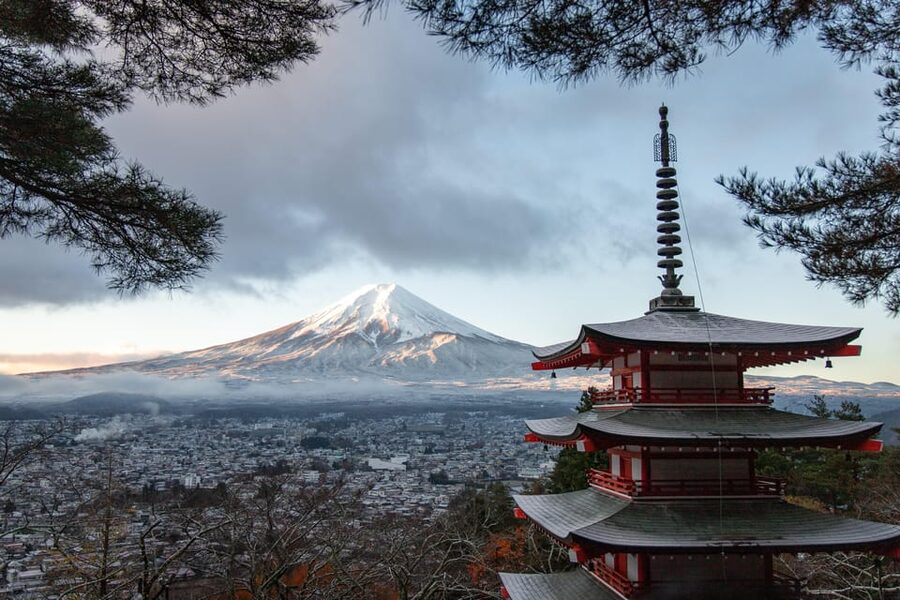
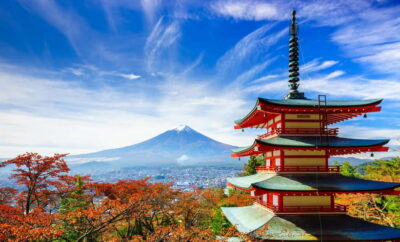
After the Hakone side, the tour loops you back toward Fujiyoshida for Chureito Pagoda in Arakurayama Sengen Park. This is the Mount Fuji photo spot many people dream about because of the clean visual relationship between the pagoda’s tiered structure and Fuji’s silhouette.
What makes it special is that it’s not just a random temple stop. It’s a deliberately framed scene—one where you can spend time walking the area and choosing angles rather than only snapping a quick picture from a single place.
Timing depends on the season. The best-known charm is in cherry blossom season and autumn foliage, when the park turns into a seasonal color layer behind the iconic view. Even if you’re not traveling for blossoms or autumn, it still works as a classic “I was there” moment.
In the time you have here (about two hours), you should aim for:
- a slow walk to settle your angle choices
- a few photos from different steps/distances
- a moment to simply look, not only shoot
If Fuji is showing well that day, Chureito becomes the emotional peak of the entire tour.
Food and lunch: plan for separate spending, not a full meal included
Lunch isn’t included, but the tour does include a dedicated lunch stop. That’s a good thing, because Japan has plenty of lunch styles, and everyone’s preferences differ. One local favorite that showed up in feedback was hoto noodles, a warm regional choice that fits the cold-weather Fuji day vibe.
You’ll also likely snack in-between at Oshino Hakkai, where the vibe is perfect for small bites and tea. Just remember: you’ll want cash. Even where cards are accepted, cash stays useful for quick snacks and entry fee add-ons.
If you have dietary needs, this is where the private structure matters. You can often ask the driver/host to adjust within reason, and having a flexible stop helps more than a rigid fixed restaurant reservation.
Price and value: $761 per group up to 5 for a full “Fuji + Hakone” circuit
At $761 per group (up to 5) for 10 hours, this isn’t a budget day trip. But it also isn’t just a car rental. You’re paying for a smooth door-to-door experience with hotel pickup and drop-off, an air-conditioned vehicle, WiFi onboard, bottled water, and coverage for things like fuel, highway tolls, and parking.
Here’s how to think about the value:
- If you’re traveling as a small group, you’re spreading the cost across multiple people.
- You avoid the time and stress cost of navigating transfers between distant viewpoints and ropeway/boat areas.
- You get structured stops that hit the famous Fuji-and-Hakone points in one day, instead of sacrificing one area for the other.
The cost logic shifts if you’re solo or a couple, because private transport is harder to “split.” But for families or small friend groups, it can start to look like a very reasonable way to buy time, reduce hassle, and still see the big scenery.
One more thing: the package doesn’t include Fuji Subaru Station entry fees or the ropeway and pirate ship tickets, and lunch is separate. Those are normal add-ons for this route, but they do affect your total day spend.
Weather reality: when Fuji hides, your day can still stay strong
Fuji weather is unpredictable. Clouds can erase the view quickly. The good news is that this tour format can handle that reality better than a DIY train day, because you’re not stuck with fixed departure times across multiple transit systems.
In the experiences shared, guides like Imran, Moon, and Khan are praised for adjusting when conditions weren’t perfect, including keeping the schedule moving and finding satisfying alternatives. You’ll still lose a view sometimes—but you’re much more likely to protect the overall day than if you planned everything around a single “must-see” viewpoint.
Your best strategy: treat the day as a scenic program, not a single photograph. If Fuji is visible, celebrate. If it isn’t, focus on the shrines, ponds, ropeway elevation views, and the lake cruise, because those are still meaningful even under cloud cover.
Small logistics that can save your day
A few details matter more than they sound when you’re doing a mountain day trip:
- Wear comfortable shoes. You’ll walk at station areas, shrines, Oshino, and around Chureito.
- Bring cash for entry fees and the separate ropeway/boat tickets.
- Accept that lines can form around the ropeway and lake departure windows.
- Smoking and alcohol aren’t allowed in the vehicle.
- If you’re staying outside Tokyo’s 23 wards, pickup/drop-off extra charges may apply.
Also, the tour is described as customizable. That’s useful when you want to swap a stop, spend longer at one place, or adjust pace for kids or slower walkers.
Should you book this Mount Fuji and Hakone private tour?
Book it if you want a one-day Fuji + Hakone highlights circuit without the stress of coordinating transport, ticketed rides, and long-distance transfers. It’s especially good value for a group up to 5, and it’s a smart choice for families because you’re not managing trains while everyone’s tired.
Skip it (or consider trimming expectations) if you hate long days, don’t want to pay for separate ride tickets and entry fees, or you’re aiming for a slow, unstructured itinerary. This is a “many stops, well-paced” tour, not a relaxed overnight-style wander.
If you check one thing before you commit, make sure you’re comfortable with the idea that Fuji visibility depends on weather. When clouds cooperate, you’ll get those iconic scenes. When they don’t, the itinerary still gives you a full, satisfying day around shrines, ponds, volcanic views, and Lake Ashi cruising.
FAQ
How long is the tour, and does it include pickup and drop-off?
The total duration is 10 hours, and that time includes hotel pickup and drop-off.
Is lunch included in the price?
No. Lunch is not included, and you’ll have a lunch stop during the day.
What costs are not included besides lunch?
Fuji Subaru Line 5th Station entry fees, the gondola/ropeway ride tickets, and the pirate ship cruise ride tickets are not included. (You’ll also pay any separate entry fees that come up during stops.)
What language support do I get during the tour?
The driver provides English and Japanese language support.
Can the route be changed to match what you want to see?
Yes. The tour is fully customizable, and you can add or remove places according to your preferences.
Are there any age limits?
This tour is not suitable for people over 95 years old.
More Tour Reviews in Tokyo
- Mt Fuji and Hakone 1-Day Bus Tour Return by Bullet Train
★ 5.0 · 26,383 reviews - 1-Day Tokyo Bus Tour
★ 5.0 · 14,250 reviews - Tokyo: teamLab Planets TOKYO Digital Art Museum Entry Ticket
★ 4.6 · 9,779 reviews - Mt Fuji & Hakone Cruise, Drum Show Bullet Train 1 Day from Tokyo
★ 4.0 · 7,413 reviews - Tokyo: Shinjuku Food Tour (13 Dishes at 4 Local Eateries)
★ 5.0 · 6,603 reviews
Hakone, A Few More Ways
- Mt Fuji and Hakone 1-Day Bus Tour Return by Bullet Train
★ 5.0 · 26,383 reviews - Mt Fuji & Hakone Cruise, Drum Show Bullet Train 1 Day from Tokyo
★ 4.0 · 7,413 reviews - Tokyo Mt Fuji 5th St & Hakone Cruise Bus Tour w/Bullet Train
★ 4.4 · 5,024 reviews - Tokyo: Mt. Fuji Tour, Hakone Ropeway, Owakudani, Lake Ashi
★ 4.7 · 4,002 reviews - Private Tour to Mt. Fuji and Hakone (Fully Licenced Operator)
★ 5.0 · 1,910 reviews
More Mount Fuji Days We Have Reviewed
- Mt Fuji and Hakone 1-Day Bus Tour Return by Bullet Train
★ 5.0 · 26,383 reviews - Mt Fuji & Hakone Cruise, Drum Show Bullet Train 1 Day from Tokyo
★ 4.0 · 7,413 reviews - Tokyo Mt Fuji 5th St & Hakone Cruise Bus Tour w/Bullet Train
★ 4.4 · 5,024 reviews - From Tokyo: Mount Fuji Full-Day Sightseeing Trip
★ 4.5 · 4,970 reviews - Tokyo: Mt. Fuji Tour, Hakone Ropeway, Owakudani, Lake Ashi
★ 4.7 · 4,002 reviews
Latest Tokyo reviews off our desk






Mount Fuji Tours, compared.
 ★ 5.0Mt Fuji and Hakone 1-Day Bus Tour Return by Bullet TrainFrom $16326,383 reviews
 ★ 4.0Mt Fuji & Hakone Cruise, Drum Show Bullet Train 1 Day from TokyoFrom $1497,413 reviews
 ★ 4.4Tokyo Mt Fuji 5th St & Hakone Cruise Bus Tour w/Bullet TrainFrom $1545,024 reviews
 ★ 4.5From Tokyo: Mount Fuji Full-Day Sightseeing TripFrom $684,970 reviews
 ★ 4.7Mt. Fuji Tour, Hakone Ropeway, Owakudani, Lake AshiFrom $544,002 reviews
 ★ 4.4Mt.Fuji,Kawaguchiko Oishi Park,Arakurayama Sengen ParkFrom $542,682 reviews
 ★ 4.2Mt. Fuji 5th Station & Hakone Cruise 1-Day Bus TourFrom $1292,381 reviews
 ★ 4.7Mt Fuji Top 5 Spots Day Tour: Arakurayama Park,Oshino HakkaiFrom $532,066 reviews
Browse the lists this tour appears in