
Reviewed · AKIHABARA ANIME TOURS
Tokyo: Private Manga Drawing Class with Professional Artist
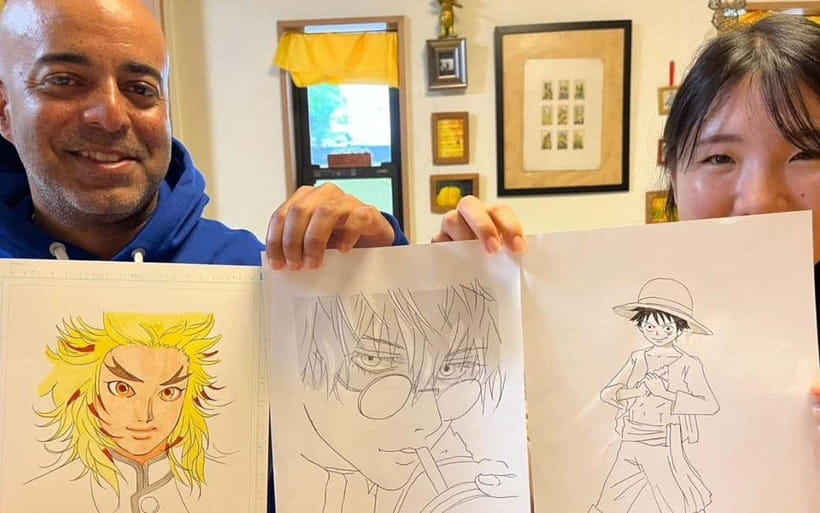
Manga skills start with the right tools. This private Tokyo manga drawing class takes you into a real studio setting and guides you step-by-step as you ink and finish your own character, not just copy a sample. I love how the lesson treats screentone like a real industry technique, with practical cut-and-apply steps for texture and depth.
I also love the hands-on pen training: you’ll work with classic G-pens plus maru-pens and brush pens, and you’ll learn line control with clear fixes for smudging, hand strain, and shaky perspective. You even get to choose from three difficulty levels, so the class can match your starting point without feeling dumbed down.
One possible drawback: you’re drawing the whole time, for 150 minutes, so come ready for a real sitting workout. Also, transportation to the studio isn’t included, so plan your route to Shindaita Station (Keio Inokashira Line).
In This Review
- Key highlights at a glance
- Getting to the studio and meeting Yumiko sensei
- The pro tool kit: pens, paper tooth, and modern workflows
- How the class builds line control that looks like manga
- Three difficulty levels, from guideline practice to full character design
- Screentones that actually look layered (not slapped on)
- The finishing phase: feedback, corrections, and a signed take-home
- Value for your money: why $141 makes sense here
- Who should book this manga class in Tokyo
- Brief practical notes you should know
- Should you book this Tokyo private manga drawing class?
- FAQ
- How long is the Tokyo private manga drawing class?
- Is the instruction available in English?
- Do I need prior drawing experience?
- What tools will I use during the workshop?
- Are there different difficulty levels?
- Can kids participate?
- How many people are in a session?
- What do I take home?
Key highlights at a glance
- Small private group (max 6) for close corrections and slower, clearer teaching
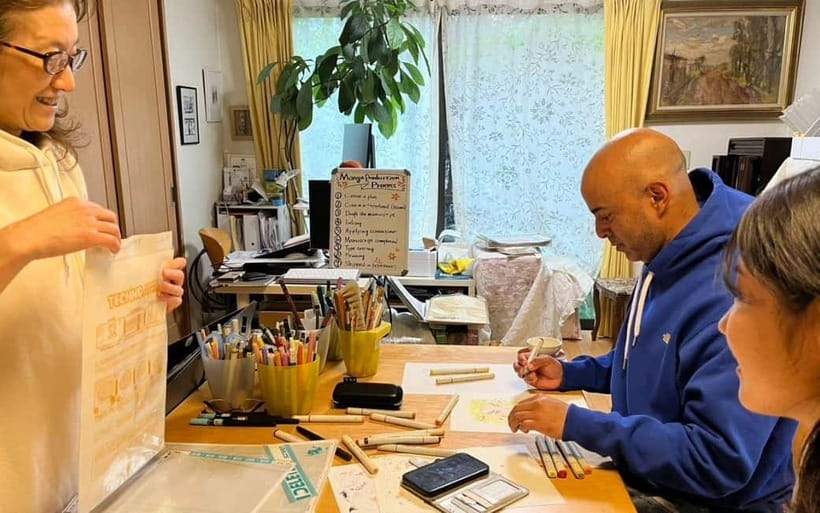
- Classic manga tools like G-pens, maru-pens, and brush pens, plus paper choice explained
- Three difficulty tiers with guideline sheets, from outline to full character design
- Screentone practice using cut-and-apply dot/line sheets for shadows and effects
- Take-home original artwork plus practice sheets and a mini handbook with where to buy tools
Getting to the studio and meeting Yumiko sensei
The experience starts right by Shindaita Station. You meet your guide just outside the ticket gates of Shindaita Station on the Keio Inokashira Line, and there’s a single exit, so it’s hard to get lost. If you’re a little early, that’s a win, because you can get settled and focus when the session begins.
Next, you meet the instructor, Yumiko sensei, a professional manga artist with serial work that appears in national magazines. You don’t just get generic tips; she talks through her portfolio and the genres she works in, such as shōnen, shōjo, and seinen. Then you name what you like—your favorite series or character—so the lesson can quietly steer toward your taste.
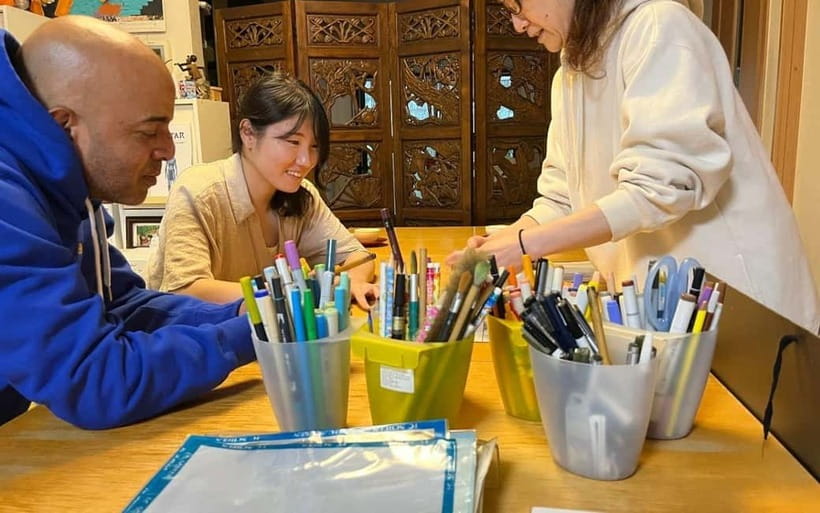
The vibe here is practical. You’re not “watching” art happen; you’re learning the decisions behind the look. With a max group size of 6, you get enough time for the instructor to correct small issues before they turn into bad habits.
More of Akihabara, ranked by our reviewers
- Official Street Go-Kart Tour – Akihabara
★ 5.0 · 1,578 reviews - Tokyo Go Kart: Asakusa, Skytree, and Akihabara **IDP MUST**
★ 5.0 · 988 reviews - Akihabara Anime & Game Adventure Walking Tour (Group or Private)
★ 5.0 · 404 reviews - Tokyo: Gameboy Mod Workshop at Akihabara
★ 5.0 · 253 reviews
The pro tool kit: pens, paper tooth, and modern workflows
This is one of the best parts of the workshop because it explains why manga tools behave differently. You’ll try classic G-pens and compare them to maru-pens and brush pens, so you feel how line thickness, texture, and flexibility change your outcome. The instructor also explains paper choice, including why higher-quality Kent paper acts differently than basic copy paper.
That sounds nerdy, but it’s actually helpful. Paper “tooth” and weight affect how ink sits and dries, which changes whether your lines look crisp or smudgy. Once you know that, you can stop blaming yourself and start choosing better materials when you practice at home.
You’ll also see how a modern artist might work today. The session includes discussion of dip ink, alcohol markers, screentones, and even digital tablets as part of a workflow. Even if you end up staying analog, that context makes you understand how manga art can move between tools without losing its style.
And because the instructor teaches pain points directly, you get early fixes. Expect talk about smudging, line control, hand strain, and perspective—those are the usual stumbling blocks when people try to ink for the first time.
How the class builds line control that looks like manga
Before you start committing ink to paper, you build structure. The workshop uses basic shapes to lock down anatomy and proportions, including heads-to-body ratio and balance lines. That’s a smart approach because it reduces the guessing that makes drawing feel stressful.
Then you move into line-weight theory. You learn where to thicken or taper lines to create volume, not flat outlines. This is the stuff that makes a character feel dimensional even when the drawing stays simple.
You also get speed-and-style techniques. For example, you practice feathering for hair shine and speed lines for motion, so your character has energy rather than just contours. A small pro trick gets repeated a lot: rotate the page instead of forcing your wrist for curves. It’s the kind of tip you can actually use immediately at home.
The instructor circles the room and gives hands-on corrections for posture and hand angles. If you’re stuck, she can demonstrate on your page, which is far more effective than generic advice. That one-on-one attention is a big reason the small group size matters.
Three difficulty levels, from guideline practice to full character design
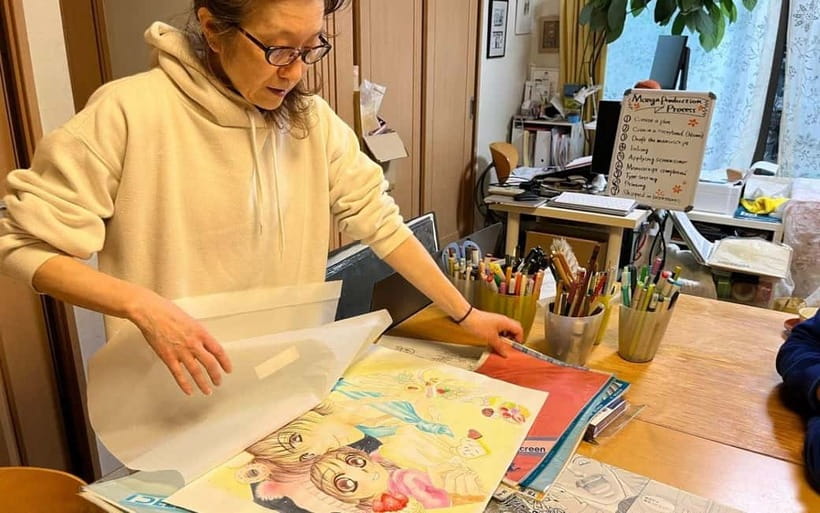
One size does not fit all here. You pick from three difficulty tiers, each with printed guideline sheets. Depending on what you choose, you can start with inking practice, do a character outline, or go all the way to full character design.
If you’re bringing kids, or you’re a true beginner, you can also request a chibi style, an action pose, or an expression sheet. That flexibility helps the session feel fun instead of intimidating.
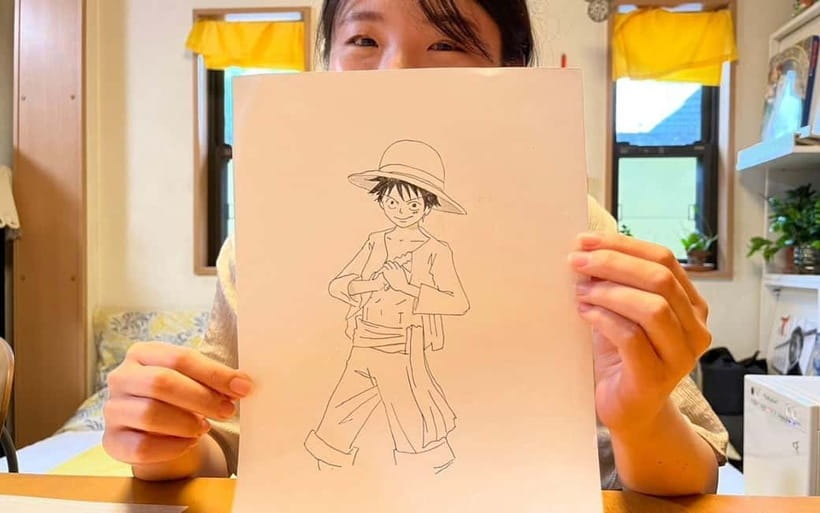
A helpful detail: the structure doesn’t trap you. Even if you start with guidelines, the class still encourages you to create your own manga character based on your preferences. You’re not locked into tracing a single example, and you don’t have to become a master in 150 minutes to leave with something finished.
This part also respects your time. You’re not stuck in a long lecture stage. The lesson quickly turns into drawing steps you can follow, try, and correct as you go.
Screentones that actually look layered (not slapped on)
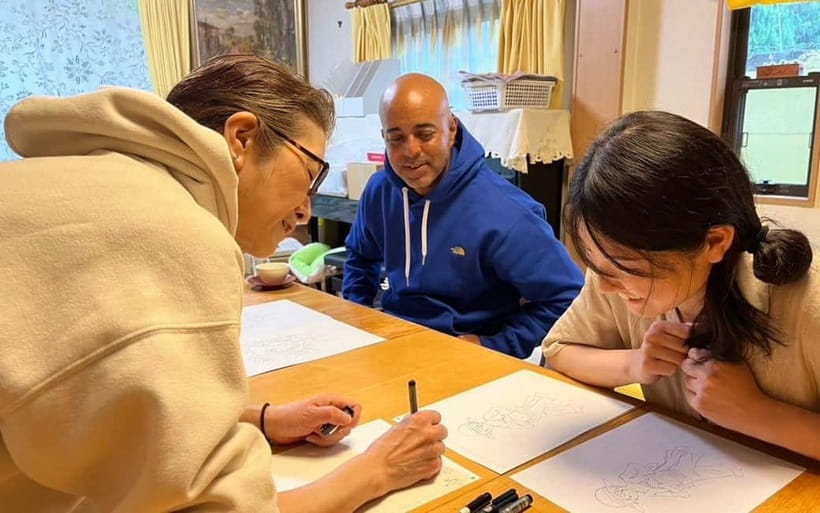
Screentone is where manga starts looking like manga. In this workshop, you practice classic screentone methods using cut-and-apply dot/line sheets. The dots and lines create shadows, depth, and background texture without needing complicated coloring.
You learn how to choose halftone sheets for different effects, like shadows, backgrounds, or sparkle-like accents. Then you move into finishing technique: using an art knife and a burnishing spoon to trim and blend edges so the tone looks integrated.
That blending step matters more than people think. If the edges look sharp or misaligned, the tone reads as a sticker instead of part of the artwork. The instructor’s guidance on trimming and smoothing gives you that smoother, more believable manga finish.
There’s also room for correction. You’ll get information on using white-ink pens for highlights and correction fluid when something goes wrong. That’s reassuring because it turns mistakes into manageable fixes, not a reason to start over.
Readers also shortlisted these Tokyo bookings:
- Private Tour to Mt. Fuji and Hakone (Fully Licenced Operator)★ 5.0 · 1,910 reviews
- Tokyo Customized Private Tour (Must See Places in 1 Day)★ 5.0 · 1,499 reviews
- Mount Fuji Full-Day Private Tour from Tokyo (Customizable)★ 4.9 · 1,470 reviews
- Private Custom Tour: Tokyo in a Day★ 5.0 · 1,432 reviews
- Tokyo 4hr Private Tour with Government-Licensed Guide★ 5.0 · 1,394 reviews
The finishing phase: feedback, corrections, and a signed take-home
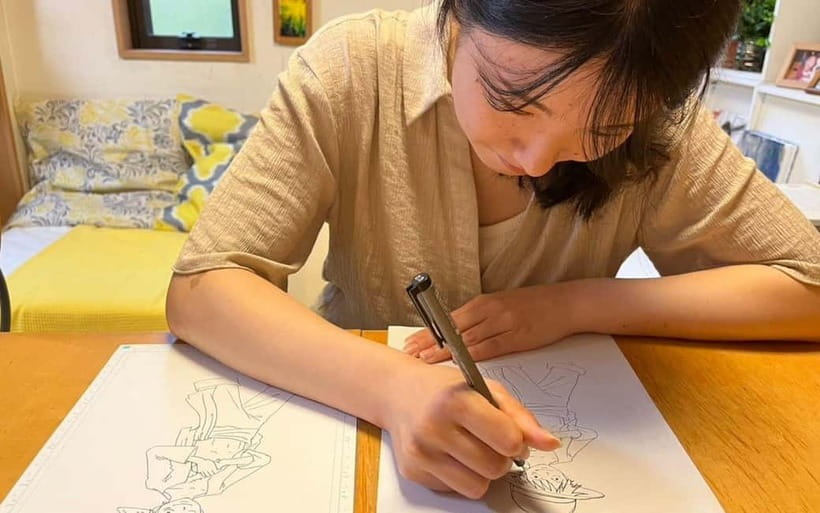
The last stretch is where you turn practice into a final piece. You apply final touches and then receive direct feedback on your work. The instructor marks areas to improve, and your finished drawing gets signed.
At the same time, you take home what you need to keep going. You receive your original artwork and practice sheets from the session, plus a mini handbook that lists today’s tools and where to buy them in Tokyo. That takeaway is quietly valuable because it saves you guesswork after your class ends.
If you want a souvenir level memory, you can also snap pictures with the artist and your piece. For some people, that’s the moment the experience feels real—your finished manga page sitting in your hands, not just a practice sheet that gets thrown away later.
In at least one case shared from the class, someone left with a character drawing like Tanjiro from scratch and also received a similar signed portrait from Yumiko sensei. That kind of extra personal touch is rare, and it’s part of why the workshop feels like more than a standard lesson.
Value for your money: why $141 makes sense here
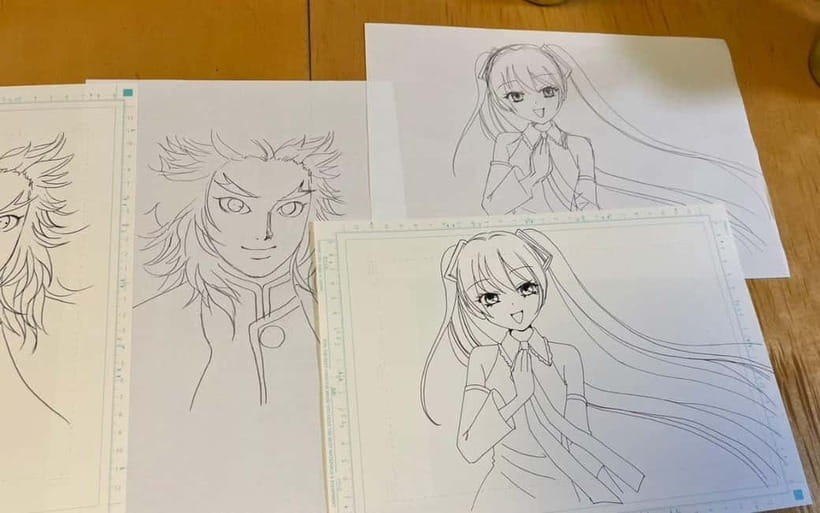
At $141 per person for 150 minutes, you’re paying for more than sitting at a table and doodling. You’re getting pro instruction, time with a published artist, and access to the tools and techniques that normally stay behind the scenes.
The private setup is a key part of the value math. A max group size of 6 means you’re more likely to get corrections that change your final result, not just general pointers. That can be the difference between leaving with something decent versus leaving with something you can actually replicate.
Then there’s the materials value. You work with classic pens and paper, practice screentones, and get exposed to multiple tools—dip ink, alcohol markers, and even digital workflows. Even if you don’t buy everything, you learn what each tool does to your line quality and texture.
Finally, the take-home pack is not just a page. You bring your original artwork plus practice sheets and a mini handbook for future buying and practice. For many people, that turns the class into a short-term kit you can use for days or weeks afterward.
Who should book this manga class in Tokyo
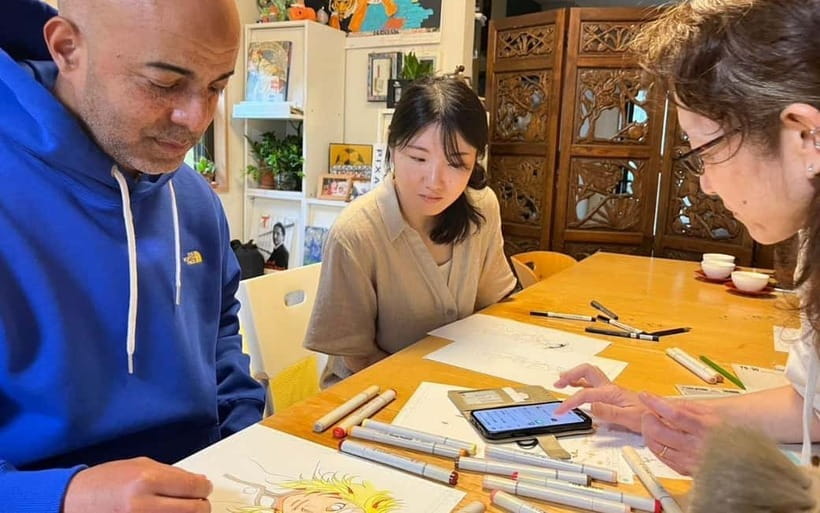
This workshop is a great fit if you want manga drawing skills with real technique, not just copying. It’s also ideal if you’re serious about improving your line work and learning how pro tools behave.
You’ll likely enjoy it if you already like manga and want to make your own character ideas look “industry clean.” And it’s beginner-friendly because there’s no prior drawing experience required, with printed guideline sheets to guide your progress.
It’s also a solid choice for families with older kids. Children 6 and up can participate, and the instructor can accommodate chibi-style requests and beginner-friendly options. Children under 5 years old aren’t suitable, so plan based on age.
If you’re recovering from wrist pain or you’re very sensitive to hand strain, the workshop is worth considering carefully. It’s not a gentle activity, because you’ll be inking and shading the whole time, and the class specifically teaches pain points like hand strain. That can help you avoid problems, but it doesn’t remove the fact that you’ll be drawing for 150 minutes.
Brief practical notes you should know
The session language is English, with Japanese support available. Your instructor can tailor the lesson when you mention the manga genres and characters you enjoy.
You’ll want a camera, and comfortable clothes make a difference because you’ll be focusing closely for the entire workshop. Transportation to the studio isn’t included, so time your trip so you arrive without rushing.
The experience is wheelchair accessible, which matters because drawing classes are often hard to adapt when chairs, spacing, and mobility aren’t planned. Here, wheelchair access is explicitly listed.
Should you book this Tokyo private manga drawing class?
Yes—if you want a real manga outcome, not just an art souvenir. The combination of tiny-group attention, classic inking tools, and screentone technique gives you skills you can repeat at home.
Book it especially if you like the idea of choosing a difficulty level, bringing your favorite character preferences, and leaving with an original piece plus practice materials. The take-home handbook also helps you continue learning without wandering around Tokyo guessing which tools to buy.
If you hate sitting still or you’re looking for a quick photo-and-leave activity, this may feel like too much drawing time. But if you want to leave with a page you’re proud of, this is one of the most practical manga classes in Tokyo.
FAQ
How long is the Tokyo private manga drawing class?
The class lasts 150 minutes.
Is the instruction available in English?
Yes. The session language is English, with Japanese support available.
Do I need prior drawing experience?
No. Prior drawing experience is not required.
What tools will I use during the workshop?
You’ll use classic manga tools such as G-pens, maru-pens, and brush pens. You’ll also work with screentone materials and may use items like dip ink and alcohol markers, depending on the session approach.
Are there different difficulty levels?
Yes. You can choose from three difficulty tiers, each with printed guideline sheets.
Can kids participate?
Children 6 and up can participate. Children under 5 years old are not suitable.
How many people are in a session?
This is a private group with a maximum group size of 6 for personalized attention.
What do I take home?
You take home your original artwork, practice sheets, and a mini handbook listing the tools used and where to buy them in Tokyo.
More Private in Tokyo
- Tokyo 6hr Private Tour with Government-Licensed Guide
★ 5.0 · 3,902 reviews - Private Tour to Mt. Fuji and Hakone (Fully Licenced Operator)
★ 5.0 · 1,910 reviews - Tokyo Customized Private Tour (Must See Places in 1 Day)
★ 5.0 · 1,499 reviews - Mount Fuji Full-Day Private Tour from Tokyo (Customizable)
★ 4.9 · 1,470 reviews - Tokyo: Private City Highlights Tour with Local Guide
★ 4.8 · 1,433 reviews
More Tour Reviews in Tokyo
- Mt Fuji and Hakone 1-Day Bus Tour Return by Bullet Train
★ 5.0 · 26,383 reviews - 1-Day Tokyo Bus Tour
★ 5.0 · 14,250 reviews - Tokyo: teamLab Planets TOKYO Digital Art Museum Entry Ticket
★ 4.6 · 9,779 reviews - Mt Fuji & Hakone Cruise, Drum Show Bullet Train 1 Day from Tokyo
★ 4.0 · 7,413 reviews - Tokyo: Shinjuku Food Tour (13 Dishes at 4 Local Eateries)
★ 5.0 · 6,603 reviews
More of Akihabara, Reviewed
- Official Street Go-Kart Tour – Akihabara
★ 5.0 · 1,578 reviews - Tokyo Go Kart: Asakusa, Skytree, and Akihabara **IDP MUST**
★ 5.0 · 988 reviews - Akihabara Anime & Game Adventure Walking Tour (Group or Private)
★ 5.0 · 404 reviews - Tokyo: Gameboy Mod Workshop at Akihabara
★ 5.0 · 253 reviews - Akihabara: Private Anime and Pop Culture Tour
★ 4.8 · 152 reviews
Latest Tokyo reviews off our desk






Akihabara Anime Tours, compared.
 ★ 5.0Official Street Go-Kart Tour – AkihabaraFrom $611,578 reviews
 ★ 5.0Tokyo Go Kart: Asakusa, Skytree, and Akihabara **IDP MUST**From $99988 reviews
 ★ 5.0Akihabara Anime & Game Adventure Walking Tour (Group or Private)From $90404 reviews
 ★ 5.0Gameboy Mod Workshop at AkihabaraFrom $360253 reviews
 ★ 4.8Akihabara: Private Anime and Pop Culture TourFrom $95152 reviews
 ★ 5.0Akihabara Tailor-made Private Tour for Anime FansFrom $132142 reviews
 ★ 5.0Original Street Kart Experience from AkihabaraFrom $51111 reviews
 ★ 5.0Ramen Making from Scratch +Akihabara Tour –Tokyo Cooking ClassFrom $123107 reviews
Browse the lists this tour appears in