
Reviewed · CITY TOURS
Tokyo Private Tour: Temples, Culture & Modern City Highlights
Tokyo can feel like sensory overload. This private walking tour helps you make sense of it all. You’ll get a multilingual local guide and a flexible route that can swing between old-school Asakusa temples, classic market streets, and modern districts like Shibuya and Shinjuku.
What I like most is the way the day mixes “big sights” with day-to-day Tokyo habits. You’ll start with Sensō-ji and Nakamise Street, then shift to places that feel lived-in, like Ameyoko’s market energy, and you’ll get practical coaching on getting around (people often highlight help with the subway/JR system). One thing to plan for: this is not a sit-and-ride tour. Expect lots of walking and transit connections, sometimes around 20K–25K steps.
In This Review
- Key highlights at a glance
- Why this private Tokyo route works so well
- Pickup, tickets, and transit basics you’ll actually use
- Asakusa’s Sensō-ji and Nakamise Street: the perfect warm-up
- Sumida River: a quick reset and Tokyo Skytree views
- Ameyoko shopping street in Ueno/Okachimachi: food, bargains, and noise
- Shinobazu Pond: calm between districts
- Pick your special interest: Akihabara, Imperial Palace East Gardens, or Kappabashi
- Harajuku’s Takeshita Street meets Meiji Jingu’s forest quiet
- Shibuya scramble and Shinjuku icons: modern Tokyo on full volume
- Food, shopping, and photo planning without getting stuck
- Price and value: what $99.08 per person really covers
- Who this tour is best for (and who should skip it)
- Should you book this private Tokyo tour
- FAQ
- How long is the Tokyo Private Tour?
- Is this tour private or shared?
- What languages are the guides available in?
- Is hotel pickup included?
- Are attraction entrance fees included?
- Are meals included in the price?
- Do I need to pay for public transportation?
- Is a transit card recommended?
- What is the cancellation policy?
Key highlights at a glance
- Private pacing with a local guide who can adjust the day to your interests and walking speed
- Hotel pickup in central Tokyo plus a route that blends temples, markets, and modern neighborhoods
- Photo-spot assistance so you’re not just staring at landmarks from the wrong angle
- Free entry stops at temples, shrines, parks, and viewpoints included
- Option switches like Akihabara, Imperial Palace East Gardens, or Kappabashi kitchenware for tailored days
Why this private Tokyo route works so well
Tokyo is a city of contrast, but most first days feel like a checklist. This tour is built to feel like a story instead: sacred places in the morning, everyday shopping and food streets mid-day, then the neon-heavy modern districts when your brain is ready for it.
The private format matters. If you’re traveling as a couple, solo, or with family, you’re not stuck with the slowest or fastest group pace. And because the itinerary is flexible, you can nudge the day toward temples, pop culture, history, or food without making it messy.
Timing is also handled in a way that helps you plan the rest of your trip. The tour runs about 4 to 7 hours, so you can still have an evening for dinner, a show, or just wandering. The guide experience level shows up in how the day flows, not just in what you see.
Readers also shortlisted these Tokyo bookings:
- Tokyo: Private City Highlights Tour with Local Guide
★ 4.8 · 1,433 reviews - Tokyo: Asakusa, Skytree & Akhihabara Go-Kart City Experience
★ 4.7 · 761 reviews - Tokyo: 3-Hour Bike or E-Bike City Highlights Tour
★ 4.8 · 435 reviews - Tokyo: Sumo Morning Practice Tour at Sumida City
★ 4.8 · 308 reviews
Pickup, tickets, and transit basics you’ll actually use
Hotel pickup is included for central Tokyo. That reduces the “how do we get there?” stress right at the start, which is when Tokyo usually wins.
You’ll also get a mobile ticket, which helps keep the day friction-light. Just remember what’s not included: public transportation is not included, and meals are not included. So you’re responsible for train rides, and you’ll pay for food where you decide to eat.
Two practical notes that can save time:
- A Suica/Pasmo transit card is recommended. If you don’t have one yet, you’ll want to get it before you start hopping lines.
- Some shops are cash-only. It’s Tokyo, so you can’t assume card payments for everything—especially smaller market stalls or specialty shops.
If you’re the type who likes figuring out systems, this tour often scratches that itch. People frequently mention that guides help with navigating the subway/JR setup, including how to order food and how to move efficiently between stops.
Asakusa’s Sensō-ji and Nakamise Street: the perfect warm-up
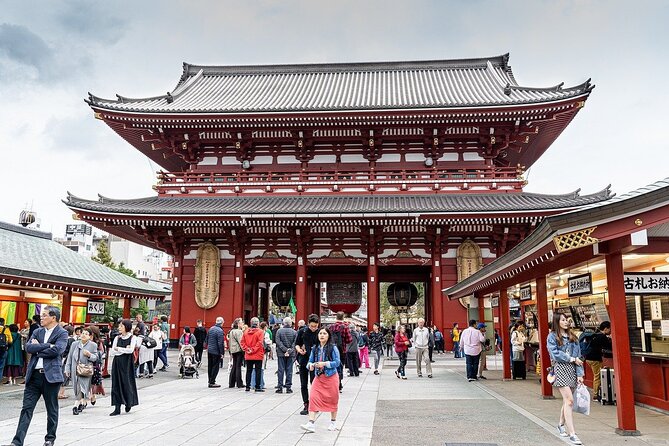
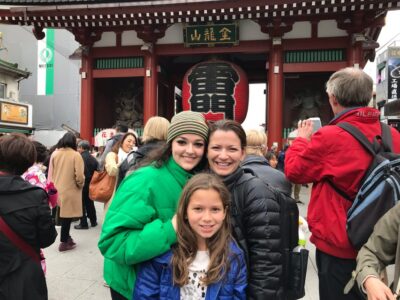
The day often begins at Sensō-ji Temple in Asakusa. You’re there for the iconic red lantern and the classic temple atmosphere, but you also get something more useful: a smooth transition from sightseeing to street-level Tokyo.
You’ll spend about 45 minutes here, and admission is free. The surrounding Nakamise shopping street is part of the show—snack stands, traditional souvenirs, and that slightly chaotic-but-fun crowd flow that makes Asakusa feel like old Tokyo in the middle of a modern city.
What I like about starting here: it gives you Tokyo’s “rulebook” early. Even if you don’t know the etiquette, the guide helps you understand what you’re looking at and how the space works, so you don’t just walk past things without context.
Small consideration: the area can be busy. If you want calmer photos, the guide’s photo-spot help can make a real difference in where you stop and when you move.
Sumida River: a quick reset and Tokyo Skytree views
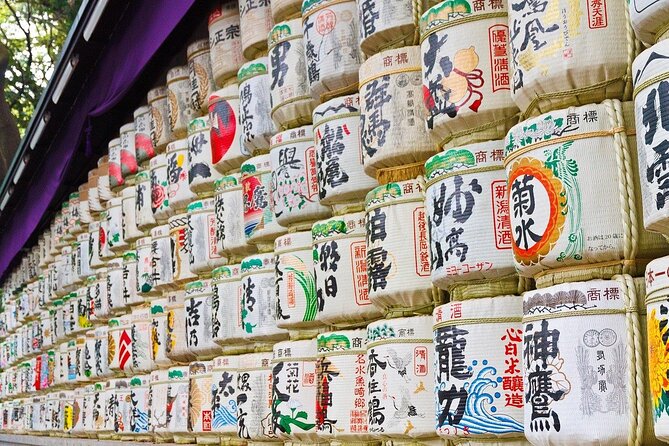
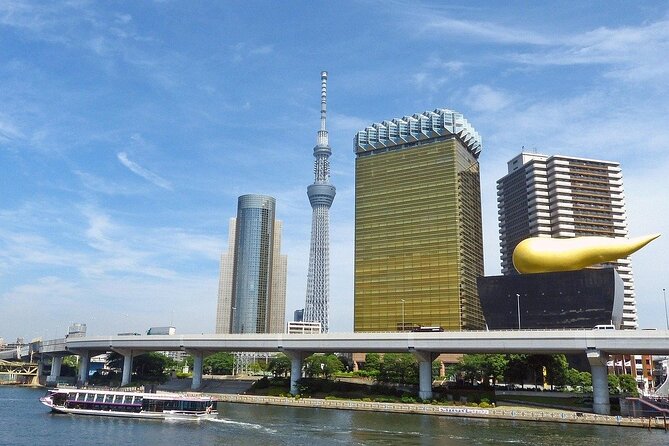
Next comes a breather: the Sumida River walk. You’re there for the open space, the calmer pace, and the scenic views—especially with the Tokyo Skytree in the background.
Plan about 15 minutes and free entry. It’s not a huge “attraction block,” but it works as a mental reset between dense streets and bigger districts. You’ll also get a clean stretch for photos without feeling like you’re being rushed.
If you tend to get temple-fatigue after long mornings, this stop helps. It gives you a small reward that still keeps the day moving.
Ameyoko shopping street in Ueno/Okachimachi: food, bargains, and noise
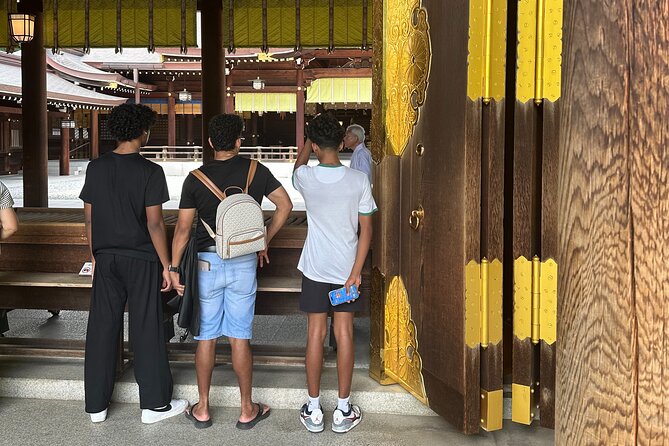
Then you hit Ameyoko, the open-air market street running along the railway area between Ueno and Okachimachi. This is where Tokyo feels blunt and real: street food smells, spice displays, seafood counters, snack runs, and bargain clothing.
You’ll typically get around 30 minutes here, and entry is free. This is a great stop if you like “walking while deciding.” You can sample small bites, browse, or just take in the energy while your guide explains what you’re seeing.
What makes Ameyoko valuable is the practical stuff: the guide can point you toward items that are easy to order and worth the effort, and can suggest snack style foods rather than turning your market time into a random guessing game.
Consideration: Ameyoko is active and sometimes crowded. If you want slow, quiet browsing, tell your guide early. A private setup gives you more control over how long you linger in each lane.
Readers also shortlisted these Tokyo bookings:
- Tokyo 6hr Private Tour with Government-Licensed Guide★ 5.0 · 3,902 reviews
- Private Tour to Mt. Fuji and Hakone (Fully Licenced Operator)★ 5.0 · 1,910 reviews
- Tokyo Customized Private Tour (Must See Places in 1 Day)★ 5.0 · 1,499 reviews
- Mount Fuji Full-Day Private Tour from Tokyo (Customizable)★ 4.9 · 1,470 reviews
- Tokyo: Private City Highlights Tour with Local Guide★ 4.8 · 1,433 reviews
Shinobazu Pond: calm between districts
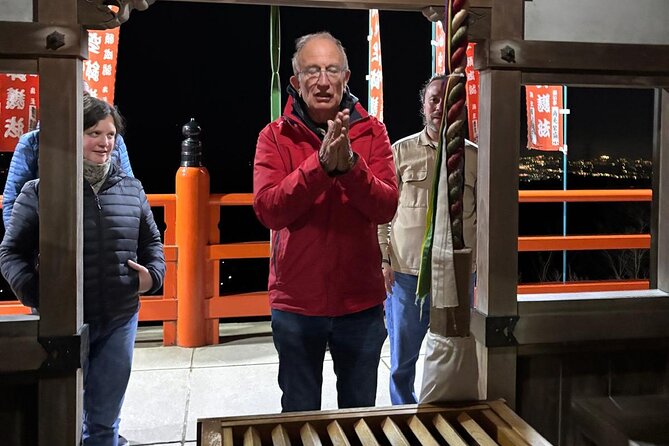
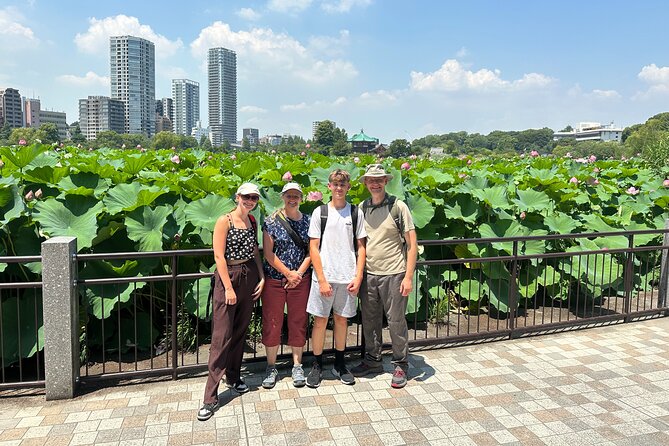
A short walk brings you to Shinobazu Pond. It’s a peaceful counterpoint after the market noise, and it’s a nice place to reset your pace.
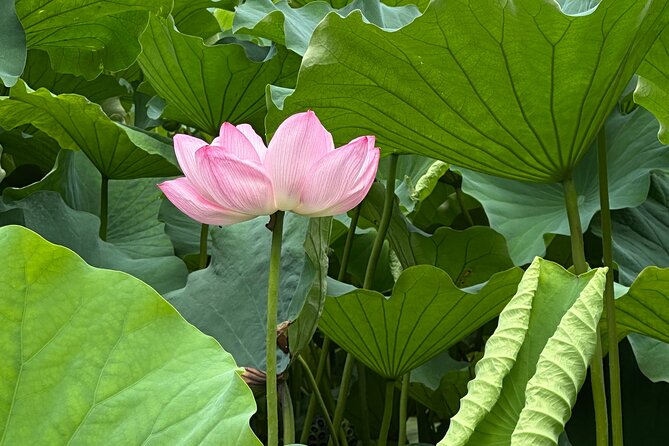
You’ll spend about 30 minutes. Free entry means you can actually enjoy it instead of feeling like you’re rushing because you paid to be there. The pond area is known for lotus, koi fish, turtles, and migratory birds across the year, so even if you don’t stay long, you’ll likely notice something living and changing around you.
For photos, the pond’s open feel helps. For your body, it’s a relief from continuous streets and constant crowd movement.
Pick your special interest: Akihabara, Imperial Palace East Gardens, or Kappabashi
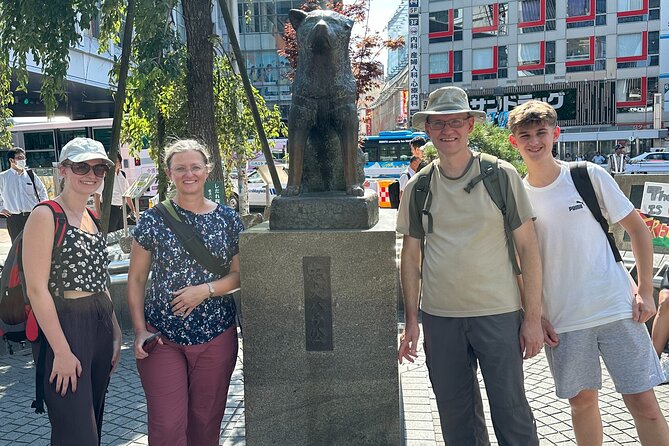
Some stops are optional, which is a big deal because it keeps the day from feeling like a forced greatest-hits tour.
Here are the most common choices:
Akihabara (Electric Town)
If you’re into anime, retro games, or electronics, this area is often a crowd magnet for a reason. You’ll spend about 30 minutes and admission is free. It’s ideal for quick pop-culture browsing, multi-level arcades, and electronics shopping without turning the whole day into a single theme.
Imperial Palace East Gardens (Edo Castle ruin area)
For a softer, more historic angle, you can choose the Imperial Palace East Gardens, including Ninomaru Garden and samurai guardhouse areas. It’s about 30 minutes, free to enter, and it’s a nice “history break” when you want something less commercial than market streets.
Kappabashi Street (kitchenware district)
Food-lovers and home-cooks often love Kappabashi. It’s known for Japanese knives, tableware, chopsticks, cookware, and related specialty shops. Expect 30 minutes and free entry, with a location between Asakusa and Ueno that fits naturally into the day.
My practical advice: choose one option, not three. Tokyo can make you feel like you must do everything. The value here comes from focus—one good detour that matches your interests, not three half-fits.
Harajuku’s Takeshita Street meets Meiji Jingu’s forest quiet
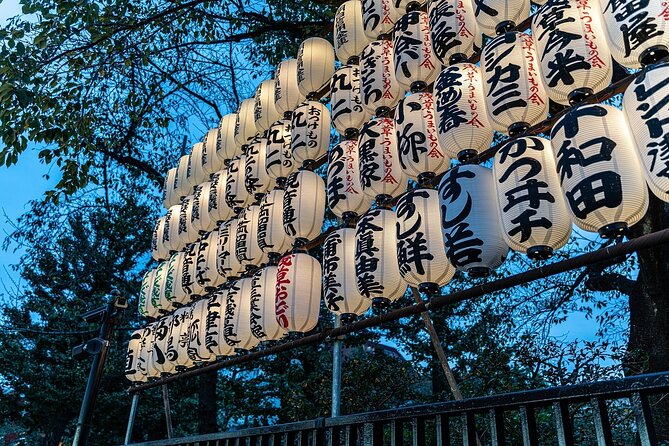
Next you get a bold switch: youth culture outside, calm spirituality inside.
Takeshita Street is about 45 minutes and free entry. This is the heart of Harajuku’s youth vibe, with colorful shops, kawaii-style snacks, and pop-culture energy. It’s narrow, energetic, and very easy to recognize even if you’ve never been to Tokyo before.
Then the day turns quieter at Meiji Jingu Shrine. You’ll spend about 45 minutes and admission is free. The shrine sits inside a large forest area, so the change feels almost physical—taller torii gates, shaded paths, and a noticeably calmer atmosphere than the streets you just left.
This contrast is the point. Tokyo isn’t one mood. It’s a rapid sequence of moods, and the guide helps you shift your mindset without making you dizzy.
Shibuya scramble and Shinjuku icons: modern Tokyo on full volume
Your afternoons usually land in two of the most recognizable districts in Japan.
Shibuya
You’ll get about 1 hour here, free entry. The star is Shibuya Scramble Crossing, often described as one of the busiest crossings in the world, plus neon-lit streets, modern shopping malls, and a sense of city motion that’s hard to replicate anywhere else.
This stop works best when you let it be a spectacle. Don’t over-plan your photos. Use the time to watch the flow, then roam a bit with your guide’s suggestions for better angles.
Shinjuku
Then it’s 1 hour in Shinjuku, free entry. You’ll stop at the Godzilla Head and the 3D cat billboard, then head toward Golden Gai, a maze of tiny bar alleys.
Golden Gai is the perfect “Tokyo feels like a movie” area: small-scale nightlife, lots of doorways, and a sense that the city has layers you only see if you walk. If you’re hoping for a nightlife vibe without committing to a big club scene, this is a great compromise.
Practical note: if you hate crowds, tell your guide at the start of the day. They can adjust how you move through the busiest parts.
Food, shopping, and photo planning without getting stuck
Meals and drinks are not included, but the tour is designed to help you eat like you’re not just guessing. People often mention their guide giving food recommendations, helping with ordering, and pointing out snack stops that fit what you’re walking past.
One common pattern from guide-led days: you’ll do better with food when you go in with a plan. Ask what to eat at each market stop rather than waiting until you’re hungry and rushed. The guide can also help you avoid the common trap of buying something expensive and underwhelming when a more local option is right next door.
For shopping, the tour’s value is that it saves you time. If you’re after kitchenware in Kappabashi, pop-culture browsing in Akihabara, or youth fashion in Harajuku, you’ll know where to focus instead of bouncing around randomly.
And because some shops are cash-only, you’ll feel smoother if you carry some yen. It’s not dramatic. It’s just smart.
Price and value: what $99.08 per person really covers
At $99.08 per person, this feels like a good deal if you want both guidance and a day that uses your time efficiently.
Here’s what you’re getting value from:
- A private, multilingual local guide (English/French/Japanese)
- Hotel pickup in central Tokyo
- Flexible, customizable routing so you’re not trapped in someone else’s pace
- Free-entry attractions are included (temples, shrines, parks, and observatories where applicable)
- Photo help—not just walking to places, but figuring out good photo spots
- Group discounts are available (handy if you’re booking with friends)
What you’re not getting:
- Meals
- Transportation cost
- Airport or outside-central Tokyo pickup (listed as an extra ¥10,000 per booking)
So the math works best if you’re willing to spend your own money on food and transit, while you let the guide handle the planning and navigation. If you want zero walking and all costs bundled, this isn’t that style. But if you want a Tokyo day that feels like it has a brain behind it, the price makes sense.
Who this tour is best for (and who should skip it)
I’d recommend this tour if you:
- Want a first Tokyo day that helps you get your bearings fast
- Like walking and want to see a spread of neighborhoods in one go
- Appreciate a guide who can explain what you’re looking at, including religion and culture basics
- Want flexibility (temples vs pop culture vs history vs shopping)
I’d be cautious if you:
- Expect a vehicle-based sightseeing day
- Don’t like stepping and changing lines via trains
- Have limited stamina and can’t comfortably handle long walking blocks
If you’re a photographer, this can be especially good. People mention guides being patient and tailoring the day to maximize shots.
Should you book this private Tokyo tour
If you’re trying to see Tokyo without wasting hours figuring stuff out, I think this is a solid yes. The value is in the mix: temples plus markets plus modern city icons, connected by a guide who can adjust your pacing and interests.
Book it if you can handle walking and you want practical local help with transit and daily decision-making. Skip or consider a different style if you need a low-step, car-driven day or if you want meals fully included.
In short: this is a smart way to turn a limited Tokyo window into a day that feels coherent, not chaotic.
FAQ
How long is the Tokyo Private Tour?
The tour lasts about 4 to 7 hours, depending on the route and how much time you spend at each stop.
Is this tour private or shared?
It’s a private tour. Only your group participates.
What languages are the guides available in?
The guide is available in English, French, or Japanese.
Is hotel pickup included?
Yes. Pickup is offered in central Tokyo.
Are attraction entrance fees included?
Yes. Entrance to free attractions such as temples, shrines, parks, and observatories is included.
Are meals included in the price?
No. Meals and drinks are not included.
Do I need to pay for public transportation?
Public transportation is not included, so you’ll handle the train/subway costs during the day.
Is a transit card recommended?
Yes. A Suica/Pasmo transportation card is recommended.
What is the cancellation policy?
You can cancel for a full refund if you cancel at least 24 hours in advance of the experience start time.
More City Tours in Tokyo
- Tokyo: Private City Highlights Tour with Local Guide
★ 4.8 · 1,433 reviews - Tokyo: Asakusa, Skytree & Akhihabara Go-Kart City Experience
★ 4.7 · 761 reviews - Tokyo: 3-Hour Bike or E-Bike City Highlights Tour
★ 4.8 · 435 reviews - Tokyo: Sumo Morning Practice Tour at Sumida City
★ 4.8 · 308 reviews - Private Haneda Airport (HND) to Central Tokyo City Transfer
★ 4.5 · 260 reviews
More Tours in Tokyo
- Mt Fuji and Hakone 1-Day Bus Tour Return by Bullet Train
★ 5.0 · 26,383 reviews - 1-Day Tokyo Bus Tour
★ 5.0 · 14,250 reviews - Tokyo: Shinjuku Food Tour (13 Dishes at 4 Local Eateries)
★ 5.0 · 6,603 reviews - Tokyo Mt Fuji 5th St & Hakone Cruise Bus Tour w/Bullet Train
★ 4.4 · 5,024 reviews - Flagship 2-Hours Official Street Go-Kart Tour – Tokyo Bay Shop
★ 5.0 · 4,974 reviews
More Tour Reviews in Tokyo
- Mt Fuji and Hakone 1-Day Bus Tour Return by Bullet Train
★ 5.0 · 26,383 reviews - 1-Day Tokyo Bus Tour
★ 5.0 · 14,250 reviews - Tokyo: teamLab Planets TOKYO Digital Art Museum Entry Ticket
★ 4.6 · 9,779 reviews - Mt Fuji & Hakone Cruise, Drum Show Bullet Train 1 Day from Tokyo
★ 4.0 · 7,413 reviews - Tokyo: Shinjuku Food Tour (13 Dishes at 4 Local Eateries)
★ 5.0 · 6,603 reviews
Latest Tokyo reviews off our desk






City Tours, compared.
 ★ 4.8Private City Highlights Tour with Local GuideFrom $1061,433 reviews
 ★ 4.7Asakusa, Skytree & Akhihabara Go-Kart City ExperienceFrom $96761 reviews
 ★ 4.83-Hour Bike or E-Bike City Highlights TourFrom $45435 reviews
 ★ 4.8Sumo Morning Practice Tour at Sumida CityFrom $116308 reviews
 ★ 4.5Private Haneda Airport (HND) to Central Tokyo City TransferFrom $119260 reviews
 ★ 4.83-hour Guided E-Bike Tour of the City’s Hidden GemsFrom $65251 reviews
 ★ 5.03-Hour Bike/E-Bike Tour of the City’s HighlightsFrom $63209 reviews
 ★ 4.5Private departure transfer from Tokyo city to Tokyo Haneda Airport(HND)From $118123 reviews
Browse the lists this tour appears in