
Reviewed · SHOW
Traditional Japanese Comedy, Juggling & Magic Live Show in Tokyo
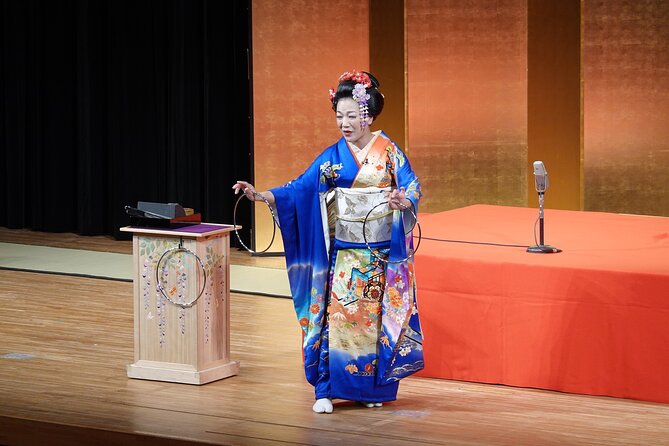
Three acts in ninety minutes, no Japanese needed. This show pairs Rakugo storytelling with the quick-hit athletic comedy of Daikagura, then finishes with Wazuma-style magic, all inside EDOCCO STUDIO at Kanda Myōjin Shrine near Akihabara. I like that you don’t need Japanese because there’s interpretation, and I really like that you get chances to learn and try parts of the performance. One possible drawback: shows are limited, so if you want a specific day, you’ll need to book early.
It’s an easy Tokyo plan too. Since it’s indoors, you can dodge the usual weather chaos, and the setting at a historic shrine makes the whole experience feel more meaningful than a typical theater stop. You’ll also get a mini take-home gift tied to the show’s props, like tenugui hand towels, folding fans, and paper balloons. Just plan to arrive a bit early—compact theaters and a set start time mean you don’t want to rush in late.
In This Review
- Key things to know before you go
- Why this Tokyo show blends Rakugo, Daikagura, and Wazuma so well
- EDOCCO STUDIO at Kanda Myōjin Shrine: a location you’ll remember
- The 90-minute flow: what happens once the show starts
- What you’ll actually do: learning the tricks, trying Daikagura and magic
- Language support and explanation: how you’ll follow along without Japanese
- The take-home gifts: props you can use, not just keep
- Price and value: is $36.24 for 1.5 hours fair?
- Getting there near Akihabara without stress
- Who should book this show (and who might skip it)
- Should you book this Rakugo–Daikagura–Wazuma show?
- FAQ
- Where does the show take place?
- How long is the experience?
- Do I need to speak Japanese to enjoy it?
- What is included with the ticket?
- Is it an indoor show?
- How many people are in the group?
Key things to know before you go
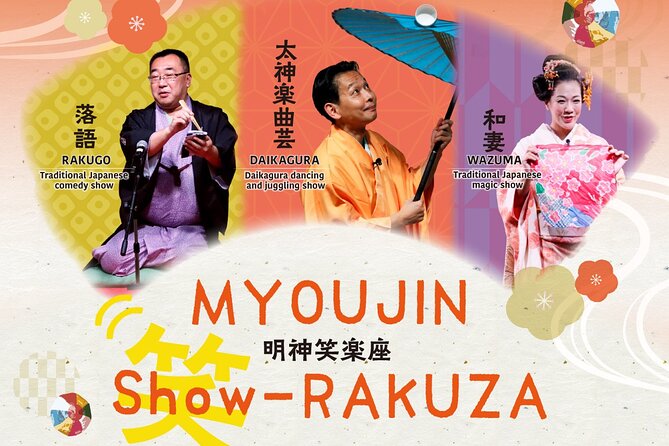
- Three traditional styles, one show: Rakugo comedy, Daikagura acrobatics, and Wazuma magic in about 1.5 hours.
- No Japanese required: Interpretation helps you follow along and understand the tricks and the jokes.
- You’re not just watching: You get moments to learn and try parts of Daikagura and magic firsthand.
- A shrine setting, in a modern studio: Kanda Myōjin Shrine grounds + EDOCCO STUDIO = a neat contrast.
- Small-ish audience: Maximum group size is 100, which usually means better interaction.
- Props as souvenirs: You leave with a mini gift connected to the performance items.
Why this Tokyo show blends Rakugo, Daikagura, and Wazuma so well
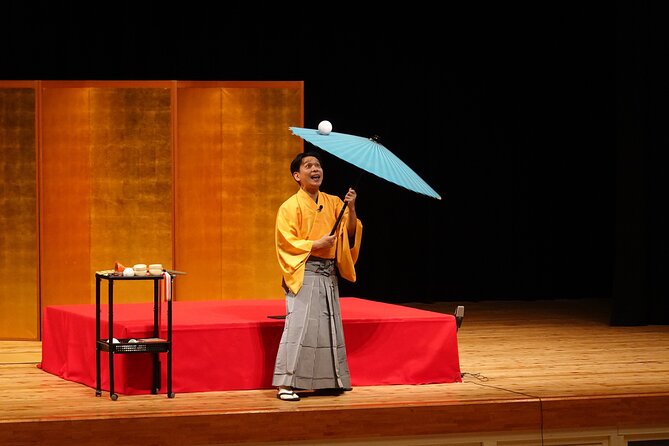
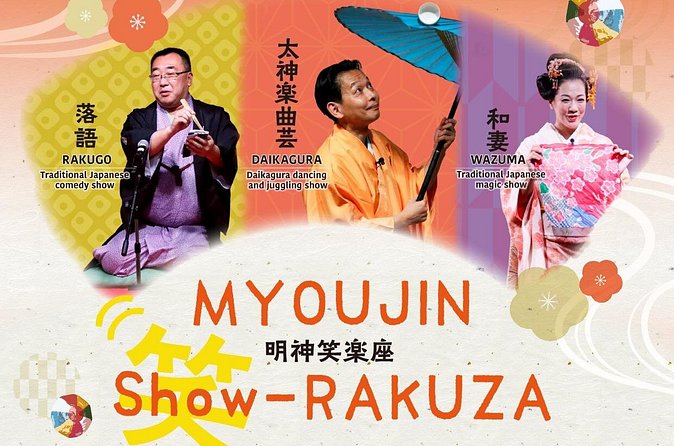
What makes this show a smart first stop for Japanese performing arts is the mix. Instead of picking one genre, you get three: Rakugo (comic storytelling), Daikagura (fast, physical acrobatics and juggling-style performance), and Wazuma (Japanese magic). It’s a “try a little of everything” plan that works even if your Japanese vocabulary is basically zero.
The best part for me is how those styles complement each other. Rakugo slows the pace just enough that you can catch the humor, then Daikagura ramps the energy with skilled movement and timing. Magic bridges the two, because once you’ve seen how the performers manage attention—story, body, then hands—it’s easier to appreciate what’s happening.
You also don’t just watch the transitions; you get to see how performance is built. The show is designed to explain what you’re seeing and then let you participate in simple ways. That turns it from a passive theater ticket into something closer to a hands-on culture lesson—without making it heavy or academic.
Readers also shortlisted these Tokyo bookings:
- Mt Fuji & Hakone Cruise, Drum Show Bullet Train 1 Day from Tokyo
★ 4.0 · 7,413 reviews - Tokyo: Sumo Show and Dining Experience
★ 4.8 · 2,742 reviews - the SUMO show
★ 5.0 · 1,960 reviews - Tokyo Shinjuku Sumo Show & Experience with Photo
★ 5.0 · 1,750 reviews
EDOCCO STUDIO at Kanda Myōjin Shrine: a location you’ll remember
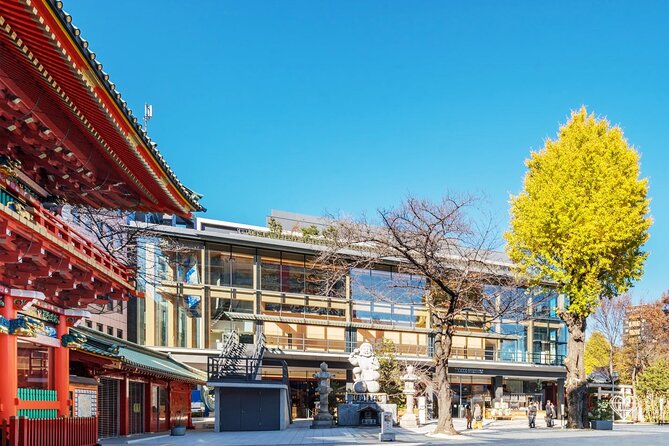
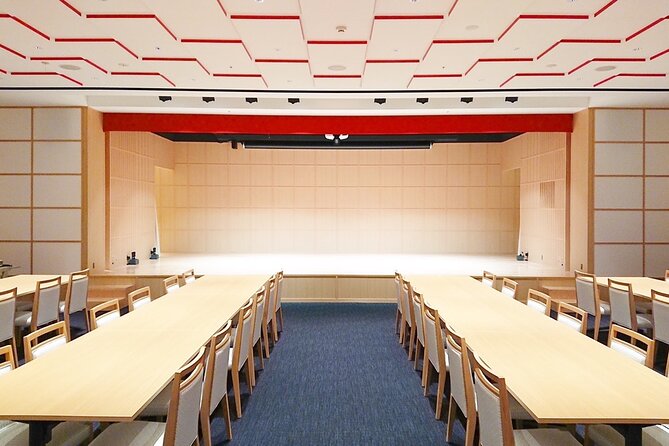
The venue matters here. The show takes place at EDOCCO STUDIO inside the grounds of Kanda Myōjin Shrine, in central Tokyo, with easy access from the Akihabara area. That shrine setting gives you an immediate sense of place before the lights even come up.
You’ll meet at EDOCCO (Sotokanda, Chiyoda City). From there, you’re in a proper indoor theater setup, which is convenient if Tokyo weather goes sideways. That said, the activity still notes a weather dependency. If it’s canceled due to poor weather, you’ll be offered a different date or a full refund—so check your plans close to showtime.
There’s also something quietly useful about the “modern studio inside a historic shrine” combo. It helps you avoid the common Tokyo problem of choosing between “cultural sites” and “activities.” Here, the location does both: it looks like you’re in a traditional place, while the format is built for visitors and interaction.
The 90-minute flow: what happens once the show starts
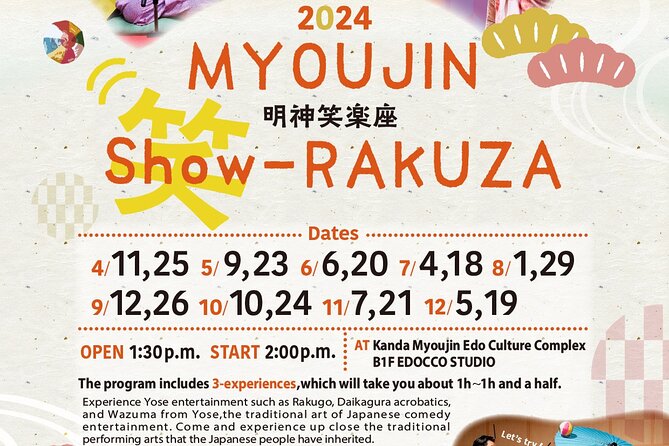
The show runs about 1 hour 30 minutes. On Thursdays specifically, the schedule lists door open at 13:30 and show start at 14:00. It’s short enough to fit into a normal sightseeing day, and long enough to feel like you got your money’s worth.
Because the production mixes three forms, the pacing is your guide. You’ll start with Rakugo comedy, which usually means a focus on expression, timing, and storytelling. Then you move into Daikagura—where movement and rhythm take over. Finally, Wazuma magic brings the attention back to hands, objects, and misdirection, followed by a chance to learn and try some basics.
Here’s the practical reason this format works: each segment teaches you how to watch. After you understand the “rules” of Rakugo (how the joke lands), your brain is primed to notice timing and spectacle in Daikagura. Then, when magic comes in, you’re already paying attention to the same things performers rely on: focus, anticipation, and controlled surprise.
Also, don’t overlook the fact that the show is designed for international visitors. You can expect interpretation support, so you’re not left translating silently in your head during punchlines or trick explanations.
What you’ll actually do: learning the tricks, trying Daikagura and magic
A lot of Tokyo theater tickets sound interactive and aren’t. This one is different because it explicitly includes moments where you learn the tricks of the trade and try Daikagura and Wazuma firsthand.
That matters for you because it turns understanding into memory. If you only watch, you leave with images. If you also try, you leave with muscle memory—how a motion feels, how a prop works, how a trick is structured. And with Japanese performance styles, that’s a big deal: the “skill” is in the details you only notice when you try.
You may also see audience participation that feels natural rather than forced. The experience is described as interactive in a fun way, with performers who keep it comfortable. You’ll also notice that the staff and artists tend to be kind and welcoming, which makes a solo visit feel less awkward.
One more nice touch: the show teaches you more than just what the final trick looks like. You get at least basic instruction and a mini lesson vibe—so you can recreate a small moment later, not just talk about it in hindsight.
Language support and explanation: how you’ll follow along without Japanese
You don’t need Japanese skills for this show. Interpretation is part of the experience, and the performance is structured so you can understand what’s going on—both the humor in Rakugo and the mechanics behind the magic.
That sounds straightforward, but it’s actually the deciding factor for many visitors. If you can follow, you relax. If you relax, you laugh and pay attention, and then the techniques actually make sense. Without language support, Japanese comedy can become a “watch the faces” experience. With interpretation, you get the meaning, the pacing, and the reason the performers do what they do.
Also, the interactive elements work better when you understand the basic instructions. If you’re asked to try something, you’ll benefit from having the explanation in a way that matches your pace. The show is set up so the audience isn’t left guessing.
So if you’re the type of traveler who likes guided cultural experiences (but still wants it to feel light), this is built for you.
- Tokyo: Shinjuku Food Tour (13 Dishes at 4 Local Eateries)★ 5.0 · 6,603 reviews
- Tokyo Mt Fuji 5th St & Hakone Cruise Bus Tour w/Bullet Train★ 4.4 · 5,024 reviews
- Flagship 2-Hours Official Street Go-Kart Tour – Tokyo Bay Shop★ 5.0 · 4,974 reviews
- From Tokyo: Mount Fuji Full-Day Sightseeing Trip★ 4.5 · 4,970 reviews
- Tokyo: Hop-On Hop-Off Sightseeing Bus Ticket★ 3.9 · 4,207 reviews
The take-home gifts: props you can use, not just keep
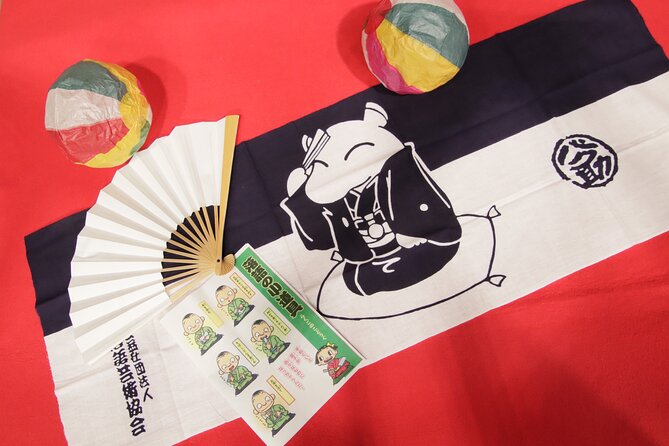
You get a mini gift with the admission, and it’s tied to items that appear in the performance. The examples given include tenugui hand towels, folding fans, and paper balloons—the same kind of traditional props that show up in the show.
This is more valuable than a generic souvenir because it’s connected to what you learned. If you watched a performer handle a prop with precision, and then you take a similar item home, you’re more likely to keep it and use it. It also gives you something practical to show friends, since you can explain what it’s for and how it was used in the act.
Think of it as a “transfer” from the theater to your daily life. The gift doesn’t replace the performance, but it helps you remember the details.
One caution: gifts are mini by design, so if you’re expecting a big bag of merch, you might be happier setting expectations as a small cultural bonus.
Price and value: is $36.24 for 1.5 hours fair?
At $36.24 per person, this show sits in the category of “you’re paying for a live, skill-heavy performance with translation and participation.” The value comes from the combination: three traditional art forms, a small theater setting (up to 100), and built-in audience interaction plus a take-home prop gift.
If you’re comparing to typical museum tickets or standard theater performances, this may look steep at first glance. But you’re not just buying a seat—you’re buying time with performers who explain and demonstrate the work. You also get a participation element, which usually costs more in any culture-focused activity because it takes skilled staffing and production design.
You’re also getting a tight time window. About 90 minutes is convenient. You can fit it into a day of temple visits and shopping without sacrificing a huge chunk of time. That convenience is part of the value, especially in Tokyo where your day can fill up fast.
If you want a low-cost meal and a show, this might not be the budget match. But if you want one high-quality cultural activity that’s easy to understand and genuinely fun, it’s a strong deal.
Getting there near Akihabara without stress
The meeting point is listed as EDOCCO (2-chōme-16-2 Sotokanda, Chiyoda City, Tokyo 101-0021). The venue is described as only a few minutes from Akihabara and near public transportation, which is exactly what you want for a short show.
Here’s the practical move: plan your arrival early enough to find the entrance without sprinting. Doors open at 13:30 on Thursdays, so you’ll have time to settle. In a compact theater, being late can hurt your view and your comfort—especially if you might be called into participation sections.
Also, this is a straightforward tour layout: the experience starts at the shrine/EDOCCO area and ends back at the meeting point. That simplicity helps you keep your day organized. No long transfers, no complicated routing.
Group size is capped at 100, so you’re not in a giant crowd. That typically makes it easier to hear interpretation and to track what the hosts are asking you to do.
Who should book this show (and who might skip it)
This experience is a great fit if you:
- Want a first-time-friendly introduction to Japanese performance styles.
- Prefer cultural activities with English support and minimal language friction.
- Like interactive theater where you do something small, not just clap at the end.
- Travel as a family, since the show is described as fun and family friendly.
- Visit solo and want a setting where staff and performers are welcoming.
You might think twice if you:
- Hate participation formats in general. Even with soft, friendly participation, it’s still interactive.
- Need a fully unstructured cultural experience. This is a timed show with a set program and start time, not a roaming event.
- Are looking for a long-form deep academic explanation. It’s practical, entertaining, and learn-by-doing rather than lecture-heavy.
Should you book this Rakugo–Daikagura–Wazuma show?
I’d tell you to book if your goal is one ticket that delivers three types of Japanese live entertainment in a way that you can actually understand and enjoy. The best reasons are practical: the language support, the interaction, and the fact that you take home props connected to what you saw.
It’s also a solid choice when you want to feel the culture without needing special prep. You’re stepping into a shrine setting, then getting a modern theater experience that explains itself. For many first-time Tokyo days, that balance is exactly what makes a ticket feel worth it.
If you’re on the fence because of price, focus on what’s included: translation, a 90-minute live show with multiple disciplines, and a mini souvenir gift tied to traditional props. If that matches how you like to travel, this is a very easy yes.
FAQ
Where does the show take place?
The show is held at EDOCCO STUDIO within the grounds of Kanda Myōjin Shrine in central Tokyo. The meeting point listed is EDOCCO (2-chōme-16-2 Sotokanda, Chiyoda City, Tokyo 101-0021).
How long is the experience?
The show lasts about 1 hour 30 minutes (approx.).
Do I need to speak Japanese to enjoy it?
No. The experience is designed for international visitors and includes interpretation so you can understand what’s happening.
What is included with the ticket?
Admission to the show is included, along with a mini gift. The gift is connected to traditional props featured in the performance (examples include tenugui hand towels, folding fans, and paper balloons).
Is it an indoor show?
Yes, it takes place in an indoor theater at EDOCCO STUDIO, which helps it work in any weather. The activity still lists weather dependency for the scheduled session.
How many people are in the group?
The maximum group size is 100 travelers. Service animals are allowed, and it’s near public transportation.
More Show in Tokyo
- Mt Fuji & Hakone Cruise, Drum Show Bullet Train 1 Day from Tokyo
★ 4.0 · 7,413 reviews - Tokyo: Sumo Show and Dining Experience
★ 4.8 · 2,742 reviews - the SUMO show
★ 5.0 · 1,960 reviews - Tokyo Shinjuku Sumo Show & Experience with Photo
★ 5.0 · 1,750 reviews - Mt Fuji & Hakone Cruise, Drum Show Bus 1 Day from Tokyo
★ 4.0 · 1,287 reviews
More Tour Reviews in Tokyo
- Mt Fuji and Hakone 1-Day Bus Tour Return by Bullet Train
★ 5.0 · 26,383 reviews - 1-Day Tokyo Bus Tour
★ 5.0 · 14,250 reviews - Tokyo: teamLab Planets TOKYO Digital Art Museum Entry Ticket
★ 4.6 · 9,779 reviews - Mt Fuji & Hakone Cruise, Drum Show Bullet Train 1 Day from Tokyo
★ 4.0 · 7,413 reviews - Tokyo: Shinjuku Food Tour (13 Dishes at 4 Local Eateries)
★ 5.0 · 6,603 reviews
Latest Tokyo reviews off our desk


Show, compared.
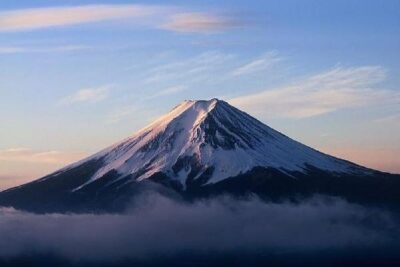 ★ 4.0Mt Fuji & Hakone Cruise, Drum Show Bullet Train 1 Day from TokyoFrom $1497,413 reviews
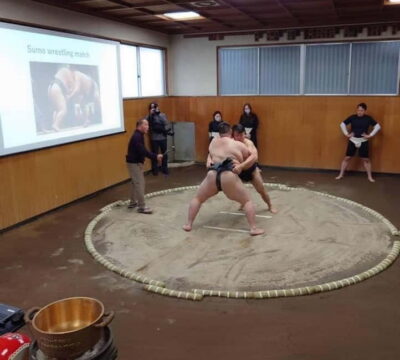 ★ 4.8Sumo Show and Dining ExperienceFrom $792,742 reviews
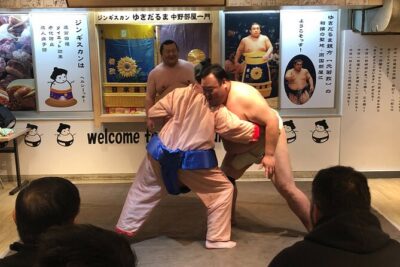 ★ 5.0the SUMO showFrom $891,960 reviews
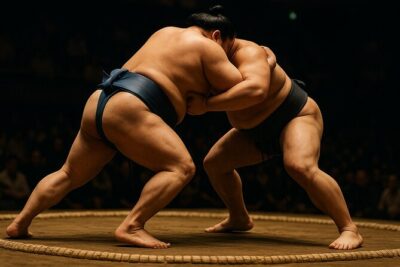 ★ 5.0Tokyo Shinjuku Sumo Show & Experience with PhotoFrom $791,750 reviews
 ★ 4.0Mt Fuji & Hakone Cruise, Drum Show Bus 1 Day from TokyoFrom $1221,287 reviews
 ★ 4.8Sumo Show and Experience in ShinjukuFrom $691,001 reviews
 ★ 4.7Yakatabune Dinner Cruise with Japanese Show & DrinksFrom $100871 reviews
 ★ 4.7Luxury Sumo Show Experience & Japanese cuisine & DrinkFrom $103577 reviews