
Reviewed · IMPERIAL PALACE TOURS
From the Imperial Palace to Odaiba : Time travel to Tokyo
Tokyo reads like a novel if you know the chapters. This tour takes you from the Edo Castle area to the futuristic Odaiba shoreline, using architecture and daily city life as your storyline. I love how the stops feel connected by theme, not just a checklist of famous sights. I also love that Matteo Leone, your guide, answers your questions and turns random details into clear context.
The main drawback is simple: this is a walking-focused route with moderate fitness needs, and it’s not recommended if you need help for reduced mobility or strollers/prams.
In This Review
- Key Highlights You’ll Actually Feel
- Entering The Edo-to-Tokyo Story at the Imperial Palace East Gardens
- Tokyo Station’s Red Brick: Where Two Worlds Cross
- Tokyo International Forum: Contemporary Architecture With Breathing Room
- Odaiba on a Bay: Futuristic Views and Open Space on an Artificial Island
- How Long It Takes (and Why 6–8 Hours Fits the Story)
- Price and Value: What Your $91.21 Actually Buys
- Meeting Point and Ending in Odaiba (So Plan Your Night)
- What Matteo Leone Adds: Answers, Context, and the Non-Obvious
- Who This Tour Is Best For (and Who Should Think Twice)
- Tips to Get More Out of Every Stop
- Should You Book This Tour?
- FAQ
- What is the duration of the tour?
- Where does the tour start?
- Where does the tour end?
- Is pickup available?
- Are entrance tickets included?
- How do I receive my tickets?
- How much should I budget for transportation?
- Is the tour private?
- Is it suitable for people with mobility issues or strollers?
Key Highlights You’ll Actually Feel
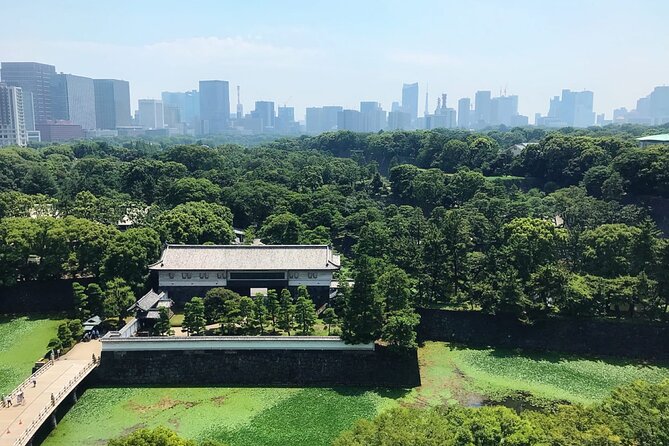
- Edo Castle East Gardens start the “how Tokyo became Tokyo” story
- Tokyo Station’s red brick facade anchors the history-meets-modern theme
- Tokyo International Forum gives you a breather and a clean look at contemporary design
- Odaiba delivers bay views and modern urban space on an artificial island
- Private tour format means your questions can steer the day
- Hotel pickup (if centrally located) and transport-ticket help reduce friction
Entering The Edo-to-Tokyo Story at the Imperial Palace East Gardens
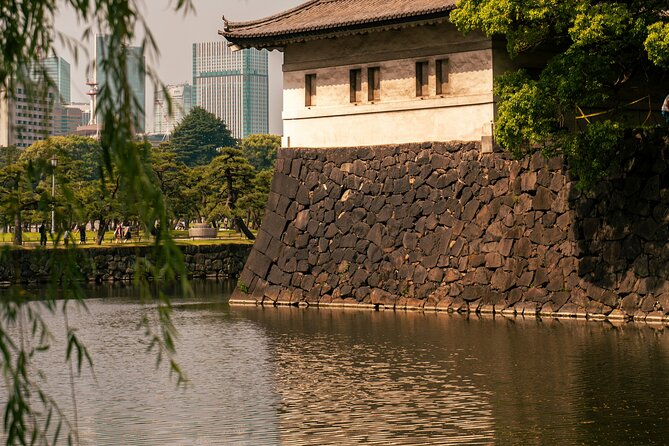
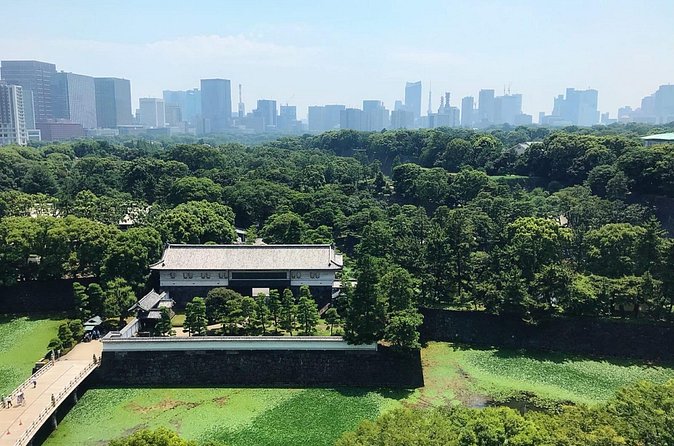
Your day begins in the East Gardens of the Imperial Palace, at the area connected to where Edo Castle once stood. Even if you’re not a “history memorizer,” this stop works because the space helps you picture how power and urban planning shaped everyday life. You’ll walk through a part of Tokyo that still feels like it belongs to another era, even though the modern city hums just outside the edges.
One reason I like this start: it gives you a reference point for everything else. Edo-era Tokyo was built around the shogunate, and the castle grounds are the kind of “center of gravity” that explains why Tokyo developed the way it did. You also get the benefit of a free admission experience here, so you can spend your money on eating well later instead of ticket lines upfront.
A practical note: gardens are pleasant, but they can also mean steady walking on paths that aren’t designed for wheelchairs or strollers. If you’re traveling with mobility challenges, this is the first place where you should think carefully about route comfort.
More walks around the Imperial grounds
- Tokyo: Imperial Palace and Shogun Historical Walking Tour
★ 5.0 · 2,251 reviews - Tokyo: Imperial Palace Japanese History Walking Tour
★ 4.9 · 987 reviews - Tokyo: Imperial Palace and Shogun Walking Tour
★ 4.9 · 935 reviews - Imperial Palace East Garden and Edo Castle Walking Tour in Tokyo
★ 5.0 · 510 reviews
Tokyo Station’s Red Brick: Where Two Worlds Cross
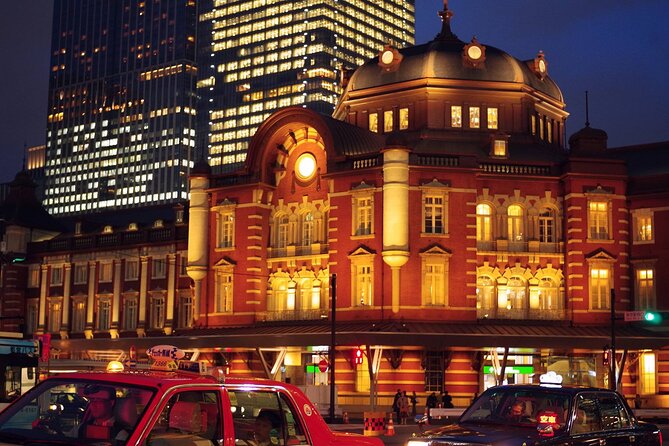
Next you’ll head to Tokyo Central Railway Station, famous for its striking red brick facade with a distinctly European look. This stop is less about riding the rails and more about reading the city. Look at the station and you can see Tokyo’s talent for borrowing ideas, then reshaping them into something local.
What makes Tokyo Station a smart “middle chapter” is that it connects eras in a visual way. Earlier in the day you’re looking at traces of Edo power. Now you’re in a major transport hub where modern logistics, commerce, and movement define the rhythm. The guide context really matters here, because you’ll start noticing how infrastructure reflects national ambitions and how old architecture survives inside new systems.
You’ll likely feel this stop as a payoff: Tokyo gets louder, faster, and more kinetic around a place like this. That’s not a bad thing. It’s part of the story—Tokyo isn’t frozen in time. It keeps rebuilding, and it keeps functioning while it does.
If you prefer fewer large-crowd zones, this might not be the calmest hour of your day. But if you can handle a busy station atmosphere, it’s a good lens for understanding how “history” in Tokyo often lives alongside daily motion.
Tokyo International Forum: Contemporary Architecture With Breathing Room
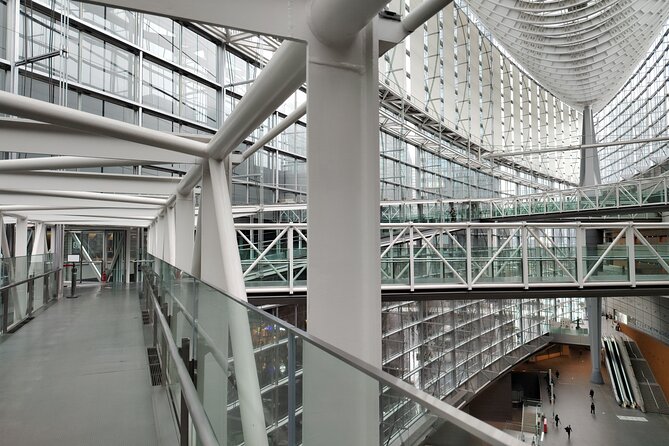
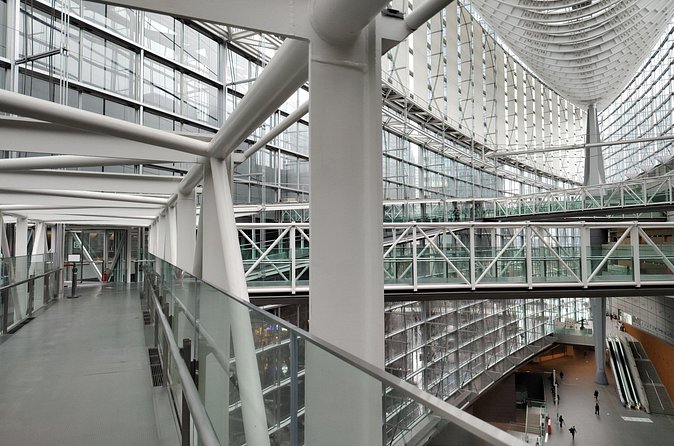
After the station energy, the itinerary shifts to Tokyo International Forum, a modern glass-and-steel building with a distinctive shape. This is a great contrast stop, and you’ll feel the difference right away. It’s quieter and more open than the station vibe, so you can slow down and actually look.
This is also where the tour’s big idea—Tokyo as a layered city—becomes easier to grasp. You’re not just moving from landmark to landmark. You’re stepping through different design philosophies. The International Forum represents modern Tokyo’s focus on global connections, public space, and large-scale architecture that’s meant to be experienced as a designed environment, not just used.
A good way to use this time: pause and let your eyes do the work. Look at the building’s form, the lines, the way people move through the space. Then connect it back to the morning. The contrast between Edo-era spatial thinking and modern public architecture is one of the clearest “time travel” moments of the day.
One caution: this stop is still inside an active city center. If you’re hoping for a totally secluded, silent setting, you won’t get that. But for a calm pause inside a busy metropolis, it’s a strong choice.
Odaiba on a Bay: Futuristic Views and Open Space on an Artificial Island
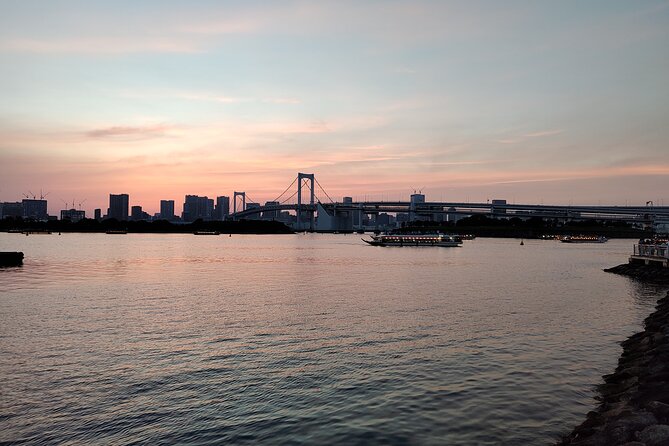
By the time you reach Odaiba, the day changes tone. Odaiba is on Tokyo Bay and built as an artificial island, which makes it a perfect last chapter for the tour’s storyline. Instead of the old city core, you get modern architecture, wide open space, and panoramic water views.
This section works especially well if you’ve been “inside” Tokyo’s history all morning. Odaiba gives you room to reset. It’s where you can stand back and see the city as a whole system—how neighborhoods relate, how the skyline looks from the water, and how Tokyo engineers space for different lifestyles.
Odaiba is also practical for photos, but it’s more than a viewpoint. It’s a place that feels designed for contemporary urban life: open-air stretches, modern buildings, and a sense that Tokyo can be futuristic without pretending the past doesn’t exist. If the morning made you think about power and planning, the afternoon helps you think about lifestyle and space.
There’s one tradeoff: because Odaiba is a planned, modern area, it won’t feel like the same kind of “heritage you can touch.” If you only want old temples and shrines, this stop may feel more modern than your personal taste. But for most first-timers—and for anyone who already did the standard Tokyo highlights—Odaiba is a helpful change of pace.
How Long It Takes (and Why 6–8 Hours Fits the Story)
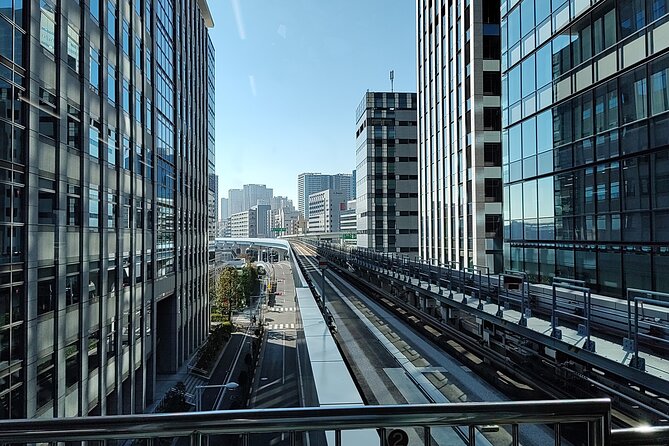
The experience runs about 6 to 8 hours, which is the sweet spot for this kind of “chapters of Tokyo” format. You get enough time at each stop to actually absorb it: about 1.5 hours in the East Gardens, then roughly 1 hour each for Tokyo Station and the International Forum, and about 2 hours in Odaiba. The remaining time covers movement between areas and natural pauses.
This duration matters because Tokyo’s neighborhoods aren’t right next door. If you try to do a similar set of areas solo, you’ll waste time figuring out transit, entrances, and pacing. Here, the guide keeps the day readable.
You should also know the tour timing window depends on the booking schedule: the listed operating period is 07/14/2025 through 12/09/2026, and the time shown is 9:00 AM to 6:00 PM daily. Confirmation comes at the time of booking, so check your date before planning other commitments.
- Tokyo: Shinjuku Food Tour (13 Dishes at 4 Local Eateries)★ 5.0 · 6,603 reviews
- Tokyo Mt Fuji 5th St & Hakone Cruise Bus Tour w/Bullet Train★ 4.4 · 5,024 reviews
- Flagship 2-Hours Official Street Go-Kart Tour – Tokyo Bay Shop★ 5.0 · 4,974 reviews
- From Tokyo: Mount Fuji Full-Day Sightseeing Trip★ 4.5 · 4,970 reviews
- Tokyo: Hop-On Hop-Off Sightseeing Bus Ticket★ 3.9 · 4,207 reviews
Price and Value: What Your $91.21 Actually Buys
The tour price is $91.21 per person, and what you get is more than a walk with a map. You’re buying a guide service for the duration, plus help that removes common Tokyo friction: hotel pickup if you’re centrally located and assistance with purchasing transport and any needed tickets.
That’s the real value angle here. In Tokyo, logistics can be the boring part—ticketing, figuring out routes, and not wasting time on the wrong exit. A guide who can point you to the right systems can turn a “good plan” into a smooth day.
Budget separately for what isn’t included: public transportation (¥1,500 per person), meals, and personal expenses. Also note that while the listed stops are free admission in the itinerary, the tour price doesn’t cover entrance fees to any other attractions that might come up. In other words, you’re mostly seeing free sites, but you’re still responsible if you add something on top.
If you’ve got limited time and want a higher signal-to-effort ratio, this is one of those tours that can pay off quickly. You’re not just saving money; you’re saving mental energy.
Meeting Point and Ending in Odaiba (So Plan Your Night)
You start at Starbucks Coffee – Kokyo Gaien Wadakura Fountain Park, 3-1 Kōkyogaien, Chiyoda City. It’s in a very central zone, and the tour notes it’s near public transportation, which helps if your hotel isn’t within pickup range.
The end point is Odaiba, and the arrival point can be agreed during the tour based on your hotel location, preferences, or convenience for returning. That flexibility is useful, because Odaiba can be a little off the “simple commute” path for some neighborhoods.
For your evening plans, treat this as an afternoon closer. If you’re staying somewhere not too far from the bay, you’ll likely have an easier time continuing your day. If you’re far away, you’ll probably spend a bit more time getting home than you would after a tour that ends in central Tokyo.
What Matteo Leone Adds: Answers, Context, and the Non-Obvious
A big theme from the experience is Matteo Leone’s role as a guide who doesn’t just point at buildings. He answers questions and connects architecture to Japanese history and culture in plain language. That matters because Tokyo is visually impressive, but it can be confusing without context.
When your guide connects the dots, you start to notice patterns: how Tokyo reuses or repurposes space, why certain areas feel different even when they’re close together, and how modern Tokyo keeps a relationship with the structures that came before. It turns the day from “walk and look” into a “walk and understand” experience.
This is also why first-timers often like the pacing. You’re not stuck doing only the most famous neighborhoods. Instead, you’re getting an orientation through the city’s evolution—from Edo-era traces to modern districts and finally to a planned future-facing area like Odaiba.
And if you’ve already done Shibuya, Shinjuku, and Harajuku on a previous visit, this route offers a different angle: less trend-watching, more city-logic.
Who This Tour Is Best For (and Who Should Think Twice)
This tour is a strong match if you want Tokyo to make sense fast. It’s ideal for first-time visitors who want orientation beyond typical nightlife districts. It’s also good for repeat travelers who already know the “big names” and want a deeper look at how the city is built and why it feels the way it does.
You should think twice if you can’t do moderate walking or if you’re traveling with mobility challenges, prams, or walkers/strollers. The itinerary includes long-ish blocks outdoors and movement between multiple city areas, so convenience may be limited.
Tips to Get More Out of Every Stop
Here are a few practical ways to make the day smoother and more rewarding.
Wear shoes you can walk in for hours. This route is built for pacing on foot, and you’ll feel it by the later stops. Bring water, and if you want a snack, plan for it around meal time since meals aren’t included.
At each stop, use a simple loop: look first, then ask your guide a question. You’ll get more out of the International Forum and Odaiba if you’re actively comparing design choices and space use, not only taking photos.
Finally, be ready to accept that Tokyo’s best lessons are often quieter than the famous ones. This tour proves that point by showing how much you can learn from gardens, stations, and modern public architecture.
Should You Book This Tour?
Book it if you want a structured, human explanation of Tokyo’s layers—Edo-era to modern day—without spending your whole day on logistics. The private format, the help with transport ticketing, and the guide context make the $91.21 price feel like money spent on understanding rather than just movement.
Skip it or reconsider if your ideal Tokyo day is mostly indoor museums with minimal walking. Also reconsider if mobility needs make outdoor walking and neighborhood transfers difficult.
If your goal is to leave Tokyo seeing chapters instead of just places, this itinerary is a very sensible choice.
FAQ
What is the duration of the tour?
The tour runs approximately 6 to 8 hours.
Where does the tour start?
The meeting point is Starbucks Coffee – Kokyo Gaien Wadakura Fountain Park, 3-1 Kōkyogaien, Chiyoda City, Tokyo.
Where does the tour end?
The tour ends in Odaiba, Tokyo. The arrival point can be agreed during the tour depending on your hotel and convenience.
Is pickup available?
Hotel pickup is offered if you are centrally located.
Are entrance tickets included?
According to the itinerary, admission at each listed stop is free. That said, the tour price does not include entrance fees to any attractions beyond what’s listed.
How do I receive my tickets?
The experience uses a mobile ticket.
How much should I budget for transportation?
Public transportation is not included and is listed as ¥1,500 per person.
Is the tour private?
Yes. It’s a private tour/activity, so only your group participates.
Is it suitable for people with mobility issues or strollers?
It’s not recommended for people with reduced mobility, mobility difficulties, or special needs related to prams, walkers, or strollers.
More Tour Reviews in Tokyo
- Mt Fuji and Hakone 1-Day Bus Tour Return by Bullet Train
★ 5.0 · 26,383 reviews - 1-Day Tokyo Bus Tour
★ 5.0 · 14,250 reviews - Tokyo: teamLab Planets TOKYO Digital Art Museum Entry Ticket
★ 4.6 · 9,779 reviews - Mt Fuji & Hakone Cruise, Drum Show Bullet Train 1 Day from Tokyo
★ 4.0 · 7,413 reviews - Tokyo: Shinjuku Food Tour (13 Dishes at 4 Local Eateries)
★ 5.0 · 6,603 reviews
More Imperial Palace Walks
- Tokyo: Imperial Palace and Shogun Historical Walking Tour
★ 5.0 · 2,251 reviews - Tokyo: Imperial Palace Japanese History Walking Tour
★ 4.9 · 987 reviews - Tokyo: Imperial Palace and Shogun Walking Tour
★ 4.9 · 935 reviews - Imperial Palace East Garden and Edo Castle Walking Tour in Tokyo
★ 5.0 · 510 reviews - Tokyo: Imperial Palace East Gardens Walking Tour
★ 4.8 · 353 reviews
Latest Tokyo reviews off our desk






Imperial Palace Tours, compared.
 ★ 5.0Imperial Palace and Shogun Historical Walking TourFrom $222,251 reviews
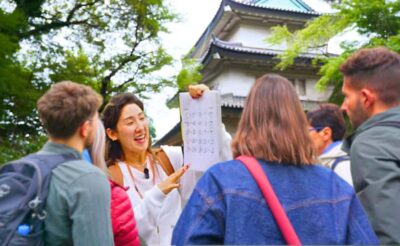 ★ 4.9Imperial Palace Japanese History Walking TourFrom $32987 reviews
 ★ 4.9Imperial Palace and Shogun Walking TourFrom $16935 reviews
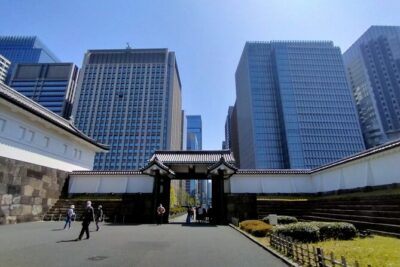 ★ 5.0Imperial Palace East Garden and Edo Castle Walking Tour in TokyoFrom $25510 reviews
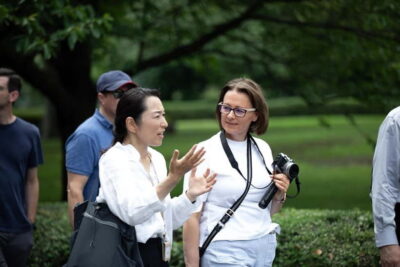 ★ 4.8Imperial Palace East Gardens Walking TourFrom $19353 reviews
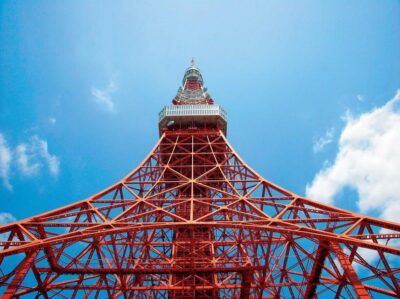 ★ 4.5Imperial Palace, Sensō-ji Temple, & Tokyo Tower TourFrom $40339 reviews
 ★ 5.0Tokyo Castle, Imperial Palace, Shogun & Garden Walking TourFrom $31211 reviews
 ★ 4.7Edo Castle & East Garden of the Imperial Palace TourFrom $42112 reviews
Browse the lists this tour appears in