
Reviewed · IMPERIAL PALACE TOURS
Imperial Palace run with fun trivia by an Imperial Palace geek
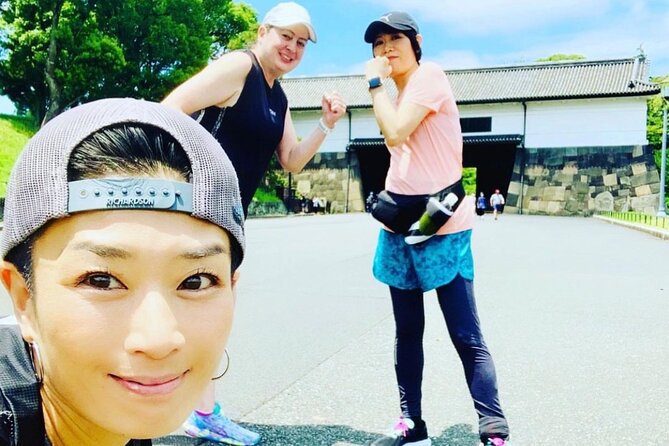
A Tokyo morning run around the Imperial Palace hits different. You start early, dodge most crowds, and get guided Imperial Palace trivia from YUKO, an Imperial Palace geek with serious love for the place.
I especially love the mix of motion and pauses—this is not a relentless jog. You get to ask questions as you go, then slow down for landmark moments like Hanzomon Gate and Nijubashi Bridge, plus a few fun myths and details that make the route feel personal.
One thing to plan for: if you want locker and shower access at JOGLIS, budget an extra ¥1,500 yen per person.
In This Review
- Key points at a glance
- Imperial Palace run with YUKO: what this feels like at 8:30am
- Price and value: is $90 worth a 2.5-hour Imperial Palace loop?
- Where you meet at JOGLIS and how to get set up fast
- The route: gates, bridges, and the Tokyo marathon vibe
- Stop 1: JOGLIS briefing and rules check
- Stop 2: Hanzomon Gate and the Miyake-zaka descent
- Stop 3: Sakuradamon Gate and Mount Fuji belief
- Stop 4: the Sakuradamon clock secret
- Stop 5: Nijubashi Bridge for the postcard moment
- Stop 6: Gyoko-dori Avenue and Tokyo Marathon finish energy
- Stop 7: Kokyo Otemon Gate and entering the East Gardens
- Stop 8: Fujimi-yagura and the “little castle” view
- Stop 9: Tenshudai remains and the Edo stone walls
- Stop 10: Kita Hanebashi Gate and the uphill finish
- Stop 11: Daikancho-dori for Edo daimyo street vibes
- Stop 12: Chidorigafuchi Park and cherry tree secrets
- Stop 13: back to JOGLIS and the end-of-run reset
- Running vs walking: how flexible is this tour?
- The best part: the trivia energy and the guide’s love for the palace
- Practical tips so you enjoy every gate
- Should you book this Imperial Palace run tour?
- FAQ
- What time does the Imperial Palace run start?
- Where do I meet the guide?
- How long is the tour?
- Is this tour only for runners?
- What languages is the tour conducted in?
- How big is the group?
- Are lockers and showers available?
- What if the weather is bad?
Key points at a glance
- Early start, less crowd pressure, for a calmer feel than later in the day
- Small group (max 8) so your questions actually get answered
- Gate-to-gate views, from Hanzomon down Miyake-zaka to Nijubashi Bridge
- Trivia built into the run, including clock talk at Sakuradamon square
- Flexible pace with stops and walk options if you’re not a runner
Imperial Palace run with YUKO: what this feels like at 8:30am
This tour is built for people who want Tokyo sightseeing without the usual all-day walking grind. You’re out early at 8:30am, when the Imperial Palace area feels quieter and more manageable—perfect if you like to start the day with movement and momentum.
What makes it fun is the way YUKO blends three things: gentle exercise, approachable explanations, and small trivia moments that keep your brain awake even when your legs slow down. It’s also a Japanese-and-simple-English experience, so you’re not left totally guessing if your Japanese is still waking up.
More walks around the Imperial grounds
- Tokyo: Imperial Palace and Shogun Historical Walking Tour
★ 5.0 · 2,251 reviews - Tokyo: Imperial Palace Japanese History Walking Tour
★ 4.9 · 987 reviews - Tokyo: Imperial Palace and Shogun Walking Tour
★ 4.9 · 935 reviews - Imperial Palace East Garden and Edo Castle Walking Tour in Tokyo
★ 5.0 · 510 reviews
Price and value: is $90 worth a 2.5-hour Imperial Palace loop?
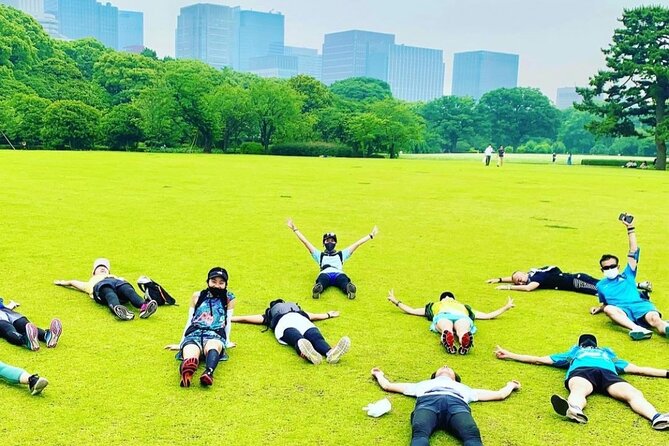
At $90 for about 2 hours 30 minutes, you’re paying for a guide, a planned route, and the time savings of not having to figure out the best way to string the highlights together. The itinerary is packed with major sights around the East Gardens area and the surrounding perimeter, but it’s paced to stay enjoyable rather than exhausting.
The only easy way this can cost more is practical add-ons. If you want the JOGLIS lockers and showers, it’s ¥1,500 per person, and if you need gear, running clothes/shoes/towels are available for rent for a fee. If you already travel light and skip facilities, you’ll likely keep it closer to the advertised price.
Where you meet at JOGLIS and how to get set up fast
You start at JOGLIS Japan, in Chiyoda City (Kōjimachi area), address: 102-0083 Tokyo, Chiyoda City, Kōjimachi, 1-chōme 7 FMセンター地下 1F. The tour meets there and ends back at the same place, so you’re not trying to navigate Tokyo mid-run.
You’ll get a mobile ticket, which is convenient. The tour is also close to public transportation, which matters because starting early at 8:30am means you don’t want a complicated commute.
If you plan to use lockers or showers, arrive with that in mind. Even if you don’t use them, you still benefit from being prepared—this isn’t a sprint start, but you do want comfortable shoes from the get-go.
The route: gates, bridges, and the Tokyo marathon vibe
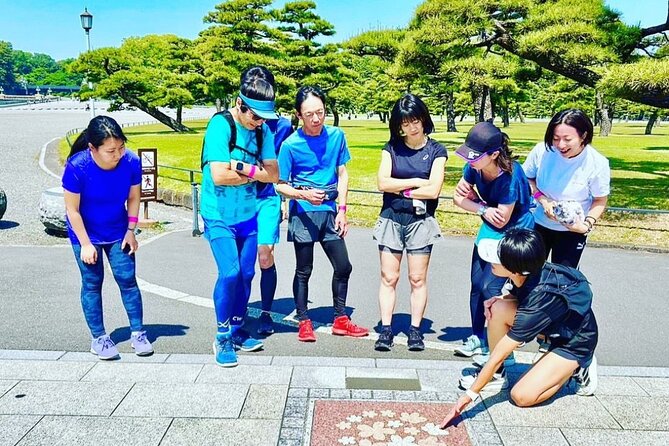
This is a loop-style run where you keep moving through the palace perimeter highlights, then turn back the way you came. You’ll also notice the stops are timed and varied, so you’ll get short photo moments and story pauses without the “stand in one place forever” feeling.
Below is what you can expect as you move through the highlights—plus the small practical notes that help you enjoy each part.
Stop 1: JOGLIS briefing and rules check
You begin with a briefing about Imperial Palace history and the rules of the Imperial Palace Run. Then you launch from JOGLIS for the start segment.
This matters because the Imperial Palace area has specific flow and expectations. A quick briefing helps you understand what’s okay to do, where the tour intends to pause, and how the group moves through the zones.
- Tokyo: Shinjuku Food Tour (13 Dishes at 4 Local Eateries)★ 5.0 · 6,603 reviews
- Tokyo Mt Fuji 5th St & Hakone Cruise Bus Tour w/Bullet Train★ 4.4 · 5,024 reviews
- Flagship 2-Hours Official Street Go-Kart Tour – Tokyo Bay Shop★ 5.0 · 4,974 reviews
- From Tokyo: Mount Fuji Full-Day Sightseeing Trip★ 4.5 · 4,970 reviews
- Tokyo: Hop-On Hop-Off Sightseeing Bus Ticket★ 3.9 · 4,207 reviews
Stop 2: Hanzomon Gate and the Miyake-zaka descent
The run starts from Hanzomon, one of the Imperial Palace entrances. As you descend Miyake-zaka, you’ll get views of the National Theatre and the Diet Building.
If you like views as much as movement, this part is a good payoff early. You’re already in “Tokyo’s big-icons” mode, and you haven’t had time to get bored yet.
Stop 3: Sakuradamon Gate and Mount Fuji belief
Next is Sakuradamon, the palace’s largest gate. Here you’ll hear about the belief in Mt. Fuji, something many Japanese people cherish, and you’ll get directed toward an area often described as a power spot.
This is a classic “culture + viewpoint” stop. It’s short, but it adds a layer beyond architecture by connecting the palace space with ideas Japanese visitors commonly bring into their sightseeing.
Stop 4: the Sakuradamon clock secret
Then you circle back to the Sakuradamon area for the secret of the clock in the square where many runners gather.
This is exactly the kind of trivia stop that makes the tour feel different from a standard photo walk. You might never notice the details on your own, but with a guide’s explanation, you start seeing more than just stone and gates.
Stop 5: Nijubashi Bridge for the postcard moment
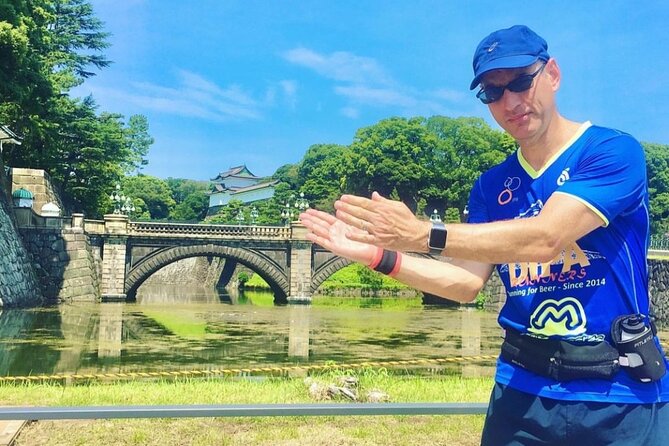
You visit Two-tiered Bridge (Ni-ju Bashi), one of the Imperial Palace’s most beautiful bridges. You’ll take a commemorative photo here.
If you’re the type who likes a real “main character” photo early in a tour, this is it. The bridge is a natural focal point, so your group doesn’t feel like you’re constantly asking where to look.
Stop 6: Gyoko-dori Avenue and Tokyo Marathon finish energy
At Gyoko-dori Avenue, you reach the finish area of the Tokyo Marathon. You’ll also talk about secrets connecting Tokyo Station, the Emperor, and the Tokyo Marathon, then you’ll take pictures that mimic the finish-line scene.
This stop is short, but it gives the morning-run theme extra personality. Even if you’re not a marathon person, the idea of finishing and celebrating adds fun energy to the route.
Stop 7: Kokyo Otemon Gate and entering the East Gardens
From Kokyo Otemon Gate, you enter the East Gardens. Before you go in, there’s baggage inspection.
This is where you’ll feel the difference between sightseeing outside and being inside a formal garden space. It can slow you down slightly, but it’s part of how the area is managed, and it keeps the experience smooth for everyone.
You’ll also see the Shachihoko as part of this entrance experience.
Stop 8: Fujimi-yagura and the “little castle” view
Next is Fujimi-yagura, where you can see turrets that served as a stand-in for the Edo Castle keep. The guide describes it as a little castle.
If you like old military-style architecture details, this is a satisfying stop. Even without a full fortress keep in view, you still get a sense of how the Edo-era design worked.
Stop 9: Tenshudai remains and the Edo stone walls
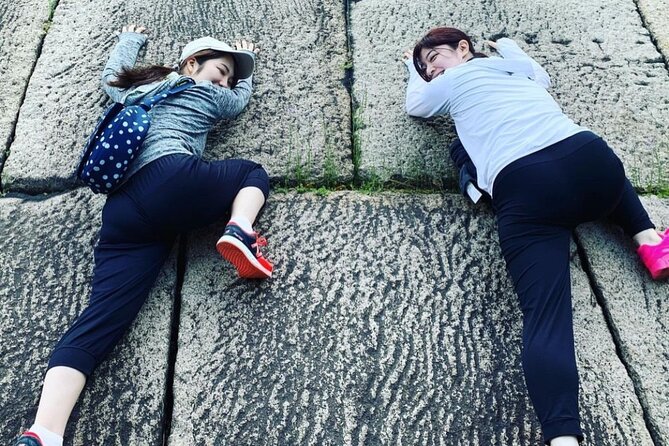
You’ll visit Tenshudai (remains of the main tower). You can see stone walls of the Edo Castle keep, though the original keep was destroyed by fire. A reconstructed model helps you visualize what’s no longer there.
This is one of those moments where a guide’s explanation really matters. Without context, it can be easy to see “ruins.” With context, you get an actual sense of scale and what used to stand here.
Stop 10: Kita Hanebashi Gate and the uphill finish
You return outside via Kita Hanebashi Gate, described as a drawbridge of Edo Castle. From here, you’ll start an uphill climb, but you can run at your own pace.
This is practical running advice built into the route. You’re not forced into a tempo that breaks your legs. You can stay steady and enjoy the return rather than power through.
Stop 11: Daikancho-dori for Edo daimyo street vibes
Then you pass Daikancho Street, where daimyo residences were during the Edo period. It’s also known as a cherry blossom viewing spot.
Even if cherry blossoms aren’t in full show, the connection to how neighborhoods worked centuries ago makes the street feel more grounded and less like a generic walkway.
Stop 12: Chidorigafuchi Park and cherry tree secrets
At Chidorigafuchi Park, another famous cherry blossom viewing spot, you’ll learn secrets of the cherry trees people in Japan care about.
If you’re visiting at the right seasonal moment, this stop can be gorgeous. If not, it still works because you’re hearing why the place matters—so it doesn’t feel like you’re just walking past a pretty pond area.
Stop 13: back to JOGLIS and the end-of-run reset
You return to JOGLIS and get dismissed. If you paid for JOGLIS facilities, you can take a shower.
This ending is helpful. You don’t have to find your own way back to a facility after a morning workout. It makes the experience feel like a complete plan rather than a random “meet and run” arrangement.
Running vs walking: how flexible is this tour?
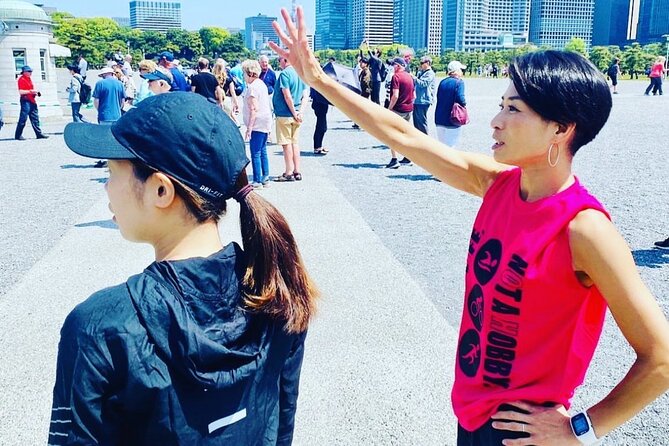
This tour is for casual runners and exercise enthusiasts, but it’s also designed with flexibility. The pace includes stops, and there’s no suggestion you have to be a hardcore runner the whole time.
If running isn’t your thing, you can walk. For first-timers, that’s big. You still get the route structure, the trivia, and the guided stops at the gates and viewpoints without worrying about maintaining a constant jog.
The tour also lists moderate physical fitness as the baseline. If you’re generally comfortable moving for two hours with short breaks, you’ll likely be fine.
The best part: the trivia energy and the guide’s love for the palace
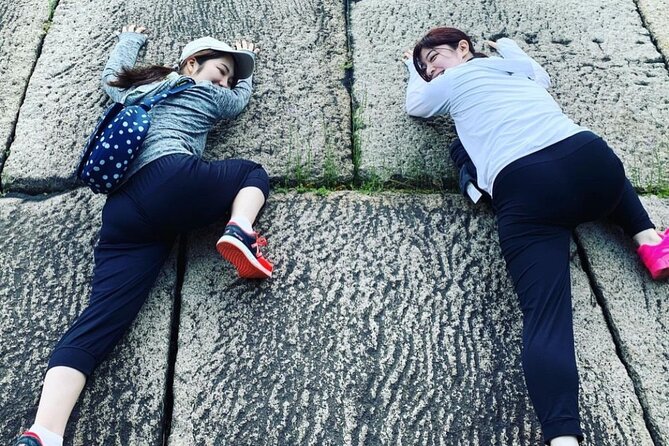
The standout theme here is how much genuine enthusiasm guides your attention. In particular, YUKO’s knowledge isn’t just facts—it’s the way she connects palace architecture, Japanese beliefs, and runner culture into short, easy-to-grasp segments.
That shows up in exactly the kind of stops that could feel random on a self-guided walk—like the clock secret at Sakuradamon or the marathon-finish photo moment at Gyoko-dori. The result is a tour where you don’t just photograph; you notice.
And because the group is capped at 8 travelers, you’re not stuck listening from the sidelines. You can ask questions and get a direct reply.
Practical tips so you enjoy every gate
A few small things can make a big difference on a morning like this:
- Wear comfortable running shoes. Even if you walk some parts, the ground and pacing still matter.
- Bring a towel if you prefer, but note towels are available for rent for a fee.
- If you want lockers/showers, plan the extra ¥1,500 yen cost at JOGLIS.
- Tokyo weather matters. The tour requires good weather, and if it’s canceled due to poor weather, you’ll be offered another date or a full refund.
Should you book this Imperial Palace run tour?

Book it if you want a Tokyo morning with a point of view. This is a smart choice for active sightseeing: exercise plus real explanations, without the stress of managing a complicated route yourself.
Skip it if you’re expecting a long, non-stop run or you hate any uphill segments. The tour is paced with stops, and there’s at least one uphill push during the return.
If you’re somewhere in the middle—curious, comfortable walking, and open to learning from a guide who truly loves the Imperial Palace—this is an excellent way to start your day.
FAQ
What time does the Imperial Palace run start?
The tour starts at 8:30am.
Where do I meet the guide?
You meet at JOGLIS Japan, 102-0083 Tokyo, Chiyoda City, Kōjimachi, 1-chōme 7 FMセンター地下 1F. The tour ends back at the same meeting point.
How long is the tour?
The duration is approximately 2 hours 30 minutes.
Is this tour only for runners?
No. If running isn’t your thing, you can also walk. It’s designed for casual runners and exercise enthusiasts, with stops along the way.
What languages is the tour conducted in?
The tour is conducted in Japanese and simple English, so it works for Japanese and English speakers.
How big is the group?
The tour has a maximum of 8 travelers.
Are lockers and showers available?
Yes. If you want to use the changing lockers and showers at JOGLIS, there’s an additional ¥1,500 yen per person.
What if the weather is bad?
The tour requires good weather. If it’s canceled due to poor weather, you’ll be offered a different date or a full refund.
More Tour Reviews in Tokyo
- Mt Fuji and Hakone 1-Day Bus Tour Return by Bullet Train
★ 5.0 · 26,383 reviews - 1-Day Tokyo Bus Tour
★ 5.0 · 14,250 reviews - Tokyo: teamLab Planets TOKYO Digital Art Museum Entry Ticket
★ 4.6 · 9,779 reviews - Mt Fuji & Hakone Cruise, Drum Show Bullet Train 1 Day from Tokyo
★ 4.0 · 7,413 reviews - Tokyo: Shinjuku Food Tour (13 Dishes at 4 Local Eateries)
★ 5.0 · 6,603 reviews
More Imperial Palace Walks
- Tokyo: Imperial Palace and Shogun Historical Walking Tour
★ 5.0 · 2,251 reviews - Tokyo: Imperial Palace Japanese History Walking Tour
★ 4.9 · 987 reviews - Tokyo: Imperial Palace and Shogun Walking Tour
★ 4.9 · 935 reviews - Imperial Palace East Garden and Edo Castle Walking Tour in Tokyo
★ 5.0 · 510 reviews - Tokyo: Imperial Palace East Gardens Walking Tour
★ 4.8 · 353 reviews
Latest Tokyo reviews off our desk






Imperial Palace Tours, compared.
 ★ 5.0Imperial Palace and Shogun Historical Walking TourFrom $222,251 reviews
 ★ 4.9Imperial Palace Japanese History Walking TourFrom $32987 reviews
 ★ 4.9Imperial Palace and Shogun Walking TourFrom $16935 reviews
 ★ 5.0Imperial Palace East Garden and Edo Castle Walking Tour in TokyoFrom $25510 reviews
 ★ 4.8Imperial Palace East Gardens Walking TourFrom $19353 reviews
 ★ 4.5Imperial Palace, Sensō-ji Temple, & Tokyo Tower TourFrom $40339 reviews
 ★ 5.0Tokyo Castle, Imperial Palace, Shogun & Garden Walking TourFrom $31211 reviews
 ★ 4.7Edo Castle & East Garden of the Imperial Palace TourFrom $42112 reviews
Browse the lists this tour appears in