

Reviewed · IMPERIAL PALACE TOURS
Imperial Palace Tour: Discover Samurai History with a Local Guide
Tokyo’s power history is right here. This 2-hour Imperial Palace East Gardens tour ties what you see to how Japan was ruled, using Edo Castle remnants and clear, human-scale commentary. It’s a practical way to connect today’s capital to the Tokugawa shogunate and the samurai world.
I especially like the small group size (max 8 travelers), which keeps questions flowing. I also like that the highlights are the stuff you actually want to look at up close: Sakurada Tatsumi Yagura, Nijūbashi Bridge, and the East Gardens’ stone walls and gates.
One thing to consider: the start at Starbucks in Kōkyogaien can be a little easy to miss if you’re arriving late or distracted by street-level Tokyo bustle, so give yourself a few extra minutes.
In This Review
- Key highlights worth aiming for
- Why the Imperial Palace East Gardens make more sense with a guide
- Meet at Starbucks in Kōkyogaien: a simple start you should plan for
- Sakurada Tatsumi Yagura: one of Edo’s surviving watchtowers
- Nijūbashi Bridge: the iconic two-tier approach with political meaning
- East Gardens of the Imperial Palace: reading Edo Castle ruins like a map
- The Imperial Palace area: emperor’s residence in the modern city
- Price and value: $12.90 for context you won’t get in a quick photo stop
- How the route feels on the ground (and who will like it most)
- A small-group tour tip: ask one question at each stop
- Should you book the Imperial Palace East Gardens samurai history tour?
- FAQ
- How long is the Imperial Palace tour?
- What is the price per person?
- How many people are in the group?
- Where does the tour start?
- What are the main stops on the tour?
- Is there admission charged at the stops?
- Is the tour suitable for someone with moderate fitness?
- Can I cancel for a full refund?
- Are service animals allowed?
Key highlights worth aiming for
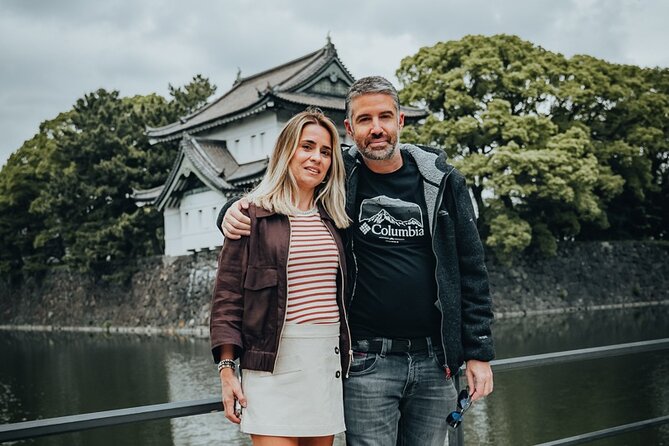
- Sakurada Tatsumi Yagura (Sakurada Nijū Yagura): a surviving Edo-period two-story watchtower you can actually orient yourself around
- Nijūbashi Bridge: the iconic double-arched approach to the inner grounds
- East Gardens on former Edo Castle grounds: stone ruins, gates, and traditional paths you can read with a guide’s help
- Imperial Palace context: how the emperor’s residence fits into the story of Tokyo’s political center
- A max 8-person group: more interaction, less queueing, better pacing for a walking tour
Why the Imperial Palace East Gardens make more sense with a guide
Tokyo is full of photo spots. This tour goes further by helping you understand the logic behind the sights. You’ll walk through the Imperial Palace East Gardens, which sit on former Edo Castle ground, then connect that setting to the Tokugawa shogunate and the samurai culture that shaped rule in Japan.
What I like is that the tour doesn’t treat the area like a museum backdrop. The guide links the stone ruins, gates, and watch structures to how power was organized and defended. Even if you’ve seen pictures of Nijūbashi Bridge, you’ll end up noticing details that you’d otherwise rush past.
Also, it’s a very manageable time commitment. At about 2 hours, you can slot this into a sightseeing day without feeling like you just started a marathon.
More walks around the Imperial grounds
- Tokyo: Imperial Palace and Shogun Historical Walking Tour
★ 5.0 · 2,251 reviews - Tokyo: Imperial Palace Japanese History Walking Tour
★ 4.9 · 987 reviews - Tokyo: Imperial Palace and Shogun Walking Tour
★ 4.9 · 935 reviews - Imperial Palace East Garden and Edo Castle Walking Tour in Tokyo
★ 5.0 · 510 reviews
Meet at Starbucks in Kōkyogaien: a simple start you should plan for
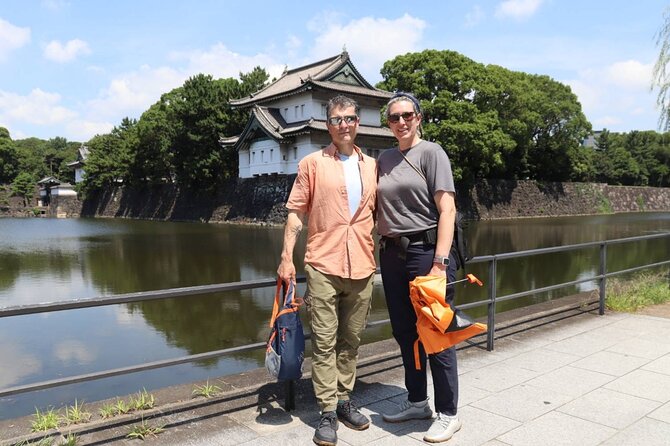
The tour meets at Starbucks Coffee at Kokyo Gaien Wadakura Fountain Park (3-1 Kōkyogaien, Chiyoda City). The activity ends back at the meeting point, so you’re not stranded across town after the walk.
Because it’s a walking tour, timing matters more than you’d think. The Imperial Palace area is easy to enter, but spotting your group can be tricky at first if you arrive right on the dot or miss the exact gathering point.
One small caution from a real experience shared: someone had trouble finding the guide at the start, but the team followed up and the rest of the tour became interesting and enjoyable. My advice is basic: arrive a touch early, keep an eye out for the group, and don’t be shy about asking for help if you’re unsure.
Sakurada Tatsumi Yagura: one of Edo’s surviving watchtowers
Your first stop is Sakurada Tatsumi Yagura, also known as Sakurada Nijū Yagura. This is a historic two-story watchtower inside the Imperial Palace grounds, built during the Edo period. It’s also described as one of the few surviving structures from that era, which is part of why it matters.
What you’ll get from having a guide here is context. A watchtower is more than an old building. It’s a clue to how the shogunate monitored movement and managed security around Edo Castle. You’ll likely spend around 30 minutes here, which is enough time to look, orient, and absorb the story without feeling rushed.
A possible drawback: the tower is a specific landmark, so if you were hoping for huge panoramic viewpoints at every step, your “big vista moments” come and go. Still, it’s a strong start because it gives you a mental framework for everything else on the route.
Nijūbashi Bridge: the iconic two-tier approach with political meaning
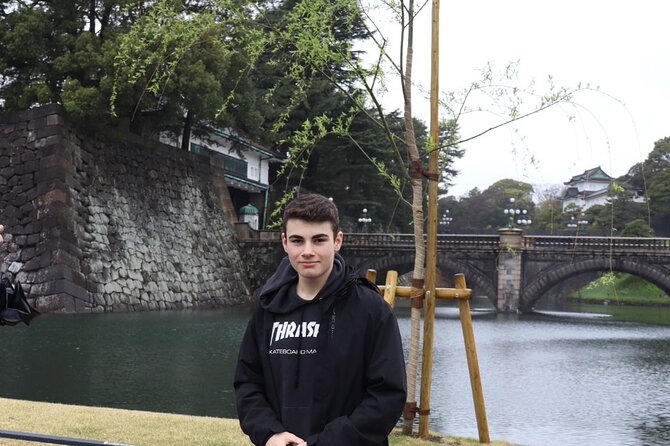
Next up is Nijūbashi Bridge, the double-arched bridge that spans the moat and serves as the main approach to the inner grounds. This is the kind of place where your first reaction is pure visual impact—clean stonework, symmetry, that classic postcard geometry.
But the guide’s job is to help you see what the bridge represented. In a castle-centered world, approaches were controlled. Bridges weren’t just convenient—they were part of how authority was displayed and accessed. This stop is short, about 15 minutes, so expect a quick but meaningful orientation rather than a long linger.
Tip: arrive ready to look slowly. The bridge is easy to photograph fast, but the story lands better when you take a breath and notice the shape and placement in relation to the moat and the surrounding walls.
East Gardens of the Imperial Palace: reading Edo Castle ruins like a map
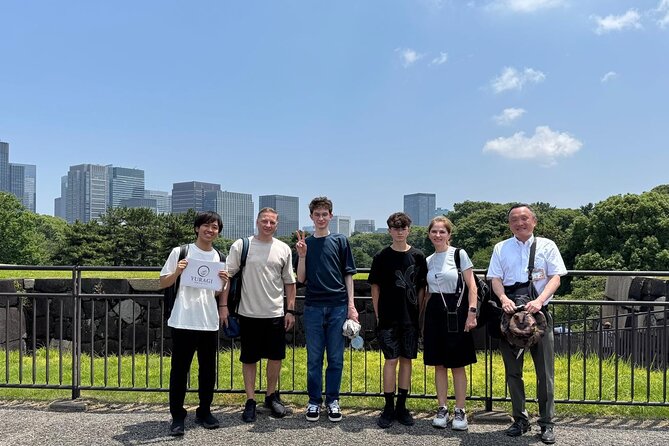
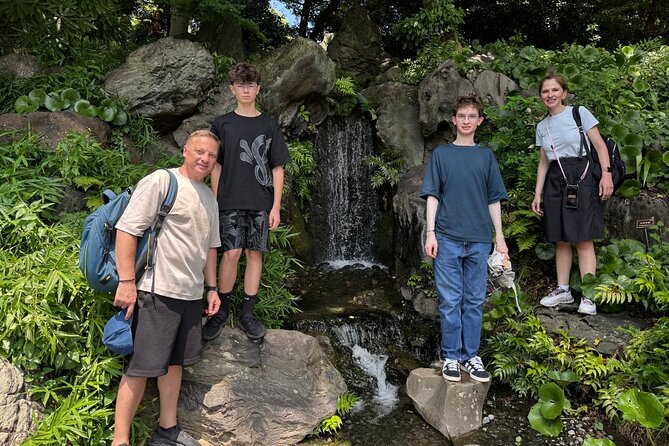
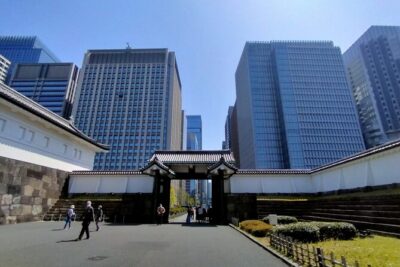
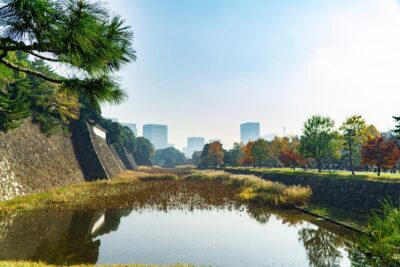
This is the heart of the tour: the East Gardens of the Imperial Palace, which are open to the public and sit on the former grounds of Edo Castle. You’ll walk through areas featuring stone walls, gates, and traditional Japanese landscaping, with seasonal flowers adding color along the way.
What I like here is the pacing. Around 30 minutes on this portion gives you time to do more than wander. The guide helps you connect what you see—ruins, gates, and remnant structures—to what it meant when Edo Castle functioned as the Tokugawa shogunate stronghold.
You’ll also hear about historic remnants that people often associate with Edo Castle, including references like the Tenshudai and the Tatsumi Yagura. Even if you’re not chasing specific building names, the explanation helps you understand why these areas were arranged the way they were: movement, visibility, boundaries, and control.
A practical consideration: the grounds are beautiful and calm, but they’re still an active walking route. The tour is designed for a moderate fitness level, so plan for steady walking and normal urban weather comfort.
More blade-and-dojo sessions, reviewed
- Tokyo: Samurai Ninja Museum Guided tour and Experience★ 4.6 · 1,010 reviews
- Tokyo: Samurai Sword & Archery Class from Samurai Descendant★ 5.0 · 603 reviews
- Best Samurai Experience in Tokyo★ 5.0 · 458 reviews
- Ninja Experience (Family Friendly) at Samurai Ninja Museum TOKYO★ 5.0 · 441 reviews
- Tokyo: Samurai Entertainment Night Show in Kanda Shrine★ 4.6 · 417 reviews
The Imperial Palace area: emperor’s residence in the modern city
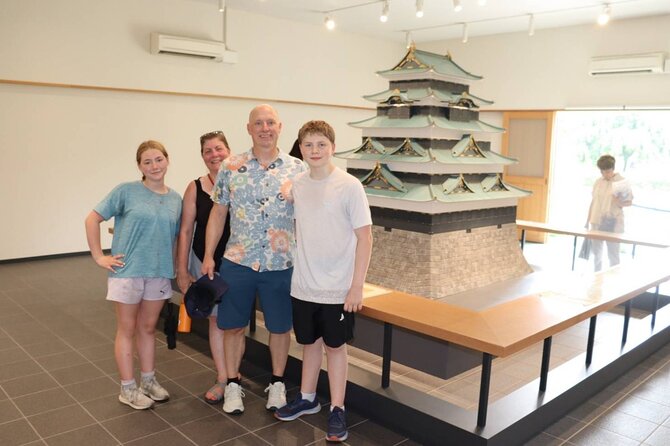
The tour’s final main stop is the Imperial Palace itself, the residence of the Emperor of Japan. The area is a major Tokyo landmark, and it still traces its roots to the Edo Castle site with moats, stone walls, and the surrounding grounds.
This is where the tour earns its value for people who love political history but don’t want to read a textbook on a hot sidewalk. You’ll connect the dots between samurai-era governance and the present-day center of state. The guide’s commentary helps you understand how the physical space carried political weight—then how Tokyo grew around it.
Expect about 30 minutes here. That time window is enough to appreciate the site and reset your camera brain, but it’s not a full, deep-dive exploration of every angle of the palace grounds. If you want extra time for independent photos after the tour, plan a little buffer in your schedule.
Price and value: $12.90 for context you won’t get in a quick photo stop
At $12.90 per person, this tour is priced in a way that feels designed for value, not for exclusivity. The big reason is that the major highlights are admission free in the tour’s flow. The stops are listed as ticket free, which makes the guided part the real purchase: the connections, the timing, and the translation of what you’re seeing.
Add to that a few other practical points:
- Mobile ticket is provided
- You get a small group capped at 8 travelers
- There’s mention of group discounts, which can make sense if you’re booking with friends
I also like the “you spend your time efficiently” angle. A 2-hour walk through this specific area is long enough to feel like you learned something, yet short enough that you’re not stuck on a slow schedule. Tokyo has plenty of attractions that eat a half day. This one doesn’t.
How the route feels on the ground (and who will like it most)
This is a walking tour, so your enjoyment will come from your tolerance for steady pacing and the type of questions you like to ask. The tour is recommended for people with moderate physical fitness, which usually means you’ll be okay as long as you can walk comfortably for the duration.
You’ll get the most out of it if you:
- Want samurai-era context without wandering aimlessly
- Prefer smaller groups over big bus tours
- Like history tied to buildings, bridges, walls, and space rather than only names and dates
- Enjoy serene walking routes that don’t feel chaotic
If you’re the type who wants nonstop adrenaline or lots of “check-the-box” indoor sites, this might feel calmer than you expect. The trade-off is that you get to slow down in a meaningful setting.
A small-group tour tip: ask one question at each stop
With a max 8-person group, you can actually interact. My best advice is to ask one simple question at each major point. For example: what did this structure do, or why is this approach designed this way?
This matters because the tour’s value is in the connections. The watchtower isn’t just old. The bridge isn’t just pretty. The East Gardens aren’t just a park. Each stop is a piece of the same story—how Edo Castle worked, and how Tokyo’s power center evolved.
If you do that, you’ll walk away with a clearer mental map, not just a batch of photos.
Should you book the Imperial Palace East Gardens samurai history tour?
I think you should book it if you want a short, well-paced way to understand Tokyo’s political roots in the Edo period. The small group size, the focus on specific surviving structures like Sakurada Tatsumi Yagura, and the guided explanations of the Edo Castle remnants make the low price feel fair.
I’d skip it (or at least adjust expectations) if you want a long, self-guided palace-style wander with zero structure. This tour gives you a guided pathway through the East Gardens and major landmarks, and it’s meant to be efficient.
One last practical point: if you’re picky about start-time logistics, arrive a bit early at the Starbucks meeting point so you don’t start the day stressed.
FAQ
How long is the Imperial Palace tour?
The tour is about 2 hours (approx.).
What is the price per person?
It costs $12.90 per person.
How many people are in the group?
The group size is capped at a maximum of 8 travelers.
Where does the tour start?
It starts at Starbucks Coffee – Kokyo Gaien Wadakura Fountain Park (3-1 Kōkyogaien, Chiyoda City, Tokyo 100-0002, Japan).
What are the main stops on the tour?
Key stops include Sakurada Tatsumi Yagura, Nijūbashi Bridge, the Imperial Palace East Gardens (Edo Castle ruin area), and the Imperial Palace area.
Is there admission charged at the stops?
The stops are listed as admission ticket free.
Is the tour suitable for someone with moderate fitness?
Yes, the tour is marked for travelers with a moderate physical fitness level.
Can I cancel for a full refund?
Yes. You can cancel up to 24 hours in advance for a full refund.
Are service animals allowed?
Yes, service animals are allowed.
More Tour Reviews in Tokyo
- Mt Fuji and Hakone 1-Day Bus Tour Return by Bullet Train
★ 5.0 · 26,383 reviews - 1-Day Tokyo Bus Tour
★ 5.0 · 14,250 reviews - Tokyo: teamLab Planets TOKYO Digital Art Museum Entry Ticket
★ 4.6 · 9,779 reviews - Mt Fuji & Hakone Cruise, Drum Show Bullet Train 1 Day from Tokyo
★ 4.0 · 7,413 reviews - Tokyo: Shinjuku Food Tour (13 Dishes at 4 Local Eateries)
★ 5.0 · 6,603 reviews
More Samurai and Ninja Sessions
- Tokyo: Samurai Ninja Museum Guided tour and Experience
★ 4.6 · 1,010 reviews - Tokyo: Samurai Sword & Archery Class from Samurai Descendant
★ 5.0 · 603 reviews - Best Samurai Experience in Tokyo
★ 5.0 · 458 reviews - Ninja Experience (Family Friendly) at Samurai Ninja Museum TOKYO
★ 5.0 · 441 reviews - Tokyo: Samurai Entertainment Night Show in Kanda Shrine
★ 4.6 · 417 reviews
More Imperial Palace Walks
- Tokyo: Imperial Palace and Shogun Historical Walking Tour
★ 5.0 · 2,251 reviews - Tokyo: Imperial Palace Japanese History Walking Tour
★ 4.9 · 987 reviews - Tokyo: Imperial Palace and Shogun Walking Tour
★ 4.9 · 935 reviews - Imperial Palace East Garden and Edo Castle Walking Tour in Tokyo
★ 5.0 · 510 reviews - Tokyo: Imperial Palace East Gardens Walking Tour
★ 4.8 · 353 reviews
Latest Tokyo reviews off our desk






Imperial Palace Tours, compared.
 ★ 5.0Imperial Palace and Shogun Historical Walking TourFrom $222,251 reviews
 ★ 4.9Imperial Palace Japanese History Walking TourFrom $32987 reviews
 ★ 4.9Imperial Palace and Shogun Walking TourFrom $16935 reviews
 ★ 5.0Imperial Palace East Garden and Edo Castle Walking Tour in TokyoFrom $25510 reviews
 ★ 4.8Imperial Palace East Gardens Walking TourFrom $19353 reviews
 ★ 4.5Imperial Palace, Sensō-ji Temple, & Tokyo Tower TourFrom $40339 reviews
 ★ 5.0Tokyo Castle, Imperial Palace, Shogun & Garden Walking TourFrom $31211 reviews
 ★ 4.7Edo Castle & East Garden of the Imperial Palace TourFrom $42112 reviews
Browse the lists this tour appears in