
Reviewed · HISTORICAL TOURS
Modern Japanese History Tour in Tokyo
War memorials tell stories fast. On this modern Japanese history tour in Tokyo, you’ll follow a guided route that focuses on Japan’s 2.5 million war dead and explains why kamikaze attacks (tokotai) became so common during WWII. It’s a compact, expert-led way to understand how Japan remembers war, without needing you to piece together confusing background first.
I also like the mix of perspectives you get, because you’re not stuck in one lane. You move from the wartime military story into what everyday civilians faced at the Showa Memorial Museum (Showa-kan), and your guide helps translate and connect the dots. The only drawback is that this is a sensitive topic for some people, so go in with an open mind and be ready for conversations around loss, commemoration, and national memory.
In This Review
- Key moments that make this tour work
- Modern Japanese history in Tokyo: what you’ll actually learn in 3 hours
- Kudanshita meeting point and how the schedule feels
- Entering Yasukuni Shrine: architecture, grounds, and remembrance
- What to watch for here
- Yūshūkan War Museum: military history you can see, not just read
- A balanced way to view this stop
- National Showa Memorial Museum (Showa-kan): the civilian experience after the guns
- The payoff for your understanding
- Kamikaze and WWII families: what your guide explains clearly
- Guides make a big difference: the styles you might get
- Price and value: why $204.58 can make sense for what’s included
- Who this tour is for (and who may want to rethink it)
- Quick practical tips before you go
- Should you book this Modern Japanese History Tour in Tokyo?
- FAQ
- Where do I meet for the tour?
- How long is the Modern Japanese History Tour?
- What’s included in the price?
- Do I need to pay for food or drinks?
- Is the tour private?
- Is this tour suitable for everyone?
- Can I get a refund if I cancel?
Key moments that make this tour work
- Expert English guidance that ties the museums to real human choices and daily life, not just dates and names
- Yasukuni Shrine + Yūshūkan Museum in one setting, where remembrance and military exhibits overlap
- Showa-kan (National Showa Memorial Museum) for the civilian side—what starvation and survival meant, and what came after
- Kamikaze context explained clearly, including how soldiers spoke to family members before their fates
- Japanese-language exhibits become understandable because your guide helps interpret what you’re seeing
Modern Japanese history in Tokyo: what you’ll actually learn in 3 hours
This tour is built for people who want context fast. In about three hours, you cover a small geographic area around Kudanshita and Yasukuni Shrine, plus two major museums. The goal isn’t to give you a laundry list of battles. It’s to show you how Japan’s WWII experience is presented through commemoration, artifacts, and the stories of both soldiers and civilians.
A good way to think about it: you’re not just visiting buildings. You’re walking through three different kinds of memory—religious remembrance at Yasukuni Shrine, military-focused interpretation at Yūshūkan, and a civilian-centered narrative at Showa-kan.
Readers also shortlisted these Tokyo bookings:
- Tokyo: Imperial Palace and Shogun Historical Walking Tour
★ 5.0 · 2,251 reviews - Tokyo: Imperial Palace Japanese History Walking Tour
★ 4.9 · 987 reviews - Tokyo: Shinjuku Historical Walking Tour & Secret Backstreets
★ 5.0 · 530 reviews - Yanaka Walking Tour: Historic and Traditional District of Tokyo
★ 5.0 · 530 reviews
Kudanshita meeting point and how the schedule feels
You meet at Kudanshita Station, starting at 9:00 am. The activity ends back at the meeting point, and the whole flow is designed to stay efficient—so you don’t lose time bouncing across Tokyo.
Because you’re on a private tour/activity format (only your group participates), the pacing tends to be smoother. You’re also given a mobile ticket, which helps on a day when you’ll likely be walking and moving between ticketed entrances without a lot of fiddling.
One practical note: this route is short, but it’s mentally heavy. If you’re the kind of traveler who needs time to process, build in your own pause time—look around the shrine grounds slowly, and don’t feel rushed through the museum rooms.
Entering Yasukuni Shrine: architecture, grounds, and remembrance
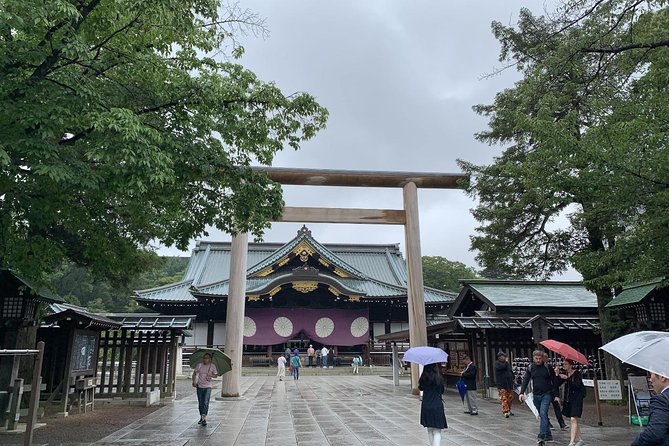
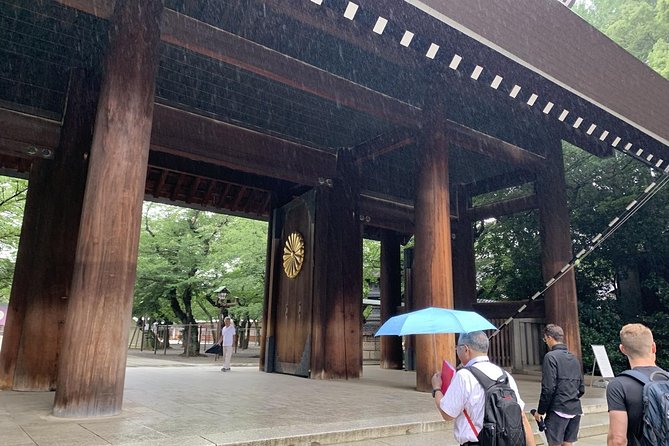
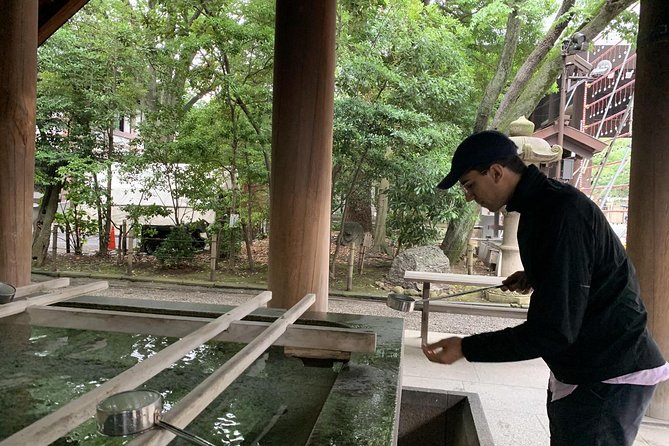
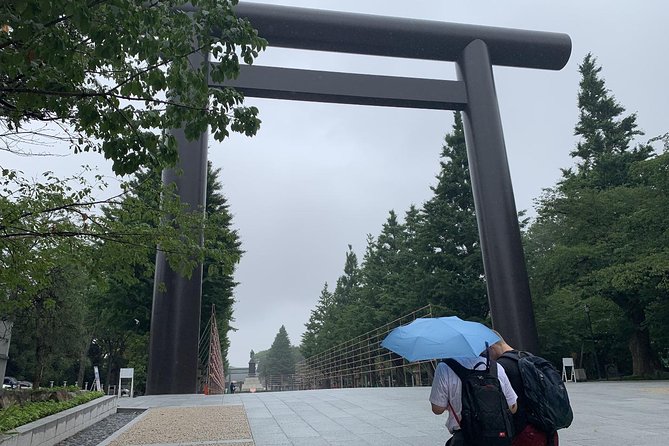
Stop one is Yasukuni Shrine, where admission is included and you spend about 30 minutes. Even before you reach the museum material, the shrine grounds set a tone: calm space, traditional architecture, and a clear sense that this place is about honoring war dead.
What’s useful here is what your guide is doing while you walk. Instead of just pointing at buildings, they’re explaining how Japan commemorates those who perished from war, including references that stretch back to the period since 1869. It’s a reminder that national remembrance doesn’t start and stop with one war.
What to watch for here
- The atmosphere is quiet. If you’re expecting a “lively attraction,” lower your volume expectations.
- Photography is allowed for photo opportunities, but you’ll still want to be respectful on memorial grounds.
Yūshūkan War Museum: military history you can see, not just read
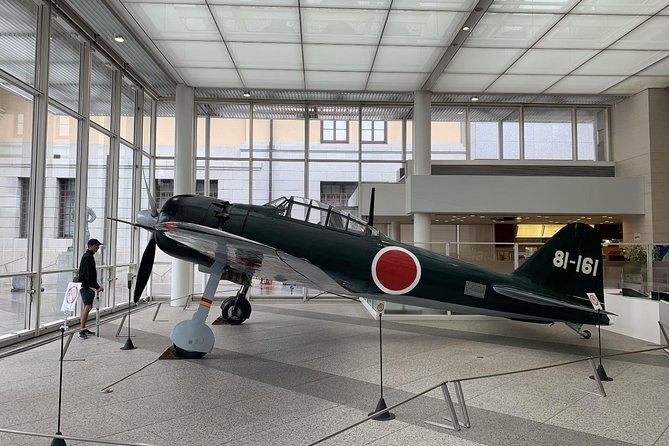
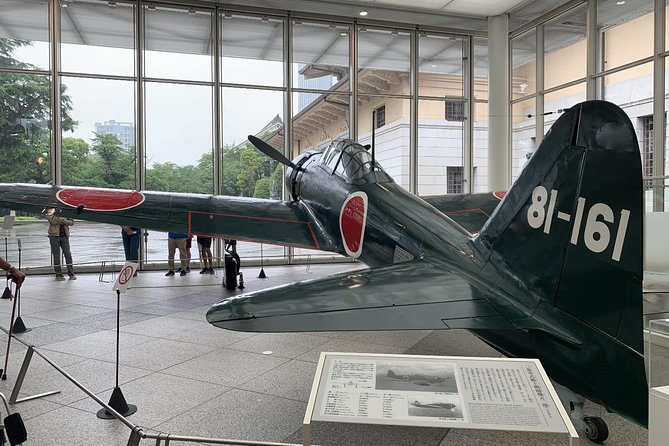
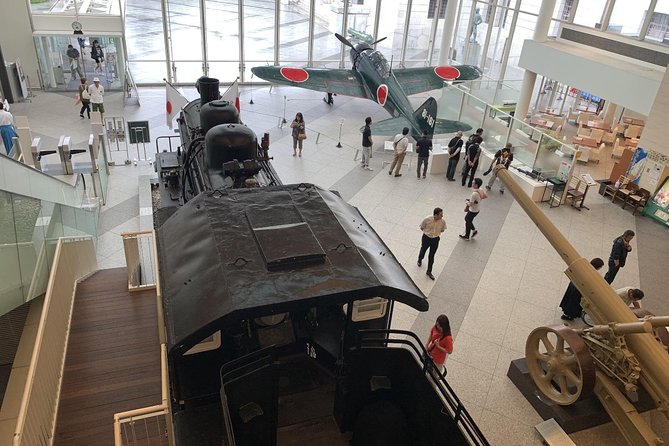
Next is Yūshūkan Museum (Yūshūkan War Museum), also on the Yasukuni grounds. You’ll spend about 1.5 hours, and admission is included.
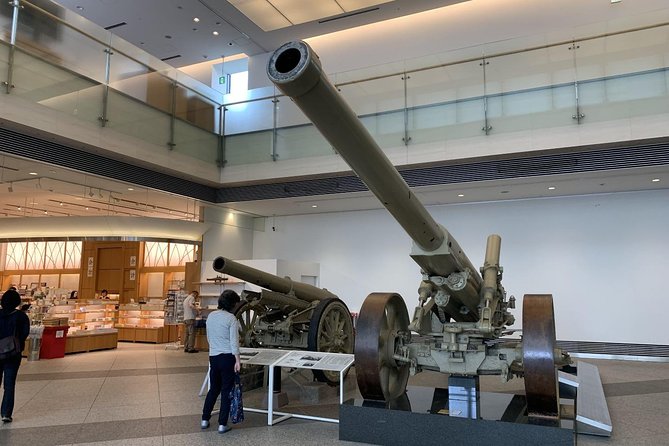
This is where the tour gets more artifact-driven. Expect exhibits made of historical items, documents, and military equipment. The value for English speakers is your guide’s role in interpreting what you’re seeing—especially because many displays can be in Japanese, and the explanations help you understand what the exhibit is trying to communicate.
I like that the museum time doesn’t become only about machines and uniforms. Your guide is also setting up the human layer behind the exhibits, including how Japanese soldiers felt and behaved during the war, and the choices that shaped their final outcomes.
- Mt Fuji and Hakone 1-Day Bus Tour Return by Bullet Train★ 5.0 · 26,383 reviews
- 1-Day Tokyo Bus Tour★ 5.0 · 14,250 reviews
- Tokyo: teamLab Planets TOKYO Digital Art Museum Entry Ticket★ 4.6 · 9,779 reviews
- Mt Fuji & Hakone Cruise, Drum Show Bullet Train 1 Day from Tokyo★ 4.0 · 7,413 reviews
- Tokyo: Shinjuku Food Tour (13 Dishes at 4 Local Eateries)★ 5.0 · 6,603 reviews
A balanced way to view this stop
Yūshūkan is a museum with a clear framing. When you go with a guide, you’re more likely to understand that framing and ask better questions about it—rather than leaving with a vague sense of conflict or confusion.
National Showa Memorial Museum (Showa-kan): the civilian experience after the guns
The final stop is the National Showa Memorial Museum, commonly called Showa-kan, with about 1 hour on-site. Admission is included.
Showa-kan shifts the tone. Instead of focusing mainly on military practice, it puts attention on the lives of Japanese civilians during and after WWII. The exhibits you’ll encounter are described in terms of personal items and photographs, which makes the story feel closer to real people rather than abstract strategy.
This matters because WWII in Tokyo can sometimes get reduced to famous events or military technology. Here, you’ll get the civilian side: the issues civilians faced, including starvation, and what happened as Japan moved through the war and into the postwar period.
The payoff for your understanding
By the time you reach Showa-kan, you’re no longer just asking what soldiers did. You start asking what the war did to ordinary life—how families coped, what scarcity meant, and what survival looked like.
Kamikaze and WWII families: what your guide explains clearly
The tour’s purpose is explicit about WWII’s hardest parts, including kamikaze (tokotai) attacks. Your history expert is there to explain why kamikaze became so prevalent, and how soldiers told their family members about their inevitable fates.
That combination—military practice plus family reality—is exactly what makes this kind of tour worth booking. It’s easy to read about kamikaze as a tactic. It’s harder to understand it as a lived experience inside families and communities.
The best thing you can do as a visitor is to keep your attention on explanation rather than debate. A good guide handles the moral weight carefully, and the route is set up to support respectful listening.
Guides make a big difference: the styles you might get
One reason this tour tends to score well is the guide. Different guides have different ways of teaching, but the common thread is that they answer questions and help you understand what you’re looking at inside museums that aren’t designed for English-only visitors.
You may be paired with guides such as Shun, Yasuhiro Suzuki, Hiro, or Izumi. In particular, I’d prioritize this tour if you like explanations that connect everyday life to the bigger history story, not just a straight lecture. One of the strongest practical benefits is interpretation inside the museums—especially where exhibits are Japanese-only.
Price and value: why $204.58 can make sense for what’s included
At $204.58 per person, this isn’t a bargain-basement museum stop. But it’s also not just a self-guided ticket purchase.
Here’s what you’re really paying for:
- A private English-speaking guide with history expertise
- Entrance fees included for Yūshūkan War Museum and Showa Memorial Museum
- Shrine stop with admission included
- Photo opportunities and guided interpretation so you’re not left translating on your own
Also, the schedule is short, which reduces “wasted day” time. Three hours can be easier to fit than a full-day historical deep dive, especially if you already have other Tokyo plans.
If you’re traveling with someone who reads Japanese or wants to self-tour museums, you might not need the guide. But if you want understanding that keeps pace with what’s on the walls, the guided format is the whole point.
Who this tour is for (and who may want to rethink it)
This tour is a good match if you:
- Want modern Japanese history with a WWII focus, centered on how Japan remembers war
- Like structured context and a human explanation while you see artifacts
- Prefer a guide to handle museum interpretation, especially when exhibits are in Japanese
It may not be ideal if you:
- Know you strongly prefer upbeat, low-emotion sightseeing
- Want a purely neutral, “nothing is framed” experience
- Get uncomfortable with topics that involve war commemoration, military ideology, and national memory
There’s also a built-in sensitivity warning: the topic can be hard for some people, and the tour is designed to keep a respectful environment. If you’re going, bring respect and an open approach.
Quick practical tips before you go
- Wear comfortable shoes. You’ll walk through shrine grounds and move between museum rooms in a short time window.
- Be ready for museum text that can be Japanese-only. That’s not a problem—your guide is part of the plan.
- Bring a calm mindset. This is the kind of tour where slowing down helps you absorb what you’re seeing.
- If you’re planning meals after, do it on your terms. Food and drinks aren’t included, so you’ll want to time a stop nearby if you get hungry.
Should you book this Modern Japanese History Tour in Tokyo?
If you want a focused, guided route through Tokyo’s WWII remembrance—Yasukuni Shrine, Yūshūkan, and Showa-kan—this tour is a strong fit. The short duration makes it workable, and the guide support turns museum exhibits into something you can actually follow, especially when signs and displays are in Japanese.
I’d book it if you’re curious about how Japan frames its modern wartime story and how civilians lived through it. I wouldn’t book it if you’re hoping for light entertainment or if you strongly dislike sensitive discussions around war and commemoration. Done with the right attitude, it’s one of the more direct ways to understand this part of Japan’s modern history.
FAQ
Where do I meet for the tour?
You meet at Kudanshita Station (1-chōme-13-19 Kudankita, Chiyoda City, Tokyo 102-0073). The tour ends back at the meeting point.
How long is the Modern Japanese History Tour?
It lasts about 3 hours.
What’s included in the price?
Included are a private English-speaking guide, photo opportunities, and entrance fees to the scheduled sites (Yūshūkan War Museum and Showa Memorial Museum). The tour also includes admission for the Yasukuni Shrine stop.
Do I need to pay for food or drinks?
No. Food and drinks are not included, and you’ll need to plan them separately.
Is the tour private?
Yes. It’s listed as a private tour/activity, so only your group participates.
Is this tour suitable for everyone?
Most travelers can participate, but the topic can be sensitive. The purpose is to inform about modern Japanese history, including WWII and how Japan commemorates war victims.
Can I get a refund if I cancel?
This experience is non-refundable and cannot be changed for any reason. If you cancel or ask for an amendment, the amount you paid will not be refunded.
More Historical Tours in Tokyo
- Tokyo: Imperial Palace and Shogun Historical Walking Tour
★ 5.0 · 2,251 reviews - Tokyo: Imperial Palace Japanese History Walking Tour
★ 4.9 · 987 reviews - Tokyo: Shinjuku Historical Walking Tour & Secret Backstreets
★ 5.0 · 530 reviews - Yanaka Walking Tour: Historic and Traditional District of Tokyo
★ 5.0 · 530 reviews - Mt. Fuji Heritage Tour: Traditional Villages, Lakes & Shrine
★ 4.5 · 509 reviews
More Tours in Tokyo
- Mt Fuji and Hakone 1-Day Bus Tour Return by Bullet Train
★ 5.0 · 26,383 reviews - 1-Day Tokyo Bus Tour
★ 5.0 · 14,250 reviews - Tokyo: Shinjuku Food Tour (13 Dishes at 4 Local Eateries)
★ 5.0 · 6,603 reviews - Tokyo Mt Fuji 5th St & Hakone Cruise Bus Tour w/Bullet Train
★ 4.4 · 5,024 reviews - Flagship 2-Hours Official Street Go-Kart Tour – Tokyo Bay Shop
★ 5.0 · 4,974 reviews
More Tour Reviews in Tokyo
- Mt Fuji and Hakone 1-Day Bus Tour Return by Bullet Train
★ 5.0 · 26,383 reviews - 1-Day Tokyo Bus Tour
★ 5.0 · 14,250 reviews - Tokyo: teamLab Planets TOKYO Digital Art Museum Entry Ticket
★ 4.6 · 9,779 reviews - Mt Fuji & Hakone Cruise, Drum Show Bullet Train 1 Day from Tokyo
★ 4.0 · 7,413 reviews - Tokyo: Shinjuku Food Tour (13 Dishes at 4 Local Eateries)
★ 5.0 · 6,603 reviews
Latest Tokyo reviews off our desk
Historical Tours, compared.
 ★ 5.0Imperial Palace and Shogun Historical Walking TourFrom $222,251 reviews
 ★ 4.9Imperial Palace Japanese History Walking TourFrom $32987 reviews
 ★ 5.0Yanaka Walking Tour: Historic and Traditional District of TokyoFrom $72530 reviews
 ★ 5.0Shinjuku Historical Walking Tour & Secret BackstreetsFrom $25530 reviews
 ★ 4.5Mt. Fuji Heritage Tour: Traditional Villages, Lakes & ShrineFrom $50509 reviews
 ★ 4.9From Tokyo: Nikko World Heritage Site Private Full-Day TripFrom $483243 reviews
 ★ 4.9The Best of Izakaya in Shinjuku Food & Cultural TourFrom $129221 reviews
 ★ 5.0Yanaka Historical Walking Tour in Tokyo’s Old TownFrom $81182 reviews
Browse the lists this tour appears in