
Reviewed · YANAKA OLD TOWN WALKS
Yanaka Walking Tour: Historic and Traditional District of Tokyo
A quiet Tokyo corner beats the skyscraper rush. The Yanaka Walking Tour takes you through old Edo-era neighborhoods, temples, and a cemetery you’ll actually remember.
I love the small-group pace and the way the guide turns street corners into stories. I also love that you get an English-speaking guide who can explain shrine vs temple customs as you go, not in a lecture hall.
One drawback to plan for: this is a lot of walking for about 3.5 hours, with time spent at the cemetery early in the route.
In This Review
- Key highlights you’ll care about
- Yanaka feels like Tokyo that never got the memo
- The 3.5-hour route: what you’ll see and why it works
- Yanaka District: your orientation in old Tokyo
- Tennoji Temple: a quiet garden and a very old date
- Yanaka Cemetery: the stop that can feel long, in a good way
- Optional tea on tatami at Gallery Okubo (bring cash if you want it)
- Optional afternoon art stops: SCAI The Bathhouse and Edokoro Alan West
- Shitamachi Customs Museum: a quick hit of everyday culture
- Nezu Jingu shrine area: trees, ponds, and azalea season vibes
- Yanaka Ginza Shopping Street: finish with snacks and old-street energy
- What the guide role actually changes (and why names matter)
- Price and value: where $72.96 makes sense
- Logistics you should plan for before you step out
- Who should book this tour, and who might want something else
- Should you book the Yanaka Walking Tour?
- FAQ
- How long is the Yanaka Walking Tour?
- What times does the tour start?
- How many people are in the group?
- Is the tea ceremony included?
- What’s included in the price?
- Where does the tour meet and end?
- Can I change my booking or cancel?
Key highlights you’ll care about
- Yanaka Cemetery: a serious, historical stop that most tourists skip, with time to slow down and look.
- Temple-and-shrine basics on the move: you’ll learn what to do (and why) as you pass the gates.
- Guides with real personality: names like Keita, Charlotte, Michiko, and Mana show up in reviews for clear English and thoughtful pacing.
- Optional culture add-ons: tea on tatami, plus art stops tied to older buildings.
- Yanaka Ginza food street finish: a simple, local way to cap the walk with snacks along Shitamachi-style streets.
- Photo included: the tour includes photos of participants, which is handy if you want a few “we were there” shots without chasing your own tripod.
Yanaka feels like Tokyo that never got the memo
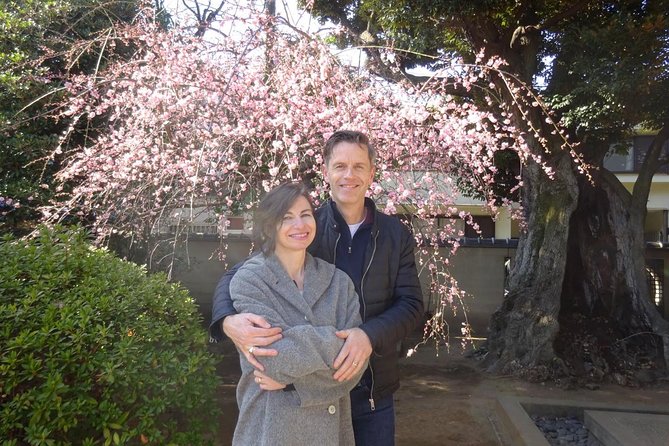
Yanaka is the part of Tokyo that reminds you the city didn’t start as glass and steel. It’s an older residential district where you can still see the smaller-scale rhythm of daily life: narrow lanes, wooden storefronts, gardens tucked behind walls, and the kind of calm that makes you lower your voice without trying.
This tour does a good job of steering you away from a generic checklist. You’re not just ticking off temples. You’re moving through a neighborhood shaped by Edo-era life, and then meeting the places where religion and family history left their marks. It’s a “mini-retreat” feel, even though you’re still in Tokyo.
The atmosphere matters because it changes how you look at everything. When your guide points out details—like why certain structures face the way they do, or how people behave at shrines—you stop treating the sights as photos and start treating them as living spaces.
More slow walks through old Yanaka
- Yanaka Walking Tour: Historic and Traditional District of Tokyo
★ 5.0 · 530 reviews - Tokyo: Old Quarter Yanaka Walking Tour
★ 4.8 · 406 reviews - Tokyo:Stroll in Old traditional culture towns~Yanaka & Nezu
★ 4.9 · 186 reviews - Yanaka Historical Walking Tour in Tokyo’s Old Town
★ 5.0 · 182 reviews
The 3.5-hour route: what you’ll see and why it works
The tour is designed as a walk that flows from Yanaka’s neighborhood core into religious sites and then back toward the shopping street. Expect a roughly 3 hours 30 minutes rhythm, with multiple short stops and a few longer pauses where it makes sense to slow down.
Here’s how the stops generally land, and what they mean for you:
Yanaka District: your orientation in old Tokyo
You start with the Yanaka district itself—time to get your bearings fast and learn how this neighborhood “reads” from street level. This is where you’ll notice the scale shift: smaller streets, older facades, and a vibe that’s very different from Tokyo’s big commercial corridors.
This opening matters. If you start with context, the rest of the tour feels less random. You’ll also be better at spotting why certain temples and shrines sit where they do.
A practical note: bring comfortable shoes early. People flag that the route involves plenty of walking, and you don’t want to pay the price for good intentions.
Tennoji Temple: a quiet garden and a very old date
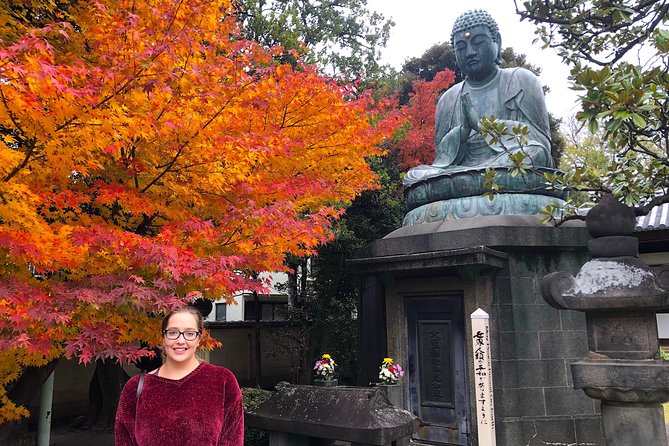
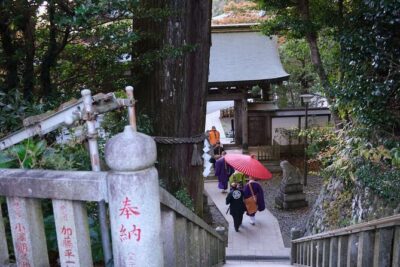
Next comes Tennoji Temple. It’s described as sitting on the edge of Yanaka Cemetery and dating back to 1274. In practice, that translates into a “place with weight” feeling—an old wooden gate, a pleasant garden approach, and a bronze Buddhist statue on the grounds.
The value here isn’t just age. It’s that the stop helps you understand the religious landscape of the district. When you see temples and cemeteries side by side, the neighborhood’s history stops being abstract.
Yanaka Cemetery: the stop that can feel long, in a good way
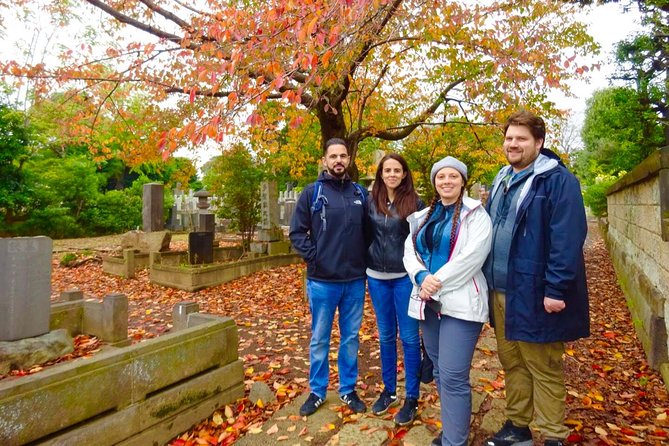
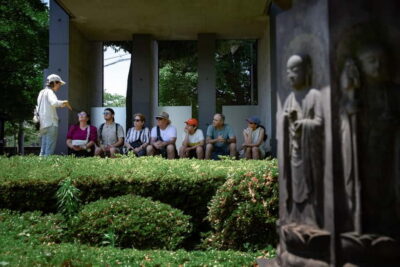
Then you reach Yanaka Cemetery, a standout stop. It covers 100,000 square meters and has over 7,000 graves. That’s a huge, solemn place—again, not a quick photo stop.
Why it’s worth it: this kind of space is central to how Japanese culture connects family, memory, and place. The tour gives you time (about 40 minutes) to look instead of rushing.
A common consideration: at least one review points out the cemetery time can feel long at the start. If you’re someone who likes high-energy sightseeing, you may want to mentally switch gears before you arrive—think slower, observe more, and let the guide’s explanations do their work.
Readers also shortlisted these Tokyo bookings:
- Tokyo Tsukiji Fish Market Food and Culture Walking Tour★ 5.0 · 3,184 reviews
- Tokyo: Imperial Palace and Shogun Historical Walking Tour★ 5.0 · 2,251 reviews
- Tokyo: Shinjuku Local Bar and Izakaya Guided Walking Tour★ 4.9 · 1,794 reviews
- Tokyo: Tsukiji Fish Market Food and Walking tour★ 5.0 · 1,724 reviews
- Tokyo: Asakusa Walking Tour with Sensoji Temple Visit★ 4.8 · 1,583 reviews
Optional tea on tatami at Gallery Okubo (bring cash if you want it)
There’s an optional stop at Gallery Okubo, and this is one of the tour’s best “hands-on” diversions. You can experience a Japanese tea ceremony on tatami mats on the second floor of the building.
The tea costs ¥1,000 and is not included in the tour price. If you like traditional rituals and want something more embodied than walking-and-looking, this is the kind of add-on that makes the tour feel personal rather than like sightseeing homework.
It’s also a nice break if your legs start bargaining with you around the 2-hour mark.
Optional afternoon art stops: SCAI The Bathhouse and Edokoro Alan West
If you’re on an afternoon tour, you may also visit SCAI The Bathhouse and Edokoro Alan West.
These stops matter for a simple reason: they show you how old Tokyo structures keep getting reused. SCAI The Bathhouse is a contemporary art gallery housed in a venerable public bath—so you’re not just seeing art, you’re seeing a building with a former life. Edokoro Alan West is described as a studio once an auto body garage, now operating as a traditional craft or workshop-like space.
If you love contrasts, you’ll likely enjoy this portion. It’s the bridge between “Edo and Meiji mood” and modern Tokyo habits of repurposing old spaces.
Shitamachi Customs Museum: a quick hit of everyday culture
Another optional add-on is Shitamachi Customs Museum & Exhibit Hall. The focus here is Shitamachi culture—the down-town Tokyo identity tied to everyday life.
The stop is set up to show objects that were actually used, which can be a refreshing change from relying only on buildings and architecture. If you’re the type who likes to understand how people lived day-to-day (food, tools, routines), this museum portion is a good use of time.
Nezu Jingu shrine area: trees, ponds, and azalea season vibes
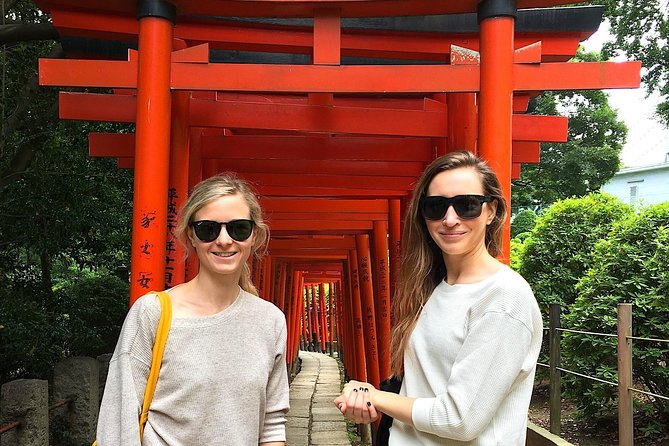
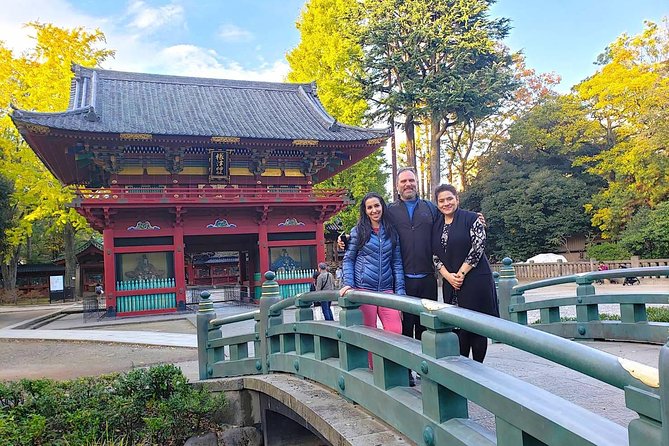
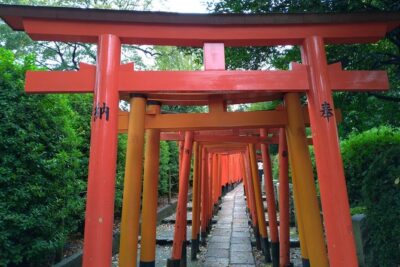
The tour includes a stop at one of Japan’s oldest shrines, surrounded by huge trees and flowering azalea (つつじ), with ponds, pathways, and iconic wooden structures.
In Yanaka, this is often associated with Nezu Jingu, and reviews mention Nezu Jingu specifically. Either way, the point is the same: you’re not just seeing a shrine facade—you’re walking through a landscaped religious space designed for pauses.
This stop is great when you want a visual mood shift. Even if you’ve seen shrines before, you’ll likely appreciate the garden setting and the scale of the trees.
Yanaka Ginza Shopping Street: finish with snacks and old-street energy
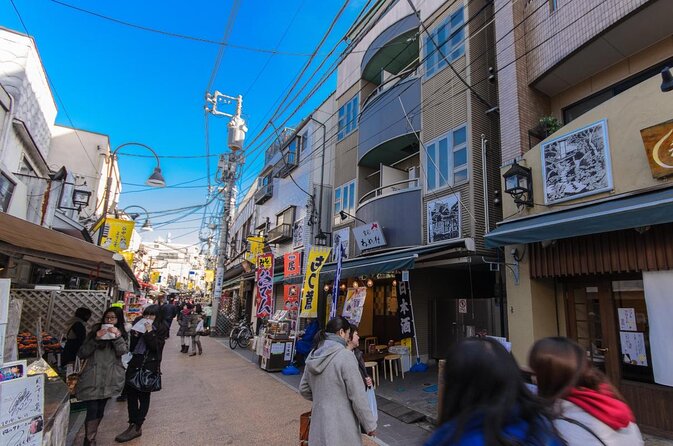
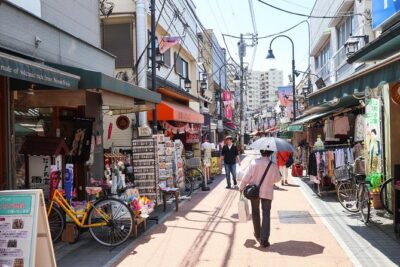
At the end, you reach Yanaka Ginza Shopping Street. This is one of the better-known local shopping streets for preserving that Shitamachi feel, and it’s where you can snack your way through the day.
The tour gives you about 30 minutes here, which is enough time to grab something small, cool off if you need to, and wander without pressure. Since food and drinks aren’t included, you’re free to choose what fits your taste and budget.
What the guide role actually changes (and why names matter)
A good walking tour doesn’t just recite facts. It tells you how to look. This tour’s biggest strength is the guide experience—real humans with different personalities, but with a shared skill: turning the district into a narrative you can follow.
Reviews repeatedly mention guides like Keita and Charlotte for being friendly and very engaged, with clear English. Others highlight Michiko for knowing Yanaka well and helping with how to navigate trains and stations. People also praise Mana for answering many questions and helping interpret what locals might do in and around older buildings.
There’s also a practical angle. One review notes a guide came prepared on a hot day with bug spray and cooling spray, plus patient time for shopping. That matters because it changes how your day feels in heat, rain, or when you need a short pause.
If you go in expecting a gentle stroll with context, this tour usually delivers. If you want a rigid, silent march, you might find it too conversational. Most people seem to love the back-and-forth.
Price and value: where $72.96 makes sense
At $72.96 per person, you’re paying for a guided group walk with multiple included stops. The price covers the English-speaking guide and all fees/taxes, plus photos of tour participants.
Food and drinks are not included, so factor in a snack budget for Yanaka Ginza. Also, hotel pickup/drop-off isn’t included (though it’s available for an additional fee), so you’ll likely handle your own trip to the meeting point.
So is it good value? For me, yes—because the tour doesn’t just “show” places. It gives you time in a cemetery, explains how temples and shrines work, and includes optional culture stops that can be genuinely memorable (like tea on tatami). If you’re only in Tokyo briefly, this is an efficient way to get a more human Tokyo experience than the usual headline temples.
The small-group size also boosts value. A group capped at 8 on the tour (and listed with a max of 10 per booking) means less standing around. You’re more likely to hear the guide clearly and to ask questions.
Logistics you should plan for before you step out

This tour starts from Nippori Station (2 Chome-19 Nishinippori, Arakawa City, Tokyo 116-0013). It ends back at the same meeting point, which helps you avoid the end-of-tour scramble.
You can pick a 9:00 am or 14:00 pm start time, and you should inform the operator of your start time when booking. Duration is listed as about 3 hours 30 minutes, with an option to extend by ¥3,000 per group per hour payable in cash.
Weather matters in Tokyo. One review mentions the tour was memorable even in rain, which suggests the guides keep the day moving. Still, if you hate wet pavement and long umbrella battles, aim for a more comfortable weather window.
Heat is another real factor. At least one review praises a guide who handled extreme heat carefully, making additional air-conditioned stops. If you’re visiting in hot months, pack a small water plan and consider bug spray—some guides bring it, but you shouldn’t rely on that.
Who should book this tour, and who might want something else
This tour is ideal if you want:
- A slower, older-feeling side of Tokyo with real neighborhoods
- A temple/shrine day that includes practical customs (not just sightseeing)
- Time in Yanaka Cemetery and a Shitamachi-style shopping finish
- A guide-driven experience where you can ask questions
It may be less ideal if you:
- Want an action-heavy itinerary with minimal walking
- Prefer only famous, high-traffic sights and don’t want quieter spaces
- Struggle with long, solemn environments early in the day (that cemetery stop is a strong first anchor)
If you’re in Tokyo for the first time, this can also work as a grounding day. It helps you understand how people live around the religion-and-memory landmarks, so later visits feel more meaningful.
Should you book the Yanaka Walking Tour?
If you want a Tokyo day that feels like a neighborhood, not a theme park, I’d say yes. The tour’s standout strength is the combination of small-group walking, English guide storytelling, and time spent in places most visitors rush past—especially Yanaka Cemetery.
I’d book it if you’re comfortable with steady walking and you like cultural context. I’d think twice if you’re chasing maximum “wow” per minute, because this is more about atmosphere, explanations, and respectful looking than fast photo hopping.
If you do book, make it easy on yourself: wear good shoes, bring water, and come ready to ask questions. That’s where this tour tends to shine.
FAQ
How long is the Yanaka Walking Tour?
The tour duration is listed as approximately 3 hours 30 minutes.
What times does the tour start?
Start times are listed as 9:00 am or 14:00 pm. You’re asked to inform the operator of your starting time when booking.
How many people are in the group?
The tour lists a maximum of 10 people per booking and also notes a maximum of 8 travelers on the activity.
Is the tea ceremony included?
An optional tea ceremony at Gallery Okubo is offered, but the tea (¥1,000) is not included in the tour cost.
What’s included in the price?
The tour includes an English-speaking guide, all fees and taxes, and photos of tour participants. Food and drinks are not included.
Where does the tour meet and end?
It starts at Nippori Station (2 Chome-19 Nishinippori, Arakawa City, Tokyo 116-0013) and ends back at the meeting point.
Can I change my booking or cancel?
Free cancellation is available up to 24 hours in advance of the experience for a full refund. Changes made less than 24 hours before the experience start time are not accepted.
More Tours in Tokyo
- Mt Fuji and Hakone 1-Day Bus Tour Return by Bullet Train
★ 5.0 · 26,383 reviews - 1-Day Tokyo Bus Tour
★ 5.0 · 14,250 reviews - Tokyo: Shinjuku Food Tour (13 Dishes at 4 Local Eateries)
★ 5.0 · 6,603 reviews - Tokyo Mt Fuji 5th St & Hakone Cruise Bus Tour w/Bullet Train
★ 4.4 · 5,024 reviews - Flagship 2-Hours Official Street Go-Kart Tour – Tokyo Bay Shop
★ 5.0 · 4,974 reviews
More Tour Reviews in Tokyo
- Mt Fuji and Hakone 1-Day Bus Tour Return by Bullet Train
★ 5.0 · 26,383 reviews - 1-Day Tokyo Bus Tour
★ 5.0 · 14,250 reviews - Tokyo: teamLab Planets TOKYO Digital Art Museum Entry Ticket
★ 4.6 · 9,779 reviews - Mt Fuji & Hakone Cruise, Drum Show Bullet Train 1 Day from Tokyo
★ 4.0 · 7,413 reviews - Tokyo: Shinjuku Food Tour (13 Dishes at 4 Local Eateries)
★ 5.0 · 6,603 reviews
More Old Yanaka on Foot
- The Old Quarter of Tokyo – Yanaka Walking Tour
★ 4.5 · 590 reviews - Tokyo: Old Quarter Yanaka Walking Tour
★ 4.8 · 406 reviews - Tokyo:Stroll in Old traditional culture towns~Yanaka & Nezu
★ 4.9 · 186 reviews - Yanaka Historical Walking Tour in Tokyo’s Old Town
★ 5.0 · 182 reviews - Private Home Cooking in Yanaka – Local Flavors in a Warm Setting
★ 5.0 · 173 reviews
Latest Tokyo reviews off our desk




Yanaka Old Town Walks, compared.
 ★ 4.5The Old Quarter of Tokyo – Yanaka Walking TourFrom $40590 reviews
 ★ 4.8Old Quarter Yanaka Walking TourFrom $32406 reviews
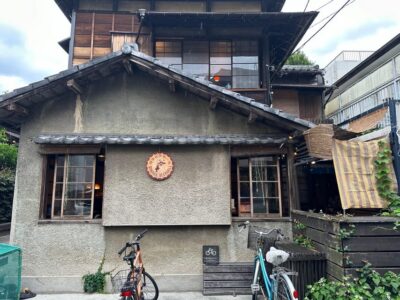 ★ 4.9Stroll in Old traditional culture towns~Yanaka & NezuFrom $29186 reviews
 ★ 5.0Yanaka Historical Walking Tour in Tokyo’s Old TownFrom $81182 reviews
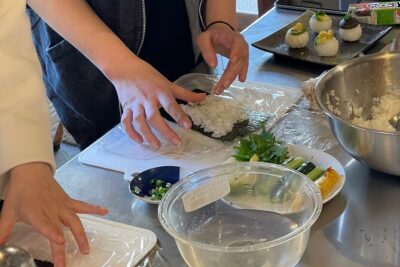 ★ 5.0Private Home Cooking in Yanaka – Local Flavors in a Warm SettingFrom $122173 reviews
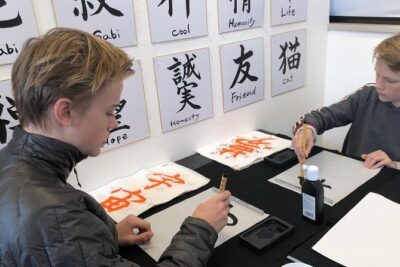 ★ 5.0Let’s experience calligraphy in YANAKA, Taito-ku, TOKYO !!From $75127 reviews
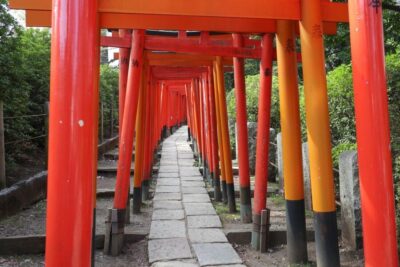 ★ 4.8Yanaka District: Historical Walking Tour in Tokyo’s Old TownFrom $79117 reviews
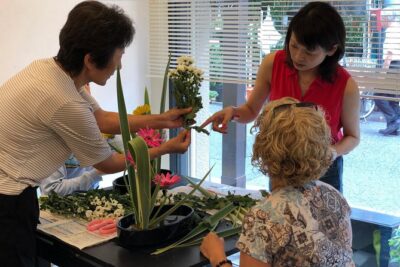 ★ 5.0Discover the Art of Ikebana in Tokyo’s Historic Yanaka DistrictFrom $10860 reviews
Browse the lists this tour appears in