
Reviewed · MOUNT FUJI TOURS
Mt. Fuji Aokigahara Jukai Forest Private Tour with Licensed Guide
Lava caves under Mt. Fuji sound like science fiction. This private route takes you into Aokigahara Jukai Forest, the old-growth Sea of Trees, plus several nearby cave stops tied to Mt. Fuji’s volcanic past.
I really like how this tour is built around a government licensed English-speaking guide. In the feedback, guides like Masako stood out for being genuinely knowledgeable and for adjusting the plan to your pace so you can spend your time where it counts.
One thing to plan around: not everything always works out the same way. Seasonal closures (like Saiko Bat Cave) and safety limits (like Dragon Cave entry) can change what you’re able to see, and traffic may prevent every planned stop.
In This Review
- Key highlights before you go
- Why Aokigahara Jukai feels different under your feet
- The real value of a licensed English guide on this route
- Saiko Bat Cave and the lava-tube world
- Dragon Cave: sacred Mt. Fuji worship, with a safety catch
- Koyodai Observatory: three lakes at once
- Narusawa Ice Cave: classic volcanic cold, 1150 years old
- Tokai Nature Trail segment: a break without committing to hours
- Fugaku Wind Cave: the 3°C chill effect
- Time management: how a 6-hour private tour stays realistic
- Price and what you’re actually paying for ($155.38)
- What to do before you meet your guide at Kawaguchiko Station
- Should you book this Aokigahara Jukai private tour?
- FAQ
- FAQ
- How long is the tour?
- Where does the tour start and end?
- How much does the tour cost?
- Is this tour private?
- What’s included in the price?
- What’s not included?
- Are there entrance fees at every stop?
- Is the Dragon Cave accessible?
- Is Saiko Bat Cave open year-round?
- What happens if the weather is bad?
Key highlights before you go
- Licensed local English guide with a Japanese culture/history interpreter credential
- Private 6-hour plan that can flex to your interests and timing
- Lava-tube sights across the Mt. Fuji foothills, including caves with recorded temperatures
- Lake panoramas from Koyodai with views of Saiko, Shojiko, and Motosuko
- Season- and safety-dependent cave access (bat cave hours vary; some cave areas close for rock-fall risk)
- Admission is a mix: some sites are free, some require tickets you pay separately
Why Aokigahara Jukai feels different under your feet
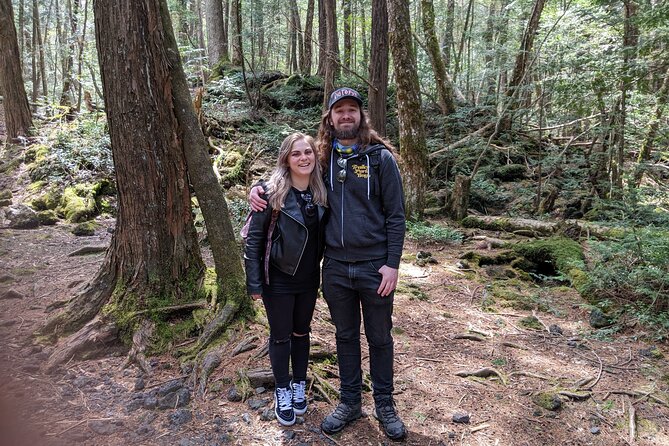
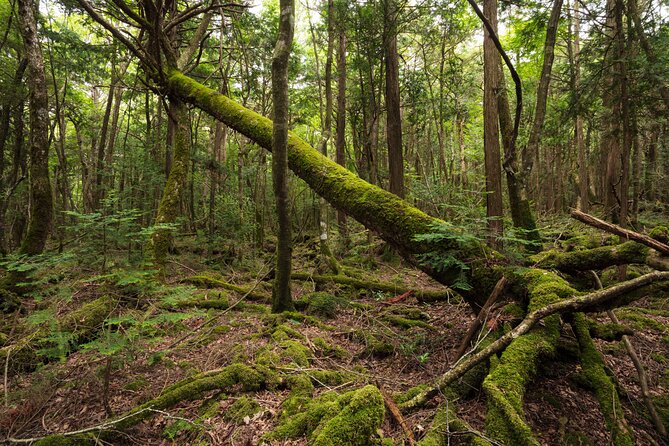
Aokigahara Jukai is described as primeval forest that began growing about 1,200 years ago. It sits on the foothills of Mt. Fuji, and the area’s shape and atmosphere come from its volcanic roots. Sea of Trees is a nickname many people use for this place, but you’ll feel the idea quickly once you’re among the trees and moss—sunlight filters down in a way that makes the whole forest feel hushed and old.
What makes the experience click is that it’s not only “pretty nature.” This area is also a network of lava flows. Over time, lava tubes and cave systems formed in those flows, giving you a chance to see geology up close. And because the region is also connected to groundwater sources (the information here notes caves with fresh water fed by snowmelt from Mt. Fuji), you get a sense that the forest has its own ecosystem story, not just a scenic one.
More Fuji day trips our readers rated highly
- Mt Fuji Area Private Guided Tours in English-Nature up close, quiet, personal
★ 5.0 · 288 reviews - Explore Mt. Fuji Ice Cave in Aokigahara Forest
★ 5.0 · 243 reviews - Ramen Cooking Class at Ramen Factory in Mt.Fuji
★ 5.0 · 101 reviews - Early Morning Kayaking With Views of Mt Fuji at Lake Kawaguchiko
★ 5.0 · 69 reviews
The real value of a licensed English guide on this route
Most people can walk around on their own. The difference on this tour is the guide. The guide here is described as English speaking and licensed with a Japanese government interpreter credential tied to Japanese culture and history. That matters because the caves and sacred sites around Mt. Fuji aren’t just “cool to photograph.” They come with context—religion, local beliefs, and why certain places were important during eras like the Edo period.
It also matters for flow. In the feedback, Masako was praised for being flexible—adapting the route to preferences and helping visitors find lesser-crowded spots. You still have a structure (six hours, several stops), but you aren’t stuck rigidly following a script that ignores what you actually care about: more views, more cave time, or a calmer pace through the forest.
And since this is a private tour, it’s easier to ask questions in plain language. Instead of guessing what you’re looking at, you get explanations while you’re standing there.
Saiko Bat Cave and the lava-tube world
The first cave stop in this plan is Saiko Bat Cave (西湖コウモ리穴), located at the southwest side of Lake Saiko. This is a lava tube that stretches more than 350 meters, and it’s noted as the largest of several lava tubes in the Aokigahara Jukai Forest area. In short: it’s a legit size cave, not a tiny showpiece corridor.
There’s an important practical detail—it’s seasonal. The cave is listed as open from Mar 20 to Nov 30 in 2025 (and that could vary). Closed in winter months means you should treat your dates seriously. If you’re traveling outside that window, you might miss this stop or have it swapped.
Time-wise, you’ll have about 30 minutes. Admission ticket is noted as not included, so budget a separate fee. The upside is that the cave experience adds variety right away, moving you from forest atmosphere into a volcanic interior world.
Next comes Saiko Minshuku Village (西湖民宿村). This is essentially a cluster of old-fashioned guesthouses. It’s not a long detour just for the sake of scenery. It gives you that “small neighborhood by the lakes” feel, where the Mt. Fuji setting isn’t only about big photo viewpoints. It’s a more local pace before the next cave stop.
Dragon Cave: sacred Mt. Fuji worship, with a safety catch
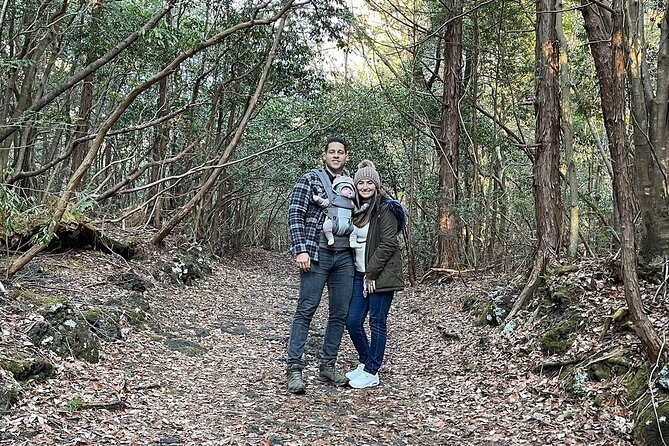
Dragon Cave (龍宮洞穴) is tied to sacred Mt. Fuji worship during the Edo period. The notes here say it’s a nationally designated natural monument and that it was believed to house a god of water, with rituals for rain in times of drought. That’s exactly the kind of context a good guide can translate into something meaningful—because you can read the signs later, but it helps to understand why people cared about this particular cave.
Here’s the catch: entry is prohibited due to danger of falling rocks. That means this can be more of a viewpoint/area stop than the full “walk inside the cave” experience. You’ll still get time (about 30 minutes) but not full access.
This is why I like booking with a licensed guide. When access changes, you still want someone to explain what you can and can’t do, and what that means. You don’t want to show up, hear it’s closed, and then scramble for an alternate plan on the spot.
Koyodai Observatory: three lakes at once
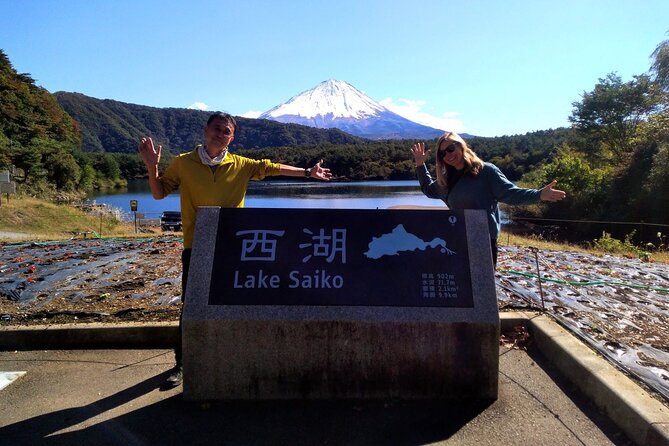
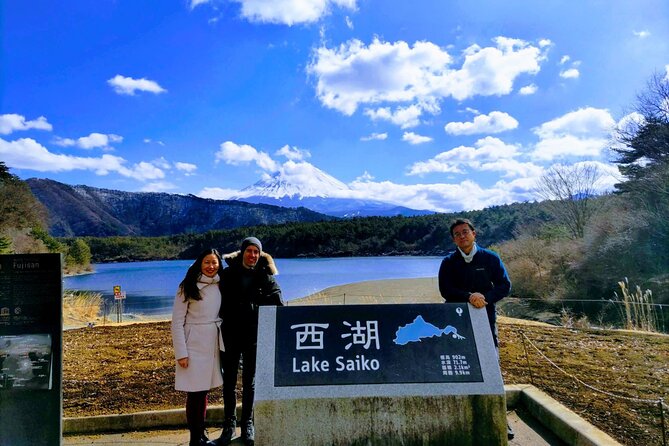
Koyodai Observatory has a simple promise: see three lakes from one spot—Lake Saiko, Lake Shojiko, and Lake Motosuko. The information also notes it’s on the way of the Tokai Nature Trail, and it has a spacious rest area. Even if you’re not a hardcore hiker, it’s a great break in the middle of a cave-and-forest day.
You’ll get about 1 hour here, and it’s free (no admission ticket required). This is one of those stops where the value isn’t only the view. It’s the pacing. After enclosed cave time, you get open air and a chance to reset.
If you’re the type who likes photos, this is where you’ll feel glad you came. If you don’t care about photos, it still works because the pause matters. A good view stop helps the rest of the day feel less rushed.
Readers also shortlisted these Fujikawaguchiko machi bookings:
- Private guided hidden gems tour by local English speaking driver★ 5.0 · 142 reviews
- Mt. Fuji Five Lakes Area Private Tour with Licensed Guide(Kawaguchiko area Dep)★ 5.0 · 55 reviews
- Cute & Fun E-Car tour following guide around Lake Kawaguchiko★ 5.0 · 54 reviews
- Hidden Fuji drive tour with a Local English speaking guide★ 5.0 · 43 reviews
- Mt Fuji Area: In-depth Guided Adventure in English or French★ 5.0 · 27 reviews
Narusawa Ice Cave: classic volcanic cold, 1150 years old
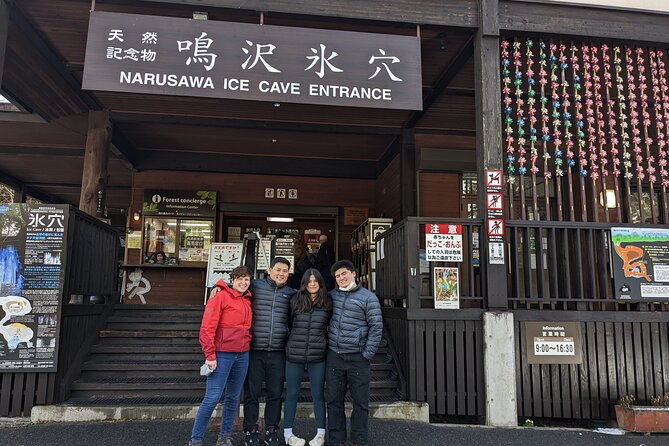
Narusawa Ice Cave (鳴沢氷穴) is one of those places that makes you stop and think about time in a different way. The notes here say it’s a typical lava cave at the foot of Mt. Fuji. The cave formation is tied to an eruption roughly 1,150 years ago (year 6 of the Jogan era). Lava flowed between ancient parasitic volcanoes, creating a two-tunnel-type cave system.
It was introduced to the world as a geological wonder after being designated a natural monument in 1929. That’s a nice reminder that this isn’t a “local secret only” kind of cave. It has formal recognition.
The part you’ll notice most during your visit is the cold. It’s a cool, ice-related cave, and the notes add that the tree-type lava bed is said to have the most spiracles in the world. That’s the kind of odd-sounding detail that often makes a cave more interesting when a guide explains how air movement and rock structure can create cold conditions.
Time is about 30 minutes, and admission isn’t included. So—save your cash or card for the entrance fee.
Tokai Nature Trail segment: a break without committing to hours
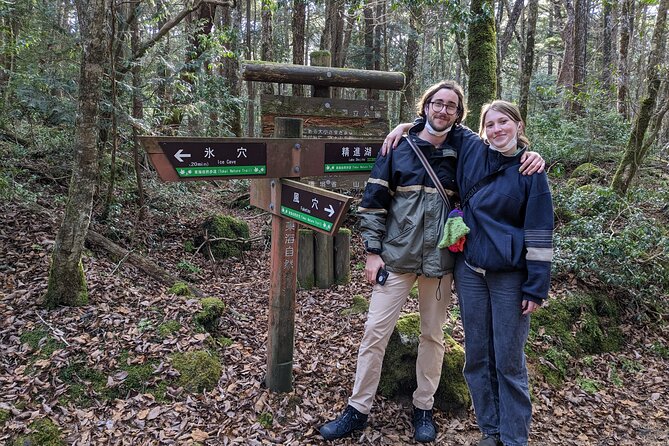
Later in the route, you’ll get a short stop at Koyodai again, then some time along the Tokai Nature Trail (東海自然歩道). The trail is described as a long-distance walkway that runs from Meiji no Mori Takao Quasi-National Park in Tokyo to Meiji no Mori Minō Quasi-National Park in Osaka Prefecture, crossing 11 prefectures and covering 1,697 kilometers.
Now, don’t worry if you don’t plan to hike the whole thing. The tour gives you about 30 minutes at no admission fee. That’s enough time to feel like you’re part of something bigger than a single photo spot, without having to decide your whole vacation around shoes, blisters, and willpower.
This is also where you can catch a calmer mood in the day—less “ticket line, cave, done,” more “pause, walk a little, look around.”
Fugaku Wind Cave: the 3°C chill effect
Fugaku Wind Cave (富岳風穴) is described as one of the biggest caves around the Mt. Fuji area. The standout detail is temperature: it’s said to be pleasantly cool even in summer, with an average temperature of 3℃. You can also see ice pillars made every year.
The notes say the cave used to be used as a refrigerator to store silkworm eggs up until about 100 years ago. That’s a great example of how people used local natural systems before modern refrigeration—so when you’re in the cold air, it’s not just a novelty. It’s part of a longer human story.
Like the other caves, time is about 30 minutes and the admission ticket isn’t included. The cave is also described as a lateral type cave that tourist can easily walk through, which usually means you can experience it without needing special climbing or scrambling.
If you only remember one practical tip: wear or bring an extra layer. Even if the weather outside is warm, inside the cave is cold by design.
Time management: how a 6-hour private tour stays realistic
This tour is scheduled for about 6 hours from pickup to drop-off. The key word here is approximate. Cave stops, parking, and traffic can shift the plan. The notes even warn that depending on traffic, you may not be able to visit all planned sites.
That’s not a deal-break; it’s just reality in the Fuji area. I suggest you decide in advance what you care about most:
- If caves are your main goal, prioritize Narusawa Ice Cave and Fugaku Wind Cave.
- If you want broader views, protect time for Koyodai Observatory.
- If your dates fall in the bat cave’s open season, Saiko Bat Cave becomes a big bonus.
Because it’s private, you’re in a better position to ask for adjustments on the fly. This is where a flexible, licensed guide earns their keep.
Price and what you’re actually paying for ($155.38)
At $155.38 per person, this doesn’t look like a bargain bus tour. But you’re also not buying just tickets and driving. You’re paying for a licensed English-speaking guide, a private experience (only your group participates), and a structured day that hits multiple cave-and-view stops in a single block of time.
Included:
- Licensed local English speaking guide
- Meet-up with the guide on foot at Kawaguchiko Station
Not included:
- Transportation fees
- Entrance fees
- Lunch and other personal expenses
- Private vehicle
That mix changes the true cost. Your final total depends mostly on which caves have ticket fees on your exact day. Some stops are listed as free (like Dragon Cave entry is free but entry is prohibited; Koyodai Observatory stops are free), while others explicitly say admission isn’t included (Saiko Bat Cave, Narusawa Ice Cave, Fugaku Wind Cave).
So here’s how I see the value: if you want more than one cave, plus Mt. Fuji-area stops, and you’d rather not coordinate transit and translations yourself for six hours, this price starts to make sense. If you’re traveling as a group and comfortable using local transport plus reading signage, it may feel more like you’re paying for convenience and interpretation.
What to do before you meet your guide at Kawaguchiko Station
Your meet-up point is Kawaguchiko Station, with the guide meeting you on foot there. The tour ends back at the meeting point.
Because admission fees for some stops aren’t included, I recommend you keep a little extra money set aside for cave entrances. And because this is a weather-dependent experience, keep your plans flexible—cool cave temperatures and forest conditions are part of the experience, but the route can still be affected when conditions aren’t good.
One more useful note: confirmation is received at booking, and there’s a mobile ticket element. That’s helpful when you’re moving quickly between sites.
Should you book this Aokigahara Jukai private tour?
Book it if you want a guided day that connects Mt. Fuji’s volcanic geology with the meaning of sacred sites and local culture, and you’d rather spend your energy looking at caves and views than planning routes and translation.
Skip it (or adjust expectations) if you’re visiting in a bat cave off-season window, or if you’re only interested in one single highlight. Dragon Cave entry can also be restricted due to rock-fall danger, so you should be okay with the idea that “seeing” might mean observing from safe areas rather than going inside.
If your goal is a smooth, English-friendly, 6-hour mix of forest atmosphere, cave interiors, and lake viewpoints, this is a strong way to spend time around Kawaguchiko.
FAQ
FAQ
How long is the tour?
It’s scheduled for about 6 hours, from pickup to drop-off. The exact time can shift depending on traffic.
Where does the tour start and end?
The meeting point is Kawaguchiko Station, and the tour ends back at the same meeting point.
How much does the tour cost?
The price is $155.38 per person.
Is this tour private?
Yes. It’s a private tour/activity, and only your group participates.
What’s included in the price?
A licensed local English-speaking guide and meeting the guide on foot at Kawaguchiko Station are included.
What’s not included?
Transportation fees, entrance fees, lunch, and other personal expenses are not included. A private vehicle is also not included.
Are there entrance fees at every stop?
No. Some stops are listed as free, while others say admission tickets are not included (for example, Saiko Bat Cave, Narusawa Ice Cave, and Fugaku Wind Cave).
Is the Dragon Cave accessible?
Entry is prohibited due to danger of falling rocks, even though it’s a planned stop and listed as free.
Is Saiko Bat Cave open year-round?
No. It’s listed as open Mar 20 to Nov 30 in 2025 (with possible variation). It’s closed in winter months.
What happens if the weather is bad?
This experience requires good weather. If it’s canceled due to poor weather, you’ll be offered a different date or a full refund.
More Tours in Fujikawaguchiko machi
- Mt Fuji Area Private Guided Tours in English-Nature up close, quiet, personal
★ 5.0 · 288 reviews - Private guided hidden gems tour by local English speaking driver
★ 5.0 · 142 reviews - Mt. Fuji Five Lakes Area Private Tour with Licensed Guide(Kawaguchiko area Dep)
★ 5.0 · 55 reviews - Cute & Fun E-Car tour following guide around Lake Kawaguchiko
★ 5.0 · 54 reviews - Hidden Fuji drive tour with a Local English speaking guide
★ 5.0 · 43 reviews
More Tour Reviews in Fujikawaguchiko machi
- Mt Fuji Area Private Guided Tours in English-Nature up close, quiet, personal
★ 5.0 · 288 reviews - Explore Mt. Fuji Ice Cave in Aokigahara Forest
★ 5.0 · 243 reviews - Private guided hidden gems tour by local English speaking driver
★ 5.0 · 142 reviews - Ramen Cooking Class at Ramen Factory in Mt.Fuji
★ 5.0 · 101 reviews - Early Morning Kayaking With Views of Mt Fuji at Lake Kawaguchiko
★ 5.0 · 69 reviews
More Mount Fuji Days We Have Reviewed
- Mt Fuji Area Private Guided Tours in English-Nature up close, quiet, personal
★ 5.0 · 288 reviews - Explore Mt. Fuji Ice Cave in Aokigahara Forest
★ 5.0 · 243 reviews - Ramen Cooking Class at Ramen Factory in Mt.Fuji
★ 5.0 · 101 reviews - Early Morning Kayaking With Views of Mt Fuji at Lake Kawaguchiko
★ 5.0 · 69 reviews - Johnny’s Exclusive: Mt. Fuji Adventure from Kawaguchiko
★ 5.0 · 62 reviews
Latest Fujikawaguchiko machi reviews off our desk

Mount Fuji Tours, compared.
 ★ 5.0Mt Fuji and Hakone 1-Day Bus Tour Return by Bullet TrainFrom $16326,383 reviews
 ★ 4.0Mt Fuji & Hakone Cruise, Drum Show Bullet Train 1 Day from TokyoFrom $1497,413 reviews
 ★ 4.4Tokyo Mt Fuji 5th St & Hakone Cruise Bus Tour w/Bullet TrainFrom $1545,024 reviews
 ★ 4.5From Tokyo: Mount Fuji Full-Day Sightseeing TripFrom $684,970 reviews
 ★ 4.7Mt. Fuji Tour, Hakone Ropeway, Owakudani, Lake AshiFrom $544,002 reviews
 ★ 4.4Mt.Fuji,Kawaguchiko Oishi Park,Arakurayama Sengen ParkFrom $542,682 reviews
 ★ 4.2Mt. Fuji 5th Station & Hakone Cruise 1-Day Bus TourFrom $1292,381 reviews
 ★ 4.7Mt Fuji Top 5 Spots Day Tour: Arakurayama Park,Oshino HakkaiFrom $532,066 reviews