
Reviewed · WORKSHOPS
A class on Making Hoto, Yamanashi’s Traditional Dish
Thick noodles, cozy tatami, zero stress. This Hoto class in Fujikawaguchiko is interesting because you learn how Yamanashi-style noodles are cooked in a miso-based soup, not just boiled like plain noodles. I especially loved the hands-on rhythm of mixing and kneading the dough and the payoff of getting your own bowl in the end.
One more thing I liked: the way the class explains how texture works. You use wheat flour and water for the dough, potato starch to thicken the soup, and then you cook the noodles with ingredients so the broth thickens without extra salt.
The only possible drawback is simple: with about 2 hours, you’ll focus on making one satisfying meal, not stretching the experience into a long dinner.
In This Review
- Key highlights you should care about
- Why Hoto Near Lake Kawaguchi Feels Different Than Udon
- Getting There: Fujikawaguchiko Meeting Point With Easy Access
- The 2-Hour Class Flow: Knead, Cut, Simmer, Eat
- 1) Dough time: flour and water, then even moisture
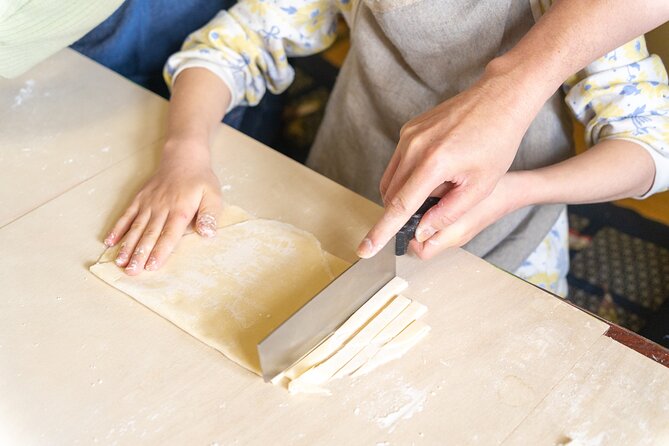
- 2) Roll and slice: thick, rustic Hoto noodles
- 3) Cook in miso vegetable broth: thick and hearty without extra fuss
- 4) Tatami-room meal: eat what you made
- What Makes the Broth Special: Koshu Miso, Vegetables, and Thickening Technique
- Staff, Language, and Food Options That Actually Matter
- Price and Value: What $26 Buys You (Besides a Full Belly)
- Optional Extras: Turn Your Noodle Class Into a Yamanashi Craft Day
- Who Should Book This Hoto-Making Class
- Should You Book Japanese Cooking Class FUJIYA for Hoto?
- FAQ
- How long is the Hoto-making class?
- How much does it cost?
- Where is the meeting point?
- Is the class beginner-friendly?
- Is there English support?
- Can dietary needs be accommodated?
Key highlights you should care about
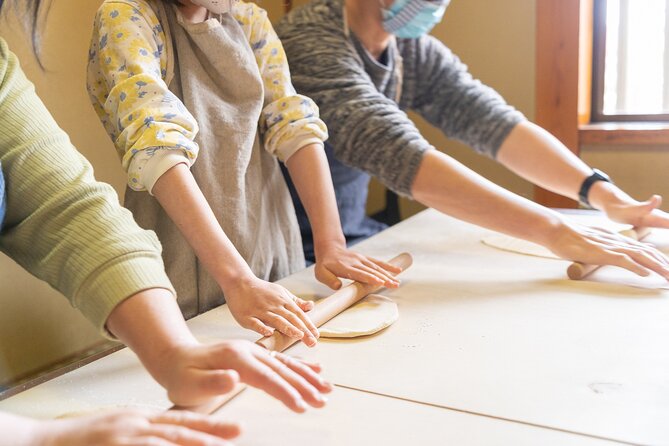
- You knead and cut thick Hoto noodles by hand, so the food feels earned
- Potato starch helps thicken the miso broth, which is the technique behind Hoto’s comfort texture
- Cooking the noodles with the ingredients changes the whole outcome versus boiled noodles
- English-speaking staff guide you step-by-step, so you’re not stuck playing kitchen guesswork
- Tatami-room meal after cooking, indoors and easy to fit into a Mt. Fuji day
- Optional extras like indigo dyeing or dessert classes if you want more than noodles
Why Hoto Near Lake Kawaguchi Feels Different Than Udon
If you only know udon, Hoto will surprise you in a good way. Udon usually means thick wheat noodles in broth or sauce, cooked like a fairly straightforward noodle dish. Hoto, from Yamanashi, is built around the idea that the soup thickens as the noodles cook with the ingredients. The result is warmer, heartier, and more stew-like.
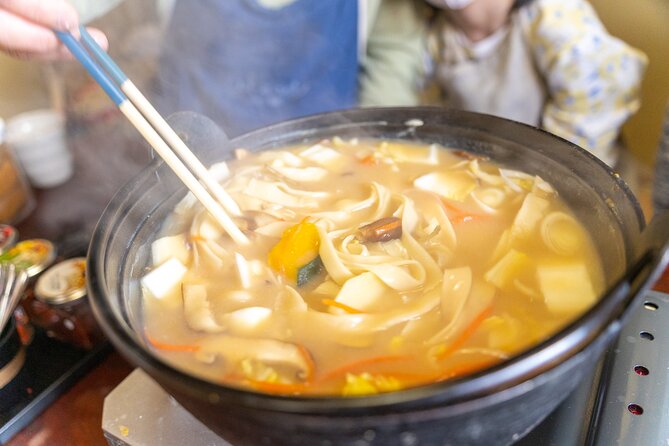
In class, you start from the ground up with flour and water to make the dough. Then you learn the role of potato starch for thickening the soup, which helps explain why Hoto tastes comforting even when the broth is primarily miso-based. Traditional Yamanashi Hoto is often described as using Koshu miso (a local style of miso), plus vegetables such as pumpkin and mushrooms. You’ll be working with the class version of that formula, and the technique is the star.
What you’ll like most is how “simple” becomes smart cooking. The class makes it clear that Hoto’s thick consistency comes from method, not from complicated steps or strange ingredients. And because the broth is miso-based, it avoids the need to add extra salt during the thickening stage. That’s a practical lesson you can use later at home with other thick soups.
Readers also shortlisted these Fujikawaguchiko machi bookings:
- Ramen Cooking Class at Ramen Factory in Mt.Fuji
★ 5.0 · 101 reviews - Ramen Cooking Class at Lake Kawaguchiko (Short Course)
★ 5.0 · 42 reviews - Sushi Cooking Class at Sushi Factory -KIWAMI- Mt.Fuji
★ 5.0 · 23 reviews - Fujisan Sushi Making Lesson
★ 5.0 · 16 reviews
Getting There: Fujikawaguchiko Meeting Point With Easy Access
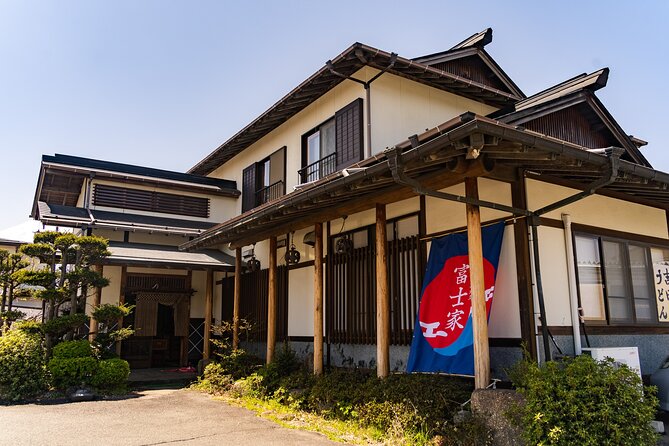
This experience takes place in Fujikawaguchiko-machi, near Lake Kawaguchi and Mt. Fuji. Your start point is at 3376-3 Funatsu, Fujikawaguchiko, Minamitsuru District, Yamanashi 401-0301, Japan, and the class ends back where you meet.
It’s also a nice setup for travel days because it’s near public transportation, and you’ll receive a mobile ticket. That matters more than it sounds when you’re juggling transit and weather around Mt. Fuji. Since the class is indoor, you’re not at the mercy of rain or chilly wind off the lake.
One more practical note: the group size is capped at a maximum of 100 travelers. That doesn’t guarantee it’ll feel small, but it does suggest the operator plans around crowd limits and logistics.
The 2-Hour Class Flow: Knead, Cut, Simmer, Eat
The class is about 2 hours (approx.), and everything you do connects directly to the final bowl. There’s no long lecture loop. You’ll be in motion—hands, wrists, and patience all get a workout.
1) Dough time: flour and water, then even moisture
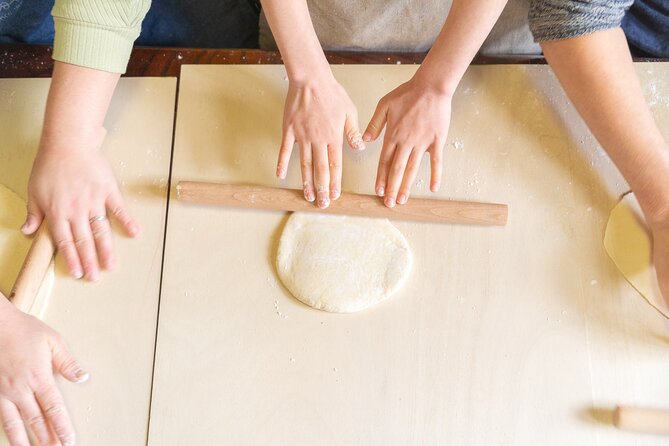
You’ll begin by mixing flour and water and kneading the dough by hand. The key idea you’ll learn is even moisture distribution. That sounds technical, but it’s really about getting a workable dough that’s consistent when you roll it out.
Even if you’ve never kneaded anything before, the class format is designed to be beginner-friendly. You’re not expected to already know the texture. You’re shown what to aim for, and you get the feel of it.
2) Roll and slice: thick, rustic Hoto noodles
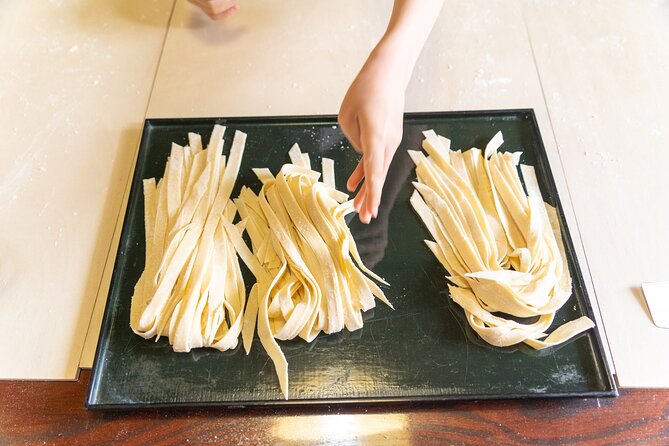
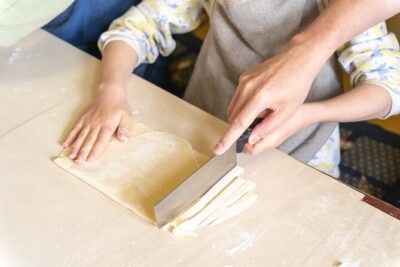
Next comes the fun part: you flatten the dough and slice it. Hoto noodles are known for being thick and rustic, not delicate strands. In other words, you’re making a style that celebrates substance over perfection.
This step matters because noodle thickness affects how the dish thickens as it cooks. So the “how” here isn’t just for looks—it feeds into the soup’s final texture.
- Private guided hidden gems tour by local English speaking driver★ 5.0 · 142 reviews
- Mt. Fuji Five Lakes Area Private Tour with Licensed Guide(Kawaguchiko area Dep)★ 5.0 · 55 reviews
- Cute & Fun E-Car tour following guide around Lake Kawaguchiko★ 5.0 · 54 reviews
- Hidden Fuji drive tour with a Local English speaking guide★ 5.0 · 43 reviews
- Ramen Cooking Class at Lake Kawaguchiko (Short Course)★ 5.0 · 42 reviews
3) Cook in miso vegetable broth: thick and hearty without extra fuss
Then you cook your noodles in a miso-based vegetable broth. The class description specifically connects the process to thickening: by cooking the noodles with the ingredients, the soup becomes thicker without needing salt added for thickening.
You’ll also see where the potato starch fits into the system. The class explains it as the thickener that helps warm the dish up and create that classic Hoto mouthfeel.
4) Tatami-room meal: eat what you made
Finally, you enjoy the meal you helped create in a cozy tatami room. This is one of those travel experiences that feels more grounded than a typical tasting because you understand the dish’s logic by the time you sit down.
What Makes the Broth Special: Koshu Miso, Vegetables, and Thickening Technique
Hoto is essentially a noodle dish with stew mechanics. That’s why the miso broth matters so much. The class highlights a primarily miso-based soup and notes that the dish traditionally uses homemade Koshu miso.
You’ll also work with seasonal vegetables. The examples given include pumpkin and mushrooms, which is great because they naturally contribute body and sweetness. In a miso-based broth, that combo makes the bowl taste layered without needing anything fancy.
Here’s what I think is most useful for you: you learn the relationship between ingredients and texture.
- Wheat flour and water create the noodle dough structure.
- Potato starch supports thickening in the soup.
- Cooking noodles with the ingredients helps thicken the broth as everything simmers together.
- The dish is designed so thickening doesn’t require adding salt.
That last point is a small-but-smart takeaway. A lot of people think thick soup always means heavy seasoning. Hoto reframes it: method first, seasoning second. If you like soups that feel comforting rather than salty, you’ll get the idea quickly.
Staff, Language, and Food Options That Actually Matter
This is set up to be beginner-friendly and fully guided. The class is described as suitable for all ages, which makes sense for a 2-hour hands-on cooking activity where you can learn by doing.
English-speaking staff are available. That’s a big deal for cooking classes near Mt. Fuji, where your best souvenir might be the technique—not just the final taste. When you can ask questions in plain language, you’ll understand why each step matters.
You can also request vegetarian or allergy-conscious options with notice. That’s the right kind of flexibility: it tells you the operator is used to adapting meals rather than treating dietary needs as an afterthought. If you have allergies, give the notice early so they can plan.
Finally, service animals are allowed, and the class is near public transportation. Those details don’t make the noodles taste better, but they do make the whole day smoother.
Price and Value: What $26 Buys You (Besides a Full Belly)
At $26.01 per person, this class is priced like a “do it once, learn something, and eat well” experience. What makes it feel like value isn’t the number on the screen—it’s the package of payoff you get in two hours:
- Guided instruction for making fresh Hoto dough and thick noodles
- A real cooking process, not just sampling
- A full handmade meal in the end
- Indoor comfort in a region where weather can shift fast
Also, it’s booked on average about 13 days in advance. That doesn’t mean you must rush, but it does suggest it’s popular enough that waiting too long can leave you stuck choosing a less convenient time.
If you enjoy food you can recreate, you’re also paying for the technique. You’re not just paying to taste miso soup. You’re learning how thick noodles and broth interact.
Optional Extras: Turn Your Noodle Class Into a Yamanashi Craft Day
If you want to go beyond the Hoto meal, there are optional add-ons:
- Indigo t-shirt dyeing
- Spice blend (Shichimi) making
- Chili paste (Suridane) workshop
- Kinako mochi dessert class
This is ideal if you like the idea of taking home more than food—something visual you made with your hands. It’s also a smart way to build a longer day around Lake Kawaguchi without adding complicated logistics, since these extras are offered as part of the overall experience framework.
If you’re only in town briefly, the base Hoto class alone already covers enough for a satisfying memory. But if you’re the kind of traveler who collects skills, the add-ons make sense.
Who Should Book This Hoto-Making Class
You’ll likely enjoy this most if you:
- Want an indoor activity near Mt. Fuji that’s hands-on and not overly technical
- Like cooking classes where you make the full dish and then eat it immediately
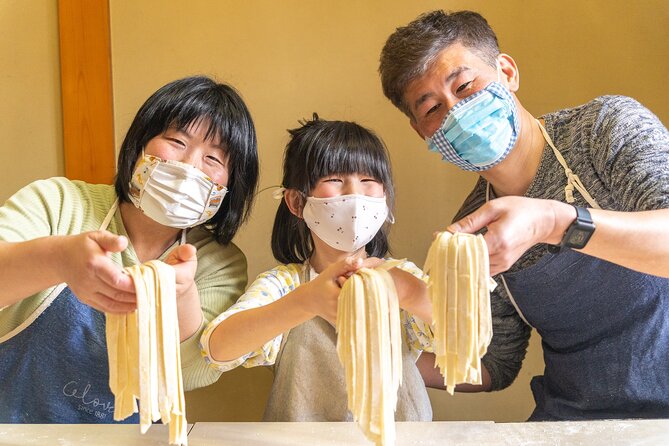
- Travel with family, a couple, or solo and want something flexible in timing and comfort
- Want an English-friendly option with actual instruction, not just a demo
You might want to skip it if your priority is sightseeing and you don’t want any kitchen time. It’s also a focused activity—about 2 hours—so it won’t replace a longer evening meal plan.
Should You Book Japanese Cooking Class FUJIYA for Hoto?
Yes, if you want a practical food experience that teaches technique and doesn’t require prior cooking skills. The class is built around the real heart of Hoto: making thick noodles, cooking them in miso vegetable broth, and understanding the thickening logic with potato starch and noodle cooking method. Add in the tatami-room meal and English-speaking guidance, and it’s a strong use of time near Lake Kawaguchi.
If you’re on the fence, here’s my simple rule: if you’d enjoy making one hearty bowl from scratch, book it. If you’re more in the mood for wandering views and minimal effort, you may prefer something less hands-on.
FAQ
How long is the Hoto-making class?
The experience lasts about 2 hours (approx.).
How much does it cost?
The price is $26.01 per person.
Where is the meeting point?
You’ll start at 3376-3 Funatsu, Fujikawaguchiko, Minamitsuru District, Yamanashi 401-0301, Japan, and the class ends back at the meeting point.
Is the class beginner-friendly?
Yes. The class is beginner-friendly and fully guided.
Is there English support?
English-speaking staff are available.
Can dietary needs be accommodated?
Vegetarian or allergy-conscious options can be arranged with notice.
More Workshops in Fujikawaguchiko machi
- Ramen Cooking Class at Ramen Factory in Mt.Fuji
★ 5.0 · 101 reviews - Ramen Cooking Class at Lake Kawaguchiko (Short Course)
★ 5.0 · 42 reviews - Sushi Cooking Class at Sushi Factory -KIWAMI- Mt.Fuji
★ 5.0 · 23 reviews - Fujisan Sushi Making Lesson
★ 5.0 · 16 reviews - View of Mt. Fuji is good! Sushi making experience class
★ 5.0 · 6 reviews
More Tour Reviews in Fujikawaguchiko machi
- Mt Fuji Area Private Guided Tours in English-Nature up close, quiet, personal
★ 5.0 · 288 reviews - Explore Mt. Fuji Ice Cave in Aokigahara Forest
★ 5.0 · 243 reviews - Private guided hidden gems tour by local English speaking driver
★ 5.0 · 142 reviews - Ramen Cooking Class at Ramen Factory in Mt.Fuji
★ 5.0 · 101 reviews - Early Morning Kayaking With Views of Mt Fuji at Lake Kawaguchiko
★ 5.0 · 69 reviews
Latest Fujikawaguchiko machi reviews off our desk
Workshops, compared.
 ★ 5.0Sushi Making Tokyo Roll and Authentic Japanese Sushi ClassFrom $593,971 reviews
 ★ 4.9Roll and Authentic Sushi Making Class in AsakusaFrom $581,957 reviews
 ★ 5.0Tokyo Shinjuku Chopsticks Making ClassFrom $201,763 reviews
 ★ 4.9Sushi Making Class in a Happi Coat near a Famous SpotFrom $421,377 reviews
 ★ 4.8Chopstick Making Workshop in GinzaFrom $251,366 reviews
 ★ 5.0Tokyo Sushi Making Class in Tsukiji with Professional ChefFrom $491,177 reviews
 ★ 5.0Ramen & Gyoza Cooking Class in Tokyo with Local Supermarket VisitFrom $122823 reviews
 ★ 5.0Matcha Making Class in Tokyo with Authentic Japanese Sweets SetFrom $21744 reviews
Browse the lists this tour appears in