
Reviewed · MOUNT FUJI TOURS
Mt. Fuji Five Lakes Tour with Guide & Vehicle (Kawaguchiko Dep)
Fuji looks different when someone drives you. This private Mt. Fuji Five Lakes tour pairs a licensed English guide with hotel pickup and a dedicated vehicle, so you can spend less time wrangling transit and more time on the Fuji views and meaning. I like that you can shape the day by picking 3–4 stops from the highlights, instead of getting locked into a rigid bus route.
What I really like is the human part. Guides such as Kei (often seen keeping things upbeat and family-friendly) and Reiko (praised for thoughtful planning and strong explanations) make a short 6-hour window feel organized, not rushed. The other big plus is that you do not have to go searching for a meeting point.
One consideration: several of the best stops are free, but others charge separate admission, and lunch is on you. On top of that, car-seat availability is limited (and rear-facing car seats are not available), so it’s worth planning if you’re traveling with kids.
In This Review
- Key takeaways before you pick your Fuji stops
- Hotel Pickup From the Tokyo-to-Fuji Side: Why It Matters
- The Licensed English Guide Factor (Kei, Reiko, and the “Don’t Waste Time” Approach)
- Custom Stops: Choosing Your 3–4 Fuji Five Lakes Highlights
- Lake Kawaguchiko: The Fuji Five Lakes Starting Point
- Mt. Fuji Panoramic Ropeway: Tenjo Views With a Short Time Budget
- Oshino Hakkai: Eight Ponds Fed by Fuji Snowmelt
- Chureito Pagoda: The Most Famous Fuji Photo Angle
- Kitaguchi Hongu Fuji Sengen Jinja and Kawaguchi Asama Shrine
- Narusawa Ice Cave: A 153m Lava Cave With Year-Round Ice
- Mt. Fuji Subaru Line 5th Station: Included Admission on the Yoshida Trail
- Price and What You’re Really Paying For: $731.65 per Group
- Timing for a Smooth 6-Hour Fuji Five Lakes Day
- Should You Book This Mt. Fuji Five Lakes Tour?
- FAQ
- How long is the Mt. Fuji Five Lakes tour?
- Is hotel pickup included, and do I need to go to a meeting point?
- Can I choose which stops to visit?
- Are entrance fees included in the tour price?
- Is this tour private?
- Do you offer car seats, and are service animals allowed?
- Is there free cancellation?
Key takeaways before you pick your Fuji stops
- Hotel pickup with no meeting-point stress makes the morning feel simple.
- 3–4 customizable sites means you can match the day to your interests (lakes, shrines, caves, ropeway).
- Oshino Hakkai’s 8 ponds connect directly to Fuji snowmelt, not just scenic postcards.
- Narusawa Ice Cave is a real 153m lava cave, with ice features visible year-round.
- Mt. Fuji Subaru Line 5th Station includes admission, so you get at least one paid highlight handled.
- English-speaking local guidance helps you connect the dots between views, shrines, and local history.
Hotel Pickup From the Tokyo-to-Fuji Side: Why It Matters
A Mt. Fuji day lives or dies by logistics. This tour is designed around the easiest kind of day: you get picked up from your hotel and you do not need to meet at a specific location. That sounds small, but when you’re dealing with timing, traffic, and moving people, it’s a big deal.
The other practical win is the private vehicle. Instead of hopping between transfer points, you’re riding with a plan. You can also keep your day more flexible because your guide is steering the order of sights from the list of options.
Your ticket is mobile, so you’re not scrambling to find paper in a morning rush. And because it’s a private tour for your group only, you’re not negotiating pace with strangers who want to spend 10 minutes somewhere and 10 minutes elsewhere.
More Fuji day trips our readers rated highly
- Mt Fuji Area Private Guided Tours in English-Nature up close, quiet, personal
★ 5.0 · 288 reviews - Explore Mt. Fuji Ice Cave in Aokigahara Forest
★ 5.0 · 243 reviews - Ramen Cooking Class at Ramen Factory in Mt.Fuji
★ 5.0 · 101 reviews - Early Morning Kayaking With Views of Mt Fuji at Lake Kawaguchiko
★ 5.0 · 69 reviews
The Licensed English Guide Factor (Kei, Reiko, and the “Don’t Waste Time” Approach)
A private Mt. Fuji guide isn’t just for translation. It’s for making sure you know what you’re looking at and why it matters, even when you only have about an hour at a stop.
In feedback for this operator, guides like Kei and Reiko are praised for two things: planning that keeps everyone engaged, and explanations that make the sights click. One nice detail is how this is framed for families too. If you’re bringing a teen who might otherwise tune out, the guide’s job is to keep the day moving with context, not just sightseeing.
This also helps with how long you should linger. You’ll often have around 30 to 60 minutes per stop, so the guide’s guidance on where to focus can save you from wandering in circles.
Custom Stops: Choosing Your 3–4 Fuji Five Lakes Highlights
The tour is built for flexibility: you choose 3–4 sites from the available set. That’s the secret sauce. Mount Fuji area sightseeing can easily become “checklist travel,” where you rush through everything and remember almost nothing.
Here’s a helpful way to think about it: pick one anchor viewpoint stop, then add one or two “story” stops, plus one “wow” stop.
- If you want views, consider Lake Kawaguchiko plus the Mt. Fuji Panoramic Ropeway at nearby Tenjo (via Mt. Kachi-Kachi Ropeway).
- If you want Fuji’s water and culture, Oshino Hakkai is a strong choice because it’s defined by eight ponds formed from Mt. Fuji snowmelt spring water.
- If you want postcard photography, Chureito Pagoda is famous for the five-storied red pagoda view and the cherry blossoms seasonally.
- If you want shrines and sacred sites, combine Chureito’s Arakurayama area with one or two Sengen shrines (Kitaguchi Hongu Fuji Sengen Jinja, Kawaguchi Asama Shrine).
- If you want a physical, cool-to-touch experience, Narusawa Ice Cave is a true 153m lava cave with ice pillars and walls visible year-round.
- If you want a “high on the Yoshida Trail” moment, Mt. Fuji Subaru Line 5th Station is included for admission and sits about halfway up the Yoshida Trail.
With only 6 hours total (approx.), choosing wisely means you’ll actually enjoy the stops, not just survive them.
Lake Kawaguchiko: The Fuji Five Lakes Starting Point
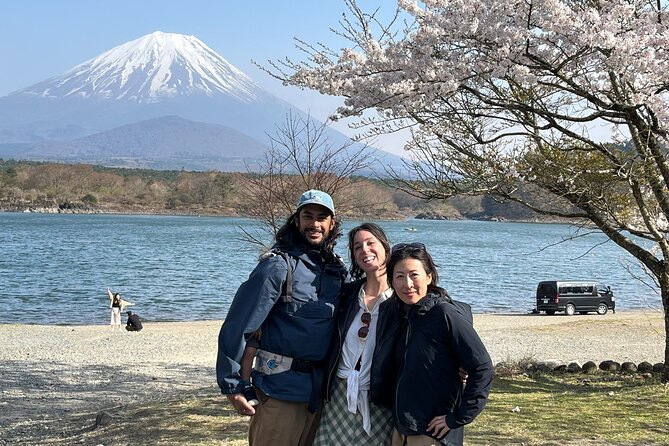
Lake Kawaguchiko is part of Fuji Five Lakes (Fuji Goko), which is the cluster of five resort lake areas at the base of Mt. Fuji. This is the most common starting feel for the region, and the tour gives you about an hour here.
What you should expect: a classic “Fuji from the water” setting, plus easy access to nearby attractions you can pair with it. Even if you keep your time relaxed, it’s a stop that works for both nature lovers and photo hunters, because it sets the frame for the rest of the day.
A drawback to be aware of: this is one of several viewpoint-style stops. If you pick too many “look at Fuji” locations, you may feel like you’re repeating the same experience in different packaging. I’d rather you pair Lake Kawaguchiko with one distinct stop like Oshino Hakkai or Narusawa Ice Cave.
Entrance fees for Lake Kawaguchiko-style wandering aren’t included per the tour details, so plan for possible paid features depending on what you decide to do on the ground.
Mt. Fuji Panoramic Ropeway: Tenjo Views With a Short Time Budget
Next up, many combinations include the Mt. Fuji Panoramic Ropeway, using the Mt. Kachi-Kachi Ropeway next to Lake Kawaguchiko. It runs to the summit of Mt. Tenjo, and the whole point is the view: Mt. Fuji, Lake Kawaguchiko, and the surrounding area.
The tour allows about 30 minutes for this. That’s enough time to ride up, take photos, and enjoy the perspective without turning it into a half-day project. The ropeway is a smart choice if you want elevation without the effort of hiking.
The practical catch: admission ticket is not included. So you’ll want to account for that extra cost when you decide whether this is your “must-do.”
If you’re traveling with kids or anyone who doesn’t want stairs and steep paths, ropeway time is usually an easy win because the effort-to-view ratio is high.
Readers also shortlisted these Fujikawaguchiko machi bookings:
- Private guided hidden gems tour by local English speaking driver★ 5.0 · 142 reviews
- Cute & Fun E-Car tour following guide around Lake Kawaguchiko★ 5.0 · 54 reviews
- Hidden Fuji drive tour with a Local English speaking guide★ 5.0 · 43 reviews
- Mt Fuji Area: In-depth Guided Adventure in English or French★ 5.0 · 27 reviews
- Private Fuji Half-day Car Tour with Hotel Pickup and Local Guide★ 5.0 · 20 reviews
Oshino Hakkai: Eight Ponds Fed by Fuji Snowmelt
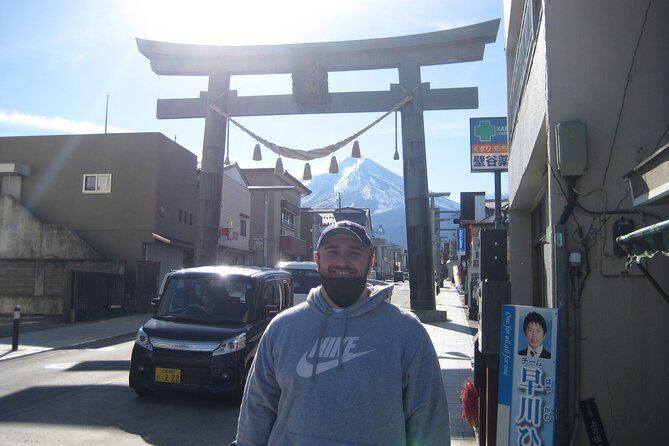
Oshino Hakkai is a traditional village in the Fuji Five Lakes area, and it’s defined by something very concrete: eight ponds formed from spring water from the snowmelt of Mt. Fuji. That’s the kind of detail that makes the visit feel more grounded than just walking through shops.
You’ll get about one hour here. In that window, you can slow down. It’s the sort of stop where you’ll naturally take your time reading the water story, looking at pond edges, and spotting how the village layout supports the water system.
Entrance is listed as free, which helps you keep this day feeling value-heavy.
The downside? Because it’s a village-style stop, it can be a bit more “slow travel” than “big view.” If your group wants only high viewpoints and quick photo stops, you may want to be careful how you balance this with pagodas and ropeways.
Chureito Pagoda: The Most Famous Fuji Photo Angle
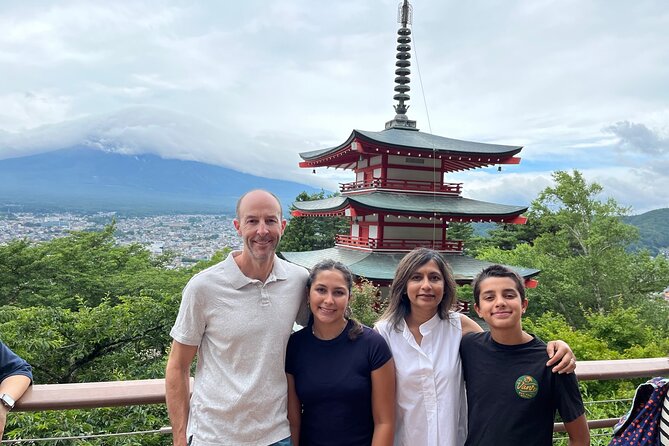
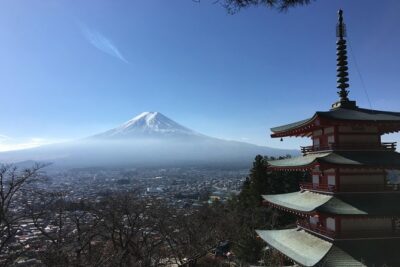
Chureito Pagoda (part of the Arakurayama Sengen Shrine area) is one of the most popular Mt. Fuji photo spots in the region. What you’re looking for is specific: the famous view of Mt. Fuji with the five-storied red pagoda and cherry blossoms (seasonal).
Plan for about 30 minutes. That’s typically the right amount of time because the highlight is the view itself. Your guide can also help you move efficiently so you get the angle without exhausting your legs.
This stop is free for admission according to the tour details, which is always a relief when you’re already paying for the private vehicle and guide.
One consideration: if cherry blossoms are not in bloom, the pagoda still matters, but the full “red pagoda + Fuji + blossoms” combo may not look the same as the iconic photos. It’s still worth it for the pagoda and the wider Fuji view, just don’t assume every factor will match the famous picture.
Kitaguchi Hongu Fuji Sengen Jinja and Kawaguchi Asama Shrine
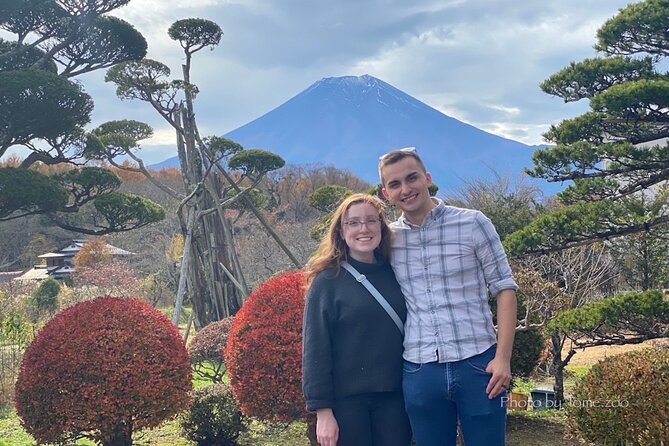
If you like Japan’s sacred geography, spend time on the shrines. They’re not random stops. They’re the area’s way of explaining why Fuji is treated as a sacred symbol and how people approached volcanic risk.
Kitaguchi Hongu Fuji Sengen Jinja sits on the north side of Mt. Fuji between Lake Kawaguchi and Lake Yamanaka. You’ll have about 30 minutes here, and it’s a chance to slow down and understand the shrine’s setting rather than treating it like a photo wall.
Then there’s Kawaguchi Asama Shrine, also called a Sengen Shrine. This one is tied directly to the human side of living near an active mountain. The shrine was built to calm the eruption of Mt. Fuji that occurred in 864, and it’s recognized as a world cultural heritage site. You can also see mention of the sacred tree of seven cedars called Shichi-hon Sugi.
This second shrine is also about 30 minutes with free admission.
Why these shrines fit this tour so well: they break up the “views and water” rhythm with meaning. If you’re doing only one cultural stop, I’d pick one of these and keep the rest of your picks more natural or scenic.
Narusawa Ice Cave: A 153m Lava Cave With Year-Round Ice
Now for the wow factor. Narusawa Ice Cave (Narusawa Hyogan) is a 153m lava cave in the Aokigahara Forest area. You can walk through inside the cave, and it’s known for ice pillars and ice walls that can be seen all year round.
The tour gives you about 30 minutes. That’s enough time to enter, walk the inside paths, and take a few steady photos without feeling like you need to spend an entire afternoon in a cool cave.
Admission for this stop is not included, so factor in the extra ticket cost.
Practical note: a cave stays cool. Even if it’s warm outside, you’ll probably want a layer, because an ice cave is not a place to wear just summer clothes and hope for the best.
Mt. Fuji Subaru Line 5th Station: Included Admission on the Yoshida Trail
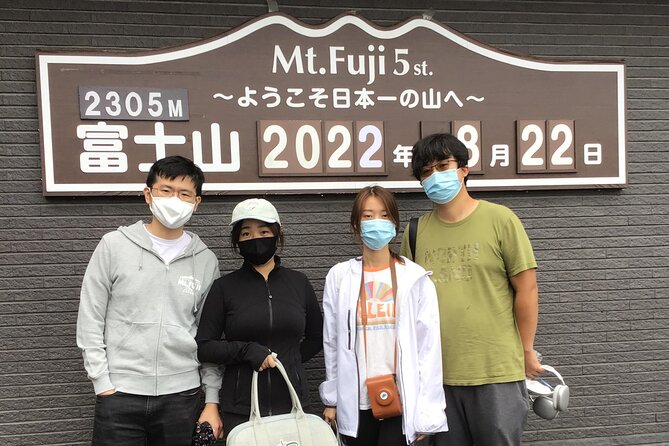
Mt. Fuji Subaru Line 5th Station sits about halfway up the Yoshida Trail, and the tour lists it with admission included. You’ll have around one hour here.
This is a different kind of Fuji day than lakes and pagodas. It’s more about altitude and the sense of being closer to the mountain’s climbing zone, even if you’re not hiking the trail.
Because it’s included, it’s one of the stops that helps the tour price feel more “whole.” If you add all non-included tickets later in the day, the total can climb. Having one included paid highlight helps you stay in control.
Price and What You’re Really Paying For: $731.65 per Group
The price is $731.65 per group (up to 2) for about 6 hours. That’s not cheap, so here’s how I’d judge value in real life.
You’re paying for:
- a licensed local English-speaking guide
- a private vehicle
- a route built around 3–4 chosen sites
- hotel pickup (no meeting-point scramble)
- admission included at Mt. Fuji Subaru Line 5th Station
You’re not paying for:
- entrance fees for several stops (for example, the ropeway and Narusawa Ice Cave)
- lunch
- other personal expenses
So the “value math” depends on your group style. This tour makes a lot of sense if you and your travel partner want to avoid the stress of routing and want someone to steer your day. If you’re the type who likes to hop on public transit and self-plan, you might feel the private price less justified. But if you value time, comfort, and explanations, the setup is usually fair.
Also, this kind of tour has demand. It’s listed as typically booked about 40 days in advance, so if you have a specific date in mind, I’d plan to lock it earlier rather than later.
Timing for a Smooth 6-Hour Fuji Five Lakes Day
With a short day, you’ll want a clear order. Your guide will help you choose, but you should also think about how your group moves.
A realistic rhythm from this experience:
- lakes or elevated viewpoint: about 1 hour for Lake Kawaguchiko
- ropeway-style viewpoint: about 30 minutes
- village/photo/shrine stops: often 30 minutes
- Narusawa Ice Cave and other specialty stops: about 30 minutes
- Subaru Line 5th Station: about 1 hour
That pacing works best when you avoid stacking too many similar stops back-to-back. For example, pair one major photo stop (like Chureito Pagoda) with something that adds a different texture (like Oshino Hakkai’s water system or Narusawa Ice Cave’s interior experience).
One more practical tip: since admission tickets are not included for some attractions, keep a little budget buffer for onsite payments. You’ll also want to have your phone ready for the mobile ticket, even if you don’t love tech tasks on vacation.
Should You Book This Mt. Fuji Five Lakes Tour?
Book it if you want a private, guide-led Fuji day that you can shape around your interests, with the convenience of hotel pickup and no meeting-point hassle. It’s also a smart fit for families, because guides such as Kei and Reiko have shown they can keep a teen engaged while still teaching the meaning behind shrines and the region.
Skip or rethink it if you’re trying to minimize costs, because multiple stops have separate admission fees and lunch is extra. Also rethink if you need special car-seat setups beyond what’s available, since car seats/booster seats are limited and rear-facing car seats are not offered.
If you’re aiming for the best chance of a satisfying Fuji day, pick your 3–4 stops with intention: one view anchor (lake or ropeway or 5th Station), one cultural anchor (a Sengen shrine or Chureito’s shrine area), and one “hands-on” experience (Oshino Hakkai’s water ponds or Narusawa Ice Cave).
FAQ
How long is the Mt. Fuji Five Lakes tour?
It runs for about 6 hours (approx.).
Is hotel pickup included, and do I need to go to a meeting point?
Yes. The guide comes to your hotel, and you do not need to go to a meeting place.
Can I choose which stops to visit?
Yes. You can pick 3–4 sites from the listed options.
Are entrance fees included in the tour price?
No. Entrance fees are generally not included, and lunch is not included. Mt. Fuji Subaru Line 5th Station lists admission included, while other stops like the ropeway and Narusawa Ice Cave list admission as not included.
Is this tour private?
Yes. It’s a private tour/activity, and only your group participates.
Do you offer car seats, and are service animals allowed?
Service animals are allowed. Car seats and booster seats are available in limited quantity, and rear-facing car seats are not available. You need to contact the provider directly if you need a specific setup.
Is there free cancellation?
Yes. You can cancel up to 24 hours in advance for a full refund.
If you tell me your travel dates and which 3–4 stops you’re leaning toward, I can help you pick a tight order that fits the time you’ll actually have.
More Tours in Fujikawaguchiko machi
- Mt Fuji Area Private Guided Tours in English-Nature up close, quiet, personal
★ 5.0 · 288 reviews - Private guided hidden gems tour by local English speaking driver
★ 5.0 · 142 reviews - Mt. Fuji Five Lakes Area Private Tour with Licensed Guide(Kawaguchiko area Dep)
★ 5.0 · 55 reviews - Cute & Fun E-Car tour following guide around Lake Kawaguchiko
★ 5.0 · 54 reviews - Hidden Fuji drive tour with a Local English speaking guide
★ 5.0 · 43 reviews
More Tour Reviews in Fujikawaguchiko machi
- Mt Fuji Area Private Guided Tours in English-Nature up close, quiet, personal
★ 5.0 · 288 reviews - Explore Mt. Fuji Ice Cave in Aokigahara Forest
★ 5.0 · 243 reviews - Private guided hidden gems tour by local English speaking driver
★ 5.0 · 142 reviews - Ramen Cooking Class at Ramen Factory in Mt.Fuji
★ 5.0 · 101 reviews - Early Morning Kayaking With Views of Mt Fuji at Lake Kawaguchiko
★ 5.0 · 69 reviews
More Mount Fuji Days We Have Reviewed
- Mt Fuji Area Private Guided Tours in English-Nature up close, quiet, personal
★ 5.0 · 288 reviews - Explore Mt. Fuji Ice Cave in Aokigahara Forest
★ 5.0 · 243 reviews - Ramen Cooking Class at Ramen Factory in Mt.Fuji
★ 5.0 · 101 reviews - Early Morning Kayaking With Views of Mt Fuji at Lake Kawaguchiko
★ 5.0 · 69 reviews - Johnny’s Exclusive: Mt. Fuji Adventure from Kawaguchiko
★ 5.0 · 62 reviews
Latest Fujikawaguchiko machi reviews off our desk
Mount Fuji Tours, compared.
 ★ 5.0Mt Fuji and Hakone 1-Day Bus Tour Return by Bullet TrainFrom $16326,383 reviews
 ★ 4.0Mt Fuji & Hakone Cruise, Drum Show Bullet Train 1 Day from TokyoFrom $1497,413 reviews
 ★ 4.4Tokyo Mt Fuji 5th St & Hakone Cruise Bus Tour w/Bullet TrainFrom $1545,024 reviews
 ★ 4.5From Tokyo: Mount Fuji Full-Day Sightseeing TripFrom $684,970 reviews
 ★ 4.7Mt. Fuji Tour, Hakone Ropeway, Owakudani, Lake AshiFrom $544,002 reviews
 ★ 4.4Mt.Fuji,Kawaguchiko Oishi Park,Arakurayama Sengen ParkFrom $542,682 reviews
 ★ 4.2Mt. Fuji 5th Station & Hakone Cruise 1-Day Bus TourFrom $1292,381 reviews
 ★ 4.7Mt Fuji Top 5 Spots Day Tour: Arakurayama Park,Oshino HakkaiFrom $532,066 reviews