
Reviewed · AKIHABARA ANIME TOURS
Official Japan Go-Kart Tokyo Skytree/Akihabara (IDP Required)
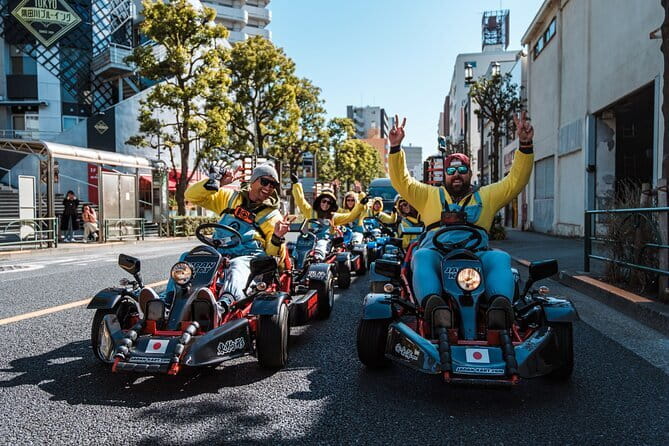
Tokyo in a go-kart beats walking. In about 90 minutes, JAPANKART rolls you past major Tokyo sights from Asakusa to Tokyo Skytree, with an English and Japanese-speaking guide and a small group capped at 10.
I like how this route compresses a lot of neighborhoods into one ride. I also like the hands-on start: you sign a waiver, pick your outfits, then watch a short instruction video before you hit the streets.
The main catch is serious: to drive, you must bring a valid International Driving Permit in the 1949 Geneva format (booklet form), plus your home license and passport. If your documents do not match the rules, you may lose your chance to drive, and the day can feel like a bust.
In This Review
- Key things to know before you ride
- Tokyo Go-Karting That Hits Asakusa to Skytree Fast
- Getting Set Up at JapanKart in Azumabashi
- Kaminarimon to Sensō-ji Area: Starting Under the Thunder Gate
- Ameyoko Market Street and Ueno Park by Speed and Sight
- Akihabara Neon and Kappabashi Kitchen Town in One Ride
- Tokyo Skytree Stop: 634 Meters of Photo Value
- Price and Value: What You’re Really Paying For
- Safety and Style: The IDP Rules That Can Make or Break Your Day
- Who This Tour Fits Best (And Who Might Skip It)
- Should You Book JapanKart’s Skytree and Akihabara Go-Kart?
- FAQ
- Do I need an International Driving Permit to drive?
- Where does the tour start?
- How many people are in a group?
- How long is the go-kart experience?
- Is there a guide and instruction before driving?
- Which stops will we see?
- Can I drink alcohol before the tour?
Key things to know before you ride
- Small group cap of 10 keeps the pace manageable and the guide easier to follow
- A short instruction video helps you get moving without a long delay
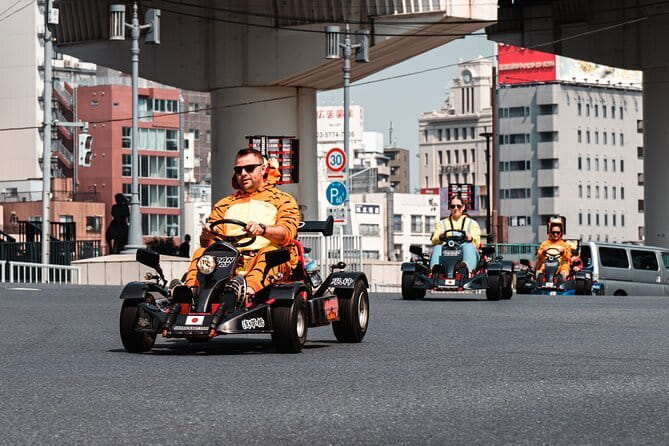
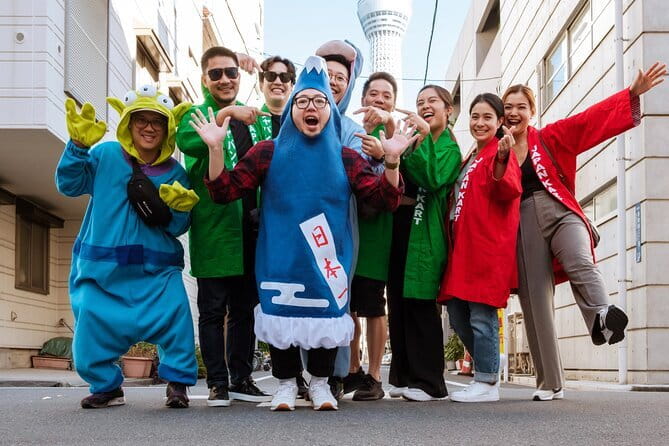
- Costumes and street-waving energy turn normal sightseeing into a fun performance
- You cover Asakusa, Ueno, Akihabara, and Skytree areas without spending hours commuting
- Strict IDP rules decide whether you can drive at all
Tokyo Go-Karting That Hits Asakusa to Skytree Fast
This is a fast-track way to see Tokyo without treating the day like an endurance test. You’re not just driving through one spot. You’re passing through several distinct areas, so the scenery changes often: classic temple streets, a market district, a park zone, then tech and shopping.
The payoff is time. With an experience length of about 1 hour 30 minutes, you can fit it around other plans like museum time, shopping, or heading to dinner later (dinner is not included). And because the group is limited to 10 travelers, you spend less time stuck waiting for everyone to line up.
I also like the guide factor. You get help in both English and Japanese, which matters when you’re learning rules and trying to understand what you’re seeing as the route moves along.
More of Akihabara, ranked by our reviewers
- Official Street Go-Kart Tour – Akihabara
★ 5.0 · 1,578 reviews - Tokyo Go Kart: Asakusa, Skytree, and Akihabara **IDP MUST**
★ 5.0 · 988 reviews - Akihabara Anime & Game Adventure Walking Tour (Group or Private)
★ 5.0 · 404 reviews - Tokyo: Gameboy Mod Workshop at Akihabara
★ 5.0 · 253 reviews
Getting Set Up at JapanKart in Azumabashi
Your adventure starts at JapanKart, located at JapanKart2-chōme-18-15 Azumabashi, Sumida City, Tokyo 130-0001. From there, you go through the basics before you ever sit behind the wheel.
Plan to arrive 15 minutes early. They can wait up to 10 minutes after your reserved time, so if you’re late, your slot is at risk. You’ll also want to skip any alcohol before the tour, because alcohol consumption prior to the tour is prohibited.
There’s a practical dress note too. Avoid long skirts, high heels, and sandals. You’ll feel better if you come in comfortable footwear and clothing you can move in.
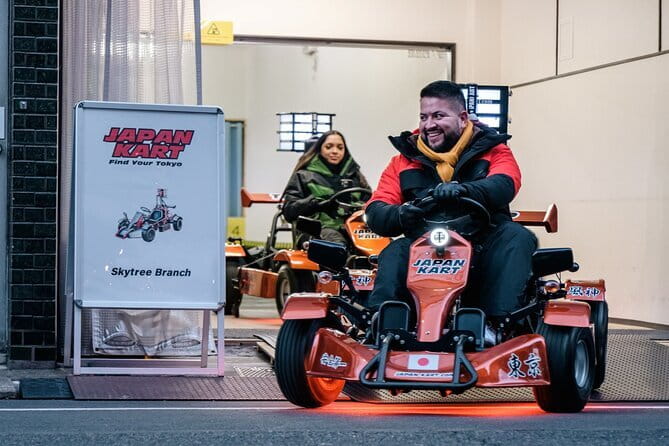
Once you’re checked in, the flow is simple. You’ll sign the waiver, choose outfits or customs, then watch a short instruction video. That quick prep is one reason the experience works even if you’re new to go-karts.
Kaminarimon to Sensō-ji Area: Starting Under the Thunder Gate
The tour begins with Kaminarimon, the Thunder Gate, in Tokyo’s Asakusa district. This is the famous entrance area for Sensō-ji, marked by the big red lantern and statues of Fujin (god of wind) and Raijin (god of thunder).
Why this stop is such a good opener: it gives you instant Tokyo identity. You’re not starting in an anonymous parking lot. You’re starting in a place that signals, right away, you’re in one of the city’s most recognizable neighborhoods.
There’s also a little adrenaline built into the timing. You’ll be fresh from instructions, and now you’re applying it near a landmark-heavy area. If you’re comfortable with traffic and rules, you’ll likely feel confident right away.
If you’re nervous, that’s fine too. Just remember the pace can feel fast because the goal is to cover ground across multiple stops.
Ameyoko Market Street and Ueno Park by Speed and Sight
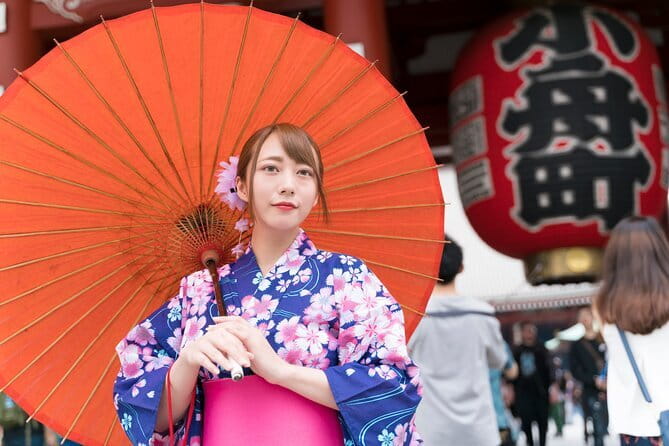
Next up is Ameyoko, short for Ameya Yokocho. It started as a street associated with American goods, and the name comes from America. Today, it’s a busy shopping street off the Ueno area.
This is one of the best stops for people who like sensory variety. You get to see what day-to-day Tokyo commerce looks like without spending hours planning which streets to walk. From the cart, you’ll get a quick read of storefronts and street energy, which is harder to capture from a single photo.
Then you roll toward Ueno Park, a large public park known for major cultural attractions like the Tokyo National Museum and Ueno Zoo. In spring, it’s famous for cherry blossoms, and even when you’re not there for blossoms, the park still signals a local rhythm.
The park stop works well as a reset. After market streets and shopping density, a green space gives your eyes a break, and it’s a good chance to grab photos and re-orient your bearings.
Akihabara Neon and Kappabashi Kitchen Town in One Ride
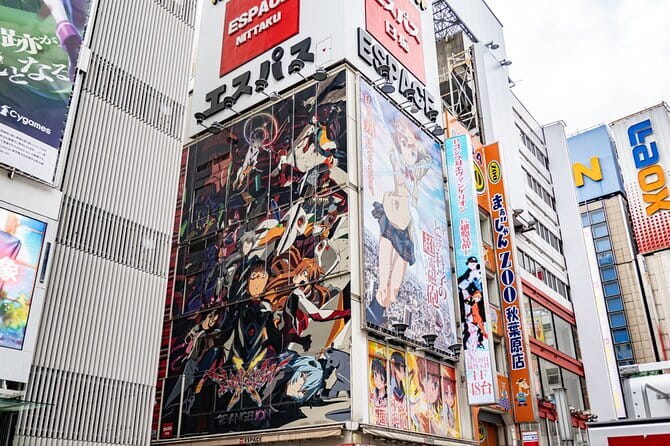
Akihabara is next, and it’s exactly what many people hope for when they picture it: the electrifying hub of otaku culture and cutting-edge technology. Expect neon-lit streets, electronics stores, anime and manga shops, and quirky themed touches like maid cafes.
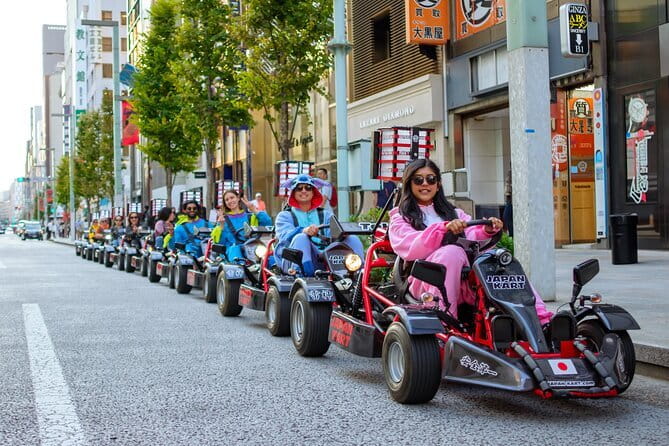
This is also where the go-kart experience gets especially fun. It’s one thing to walk Akihabara and take in signage. It’s another to motor through it while your outfit catches attention. The experience can feel like you’ve turned into part of the neighborhood’s street show.
After Akihabara, you head to Kappabashi, Tokyo’s Kitchen Town. This is where culinary-focused Tokyo comes alive: shops selling professional-grade knives and cookware, plus intricate plastic food model displays.
Why I think Kappabashi is a smart tour stop: you get a focused shopping theme without needing a food shopping plan of your own. Even if you don’t buy anything, it helps you understand why people come here for kitchen gear and food-themed displays.
The drawback with both Akihabara and Kappabashi is that you’re seeing them mostly from the route, not as a long browsing walk. If your top goal is deep shopping, you’ll likely want to plan extra time on your own afterward.
Other Skytree entries readers booked
- Tokyo Panoramic 1 Day: Meiji Shrine, Asakusa, Odaiba and SKYTREE®★ 4.5 · 1,222 reviews
- Tokyo Go Kart: Asakusa, Skytree, and Akihabara **IDP MUST**★ 5.0 · 988 reviews
- Tokyo Skytree Admission Ticket with Tembo Deck and Galleria★ 4.0 · 589 reviews
- Tokyo: 1 Day Bus Tour with Meiji-Jingu,Odaiba,lunch&Skytree★ 4.6 · 156 reviews
- Tokyo Skytree: Admission Ticket with 24-Hour Subway Pass★ 4.5 · 79 reviews
Tokyo Skytree Stop: 634 Meters of Photo Value
Your route ends with Tokyo Skytree, the tallest structure in Japan at 634 meters. The observation decks offer panoramic views of Tokyo, and on clear days you can even see Mount Fuji. Inside Skytree, you’ll also find shopping and dining, plus an aquarium and a planetarium.
In a go-kart tour, your stop is usually best thought of as a close-up moment and photo chance, not a full half-day visit. Even so, it’s a great finishing point because Skytree gives you instant scale. Tokyo can be hard to mentally map. After Skytree, landmarks feel more connected.
If you’re the type who likes turning city highlights into a clean sequence, this stop helps. You go from traditional Asakusa sights, to everyday market streets, to tech districts, and then to a modern Tokyo icon.
Price and Value: What You’re Really Paying For
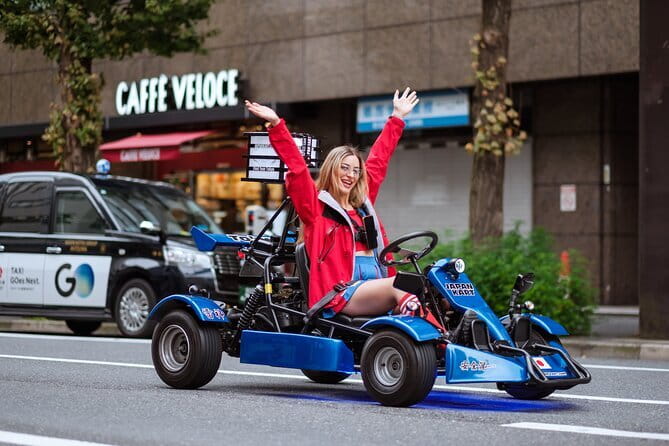
The price is $65.69 per person for an experience of about 1 hour 30 minutes. Included are the go-kart and an English & Japanese-speaking guide. Dinner is not included.
So what’s the value here?
First, you’re buying time efficiency. The route covers multiple Tokyo districts that are not right next to each other on foot. Second, you’re buying a guided, guided-traffic solution. Instead of figuring out a route, traffic timing, and where to stop, you follow the planned circuit.
Third, the start process is part of the value. Reviews point to staff support like waivers, outfit selection, and a short instruction video. That means you’re not just handed a kart and sent on your way.
There are two value watch-outs:
- If you don’t have the required IDP and license documents, you may be denied participation without a refund, which changes the math fast.
- If you want long shopping time or museum-style stops, this is not built for lingering.
Safety and Style: The IDP Rules That Can Make or Break Your Day
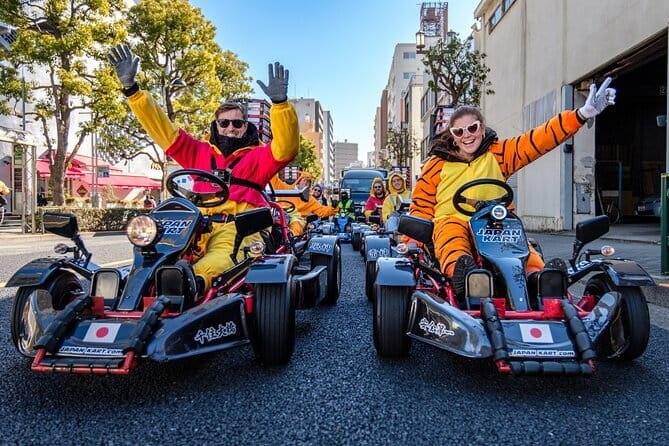
Let’s talk about the driving requirement, because it’s the biggest make-or-break item.
To drive, you must have an International Driving Permit issued in the format of the 1949 Geneva Convention, plus your driving license from your home country and your passport. The IDP must be in booklet form, not paper or A4 form.
There are exceptions listed. If your license is issued in Switzerland, Germany, France, Taiwan, Belgium, or Monaco, you still need a Japanese translation issued by the Japan Automobile Federation (JAF), using the online application process, plus your original license.
One more detail that matters: International driving permits issued under the Vienna Convention 1968 are not accepted in Japan.
The provider also notes that IDPs must be issued by approved country issuers, with examples such as:
- USA: AAA or AATA
- UK: AA or RAC
- Canada: CAA
- Australia: AAA
If that’s a lot to remember, do yourself a favor: double-check your documents before you travel so you’re not relying on luck at check-in.
On top of that, alcohol is prohibited before the tour, and clothing rules matter (no long skirts, high heels, or sandals). This is a go-kart day. The goal is comfort plus safety.
Finally, note that due to the mechanics of running karts, bookings may be adjusted at maximum capacity depending on kart availability. That doesn’t usually mean a bad experience, but it is a good reminder to stay flexible.
Who This Tour Fits Best (And Who Might Skip It)
This tour fits best if you:
- Want a fast way to see Tokyo neighborhoods in one plan
- Like fun street energy, including the costume component
- Have the right documents and are comfortable driving a kart
It’s also a strong choice for first-timers who want a mental map of Tokyo. In a short time, you’ll pass through Asakusa, Ueno, Akihabara, Kappabashi, and Skytree. That makes it easier to plan later days with confidence.
Who should consider another option:
- If you can’t or don’t want to drive, this is not set up like a guided walking tour.
- If you’re planning to spend hours shopping or browsing museums, you’ll probably want to pair this with extra time elsewhere.
And one practical expectation: the experience requires good weather. If weather cancels it, you’ll get a different date or a full refund, depending on what’s available.
Should You Book JapanKart’s Skytree and Akihabara Go-Kart?
If you have the right IDP setup and your schedule can handle about 90 minutes, I think this is a high-value Tokyo “first hits” activity. You get major districts in one loop, plus professional staff support like waiver handling, outfit selection, and a short instruction video before you drive.
My main advice is simple: check your driving documents like you’re prepping for a passport control moment. This tour can go from great to frustrating if you arrive without acceptable IDP format and license proof.
If that part is sorted, you’re set for a fun, photo-friendly ride that turns Tokyo’s landmarks into an actual street-level experience, not just a series of stops on a list.
FAQ
Do I need an International Driving Permit to drive?
Yes. You must have an International Driving Permit issued in the format of the 1949 Geneva Convention (booklet form) along with your home driving license and passport. Vienna Convention IDPs are not accepted. If your license is issued in Switzerland, Germany, France, Taiwan, Belgium, or Monaco, you need a Japanese translation from JAF plus your own driving license.
Where does the tour start?
The meeting point is JapanKart2-chōme-18-15 Azumabashi, Sumida City, Tokyo 130-0001, Japan. The activity ends back at the meeting point.
How many people are in a group?
The tour has a maximum of 10 travelers.
How long is the go-kart experience?
It runs for approximately 1 hour 30 minutes.
Is there a guide and instruction before driving?
Yes. The tour includes an English & Japanese-speaking guide. You will also watch an instructional video before you start driving.
Which stops will we see?
You pass or stop at Kaminarimon, Ameyoko, Ueno Park, Akihabara, Kappabashi, and Tokyo Skytree.
Can I drink alcohol before the tour?
No. Alcohol consumption before the tour is prohibited.
More Tour Reviews in Tokyo
- Mt Fuji and Hakone 1-Day Bus Tour Return by Bullet Train
★ 5.0 · 26,383 reviews - 1-Day Tokyo Bus Tour
★ 5.0 · 14,250 reviews - Tokyo: teamLab Planets TOKYO Digital Art Museum Entry Ticket
★ 4.6 · 9,779 reviews - Mt Fuji & Hakone Cruise, Drum Show Bullet Train 1 Day from Tokyo
★ 4.0 · 7,413 reviews - Tokyo: Shinjuku Food Tour (13 Dishes at 4 Local Eateries)
★ 5.0 · 6,603 reviews
More Skytree Entries
- Tokyo: Meiji Shrine, Asakusa, Skytree Bus Tour and Cruise
★ 4.7 · 1,986 reviews - Tokyo Panoramic 1 Day: Meiji Shrine, Asakusa, Odaiba and SKYTREE®
★ 4.5 · 1,222 reviews - Tokyo Go Kart: Asakusa, Skytree, and Akihabara **IDP MUST**
★ 5.0 · 988 reviews - Tokyo: Asakusa, Skytree & Akhihabara Go-Kart City Experience
★ 4.7 · 761 reviews - Tokyo Skytree Admission Ticket with Tembo Deck and Galleria
★ 4.0 · 589 reviews
More of Akihabara, Reviewed
- Official Street Go-Kart Tour – Akihabara
★ 5.0 · 1,578 reviews - Tokyo Go Kart: Asakusa, Skytree, and Akihabara **IDP MUST**
★ 5.0 · 988 reviews - Akihabara Anime & Game Adventure Walking Tour (Group or Private)
★ 5.0 · 404 reviews - Tokyo: Gameboy Mod Workshop at Akihabara
★ 5.0 · 253 reviews - Akihabara: Private Anime and Pop Culture Tour
★ 4.8 · 152 reviews
Latest Tokyo reviews off our desk






Akihabara Anime Tours, compared.
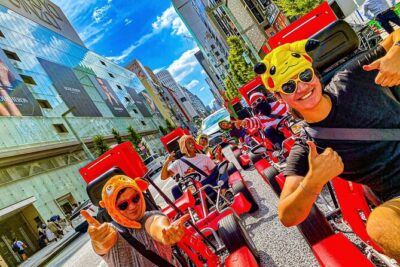 ★ 5.0Official Street Go-Kart Tour – AkihabaraFrom $611,578 reviews
 ★ 5.0Tokyo Go Kart: Asakusa, Skytree, and Akihabara **IDP MUST**From $99988 reviews
 ★ 5.0Akihabara Anime & Game Adventure Walking Tour (Group or Private)From $90404 reviews
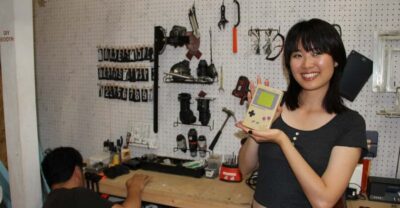 ★ 5.0Gameboy Mod Workshop at AkihabaraFrom $360253 reviews
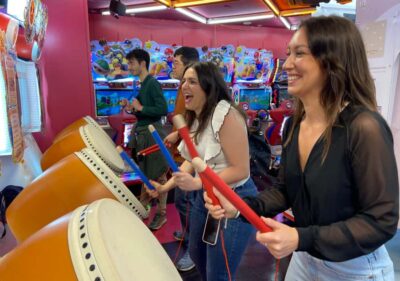 ★ 4.8Akihabara: Private Anime and Pop Culture TourFrom $95152 reviews
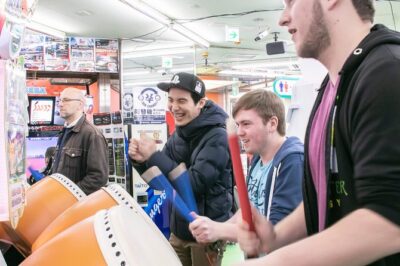 ★ 5.0Akihabara Tailor-made Private Tour for Anime FansFrom $132142 reviews
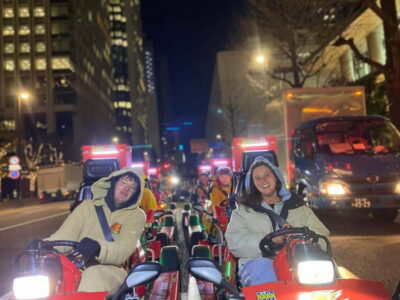 ★ 5.0Original Street Kart Experience from AkihabaraFrom $51111 reviews
 ★ 5.0Ramen Making from Scratch +Akihabara Tour –Tokyo Cooking ClassFrom $123107 reviews
Browse the lists this tour appears in