
Reviewed · SUMO TOURNAMENTS & SHOWS
Tokyo Grand Sumo Tournament 2026 with a Sumo Expert Guide
If sumo feels like chaos, this makes it click. With a Sumo expert guide, you’ll pair the action at Ryogoku Kokugikan with museum context and clear rules. I love that your experience includes reserved 2nd-floor chair seats and entry to the Sumo Museum, so you aren’t stuck figuring things out on your own. One possible drawback: the venue access inside can be tough for reduced mobility, with steep steps reported by guests.
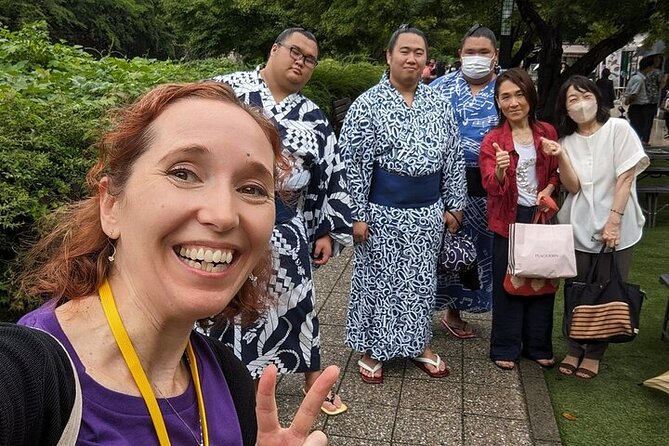
This tour also keeps the pace friendly: you’ll spend about 4 hours at the heart of Tokyo sumo, starting at Ryōgoku Station and ending back there. With Elisabeth Llopis (Elly) guiding, you get explanations of ceremony, tradition, and what to watch for so the matches feel meaningful. The value question is mostly about what you want: if you only want a seat and zero talking, you may find the guidance less necessary.
In This Review
- Key things that make this tour worth it
- Ryogoku Kokugikan: where the tournament mood already matters
- How the 2:00 pm start and 4-hour timing works in practice
- What you’ll see from reserved 2nd-floor chair seats
- Ryogoku Kokugikan Sumo Museum: context you can use immediately
- The guide experience: what Elisabeth Llopis (Elly) adds
- Tournament viewing with meaning: what to watch once you understand the basics
- Value and price: why $198 can make sense for this format
- Practical notes that matter on a real Tokyo day
- Who should book this tour
- Should you book Tokyo Grand Sumo Tournament 2026 with a Sumo expert guide?
- FAQ
- What time does the tour start?
- How long is the tour?
- What’s included in the price?
- Is food or drinks included?
- Where do I meet, and where does it end?
- How many people are in the group?
Key things that make this tour worth it
- Reserved 2nd-floor chair seats at Ryogoku Kokugikan, included
- Elisabeth Llopis (Elly), Sumo expert guide who explains rules and tradition
- Sumo Museum entry in the same complex, even on non-bout time
- Small group size (max 10) for better questions and a calmer experience
- Mobile ticket for easier check-in on the day
- 4-hour format that fits well into a Tokyo itinerary
Ryogoku Kokugikan: where the tournament mood already matters
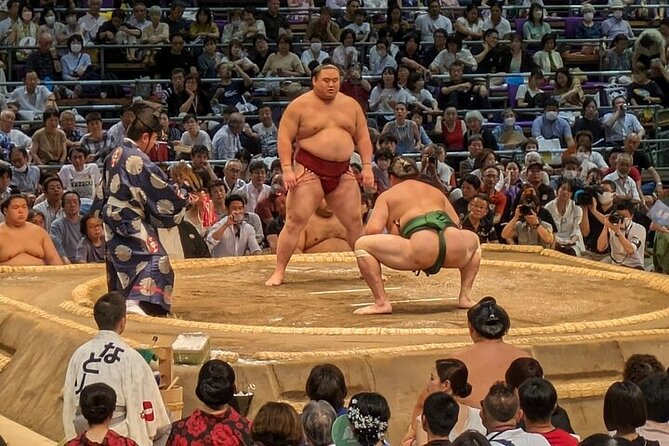
Ryogoku Kokugikan isn’t just a stadium. It’s the place where sumo feels official, old-school, and seriously structured. Even before you fully understand the sport, you’ll notice how everything is staged: the rhythm of introductions, the tight flow of the day, and how people watch with purpose.
I like that this experience doesn’t treat sumo like a random spectacle. You get a guide who helps you connect what you’re seeing to what it means. That matters because sumo has layers. A pause can be strategy. A ceremony can signal respect. Once you know the basics, the bouts feel less like wrestling and more like a timed performance with rules you can actually read.
Other ringside bookings readers scored
- Tokyo: Sumo Show and Dining Experience
★ 4.8 · 2,742 reviews - the SUMO show
★ 5.0 · 1,960 reviews - Tokyo Shinjuku Sumo Show & Experience with Photo
★ 5.0 · 1,750 reviews - Tokyo: Sumo Show and Experience in Shinjuku
★ 4.8 · 1,001 reviews
How the 2:00 pm start and 4-hour timing works in practice
The tour starts at 2:00 pm with the meeting point at Ryōgoku Station (1-chōme-3-20 Yokoami, Sumida City). It ends back at the meeting point, so you aren’t left figuring out transportation when the day runs long. The total time is about 4 hours, which is a big plus in Tokyo, where getting from place to place can eat up a whole afternoon.
Because it’s a single focused outing, you can build the rest of your day around it. I’d plan this as your main sumo block rather than something you squeeze between other commitments. If you want to take your time in the museum and absorb what the guide is explaining, the 4 hours gives breathing room.
Also, the tour runs with a maximum of 10 travelers. That’s the sweet spot where you can still ask questions, and the group doesn’t turn into a rushed line.
What you’ll see from reserved 2nd-floor chair seats
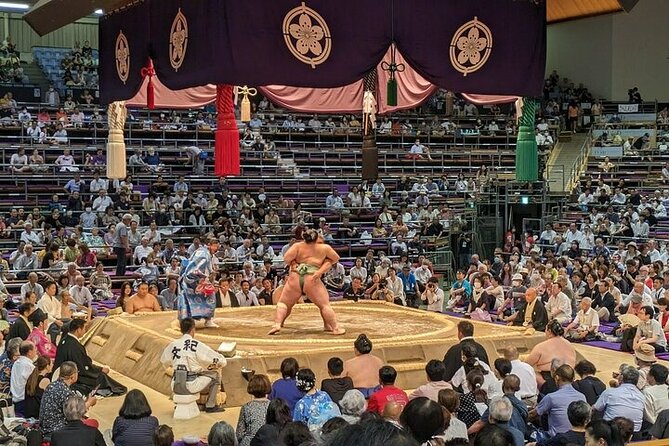
You’re getting reserved 2nd-floor chair seats, which is the practical heart of this tour. For sumo, good viewing isn’t only about distance. It’s about angle and whether you can follow the action once the wrestlers surge into the ring. With reserved seating included, you avoid the most common stress: arriving and then having no idea where you’ll actually land.
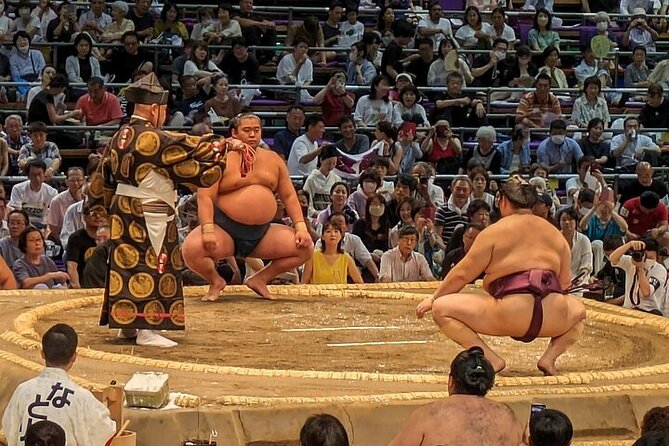
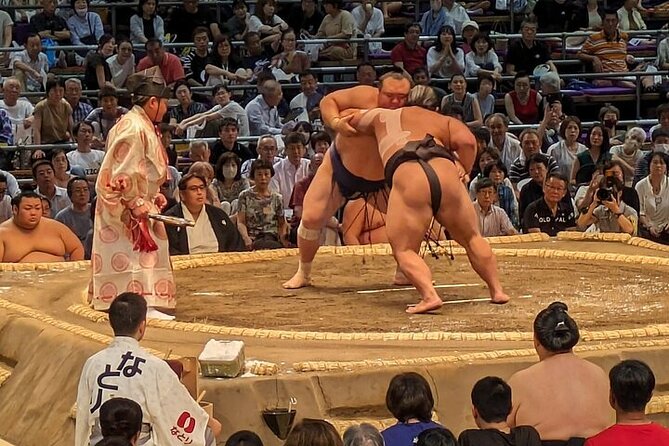
From those seats, you should be able to watch the full bout flow: the setup, the charge-in, the moment the match turns, and the way the outcome gets confirmed. The guide’s role here is key. If you know what to look for, you’ll notice grip changes, foot placement, and the tiny signals that show a wrestler is about to commit to a move.
The one caution is access. A guest review specifically flagged that the steps leading up to the stadium seats can be steep, and that the venue’s seating access isn’t adapted for reduced mobility. If mobility is a factor for you or someone in your group, plan with care and consider whether you can comfortably handle steep stairs.
Ryogoku Kokugikan Sumo Museum: context you can use immediately
In addition to the tournament viewing, you’ll enter the Kokugikan Sumo Museum. I really like museum time when it’s housed in the same place you’ll watch the sport, because it turns confusion into confidence fast.
You’ll see historic sumo artifacts up close, including old woodblock prints, ceremonial belts worn by legendary wrestlers, and memorabilia from past eras. The museum is designed to explain history and tradition in a way that’s easy to follow, and exhibits change regularly, so you’re not guaranteed to see only one fixed set of displays.
A practical win: the museum experience can still be worthwhile even when you’re not just there for the bouts. That’s helpful because tournament days can have busy pacing. You can slow down with artifacts and stories before you sit down to watch live competition.
The guide experience: what Elisabeth Llopis (Elly) adds
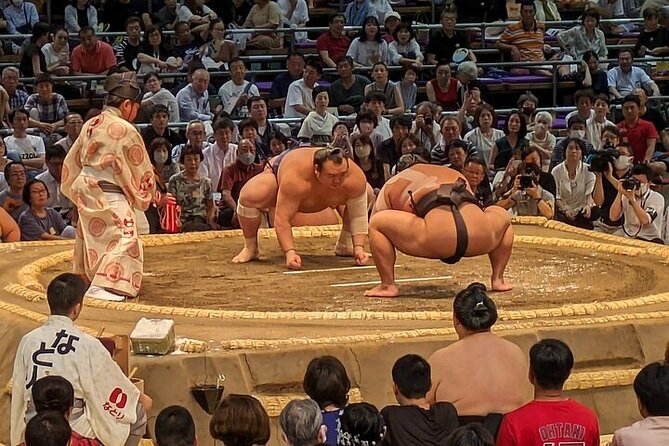
The tour’s real difference is the human layer. You’re not just buying a seat. You’re getting a local professional Sumo expert guide, with the provider listed as Elisabeth Llopis.
In practice, that means the guide helps you translate the spectacle into something you can follow. From what I’ve learned about the most praised parts of this experience, the guiding style is passionate and structured: rules, ceremony, history, and what to watch in today’s wrestlers. That’s how you go from spectator mode to informed fan mode.
One of the standout perks people describe is that the guide makes you feel connected to the event, not just watching it from the sidelines. Guests also mention small extras like snacks and sumo towels for favorite wrestlers, which add a fun layer without turning it into a theme park. You leave feeling like you participated.
Readers also shortlisted these Tokyo bookings:
- Tokyo 6hr Private Tour with Government-Licensed Guide★ 5.0 · 3,902 reviews
- Tokyo: Shinjuku Local Bar and Izakaya Guided Walking Tour★ 4.9 · 1,794 reviews
- Tokyo: Private City Highlights Tour with Local Guide★ 4.8 · 1,433 reviews
- Tokyo: Tsukiji Fish Market Guided Walking Tour★ 4.9 · 1,397 reviews
- Tokyo 4hr Private Tour with Government-Licensed Guide★ 5.0 · 1,394 reviews
Tournament viewing with meaning: what to watch once you understand the basics
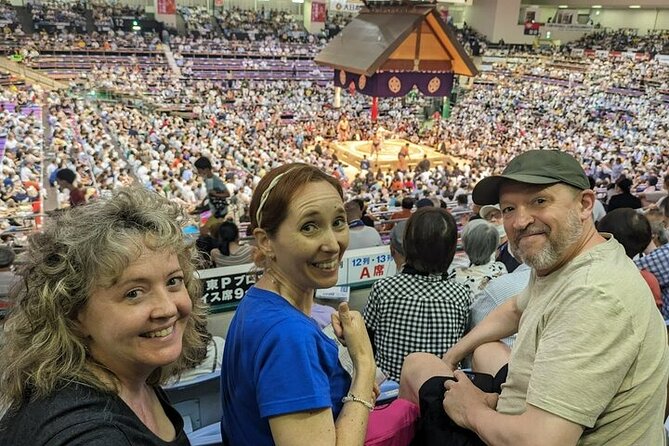
Once you’ve been coached on the sport, you’ll notice sumo becomes easier to read. You’ll pick up the flow of the bout: the charge, the brief grappling, the moment a grip becomes a commitment, and the way a match can flip quickly. The ceremony also changes your perception. You start seeing it as part of the competitive framework, not decorative staging.
If you’re new to sumo, this is the best use of a guided tournament day. Without context, you can still enjoy the physical drama. With context, you understand why certain behaviors matter and what you’re seeing beneath the noise.
And if you already like sumo, the guide’s explanations still help. It’s the difference between watching moves and watching decision-making.
Value and price: why $198 can make sense for this format
At $198, you’re paying for three things together: the reserved seats, the expert guide, and Sumo Museum entry. That’s not cheap, but it is often good value for tournament days, because the expensive part is usually getting the right location with the least hassle.
Here’s the value logic I use: you’re buying time and certainty. Reserved seating means you’re not gambling with where you’ll sit. A guide means you’re not spending that time learning basic rules with no one to answer questions. Museum entry means the tour isn’t just four hours of waiting for the next bout.
If your goal is simply to sit and watch, you might choose a cheaper self-guided option. But if your goal is to understand what you’re seeing, this package is built for that.
Practical notes that matter on a real Tokyo day
This outing is designed to be easy to integrate. It’s near public transportation, and you start at a well-known hub: Ryōgoku Station. The ticket is listed as mobile, which usually saves time at the gate.
Group size is limited to 10, and you can expect the operator to stay with the group the whole time. That matters because sumo days can be confusing if you don’t know where to stand, when to move, and how to transition between museum time and seating.
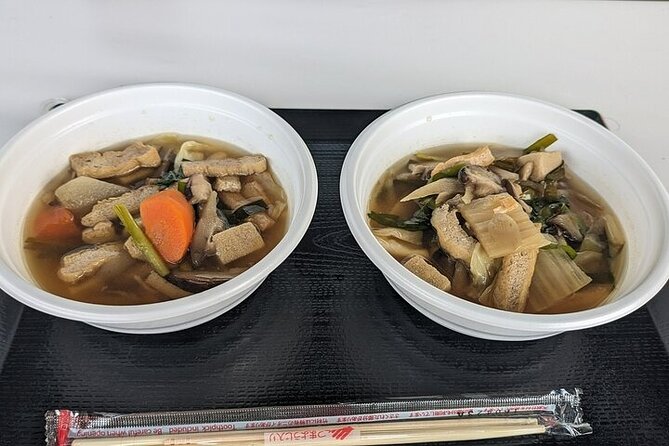
One more practical thought: food and drinks aren’t included. So don’t plan on a full meal being part of the tour. If you want to stay comfortable, plan your snacks around that reality (and if the guide offers small snacks, treat that as a bonus, not a substitute for meal planning).
Who should book this tour
This tour fits you if:
- You want a sumo expert guide to explain rules, ceremony, and what to watch.
- You like the idea of combining live tournament viewing with museum context.
- You prefer a small group and a structured experience that doesn’t require planning every step.
It may be a weaker fit if:
- You need accessible seating that avoids steep stairs, because access inside the venue has been reported as not adapted for reduced mobility.
- You already know sumo well and just want maximum freedom with minimal guidance. The tour is built around learning, not wandering.
Should you book Tokyo Grand Sumo Tournament 2026 with a Sumo expert guide?
I’d book it if you want your Tokyo sumo day to feel understandable from the first moment you sit down. The reserved 2nd-floor seats remove a lot of uncertainty, and the Elisabeth Llopis (Elly) guided explanations are what turn the experience into more than just big guys throwing each other around.
Skip it only if accessibility needs make stair access a problem, or if you strongly prefer a self-directed museum-plus-sumo plan without an expert in your ear.
If you’re doing your first sumo tournament, or you want to feel smarter by the end, this is one of the more “worth it” ways to spend a Tokyo afternoon at Ryogoku.
FAQ
What time does the tour start?
The experience starts at 2:00 pm.
How long is the tour?
It lasts about 4 hours.
What’s included in the price?
Included are reserved 2nd-floor chair seats, a local and professional sumo expert guide, and entry to the Sumo Museum.
Is food or drinks included?
No. Food and drinks are not included.
Where do I meet, and where does it end?
You meet at Ryōgoku Station (address: 1-chōme-3-20 Yokoami, Sumida City, Tokyo 130-0015) and the tour ends back at the meeting point.
How many people are in the group?
The tour has a maximum of 10 travelers, and bookings require at least 2 people per booking. Confirmation is received within 48 hours, subject to availability.
More Guided in Tokyo
- Tokyo 6hr Private Tour with Government-Licensed Guide
★ 5.0 · 3,902 reviews - Tokyo: Shinjuku Local Bar and Izakaya Guided Walking Tour
★ 4.9 · 1,794 reviews - Tokyo: Private City Highlights Tour with Local Guide
★ 4.8 · 1,433 reviews - Tokyo: Tsukiji Fish Market Guided Walking Tour
★ 4.9 · 1,397 reviews - Tokyo 4hr Private Tour with Government-Licensed Guide
★ 5.0 · 1,394 reviews
More Tour Reviews in Tokyo
- Mt Fuji and Hakone 1-Day Bus Tour Return by Bullet Train
★ 5.0 · 26,383 reviews - 1-Day Tokyo Bus Tour
★ 5.0 · 14,250 reviews - Tokyo: teamLab Planets TOKYO Digital Art Museum Entry Ticket
★ 4.6 · 9,779 reviews - Mt Fuji & Hakone Cruise, Drum Show Bullet Train 1 Day from Tokyo
★ 4.0 · 7,413 reviews - Tokyo: Shinjuku Food Tour (13 Dishes at 4 Local Eateries)
★ 5.0 · 6,603 reviews
More Sumo, Ringside and Rated
- Tokyo: Sumo Show and Dining Experience
★ 4.8 · 2,742 reviews - the SUMO show
★ 5.0 · 1,960 reviews - Tokyo Shinjuku Sumo Show & Experience with Photo
★ 5.0 · 1,750 reviews - Tokyo: Sumo Show and Experience in Shinjuku
★ 4.8 · 1,001 reviews - Tokyo Grand Sumo Tournament Viewing Tour with Tickets
★ 5.0 · 692 reviews
Latest Tokyo reviews off our desk






Sumo Tournaments & Shows, compared.
 ★ 4.8Sumo Show and Dining ExperienceFrom $792,742 reviews
 ★ 5.0the SUMO showFrom $891,960 reviews
 ★ 5.0Tokyo Shinjuku Sumo Show & Experience with PhotoFrom $791,750 reviews
 ★ 4.8Sumo Show and Experience in ShinjukuFrom $691,001 reviews
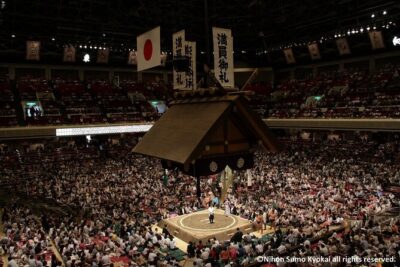 ★ 5.0Tokyo Grand Sumo Tournament Viewing Tour with TicketsFrom $124692 reviews
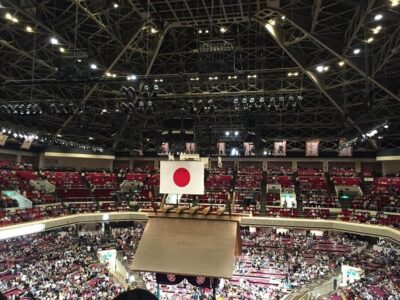 ★ 5.0Tokyo Sumo Wrestling Tournament ExperienceFrom $124660 reviews
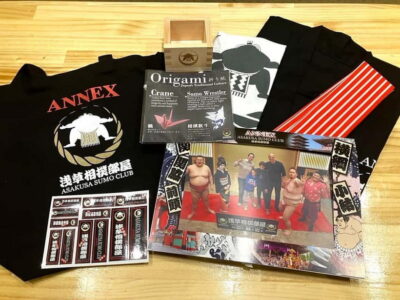 ★ 4.7Luxury Sumo Show Experience & Japanese cuisine & DrinkFrom $103577 reviews
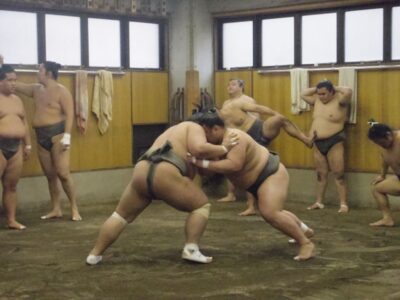 ★ 4.8Sumo Morning Practice Viewing TourFrom $81570 reviews
Browse the lists this tour appears in