
Reviewed · TSUKIJI MARKET FOOD TOURS
Tokyo: Guided Walking Tour of Tsukiji Market with Lunch
Tsukiji is a food factory. This guided stroll through Tokyo’s Tsukiji Outer Market pairs 9 tastings with real market rhythm, and it starts at Tsukiji Hongwanji Temple so you understand what you’re seeing before you eat.
I especially like how the guide steers you through the chaos with a plan, not guesswork, and how you get snacks that actually feel like lunch instead of random samples. One thing to consider: at this price point, you should treat it as a guided tasting experience more than a full, sit-down meal, and picky eaters may want to think carefully about the seafood and beef items included.
In This Review
- Key Points You’ll Care About
- Tsukiji Hongwanji Temple: Your Starting Gate and Culture Lesson
- Walking the Tsukiji Outer Market Like a Local (Not Like a Tourist)
- A realistic note on the coverage
- Nine Tastings That Add Up to a Real Lunch
- Why these choices work
- Portion expectations
- How Food, Religion, and Daily Work Connect Here
- Small Group in Real Life: English Guidance and an Easy Pace
- What to bring
- Timing reality
- Price and Value: Is $113 Worth It?
- Should You Book This Tsukiji Market Tour?
- FAQ
- Where does the tour start?
- How long is the tour?
- Is the tour in English?
- What’s included in the price?
- Is it a small group?
- Do I need to bring anything?
Key Points You’ll Care About
- Meet at Tsukiji Hongwanji Temple for context right before the market
- 9 tasting stops that cover grilled skewers, sushi, omelet, rice balls, dessert, tea, and dashi soup stock
- Small group limit of 10 so you can move with less crowd-pressure
- English-speaking guide focused on how food, work, and culture connect
- Outer Market + wholesaler viewing so you’re not stuck only on tourist stalls
- Comfort-first pace with time to sample, queue when needed, and keep things organized
Tsukiji Hongwanji Temple: Your Starting Gate and Culture Lesson
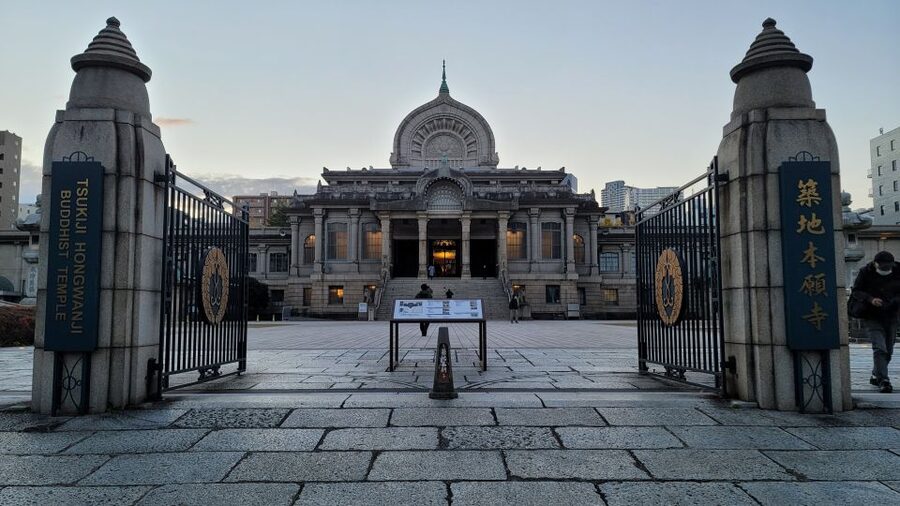
The tour begins in front of Tsukiji Hongwanji Temple, and that matters more than it sounds. Before you step into the food frenzy, you get a chance to look at the temple exterior—an older, Indian-inspired style that signals this area is not just commerce. It’s also belief, routine, and community.
You’ll see the temple as a kind of mental reset. In a place like Tsukiji Outer Market, it’s easy to think only in terms of what you’re about to eat. Starting with the temple helps you pay attention to why Japanese food is treated with respect: ingredients, preparation, and even the act of gathering food all connect to daily life and to the broader cultural world around Buddhism.
If you’re the type who likes your meals with meaning (and not just calories), this first stop is a win.
More market breakfasts our reviewers scored
- Tokyo Tsukiji Fish Market Food and Culture Walking Tour
★ 5.0 · 3,184 reviews - Tokyo: Tsukiji Fish Market Food and Walking tour
★ 5.0 · 1,724 reviews - Tokyo: Tsukiji Fish Market Guided Walking Tour
★ 4.9 · 1,397 reviews - Tokyo Sushi Making Class in Tsukiji with Professional Chef
★ 5.0 · 1,177 reviews
Walking the Tsukiji Outer Market Like a Local (Not Like a Tourist)
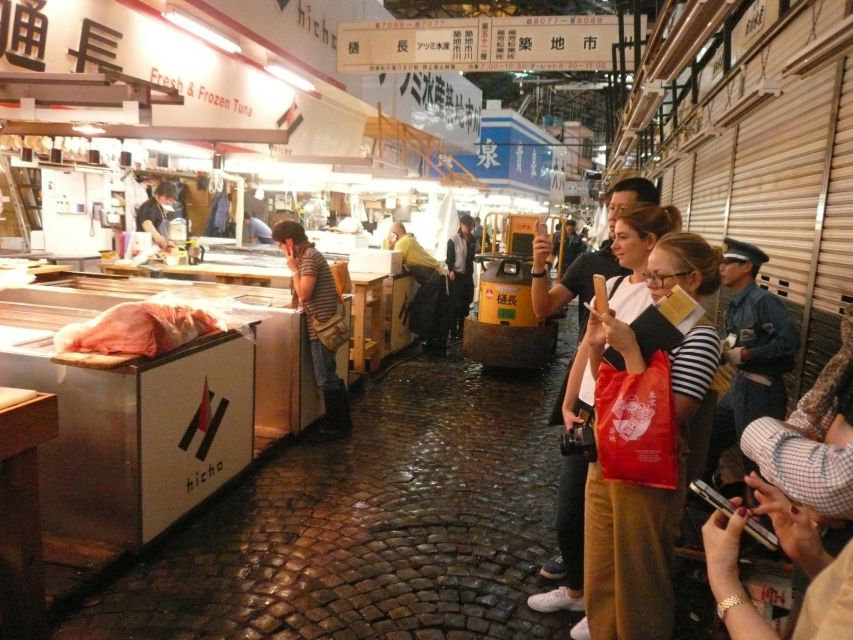
Once you move into the Outer Market area, the guide’s job becomes clear. Tsukiji’s food scene is dense, loud, and easy to misunderstand if you’re trying to navigate solo. The market has busy workers, strong smells, and a lot of product variety—some of it surprising even if you think you know Japanese seafood already.
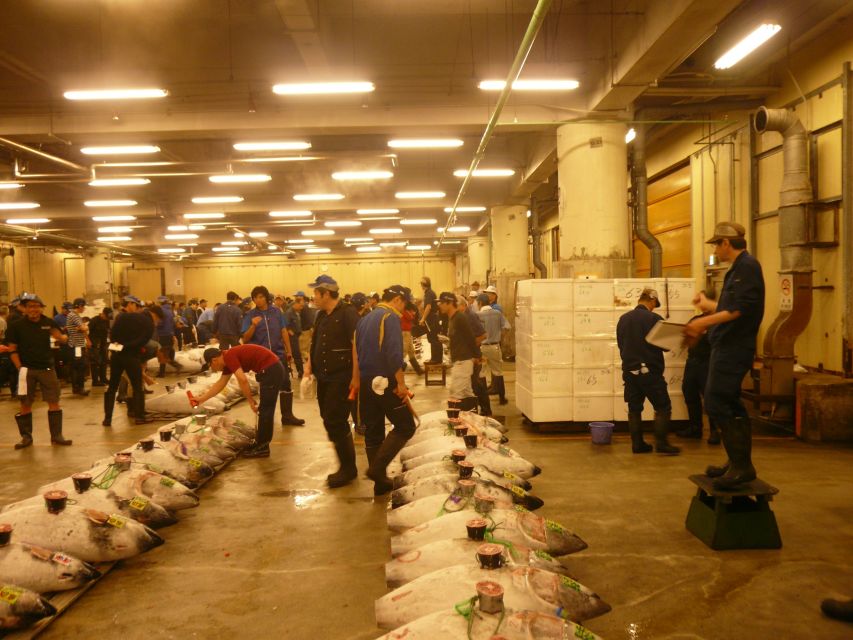
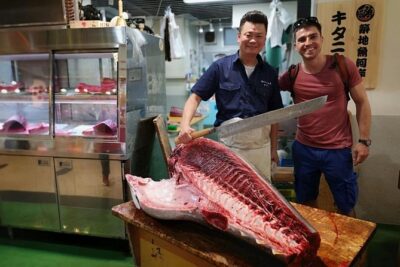
This tour helps you read the place. You’ll pass restaurants, shops, and stalls, and you’ll spend time observing expert wholesalers busy at work. That’s the difference between shopping and watching how the market truly functions. The guide helps you understand what you’re looking at—why certain items are prepared quickly, why particular foods are popular at certain times, and how the Outer Market’s rhythm shapes what you can taste.
In past groups, guides such as Tomoko or Yumiko have been praised for keeping things relaxed and organized—like queuing for you at stalls so you can keep walking and stay with the group, and even bringing items to help you stay tidy while eating on the move. You should expect that kind of practical flow from a good guide, especially in tight spaces where everyone’s trying to squeeze in.
A realistic note on the coverage
The market tour is focused. If you’re hoping to cover every corner of Tsukiji with deep time at each stall, this isn’t built like an all-day free-for-all. The experience is designed around a set number of tastings and guided stops over 165 minutes, so you’ll move efficiently—great for many people, but less ideal if you want long wandering.
Nine Tastings That Add Up to a Real Lunch

Here’s the core value: 9 tastings. This is not just a snack stop; it’s a tasting circuit that’s meant to feel like lunch while teaching you how different Japanese flavors work together.
You can expect tastings that include:
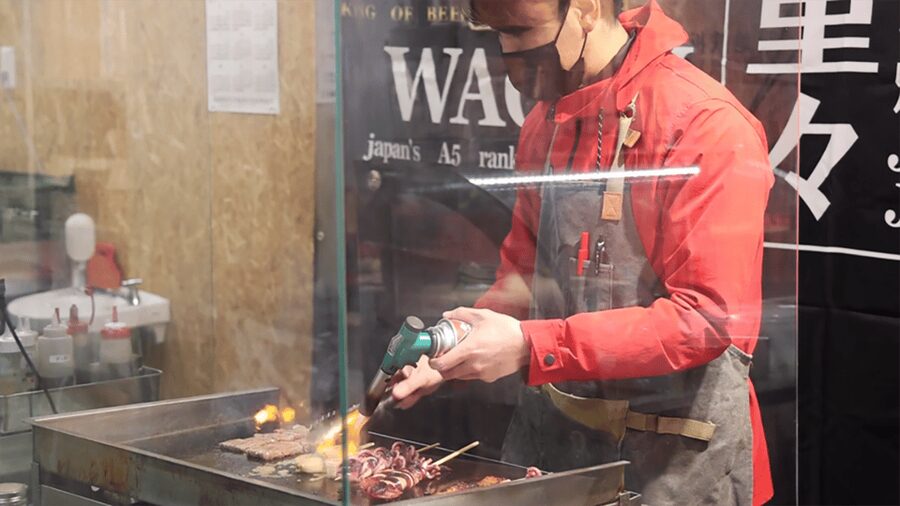
- Grilled seafood or beef skewers (often described through items like yakitori-style skewers)
- Wagyu beef
- A Japanese-style omelette
- Tuna sushi
- Fried fish paste skewers
- Filled rice balls
- Dessert
- A drink
- A sample of Japanese tea
- Plus a sample of dashi soup stock
Why these choices work
The selection isn’t random. You get multiple textures and temperature styles: something grilled, something fried, something soft and savory (like omelette), and then sushi and rice ball formats that show how Japanese meals can be portable without losing soul. You also get dashi tasting, which is a big deal in Japanese flavor building—so even if you’ve only had miso soup before, this helps you connect the dots between the market snacks and the broader Japanese pantry.
Readers also shortlisted these Tokyo bookings:
- Tokyo Tsukiji Fish Market Food and Culture Walking Tour★ 5.0 · 3,184 reviews
- Tokyo: Imperial Palace and Shogun Historical Walking Tour★ 5.0 · 2,251 reviews
- Tokyo: Shinjuku Local Bar and Izakaya Guided Walking Tour★ 4.9 · 1,794 reviews
- Tokyo: Tsukiji Fish Market Food and Walking tour★ 5.0 · 1,724 reviews
- Tokyo: Asakusa Walking Tour with Sensoji Temple Visit★ 4.8 · 1,583 reviews
Portion expectations
The feedback you’ll see from people who enjoyed the experience tends to focus on the guided tasting structure and the guide’s ability to pick good bites for timing and access. That said, some people have felt the food assortment didn’t match their expectations, especially when they wanted a more substantial “food crawl” vibe or bigger wow moments from each stall.
So here’s my practical advice: treat the tastings as samples that combine into a satisfying lunch, not as a guarantee that every single bite will be a home run for your personal taste. If you have strong preferences (especially around seafood or stronger fishy flavors), consider that the tasting list explicitly includes tuna sushi, grilled seafood, and dashi.
How Food, Religion, and Daily Work Connect Here
One of the more interesting parts of this experience is the way the guide ties food to culture. The tour doesn’t just say eat this. It explains why these market foods are treated seriously and how daily work and community habits feed into what people choose to eat.
You’ll also connect that idea to the temple stop you made earlier. When you see the temple exterior first, then walk into a market full of workers and wholesalers, it creates a clear story: food isn’t only entertainment. It’s tied to respect for craft, for ingredients, and for the social structures that make community meals possible.
That’s what makes this tour feel more like a cultural walk than a menu list. Even if you’re mostly there for the taste, you’ll likely leave with a better sense of how Japanese food culture stays grounded in routine, not just trend.
Small Group in Real Life: English Guidance and an Easy Pace
This tour is limited to 10 participants. That size is ideal for a place like Tsukiji Outer Market. Big groups can turn into herding. Too small can mean slower pacing and less efficient access to stalls. Ten is the sweet spot where you still feel guided, but you’re not jammed shoulder-to-shoulder the whole time.
The tour is conducted in English with a live guide, and the meeting point is straightforward: in front of Tsukiji Hongwanji Temple. From Tsukiji Station on the Hibiya Line, you’ll use Exit A1, then turn left. The temple entrance is about 50 meters from the station.
What to bring
Wear comfortable shoes. The market walk involves standing, moving through narrow areas, and eating while on the go. You don’t need special gear, but you do want footwear that can handle a solid stretch of walking and occasional crowding.
Timing reality
165 minutes is long enough to taste multiple foods and get meaningful context, but it’s not an all-afternoon commitment. It works well if you want a strong food-and-culture experience without losing your entire day in one neighborhood.
Price and Value: Is $113 Worth It?
At $113 per person for about 2 hours and 45 minutes, you’re paying for three things:
- A guide who can navigate the market efficiently
- 9 tastings plus tea, a drink, dessert, and dashi soup stock
- The added structure of starting at the temple so the market doesn’t feel random
If you were to buy all items on your own, the market economy is tricky. Prices vary stall-to-stall, the timing can be unpredictable, and you might miss the best options simply because you don’t know what to look for. This tour reduces that guesswork. You also get someone managing movement and queues, which is a real benefit in Tokyo food neighborhoods.
Where the value question gets personal is expectations. If you want a long, heavy buffet-style meal, this won’t feel like that. The food is portioned to fit multiple tastes across a circuit. But if you want a guided tasting that hits a range of flavors and formats, you’ll likely feel the $113 is more about access and context than about quantity.
My balanced take: this is strong value if you enjoy learning while you snack, and you’re comfortable with seafood and beef-based items being part of the lineup. If you’re mainly hungry and want the biggest food payoff per dollar, you might feel underwhelmed.
Should You Book This Tsukiji Market Tour?

Book it if you:
- Want an easy win for your Tokyo schedule that mixes temple context with a hands-on market walk
- Like guided direction in crowded food areas (so you don’t spend your time lost)
- Are happy with a lunch-style tasting menu made of 9 bite-sized stops
- Prefer a small group (10 max) and an English guide
Skip or think twice if you:
- Expect a huge, sit-down meal rather than samples across multiple stalls
- Have very limited comfort with seafood and fish-based flavors, since the tastings include tuna sushi, grilled seafood, and dashi soup stock
- Need maximum market coverage and lots of free time to wander independently
If you land in the first group, this tour is a smart way to experience Tsukiji Outer Market without turning it into a stressful scavenger hunt.
FAQ
Where does the tour start?
Meet in front of Tsukiji Hongwanji Temple.
How long is the tour?
The duration is 165 minutes.
Is the tour in English?
Yes, the tour guide provides the experience in English.
What’s included in the price?
The tour includes a guide and tasting of 9 local specialties.
Is it a small group?
Yes. The group is limited to 10 participants.
Do I need to bring anything?
Bring comfortable shoes, since you’ll be walking through the market area.
More Tours in Tokyo
- Mt Fuji and Hakone 1-Day Bus Tour Return by Bullet Train
★ 5.0 · 26,383 reviews - 1-Day Tokyo Bus Tour
★ 5.0 · 14,250 reviews - Tokyo: Shinjuku Food Tour (13 Dishes at 4 Local Eateries)
★ 5.0 · 6,603 reviews - Tokyo Mt Fuji 5th St & Hakone Cruise Bus Tour w/Bullet Train
★ 4.4 · 5,024 reviews - Flagship 2-Hours Official Street Go-Kart Tour – Tokyo Bay Shop
★ 5.0 · 4,974 reviews
More Tour Reviews in Tokyo
- Mt Fuji and Hakone 1-Day Bus Tour Return by Bullet Train
★ 5.0 · 26,383 reviews - 1-Day Tokyo Bus Tour
★ 5.0 · 14,250 reviews - Tokyo: teamLab Planets TOKYO Digital Art Museum Entry Ticket
★ 4.6 · 9,779 reviews - Mt Fuji & Hakone Cruise, Drum Show Bullet Train 1 Day from Tokyo
★ 4.0 · 7,413 reviews - Tokyo: Shinjuku Food Tour (13 Dishes at 4 Local Eateries)
★ 5.0 · 6,603 reviews
More Tsukiji Market Breakfasts
- Tokyo Tsukiji Fish Market Food and Culture Walking Tour
★ 5.0 · 3,184 reviews - Tokyo: Tsukiji Fish Market Food and Walking tour
★ 5.0 · 1,724 reviews - Tokyo: Tsukiji Fish Market Guided Walking Tour
★ 4.9 · 1,397 reviews - Tokyo Sushi Making Class in Tsukiji with Professional Chef
★ 5.0 · 1,177 reviews - Tsukiji Fish Market Guided Tour and Sushi Making with Pro Chef
★ 5.0 · 775 reviews
Latest Tokyo reviews off our desk






Tsukiji Market Food Tours, compared.
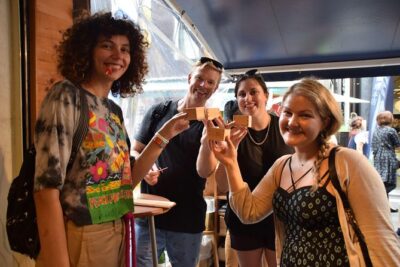 ★ 5.0Tokyo Tsukiji Fish Market Food and Culture Walking TourFrom $993,184 reviews
 ★ 5.0Tsukiji Fish Market Food and Walking tourFrom $301,724 reviews
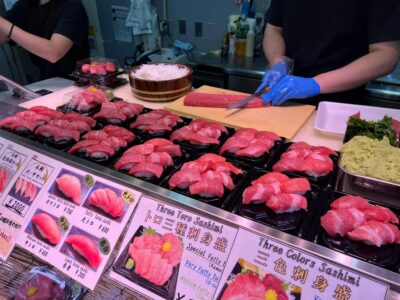 ★ 4.9Tsukiji Fish Market Guided Walking TourFrom $221,397 reviews
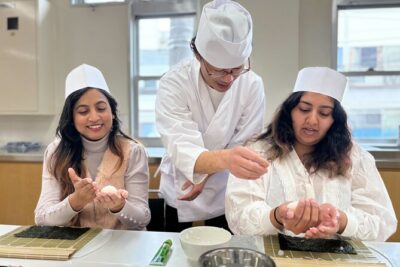 ★ 5.0Tokyo Sushi Making Class in Tsukiji with Professional ChefFrom $491,177 reviews
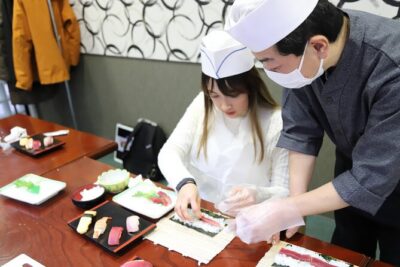 ★ 5.0Tsukiji Fish Market Guided Tour and Sushi Making with Pro ChefFrom $104775 reviews
★ 4.7Tsukiji Fish Market Food and Culture Walking TourFrom $96757 reviews
★ 5.0Tsukiji Fish Market Guided Tour and Sushi Making with Pro ChefFrom $104775 reviews
★ 4.7Tsukiji Fish Market Food and Culture Walking TourFrom $96757 reviews
 ★ 5.0Tsukiji Fish Market: Street Food & Culture Walking TourFrom $33669 reviews
 ★ 5.0Tsukiji Fish Market Small-Group Food Walking TourFrom $87621 reviews
Browse the lists this tour appears in