
Reviewed · TSUKIJI MARKET FOOD TOURS
Tsukiji Fish Market Small-Group Food Walking Tour
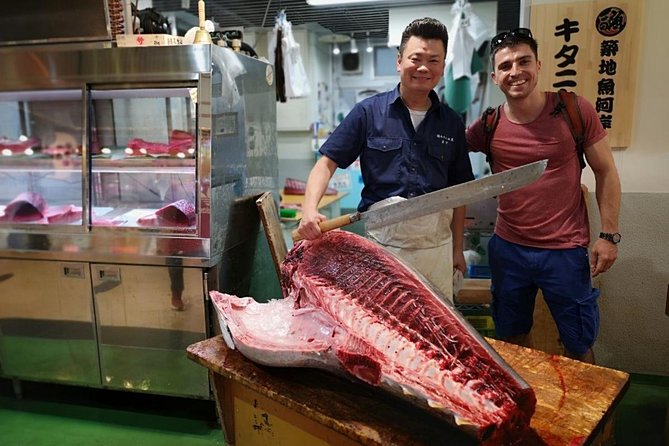
One of Tokyo’s food walks comes with a shrine stop. This small-group Tsukiji Fish Market tour is built around the Outer Market food stalls, then adds Japanese religious sites and a lookout moment so you’re not just eating in a blur. You’ll also get fresh seafood sampling plus a sit-down lunch, timed so you’re moving while the market energy peaks.
Two things I really like: the tour packs in real market snacks (not just one tasting), and the guide brings food and culture together—Buddhist temple and Shinto shrine included. One caution: it’s a hot, tight area, and food is not designed to be allergy-free or vegan-friendly.
Want the short version? Come hungry, bring water, and wear shoes you trust. Expect a small group (max 7) and a guided route through narrow lanes where it can feel crowded and you’ll be standing and walking more than sitting.
In This Review
- Key points to know before you go
- Tsukiji: what this tour really means in 2026
- Meeting, route flow, and timing in plain terms
- Stop 1: Tsukiji Station area and your first taste moment
- Stop 2: the Old Tsukiji Market and the religion/history piece
- What you might eat here
- Stop 3: Tsukiji Jogai Market (Outer Market) for more snack hunting
- The seafood lunch: where the value really lands
- Dietary reality check (so you’re not surprised)
- Guides and what they add to the walk
- Crowds, heat, and lane etiquette: how to make it pleasant
- Price and value: why $87.37 can be fair
- Who should book this Tsukiji tour?
- Should you book this Tsukiji Fish Market Small-Group Food Walk?
- FAQ
- How long is the Tsukiji Fish Market small-group food walking tour?
- How many people are in the group?
- Is lunch included?
- Are there vegan options or allergy-friendly guarantees?
- Where do I meet the guide and where does the tour end?
- Does the tour include the temples and shrines?
Key points to know before you go
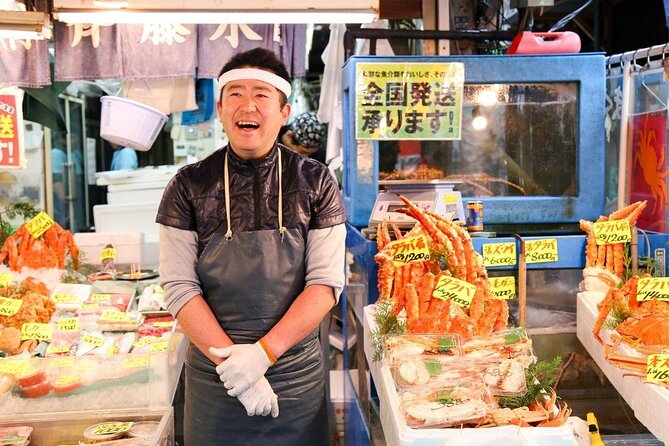
- Outer Market focus: the inner wholesale fish market moved years ago, but Tsukiji’s Outer Market still delivers seafood storefront action.
- Lunch is included: you’re not just nibbling; you get a proper sit-down seafood meal.
- Culture stops matter: you’ll visit a Buddhist temple and Shinto shrine, not only food shops.
- You’ll sample across several stalls: it’s designed for variety, so you can try more than one signature item.
- Small-group pacing: with up to 7 people, you’re less lost in the crowd.
- No vegan options: and allergy-free guarantees aren’t promised, so plan accordingly.
Tsukiji: what this tour really means in 2026
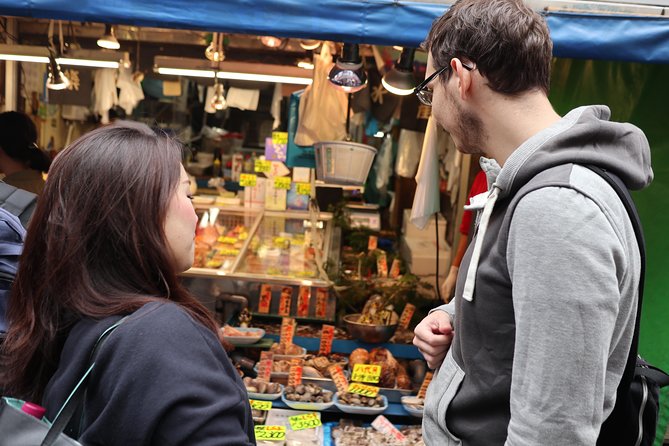
Tsukiji still has the reputation. And the reputation is deserved. But here’s the practical context that shapes what you’ll do on this tour: the original inner wholesale market moved to Toyosu in 2018. Tsukiji is no longer the same picture of dramatic auctions that people remember from older photos.
What you get instead—and what I think is more fun for most visitors—is the Outer Market experience: food specialty shops, seafood sellers, quick bites, and people doing what they do every day. This tour keeps you in that lived-in zone and then layers on religion and viewpoints so the walking has meaning.
You’ll also notice the market has two speeds. Some lanes move fast and you’ll keep flowing. Other spots slow down into lines and small counters. That’s why a guide matters here: you’ll spend less time guessing and more time eating.
More market breakfasts our reviewers scored
- Tokyo Tsukiji Fish Market Food and Culture Walking Tour
★ 5.0 · 3,184 reviews - Tokyo: Tsukiji Fish Market Food and Walking tour
★ 5.0 · 1,724 reviews - Tokyo: Tsukiji Fish Market Guided Walking Tour
★ 4.9 · 1,397 reviews - Tokyo Sushi Making Class in Tsukiji with Professional Chef
★ 5.0 · 1,177 reviews
Meeting, route flow, and timing in plain terms
The tour starts at Tsukiji Station, Exit 1, with your guide waiting nearby. You’ll then walk through the Tsukiji area for about 3 hours. It ends near Shiodome Tower (handy if you want an easy train connection afterward).
This is a max-7 group. That number is key. In a bigger group, market lanes can feel like a school trip herd. Here, the pacing tends to feel more like a guided stroll with stops—still active, but not chaotic.
Plan for standing. Plan for short segments. And plan for heat. Summer in Tokyo is hot and humid, and the tour specifically warns you to bring water and a hat. I’d add one more practical note: wear shoes that don’t mind uneven pavement, and keep your phone charged because photos in crowds chew up battery fast.
Stop 1: Tsukiji Station area and your first taste moment
You meet at Tsukiji Eki mae near the station. From there, the early part of the tour sets your food baseline—what to look for, what to order, and how to move through the Outer Market without getting stuck behind someone who decided to browse for 20 minutes.
This segment also matters because the market is not a museum. It’s a working food district. Even when you’re just sampling, you’re learning how vendors think: freshness cues, simple prep styles, and what’s worth trying when you only have a few hours.
One thing to watch: the tour information says admission ticket isn’t included at the first stop. If there’s any ticketed component, your guide will handle the details on the ground, but it’s still good to know you may be paying a small extra fee depending on what’s required at that moment.
Stop 2: the Old Tsukiji Market and the religion/history piece
Next comes the Old Tsukiji Market area. This is where the tour shifts from pure eating to “why this place matters.” You’ll get food sampling around the market, and you’ll also learn about the building and religions in Japan.
Two layers show up here:
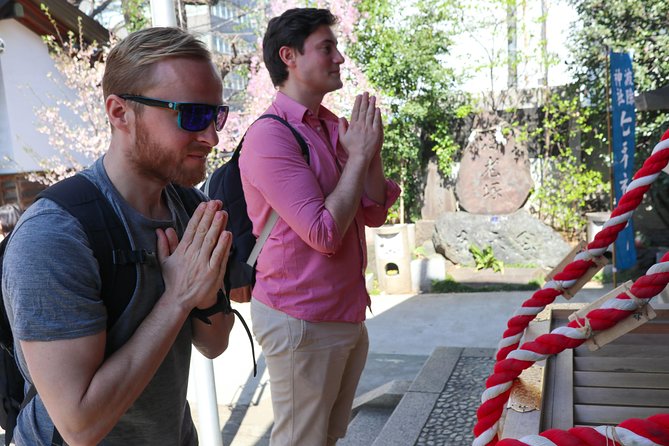
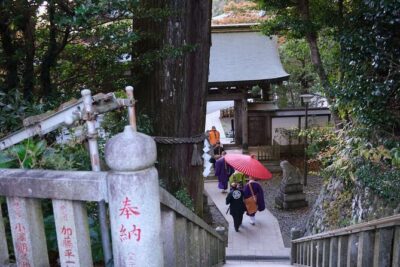
1) Japanese religious sites in a market setting. The tour’s highlights call out both a Buddhist temple and a Shinto shrine. Seeing those within the Tsukiji environment helps you understand how daily food culture and spiritual practice can overlap. This isn’t just sightseeing tacked on. It’s part of how people frame luck, work, and community.
2) A viewpoint moment. The tour includes seeing a Tokyo city view. In practice, that often means a short “pause and look” break in the walking rhythm—useful when you’re already on sensory overload. One review specifically mentions a lookout over Tokyo bay, which sounds like the right kind of payoff: you get your bearings, then you’re back to eating.
This stop is also where you’ll notice the market’s shape. You’re walking through dense lanes. There are a lot of signs telling you not to stop and eat, so you’ll be managing food while keeping the flow. That can feel a little awkward at first, but it’s also what makes it feel authentic: the market still functions while you’re there.
What you might eat here
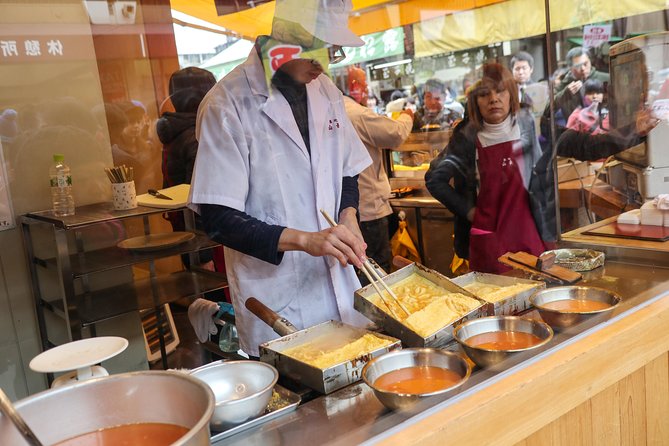
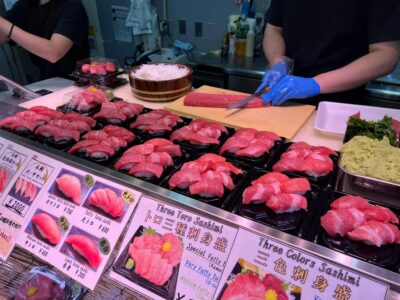
The tour description emphasizes “fresh seafood lunch included” and “food sampling at several local shops and stalls.” Based on the food types people talked about, you may encounter items like tamagoyaki (Japanese sweet omelette), sushi, unagi (eel) BBQ, and seafood-on-a-stick style snacks. Exact items can vary by timing and supply, but the goal stays the same: you should leave knowing the flavors, not just the photos.
Readers also shortlisted these Tokyo bookings:
- Tokyo Tsukiji Fish Market Food and Culture Walking Tour★ 5.0 · 3,184 reviews
- Tokyo: Imperial Palace and Shogun Historical Walking Tour★ 5.0 · 2,251 reviews
- Tokyo: Shinjuku Local Bar and Izakaya Guided Walking Tour★ 4.9 · 1,794 reviews
- Tokyo: Tsukiji Fish Market Food and Walking tour★ 5.0 · 1,724 reviews
- Tokyo: Asakusa Walking Tour with Sensoji Temple Visit★ 4.8 · 1,583 reviews
Stop 3: Tsukiji Jogai Market (Outer Market) for more snack hunting
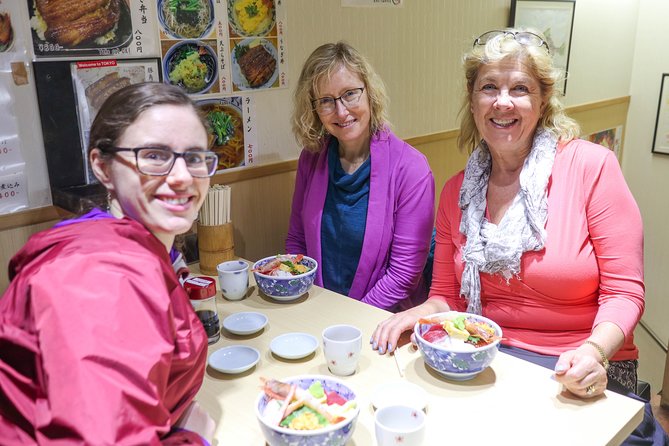
The third stop is Tsukiji Jogai Market, where the focus stays on hunting seafood and local snacks. This section is where your stomach starts to do math. You’ve already eaten a few bites, now you’re comparing texture, taste, and portion size.
Jogai/Outer Market is also the place where the variety shows. The tour info notes that there are around 460 stores selling fish, produce, dried goods, seasonings, cooking utensils, and tableware. That’s a lot of variety packed into a small area, which is why it’s so easy to miss things if you wander alone.
The guide helps you keep it fun, not stressful:
- You try multiple sellers, not just the one with the longest line
- You get suggestions that fit the tour pace
- You get a sense of what’s “signature” versus what’s just popular with crowds
And yes, it can feel crowded and tightly packed. One review mentioned that some stall stops were only okay. That usually comes down to what you personally prefer and how hungry you are at that moment. The tradeoff is you’re seeing more of the market in less time.
The seafood lunch: where the value really lands
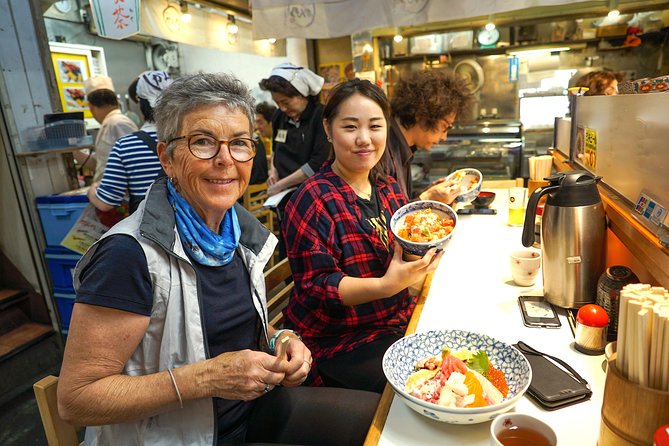
One major selling point here is the delicious seafood lunch at the market is included. I love that because it turns the tour into a real meal plan, not only snacks.
You’ll also likely have some choice for at least part of the lunch. People have said they were allowed to choose what they wanted for the sit-down meal. That’s important. It means you can tailor the lunch to your tastes instead of being stuck with a one-size-fits-all plate.
Food you can expect in this broad Tsukiji seafood style includes items like tuna nigiri, sushi sets, and cooked seafood like scallops or eel in BBQ styles. You may even see crab legs mentioned in the general food chatter around Tsukiji tours, though your exact menu depends on the day.
Dietary reality check (so you’re not surprised)
Here’s the honest bit: vegan options are not available. And allergy-free dining is not guaranteed. The tour information says the food is prepared in kitchens that do not belong to the tour operator, and substitutions may not be possible at every stop.
That said, one review highlights that a guide (Kazu) went out of his way to help a coeliac diner with appropriate options, even if substitution or slight changes were needed. Translation for you: if you have dietary needs, it’s worth communicating clearly, early, and repeatedly. Don’t assume every stop can adapt—but some guides can be very proactive.
Guides and what they add to the walk
This tour is only as good as the guide’s rhythm. The pattern in the feedback is consistent: guides like Hitomi, Yuki, Mark, Kazu, Tiger, and Mia and Mummy are praised for making the walk fun and for pairing food with explanations.
You’ll feel the difference in two ways:
- You spend less time stuck at the wrong stalls
- You get practical context (what you’re tasting and why it works in Japanese seafood culture)
Even when you’re not super into seafood, that kind of framing turns a snack crawl into a story.
Crowds, heat, and lane etiquette: how to make it pleasant
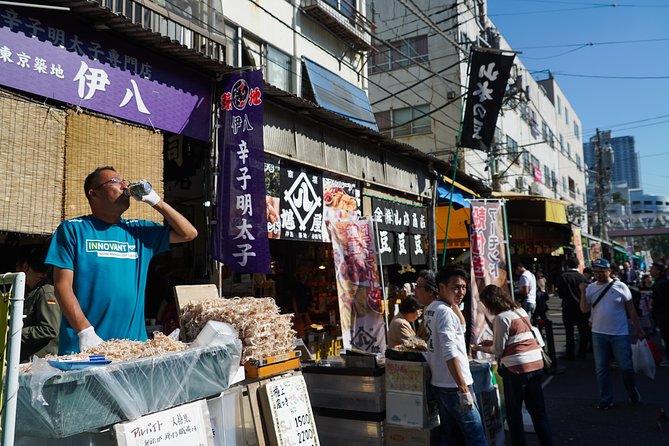
Tsukiji is not a wide open promenade. It’s narrow. And the crowd level can swing during the day. For this tour’s route, you should assume you’ll be shoulder-to-shoulder sometimes.
Two moves make your experience smoother:
1) Bring water and a hat in summer. The tour already flags heat stroke prevention for a reason.
2) Expect to eat while moving. Signs often discourage lingering while eating, so plan to grab, taste, and step aside.
One review even said the market lanes are tightly packed and there are many signs telling you not to stop and eat. That’s not a deal-breaker—it’s just how the market stays operational. Think of it as eating with purpose.
Price and value: why $87.37 can be fair
At $87.37 per person for around 3 hours, this tour isn’t the cheapest snack stroll in Tokyo. But it’s not just “pay for walking.”
Here’s the value math that makes sense:
- Lunch included (a real meal, not only bites)
- Multiple samples across different stalls
- A guide who helps you navigate a dense food district
- Cultural additions: Buddhist temple, Shinto shrine, and a viewpoint
Also, it’s small-group (max 7). That matters. You’re not fighting for attention, and the guide can keep the group moving efficiently through tight lanes.
And it’s often booked about 40 days in advance on average. That tells me the timing is popular, not random. If your dates are firm, don’t wait too long.
Who should book this Tsukiji tour?
This is a strong fit if you:
- Love seafood and want to try multiple types in a few hours
- Want a guided route that includes market texture plus temple/shrine culture
- Prefer small groups over big bus-structure tours
- Plan to eat lunch as part of your Tokyo day
It might be less ideal if you:
- Need vegan meals (not available on this tour)
- Require allergy-safe dining with guarantees (the tour can’t promise allergy-free preparation)
- Hate tight walking and “move along” market etiquette
Should you book this Tsukiji Fish Market Small-Group Food Walk?
If you want Tsukiji for what it is now—an Outer Market food and culture zone—then yes, this one is a solid choice. The combination of included seafood lunch, multiple sampling stops, and the cultural detour to Buddhist and Shinto sites makes it feel worth your time and money. The small group cap helps you actually experience the place, instead of just following.
Book it if you can handle heat and crowded lanes, and if seafood fits your diet. Skip it if you’re vegan or need guaranteed allergy accommodation.
FAQ
How long is the Tsukiji Fish Market small-group food walking tour?
It runs for about 3 hours.
How many people are in the group?
The tour has a maximum of 7 travelers.
Is lunch included?
Yes. A fresh seafood lunch is included as part of the market eating.
Are there vegan options or allergy-friendly guarantees?
Vegan options are not available. The tour also cannot guarantee allergy-free dining or dietary restrictions because food is prepared in kitchens that are not part of MagicalTrip.
Where do I meet the guide and where does the tour end?
Meet at Tsukiji Station Exit 1. The tour ends near Shiodome Tower.
Does the tour include the temples and shrines?
Yes. The experience includes visits to a Japanese Buddhist temple and a Shinto shrine, along with other cultural stops such as history and a viewpoint.
More Tours in Tokyo
- Mt Fuji and Hakone 1-Day Bus Tour Return by Bullet Train
★ 5.0 · 26,383 reviews - 1-Day Tokyo Bus Tour
★ 5.0 · 14,250 reviews - Tokyo: Shinjuku Food Tour (13 Dishes at 4 Local Eateries)
★ 5.0 · 6,603 reviews - Tokyo Mt Fuji 5th St & Hakone Cruise Bus Tour w/Bullet Train
★ 4.4 · 5,024 reviews - Flagship 2-Hours Official Street Go-Kart Tour – Tokyo Bay Shop
★ 5.0 · 4,974 reviews
More Tour Reviews in Tokyo
- Mt Fuji and Hakone 1-Day Bus Tour Return by Bullet Train
★ 5.0 · 26,383 reviews - 1-Day Tokyo Bus Tour
★ 5.0 · 14,250 reviews - Tokyo: teamLab Planets TOKYO Digital Art Museum Entry Ticket
★ 4.6 · 9,779 reviews - Mt Fuji & Hakone Cruise, Drum Show Bullet Train 1 Day from Tokyo
★ 4.0 · 7,413 reviews - Tokyo: Shinjuku Food Tour (13 Dishes at 4 Local Eateries)
★ 5.0 · 6,603 reviews
More Tsukiji Market Breakfasts
- Tokyo Tsukiji Fish Market Food and Culture Walking Tour
★ 5.0 · 3,184 reviews - Tokyo: Tsukiji Fish Market Food and Walking tour
★ 5.0 · 1,724 reviews - Tokyo: Tsukiji Fish Market Guided Walking Tour
★ 4.9 · 1,397 reviews - Tokyo Sushi Making Class in Tsukiji with Professional Chef
★ 5.0 · 1,177 reviews - Tsukiji Fish Market Guided Tour and Sushi Making with Pro Chef
★ 5.0 · 775 reviews
Latest Tokyo reviews off our desk

Tsukiji Market Food Tours, compared.
 ★ 5.0Tokyo Tsukiji Fish Market Food and Culture Walking TourFrom $993,184 reviews
 ★ 5.0Tsukiji Fish Market Food and Walking tourFrom $301,724 reviews
 ★ 4.9Tsukiji Fish Market Guided Walking TourFrom $221,397 reviews
 ★ 5.0Tokyo Sushi Making Class in Tsukiji with Professional ChefFrom $491,177 reviews
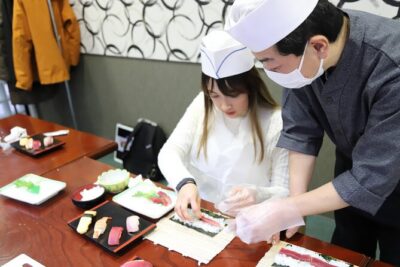 ★ 5.0Tsukiji Fish Market Guided Tour and Sushi Making with Pro ChefFrom $104775 reviews
★ 4.7Tsukiji Fish Market Food and Culture Walking TourFrom $96757 reviews
★ 5.0Tsukiji Fish Market Guided Tour and Sushi Making with Pro ChefFrom $104775 reviews
★ 4.7Tsukiji Fish Market Food and Culture Walking TourFrom $96757 reviews
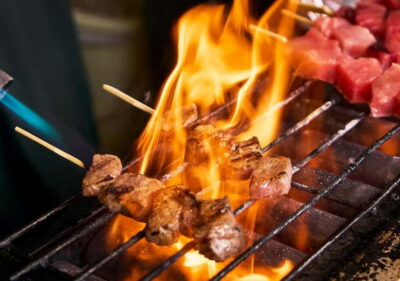 ★ 5.0Tsukiji Fish Market: Street Food & Culture Walking TourFrom $33669 reviews
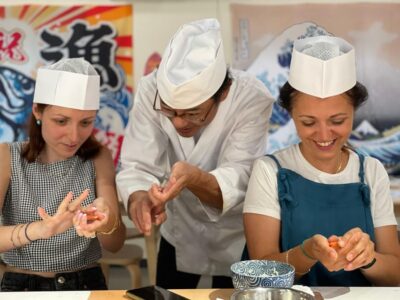 ★ 4.9Tsukiji Fish Market Sushi Making Class with Pro ChefFrom $63506 reviews
Browse the lists this tour appears in