
Reviewed · SUMO TOURNAMENTS & SHOWS
Tokyo: Not a show- a professional sumo practice with experts
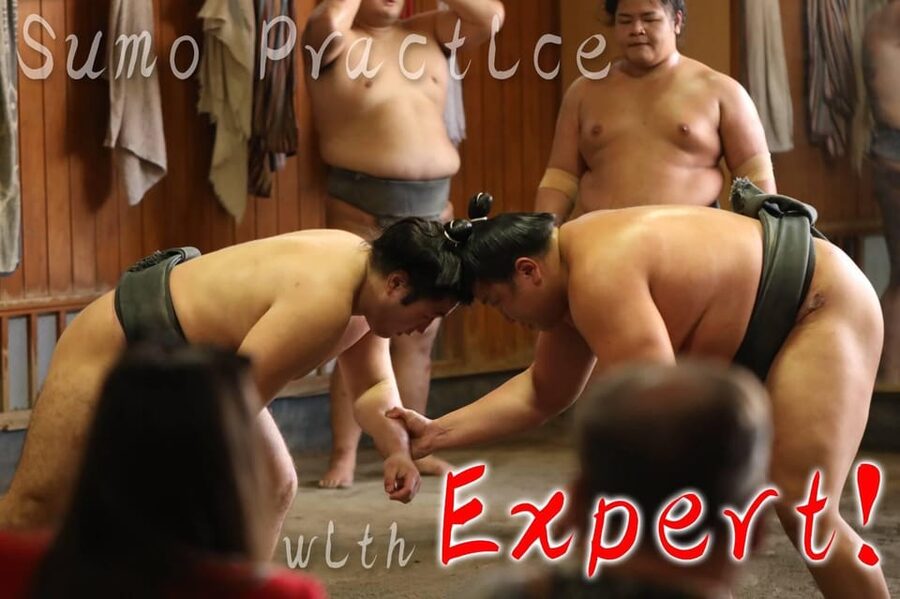
Sumo without the fake drama. This Tokyo practice tour sends you into Takasago-beya for real stable training and a photo plus Q&A with Shinya-san, a long-time sumo specialist with newspaper-journalist experience.
One thing to plan for: you sit on the floor during training, and while a cushion is provided, it can still feel demanding for the full session (floor seating).
In This Review
- Key things that make this sumo practice special
- Sumo practice in Tokyo, the real way
- Ryogoku: where Tokyo goes sumo-first
- Takasago-beya Sumo Stable: morning training up close
- What you actually do during the stable time
- Seating reality check: you’ll sit on the floor
- Photo moment: worth it because it’s framed by training
- Shinya-san’s Q&A: the part that turns questions into understanding
- A practical tip for your questions
- Kokugikan and Edo Noren: short stops that connect the dots
- Price and timing: does it make sense at $103 per person?
- How to be comfortable during training (and actually enjoy it)
- Who this Tokyo sumo practice tour is best for
- Who might want to adjust expectations
- Should you book Japan Shine Tour’s sumo practice session?
- FAQ
- How long is the Tokyo sumo practice tour?
- Where do I meet for the tour?
- Which sumo stable do you visit?
- What’s included in the tour price?
- Is there time to ask questions?
- Are drinks and food included?
- What languages are offered?
- Is seating comfortable for the training?
- Is the tour suitable for young children?
- Can I cancel and get a refund?
Key things that make this sumo practice special
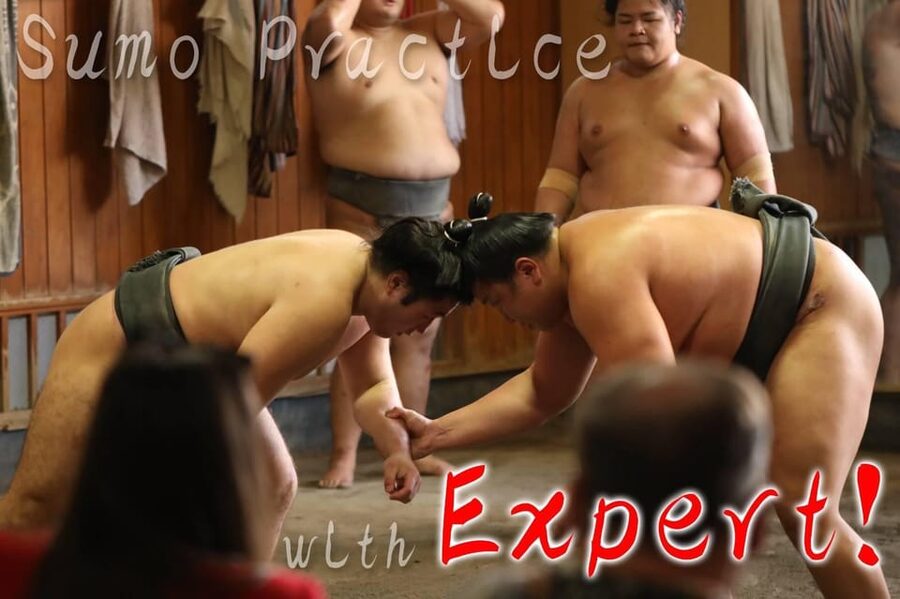
- A real stable, not a performance: you watch professional morning training with special permission
- Takasago-beya Sumo Stable: the heart of the experience for a full 2 hours
- Front-row-style viewing: you sit on the floor with cushions to get the close, grounded angle
- Photo moment with wrestlers: it’s part souvenir, part memory you’ll actually value
- Q&A with Shinya-san: journalist-style context for tournaments, wrestlers, and traditions
- Ryogoku sightings: short guided looks at Ryogoku Kokugikan and Ryōgoku Edo Noren
Sumo practice in Tokyo, the real way
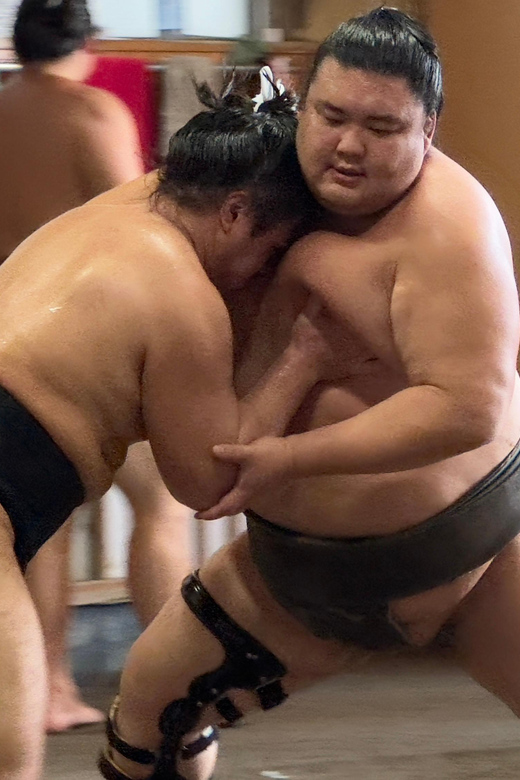
If you’re even slightly curious about sumo, this tour helps you see what most visitors only guess at. It’s not built like a show. Instead, you get a live glimpse into how wrestlers prepare, sweat, and polish technique before the day’s next steps.
What I like most is how practical it feels. You’re given a clear path through the rituals and training, then Shinya-san answers questions at the end. Add in the photo moment with wrestlers, and it turns into a trip memory that feels earned, not staged.
Other ringside bookings readers scored
- Tokyo: Sumo Show and Dining Experience
★ 4.8 · 2,742 reviews - the SUMO show
★ 5.0 · 1,960 reviews - Tokyo Shinjuku Sumo Show & Experience with Photo
★ 5.0 · 1,750 reviews - Tokyo: Sumo Show and Experience in Shinjuku
★ 4.8 · 1,001 reviews
Ryogoku: where Tokyo goes sumo-first
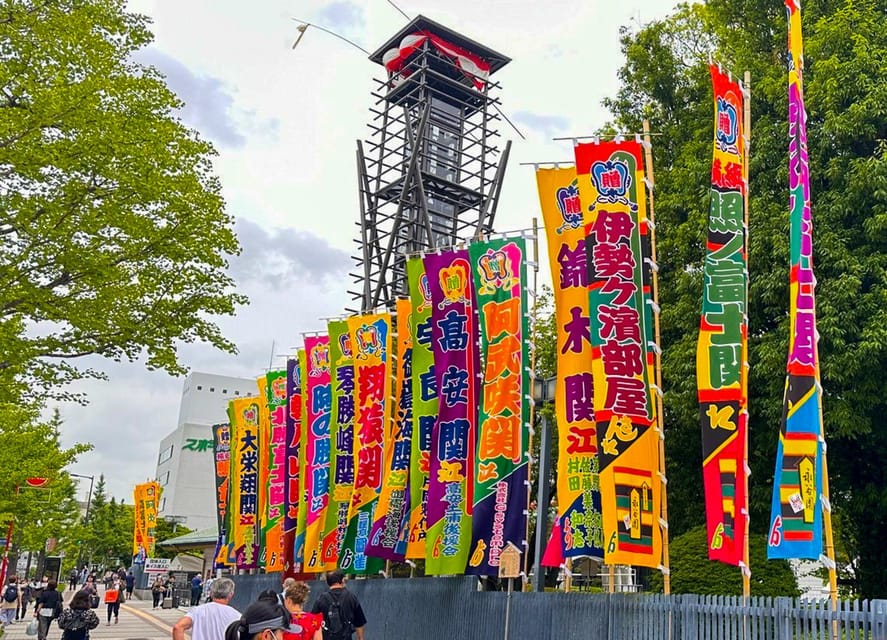
This experience is based in Ryogoku, Tokyo’s famous sumo district. The neighborhood’s reputation isn’t marketing fluff. When you’re walking around, it’s obvious you’re in an area designed around the sport—especially with Kokugikan (the arena) nearby.
You also get a short guided look at two Ryogoku landmarks tied to the sumo world: the Ryogoku Kokugikan and Ryōgoku Edo Noren. Even in a short window, those stops help you connect the dots between training, tournaments, and the bigger “sumo ecosystem.”
Takasago-beya Sumo Stable: morning training up close
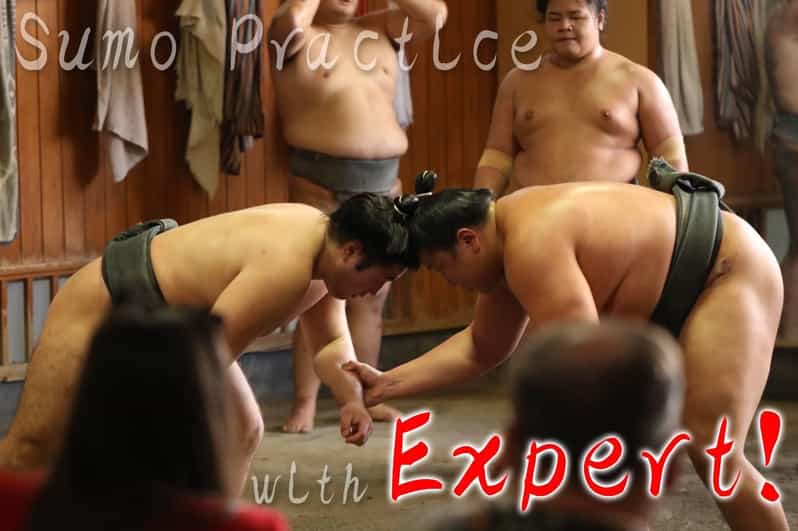
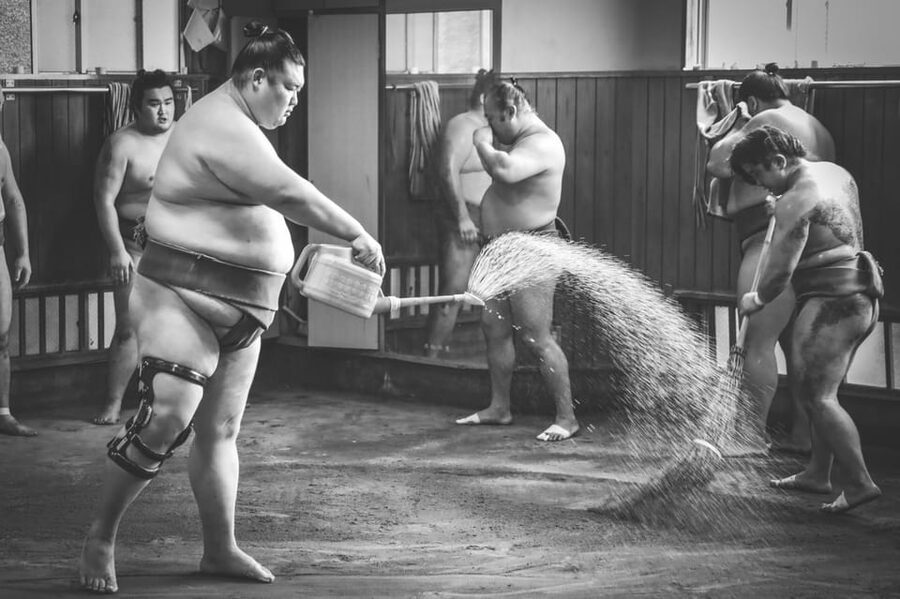
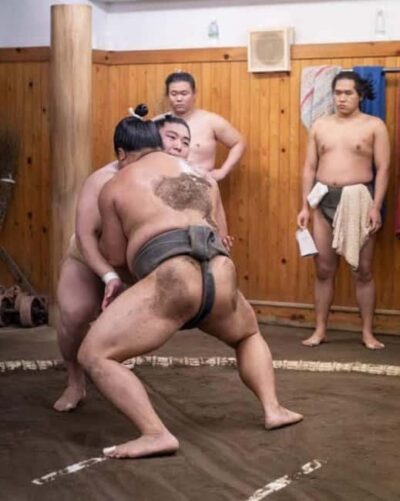
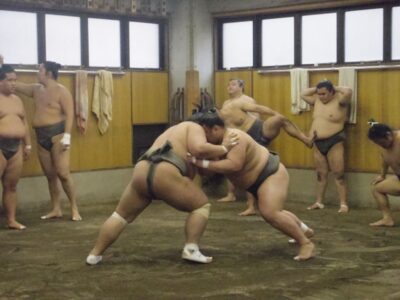
The stable visit is the center of the tour, and it lasts about 2 hours. This is where the experience shifts from sightseeing into something much more intimate. You’re observing a real professional heya, and that changes the mood instantly. The training rhythm is focused, and the intensity is more noticeable when you’re close enough to see technique details.
What you actually do during the stable time
You start with context from your English-speaking guide. The idea is to give you a map first: sumo’s history as a Japanese cultural practice, plus the routines and rituals you’ll see during training. Then you watch the session itself, with time to take commemorative photos with a sumo wrestler.
The tour is designed for questions too. Shinya-san guides the experience and later makes sure you can ask what you want—whether you’re new to sumo or you’ve already read a few basics and still want clearer answers.
Seating reality check: you’ll sit on the floor
Plan on sitting on the floor. A floor cushion is provided, which helps a lot, but it’s still floor seating. Several details in this type of stable setting can affect comfort: your legs, how long you stay in one position, and whether you can adjust easily during breaks.
If you know you’re sensitive to long floor time, consider bringing a calm mindset (and using the cushion early). Also keep water in mind, since the tour does not include drinks or food.
Readers also shortlisted these Tokyo bookings:
- Mt Fuji & Hakone Cruise, Drum Show Bullet Train 1 Day from Tokyo★ 4.0 · 7,413 reviews
- Tokyo: Sumo Show and Dining Experience★ 4.8 · 2,742 reviews
- the SUMO show★ 5.0 · 1,960 reviews
- Tokyo Shinjuku Sumo Show & Experience with Photo★ 5.0 · 1,750 reviews
- Mt Fuji & Hakone Cruise, Drum Show Bus 1 Day from Tokyo★ 4.0 · 1,287 reviews
Photo moment: worth it because it’s framed by training
It’s easy to roll your eyes at the idea of “meet a wrestler, take a photo.” Here, the photo matters more because it happens after you’ve watched real practice. You’re not just collecting an image—you’re connecting it to what you saw: the discipline, the pace, and the training feel.
Shinya-san’s Q&A: the part that turns questions into understanding
This tour’s biggest advantage is the person behind it. You’re not only getting a guided explanation—you get a specialist conversation.
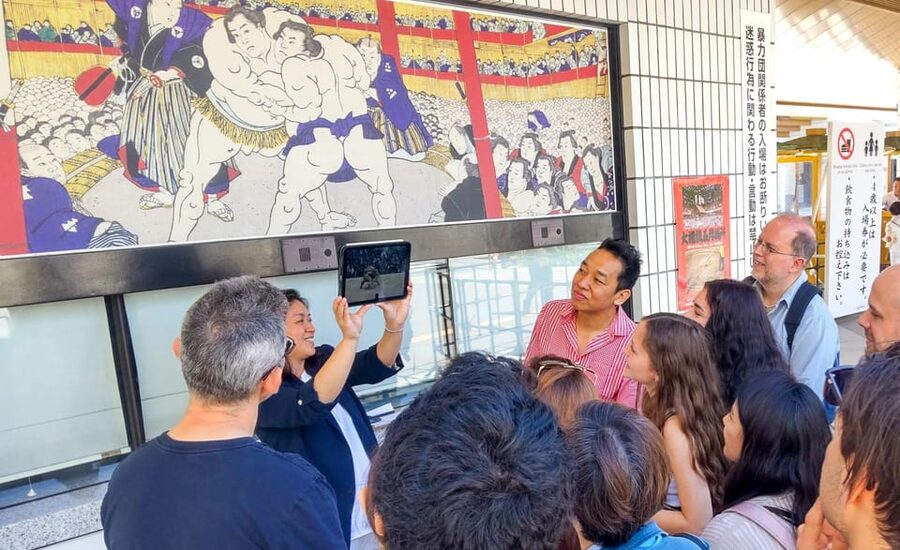
Shinya-san is described as both a sumo specialist and a national newspaper journalist. That’s a big deal. Journalists usually explain with structure: how tournaments work, why certain wrestlers’ journeys matter, what to notice in the way training unfolds, and how tradition shows up in the small stuff.
During the Q&A, you’re given room to ask questions you’d normally leave unanswered. That’s where the tour becomes more than a look-see. You’ll walk away with clearer context about what you watched and why it matters.
A practical tip for your questions
Before the training starts, I’d think of 2–3 question categories. For example:
- Rules and ranking basics you want clarified
- What specific training moments mean
- How rituals connect to tournament performance
Even if you’re advanced, this format helps you get answers that feel made for your exact curiosity.
Kokugikan and Edo Noren: short stops that connect the dots
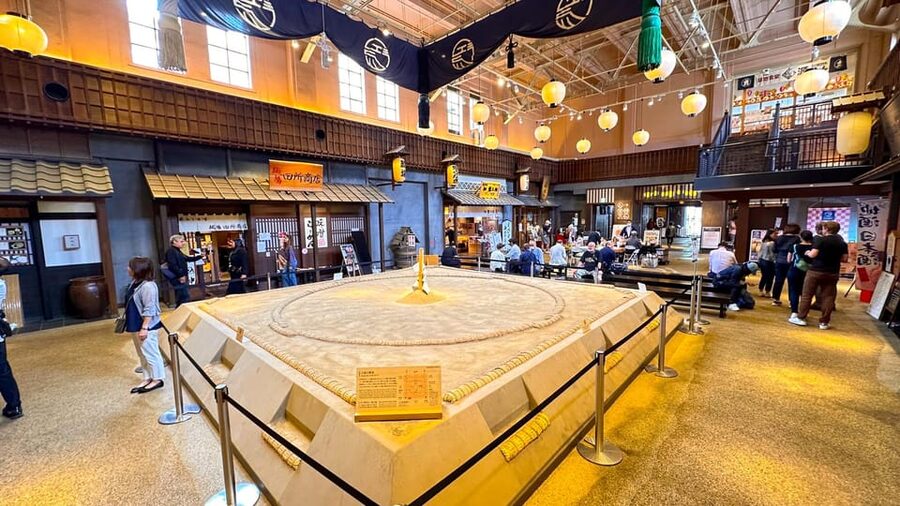
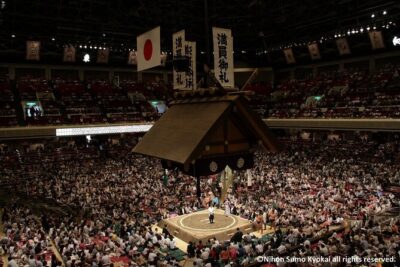
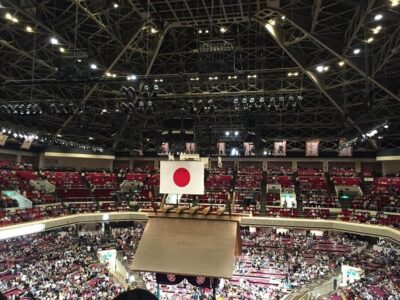
After the stable, the tour moves to Ryogoku Kokugikan for a guided tour of about 15 minutes. This is not a long museum-style visit. Think of it as orientation—helping you place the sport’s public face next to the private world of the stable.
Then you head to Ryōgoku Edo Noren for about 15 minutes of guided time, plus around 30 minutes for shopping and sightseeing. That extra stretch is useful. It gives you a chance to look around at Ryogoku’s sumo-related atmosphere without feeling rushed.
These stops are also a nice reset. Your brain has been focused on the intensity of training. Kokugikan and Edo Noren give you a chance to step back and see how the culture continues outside the stable.
Price and timing: does it make sense at $103 per person?
Let’s talk value, because $103 for a 3-hour tour in Tokyo isn’t pocket change.
Here’s what you’re paying for:
- Small group size (up to 10 participants), which usually means you can see better and stay engaged
- Special permission access to a professional stable setting
- A photo with a sumo wrestler tied to the real training context
- A dedicated Q&A with a specialist (Shinya-san), including time for questions
- Guided stops at Ryogoku landmarks linked directly to sumo
If you compare this to many sumo “experiences” that feel like performances or staged shows, the difference is access and authenticity. You’re paying for a rare look into the working side of professional sumo, not just the spectacle side.
Timing-wise, 3 hours is long enough to feel like you did something real, yet short enough that you can still enjoy the rest of your day in Tokyo. Just don’t schedule something tight right after, since the walking between the meeting point and the stable can take a bit of time.
How to be comfortable during training (and actually enjoy it)
This tour can be physically easier than a full-day outing, but it still has one comfort hurdle: floor seating for training.
Here’s how I’d handle it:
- Use the provided floor cushion and treat it like part of the plan
- Wear clothes you can sit in for a while without constantly shifting
- Keep your phone silenced and ready to follow the guide’s etiquette
- If you need breaks, follow the guide’s cues rather than trying to “power through”
Also, the tour does not include food or drink. If your stomach runs on a schedule, grab a small snack before you meet.
Who this Tokyo sumo practice tour is best for
This is ideal if:
- You want authentic access to professional sumo training
- You like learning from someone who can answer real questions
- You’re the type of traveler who enjoys etiquette and context, not just photos
It’s also a strong pick if you’re coming early in your Tokyo trip. One reviewer even described it as a first-day highlight because it gives you a fresh lens on Japanese culture right away—sumo isn’t just sport, it’s tradition and identity.
Who might want to adjust expectations
If you’re expecting a dramatic “match day” experience, you might feel slightly different. The core is training and ritual, not a tournament spectacle. And if you’re not comfortable sitting on the floor, you’ll need to mentally prepare for the comfort trade-off.
Also, the tour is not suitable for children under 5, so it’s best for families with kids who can handle the seating and quiet attention requirements.
Should you book Japan Shine Tour’s sumo practice session?
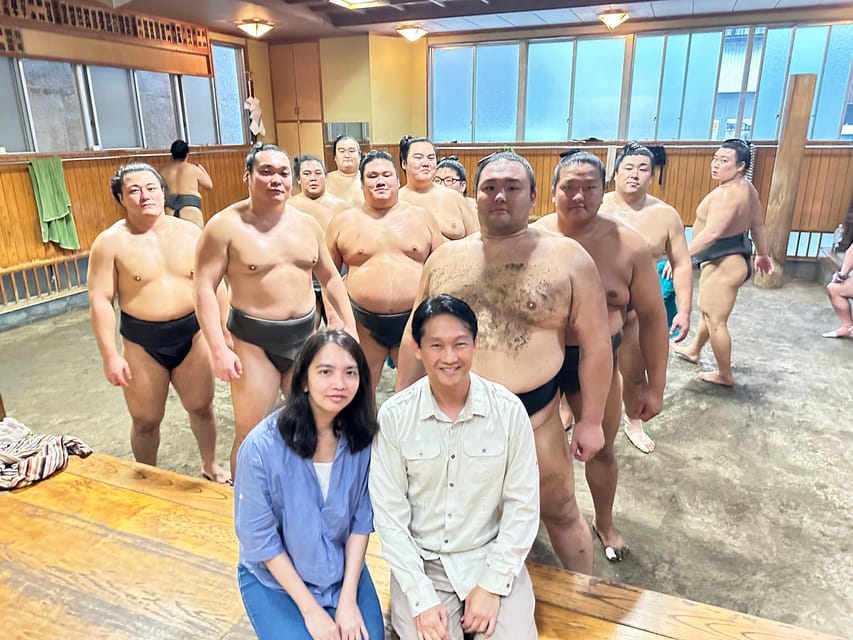
I’d book this if you care about authenticity and you want your questions answered by someone like Shinya-san, who clearly knows how to connect training to the larger sumo world. The combination of live stable practice, photo with wrestlers, and a real Q&A is a rare mix.
Skip it—or pick a different option—if you mainly want a loud, showy event. Also think twice if you know you struggle with long floor seating. Otherwise, this is the kind of Tokyo experience that sticks because it feels close to the source.
FAQ
How long is the Tokyo sumo practice tour?
The duration is 3 hours.
Where do I meet for the tour?
You meet at Subway Toei Oedo Line, Ryogoku Station (E12), Exit A2 (ground level). It’s a 5-minute walk from the east exit of JR Ryogoku Station.
Which sumo stable do you visit?
The tour includes a visit to Takasago-beya Sumo Stable.
What’s included in the tour price?
Included are an English-speaking guide, a photo with a sumo wrestler, and a Q&A session with a long-time sumo expert.
Is there time to ask questions?
Yes. There is a Q&A with the sumo specialist, and the tour is designed to give you time to ask questions.
Are drinks and food included?
No. Drinks and food are not included.
What languages are offered?
The tour is offered in English and Japanese.
Is seating comfortable for the training?
Customers sit on the floor to watch the sumo practice, and a floor cushion is available.
Is the tour suitable for young children?
The tour is not suitable for children under 5 years old.
Can I cancel and get a refund?
Yes. Free cancellation is available up to 24 hours in advance for a full refund.
More Show in Tokyo
- Mt Fuji & Hakone Cruise, Drum Show Bullet Train 1 Day from Tokyo
★ 4.0 · 7,413 reviews - Tokyo: Sumo Show and Dining Experience
★ 4.8 · 2,742 reviews - the SUMO show
★ 5.0 · 1,960 reviews - Tokyo Shinjuku Sumo Show & Experience with Photo
★ 5.0 · 1,750 reviews - Mt Fuji & Hakone Cruise, Drum Show Bus 1 Day from Tokyo
★ 4.0 · 1,287 reviews
More Tour Reviews in Tokyo
- Mt Fuji and Hakone 1-Day Bus Tour Return by Bullet Train
★ 5.0 · 26,383 reviews - 1-Day Tokyo Bus Tour
★ 5.0 · 14,250 reviews - Tokyo: teamLab Planets TOKYO Digital Art Museum Entry Ticket
★ 4.6 · 9,779 reviews - Mt Fuji & Hakone Cruise, Drum Show Bullet Train 1 Day from Tokyo
★ 4.0 · 7,413 reviews - Tokyo: Shinjuku Food Tour (13 Dishes at 4 Local Eateries)
★ 5.0 · 6,603 reviews
More Sumo, Ringside and Rated
- Tokyo: Sumo Show and Dining Experience
★ 4.8 · 2,742 reviews - the SUMO show
★ 5.0 · 1,960 reviews - Tokyo Shinjuku Sumo Show & Experience with Photo
★ 5.0 · 1,750 reviews - Tokyo: Sumo Show and Experience in Shinjuku
★ 4.8 · 1,001 reviews - Tokyo Grand Sumo Tournament Viewing Tour with Tickets
★ 5.0 · 692 reviews
Latest Tokyo reviews off our desk






Sumo Tournaments & Shows, compared.
 ★ 4.8Sumo Show and Dining ExperienceFrom $792,742 reviews
 ★ 5.0the SUMO showFrom $891,960 reviews
 ★ 5.0Tokyo Shinjuku Sumo Show & Experience with PhotoFrom $791,750 reviews
 ★ 4.8Sumo Show and Experience in ShinjukuFrom $691,001 reviews
 ★ 5.0Tokyo Grand Sumo Tournament Viewing Tour with TicketsFrom $124692 reviews
 ★ 5.0Tokyo Sumo Wrestling Tournament ExperienceFrom $124660 reviews
 ★ 4.7Luxury Sumo Show Experience & Japanese cuisine & DrinkFrom $103577 reviews
 ★ 4.8Sumo Morning Practice Viewing TourFrom $81570 reviews
Browse the lists this tour appears in