
Reviewed · SAMURAI & NINJA CLASSES
Tokyo Samurai Spirit: Create Sushi & Witness a Samurai Sword Show
Samurai swords and sushi in one hour. In Asakusa, you’re eating inside a newly built Sengoku-themed space with armor, helmets, and swords, so the whole meal feels like a TV set. I love the hands-on sushi format and the small-group size that keeps it personal; the drawback is the class is only about 80 minutes, so it’s not a long, slow sushi deep-dive.
What makes this one especially practical is the pacing: you make a set of sushi items, watch a chef do a few key steps, and then you eat what you made. Courses run mainly in English, with Japanese/Chinese/Korean subtitles on monitors, and the location is a short walk from both Asakusa Station and Sensoji Temple, plus you’re in a building known for Skytree-area views.
In This Review
- Key points to know before you go
- Entering JIN-ASAKUSA: a Sengoku-themed room that makes the meal feel like a show
- Meeting at Asakusa Station: fast to find, easy to fit into a day
- The core experience: making sushi that tastes better because you built it
- What you make (and why each piece matters)
- The hands-on flow: interactive, not passive
- Chef demonstrations: dashimaki tamago and large roll guidance
- Dashimaki tamago: comfort food with theater
- Why the roll demo helps your own roll
- The Sengoku setting: swords, armor, bamboo, and a sword-show vibe
- What’s included, what you’ll actually eat, and the dessert note
- Price and value: is $49 worth it in Asakusa?
- English-first with subtitles: how well you’ll keep up
- Who should book this (and who might want to skip it)
- Quick tips to get the most out of your 80 minutes
- Should you book Tokyo Samurai Spirit? My take
- FAQ
- What is the duration of the Tokyo Samurai Spirit experience?
- Where does the experience take place?
- How many people are in each session?
- What food do I make during the class?
- Is there any chef cooking or demonstrations?
- Is dessert included?
- What drinks are included?
- Is the tour taught in English?
- Is transportation included?
- What is the cancellation policy?
Key points to know before you go
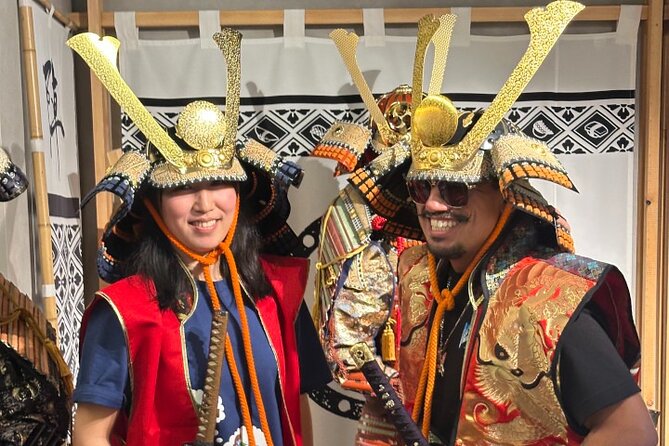
- Sengoku atmosphere built for photos: armor, helmets, swords, bamboo, and torch-style decor
- Small group cap (max 12): more face time with the chef and easier to ask questions
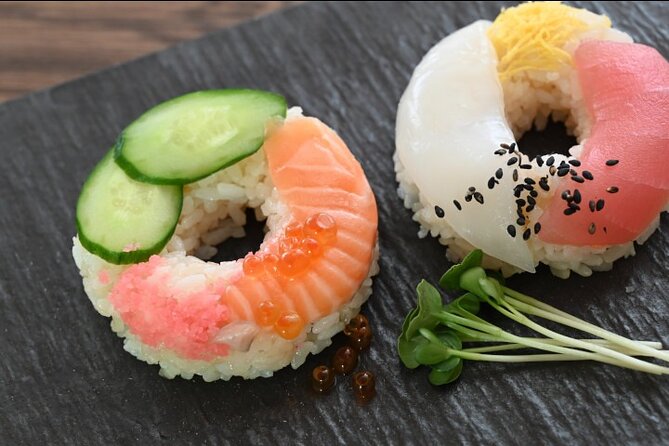
- Hands-on sushi menu: 5 nigiri types, a large roll, and a one-of-a-kind donut sushi
- Chef performances right in front of you: dashimaki tamago grilled on the spot
- English lessons with multi-language subtitles: Japanese, Chinese, and Korean text on monitors
Entering JIN-ASAKUSA: a Sengoku-themed room that makes the meal feel like a show
Asakusa is one of those Tokyo bases where you can do “classic sights” and “modern fun” on the same day. This experience starts in the JIN-ASAKUSA restaurant space, in a building at CREAL Asakusa Sky View Square (4F). The big difference here is that the restaurant is built around a warlord-era vibe—think samurai gear and stage-like decor—so you’re not just learning sushi. You’re stepping into a themed world while you learn.
And that theme isn’t decorative fluff. It changes how the experience lands. When your room is full of armor helmets and swords, the instructions feel like part of a story. Even the music and set design (mentioned as a highlight) help keep energy high while you’re working with sticky rice and toppings.
The other quiet benefit: the location is extremely convenient. You’re basically a one-minute walk from Asakusa Station and about three minutes from Sensoji Temple. That matters because you won’t burn half your day commuting. You can book this before or after temple time, then still have energy for shopping and street snacks.
More blade-and-dojo sessions, reviewed
- Tokyo: Samurai Ninja Museum Guided tour and Experience
★ 4.6 · 1,010 reviews - Tokyo: Samurai Sword & Archery Class from Samurai Descendant
★ 5.0 · 603 reviews - Best Samurai Experience in Tokyo
★ 5.0 · 458 reviews - Ninja Experience (Family Friendly) at Samurai Ninja Museum TOKYO
★ 5.0 · 441 reviews
Meeting at Asakusa Station: fast to find, easy to fit into a day
The meeting point is JIN-ASAKUSA 陣-浅草, located at Hanakawado 1-chōme, inside CREAL Asakusa Sky View Square on the 4F. The tour ends back at the meeting point, so you’re not dealing with a long disconnect where you have to find your way back.
Here’s how I’d plan it if you’re building a day around it:
- If you’re doing Sensoji Temple, time this so you’re not rushing. The restaurant is close, so it’s easy to walk over right after you’ve taken your photos.
- If you’re doing Skytree-area wandering later, this venue’s building is positioned for Skytree views, so you get a scenic bonus without extra travel.
You’ll also have a mobile ticket. That’s one less thing to manage in a busy tourist area.
The core experience: making sushi that tastes better because you built it
The class is about 80 minutes (listed as approx. 1 hour 20 minutes). You’re in a small group setting, max 12 people, so you’re not lost in the back row. The restaurant runs the course mainly in English, and subtitles are provided on monitors in Japanese, Chinese, and Korean. That means you can keep up even if your Japanese is rusty.
What you make (and why each piece matters)
The course has a set menu of what you’ll produce:
- 5 types of nigiri (5 pieces)
You’re not just rolling one thing. You’re making multiple styles, which gives you a better sense of how sushi changes with topping and balance.
- 1 large rolled sushi (futomaki)
Rolling is the skill-work part. This is where you learn that sushi isn’t only about the fish; it’s about structure and portion.
- 1 donut sushi (your own design)
This is the signature party trick. You’ll create and decorate a donut-shaped sushi that’s meant to be cute and shareable. It’s a fun twist for beginners because you’re not expected to be an expert; you’re expected to have fun decorating while you learn.
I like this mix because it teaches variety without turning the class into a long production line. You end up with different textures and shapes on your plate, so you can actually taste what you learned.
The hands-on flow: interactive, not passive
You’ll get an interactive section where a sushi chef instructs you on how to make sushi. From the way the experience is described, it’s set up so you’re actively doing the work, then eating what you made. That’s key for value. A lot of Tokyo “food shows” are mostly watching. Here, you’re participating.
Readers also shortlisted these Tokyo bookings:
- Mt Fuji & Hakone Cruise, Drum Show Bullet Train 1 Day from Tokyo★ 4.0 · 7,413 reviews
- Mt Fuji & Hakone Cruise, Drum Show Bus 1 Day from Tokyo★ 4.0 · 1,287 reviews
- Tokyo: Yakatabune Dinner Cruise with Japanese Show & Drinks★ 4.7 · 871 reviews
- Tokyo:Luxury Sumo Show Experience & Japanese cuisine & Drink★ 4.7 · 577 reviews
- Tokyo Bay Yakatabune Dinner/Day Cruise with Japan Show and Drinks★ 4.5 · 473 reviews
Chef demonstrations: dashimaki tamago and large roll guidance
Even though you’ll make plenty yourself, the chef also steps in to guide key moments. You’ll see:
- A chef’s large rolled sushi demonstration
- A dashimaki tamago performance, with the dashimaki grilled right in front of you
Dashimaki tamago: comfort food with theater
Dashimaki tamago is Japanese rolled omelet made with dashi. In this experience, it’s cooked right before you. That’s not just a nice detail. Heat, sound, and the smell make the lesson stick. It also gives you a break from hands-on work while still keeping you engaged.
If you’re coming with kids or someone who gets impatient with step-by-step instructions, this grilled-on-the-spot moment helps reset attention without you losing the thread.
Why the roll demo helps your own roll
You’ll be making a large roll, but the chef demonstration is there to show technique first. Rolling is one of those skills where one small change can make a big difference. Seeing the method before you repeat it makes the experience feel less frustrating and more like a skill-building workshop.
The Sengoku setting: swords, armor, bamboo, and a sword-show vibe
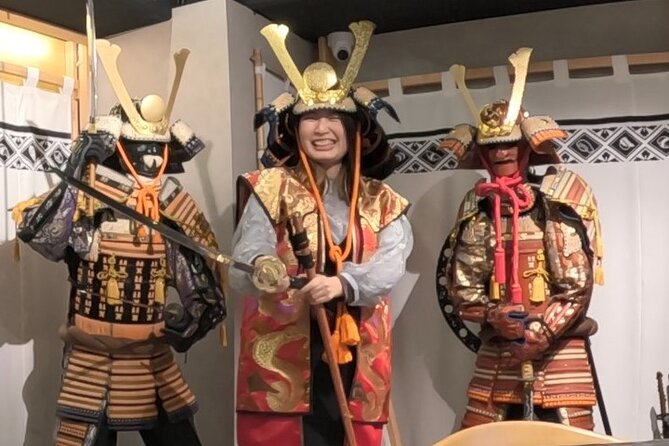
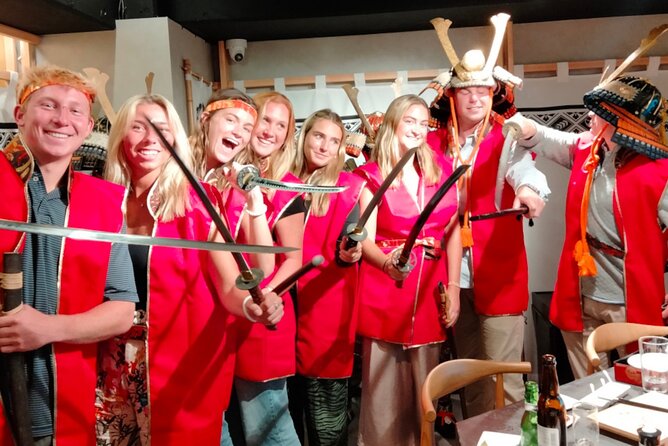
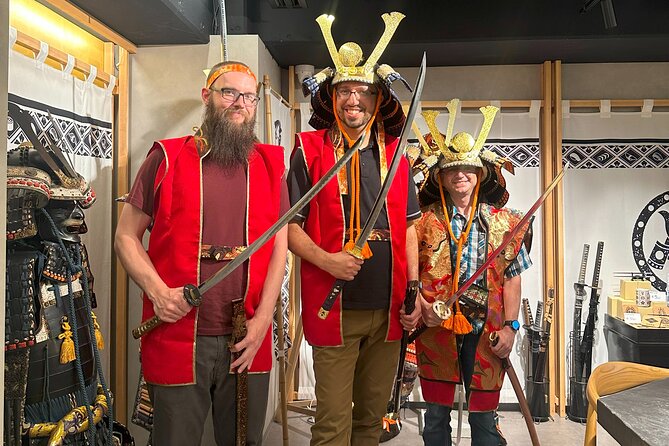
This is where the title really makes sense: you’re in a newly built Sengoku-themed space, decorated with armor, helmets, and swords. It’s not just wall art. The layout feels like a designed set—bamboo elements and torch-style atmosphere are part of the overall look.
If you’re specifically a samurai-fan, this is a major reason to choose the experience. You get the visual payoff while you eat, and the experience is positioned as including a samurai sword-show element. Even without getting lost in technical show details, the overall theme is clearly built to put swords and samurai culture in the foreground.
And yes—this is the kind of place where you’ll take photos. The decor is intentionally Instagram-friendly, and the vibe is designed for sharing.
What’s included, what you’ll actually eat, and the dessert note
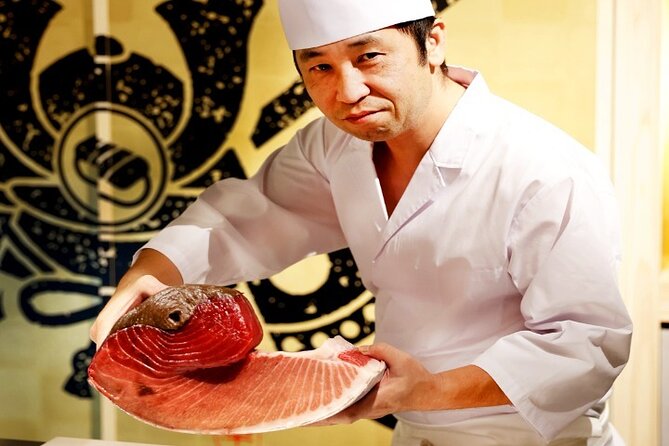
The price is $49.00 per person, and meals are included, along with service charge and consumption tax. Water and hot Japanese tea are complimentary, but alcoholic beverages are not included.
You’ll leave with:
- Your made sushi items: 5 nigiri pieces, 1 large rolled sushi, and 1 donut sushi
- The chef-prepared items: the chef’s large roll demonstration and the dashimaki tamago performance
- Dessert is noted as included (courses plus dessert)
Two practical thoughts:
- This is a “course experience” rather than a full-blown all-you-can-eat meal. The sushi set is designed to be enough for the class, but don’t plan on it replacing a hearty Tokyo dinner.
- If you have dietary restrictions, you should double-check before booking, since the specific menu ingredients are not listed in the provided details. That said, the structure is clear: sushi set + dessert, with tea/water provided.
Price and value: is $49 worth it in Asakusa?
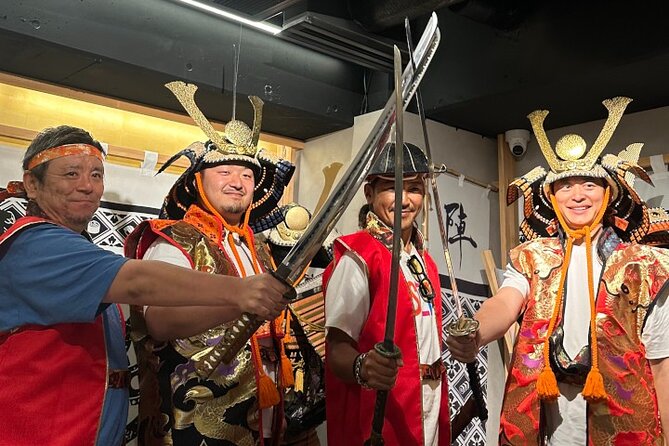
For $49, you’re paying for three things at once:
- Instruction and hands-on making (not just tasting)
- Chef demonstrations (dashimaki tamago + sushi steps)
- A themed environment designed to keep the experience fun and photo-worthy
In Tokyo, themed workshops can go either way: some are mostly decoration with a token bite, and others are genuinely structured lessons. Here, the menu is specific (5 nigiri types, large roll, donut sushi), and the class includes performance-style cooking right in front of you. That makes the price feel less like a ticket for a photo booth and more like a worked-through experience.
Also consider the group size. Max 12 people is a sweet spot. You’re less likely to feel ignored, and the chef can keep the pace moving.
English-first with subtitles: how well you’ll keep up
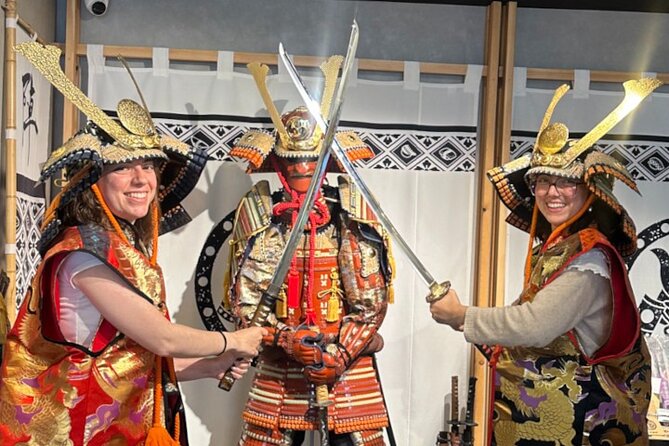
The course is conducted mainly in English, with subtitles in Japanese, Chinese, and Korean shown on monitors. That’s a smart setup. It means you can follow along without needing full Japanese skills, and if you want extra context, you have text support.
This matters most during the parts where you’re shaping sushi. You don’t need perfect vocabulary, but you do need clarity on steps. Subtitles reduce guesswork, and they help everyone stay included.
Who should book this (and who might want to skip it)
This is a strong match if:
- You like interactive food experiences more than watching
- You want a family-friendly activity in Asakusa
- You’re curious about samurai culture but want it in a fun, accessible format
- You’re new to sushi-making and want structure
It may be less ideal if:
- You’re expecting a long, multi-hour craft class. This runs about 80 minutes.
- You want a purely historical, solemn samurai encounter. This is entertainment first, with culture mixed in through the theme and cooking.
Quick tips to get the most out of your 80 minutes
Here are a few practical moves that make this type of class go smoother:
- Arrive on time. The class is short, and you want to start with full attention.
- Come ready to get hands-on. You’ll be making nigiri, a roll, and a donut sushi.
- Treat the dashimaki moment like a reset. If you’re tired from temple walking, the cooking show gives you energy while you watch.
- Bring your phone but also enjoy the act. The room is photo-friendly, yet the best part is still eating what you made.
Should you book Tokyo Samurai Spirit? My take
I’d book it if you want a compact, well-structured Tokyo activity that mixes sushi-making, a themed Sengoku setting, and live cooking right in front of you. At $49, the value is strongest for people who learn best by doing—and for families who want something fun without needing advanced food knowledge.
I’d think twice if you’re looking for a long, traditional sushi apprenticeship. This is a polished experience with a clear set of what you’ll make, and it’s designed to be a highlight of a day, not a full culinary journey.
If your plan is Asakusa + temple photos + one memorable activity, this is a solid fit.
FAQ
What is the duration of the Tokyo Samurai Spirit experience?
It’s about 1 hour 20 minutes.
Where does the experience take place?
The meeting point is JIN-ASAKUSA 陣-浅草 in Asakusa, at CREAL Asakusa Sky View Square 4F.
How many people are in each session?
The group size has a maximum of 12 travelers.
What food do I make during the class?
You’ll make 5 types of nigiri (5 pieces), 1 large rolled sushi, and 1 donut sushi.
Is there any chef cooking or demonstrations?
Yes. There is a chef’s large rolled sushi demonstration and a dashimaki tamago performance where it’s grilled in front of you.
Is dessert included?
Yes, dessert is included as part of the courses.
What drinks are included?
Water and hot Japanese tea are complimentary. Alcoholic beverages are not included.
Is the tour taught in English?
Courses are conducted mainly in English, with subtitles on monitors in Japanese, Chinese, and Korean.
Is transportation included?
No. Public transportation to the venue is not included.
What is the cancellation policy?
You can cancel for a full refund up to 24 hours in advance of the experience start time.
More Show in Tokyo
- Mt Fuji & Hakone Cruise, Drum Show Bullet Train 1 Day from Tokyo
★ 4.0 · 7,413 reviews - Tokyo: Sumo Show and Dining Experience
★ 4.8 · 2,742 reviews - the SUMO show
★ 5.0 · 1,960 reviews - Tokyo Shinjuku Sumo Show & Experience with Photo
★ 5.0 · 1,750 reviews - Mt Fuji & Hakone Cruise, Drum Show Bus 1 Day from Tokyo
★ 4.0 · 1,287 reviews
More Tour Reviews in Tokyo
- Mt Fuji and Hakone 1-Day Bus Tour Return by Bullet Train
★ 5.0 · 26,383 reviews - 1-Day Tokyo Bus Tour
★ 5.0 · 14,250 reviews - Tokyo: teamLab Planets TOKYO Digital Art Museum Entry Ticket
★ 4.6 · 9,779 reviews - Mt Fuji & Hakone Cruise, Drum Show Bullet Train 1 Day from Tokyo
★ 4.0 · 7,413 reviews - Tokyo: Shinjuku Food Tour (13 Dishes at 4 Local Eateries)
★ 5.0 · 6,603 reviews
More Samurai and Ninja Sessions
- Tokyo: Samurai Ninja Museum Guided tour and Experience
★ 4.6 · 1,010 reviews - Tokyo: Samurai Sword & Archery Class from Samurai Descendant
★ 5.0 · 603 reviews - Best Samurai Experience in Tokyo
★ 5.0 · 458 reviews - Ninja Experience (Family Friendly) at Samurai Ninja Museum TOKYO
★ 5.0 · 441 reviews - Tokyo: Samurai Entertainment Night Show in Kanda Shrine
★ 4.6 · 417 reviews
Latest Tokyo reviews off our desk






Samurai & Ninja Classes, compared.
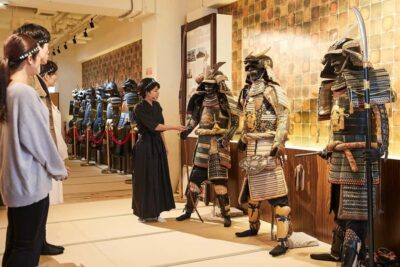 ★ 4.6Samurai Ninja Museum Guided tour and ExperienceFrom $271,010 reviews
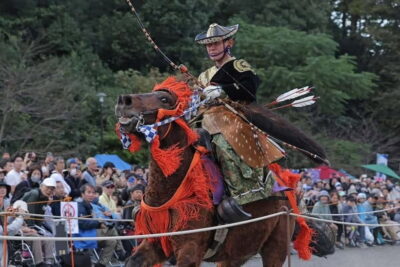 ★ 5.0Samurai Sword & Archery Class from Samurai DescendantFrom $193603 reviews
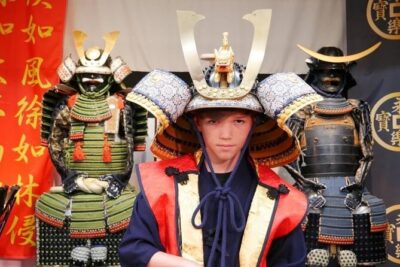 ★ 5.0Best Samurai Experience in TokyoFrom $65458 reviews
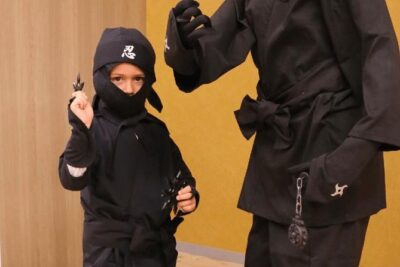 ★ 5.0Ninja Experience (Family Friendly) at Samurai Ninja Museum TOKYOFrom $47441 reviews
 ★ 4.6Samurai Entertainment Night Show in Kanda ShrineFrom $41417 reviews
 ★ 4.2Ninja Kabuki PerformanceFrom $29330 reviews
 ★ 5.0Tokyo Sword Experience – includes Museum Ticket/Ninja ExperienceFrom $84314 reviews
 ★ 4.8Samurai Ninja Museum Asakusa: Samurai Sword Lesson & TourFrom $63306 reviews
Browse the lists this tour appears in