
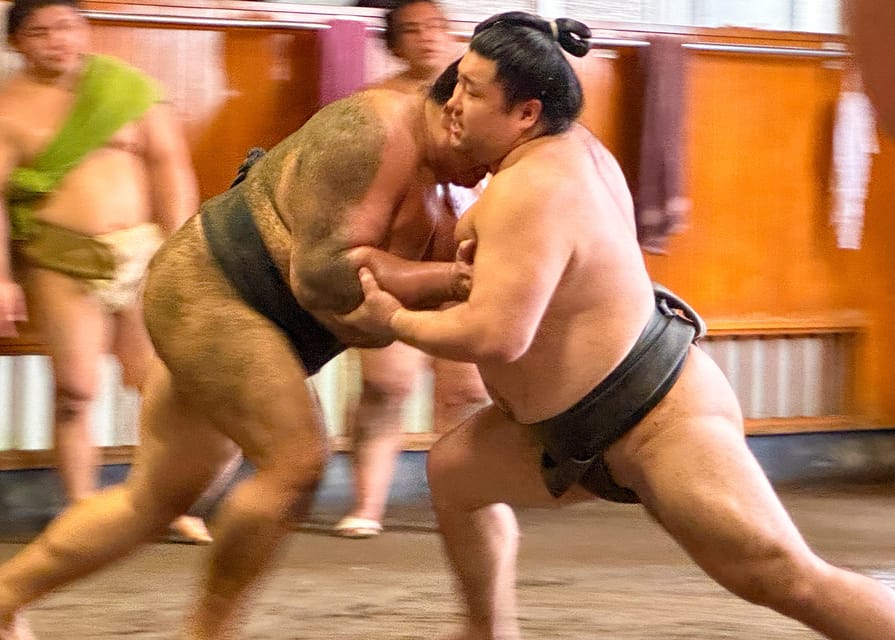
Reviewed · SUMO TOURNAMENTS & SHOWS
Tokyo: Sumo Morning Practice with journalists. Not fake show
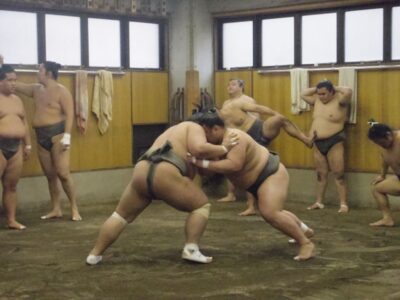
Sumo feels different when it is real training. This Tokyo tour takes you into a working sumo stable for a morning practice that is meant for learning, not performing, with special permission that keeps it authentic. I like that you also get a journalist-style guide who can answer the questions you actually have, not just recite a script.
The one big drawback is the traditional setup: you’ll sit on the floor during the practice, and the experience is not suitable for wheelchair users. Flash photography is also not allowed, so you’ll need to rely on your camera settings for low light.
In This Review
- The Real Pull: Morning Practice Without the Tournament Pressure
- Key Moments You’ll Actually Care About
- Takasago-beya Sumo Stable: What Two Hours Feels Like
- If you want to spot details, do this
- During Practice: Etiquette Rules That Keep the Moment Respectful
- Commemorative photos: what to expect
- The Journalist Guide and the Q&A That Actually Helps
- The kind of questions this tour is perfect for
- Ryōgoku Edo NOREN: Turning Training Into a Walkable Picture
- How to Get There: Ryogoku Station Without the Stress Spiral
- Price and Logistics: Is $103 Worth It?
- What to Bring (and What to Leave at Home)
- Who Should Book This Sumo Morning Practice
- Should You Book This Tour?
- FAQ
- Where is the meeting point for the tour?
- How long is the tour?
- Which stops are included during the tour?
- Is flash photography allowed during the practice?
- What should I wear or bring?
- Is the tour suitable for wheelchair users?
- Can babies join the tour?
- What is included in the price?
- Can I cancel for a full refund?
- Is food provided?
The Real Pull: Morning Practice Without the Tournament Pressure
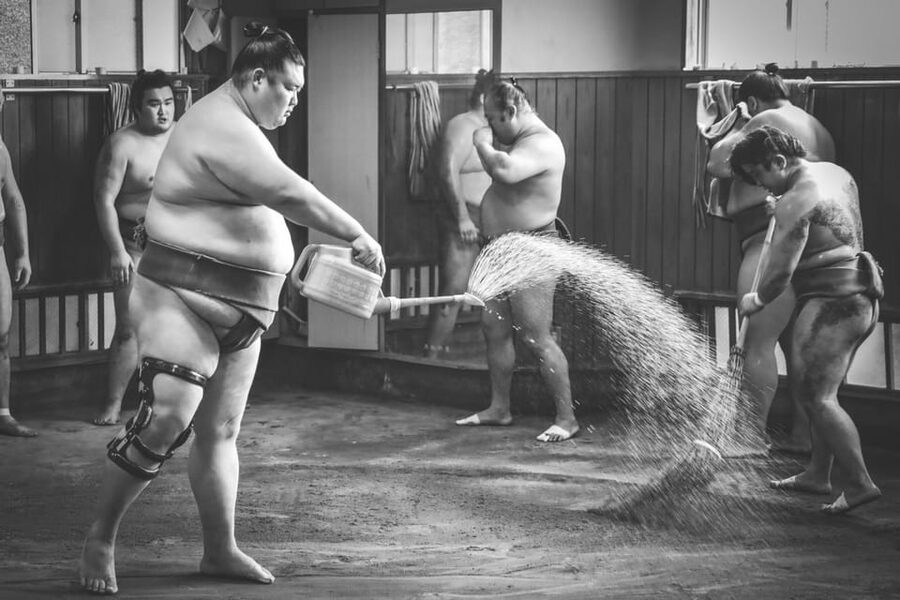
If you only see sumo during a grand tournament, you miss most of what makes the sport tick. A morning practice is where you see discipline in motion: the routine, the repetition, and the hierarchy of a stable day before thousands of fans fill the stands.
What makes this experience compelling is the combination of three things:
- you are watching training firsthand in a stable environment
- you have time for questions (not a rushed, one-way lecture)
- you’re guided by a sumo specialist who is also a national newspaper journalist, so the story has context
This is also a smart choice when tournament tickets are hard to get. Even if you do end up catching a match later, practice day gives you a different baseline understanding of what you’re seeing.
Price-wise, $103 is not pocket change, but it’s tied to the hard part: stable access. Permission for a non-staff group is the bottleneck in Tokyo, and that cost usually shows up in tours like this.
Key Moments You’ll Actually Care About
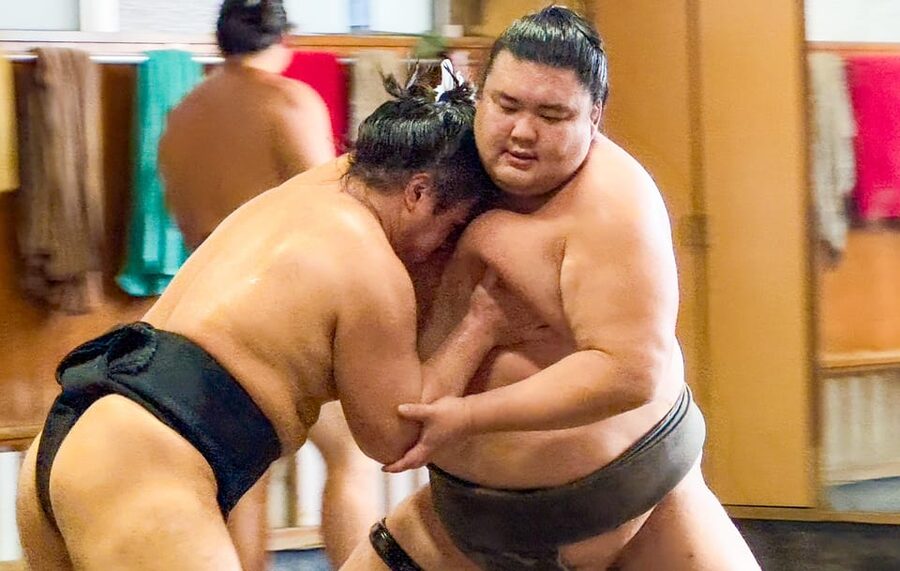
- Working-stable access: special permission puts you inside a real training setting, not a staged show
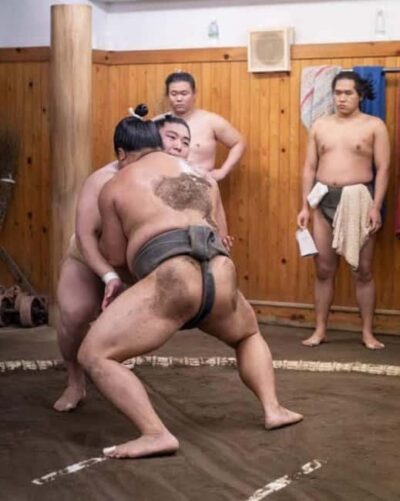
- Live morning practice: you’ll watch the wrestlers go through their routine in the way they normally do
- Journalist-led explanations: expect stories and answers drawn from serious sumo reporting
- Commemorative photos: you get a photo moment linked to your visit
- Q&A time: you’re not limited to a few scripted questions
- Ryōgoku follow-up: a guided stop at Ryōgoku Edo NOREN adds place-based context
Other ringside bookings readers scored
- Tokyo: Sumo Show and Dining Experience
★ 4.8 · 2,742 reviews - the SUMO show
★ 5.0 · 1,960 reviews - Tokyo Shinjuku Sumo Show & Experience with Photo
★ 5.0 · 1,750 reviews - Tokyo: Sumo Show and Experience in Shinjuku
★ 4.8 · 1,001 reviews
Takasago-beya Sumo Stable: What Two Hours Feels Like
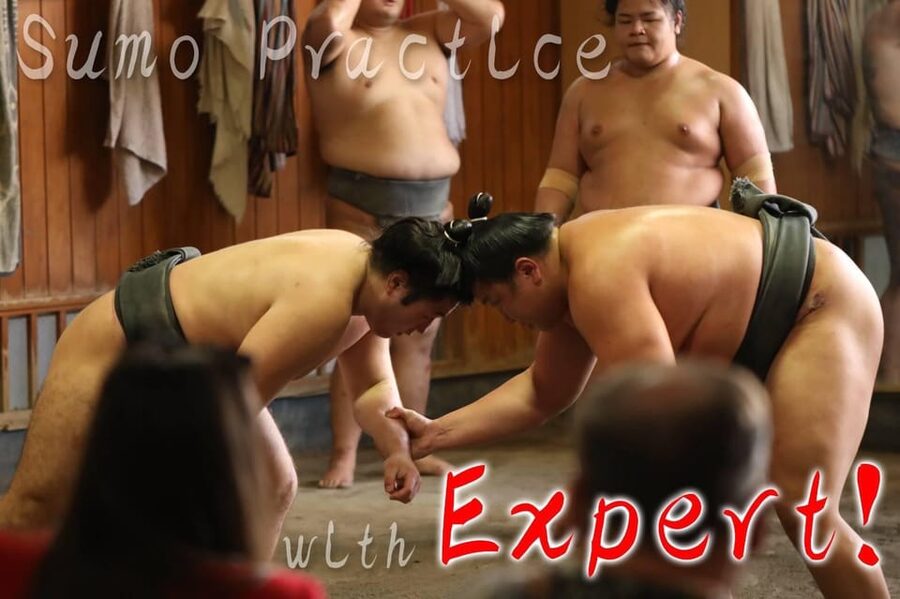
Your tour centers on Takasago-beya Sumo Stable, with a guided visit designed around a live morning practice window. The pace is slow enough that you can watch what’s happening, then put it into words through the guide’s explanations.
You should plan to spend a lot of the time seated on the floor. That sounds minor until you’re there, so wear comfortable clothes and shoes you can remove quickly. Shoes indoors are not allowed inside the stable area, so think practical for getting on and off the floor without fuss.
During the practice, flash photography is not allowed. That matters because stable lighting can be unforgiving for phones and cameras in full automatic mode. If you care about photos, bring a camera you’re comfortable with, and consider turning on noise reduction or using a higher ISO setting rather than relying on flash.
What I like about this stable segment is that it’s built for understanding. The guide covers history and rituals, but it’s not just background filler. You’ll connect what you’re watching to why it’s done: training order, discipline, and the formal way sumo treats respect as part of the sport.
If you want to spot details, do this
Keep your attention on small transitions. In a stable practice, the rhythm changes as wrestlers move from warmups into technique work. When you notice those shifts, the guide’s explanations start to click.
During Practice: Etiquette Rules That Keep the Moment Respectful
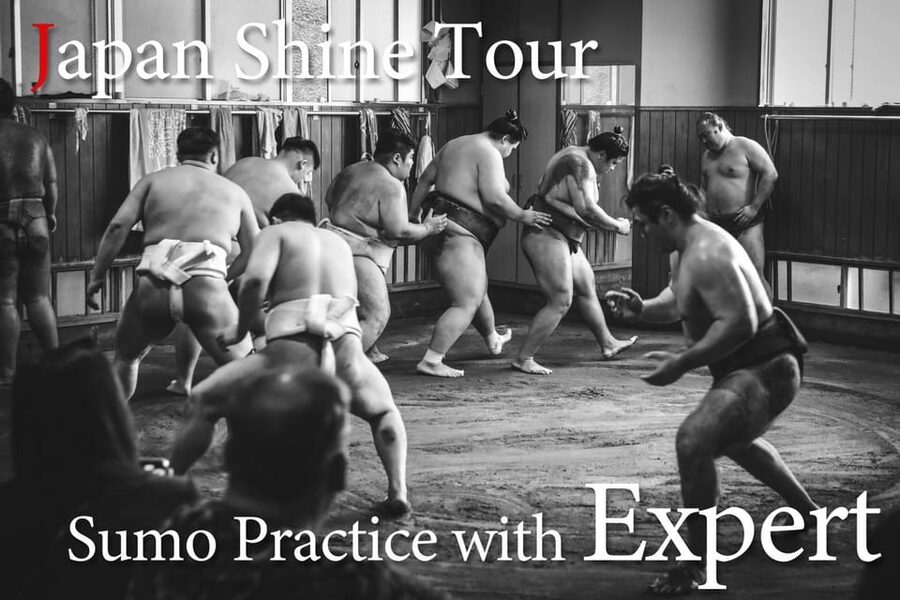
A stable is not a museum. It has rules, and your best experience comes when you follow them smoothly.
Here’s what you know you’ll need:
- bring a camera, and assume flash is off-limits
- expect to sit on the floor during the practice
- do not eat or bring food into the training area
- don’t wear shoes indoors
- avoid anything that could disrupt training (food, loud behavior, etc.)
One more practical point from the experience: you may be asked to stay quiet while the practice is happening. Even if you’re eager to learn, the stable environment runs on respect and stillness. If you want good photos, quiet also helps you set up your shot without drawing attention.
Commemorative photos: what to expect
The tour includes commemorative photos as part of the experience. In a stable setting, photo time usually comes after the main training portion, once things settle. It’s a nice added value because it gives you a tangible memory beyond video clips and a few blurry shots.
Readers also shortlisted these Tokyo bookings:
- Mt Fuji & Hakone Cruise, Drum Show Bullet Train 1 Day from Tokyo★ 4.0 · 7,413 reviews
- Tokyo: Sumo Show and Dining Experience★ 4.8 · 2,742 reviews
- the SUMO show★ 5.0 · 1,960 reviews
- Tokyo Shinjuku Sumo Show & Experience with Photo★ 5.0 · 1,750 reviews
- Mt Fuji & Hakone Cruise, Drum Show Bus 1 Day from Tokyo★ 4.0 · 1,287 reviews
The Journalist Guide and the Q&A That Actually Helps
This is where the tour gains real strength. The English-speaking guide isn’t just a presenter. They’re a sumo specialist who also works as a national newspaper journalist, and the explanations carry that kind of depth.
In past groups, guides have included reporters such as Shinya Setsu and Shin (names vary by date). The common thread is style: they answer questions with specifics, and they share stories that put stable life into human terms.
What I like about this is the Q&A freedom. You don’t have to guess what you should ask. You can ask about:
- how training works day to day
- how hierarchy affects daily life in a stable
- the rituals around sumo’s formality
- what you’re seeing during practice and why it’s structured that way
That’s also why the journalist angle matters. It tends to produce explanations that are less touristy and more grounded in how sumo is actually discussed and observed in Japan.
The kind of questions this tour is perfect for
If you’ve watched sumo on TV but wondered about what’s happening off-screen, this is the right format. You’ll get the practical layer: what to notice, how to interpret behavior, and what terms you’ll hear in matches later.
Ryōgoku Edo NOREN: Turning Training Into a Walkable Picture
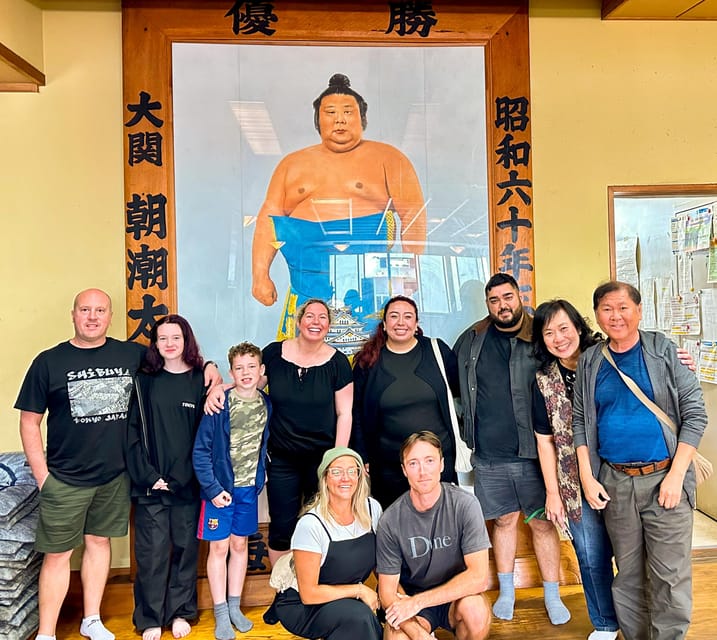
After the stable visit, you head to Ryōgoku Edo NOREN for a guided stop. This part is shorter, about 30 minutes, but it has a purpose: it helps connect what you just saw in the stable to the larger sumo world in the Ryōgoku area.
Even though this is brief, I think it’s a valuable bridge. Practice day can feel private and technical. The Ryōgoku segment adds place-based context, so you leave with a stronger sense of where sumo lives in Tokyo and how the neighborhood frames the sport.
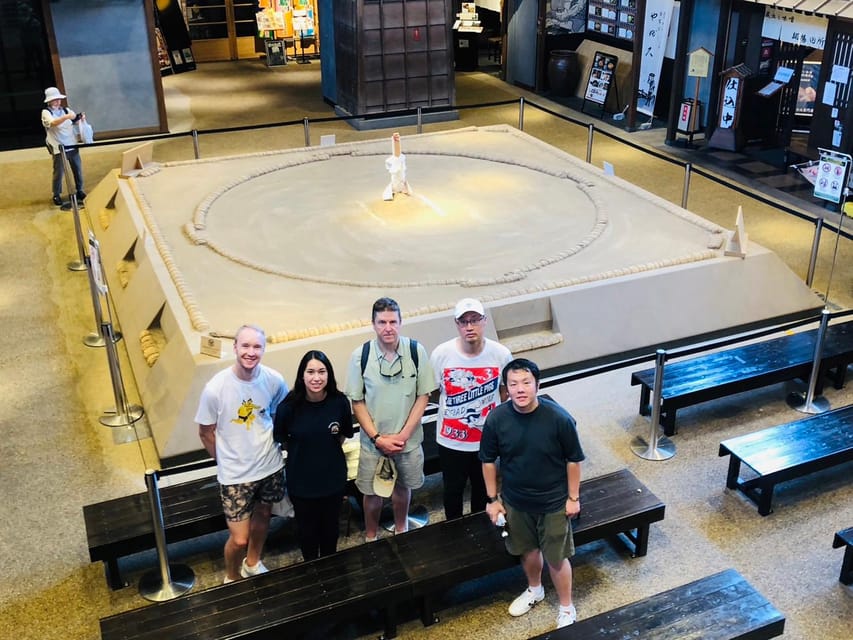
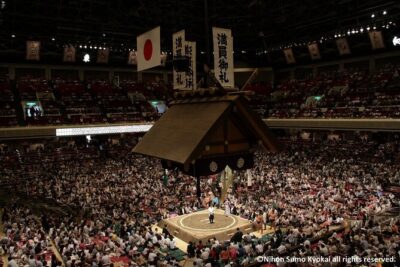
On some days, guides also connect the area to the Ryōgoku Kokugikan Sumo Hall context you’ll recognize from TV and tournament coverage. If you care about turning this into a full sumo storyline for your trip, that extra linkage helps a lot.
How to Get There: Ryogoku Station Without the Stress Spiral
The meeting point is in Ryogoku, with a very specific instruction set designed for smooth arrival.
- Meet at 両国 HANA WA ビル (starting location)
- Closest transit: Toei Oedo Line, Ryogoku Station (E12), Exit A2, ground level
- It’s about a 5-minute walk from the east exit of JR Ryogoku Station
- The operator contacts you with more details before your tour date
The smartest move is to show up early. In Tokyo, minor delays snowball fast. Build in extra time so you can focus on the morning rather than racing to remove your shoes and get seated.
Transfers between stops are short (around 5 minutes, plus a tiny walk at the end), so once you’re at Ryogoku, you’re mostly on foot and ready.
Price and Logistics: Is $103 Worth It?
Let’s talk value, not just cost.
You’re paying for:
- live access to a working stable’s morning practice
- special permission from the sumo stable (this is the key constraint)
- guidance by an English-speaking sumo specialist and national journalist
- commemorative photos
- a follow-up guided stop at Ryōgoku Edo NOREN
You do not pay for:
- meals and drinks
- transportation to/from the stable area
So, when is it worth it?
- If you want something authentic instead of a staged performance, the stable access is the real headline.
- If you can’t get tournament tickets, this is a strong way to still see wrestlers in their training environment.
- If you like learning, the journalist-led Q&A can turn what looks like heavy effort into something you can actually interpret.
If you mainly want casual entertainment and don’t care about etiquette or explanations, you might prefer a lower-cost, more flexible sightseeing plan. But for genuine sumo immersion at the practice level, the price sits in the range you’d expect for stable-permission tours.
What to Bring (and What to Leave at Home)
This tour is simple, but it runs by rules. Pack with the stable in mind.
Bring:
- a camera
- comfortable clothes (you will sit on the floor)
Do not expect:
- food inside the practice area
Leave or avoid:
- flash photography
- alcohol and drugs
- shoes indoors
- baby carriages
- electric wheelchairs
- firework
Comfort tip: if you’re sensitive to floor sitting, choose clothes you can sit in for a while without adjusting constantly.
Who Should Book This Sumo Morning Practice
This is best for:
- sumo fans who want more than match-day results
- culture-minded travelers who care about rituals and discipline
- photo-focused people who understand that flash is not allowed
- anyone who wants a real Q&A with a guide who has reported on sumo professionally
It’s not a fit for:
- wheelchair users, because the traditional setup requires floor seating and the stable environment is not suitable
- babies under 1 year
Also, double-check your expectations if you’re hoping for a fully accessible, modern venue. This is a working stable with traditional space and rules.
Should You Book This Tour?
I’d book it if you want the closest thing to seeing sumo as the wrestlers experience it. The best part isn’t just watching training. It’s the permission to observe in a real stable setting, plus the journalist-led explanations and real room for questions.
I’d skip it if:
- you need wheelchair-friendly seating and movement
- you want a low-effort, no-etiquette experience
- you rely on flash photography for your memories
If you’re in Tokyo anyway and sumo is on your must-do list, this is the kind of activity that changes how you watch the sport later. You’ll understand the routine, not just the spectacle.
FAQ
Where is the meeting point for the tour?
You meet at 両国 HANA WA ビル. The closest subway access is Toei Oedo Line, Ryogoku Station (E12), Exit A2 (ground level), about a 5-minute walk from the east exit of JR Ryogoku Station.
How long is the tour?
The duration is 3 hours.
Which stops are included during the tour?
You visit Takasago-beya Sumo Stable for a guided tour with the live morning practice viewing, then you have a guided stop at Ryōgoku Edo NOREN before finishing at 両国駅.
Is flash photography allowed during the practice?
No. Flash photography is not allowed during the practice.
What should I wear or bring?
Bring a camera and wear comfortable clothes, because you will be sitting on the floor during the practice.
Is the tour suitable for wheelchair users?
The tour is not suitable for wheelchair users due to the traditional setup of the sumo stable.
Can babies join the tour?
The tour is not suitable for babies under 1 year.
What is included in the price?
Included are live sumo morning practice viewing, commemorative photos, guidance by a sumo specialist and national newspaper journalist, and special permission from the sumo stable for access.
Can I cancel for a full refund?
Yes. You can cancel up to 24 hours in advance for a full refund.
Is food provided?
No meals or drinks are included. Food is also not allowed during the practice.
More Show in Tokyo
- Mt Fuji & Hakone Cruise, Drum Show Bullet Train 1 Day from Tokyo
★ 4.0 · 7,413 reviews - Tokyo: Sumo Show and Dining Experience
★ 4.8 · 2,742 reviews - the SUMO show
★ 5.0 · 1,960 reviews - Tokyo Shinjuku Sumo Show & Experience with Photo
★ 5.0 · 1,750 reviews - Mt Fuji & Hakone Cruise, Drum Show Bus 1 Day from Tokyo
★ 4.0 · 1,287 reviews
More Tour Reviews in Tokyo
- Mt Fuji and Hakone 1-Day Bus Tour Return by Bullet Train
★ 5.0 · 26,383 reviews - 1-Day Tokyo Bus Tour
★ 5.0 · 14,250 reviews - Tokyo: teamLab Planets TOKYO Digital Art Museum Entry Ticket
★ 4.6 · 9,779 reviews - Mt Fuji & Hakone Cruise, Drum Show Bullet Train 1 Day from Tokyo
★ 4.0 · 7,413 reviews - Tokyo: Shinjuku Food Tour (13 Dishes at 4 Local Eateries)
★ 5.0 · 6,603 reviews
More Sumo, Ringside and Rated
- Tokyo: Sumo Show and Dining Experience
★ 4.8 · 2,742 reviews - the SUMO show
★ 5.0 · 1,960 reviews - Tokyo Shinjuku Sumo Show & Experience with Photo
★ 5.0 · 1,750 reviews - Tokyo: Sumo Show and Experience in Shinjuku
★ 4.8 · 1,001 reviews - Tokyo Grand Sumo Tournament Viewing Tour with Tickets
★ 5.0 · 692 reviews
Latest Tokyo reviews off our desk



Sumo Tournaments & Shows, compared.
 ★ 4.8Sumo Show and Dining ExperienceFrom $792,742 reviews
 ★ 5.0the SUMO showFrom $891,960 reviews
 ★ 5.0Tokyo Shinjuku Sumo Show & Experience with PhotoFrom $791,750 reviews
 ★ 4.8Sumo Show and Experience in ShinjukuFrom $691,001 reviews
 ★ 5.0Tokyo Grand Sumo Tournament Viewing Tour with TicketsFrom $124692 reviews
 ★ 5.0Tokyo Sumo Wrestling Tournament ExperienceFrom $124660 reviews
 ★ 4.7Luxury Sumo Show Experience & Japanese cuisine & DrinkFrom $103577 reviews
 ★ 4.8Sumo Morning Practice Viewing TourFrom $81570 reviews
Browse the lists this tour appears in