
Reviewed · TSUKIJI MARKET FOOD TOURS
Tokyo Tsukiji Fish Market Food and Walking Tour
Tokyo’s fish market feels like a live documentary. A 2-hour, small-group walk through Tsukiji pairs Hongwanji Temple customs with market highlights so you get context, not just chaos. You’ll also finish with digital photos included, which is a nice bonus in a place where you’ll be too busy eating and staring to remember everything.
I love that this tour keeps you moving with a capped group size (10 people). I also like the fact that admissions are included for the temple and both market areas, so you don’t waste time figuring out tickets mid-walk.
One consideration: food and drinks aren’t included, so you’ll want to budget extra if you plan to sample as you go.
In This Review
- Key highlights I’d put on your shortlist
- Tsukiji’s best intro starts with Hongwanji Temple
- Tsukiji Fish Market in 50 minutes: what you’ll actually learn
- Jogai Market’s 400 stalls: the tuna-and-seafood part
- Value check: $21.14, admissions included, and a guide that points
- Food game plan when food isn’t included
- Meeting at Tsukiji Station and walking logistics that keep it easy
- Who should book this Tsukiji tour (and who should skip it)
- Should you book this Tsukiji Fish Market tour?
- FAQ
- How long is the Tokyo Tsukiji Fish Market Food and Walking Tour?
- What’s the group size for this tour?
- What’s included in the tour price?
- Are food and drinks included?
- Where do I meet for the tour?
- Can I cancel for a full refund?
Key highlights I’d put on your shortlist
- Small-group cap of 10 keeps the walk practical, not a cattle-line shuffle
- Admissions included for Hongwanji Temple, Tsukiji Fish Market, and Tsukiji Jogai Market
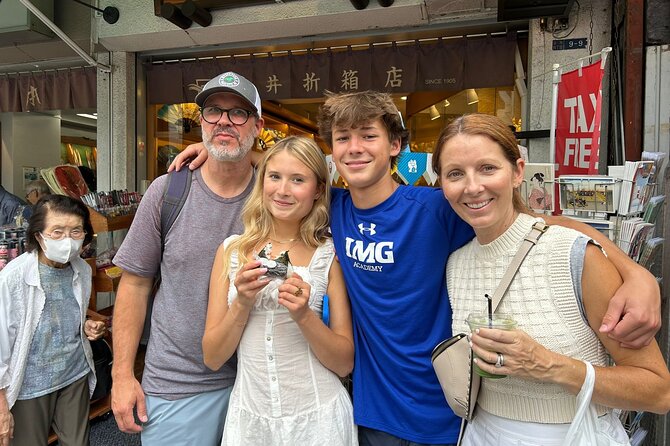
- Digital photos taken during the tour so you can focus on what you’re seeing and eating
- Temple first, market second gives you cultural context before the seafood overload
- Insider picks on where to eat so you’re less likely to miss the best stalls
Tsukiji’s best intro starts with Hongwanji Temple
Most people rush straight into the market. This tour does the smarter thing: it starts at Hongwanji Temple. You spend about 15 minutes there, and it’s not just a quick photo stop. Hongwanji has more than 400 years of history, and you learn what people do there and why.
You’ll get a quick grounding in local customs. That matters, because Tsukiji can feel intense if you’re not used to the etiquette of places where work happens, not just sightseeing. The temple stop helps you read the vibe before you hit the fish.
Also, this start is a good way to avoid the “where do we go first?” panic. You’re already oriented when you step out and head toward the markets.
More market breakfasts our reviewers scored
- Tokyo Tsukiji Fish Market Food and Culture Walking Tour
★ 5.0 · 3,184 reviews - Tokyo: Tsukiji Fish Market Food and Walking tour
★ 5.0 · 1,724 reviews - Tokyo: Tsukiji Fish Market Guided Walking Tour
★ 4.9 · 1,397 reviews - Tokyo Sushi Making Class in Tsukiji with Professional Chef
★ 5.0 · 1,177 reviews
Tsukiji Fish Market in 50 minutes: what you’ll actually learn
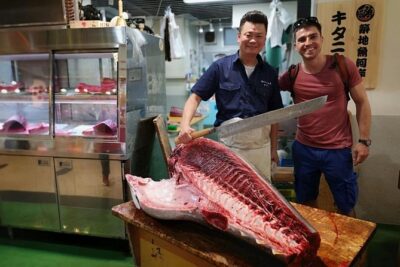
Next comes Tsukiji Fish Market for about 50 minutes. This isn’t a slow wander where you drift in and out of stalls. The goal is focused: you learn Tsukiji’s 80-year history and how it became known as the biggest fish market in Japan and the world.
In plain terms, you’re getting the “why this place is famous” part, fast. Without that context, Tsukiji can be mostly sensory noise—smells, sounds, and stacks of seafood with no story behind it. With the guide, you’re watching with a frame in your head.
The walk also keeps your time efficient. You don’t have to research for hours to understand what you’re looking at. And because it’s a small group, it’s easier to pause, ask questions, and move as a team.
One plus I’ll call out from past experiences with this tour: guides like Yayoi, Shino, and Jim Allen are known for translating market details into something you can use. That often includes explaining things like how different cuts or items get talked about in local stalls.
Jogai Market’s 400 stalls: the tuna-and-seafood part
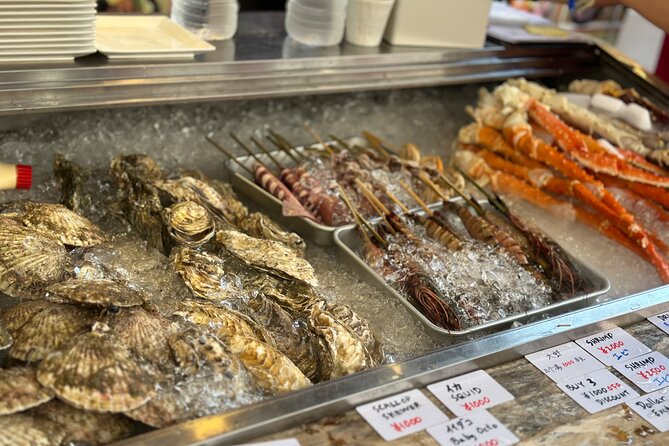
Then you head to Tsukiji Jogai Market for another 50 minutes. This is the part people imagine: hundreds of street shops and vendors. The tour highlights Jogai as a dense food zone—around 400 street shops, based on the tour description—where you can see fresh tuna and other seafood served in very everyday ways.
Here, you’re not just looking. You’re learning how to order and what to look for. Since food and drinks are not included, the tour is set up to help you spend your money wisely at the stalls instead of randomly snacking at the first sign that looks tourist-friendly.
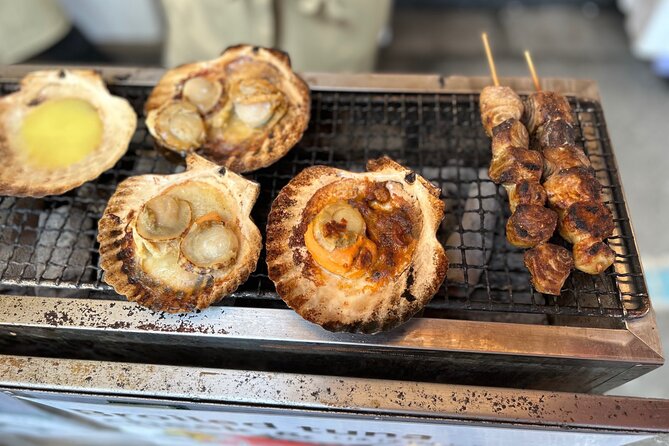
This is also where the “come hungry” advice makes sense. Even if you start with a light appetite, Jogai can tempt you into trying multiple things. Past groups have reported tasting everything from sushi-style bites to shellfish, eel, Wagyu, and sweet treats—usually because their guide pointed out what’s worth your yen and time.
If you’re the type who enjoys variety, Jogai is where you’ll feel it. If you hate crowds and don’t like making choices on the spot, you may want to go in with a plan (like choosing 2–3 items you really care about before the walk begins).
Value check: $21.14, admissions included, and a guide that points
At $21.14 per person for about 2 hours, the big value is that you’re paying for more than a walk. You’re paying for:
- a local professional guide
- historical insights about the district
- entry/admission to Hongwanji Temple, Tsukiji Fish Market, and Tsukiji Jogai Market
- photos taken during the tour
When admissions are included, your “true cost” is often lower than it looks at first glance. In a place like Tsukiji, where it’s easy to waste time bouncing between places and asking where to go next, a guide’s routing can also save you effort.
I especially like the digital photos included part. You’ll be standing in tight spaces and looking down at what you’re tasting or reading on signs. It’s hard to multitask. Having tour photos handled means you can enjoy the market without turning the whole thing into a phone photography assignment.
Small group matters here too. A tour capped at 10 people means less waiting around. You can hear explanations and still move with the group instead of fighting your way through bottlenecks.
Food game plan when food isn’t included
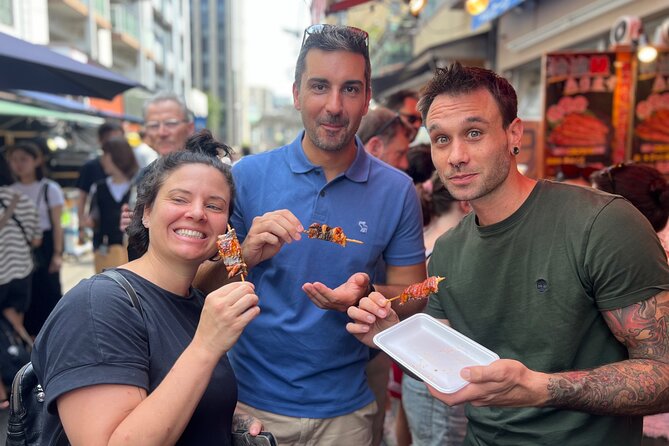
Let’s get this straight: food and drinks aren’t included. That means you’re not getting a set tasting package from the operator.
What you are getting is guidance. Your guide can steer you toward stalls that match what you want to eat—so you’re less likely to overpay, miss a good option, or end up with something you wouldn’t have chosen if you were on your own.
A practical way to think about it: treat this as an introduction to Tsukiji’s food culture, with the opportunity to buy items as you go. If you’re a light eater, you might just buy one small bite at a couple of stalls. If you’re food-curious, you’ll probably end up sampling more.
One extra pro tip you might want to consider if you’re still hungry later: some groups noted you can go to the back of the market, buy food there, and rent a grill on top for a more hands-on meal. That’s not part of a “package,” but it’s a clever option if you like the idea of cooking what you pick.
Readers also shortlisted these Tokyo bookings:
- Tokyo Tsukiji Fish Market Food and Culture Walking Tour★ 5.0 · 3,184 reviews
- Tokyo: Imperial Palace and Shogun Historical Walking Tour★ 5.0 · 2,251 reviews
- Tokyo: Shinjuku Local Bar and Izakaya Guided Walking Tour★ 4.9 · 1,794 reviews
- Tokyo: Tsukiji Fish Market Food and Walking tour★ 5.0 · 1,724 reviews
- Tokyo: Asakusa Walking Tour with Sensoji Temple Visit★ 4.8 · 1,583 reviews
Meeting at Tsukiji Station and walking logistics that keep it easy
The meeting point is Starbucks Coffee – Tsukiji Station (Tsukiji, Chuo City). The address is listed on the tour info, and the tour ends back at the same meeting point.
That matters more than people think. In dense areas, “ends where you started” can be a lifesaver when you’re carrying food, taking photos, or just feeling pleasantly overwhelmed.
The duration is about 2 hours, with the schedule broken into short, manageable chunks:
- Temple stop: about 15 minutes
- Fish market: about 50 minutes
- Jogai market: about 50 minutes
So you’re not signing up for a full day. It’s a good choice if you want Tsukiji without sacrificing the rest of your Tokyo plans.
Also, the start location is near public transportation, which helps you fit it into your day smoothly. You won’t be committing to a long commute across Tokyo just for a market walk.
Who should book this Tsukiji tour (and who should skip it)
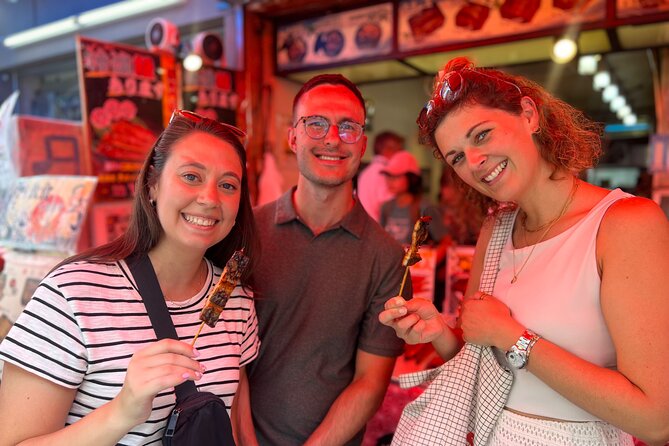
This tour is a strong match if you want:
- a small-group market experience rather than a big group shuffle
- context first (temple and history), then the hands-on market energy
- a guide who can give insider eating tips while you’re there
- digital photos as a no-effort memory maker
It’s also a great option if you’re visiting Tokyo and you’ve got limited time. A tour like this gives you a fast, high-signal pass through Tsukiji’s main stops without needing to do a pile of homework.
You might want to consider a different option if:
- you’re not interested in walking and prefer just one area
- you’re strongly budget-focused and don’t want to spend extra for food
- you dislike crowds and market-like noise (Tsukiji is Tsukiji)
If you’re a history-and-food person, this hits a sweet spot. The temple stop adds meaning, and the market stops give you the payoff.
Should you book this Tsukiji Fish Market tour?
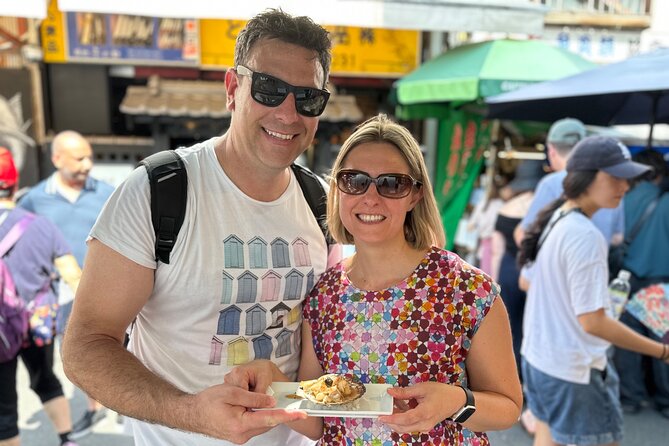
I think you should book it if your goal is a practical introduction to Tsukiji with guidance, not just photo ops. The best reason is the combo of included admissions plus a small group and digital photos. That turns a short walk into something that feels organized.
If your dream day is mostly about sampling seafood in a free-form way, you’ll still be able to do that. Just remember: you’ll be paying for food yourself, so go in with a realistic snack budget and an appetite for options you might not find elsewhere.
If you want, tell me your travel dates and whether you’re a big seafood eater. I can suggest how to plan your Tsukiji timing so you don’t feel rushed and you don’t end up skipping other parts of Tokyo you’ll also want to see.
FAQ
How long is the Tokyo Tsukiji Fish Market Food and Walking Tour?
It lasts about 2 hours.
What’s the group size for this tour?
The experience has a maximum of 10 travelers.
What’s included in the tour price?
You get a local professional guide, photos taken during the tour, historical insights, and admission to Tsukiji Fish Market, Tsukiji Jogai Market, and Tsukiji Hongwanji Temple.
Are food and drinks included?
No. Food and drinks are not included, so you’ll need to buy what you want to eat at the market.
Where do I meet for the tour?
Meet at Starbucks Coffee – Tsukiji Station in Tsukiji, Chuo City (the tour lists the address).
Can I cancel for a full refund?
Yes. Free cancellation is available up to 24 hours in advance for a full refund.
More Tours in Tokyo
- Mt Fuji and Hakone 1-Day Bus Tour Return by Bullet Train
★ 5.0 · 26,383 reviews - 1-Day Tokyo Bus Tour
★ 5.0 · 14,250 reviews - Tokyo: Shinjuku Food Tour (13 Dishes at 4 Local Eateries)
★ 5.0 · 6,603 reviews - Tokyo Mt Fuji 5th St & Hakone Cruise Bus Tour w/Bullet Train
★ 4.4 · 5,024 reviews - Flagship 2-Hours Official Street Go-Kart Tour – Tokyo Bay Shop
★ 5.0 · 4,974 reviews
More Tour Reviews in Tokyo
- Mt Fuji and Hakone 1-Day Bus Tour Return by Bullet Train
★ 5.0 · 26,383 reviews - 1-Day Tokyo Bus Tour
★ 5.0 · 14,250 reviews - Tokyo: teamLab Planets TOKYO Digital Art Museum Entry Ticket
★ 4.6 · 9,779 reviews - Mt Fuji & Hakone Cruise, Drum Show Bullet Train 1 Day from Tokyo
★ 4.0 · 7,413 reviews - Tokyo: Shinjuku Food Tour (13 Dishes at 4 Local Eateries)
★ 5.0 · 6,603 reviews
More Tsukiji Market Breakfasts
- Tokyo Tsukiji Fish Market Food and Culture Walking Tour
★ 5.0 · 3,184 reviews - Tokyo: Tsukiji Fish Market Food and Walking tour
★ 5.0 · 1,724 reviews - Tokyo: Tsukiji Fish Market Guided Walking Tour
★ 4.9 · 1,397 reviews - Tokyo Sushi Making Class in Tsukiji with Professional Chef
★ 5.0 · 1,177 reviews - Tsukiji Fish Market Guided Tour and Sushi Making with Pro Chef
★ 5.0 · 775 reviews
Latest Tokyo reviews off our desk






Tsukiji Market Food Tours, compared.
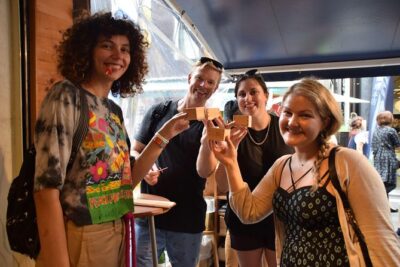 ★ 5.0Tokyo Tsukiji Fish Market Food and Culture Walking TourFrom $993,184 reviews
 ★ 5.0Tsukiji Fish Market Food and Walking tourFrom $301,724 reviews
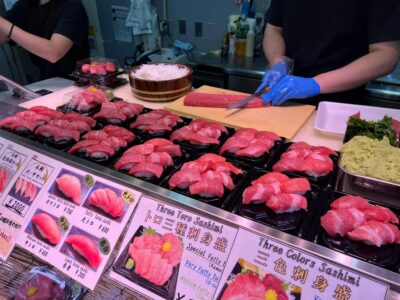 ★ 4.9Tsukiji Fish Market Guided Walking TourFrom $221,397 reviews
 ★ 5.0Tokyo Sushi Making Class in Tsukiji with Professional ChefFrom $491,177 reviews
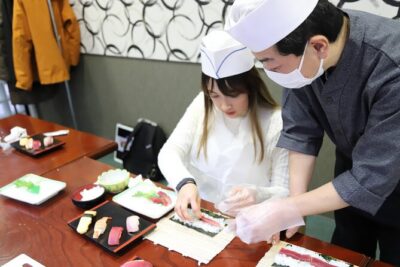 ★ 5.0Tsukiji Fish Market Guided Tour and Sushi Making with Pro ChefFrom $104775 reviews
★ 4.7Tsukiji Fish Market Food and Culture Walking TourFrom $96757 reviews
★ 5.0Tsukiji Fish Market Guided Tour and Sushi Making with Pro ChefFrom $104775 reviews
★ 4.7Tsukiji Fish Market Food and Culture Walking TourFrom $96757 reviews
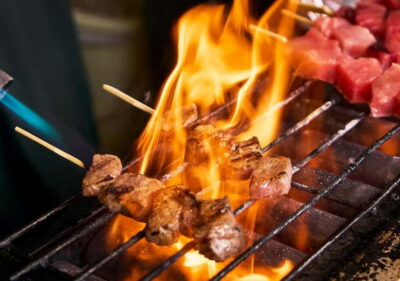 ★ 5.0Tsukiji Fish Market: Street Food & Culture Walking TourFrom $33669 reviews
 ★ 5.0Tsukiji Fish Market Small-Group Food Walking TourFrom $87621 reviews
Browse the lists this tour appears in