
Reviewed · TSUKIJI MARKET FOOD TOURS
Tokyo Tsukiji Fish Market Food & Culture Walking Tour
A morning in Tsukiji feels like a full-sensory reset. This Tokyo Tsukiji Fish Market food tour turns the Outer Market chaos into a simple plan, with tastings, breaks, and cultural stops that keep it moving at a human pace. I especially like how it mixes food with context so you’re not just eating random bites, but understanding why Tsukiji matters.
Two things I really like: the chance to sample sizzling skewers, sushi, and street snacks right where you’d normally feel overwhelmed, and the built-in photo moments and rest stops that make the 1.5 hours feel doable. My main caution is that it’s still a short walking tour in a dense market area, so if you dislike standing and squeezing through crowds, you may want a slower option.
In This Review
- Key Points You’ll Care About
- Tsukiji at 9:00 am: why this 1.5-hour plan works
- Meeting at FamilyMart (Tsukiji) and using your mobile ticket
- Stop 1: Tsukiji Hongwanji Temple and its unusual Indian architectural style
- Stop 2: the former Tsukiji wholesale market site and the food-culture stories
- Stop 3: Tsukiji Jogai Market—about 400 vendors and the tastings
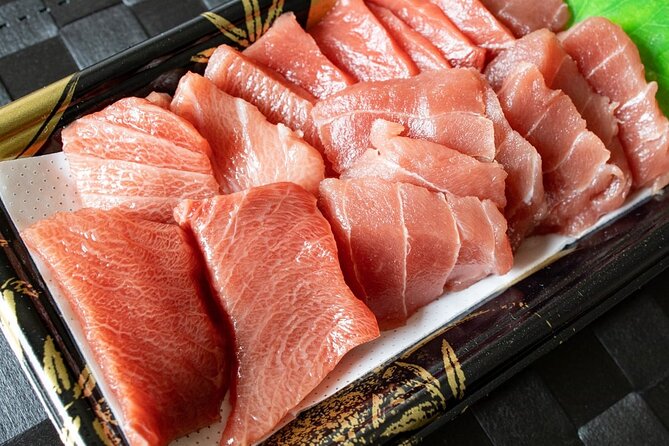
- What you actually eat: skewers, sushi, street snacks, and sweet treats
- Pace, photo moments, and the value of a max-10 group
- Price and value: $26.36 for a guided Tsukiji culture-and-food morning
- Who should book this tour (and who might prefer something else)
- Should you book this Tokyo Tsukiji Fish Market Food & Culture Walking Tour?
- FAQ
- What is the duration of the Tokyo Tsukiji Fish Market Food & Culture Walking Tour?
- How much does the tour cost?
- What time does the tour start, and where does it meet?
- Is a mobile ticket included?
- What are the main tasting items on the tour?
- Which stops are included during the walk?
- Are admission tickets included?
- How large is the group?
- Is the tour suitable for everyone in terms of physical activity?
- What is the cancellation policy?
Key Points You’ll Care About
- Temple start with a unique Indian architectural style at Tsukiji Hongwanji Temple
- Former wholesale market stories that connect Tsukiji to Tokyo’s food culture
- Tsukiji Jogai Market with about 400 vendors and plenty of tasting opportunities
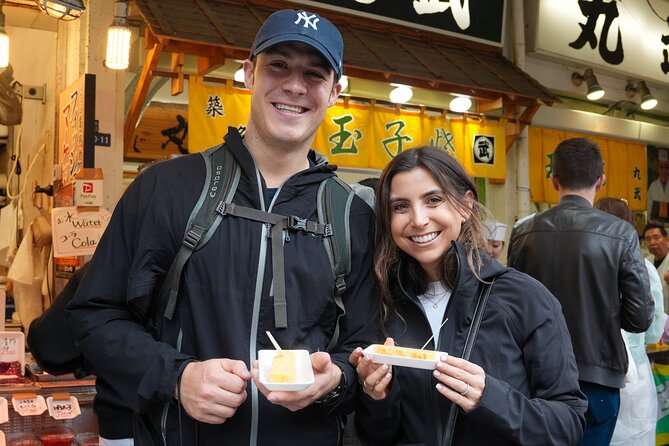
- Sushi, skewers, and street snacks as the core food experience
- Small group size (max 10) plus frequent breaks and photo spots
- Mobile ticket and a clear 9:00 am start near public transportation
Tsukiji at 9:00 am: why this 1.5-hour plan works
Tsukiji is one of those places where you either feel like you’re in control… or you feel like you’re being swept along by noise, smells, and too many choices. This tour is designed to keep you in the first category. You’re out for about 1 hour 30 minutes, which is long enough to taste, learn a bit, and get photos, but short enough that your energy doesn’t collapse halfway through.
The 9:00 am start time also helps. You get into the market mood early, without trying to solve the place on your own. And because it’s a guided walk with frequent stops, you’re not spending half your time figuring out where to go next.
More market breakfasts our reviewers scored
- Tokyo Tsukiji Fish Market Food and Culture Walking Tour
★ 5.0 · 3,184 reviews - Tokyo: Tsukiji Fish Market Food and Walking tour
★ 5.0 · 1,724 reviews - Tokyo: Tsukiji Fish Market Guided Walking Tour
★ 4.9 · 1,397 reviews - Tokyo Sushi Making Class in Tsukiji with Professional Chef
★ 5.0 · 1,177 reviews
Meeting at FamilyMart (Tsukiji) and using your mobile ticket
Your start point is specific and easy to find: FamilyMart, 3-chōme-11-8 Tsukiji, Chuo City, Tokyo. The tour runs from there and ends back at the same meeting point, so you’re not left wondering how to regroup at the end.
You also get a mobile ticket, which makes the whole thing smoother. In Japan, that matters—paper confirmations can feel like extra friction when you’re already surrounded by screens, signage, and people.
One practical note: the tour is said to be near public transportation, so you should be able to connect without planning a complicated transit route. If you’re coming from a hotel in central Tokyo, this is the kind of activity that fits well into a morning schedule.
Stop 1: Tsukiji Hongwanji Temple and its unusual Indian architectural style
Before the fish-food frenzy, you begin at Tsukiji Hongwanji Temple, a Buddhist temple with a role in the area’s history. What I find especially interesting is the temple’s rare Indian architectural style, which makes it feel different from the typical Tokyo temple look.
This first stop is also a smart warm-up. It gives you a quiet mental reset before you step into the market crush. It’s short too—about 10 minutes—so you’ll see the landmark and move on without losing your entire morning to one place.
Possible drawback: because the visit is brief, you won’t get a long, slow stroll to read every detail. If you’re the type who wants to linger for an hour in religious spaces, plan to return later on your own.
Stop 2: the former Tsukiji wholesale market site and the food-culture stories
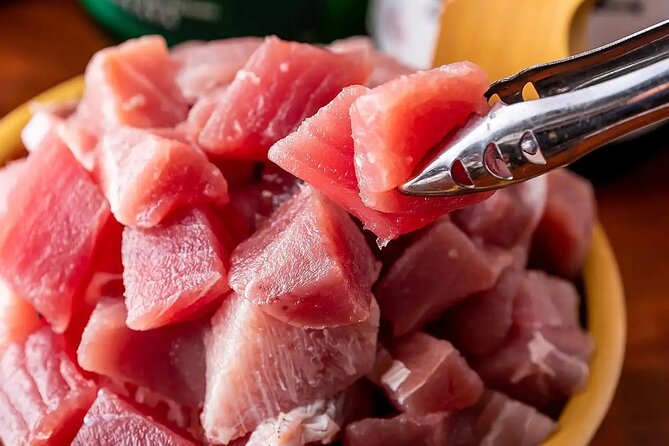
After the temple, you head to the area tied to the former Tsukiji market, once described as the largest wholesale fish market in the world. This stop isn’t about standing in front of a display and guessing the meaning. The guide shares stories that shaped Tokyo’s food culture, and it helps you understand why Tsukiji still matters even after time and change.
Why this matters for you: when you eat in a place like Tsukiji, your experience is better when it has context. Knowing that this spot was built around wholesale trading and daily supply changes how you see the energy, the variety, and the speed of the whole scene.
Time-wise, this segment is about 30 minutes, which is perfect for learning without exhausting yourself. You get the “why,” then you move on to the “what do I eat next?”
Stop 3: Tsukiji Jogai Market—about 400 vendors and the tastings
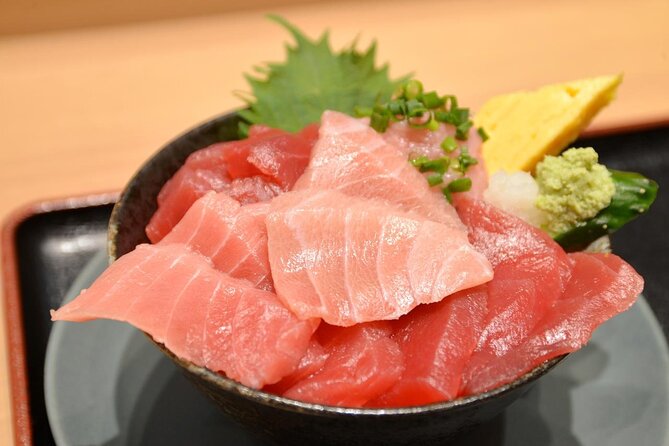
Now you’re in the heart of the Outer Market feeling: Tsukiji Jogai Market, where about four hundred vendors keep the spirit of Tsukiji alive. This is where your guide’s job really shows—because with so many stalls, the hardest part for most people is choosing. You’re not alone in thinking, where do I start?
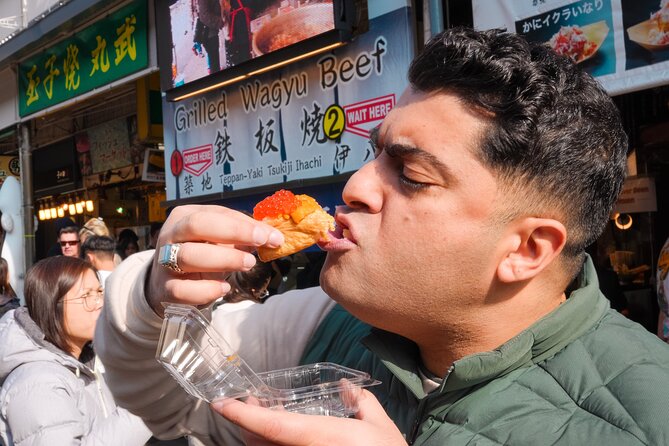
The tour turns that into a simple route through busy alleys, with tastes along the way. You’ll sample fresh seafood and local specialties, and you’ll also get those “okay, that’s a good photo” moments as you go. The tour description also calls out plenty of breaks, and that’s key here. Market air can be intense—heat, cooking smells, and the density of people—and the pauses help you reset.
This final market stretch is about 50 minutes, so it’s the longest part. You’ll likely finish with your brain full and your stomach satisfied, which is exactly what you want from a food-focused experience.
Possible consideration: you’re walking in an active market environment. Even if the pace is guided and breaks are built in, you should still plan for a bit of standing and squeezing past crowds.
Readers also shortlisted these Tokyo bookings:
- Tokyo Tsukiji Fish Market Food and Culture Walking Tour★ 5.0 · 3,184 reviews
- Tokyo: Imperial Palace and Shogun Historical Walking Tour★ 5.0 · 2,251 reviews
- Tokyo: Shinjuku Local Bar and Izakaya Guided Walking Tour★ 4.9 · 1,794 reviews
- Tokyo: Tsukiji Fish Market Food and Walking tour★ 5.0 · 1,724 reviews
- Tokyo: Asakusa Walking Tour with Sensoji Temple Visit★ 4.8 · 1,583 reviews
What you actually eat: skewers, sushi, street snacks, and sweet treats
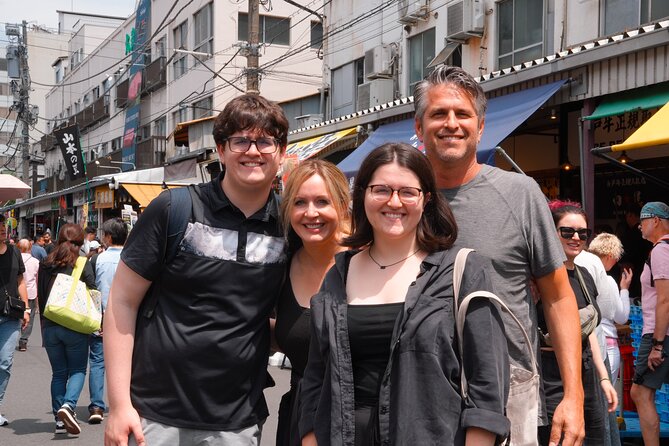
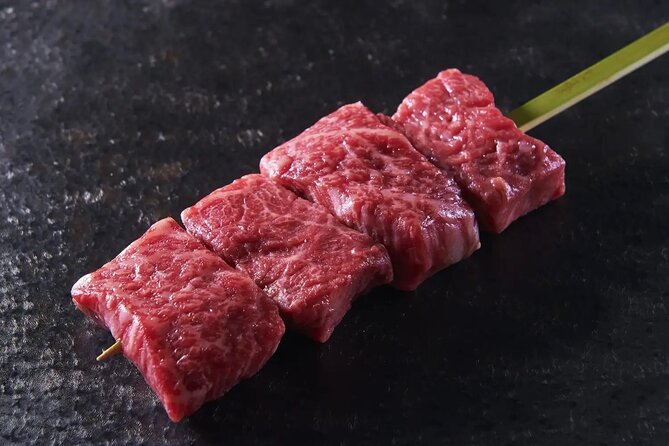
The heart of this experience is the food tasting route, and it’s not vague. The tour highlights call out sizzling skewers, sushi, and street snacks, plus traditional treats that lean sweet.
I like this mix because it covers different “textures” of Tsukiji. Skewers tend to be quick and bold. Sushi brings you a cleaner, more precise flavor. Street snacks and sweets give you the fun in-between bites that make the whole morning feel like a real exploration instead of one long meal.
Here’s how I’d approach it once you’re there: pay attention to the order your guide offers. Tastings usually build from lighter to heavier, or from savory to sweet. If you jump around on your own, you can end up overwhelmed. With a guided flow, you’re less likely to take too much of the same type of bite too early.
And because the tour includes photo spots, you can slow down for a shot without feeling like you’re derailing the schedule.
Pace, photo moments, and the value of a max-10 group
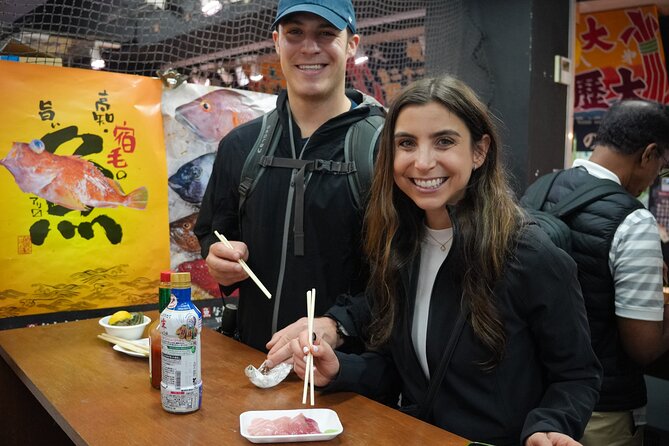
A maximum of 10 travelers changes the whole experience. In a place like Tsukiji, small groups mean less getting separated, fewer stalled bottlenecks, and more chances for the guide to steer you clearly. You’re still in a public market, but you’re not being herded like a number.
The tour also emphasizes that it’s easy and relaxed—short walk, frequent stops, and time to rest when you need it. That’s not just comfort talk. It’s practical. In busy markets, the best time to enjoy a stall isn’t the moment you’re sprinting to keep up. Breaks keep you present, and they let you enjoy the flavors without rushing.
Photo moments matter too. Tsukiji is all motion—hands working, food sizzling, signage everywhere. If you try to take photos while navigating alone, you lose either the shot or the food. The tour builds in opportunities to slow down and frame what you see.
Price and value: $26.36 for a guided Tsukiji culture-and-food morning
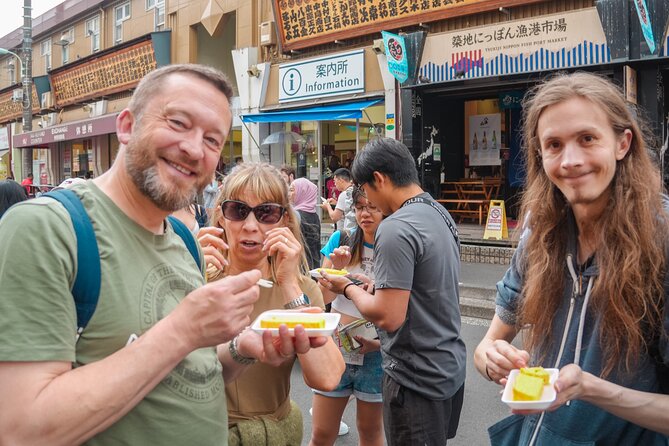
At $26.36 per person, this isn’t an expensive “big dinner” experience. It’s a tasting tour with cultural context, and that’s where value comes from. You’re paying for three things: a guided route that reduces decision stress, tastings that would otherwise require you to research individual stalls, and short culture stops that explain what you’re looking at.
Another value point: the description indicates admission ticket included for the temple and the market-related stops. That matters because it removes small planning chores. Even if you’re the type who likes to wing it, it’s still nice not to add extra ticket searches in the middle of a trip.
Is it perfect value for every appetite? If you want a long, slow, do-it-yourself seafood day, you might feel the time is short. But if you want an efficient, guided introduction that leaves you full and oriented, the price-to-experience ratio is strong.
Also: it’s an activity that people tend to plan ahead for. On average, it’s booked about 47 days in advance, so you’ll want to check dates early if your schedule is tight.
Who should book this tour (and who might prefer something else)
This tour fits best when you want a guided introduction to Tsukiji that’s not exhausting. I’d point it toward people who:
- Love street food and want a structured tasting route
- Prefer guided context to random wandering
- Want sushi and skewers plus sweets, not just one category of snack
- Appreciate a small group and frequent stops
It may not be your match if you:
- Want a long, independent market exploration for hours
- Strongly dislike walking and standing, even at a relaxed pace
- Prefer deeper, longer temple time before moving on
Still, for most people, it’s a smart “morning win.” You get a lot of Tsukiji energy without having to figure everything out first.
Should you book this Tokyo Tsukiji Fish Market Food & Culture Walking Tour?
Yes, if your goal is a short, delicious, low-stress Tsukiji visit with real guidance. This tour is built for getting your bearings fast: temple history first, then market stories, then the tasting-focused walk with photo moments and breaks. At $26.36 and about 90 minutes, it’s the kind of experience that works well as a first stop in your Tsukiji day.
Before booking, think about one thing: how you like to travel through crowded places. If you’re okay with standing, squeezing through busy aisles, and eating as you go, you’ll likely enjoy this format a lot. If you want total control and lots of lingering, you may prefer a longer independent plan.
If your dates are flexible, book earlier rather than later. The tour’s advance booking window suggests it can sell out.
FAQ
What is the duration of the Tokyo Tsukiji Fish Market Food & Culture Walking Tour?
The tour lasts about 1 hour 30 minutes.
How much does the tour cost?
The price is $26.36 per person.
What time does the tour start, and where does it meet?
It starts at 9:00 am at FamilyMart, 3-chōme-11-8 Tsukiji, Chuo City, Tokyo 104-0045, Japan.
Is a mobile ticket included?
Yes, it uses a mobile ticket.
What are the main tasting items on the tour?
The highlights mention sampling sizzling skewers, sushi, and street snacks, plus traditional treats.
Which stops are included during the walk?
You visit Tsukiji Hongwanji Temple, the site of the former Tsukiji Market (Outer Market area), and Tsukiji Jogai Market.
Are admission tickets included?
The tour information indicates admission ticket included for the listed stops.
How large is the group?
The tour has a maximum of 10 travelers.
Is the tour suitable for everyone in terms of physical activity?
It’s noted that most people can participate, with a recommendation of moderate physical fitness.
What is the cancellation policy?
You can cancel for free up to 24 hours in advance for a full refund. If you cancel less than 24 hours before the start time, the amount paid is not refunded.
More Tours in Tokyo
- Mt Fuji and Hakone 1-Day Bus Tour Return by Bullet Train
★ 5.0 · 26,383 reviews - 1-Day Tokyo Bus Tour
★ 5.0 · 14,250 reviews - Tokyo: Shinjuku Food Tour (13 Dishes at 4 Local Eateries)
★ 5.0 · 6,603 reviews - Tokyo Mt Fuji 5th St & Hakone Cruise Bus Tour w/Bullet Train
★ 4.4 · 5,024 reviews - Flagship 2-Hours Official Street Go-Kart Tour – Tokyo Bay Shop
★ 5.0 · 4,974 reviews
More Tour Reviews in Tokyo
- Mt Fuji and Hakone 1-Day Bus Tour Return by Bullet Train
★ 5.0 · 26,383 reviews - 1-Day Tokyo Bus Tour
★ 5.0 · 14,250 reviews - Tokyo: teamLab Planets TOKYO Digital Art Museum Entry Ticket
★ 4.6 · 9,779 reviews - Mt Fuji & Hakone Cruise, Drum Show Bullet Train 1 Day from Tokyo
★ 4.0 · 7,413 reviews - Tokyo: Shinjuku Food Tour (13 Dishes at 4 Local Eateries)
★ 5.0 · 6,603 reviews
More Tsukiji Market Breakfasts
- Tokyo Tsukiji Fish Market Food and Culture Walking Tour
★ 5.0 · 3,184 reviews - Tokyo: Tsukiji Fish Market Food and Walking tour
★ 5.0 · 1,724 reviews - Tokyo: Tsukiji Fish Market Guided Walking Tour
★ 4.9 · 1,397 reviews - Tokyo Sushi Making Class in Tsukiji with Professional Chef
★ 5.0 · 1,177 reviews - Tsukiji Fish Market Guided Tour and Sushi Making with Pro Chef
★ 5.0 · 775 reviews
Latest Tokyo reviews off our desk






Tsukiji Market Food Tours, compared.
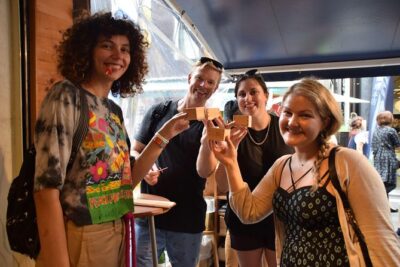 ★ 5.0Tokyo Tsukiji Fish Market Food and Culture Walking TourFrom $993,184 reviews
 ★ 5.0Tsukiji Fish Market Food and Walking tourFrom $301,724 reviews
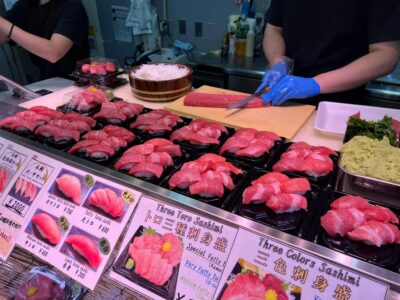 ★ 4.9Tsukiji Fish Market Guided Walking TourFrom $221,397 reviews
 ★ 5.0Tokyo Sushi Making Class in Tsukiji with Professional ChefFrom $491,177 reviews
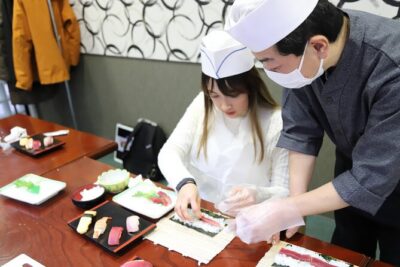 ★ 5.0Tsukiji Fish Market Guided Tour and Sushi Making with Pro ChefFrom $104775 reviews
★ 4.7Tsukiji Fish Market Food and Culture Walking TourFrom $96757 reviews
★ 5.0Tsukiji Fish Market Guided Tour and Sushi Making with Pro ChefFrom $104775 reviews
★ 4.7Tsukiji Fish Market Food and Culture Walking TourFrom $96757 reviews
 ★ 5.0Tsukiji Fish Market: Street Food & Culture Walking TourFrom $33669 reviews
 ★ 5.0Tsukiji Fish Market Small-Group Food Walking TourFrom $87621 reviews
Browse the lists this tour appears in