
Reviewed · TSUKIJI MARKET FOOD TOURS
Tokyo Tsukiji Fish Market Food&Culture Walking Tour With a LOCAL!
Tsukiji can feel like a food maze. This small-group tour adds structure with a local guide, a quick Japanese survival lesson, and included temple and shrine visits—so you spend less time lost and more time eating.
I especially like how you get a tight game plan for what to try (without getting stuck with a rigid menu), and the stop sequence keeps you moving through Tsukiji at a human pace.
One of my favorite parts is the personal attention. With a group cap of six, guides can actually steer you toward the right stalls and explain what you’re looking at—like tools and ingredients you’d never notice on your own. If you’re lucky enough to get a guide like Ronnie, you’ll start at the temple main gate and get direct, on-the-walk tips that make the market feel readable.
The main drawback to know upfront: there are no preset food inclusions, so you’ll pay for dishes à la carte. Also, the experience includes about two hours of walking, so it’s not a great fit if you struggle with extended time on your feet.
In This Review
- Key things I’d plan around
- Tsukiji is a maze. This tour is your map.
- Meeting at Tsukiji Hongwanji Temple: a calm start, real context
- 38KIOSK hub stop: luggage storage and a simple plan for your hunt
- Jogai Market (the ingredient-and-tool world you’ll remember)
- Namiyoke Shrine: a quick cultural breather
- How the food works: you choose, your guide steers
- Value check: what $75 buys (and what you’re still paying for)
- Timing, crowds, and how to not waste your morning
- Who this tour suits best (and who should skip it)
- Should you book the Tokyo Tsukiji Fish Market Food & Culture tour?
- FAQ
- How long is the Tsukiji Fish Market food and culture walking tour?
- Where does the tour start and end?
- Is luggage storage included?
- Are temple and shrine entrances included?
- Is food included in the price?
- What’s the group size?
- Can the tour accommodate dietary needs?
- Does the tour work for people who have trouble walking?
- FAQ
- What’s the ticket format?
- Is the tour weather dependent?
- Is confirmation available at booking?
- Are service animals allowed?
Key things I’d plan around
- Small-group cap (max 6): you get questions answered instead of listening over other people’s shoulders.
- Quick Japanese survival lesson: you’ll learn simple phrases to help you order and interact at stalls.
- Free luggage storage: handy if you’re coming straight from a hotel or station with a small suitcase.
- Temples included: Tsukiji Hongwanji Temple and Namiyoke Shrine add meaning and a break from food noise.
- Jogai Market focus: you’re guided through the ingredient-and-tool world, not just chasing sights.
- Lunch stop at 38KIOSK: your guide points you toward a smart, local way to eat after the hunt.
Tsukiji is a maze. This tour is your map.
Tsukiji’s reputation is famous, but the reality is simple: it’s tight, crowded in spots, and full of smells that all compete at once. Without local help, you can end up wandering in circles or paying too much because you’re unsure what you’re actually looking at.
This tour works because it gives you direction without turning the whole experience into a cafeteria line. You’re not locked into a fixed tasting menu. Instead, you use the guide’s knowledge to choose what you want—sushi, skewers, or other market favorites that match what you see in front of you.
The group size matters here. With only six people, you can pause when you need to, and the guide can adjust to how fast you walk and what you like to eat. That’s a big difference from the big bus-tour feel.
More market breakfasts our reviewers scored
- Tokyo Tsukiji Fish Market Food and Culture Walking Tour
★ 5.0 · 3,184 reviews - Tokyo: Tsukiji Fish Market Food and Walking tour
★ 5.0 · 1,724 reviews - Tokyo: Tsukiji Fish Market Guided Walking Tour
★ 4.9 · 1,397 reviews - Tokyo Sushi Making Class in Tsukiji with Professional Chef
★ 5.0 · 1,177 reviews
Meeting at Tsukiji Hongwanji Temple: a calm start, real context
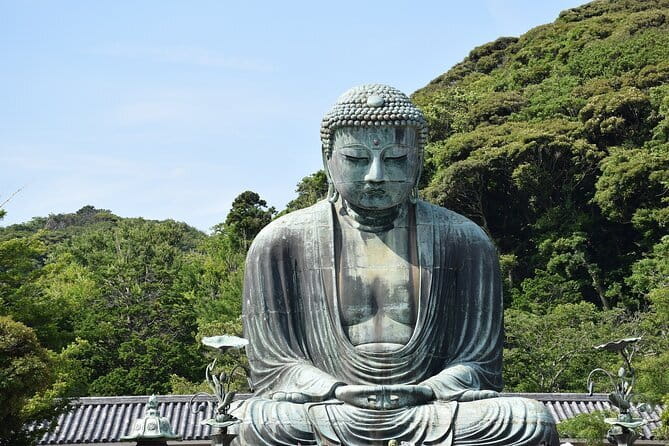
You start at Tsukiji Hongan-ji Temple (3-chōme-15-1 Tsukiji). This isn’t just a convenient meeting point; it’s the tone-setter. The guide introduces brief Buddhist rituals, and that little moment helps you understand that Tsukiji isn’t only about food—it’s also about tradition, daily work rhythms, and respect.
Practically, it’s a smart way to begin. In a market environment, people often arrive hungry, distracted, and slightly overwhelmed. Starting at a temple helps you slow down. It also gives you something to focus on while the group gathers, before you plunge into the streets and stalls.
It’s also helpful for your future Tokyo travel. The guide’s quick ritual context means you’ll spot what you’re seeing in other shrines and temples later, even if you don’t know every detail.
38KIOSK hub stop: luggage storage and a simple plan for your hunt
After the temple, you head to 38KIOSK. This is where the tour intro happens at the hub. It’s also where you get the free luggage storage service during the tour—useful if you’re carrying a small suitcase or have bags that would slow you down in the market lanes.
This stop is more than logistics. It’s your reset. You learn how the guide plans to move you through the markets and what to expect when you hit the walking sections. That’s the kind of prep that makes food tours feel effortless, even when the area is busy.
If you’re the type who likes to know what’s coming, you’ll appreciate this pacing. It stops the tour from feeling like you’re just being dragged from one shop to another.
Jogai Market (the ingredient-and-tool world you’ll remember)
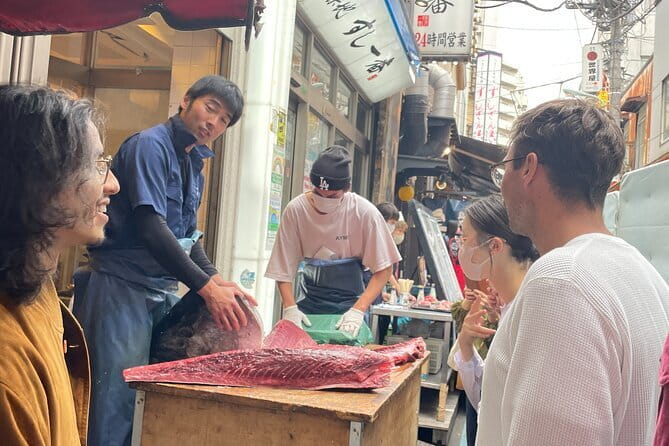
The heart of the tour is the guided walk through Tsukiji Jogai Market (about 1 hour 20 minutes). This is where you learn to look at the market like a food person, not just a tourist.
Your guide’s focus isn’t only on final dishes. You spend time discovering fresh ingredients, and you learn about Japanese food culture through the tools you see along the way—handcrafted knives and other market equipment passed down through generations.
That part is surprisingly useful. When you understand how markets handle quality—what tools are used, why certain things are prepared a particular way—you stop thinking of food as a random snack and start seeing it as a craft. Even if you don’t buy a knife (please don’t carry one home unless you truly want the responsibility), the explanation makes your tasting choices feel smarter.
One practical note: this section is active walking. Comfortable shoes matter. The streets can be uneven, and you’ll want your feet to feel good so you can spend energy on tasting and asking questions.
Namiyoke Shrine: a quick cultural breather
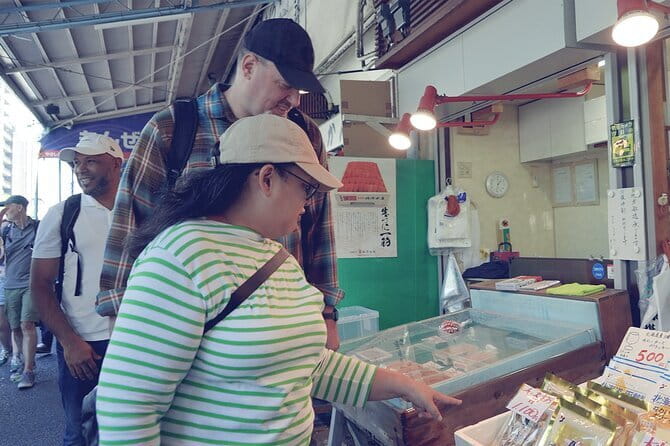
The tour also includes entry to Tsukiji Namiyoke Shrine. You’ll get that shrine stop as part of the included cultural circuit.
In a market-heavy itinerary, the shrine functions like a palate cleanser for your brain. You get a little breathing room, a reminder that this is a working area with long-standing practices, and a chance to regroup before lunch.
If you’ve ever felt like Tokyo food is too fast—too much, too loud, too crowded—this kind of short cultural pause helps the whole experience feel balanced. It’s not “extra.” It’s the structure that keeps you from burning out before you eat.
Readers also shortlisted these Tokyo bookings:
- Tokyo Tsukiji Fish Market Food and Culture Walking Tour★ 5.0 · 3,184 reviews
- Tokyo: Imperial Palace and Shogun Historical Walking Tour★ 5.0 · 2,251 reviews
- Tokyo: Shinjuku Local Bar and Izakaya Guided Walking Tour★ 4.9 · 1,794 reviews
- Tokyo: Tsukiji Fish Market Food and Walking tour★ 5.0 · 1,724 reviews
- Tokyo: Asakusa Walking Tour with Sensoji Temple Visit★ 4.8 · 1,583 reviews
How the food works: you choose, your guide steers
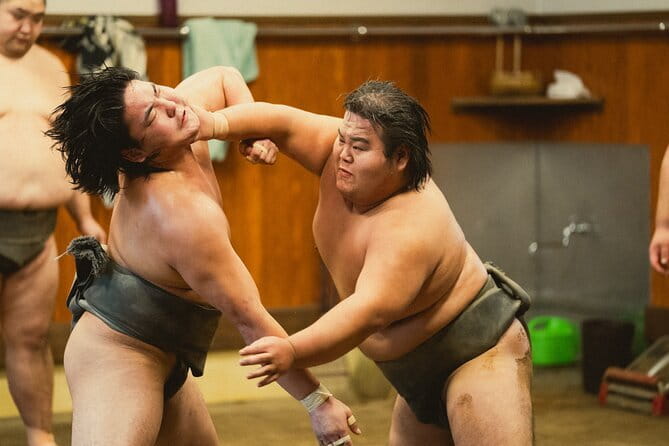
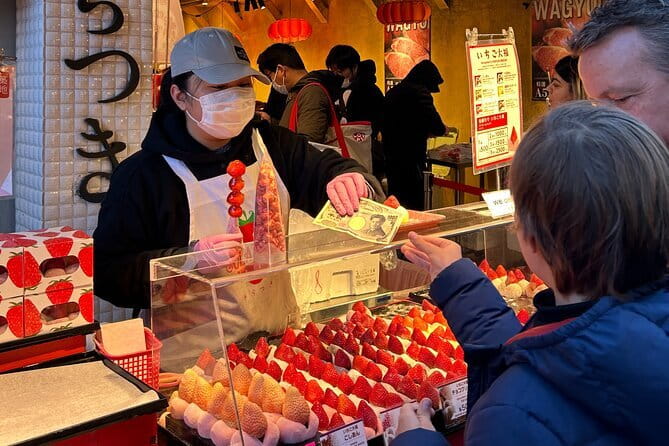
Here’s the key reality: this isn’t a fixed tasting set. There are no preset food inclusions, so you only pay for what dishes you want to try. Your guide helps you hunt for the best options, but you stay in charge of your own spending.
That’s good value if you’re picky or if you have a specific craving. It’s also good if you’re traveling with mixed eaters. One person can go heavier on sushi while another chooses skewers or other market bites. The guide can explain what’s typically ordered and what to watch for.
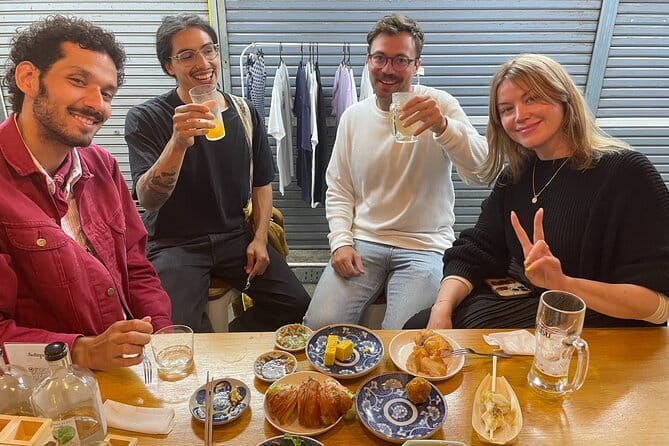
What to expect during the meal part: you head to 38KIOSK for lunch in the tour flow. The tour highlights a party-style meal approach using fresh ingredients sourced during your market time, but since lunch isn’t listed as included, you should plan on ordering and paying for your own food choices. Alcohol isn’t included either, so if you want a pairing, you’ll ask your guide for what works.
My advice: go hungry for the morning part, then pace yourself. Tsukiji can trick you into “one more bite” mode, and that’s how a fun morning turns into a rushed lunch. Your guide’s job is to help you select, not to push you into everything.
Value check: what $75 buys (and what you’re still paying for)
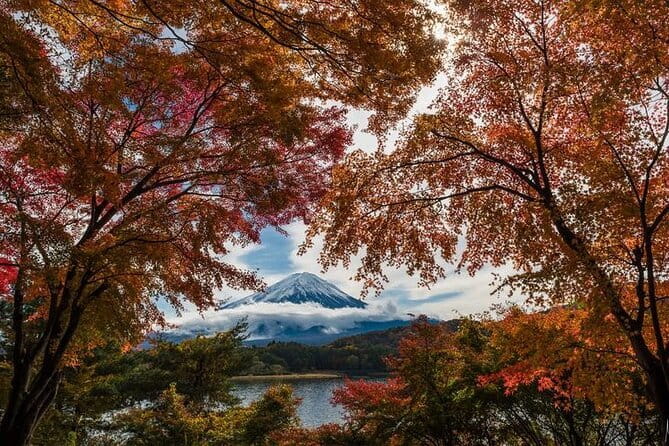
At $75 per person for about 3 hours, this tour feels like a fair deal if you care about two things: orientation and guidance.
You’re getting:
- Local professional guides
- Entry fees for the temple and shrine
- Entry fees for the fish market and Jogai market
- A survival Japanese lesson
- Free luggage storage during the tour
- A small group size capped at six
What you’re not getting:
- A guaranteed set of included food portions
- Alcohol
- A fully included lunch bill
That pricing structure is honest. You’re paying for the human expertise and cultural navigation, not for a boxed lunch. For many people, that’s exactly the value sweet spot. You can control your own food budget and still benefit from the guide’s ability to point you toward quality choices quickly.
If you were to do Tsukiji alone, you’d save the tour fee—but you’d also lose the time savings and the cultural context that helps you order confidently. This tour is basically paying for your time and your confidence.
Timing, crowds, and how to not waste your morning
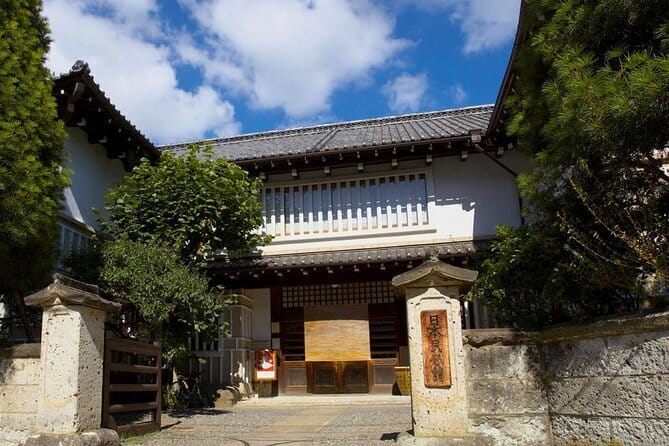
The tour starts at 10:00 am and runs for about 3 hours. That matters because Tsukiji’s crowd level shifts through the day. If you’re doing this on a busier day, you’ll be happier you have a guide to help you move efficiently.
One practical takeaway from people who’ve done it around busy weekend mornings: it can be busy, but it tends to feel more manageable earlier. Once the day gets later, the density increases. Starting at 10:00 gives you a better chance to enjoy the market lanes without feeling swallowed.
Also: you’ll walk around areas that are not built for slow strolling. If you’re the kind of traveler who likes to stop and stare at everything for ten minutes at each stall, you might feel rushed. The good news is your guide will usually help you decide what’s worth your time.
Who this tour suits best (and who should skip it)
This tour fits best if you:
- Want a food experience that’s guided but not rigid
- Like cultural stops (temple and shrine), not only tasting
- Appreciate small groups and a guide who can talk to you directly
- Need luggage handled (small suitcases are accepted for storage)
It may not fit if you:
- Can’t manage extended walking. The tour says it’s not suitable for people who have difficulty walking for extended periods (about two hours).
- Want a tour where most food is already included and you don’t think about budget. Since food is à la carte, you’ll be making choices.
If you have dietary needs, you can specify them when booking, including vegetarian and gluten-free requests and religious needs. That’s helpful because ordering in Japan can be simple, but it’s still easier with a guide who knows what to aim for.
Service animals are allowed, and the meeting point is near public transportation—good to know if you’re using transit instead of taxis.
Should you book the Tokyo Tsukiji Fish Market Food & Culture tour?
I’d book this tour if your goal is to understand Tsukiji quickly and eat well without guessing. The small group size, included cultural entry points, and quick Japanese help are the difference between wandering and actually enjoying the market.
Skip it if you want a fully pre-set tasting menu where your food cost is fixed. This is more like: the guide hands you a smart tasting route, then you choose what to pay for along the way.
If you’re on the fence, look at your travel style. If you love food and you like learning how markets work, this one makes your time count.
FAQ
How long is the Tsukiji Fish Market food and culture walking tour?
It’s about 3 hours.
Where does the tour start and end?
It starts at Tsukiji Hongan-ji Temple (3-chōme-15-1 Tsukiji, Chuo City, Tokyo) and ends at 38KIOSK (4-chōme-1014 加藤ビル, Tsukiji, Chuo City, Tokyo).
Is luggage storage included?
Yes. There’s free luggage storage during the tour for small suit cases.
Are temple and shrine entrances included?
Yes. Entrance fees for Tsukiji Hongwanji Temple and Tsukiji Namiyoke Shrine are included.
Is food included in the price?
There are no preset food inclusions. You’ll pay for the dishes you want to try, and your guide will help you choose.
What’s the group size?
The tour has a maximum of 6 travelers.
Can the tour accommodate dietary needs?
Yes. Vegetarian, gluten-free, and religious needs are supported if you specify them when making your reservation.
Does the tour work for people who have trouble walking?
It’s not suitable for people who may have difficulty walking for extended periods (about 2 hours).
FAQ
What’s the ticket format?
You receive a mobile ticket.
Is the tour weather dependent?
Yes. It requires good weather, and if it’s canceled due to poor weather, you’ll be offered a different date or a full refund.
Is confirmation available at booking?
Yes. Confirmation is received at the time of booking.
Are service animals allowed?
Yes, service animals are allowed.
More Tours in Tokyo
- Mt Fuji and Hakone 1-Day Bus Tour Return by Bullet Train
★ 5.0 · 26,383 reviews - 1-Day Tokyo Bus Tour
★ 5.0 · 14,250 reviews - Tokyo: Shinjuku Food Tour (13 Dishes at 4 Local Eateries)
★ 5.0 · 6,603 reviews - Tokyo Mt Fuji 5th St & Hakone Cruise Bus Tour w/Bullet Train
★ 4.4 · 5,024 reviews - Flagship 2-Hours Official Street Go-Kart Tour – Tokyo Bay Shop
★ 5.0 · 4,974 reviews
More Tour Reviews in Tokyo
- Mt Fuji and Hakone 1-Day Bus Tour Return by Bullet Train
★ 5.0 · 26,383 reviews - 1-Day Tokyo Bus Tour
★ 5.0 · 14,250 reviews - Tokyo: teamLab Planets TOKYO Digital Art Museum Entry Ticket
★ 4.6 · 9,779 reviews - Mt Fuji & Hakone Cruise, Drum Show Bullet Train 1 Day from Tokyo
★ 4.0 · 7,413 reviews - Tokyo: Shinjuku Food Tour (13 Dishes at 4 Local Eateries)
★ 5.0 · 6,603 reviews
More Tsukiji Market Breakfasts
- Tokyo Tsukiji Fish Market Food and Culture Walking Tour
★ 5.0 · 3,184 reviews - Tokyo: Tsukiji Fish Market Food and Walking tour
★ 5.0 · 1,724 reviews - Tokyo: Tsukiji Fish Market Guided Walking Tour
★ 4.9 · 1,397 reviews - Tokyo Sushi Making Class in Tsukiji with Professional Chef
★ 5.0 · 1,177 reviews - Tsukiji Fish Market Guided Tour and Sushi Making with Pro Chef
★ 5.0 · 775 reviews
Latest Tokyo reviews off our desk






Tsukiji Market Food Tours, compared.
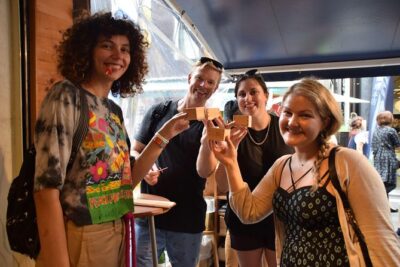 ★ 5.0Tokyo Tsukiji Fish Market Food and Culture Walking TourFrom $993,184 reviews
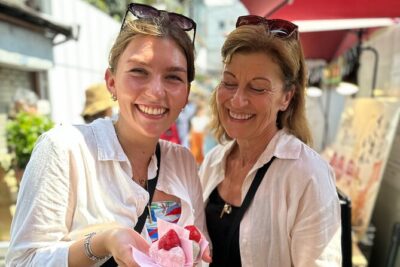 ★ 5.0Tsukiji Fish Market Food and Walking tourFrom $301,724 reviews
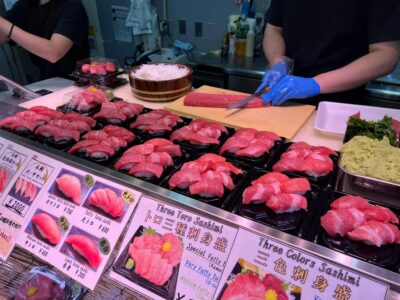 ★ 4.9Tsukiji Fish Market Guided Walking TourFrom $221,397 reviews
 ★ 5.0Tokyo Sushi Making Class in Tsukiji with Professional ChefFrom $491,177 reviews
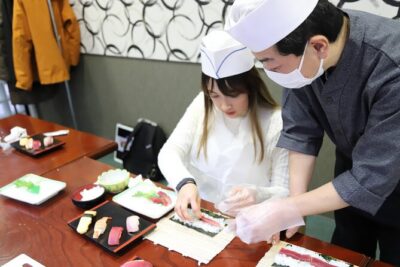 ★ 5.0Tsukiji Fish Market Guided Tour and Sushi Making with Pro ChefFrom $104775 reviews
★ 4.7Tsukiji Fish Market Food and Culture Walking TourFrom $96757 reviews
★ 5.0Tsukiji Fish Market Guided Tour and Sushi Making with Pro ChefFrom $104775 reviews
★ 4.7Tsukiji Fish Market Food and Culture Walking TourFrom $96757 reviews
 ★ 5.0Tsukiji Fish Market: Street Food & Culture Walking TourFrom $33669 reviews
 ★ 5.0Tsukiji Fish Market Small-Group Food Walking TourFrom $87621 reviews
Browse the lists this tour appears in