
Reviewed · SUMO TOURNAMENTS & SHOWS
Tokyo: Visit Sumo Morning Practice with English Guide
Sumo practice hits different in Tokyo. In the early morning, you’ll get rare access to Takasagobeya, a Tokyo sumo stable, where you can watch serious training up close and learn what’s going on.
I especially love the up-close view during training, where you feel how hard these athletes work. It’s also a great way to understand sumo as a culture, not just a sport.
I also really like the English guide part. They help you work through the language barrier, explain what you’re seeing, and answer questions so the practice makes sense while it’s happening.
One consideration: this is a small, traditional setup, so seating can be tight or uncomfortable if you’re not used to sitting on the floor.
In This Review
- Key Highlights You Can Actually Use
- Meeting at Ryogoku: The Part That Needs Your Attention
- Takasagobeya Training: What You’ll See in 90 Minutes
- The English Guide: How Explanations Turn Watching Into Understanding
- Photo Moment With the Wrestlers: The Souvenir Part
- Where This Fits on a Tokyo Morning: Asakusa Before or After
- Price and Value: Is $98.53 Worth It?
- Small-Room Reality Check: Seats, Crowds, and Comfort
- When Things Go Wrong: What You Should Know
- Should You Book This Tokyo Sumo Morning Practice?
- FAQ
- Where is the meeting point for the sumo morning practice?
- How long is the tour?
- What time does the tour start?
- How many people are in the group?
- Is admission included?
- Will there be a photo souvenir?
- Is the guide available in English?
- Can I visit Asakusa after the practice?
- What is the cancellation policy?
Key Highlights You Can Actually Use
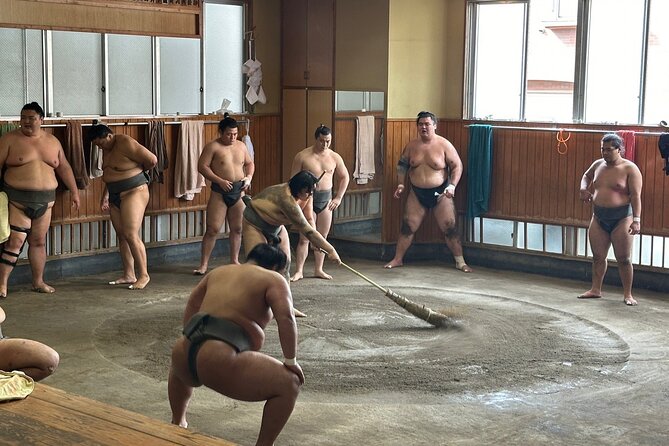
- Rare stable access to a training session that’s usually off-limits
- English guidance so exercises and rules don’t blur together
- Up-close training viewing that goes beyond the distant ring experience
- Commemorative end photo with the wrestlers (a fun, tangible souvenir)
- Small-room sensory experience: sound, sweat, and real effort up close
Meeting at Ryogoku: The Part That Needs Your Attention
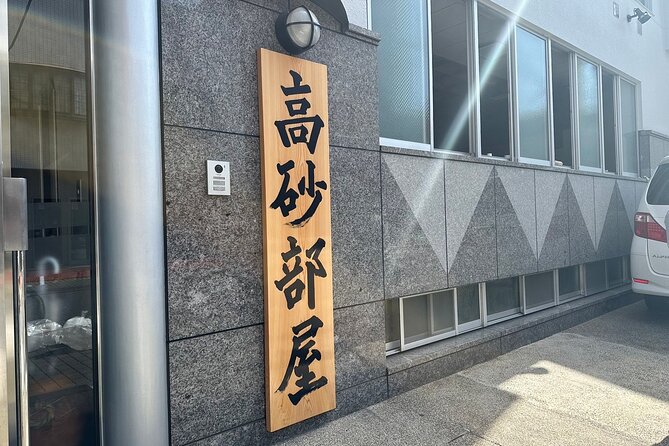
This tour centers on Ryogoku, the sumo neighborhood in Tokyo. You start near Ryogoku Station (with the meeting point listed as Ryogoku Sta. 1-chōme-4-29 Yokoami, Sumida City). The start time is 8:00 am, and the whole thing runs in a tight window once you’re there.
Here’s the practical tip that matters most: give yourself extra time to find the right station exit. One clear piece of advice from past visitors is to head to the A3 exit area early, because the group departure is time-sensitive. If you arrive a few minutes late, you may slow everyone down, and in Japan early is the polite move.
After you meet, the guide walks you to the stable area. That matters because sumo stable entrances aren’t like major tourist sites with obvious signage. Having someone point you in the right direction saves hassle and keeps your morning calm.
Other ringside bookings readers scored
- Tokyo: Sumo Show and Dining Experience
★ 4.8 · 2,742 reviews - the SUMO show
★ 5.0 · 1,960 reviews - Tokyo Shinjuku Sumo Show & Experience with Photo
★ 5.0 · 1,750 reviews - Tokyo: Sumo Show and Experience in Shinjuku
★ 4.8 · 1,001 reviews
Takasagobeya Training: What You’ll See in 90 Minutes
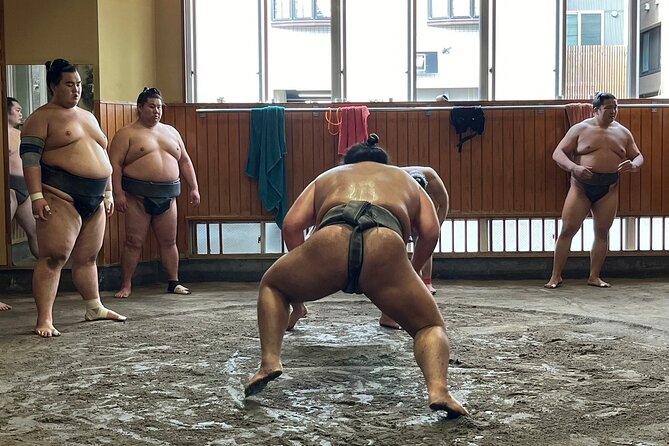
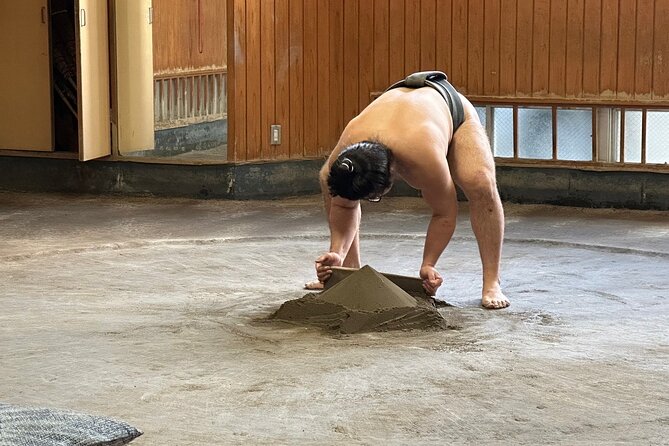
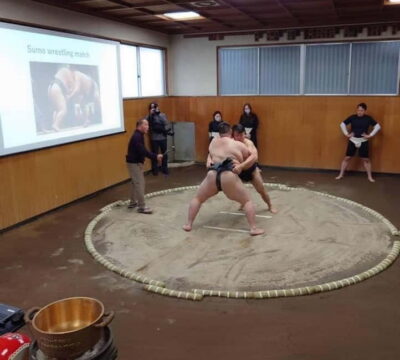
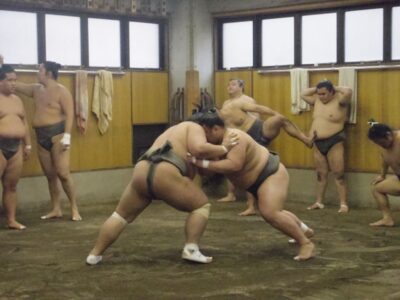
The main event is the training session at Takasagobeya (you may see Takasago Stable used in direction notes, but the stable name centers on Takasagobeya). This is not a big, staged performance. It’s a working practice, and that authenticity is the whole point.
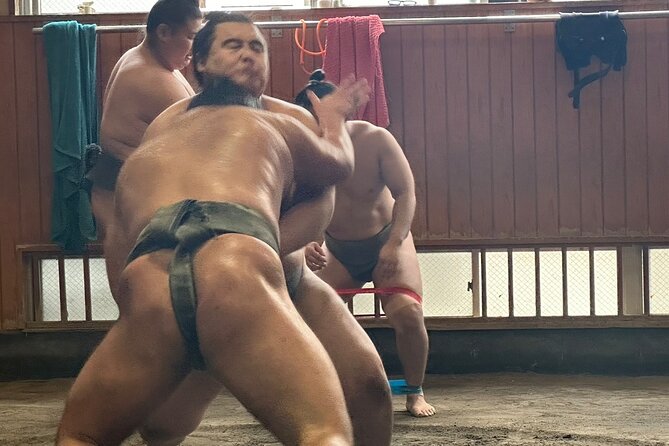
What makes it special is the access level. In a sumo tournament, you typically watch from a distance. During training, you get a closer view of the wrestlers doing the real work: exercises, prep, and practice bouts. You’ll also be able to take part in a photo moment at the end.
A session often has a rhythm. One of the best descriptions you can use to set expectations is the flow of training:
- some time for stretching and preparing bodies
- then practice matches that involve younger wrestlers first
- and later, more powerful bouts as the morning builds
You’ll likely notice that the pace is intense. Even without being a sumo expert, you’ll see the effort in the movements. And because this happens in a stable environment, you’ll hear the impact and see the sweat in a way TV never captures.
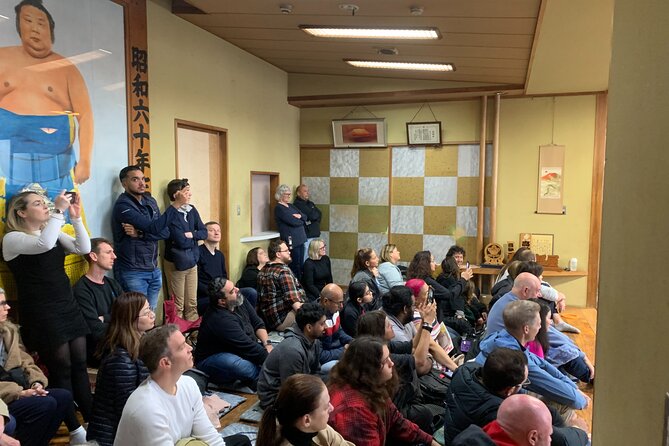
One more thing to know: your viewing area may be smaller than you expect. A common comment is that the room feels tight, and seating can get crowded, especially if multiple groups overlap. The guide can help you get positioned, but you should still plan like it’s a compact space.
The English Guide: How Explanations Turn Watching Into Understanding
The guide is a major part of the value here, and you can feel it in how the experience lands. Past groups highlight that the guides don’t just point and translate. They explain the exercises and traditions so you can follow along as the practice unfolds.
You should expect help with:
- basic sumo terms and what different parts of training mean
- why certain routines matter within sumo tradition
- answers to questions, even lots of them
At least one guide name that came up is Naomi, described as warm and friendly and willing to tackle a long list of questions. Another practical review note is that some guides may speak more than just English, including French and Japanese. You’re still in an English-guided experience, but the point is: you won’t be left staring at people in silence.
If you like learning while you watch, this is the right format. A practice session moves fast, and having context in real time makes it way more rewarding than showing up cold.
Photo Moment With the Wrestlers: The Souvenir Part
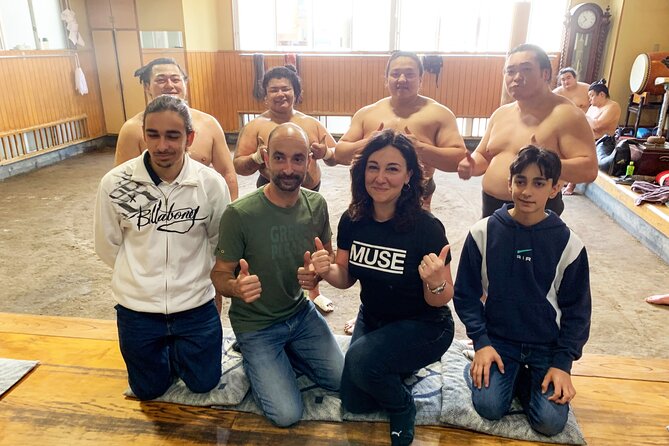
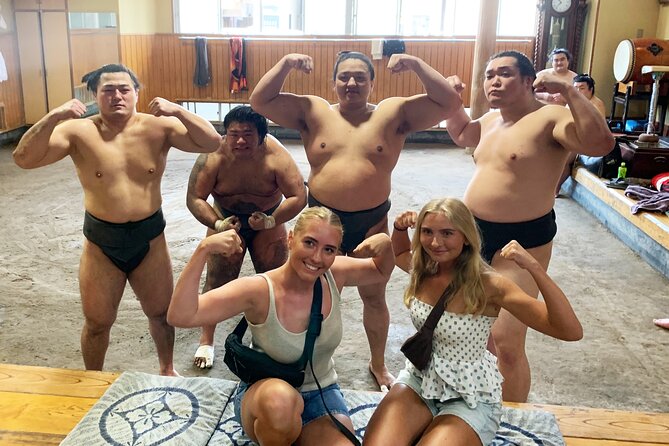
At the end of the training, you get a commemorative photo with the sumo wrestlers. For a lot of people, this is the fun payoff after all the observation.
Think of it as more than a snapshot. You’re taking home something that feels connected to the real morning training you watched—not a generic tourist photo. It’s also a good way to lock in the memory of the athletes you saw up close.
If you’re the type who likes collecting small, meaningful souvenirs, this one fits. You’re not just buying a magnet; you’re leaving with a moment created during the visit.
Where This Fits on a Tokyo Morning: Asakusa Before or After
You’ll likely have energy after a 1.5 to 2-hour morning practice. The tour notes encourage you to go sightseeing in nearby Asakusa after the viewing if you wish. This makes sense because Ryogoku and Asakusa are close enough that you can keep your morning productive without rushing across town.
After the session, you’re dismissed at the stable location (the directions list an address area for where the tour ends: 2-chōme-30-1 Ishiwara, Sumida City, Tokyo). The guide will show you how to get to your next destination, which is helpful if you’re trying to connect directly to Asakusa.
If you’re planning your day, a smooth approach is:
- do sumo early
- then pivot into Asakusa’s sightseeing streets and temple area
That way the morning’s intensity turns into an easier, slower exploration afterward.
Readers also shortlisted these Tokyo bookings:
- Tokyo 6hr Private Tour with Government-Licensed Guide★ 5.0 · 3,902 reviews
- Tokyo: Shinjuku Local Bar and Izakaya Guided Walking Tour★ 4.9 · 1,794 reviews
- Tokyo: Private City Highlights Tour with Local Guide★ 4.8 · 1,433 reviews
- Tokyo: Tsukiji Fish Market Guided Walking Tour★ 4.9 · 1,397 reviews
- Tokyo 4hr Private Tour with Government-Licensed Guide★ 5.0 · 1,394 reviews
Price and Value: Is $98.53 Worth It?
The price listed is $98.53 per person, and the session runs about 1 hour 30 minutes to 2 hours. Admission is included, and the experience includes more than viewing access: you get the English guide plus the photo moment.
So what are you really paying for?
- access to a stable training session that’s not normally open to the public
- an English-speaking guide to translate practice into understanding
- a close-up experience in a small setting
- a commemorative photo that’s part of the visit
If you compare this to buying tickets for a tournament, you’re not paying for a stadium event. You’re paying for an intimate, educational look at the craft and routine that happens before matches. For a lot of people, that’s exactly the value they want in Tokyo: less crowds, more reality.
Could you spend less in Tokyo? Sure. But if what you want is a rare early-morning view of training with context, this price starts to feel more reasonable.
Small-Room Reality Check: Seats, Crowds, and Comfort
Let’s be honest about the physical part. This isn’t a theater with comfy seats. One review specifically mentioned traditional floor seating or small seats/tools may be uncomfortable for Westerners for the duration.
Also watch for crowd effects. A few comments describe the seating becoming squeezed if other groups join, and the room can feel busy. The guide tends to look after placement, but you shouldn’t expect luxury comfort.
My practical advice:
- bring a small cushion if you’re sensitive to sitting on the floor
- wear layers in case the stable area feels cooler than the street
- plan to focus on the wrestlers, not on a long stretch of perfect comfort
If you go in with the right expectations, you’ll enjoy it far more.
When Things Go Wrong: What You Should Know
Most visits run smoothly. The overall rating is strong, and a lot of feedback points to organization, friendly guidance, and a fun morning.
Still, two issues appear in the feedback history:
- Occasionally the stable environment can get unexpectedly busy due to additional visitors (fan clubs from Japan were mentioned in an apology response), which can make viewing feel less spacious.
- In a few cases, meeting-point instructions or timing created trouble, including one story where the group had to call for help.
You can reduce risk by doing the simple things:
- arrive early enough to find your meeting spot
- confirm the meeting details in your message materials before heading out
- keep your phone ready in case you need to contact the team
Doing that takes 5 minutes and can save your morning.
Should You Book This Tokyo Sumo Morning Practice?
I think you should book this if you want an authentic sumo experience with English explanation and real access to training, not just distant viewing. It’s especially a good fit for:
- first-timers who want the basics explained as you watch
- families and teens who enjoy action that feels serious and intense
- anyone who likes culture-through-routine experiences
You might skip it if you know you can’t handle floor seating for 90+ minutes or if you need a big, comfortable venue feel. Also, if you’re very sensitive to timing, arrive early and build in buffer time to locate the correct station exit.
If you’re planning an Asakusa day, this is a smart way to start the day with something uniquely Tokyo.
FAQ
Where is the meeting point for the sumo morning practice?
The meeting point is listed as Ryogoku Sta. 1-chōme-4-29 Yokoami, Sumida City, Tokyo 130-0015, Japan.
How long is the tour?
It runs about 1 hour 30 minutes to 2 hours.
What time does the tour start?
The start time is listed as 8:00 am.
How many people are in the group?
The tour has a maximum of 20 travelers.
Is admission included?
Yes, an admission ticket is included.
Will there be a photo souvenir?
Yes, you get a commemorative photo with the sumo wrestlers.
Is the guide available in English?
Yes, it’s an English-guide experience designed to help with language barriers.
Can I visit Asakusa after the practice?
Yes. You can go sightseeing in nearby Asakusa after the viewing if you wish, and you’ll be dismissed at the stable location with guidance on getting to your next stop.
What is the cancellation policy?
Free cancellation is available up to 24 hours in advance for a full refund. If you cancel less than 24 hours before the start time, the amount paid is not refunded.
More Guided in Tokyo
- Tokyo 6hr Private Tour with Government-Licensed Guide
★ 5.0 · 3,902 reviews - Tokyo: Shinjuku Local Bar and Izakaya Guided Walking Tour
★ 4.9 · 1,794 reviews - Tokyo: Private City Highlights Tour with Local Guide
★ 4.8 · 1,433 reviews - Tokyo: Tsukiji Fish Market Guided Walking Tour
★ 4.9 · 1,397 reviews - Tokyo 4hr Private Tour with Government-Licensed Guide
★ 5.0 · 1,394 reviews
More Tour Reviews in Tokyo
- Mt Fuji and Hakone 1-Day Bus Tour Return by Bullet Train
★ 5.0 · 26,383 reviews - 1-Day Tokyo Bus Tour
★ 5.0 · 14,250 reviews - Tokyo: teamLab Planets TOKYO Digital Art Museum Entry Ticket
★ 4.6 · 9,779 reviews - Mt Fuji & Hakone Cruise, Drum Show Bullet Train 1 Day from Tokyo
★ 4.0 · 7,413 reviews - Tokyo: Shinjuku Food Tour (13 Dishes at 4 Local Eateries)
★ 5.0 · 6,603 reviews
More Sumo, Ringside and Rated
- Tokyo: Sumo Show and Dining Experience
★ 4.8 · 2,742 reviews - the SUMO show
★ 5.0 · 1,960 reviews - Tokyo Shinjuku Sumo Show & Experience with Photo
★ 5.0 · 1,750 reviews - Tokyo: Sumo Show and Experience in Shinjuku
★ 4.8 · 1,001 reviews - Tokyo Grand Sumo Tournament Viewing Tour with Tickets
★ 5.0 · 692 reviews
Latest Tokyo reviews off our desk






Sumo Tournaments & Shows, compared.
 ★ 4.8Sumo Show and Dining ExperienceFrom $792,742 reviews
 ★ 5.0the SUMO showFrom $891,960 reviews
 ★ 5.0Tokyo Shinjuku Sumo Show & Experience with PhotoFrom $791,750 reviews
 ★ 4.8Sumo Show and Experience in ShinjukuFrom $691,001 reviews
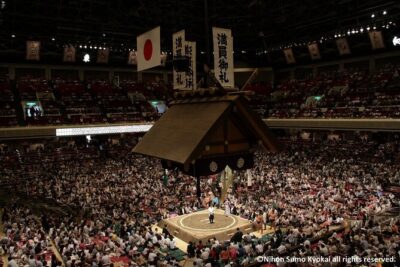 ★ 5.0Tokyo Grand Sumo Tournament Viewing Tour with TicketsFrom $124692 reviews
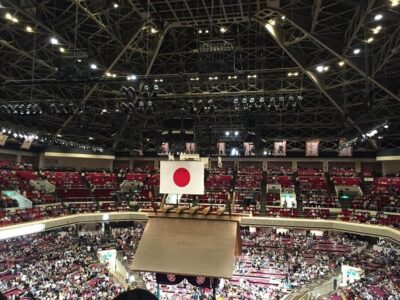 ★ 5.0Tokyo Sumo Wrestling Tournament ExperienceFrom $124660 reviews
 ★ 4.7Luxury Sumo Show Experience & Japanese cuisine & DrinkFrom $103577 reviews
 ★ 4.8Sumo Morning Practice Viewing TourFrom $81570 reviews
Browse the lists this tour appears in