
Reviewed · SUMO TOURNAMENTS & SHOWS
Tokyo: Visit Sumo Morning Practice with English Guide
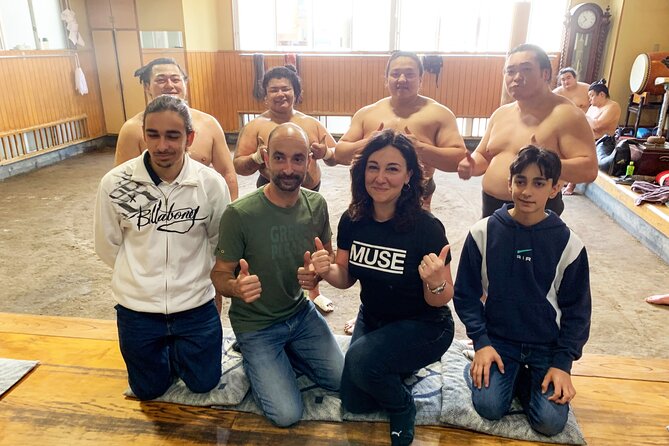
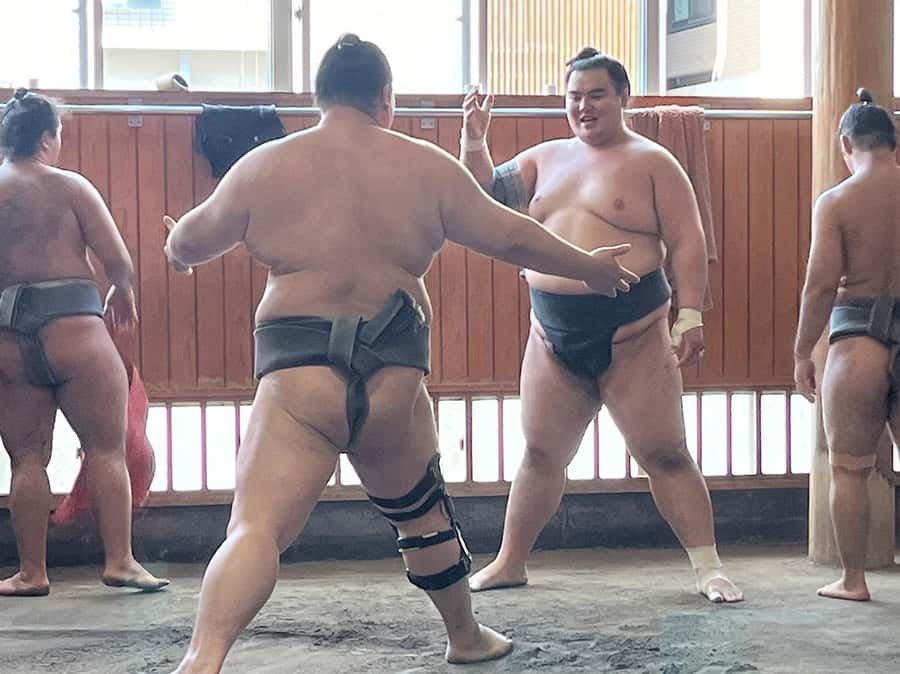
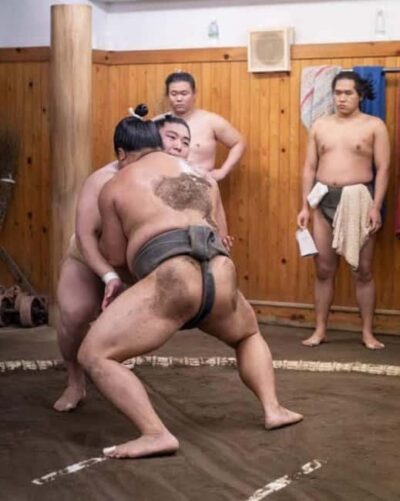
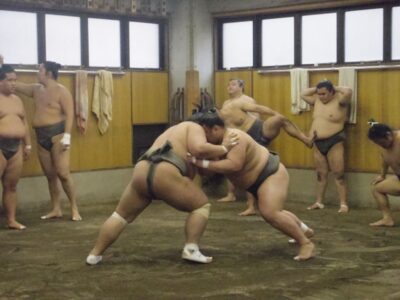
Sumo training starts before Tokyo wakes, and I love seeing real morning practice at Takasago-beya and getting a commemorative photo with the rikishi afterward. It’s one of the most direct ways to understand sumo as work, not a performance.
The main drawback is the floor seating. You’ll be quiet and seated for a long stretch while you watch, and that can be uncomfortable for some bodies (and you can’t use your cellphone during the practice).
In This Review
- Key highlights at Takasago-beya
- Why Takasago-beya morning practice feels different
- Ryogoku Station to the stable: early start, easy walk
- The observation: what 90–120 minutes really means
- Seating comfort: plan for the long sit
- Can you take photos during training?
- What you’ll notice as you watch
- Takasago stable pedigree: why it matters for your visit
- The commemorative photo: how to make it smooth
- Guide support: English explanations and what actually helps
- Price and value: is $96 a fair deal?
- Who should book this sumo morning practice
- Should you book the Takasago sumo morning practice tour?
- FAQ
- Where is the meeting point?
- How long is the tour?
- How long do I watch the sumo practice?
- Are cellphones allowed during the practice?
- Can I take photos?
- Is there a photo opportunity with the wrestlers?
- Are children allowed to attend?
Key highlights at Takasago-beya
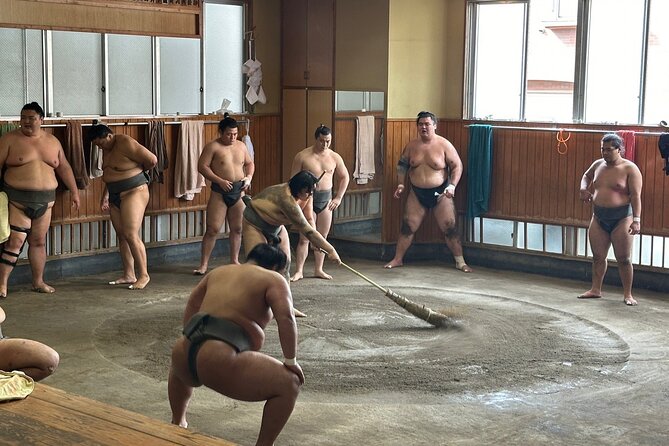
- Real training, not a show: you watch the wrestlers doing their normal morning routine, with discipline that’s obvious fast.
- Takasago-beya access: one of sumo’s biggest stables, known for producing six yokozuna and eight ozeki.
- 90–120 minutes of focus: you’re watching technique and drills up close during the main session.
- Photo moment with rikishi: a commemorative photo comes after practice, and you should plan for cash.
- English support: an English (and Japanese) guide helps you make sense of what you’re seeing, plus you get written help.
Why Takasago-beya morning practice feels different
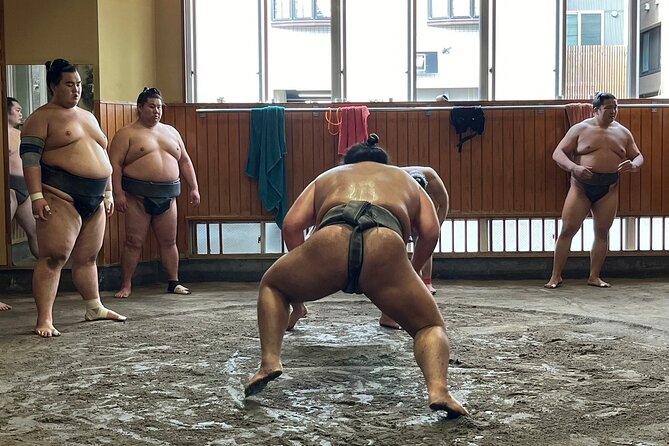
If you think sumo is only the bout you see on TV, this tour changes that. You get to watch the wrestlers during their daily grind: the stretching, the repeated drills, the concentration. The big idea here is simple: you’re not watching an exhibition. You’re watching training.
I like that it’s also very human. The wrestlers aren’t putting on crowd tricks. They’re focused, serious, and methodical. That makes your observations sharper because you’re seeing the system behind the sport.
The other part I really appreciate is the ending. After the practice, you get a commemorative photo with the rikishi. It turns your morning from just watching into a real memory you can take home, even if you’re not a hardcore sumo nerd.
Other ringside bookings readers scored
- Tokyo: Sumo Show and Dining Experience
★ 4.8 · 2,742 reviews - the SUMO show
★ 5.0 · 1,960 reviews - Tokyo Shinjuku Sumo Show & Experience with Photo
★ 5.0 · 1,750 reviews - Tokyo: Sumo Show and Experience in Shinjuku
★ 4.8 · 1,001 reviews
Ryogoku Station to the stable: early start, easy walk
You meet at Ryogoku Station (Oedo Line), at 07:45, using the A-3 Exit of the elevators. The staff is waiting for you at that exit, which matters because this is a time-sensitive activity. Once everyone’s together, you head on foot to the Takasago-beya stable for about a 10-minute walk.
This is one of those Tokyo experiences where being early pays off. You’ll have time to get oriented before the main practice starts. And because you’re watching athletes who train on a schedule, the group is expected to keep moving and stay respectful once you’re inside.
One more practical point: because you can’t use your phone during practice, it helps to decide in advance what you need for your trip day. If you’re using maps, do it before you enter. Then put the phone away and focus on what you came for.
The observation: what 90–120 minutes really means
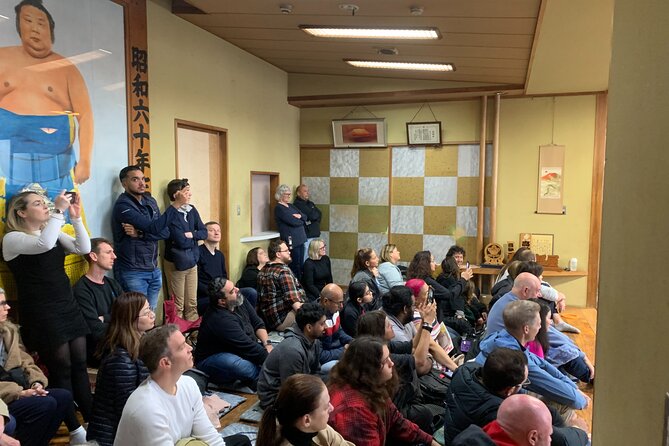
After the short walk, your guide explains what you’re going to see. Then the main practice begins. You’ll observe for about 90 to 120 minutes, but the timing can run longer or shorter depending on what’s happening in training that day.
During this period, the atmosphere is quiet and controlled. You’re close enough to see details, but you’re also asked to behave like a visitor in an active training space. The goal is observation, not interruption.
Seating comfort: plan for the long sit
Here’s the honest part. You sit on floor cushions, and some seating options can be small. People have mentioned tiny stools and sitting challenges. Some groups report being given a seat cushion or a small seat positioned near a fan, and a chilled water bottle is sometimes provided. Still, even with the comforts, it’s a long sit.
My practical advice: if you know you struggle with floor seating, bring patience and consider asking for the best available seat early in the process. It’s not about whining. It’s about making sure you can enjoy the practice instead of counting minutes.
Can you take photos during training?
Yes, with rules. You can take photos as long as you’re not getting in the way of practice. You just need to stay mindful of space and timing. The activity also clearly states that cellphones are not allowed. That means no phone photography during the practice. If you want pictures, plan around the permitted photo time and whatever camera options the tour rules allow.
Readers also shortlisted these Tokyo bookings:
- Tokyo 6hr Private Tour with Government-Licensed Guide★ 5.0 · 3,902 reviews
- Tokyo: Shinjuku Local Bar and Izakaya Guided Walking Tour★ 4.9 · 1,794 reviews
- Tokyo: Private City Highlights Tour with Local Guide★ 4.8 · 1,433 reviews
- Tokyo: Tsukiji Fish Market Guided Walking Tour★ 4.9 · 1,397 reviews
- Tokyo 4hr Private Tour with Government-Licensed Guide★ 5.0 · 1,394 reviews
What you’ll notice as you watch
Even if you’re brand-new to sumo, you’ll start catching patterns quickly:
- Wrestlers repeat movements with intention, not random warm-ups.
- Training looks like work: controlled pace, strong discipline, and focus.
- The wrestlers generally don’t engage the crowd while training, which keeps it authentic.
That last point is important. It’s not a meet-and-greet while they train. It’s training first. You’re there to witness it up close.
Takasago stable pedigree: why it matters for your visit
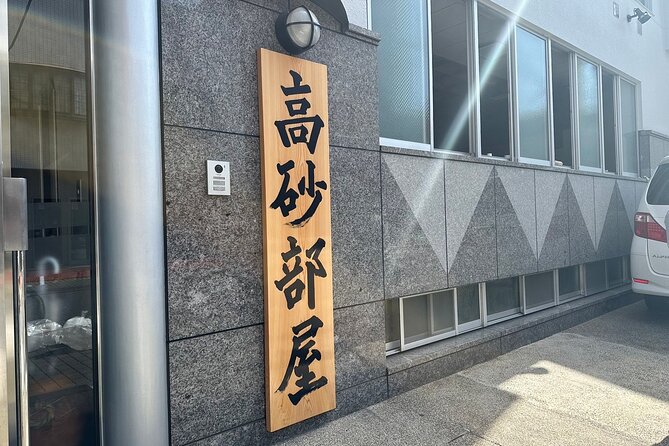
Takasago-beya isn’t just any stable. It’s one of the most prestigious in the sport. The stable has produced six yokozuna (sumo’s highest rank) and eight ozeki (the second-highest rank).
So what does that mean for you, as a visitor? It means you’re watching a culture built around high standards. Even if you don’t know the ranking system, you’ll feel it in how the training runs: seriousness, order, and respect for routine. Top stables tend to be strict about discipline, and that shows in the way sessions unfold.
It also gives context to your learning. A guide can explain the exercises and traditions as you watch, but the stable’s reputation helps you understand why those traditions exist in the first place.
The commemorative photo: how to make it smooth
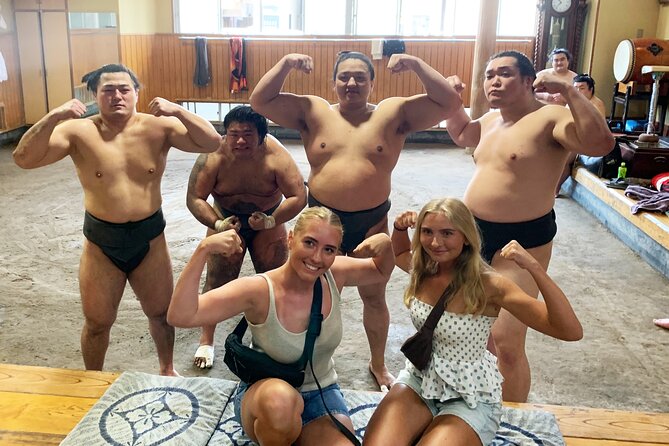
At the end of the observation period, you take a commemorative photo with the wrestlers. It’s a highlight because it turns your visit into a personal memory, not just a look-and-leave photo from behind a crowd.
Bring cash. Some participants have specifically mentioned having money on hand for the photo. One review notes that a 1,000 yen tip is requested for the photo. Even if your tour ticket already feels pricey, plan for that extra amount so you aren’t scrambling at the end.
Also, keep your head in the right place. This photo moment is separate from training. It’s where the interaction becomes allowed and expected.
Guide support: English explanations and what actually helps
A good guide can make a huge difference in sumo, because the sport has rules, positions, and traditions that aren’t obvious just by watching. Here, you get a live guide in English (and Japanese). People have praised guides for being kind, organized, and helpful.
Two guide names show up in the feedback: Keiko San and Naomi. When a guide is patient, you ask better questions, and you notice more during practice.
Also, one thing you’ll likely appreciate is the combination of verbal explanations and written support. Some participants have said the guide provided a thorough booklet, and that worked better for them than trying to absorb everything on the spot. In a quiet setting where you can’t talk freely during practice, written notes can be the difference between confusion and understanding.
If you want to get the most from the experience, come with one or two questions. For example:
- What are the key parts of morning training meant to prepare?
- How should a beginner interpret what’s happening between drills?
Your guide is there for that Q&A at the end, after you’ve watched enough to ask smarter questions.
Price and value: is $96 a fair deal?
At $96 per person for a 2-hour experience, this isn’t the cheapest thing you can do in Tokyo. But I think the value comes from how specific and rare it is.
You’re paying for three things that are hard to replicate on your own:
- Access to a major stable environment during an actual morning session.
- A guide who explains what you’re seeing in a beginner-friendly way.
- The photo opportunity at the end.
Also, compare it to the cost of trying to piece together sumo experiences independently. Getting the right stable, getting timing right, and figuring out what’s allowed where can turn into a frustrating day. Here, the structure does the heavy lifting.
That said, you should be honest about comfort. If you know you hate long floor seating, the experience can feel overpriced because your body is stressed even if the training is fascinating. The tour is best when you can sit patiently and quietly for the full session.
Who should book this sumo morning practice
This is a good fit if you want:
- Authentic access to real training rather than a staged show.
- A culturally grounded morning activity in Tokyo that’s still structured and easy to follow.
- A guided explanation that helps you understand what you’re watching.
It’s especially good for couples and solo travelers who like small-group experiences with a clear start time. Families can also go. The tour notes that children can observe as long as they can stay quiet, and children pay the same fee as adults.
You might skip it if:
- You strongly dislike sitting on the floor for 90+ minutes.
- You need constant phone use during activities (cellphones aren’t allowed during practice).
- You’re hoping for lots of crowd interaction during the main session (the wrestlers don’t treat it like a meet-and-greet).
Should you book the Takasago sumo morning practice tour?
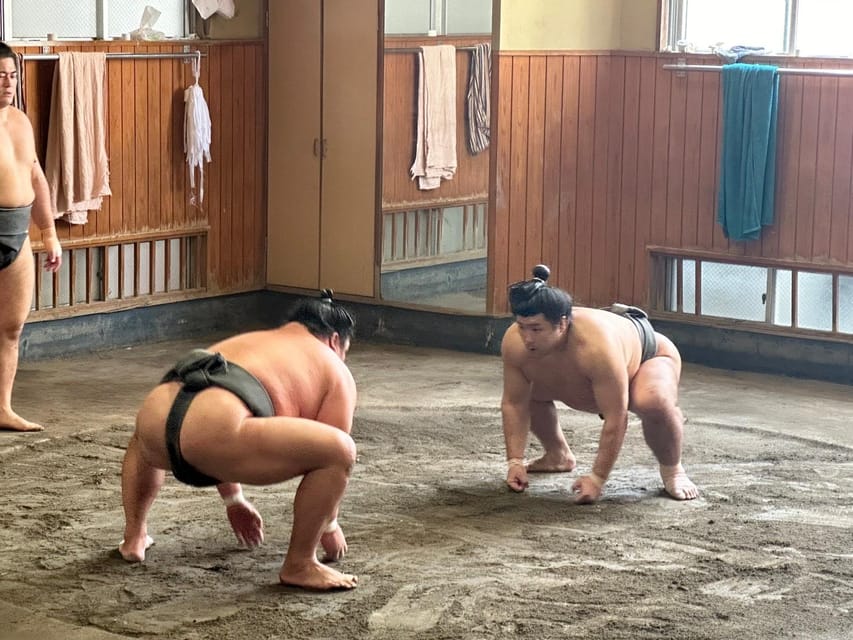
If you’re choosing one “culture + sport” experience in Tokyo, this is a strong candidate. The biggest reason is that you’re not buying a ticket to watch people perform. You’re watching professional athletes practice, and a guide helps you translate what you see into something you actually understand.
Book it if you can handle quiet rules and long seating. Bring cash for the photo tip request, and keep your phone out during practice. If you do those two things, the morning tends to land as one of those rare Tokyo moments that feels close to the real thing.
FAQ
Where is the meeting point?
You meet at Ryogoku Station (Oedo Line), at the A-3 Exit of the elevators, at 07:45.
How long is the tour?
The tour runs about 2 hours.
How long do I watch the sumo practice?
You’ll observe the morning training for about 90 to 120 minutes, and the exact timing can vary depending on training conditions.
Are cellphones allowed during the practice?
No. Cellphones are not allowed during the practice.
Can I take photos?
You can take photos as long as they do not get in the way of the practice.
Is there a photo opportunity with the wrestlers?
Yes. After the practice, you take a commemorative photo with the sumo wrestlers.
Are children allowed to attend?
Children can observe if they can watch quietly, and the fee is the same as for adults.
More Guided in Tokyo
- Tokyo 6hr Private Tour with Government-Licensed Guide
★ 5.0 · 3,902 reviews - Tokyo: Shinjuku Local Bar and Izakaya Guided Walking Tour
★ 4.9 · 1,794 reviews - Tokyo: Private City Highlights Tour with Local Guide
★ 4.8 · 1,433 reviews - Tokyo: Tsukiji Fish Market Guided Walking Tour
★ 4.9 · 1,397 reviews - Tokyo 4hr Private Tour with Government-Licensed Guide
★ 5.0 · 1,394 reviews
More Tour Reviews in Tokyo
- Mt Fuji and Hakone 1-Day Bus Tour Return by Bullet Train
★ 5.0 · 26,383 reviews - 1-Day Tokyo Bus Tour
★ 5.0 · 14,250 reviews - Tokyo: teamLab Planets TOKYO Digital Art Museum Entry Ticket
★ 4.6 · 9,779 reviews - Mt Fuji & Hakone Cruise, Drum Show Bullet Train 1 Day from Tokyo
★ 4.0 · 7,413 reviews - Tokyo: Shinjuku Food Tour (13 Dishes at 4 Local Eateries)
★ 5.0 · 6,603 reviews
More Sumo, Ringside and Rated
- Tokyo: Sumo Show and Dining Experience
★ 4.8 · 2,742 reviews - the SUMO show
★ 5.0 · 1,960 reviews - Tokyo Shinjuku Sumo Show & Experience with Photo
★ 5.0 · 1,750 reviews - Tokyo: Sumo Show and Experience in Shinjuku
★ 4.8 · 1,001 reviews - Tokyo Grand Sumo Tournament Viewing Tour with Tickets
★ 5.0 · 692 reviews
Latest Tokyo reviews off our desk



Sumo Tournaments & Shows, compared.
 ★ 4.8Sumo Show and Dining ExperienceFrom $792,742 reviews
 ★ 5.0the SUMO showFrom $891,960 reviews
 ★ 5.0Tokyo Shinjuku Sumo Show & Experience with PhotoFrom $791,750 reviews
 ★ 4.8Sumo Show and Experience in ShinjukuFrom $691,001 reviews
 ★ 5.0Tokyo Grand Sumo Tournament Viewing Tour with TicketsFrom $124692 reviews
 ★ 5.0Tokyo Sumo Wrestling Tournament ExperienceFrom $124660 reviews
 ★ 4.7Luxury Sumo Show Experience & Japanese cuisine & DrinkFrom $103577 reviews
 ★ 4.8Sumo Morning Practice Viewing TourFrom $81570 reviews
Browse the lists this tour appears in