
Reviewed · SUMO TOURNAMENTS & SHOWS
Tokyo Walking Tour : Sumo, Sushi, Tea, Temples and Tokyo Tower
A day of sumo, tea, and Tokyo Tower. You’ll love the chance for real sumo training viewing and the calm break at Hama Rikyu’s tea house inside a classic garden. The one real catch: the sumo schedule can change, so training isn’t always guaranteed.
This is an 8 hours 15 minutes walking day using public transport (no private vehicle). With a max group size of 15, it feels lively but not crowded, and you move between major Tokyo neighborhoods without the stress of planning every transfer yourself. Your local English speaking guide keeps things moving, and the best part is the human angle—someone like Jade has a knack for mixing Japanese history with personal stories in a way that actually sticks.
In This Review
- Key things to know before you go
- Why this Tokyo route makes sense for first-timers
- Arashio Beya sumo practice: the morning reality check
- Tsukiji Outer Market: choose your own lunch, with a guide’s map
- Hama Rikyu Gardens: the tea house break you’ll be glad you planned
- Zojoji Temple and sutra copying: hands-on calm in the middle of the day
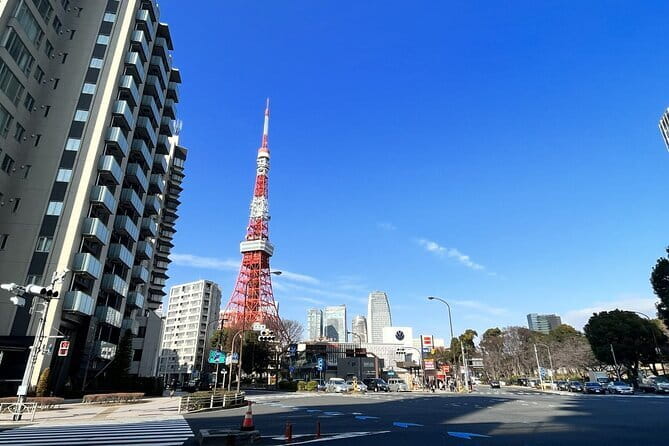
- Tokyo Tower observation deck: what the view actually teaches you
- Price and logistics: is $166.85 a smart deal?
- Who should book this Tokyo Walking Tour (and who might skip it)
- Should you book this tour?
- FAQ
- How long is the Tokyo Walking Tour?
- Where does the tour start and end?
- Does the tour include admission to Tokyo Tower?
- Is transportation included?
- What is included at Hama Rikyu Gardens?
- What is included at Zojoji Temple?
- Is food included?
- Will I definitely see sumo wrestlers training?
- How big is the group?
- What is the cancellation policy?
Key things to know before you go
- Arashio Beya sumo practice viewing: Real training, you can’t interrupt it, and the schedule can shift.
- Tsukiji Outer Market time: Guided overview plus time to walk, shop, and choose what to eat.
- Hama Rikyu Gardens + tea house moment: Admission and a traditional tea-and-sweet experience are included.
- Zojoji Temple + sutra copying: A hands-on, quiet activity inside an iconic temple complex.
- Tokyo Tower ticket included: You get a timed window to enjoy the retro skyline view.
- Public transport pace: Several hours outdoors, so comfortable shoes matter more than anything else.
Why this Tokyo route makes sense for first-timers
Tokyo can feel like you’re moving through a giant puzzle box. This tour helps you solve it in a smart order: first you hit a sumo beya (traditional training stable), then you shift to the food-and-street-life energy of Tsukiji Outer Market, and you break the day up with garden calm at Hama Rikyu. After that comes temple time at Zojoji, and finally you close with one of the city’s most recognizable landmarks, the Tokyo Tower observation deck.
That rhythm matters. If you tried to do this on your own, you’d likely waste time figuring out transfers and opening hours, especially around the inner-city train lines and the timing of temple experiences. Here, the flow is intentional, and you can focus on what you came for: the sights, the tastes, and the small cultural moments.
Price-wise, $166.85 isn’t “cheap,” but it’s also not just paying for entry tickets. You’re bundling multiple admissions (Hama Rikyu, Tokyo Tower), a tea house experience, a sutra copying activity, a guided food-and-market segment, and a scheduled route that handles part of the transit inside the tour day.
More at Tokyo Tower, reviewed
- Dynamic Tokyo: Tokyo Tower, Tea Experience, Bay Cruise Day Tour
★ 4.5 · 521 reviews - Tokyo: ‘Red Tokyo Tower’ Digital Amusement Park Ticket
★ 4.1 · 398 reviews - Tokyo: Imperial Palace, Sensō-ji Temple, & Tokyo Tower Tour
★ 4.5 · 339 reviews - Tokyo Dinner Cruise & Tradition Show & Drinks & Tokyo Tower
★ 4.7 · 315 reviews
Arashio Beya sumo practice: the morning reality check
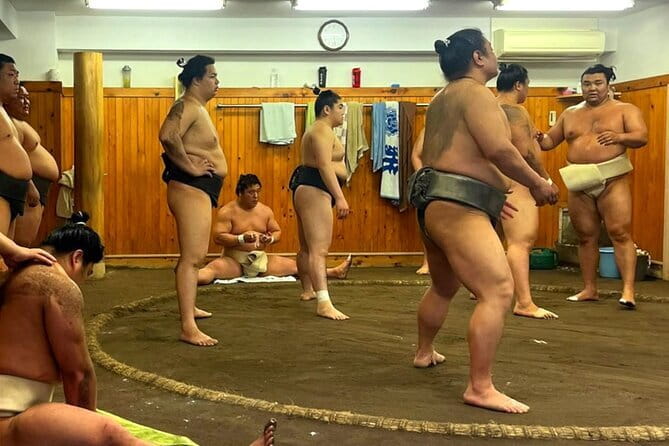
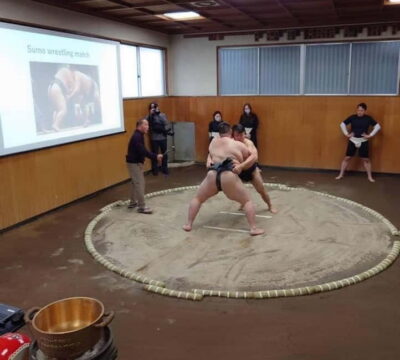
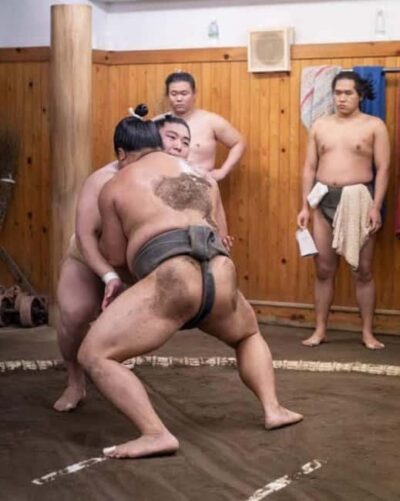
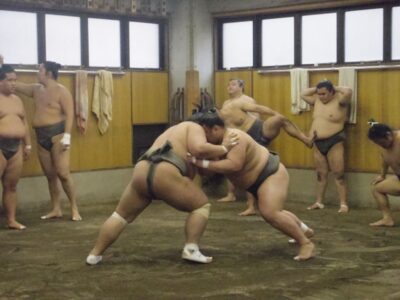
Your first stop is Arashio Beya, a traditional sumo training room. This is a real training session, not a show. That means two important things: the wrestlers can’t be disturbed, and you’ll need to watch respectfully from where your guide directs you.
What I like about this start: it puts sumo in its proper context. You’re not just looking at costumes and spectacle—you’re seeing the seriousness of training, the discipline, and the structure of a stable routine.
What you should consider: the schedule can change. Sometimes the wrestlers won’t be training when you arrive, so you might not see sumo practice that day. Also, training is closed during certain weeks when the Grand Sumo Tournaments are happening, specifically in January, May, and September. If sumo viewing is your top priority, keep your expectations flexible and treat this as a best-effort window.
Tip that keeps things smooth: don’t plan any “must-get” photos. This is about observing training properly, not treating it like a selfie stop.
Tsukiji Outer Market: choose your own lunch, with a guide’s map
After the sumo morning, you head to Tsukiji Outer Market. This part is both practical and fun: you get a guided tour, plus time to explore at your pace, take pictures, and shop.
The biggest value here is that a guide helps you orient fast. Tsukiji Outer Market can feel like a maze of stalls, aromas, and signs. With guided context, you’re less likely to waste time guessing and more likely to find places that match what you actually want to eat.
One key detail: food and drink are not included in the tour price. That doesn’t mean you won’t eat—because you’re in the right zone for snacks—but it does mean you should budget on your own. Think of this as a guided shopping-and-snacking block where you make the final call.
If you’re a little snack-driven, you’ll love the freedom. If you prefer one sit-down meal, this segment might feel more “grab-and-go” than you’d hoped. Either way, come hungry and bring cash/card, because market stalls often run on their own rhythm.
Hama Rikyu Gardens: the tea house break you’ll be glad you planned

You then step into Hama Rikyu Gardens, and the pacing changes in a good way. The tour gives you a guided introduction to the garden’s history, and then you get free time to wander.
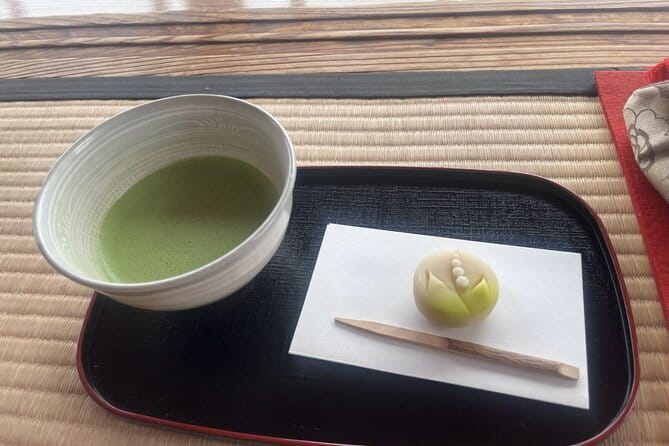
I like Hama Rikyu because it doesn’t ask you to rush. It’s a place where you can pause, look around, and let Tokyo’s speed fall away for a bit. You’re also getting something very specific here: the tour includes Hama Rikyu admission and a tea house experience, with tea and a sweet included.
This stop is one of the best “value moments” in the day. Instead of just telling you tea culture exists, you get an actual tea setting in a garden environment. You’ll come away with a clearer sense of how Japanese tea experiences fit into everyday space—quiet, planned, and meant for slowing down.
Practical note: since this is outdoors walking plus a garden visit, comfortable layers help. Tokyo weather can flip fast, and you’ll be glad you’re not stuck with heavy stuff or thin clothes.
Zojoji Temple and sutra copying: hands-on calm in the middle of the day
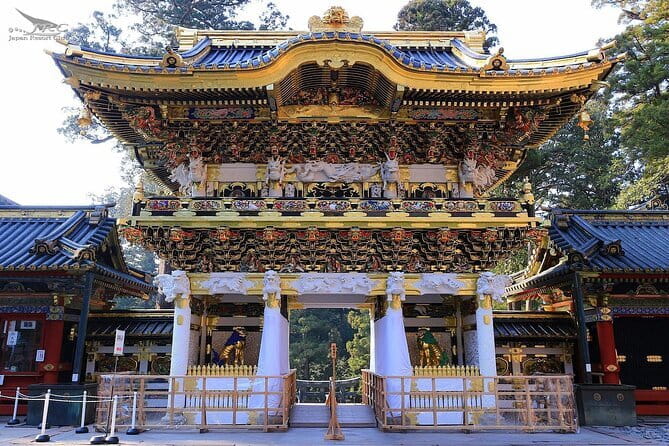
Next is Zojoji Temple, one of those Tokyo sites you’ve probably seen in photos, but experiencing it in person gives it a different weight. Your guide shares history and the temple context, and then you get a sutra copying experience.
This is the part that often becomes the most memorable, even for people who aren’t “super into temples.” Sutra copying is tactile and structured. You’re not just watching. You’re doing a simple, focused action in a setting meant for reflection. Even if you don’t speak the language, the act itself creates a break from the constant scanning for sights.
The tour includes the sutra copying experience fee, so you’re not stuck worrying about extra payments for the activity. The timing also matters: you do this after Hama Rikyu, so you’ve already had a slow garden reset and you’re ready for a quieter mental moment.
One consideration: if you’re prone to getting bored in quiet spaces, you might treat this as a short, meaningful interlude rather than a long cultural lecture. The structure of copying usually keeps it from turning into “sit and listen.”
Other ringside bookings readers scored
- Tokyo: Sumo Show and Dining Experience★ 4.8 · 2,742 reviews
- the SUMO show★ 5.0 · 1,960 reviews
- Tokyo Shinjuku Sumo Show & Experience with Photo★ 5.0 · 1,750 reviews
- Tokyo Grand Sumo Tournament Viewing Tour with Tickets★ 5.0 · 692 reviews
- Tokyo Sumo Wrestling Tournament Experience★ 5.0 · 660 reviews
Tokyo Tower observation deck: what the view actually teaches you

You finish at Tokyo Tower, with a ticket included for the observation deck. This is more than a photo stop. Once you’re up there, you finally get the sense of Tokyo’s shape—how neighborhoods stack and how movement corridors spread across the city grid.
What I like about ending here: it turns your earlier day of culture and food into perspective. Sumo beya, garden calm, temple focus—then suddenly you’re looking at the whole system from above. You see why Tokyo feels both crowded and organized.
The observation deck visit is scheduled for about 1 hour 15 minutes, so you’ll have time to settle in, not just rush for one skyline shot. You’ll also appreciate the retro architecture vibe of the tower itself—especially after a day of older Japanese spaces like Zojoji and Hama Rikyu.
If your goal is maximum photos, plan to arrive ready to move your body. Lines and lighting can vary, but you’ll likely want a few minutes to find a good angle once you’re inside.
Price and logistics: is $166.85 a smart deal?
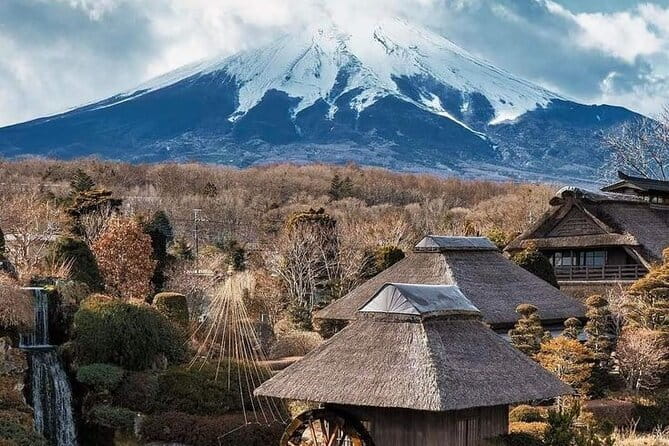
At $166.85 per person for about 8 hours 15 minutes, this tour is best understood as a bundle of guided experiences plus multiple paid entries. You’re paying for:
- the local English speaking guide for the full route,
- admissions/fees for Hama Rikyu Gardens and the tea house experience,
- the sutra copying experience at Zojoji,
- the Tokyo Tower ticket,
- plus a portion of the rail transport (the train fee from Ningyocho Station to Tsukiji Station is included),
- and your structured schedule that strings together several key areas.
What’s not included is just as important: food and drink aren’t covered, and trains before and after the tour aren’t included. So yes, you’ll add meals/snacks yourself, especially during Tsukiji Outer Market.
Here’s how I’d judge value: if you were trying to replicate this day on your own, you’d pay for admissions anyway, and you’d spend a lot of time figuring out connections and timing. For many visitors, that planning time is the real hidden cost. This tour gives you a workable path without needing to act like a transit expert all morning.
Also, the tour uses public transport and involves several hours outdoors. That’s not a problem, but it changes what you should pack: shoes you can walk in for a long stretch, water, and a light layer for weather swings.
Who should book this Tokyo Walking Tour (and who might skip it)
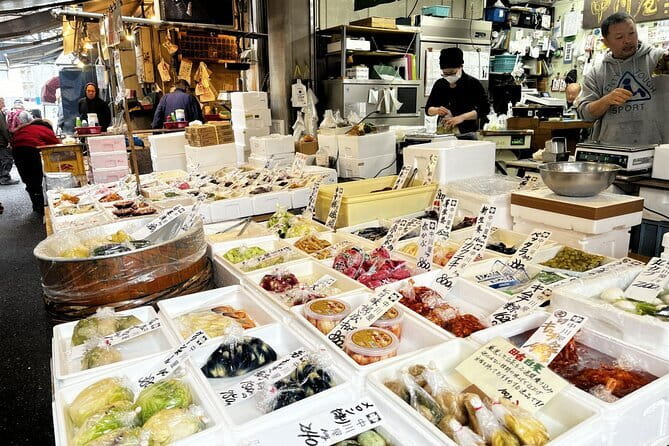
This tour fits best if you want a well-paced highlight day that mixes Tokyo’s different faces: traditional (sumo stable and temples), reflective (garden and tea), and iconic modern landmarks (Tokyo Tower). It’s also great if you like structured guidance—someone like Jade bringing history to life, not just pointing at landmarks.
You’ll especially enjoy it if:
- you want multiple major sights without piecing together transit all day,
- you like food market time but prefer a guide’s orientation,
- you’re open to a hands-on cultural activity like sutra copying.
You might hesitate if:
- you’re traveling during a time when sumo training is likely paused (the Grand Sumo Tournament months of January, May, and September),
- you need strict guarantees that you’ll see training the whole time. The schedule can change, and sometimes sumo won’t be training.
Should you book this tour?
I’d book it if your goal is a classic Tokyo “taste + tradition + skyline” day with included entry experiences and a guide-led route that saves you from planning headaches. It’s also a good value if you’re the type who likes to do one guided day and then explore freely on the rest of your trip.
Just go in with realistic expectations about sumo: treat seeing training as a hopeful bonus rather than a guaranteed ticket to spectacle. If you can do that, the rest of the day—from Hama Rikyu tea time to sutra copying to Tokyo Tower—adds up to a memorable, balanced Tokyo snapshot.
FAQ
How long is the Tokyo Walking Tour?
The tour runs for about 8 hours 15 minutes.
Where does the tour start and end?
It starts at Hamacho Station and ends near Akabanebashi Station.
Does the tour include admission to Tokyo Tower?
Yes. The Tokyo Tower ticket is included.
Is transportation included?
The tour uses public transport and includes the train fee from Ningyocho Station to Tsukiji Station. Trains before and after the tour are not included.
What is included at Hama Rikyu Gardens?
Hamarikyu Gardens admission is included, along with a tea house experience with tea and a sweet.
What is included at Zojoji Temple?
The tour includes a guided temple visit and a sutra copying experience fee.
Is food included?
Food and drink are not included in the price. You’ll have time at places like Tsukiji Outer Market, but you’ll need to pay for what you eat.
Will I definitely see sumo wrestlers training?
No. The sumo beya schedule can change, and sometimes the wrestlers may not be training. Training is also closed during certain periods tied to the Grand Sumo Tournaments in January, May, and September.
How big is the group?
The tour has a maximum of 15 travelers.
What is the cancellation policy?
You can cancel for a full refund up to 24 hours before the experience’s start time. If you cancel less than 24 hours before, it won’t be refunded.
More Tour Reviews in Tokyo
- Mt Fuji and Hakone 1-Day Bus Tour Return by Bullet Train
★ 5.0 · 26,383 reviews - 1-Day Tokyo Bus Tour
★ 5.0 · 14,250 reviews - Tokyo: teamLab Planets TOKYO Digital Art Museum Entry Ticket
★ 4.6 · 9,779 reviews - Mt Fuji & Hakone Cruise, Drum Show Bullet Train 1 Day from Tokyo
★ 4.0 · 7,413 reviews - Tokyo: Shinjuku Food Tour (13 Dishes at 4 Local Eateries)
★ 5.0 · 6,603 reviews
More Sumo, Ringside and Rated
- Tokyo: Sumo Show and Dining Experience
★ 4.8 · 2,742 reviews - the SUMO show
★ 5.0 · 1,960 reviews - Tokyo Shinjuku Sumo Show & Experience with Photo
★ 5.0 · 1,750 reviews - Tokyo: Sumo Show and Experience in Shinjuku
★ 4.8 · 1,001 reviews - Tokyo Grand Sumo Tournament Viewing Tour with Tickets
★ 5.0 · 692 reviews
More at Tokyo Tower
- Dynamic Tokyo: Tokyo Tower, Tea Experience, Bay Cruise Day Tour
★ 4.5 · 521 reviews - Tokyo: ‘Red Tokyo Tower’ Digital Amusement Park Ticket
★ 4.1 · 398 reviews - Tokyo: Imperial Palace, Sensō-ji Temple, & Tokyo Tower Tour
★ 4.5 · 339 reviews - Tokyo Dinner Cruise & Tradition Show & Drinks & Tokyo Tower
★ 4.7 · 315 reviews - Guided Tokyo Go-Kart Tour: Tokyo Tower to Shibuya Crossing
★ 5.0 · 237 reviews
Latest Tokyo reviews off our desk

Sumo Tournaments & Shows, compared.
 ★ 4.8Sumo Show and Dining ExperienceFrom $792,742 reviews
 ★ 5.0the SUMO showFrom $891,960 reviews
 ★ 5.0Tokyo Shinjuku Sumo Show & Experience with PhotoFrom $791,750 reviews
 ★ 4.8Sumo Show and Experience in ShinjukuFrom $691,001 reviews
 ★ 5.0Tokyo Grand Sumo Tournament Viewing Tour with TicketsFrom $124692 reviews
 ★ 5.0Tokyo Sumo Wrestling Tournament ExperienceFrom $124660 reviews
 ★ 4.7Luxury Sumo Show Experience & Japanese cuisine & DrinkFrom $103577 reviews
 ★ 4.8Sumo Morning Practice Viewing TourFrom $81570 reviews
Browse the lists this tour appears in