

Reviewed · IMPERIAL PALACE TOURS
Tokyo’s Imperial Palace & Nihonbashi Tour
Imperial history and craft shops, in one morning. This half-day tour pairs Imperial Palace grounds with washi-making in Nihonbashi, plus small tastings that make Japanese food culture click. I like the way the guide connects what you’re seeing to real daily life—Edo-era power, then the trades that still feed the city. One consideration: the palace portion is mostly grounds and gardens, not a full inside look at the living areas, so check your expectations if you want a true palace tour.
You can pick a morning or afternoon departure, and the day flows from central Tokyo (Tokyo Station area) to Nihonbashi, the old commercial heart near the city’s historic road network. You’ll walk a fair bit, with a short ride between areas, which is fine when weather cooperates and less fun when it’s hot or wet.
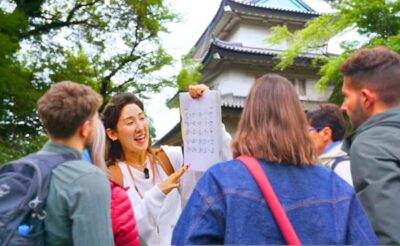
This is a small-group style experience (up to 28), led by a nationally accredited guide-interpreter. On many departures, guides like Mari, Michi, Yoshi, Toyo, and Eriko have been praised for clear explanations and keeping the group moving at a manageable pace.
In This Review
- Key things to know before you go
- The big idea: Imperial Palace + Nihonbashi in one 4-hour loop
- Entering the Imperial Palace grounds from the ginkgo-lined approach
- Otemon Gate and the East Gardens: Edo Castle context without the fuss
- Nihonbashi after the palace: where old trade routes meet modern Tokyo
- Dashi and roasted nori: tastings that explain Japanese cooking fast
- Kiya knife shop: what to look for besides the souvenirs
- Ozu Washi paper making: the hands-on part you’ll remember
- Toyama antenna shop: a calmer wrap-up with local products
- Price and value: is $101.72 worth it for 4 hours?
- Pace, weather, and what to do when Tokyo throws a curveball
- Should you book Tokyo’s Imperial Palace & Nihonbashi tour?
- FAQ
- How long is the Tokyo Imperial Palace & Nihonbashi tour?
- Where does the tour start and end?
- What’s included in the price?
- Is East Gardens admission included?
- Does the tour require good weather?
- How many people are in the group?
Key things to know before you go
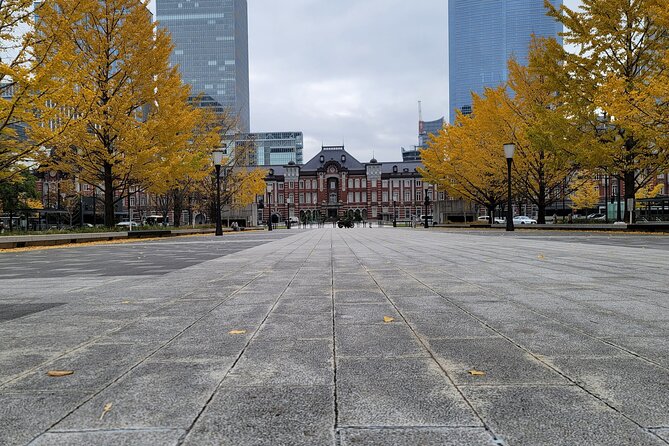
- East Gardens focus: You get access to the Imperial Palace’s East Gardens, with Edo Castle context at Otemon Gate.
- Taste as you learn: You’ll sample dashi soup stock, and you’ll end with a sake set.
- Old-school crafts in sequence: dashi, roasted nori, knives, and washi all in one run.
- Hands-on washi time: you don’t just watch paper—you make a sheet.
- Central-to-old-town route: it starts near Tokyo Station and finishes in Nihonbashi for an easy next stop.
The big idea: Imperial Palace + Nihonbashi in one 4-hour loop
This tour works because it’s two sides of Tokyo in one block of time. The palace section gives you a calm, green counterpoint to the city’s speed, and it’s paired with Nihonbashi, where centuries-old businesses still run their daily rhythm. If you’re trying to understand how Japan’s past still shapes what people do today, the order makes sense.
I also like the structure: a guide keeps you from getting lost in translation or in context. You’re not just hopping between shops—you’re hearing what those trades are for, where they fit in Japanese cooking and daily life, and why Nihonbashi became such a long-lasting center.
The main trade-off is walking. Even when the route uses transit for the jump between areas, you’re still on your feet a lot. If you’re sensitive to rain, heat, or long distances, plan your day around comfort first.
More walks around the Imperial grounds
- Tokyo: Imperial Palace and Shogun Historical Walking Tour
★ 5.0 · 2,251 reviews - Tokyo: Imperial Palace Japanese History Walking Tour
★ 4.9 · 987 reviews - Tokyo: Imperial Palace and Shogun Walking Tour
★ 4.9 · 935 reviews - Imperial Palace East Garden and Edo Castle Walking Tour in Tokyo
★ 5.0 · 510 reviews
Entering the Imperial Palace grounds from the ginkgo-lined approach
You start at the Tokyo Station area (Marunouchi), then head toward the Imperial Palace along a ginkgo tree-lined avenue. That opening matters. It slows you down right away and gives you a clean visual transition from transit hub Tokyo into something formal, maintained, and quietly imposing.
Once you reach the grounds, you’ll walk through wide outdoor areas dotted with seasonal cues like cherry and pine. The tour includes free admission into the East Gardens later, so this first stretch is more about getting your bearings than collecting stamps.
What I’d tell you to look for during the walk: the way the palace grounds are designed for space and sightlines. Even if you’re not a history fanatic, you can feel why rulers and officials liked this kind of layout—big, controlled, and easy to manage.
One practical thing: bring a layer. Palace gardens can feel cooler in the morning and colder after a rain, even when the city nearby feels muggy.
Otemon Gate and the East Gardens: Edo Castle context without the fuss
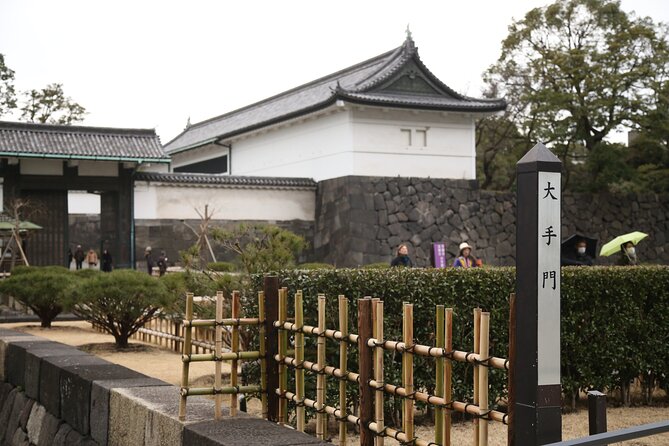
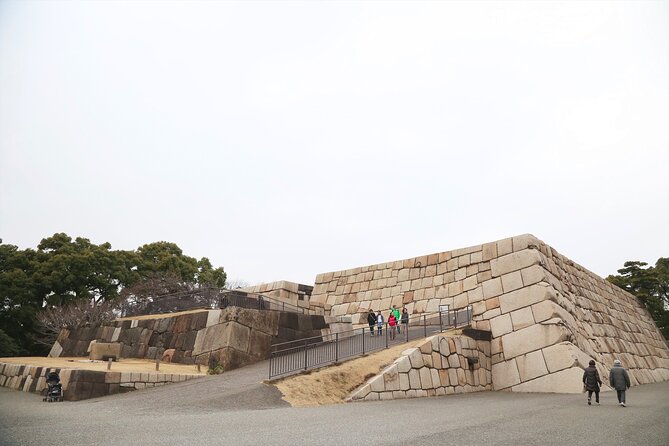
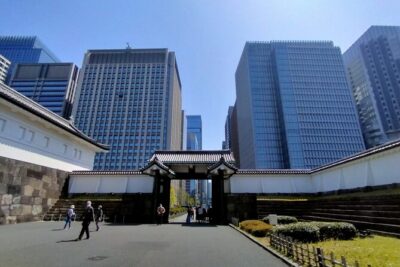
The tour then moves into the Imperial Palace’s East Gardens through Otemon Gate, a key historical entrance tied to Edo Castle, home of the Tokugawa shoguns. This part is where the story gets more specific: you’re no longer just seeing trees and paths—you’re connecting today’s grounds to a former power center.
Expect about an hour in this section, with the guide explaining what you’re looking at. You’ll also get the benefit of someone pointing out details you might miss on your own, like how the space was used and how the palace complex evolved.
A key expectation check: this is an East Gardens visit, not a full interior tour of the imperial residence. Some people go in thinking they’ll see far more than the public grounds allow, and they feel let down. If you’re okay with the public-access reality and want the gardens and Edo context, it’s a strong stop.
Nihonbashi after the palace: where old trade routes meet modern Tokyo

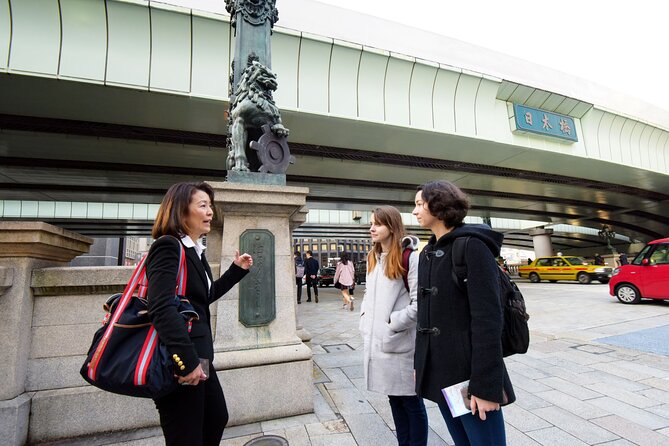
After the gardens, you move over to Nihonbashi, a major commercial district with roots in the early seventeenth century as a key starting point for Japan’s national highway network. That’s a big claim, and the best way to appreciate it is to watch how the streets feel like a working district, not a theme park.
Nihonbashi also makes a smart second act because it shows what “history” looks like when it’s still profitable. Instead of only monuments, you’re walking into everyday shops where craft and supply chains still matter: food ingredients (dashi and nori), kitchen tools (knives), paper making (washi), and region-branded retail (Toyama products).
I like that the guide ties stops together, so the day doesn’t become a random shopping crawl. You’ll leave with a clearer sense of why certain businesses survived for generations in the same area.
Dashi and roasted nori: tastings that explain Japanese cooking fast

One of the tour’s easiest wins is how it uses food culture as your shortcut to understanding Japanese daily life. You’ll visit a dashi soup stock shop where dashi—traditional Japanese soup stock—plays a starring role in hotpot and noodle soups. You’ll also sample dashi as part of what’s included.
Even if you think you already know dashi, this kind of guided stop helps you notice the basics: why it’s foundational, why so many Japanese dishes build flavor from it, and why ingredient quality matters.
Next comes nori at Yamamoto Noriten Honten, a nori producer in business since 1849. You’ll see different nori offerings and watch staff roast the seaweed. This is the kind of stop where you learn by watching the process, not just by reading about it.
Food tip for you: if you’re sensitive to strong flavors, start with small tastes and tell the guide. Most guide-interpreters are used to adjusting around preferences.
- Tokyo: Shinjuku Food Tour (13 Dishes at 4 Local Eateries)★ 5.0 · 6,603 reviews
- Tokyo Mt Fuji 5th St & Hakone Cruise Bus Tour w/Bullet Train★ 4.4 · 5,024 reviews
- Flagship 2-Hours Official Street Go-Kart Tour – Tokyo Bay Shop★ 5.0 · 4,974 reviews
- From Tokyo: Mount Fuji Full-Day Sightseeing Trip★ 4.5 · 4,970 reviews
- Tokyo: Hop-On Hop-Off Sightseeing Bus Ticket★ 3.9 · 4,207 reviews
Kiya knife shop: what to look for besides the souvenirs
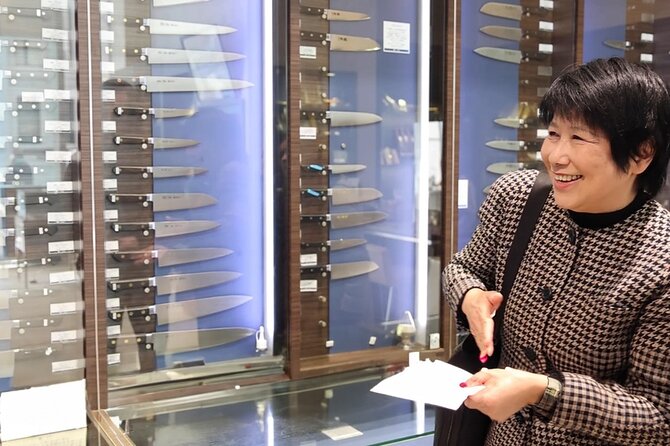
The knife stop is Kiya Nihombashi Main Branch, founded in 1792. This is where you’ll see a wide range of utensils, from traditional Japanese knives to some modern European styles.
Here’s what’s worth paying attention to during the visit: the differences in shapes and intended uses, and the simple fact that Japanese knives are treated as serious tools. Even if you don’t buy anything, it’s interesting to compare how the shop presents knives versus how department stores sell them.
If you’re shopping, ask practical questions. A good guide can help you translate what you’re looking at and what terms mean. And if you want to buy, keep your timing in mind: during the tour, you’re working with a schedule, and some people come away more excited than ready to carry.
This stop is also a good sanity check for the day’s pace. It’s enough time to look around without dragging, and it fits well after food stops.
Ozu Washi paper making: the hands-on part you’ll remember
The most memorable part for many people is the washi stop at Ozu Washi. You’ll learn about different types of Japanese paper and stationery, and then you’ll make a sheet of washi. This is the hands-on payoff—less passive than the shops, more “you did something.”
In my view, washi is a great craft lesson because it links directly to how Japanese design stays practical. Paper isn’t just stationery; it’s a material with performance and tradition behind it. Watching the steps and making your own gives you a better appreciation for why Japanese paper has such a distinct place in art, packaging, and everyday life.
Plan for mess-free reality, but also plan for reality: paper-making can be a tactile, slightly physical activity. Wear comfortable clothes you’re okay with getting a little dusty.
If you’re traveling with kids or with someone who’s easily bored by museum-style stops, this hands-on segment is usually the hook.
Toyama antenna shop: a calmer wrap-up with local products
At the end, you visit the Toyama Prefecture Antenna Shop. Toyama is a coastal prefecture on the Sea of Japan, and the store focuses on products from that region. You can browse the selection and, as part of what’s included, you’ll have a sake set to sample.
This final stop works because it gives you an easy transition from “craft and tastings” into “take-it-with-you browsing.” It’s also a decent place to ask the guide for suggestions about what to bring home, since the products are already grouped by region.
If you want your souvenirs to make sense (instead of just looking cute), antenna shops are one of the better ways to do it. They connect the items to a specific place without requiring a deep dive into sourcing.
Price and value: is $101.72 worth it for 4 hours?
At $101.72 per person for about 4 hours, this tour is positioned as a mid-priced cultural-and-food experience. You’re paying for three things that usually cost extra if you piece them together on your own: a licensed guide-interpreter, reserved access to the East Gardens, and multiple ingredient/craft stops with tastings and an included sake set.
Group size max is 28, which tends to keep the energy social but not frantic. You’re also given a mobile ticket, which is convenient in a city where paper tickets can feel like a throwback.
Where value can shift for you:
- If you mainly want the palace and minimal shopping, the Nihonbashi craft sequence may feel like more retail time than you expected.
- If you care about food ingredients and traditional making, the dashi tasting plus nori roasting plus washi workshop create a “buy less, understand more” kind of value.
A final note on timing: it’s a short half-day, so you should treat it as a highlight circuit. It’s not the kind of tour where you can linger for an extra 45 minutes in one shop without affecting the rest.
Pace, weather, and what to do when Tokyo throws a curveball
This experience requires good weather. That’s not just legal language—rain, wind, or heat can change how comfortable the day feels and how much walking is practical.
In practice, the guides have handled tough weather by adjusting the route or pacing so the group still gets a meaningful experience. You should still do your part: wear shoes with grip, bring a compact umbrella if rain is possible, and carry water if it’s warm.
Also, expect that the movement between the palace area and Nihonbashi involves more than just a straight shot. Even when there’s a short transit leg, the day can still feel like walking with occasional stops rather than walking-only or subway-only.
If you have limited mobility, check with the operator before booking. The tour includes a lot of walking across different surfaces, plus time inside shops.
Should you book Tokyo’s Imperial Palace & Nihonbashi tour?
Book it if you want an efficient first look at Tokyo that mixes public history with working crafts. The combo of East Gardens plus dashi/nori/washi/knives makes it feel like more than just another sightseeing loop. It’s especially smart for first-timers who want a guide to connect the dots.
Skip or adjust expectations if you’re looking for an extensive inside look at the Imperial Palace living areas. This is about the palace grounds and gardens, paired with Nihonbashi trades, not a full palace residence tour.
If you hate walking or you’re visiting in a period when rain and heat are likely, pack for comfort and be ready for minor schedule shifts if a facility is closed or conditions change. With free cancellation up to 24 hours in advance, you have some flexibility if the forecast turns ugly.
FAQ
How long is the Tokyo Imperial Palace & Nihonbashi tour?
It runs for about 4 hours.
Where does the tour start and end?
It starts at Tokyo Station (1 Chome-9 Marunouchi, Chiyoda City) and ends in the Nihonbashi area (near Nihombashi Station and Mitsukoshimae Station).
What’s included in the price?
The tour includes a guide-interpreter, entrance into the East Gardens of the Imperial Palace, a dashi soup stock sample, and a Japanese sake set.
Is East Gardens admission included?
Yes. Entrance into the East Gardens is included, and admission is free.
Does the tour require good weather?
Yes. It requires good weather, and if it’s canceled due to poor weather, you’ll be offered another date or a full refund.
How many people are in the group?
The maximum group size is 28 travelers.
More Tours in Tokyo
- Mt Fuji and Hakone 1-Day Bus Tour Return by Bullet Train
★ 5.0 · 26,383 reviews - 1-Day Tokyo Bus Tour
★ 5.0 · 14,250 reviews - Tokyo: Shinjuku Food Tour (13 Dishes at 4 Local Eateries)
★ 5.0 · 6,603 reviews - Tokyo Mt Fuji 5th St & Hakone Cruise Bus Tour w/Bullet Train
★ 4.4 · 5,024 reviews - Flagship 2-Hours Official Street Go-Kart Tour – Tokyo Bay Shop
★ 5.0 · 4,974 reviews
More Tour Reviews in Tokyo
- Mt Fuji and Hakone 1-Day Bus Tour Return by Bullet Train
★ 5.0 · 26,383 reviews - 1-Day Tokyo Bus Tour
★ 5.0 · 14,250 reviews - Tokyo: teamLab Planets TOKYO Digital Art Museum Entry Ticket
★ 4.6 · 9,779 reviews - Mt Fuji & Hakone Cruise, Drum Show Bullet Train 1 Day from Tokyo
★ 4.0 · 7,413 reviews - Tokyo: Shinjuku Food Tour (13 Dishes at 4 Local Eateries)
★ 5.0 · 6,603 reviews
More Imperial Palace Walks
- Tokyo: Imperial Palace and Shogun Historical Walking Tour
★ 5.0 · 2,251 reviews - Tokyo: Imperial Palace Japanese History Walking Tour
★ 4.9 · 987 reviews - Tokyo: Imperial Palace and Shogun Walking Tour
★ 4.9 · 935 reviews - Imperial Palace East Garden and Edo Castle Walking Tour in Tokyo
★ 5.0 · 510 reviews - Tokyo: Imperial Palace East Gardens Walking Tour
★ 4.8 · 353 reviews
Latest Tokyo reviews off our desk






Imperial Palace Tours, compared.
 ★ 5.0Imperial Palace and Shogun Historical Walking TourFrom $222,251 reviews
 ★ 4.9Imperial Palace Japanese History Walking TourFrom $32987 reviews
 ★ 4.9Imperial Palace and Shogun Walking TourFrom $16935 reviews
 ★ 5.0Imperial Palace East Garden and Edo Castle Walking Tour in TokyoFrom $25510 reviews
 ★ 4.8Imperial Palace East Gardens Walking TourFrom $19353 reviews
 ★ 4.5Imperial Palace, Sensō-ji Temple, & Tokyo Tower TourFrom $40339 reviews
 ★ 5.0Tokyo Castle, Imperial Palace, Shogun & Garden Walking TourFrom $31211 reviews
 ★ 4.7Edo Castle & East Garden of the Imperial Palace TourFrom $42112 reviews
Browse the lists this tour appears in