
Reviewed · TSUKIJI MARKET FOOD TOURS
Tsukiji Fish Market: Street Food & Culture Walking Tour
Tsukiji has a smell you’ll remember. This 2-hour street-food walking tour turns Tokyo’s famous seafood market into something you can actually use: where to go, what to order, and how the flavors fit together in Japanese cooking.
I especially loved the extra step with fresh wasabi—set up by the guide in a way that makes the bite feel cleaner and brighter. I also like that the tour focuses on real market ingredients—fresh tuna, wagyu, and plenty of traditional snacks—so you’re tasting the same kinds of foods locals look for, not just collecting souvenirs. Guides such as Kawa, George, Kenny, and Mao are repeatedly praised for steering people to great stalls and explaining what you’re eating as you go.
One thing to consider: on Wednesdays, Sundays, and national holidays, about half of the shops in the Tsukiji Outer Market may be closed, so the mix of tastings and vendors can feel a bit different than usual.
In This Review
- Key highlights to notice before you go
- Tsukiji Hongwanji Temple: a calm start with ritual context
- Tsukiji Outer Market street food: how to taste like a regular
- The wasabi moment: why it tastes different on this tour
- Fresh tuna, wagyu, and traditional snacks: what you’re learning with every bite
- History and market culture: more than seafood facts
- Timing and logistics: the 2-hour format that works
- Price and value: what $22 buys you in a real market
- When shops close: how to adjust on Wednesdays, Sundays, holidays
- Who this tour suits best (and who should skip it)
- Should you book the Tsukiji Fish Market street food & culture tour?
- FAQ
- How long is the Tsukiji Fish Market street food & culture walking tour?
- Where does the tour start and end?
- What’s included in the tour?
- Is the tour offered in English?
- Does the tour accommodate wheelchairs?
- Do I need to bring cash?
- Are some shops closed on certain days?
- How much does the tour cost?
- Is there free cancellation?
- What’s the group size like?
Key highlights to notice before you go
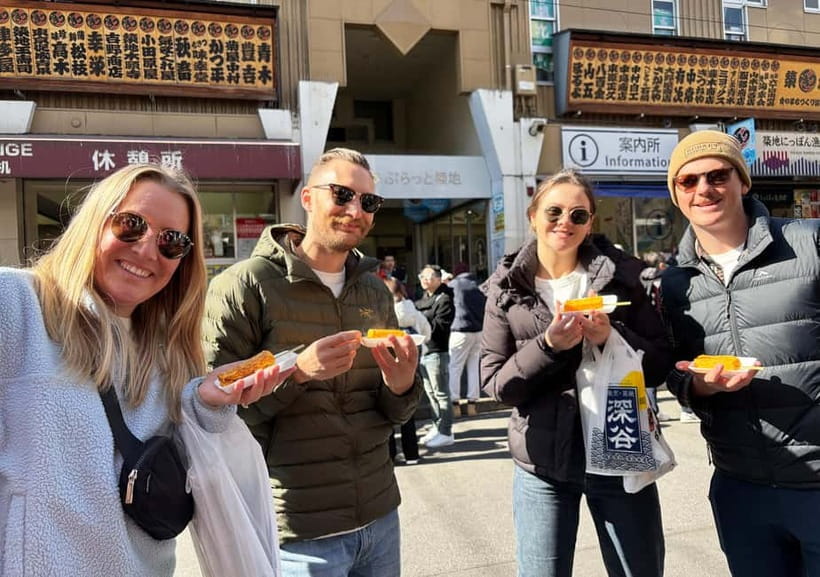
- Wasabi set-up that improves the flavor: the guide handles it with care, and the difference is obvious once you taste.
- Tsukiji Hongwanji Temple first: you start with architecture and a calmer moment before moving into market activity.
- Outer Market food tasting with practical ordering tips: you learn how to pick stalls and what to ask for based on what’s available.
- Umami-focused food logic: traditional preservation techniques are part of what you’re seeing and tasting, not just trivia.
- Small-group pacing through crowds: you spend more time eating and less time wandering or stuck in random lines.
Tsukiji Hongwanji Temple: a calm start with ritual context
Your tour begins around Tsukiji Hongwanji Temple (築地本願寺本堂). Even though you’re in one of Tokyo’s busiest food districts, this stop gives you a reset. The temple itself is known for detailed carvings and a serene interior, which helps you slow down and notice the human side of this area.
What makes this stop worth your time is the way the guide frames it. In a market like Tsukiji, food is never just food. It’s tied to daily habits, respect for ingredients, and the idea that there’s a right way to enter a space and appreciate what’s offered. Several guests mention learning about the purification procedure before entering, and that kind of context makes the next part feel more meaningful.
Practical tip: if you’re sensitive to crowds, arriving at the temple early in the tour is a small win. You’re starting in a quieter pocket before the outer market gets loud and tight.
More market breakfasts our reviewers scored
- Tokyo Tsukiji Fish Market Food and Culture Walking Tour
★ 5.0 · 3,184 reviews - Tokyo: Tsukiji Fish Market Food and Walking tour
★ 5.0 · 1,724 reviews - Tokyo: Tsukiji Fish Market Guided Walking Tour
★ 4.9 · 1,397 reviews - Tokyo Sushi Making Class in Tsukiji with Professional Chef
★ 5.0 · 1,177 reviews
Tsukiji Outer Market street food: how to taste like a regular
After the temple, you move into the Tsukiji Outer Market, where the energy changes fast. This is where the tour becomes useful for your future Tokyo days, not just this one walk.
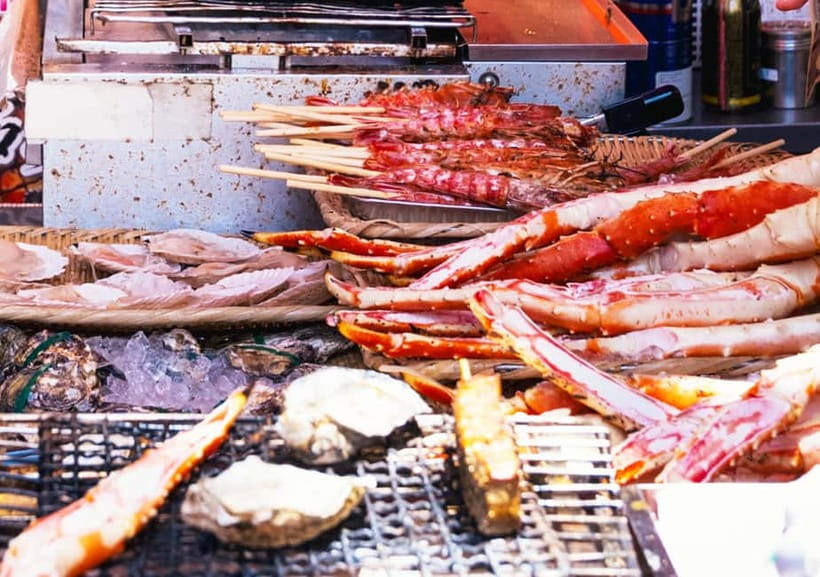
You’ll get an 80-minute guided walk and food tasting through the outer stalls. Guides typically help you avoid the common beginner mistake: picking random items based on the loudest display or the most tourist-friendly signage. Instead, you’re guided toward stalls that are actively serving good bites and that match what you want to try—tuna, wagyu, seafood skewers, grilled items, and more.
From what people report, you may see tastings like:
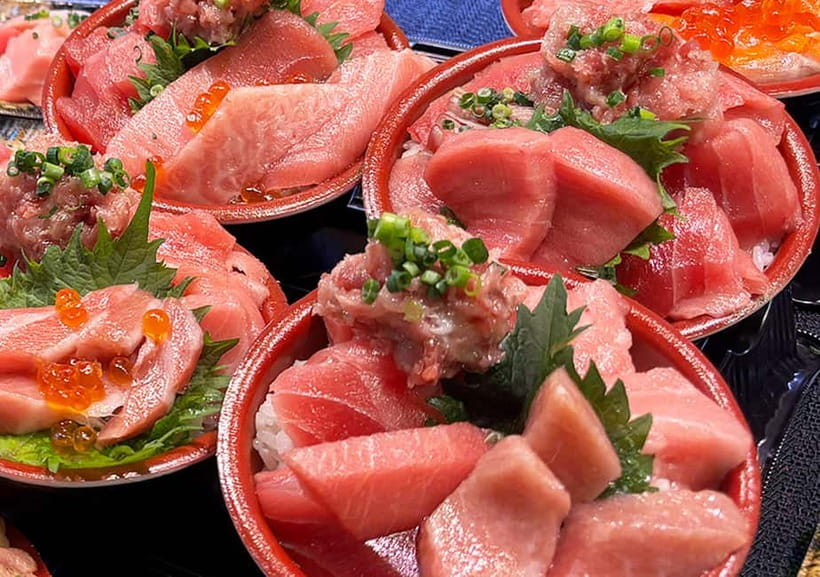
- tuna sushi or tuna dishes
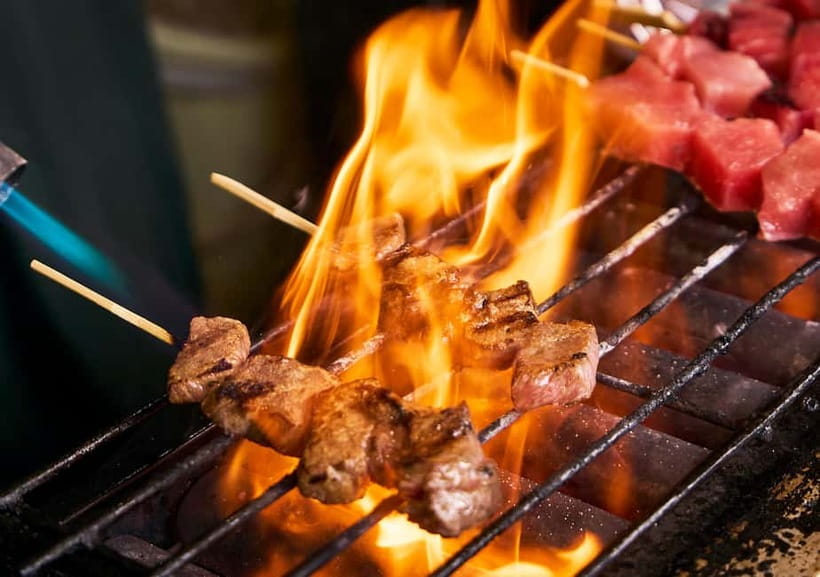
- wagyu (including skewer-style portions)
- eel and grilled scallops
- dumplings and other classic snacks
- items like octopus at prepared-stall stops
You’re not forced to eat everything. Many guests specifically mention that the tour feels flexible—more like a guided sampler than a rigid checklist. That matters in a market where quality and availability can shift minute to minute.
One more smart detail: guides are praised for standing in lines or handling the ordering flow for you. Even if you’re a confident eater, it’s exhausting to do that on your own in crowded aisles. This is one of the reasons a guided tour often feels like better value than you’d expect.
The wasabi moment: why it tastes different on this tour
Let’s talk about the thing that keeps popping up in the feedback: the tour’s special wasabi set-up.
Wasabi in Japan isn’t treated like a generic condiment. It’s part of the balance—how it cuts through richness, how it changes the perception of fish sweetness, and how freshness affects the bite. When your guide prepares the wasabi set for you, you’re getting more than a taste—you’re getting a small lesson in why people care about it.
Guests mention a fresh wasabi experience and even that the guide provides wipes/napkins and helps people handle the mess without stress. That might sound minor, but when you’re tasting multiple foods in a short time, it makes the whole session smoother.
If you’re a first-timer to Japanese markets, this is a great “confidence builder.” You learn what fresh wasabi does in practice, and you’re less likely to oversimplify it later as just green paste.
Fresh tuna, wagyu, and traditional snacks: what you’re learning with every bite
Food tours can sometimes feel like a snack parade. This one tends to teach you the logic behind Japanese flavors.
The highlight list calls out traditional preservation techniques that enhance umami. That fits what you’ll be seeing at stalls: foods that taste intense because they’re made to last, or because they’re prepared in ways that concentrate flavor over time. Umami isn’t only a buzzword here—it’s a reason why preserved seafood, properly seasoned items, and well-handled ingredients taste satisfying instead of flat.
You’ll also get a sense of craftsmanship. Even without fancy lectures, market food has a built-in “how” story:
- how tuna is handled and served
- how wagyu is presented so its fat behaves well on the palate
- how skewer-style skewers and grilled bites are portioned for quick eating
People repeatedly mention tasting tuna sushi and wagyu, and also enjoying eel and other grilled seafood. One guest even notes being “totally stuffed” by the end, which tells you the tastings are not just a few crumbs.
If you like eating with purpose: this tour fits. You’re not just consuming; you’re learning what to look for when you return on your own.
History and market culture: more than seafood facts
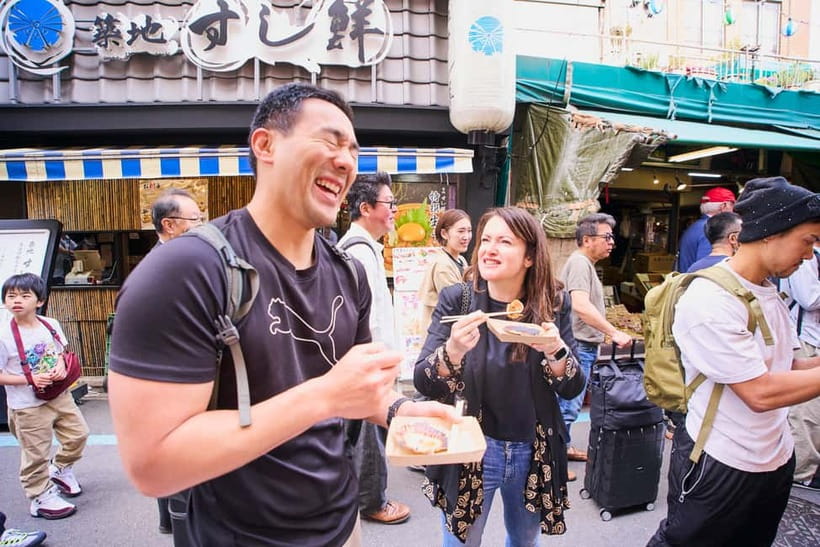
Tsukiji is iconic for a reason. It has a long role in Tokyo’s culinary culture, and the tour tries to connect that reputation to what’s actually happening at stalls right now.
You’ll hear about the market’s background and how Tsukiji shaped the way Japan thinks about seafood sourcing and preparation. The guide’s job is to translate that history into something you can feel through tasting.
A practical way this shows up: your guide points out what matters to a seller and what matters to a buyer. That might be freshness, how ingredients are kept, or how certain flavors complement each other (like pairing rich fish with something sharp like wasabi).
Multiple guides are singled out by name—Kawa, George, Mao, Naoto, Tomo, Chihiro, and others. While each guide’s style may differ, the pattern is the same: you end the tour with a clearer picture of how the market operates and why certain foods earn their place.
Readers also shortlisted these Tokyo bookings:
- Tokyo Tsukiji Fish Market Food and Culture Walking Tour★ 5.0 · 3,184 reviews
- Tokyo: Imperial Palace and Shogun Historical Walking Tour★ 5.0 · 2,251 reviews
- Tokyo: Shinjuku Local Bar and Izakaya Guided Walking Tour★ 4.9 · 1,794 reviews
- Tokyo: Tsukiji Fish Market Food and Walking tour★ 5.0 · 1,724 reviews
- Tokyo: Asakusa Walking Tour with Sensoji Temple Visit★ 4.8 · 1,583 reviews
Timing and logistics: the 2-hour format that works
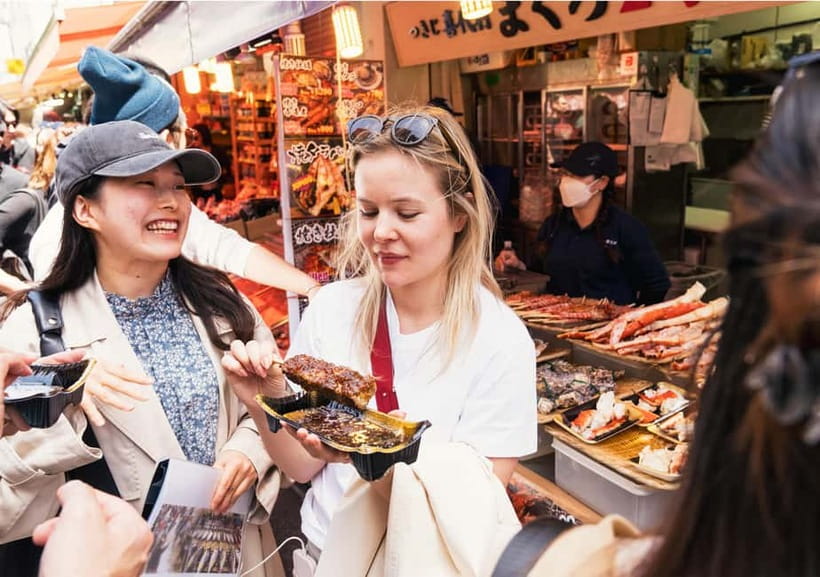
This tour runs for 2 hours. That’s a good length for Tsukiji because the market can overwhelm you fast. Too short and you miss the flow. Too long and you start moving slower, getting hungry in an unhelpful way, or losing patience in lines.
With a two-hour window, the structure is built around steady movement:
- temple intro (short but meaningful)
- outer market exploration with tastings
- time to ask questions and keep your group from turning into a slow-moving crowd
You’ll likely start at Tsukiji Hongwanji Temple and finish back around the same area (the tour lists the same drop-off location). That’s convenient because you don’t have to plan extra transport immediately afterward.
Bring cash. You’ll want it for small purchases during the market wandering. Several guests specifically mention this, and it’s consistent with how many stalls handle transactions.
Price and value: what $22 buys you in a real market
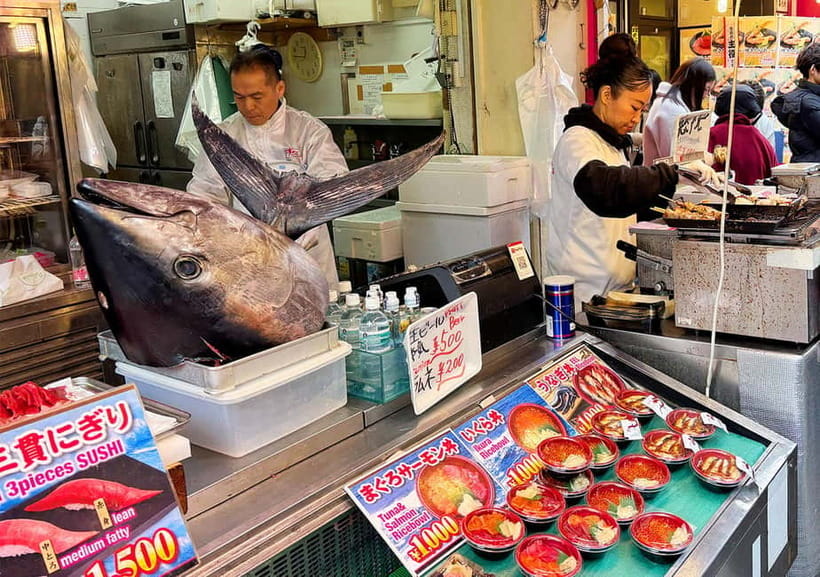
At $22 per person, this tour is priced like a budget-friendly food walk, not a fancy private experience. The value comes from three things:
- Tastings plus guidance
You’re not just walking around. You’re stopping, sampling, and getting help with what’s worth your yen.
- Time saved inside the market
Guests mention guides handling lines for the best bites. In Tsukiji’s tight lanes, that time is real money in disguise: you’ll spend less of your vacation stuck waiting or second-guessing.
- Flavor context
The wasabi set-up and the umami/preservation discussion mean you taste with understanding. That’s how you leave with something more than a full stomach.
Is it perfect value if you love markets and plan to go on your own? Maybe you won’t need a tour for basic wandering. But if you want an easier start, a smoother food path, and a better chance of getting high-quality bites without guessing, this pricing is hard to ignore.
When shops close: how to adjust on Wednesdays, Sundays, holidays
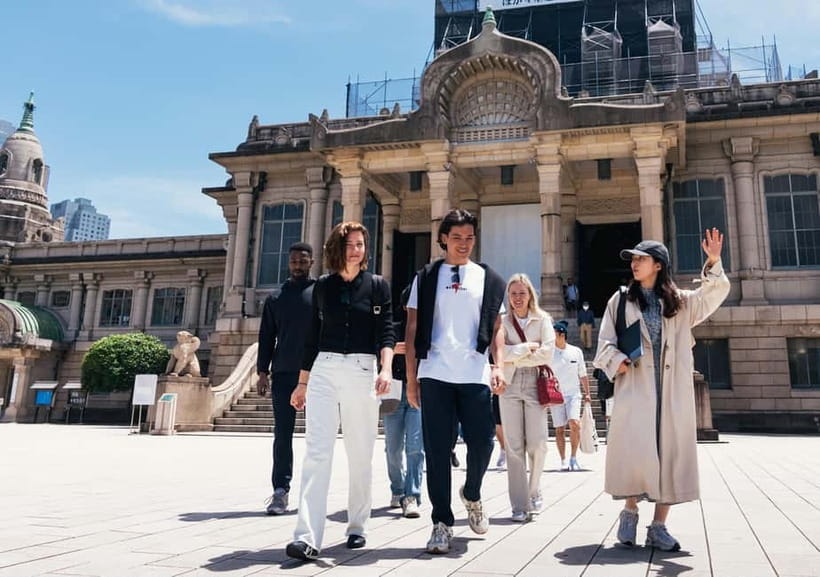
Here’s the key reality: on Wednesdays, Sundays, and national holidays, about half of the shops in the Tsukiji Outer Market may be closed.
That doesn’t automatically ruin the tour—some shops remain open and tours still happen—but the experience can feel different. You might notice:
- fewer tasting options in certain lanes
- a slightly different mix of stalls available
- less chance to see some live preparation at specific spots (you might still see market activity, but it may not be the same)
My advice: if your schedule allows flexibility, try to book on a day when more stalls are likely open. If you can’t, don’t panic. A good guide adapts by choosing the best available vendors and keeping the tasting sequence strong.
Who this tour suits best (and who should skip it)
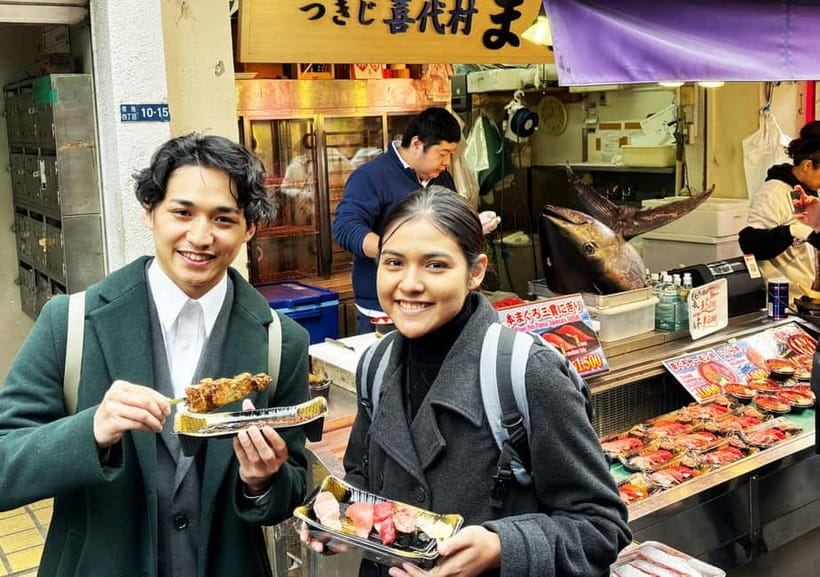
This tour is a strong fit if:
- you want help ordering in a place that can feel intimidating without context
- you care about tasting fresh seafood and traditional snacks in a practical way
- you like learning how flavors work, not only collecting photos
- you want the added structure of a small group
It may not be the best fit if:
- you hate crowds and tight walking spaces (the outer market gets busy)
- you want a long, slow hangout with zero movement
- you’re visiting on a closure day and absolutely need maximum vendor variety
Should you book the Tsukiji Fish Market street food & culture tour?
If you want an efficient, food-first way to experience Tsukiji—without spending your first visit lost in decision fatigue—yes, book it.
Do it especially if you value the details: the temple context, the wasabi set-up, the umami and preservation explanations, and a guide who can get you to good bites with less wasted time. If you’re open to tasting a range of foods (tuna, wagyu, eel, grilled seafood, and classic snacks), this tour hits a sweet spot.
If you’re the type who plans to skip tours and fully self-navigate, you can still have a great time on your own. But for most people, the $22 price feels like a small price for a smoother market day—plus you get a better sense of what to seek out next.
FAQ
How long is the Tsukiji Fish Market street food & culture walking tour?
The tour lasts 2 hours.
Where does the tour start and end?
You start at one of the listed starting options at Tsukiji Hongwanji Temple (築地本願寺本堂). The meeting point may vary depending on the option booked, and the drop-off location is also listed as 築地本願寺本堂.
What’s included in the tour?
It includes a guided tour of Tsukiji Fish Market, exploration of the outer market, a visit to Tsukiji Hongwanji Temple, and insights into Japanese cooking and ingredients, plus food tasting during the outer market portion.
Is the tour offered in English?
Yes, the live tour guide speaks English.
Does the tour accommodate wheelchairs?
Yes, the tour is listed as wheelchair accessible.
Do I need to bring cash?
Yes. Cash is listed as what to bring.
Are some shops closed on certain days?
Yes. On Wednesdays, Sundays, and national holidays, about half of the shops in the Tsukiji Outer Market may be closed. Some shops may still be open, so the experience can differ.
How much does the tour cost?
The price is listed as $22 per person.
Is there free cancellation?
Yes. Free cancellation is available up to 24 hours in advance for a full refund.
What’s the group size like?
The tour offers a small group option.
More Tours in Tokyo
- Mt Fuji and Hakone 1-Day Bus Tour Return by Bullet Train
★ 5.0 · 26,383 reviews - 1-Day Tokyo Bus Tour
★ 5.0 · 14,250 reviews - Tokyo: Shinjuku Food Tour (13 Dishes at 4 Local Eateries)
★ 5.0 · 6,603 reviews - Tokyo Mt Fuji 5th St & Hakone Cruise Bus Tour w/Bullet Train
★ 4.4 · 5,024 reviews - Flagship 2-Hours Official Street Go-Kart Tour – Tokyo Bay Shop
★ 5.0 · 4,974 reviews
More Tour Reviews in Tokyo
- Mt Fuji and Hakone 1-Day Bus Tour Return by Bullet Train
★ 5.0 · 26,383 reviews - 1-Day Tokyo Bus Tour
★ 5.0 · 14,250 reviews - Tokyo: teamLab Planets TOKYO Digital Art Museum Entry Ticket
★ 4.6 · 9,779 reviews - Mt Fuji & Hakone Cruise, Drum Show Bullet Train 1 Day from Tokyo
★ 4.0 · 7,413 reviews - Tokyo: Shinjuku Food Tour (13 Dishes at 4 Local Eateries)
★ 5.0 · 6,603 reviews
More Tsukiji Market Breakfasts
- Tokyo Tsukiji Fish Market Food and Culture Walking Tour
★ 5.0 · 3,184 reviews - Tokyo: Tsukiji Fish Market Food and Walking tour
★ 5.0 · 1,724 reviews - Tokyo: Tsukiji Fish Market Guided Walking Tour
★ 4.9 · 1,397 reviews - Tokyo Sushi Making Class in Tsukiji with Professional Chef
★ 5.0 · 1,177 reviews - Tsukiji Fish Market Guided Tour and Sushi Making with Pro Chef
★ 5.0 · 775 reviews
Latest Tokyo reviews off our desk






Tsukiji Market Food Tours, compared.
 ★ 5.0Tokyo Tsukiji Fish Market Food and Culture Walking TourFrom $993,184 reviews
 ★ 5.0Tsukiji Fish Market Food and Walking tourFrom $301,724 reviews
 ★ 4.9Tsukiji Fish Market Guided Walking TourFrom $221,397 reviews
 ★ 5.0Tokyo Sushi Making Class in Tsukiji with Professional ChefFrom $491,177 reviews
 ★ 5.0Tsukiji Fish Market Guided Tour and Sushi Making with Pro ChefFrom $104775 reviews
★ 4.7Tsukiji Fish Market Food and Culture Walking TourFrom $96757 reviews
★ 5.0Tsukiji Fish Market Guided Tour and Sushi Making with Pro ChefFrom $104775 reviews
★ 4.7Tsukiji Fish Market Food and Culture Walking TourFrom $96757 reviews
 ★ 5.0Tsukiji Fish Market: Street Food & Culture Walking TourFrom $33669 reviews
 ★ 5.0Tsukiji Fish Market Small-Group Food Walking TourFrom $87621 reviews
Browse the lists this tour appears in