
Reviewed · ASAKUSA & SENSOJI TOURS
22-Min Tokyo City Lights Helicopter Tour – Skytree and Asakusa
Tokyo at night looks best from above. This 22-minute helicopter ride strings together major landmarks in one short flight, so you get the city-light spectacle without building an entire day around it. I especially like two things: the air-conditioned cabin that keeps you comfortable while you’re up there, and the way the route spotlights big-name sights like Tokyo Skytree and Asakusa as glowing patterns below. The main thing to weigh is that this kind of flight is weather-dependent, so you’ll need flexibility if conditions aren’t good.
You also get a small-group setup. It’s a private activity with a max of 3 people per booking, and you’ll use a mobile ticket. That matters because it tends to feel smoother and more personal than bigger tours, especially when you’re dealing with night timing.
In This Review
- Key things I’d circle before you book
- Tokyo Night Views From Funabashi Heliport: What You’ll Actually Get
- Skytree, Asakusa, and Tokyo Station Gallery From the Sky
- Route Stops: How Each Aerial Highlight Looks at Night
- 1) Tokyo Skytree: the glowing anchor
- 2) Asakusa district: lighting patterns and scale
- 3) Tokyo Station Gallery area: the city’s core in context
- Comfort and Peace of Mind: Small Private Group + Professional Handling
- Price and Value for a Group Up to 3: Is It Worth $912.14?
- A simple local transport tip
- Timing, Weather, and the One Detail You Can’t Ignore
- Weight Limits: Know the Specs Before You Worry
- Who This Helicopter Tour Fits Best
- Should You Book This 22-Min Tokyo City Lights Helicopter Tour?
- FAQ
- How long is the Tokyo city lights helicopter tour?
- Where does the tour start and end?
- What landmarks will we see during the flight?
- Is this a private tour?
- How many people can be in one booking?
- Is the helicopter air-conditioned?
- What happens if the weather is bad?
- What are the weight limits?
Key things I’d circle before you book
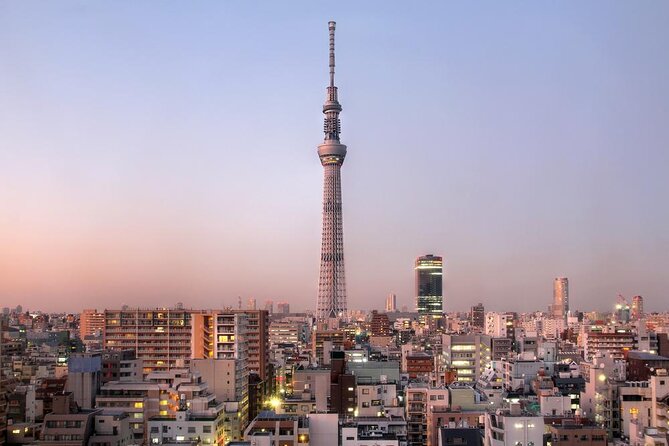
- Skytree and Asakusa from above: see the landmarks lit up in their real urban context, not just as a single viewpoint
- 22 minutes, not 2 hours of travel: you get a quick hit of city-lights magic with minimal fuss
- Air-conditioning in the helicopter: it’s built for comfort, not just excitement
- Private by default (up to 3): less waiting around with strangers and more control over your group experience
- Route highlights you can plan around: Tokyo Skytree, Asakusa district, and Tokyo Station Gallery are specifically called out
Tokyo Night Views From Funabashi Heliport: What You’ll Actually Get
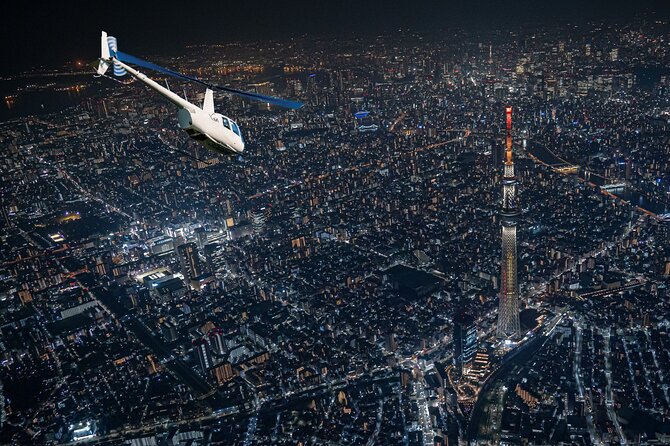
This tour is based out of Funabashi Heliport, at 1-chōme-44-2230 Kanasugi, Funabashi, Chiba 273-0853. It ends back at the same meeting point, which keeps the night logistics simple. And while Tokyo is famous for long, complicated journeys, this experience is designed to keep you focused: you show up, you fly, you’re back.
The flight time is about 22 minutes, which is short enough that you’re not dragged through a half-day of pre- and post-flight downtime. But it’s long enough to enjoy the city-light panorama as the aircraft moves along its route. Expect the experience to feel like seeing the whole city’s “night mode” all at once.
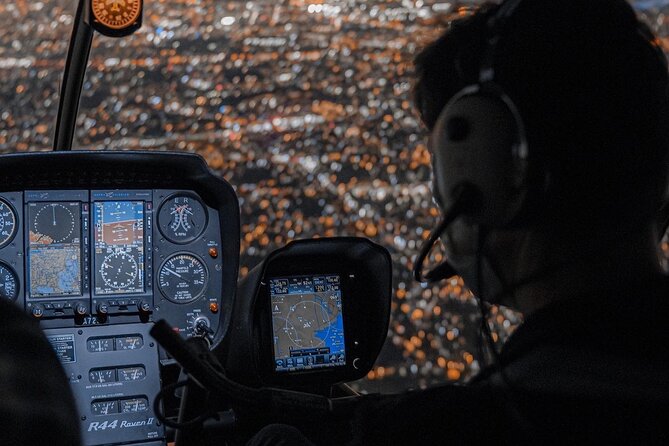
One detail that makes this tour easier to enjoy is the air-conditioning onboard. Helicopter tours are fast and sensory, and night air can be a factor. Having climate comfort helps you stay focused on the views instead of the weather.
More temple mornings in old Asakusa
- Tokyo: Japanese Dance Cabaret Theater Asakusa-Kaguwa Ticket
★ 4.8 · 2,270 reviews - Tokyo: Meiji Shrine, Asakusa, Skytree Bus Tour and Cruise
★ 4.7 · 1,986 reviews - Tokyo: Roll and Authentic Sushi Making Class in Asakusa
★ 4.9 · 1,957 reviews - Tokyo: Asakusa Walking Tour with Sensoji Temple Visit
★ 4.8 · 1,583 reviews
Skytree, Asakusa, and Tokyo Station Gallery From the Sky
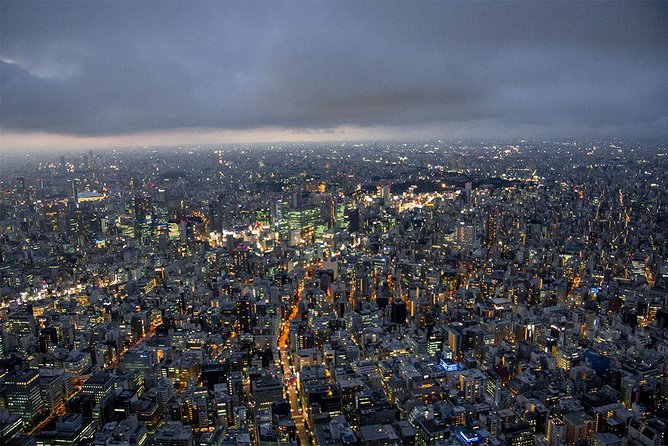
If you’ve ever stood in a long queue for an observation deck, you already know the tradeoff: you pay, you wait, and you still only see one slice of the city. Here, the idea is different. You fly above Tokyo and get skyline views while passing well-known areas and landmarks that are lit up at night.
The landmarks specifically mentioned include:
- Tokyo Skytree
- Asakusa district
- Tokyo Station Gallery
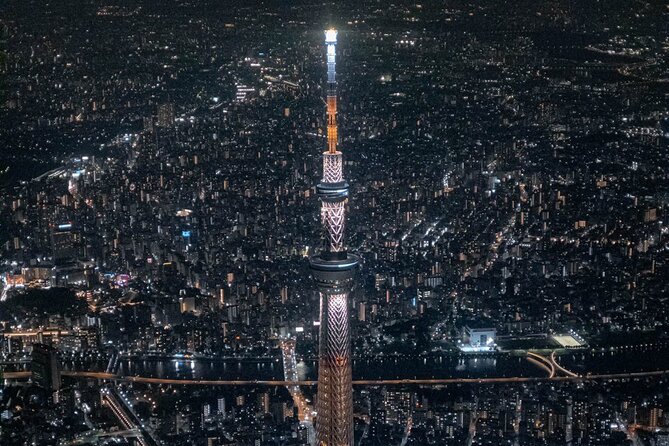
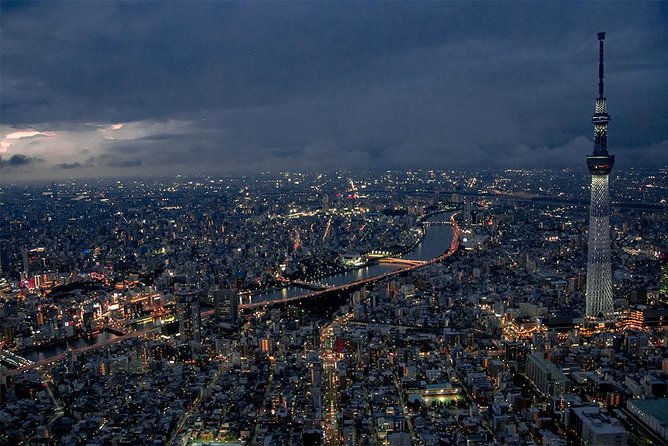
From the air, these spots stop being “tourist addresses” and turn into visual neighborhoods. You see how Skytree’s brightness sits amid a web of high-rises. You get a better sense of scale over Asakusa—how the lighting patterns and street grids spread out beyond what you can grasp at ground level. And the Tokyo Station area comes into view as part of the larger urban machine, not an isolated photo stop.
I’ll be blunt: if what you want is a calm, ground-level walk with time to browse shops, this isn’t that kind of tour. But if you want immediate perspective—the city’s geometry and lighting—this is one of the quickest ways to get it.
Route Stops: How Each Aerial Highlight Looks at Night
This flight is short, so you’re not going to get a long narrative tour with stops on the ground. What you’re getting instead is a sequence of aerial pass-bys. Here’s what to look for in each named highlight.
1) Tokyo Skytree: the glowing anchor
Skytree is the kind of landmark you can spot from far away even during the day. At night, it becomes a bright vertical reference point. When you pass overhead, you’ll likely notice how the tower’s lighting contrasts with lower buildings around it. That contrast is the “from-above” advantage: you see the tower not as an item on a skyline, but as a luminous marker inside Tokyo’s layered nightscape.
What to watch for: the way surrounding neighborhoods fill in behind it. A ground view can make places feel closer or flatter than they are; from the air, distances read more clearly.
Possible drawback: if you’re hoping for a close-up, slow hover, this isn’t designed that way. It’s a 22-minute flight, so enjoy quick clarity rather than a long lingering moment.
2) Asakusa district: lighting patterns and scale
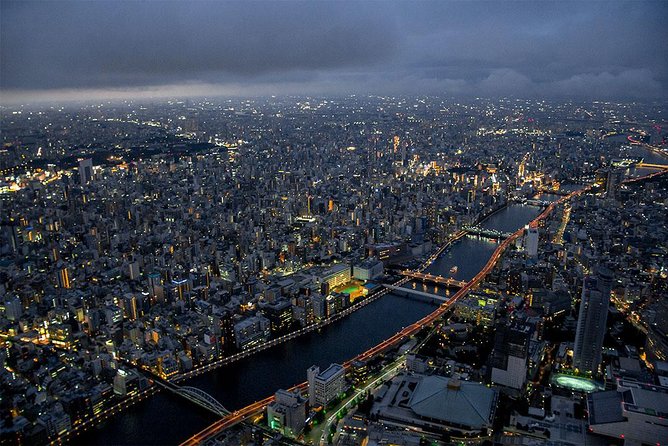
Asakusa has a distinctive feel on the ground, but from the sky it’s more about texture: the mix of streets, rooftops, and light density. You’ll probably get a better understanding of how Asakusa sits among larger corridors and how neighborhoods transition from one “lighting style” to another.
What to watch for: how the district’s layout looks compared to the surrounding modern towers. It helps your brain connect map scale with real geography.
Other Skytree entries readers booked
- Tokyo Panoramic 1 Day: Meiji Shrine, Asakusa, Odaiba and SKYTREE®★ 4.5 · 1,222 reviews
- Tokyo Go Kart: Asakusa, Skytree, and Akihabara **IDP MUST**★ 5.0 · 988 reviews
- Tokyo Skytree Admission Ticket with Tembo Deck and Galleria★ 4.0 · 589 reviews
- Tokyo: 1 Day Bus Tour with Meiji-Jingu,Odaiba,lunch&Skytree★ 4.6 · 156 reviews
- Tokyo Skytree: Admission Ticket with 24-Hour Subway Pass★ 4.5 · 79 reviews
3) Tokyo Station Gallery area: the city’s core in context
Tokyo Station is a major hub, and the Tokyo Station Gallery area is mentioned as part of the route pass-by. From above, you can see how transport districts interact with nearby high-rises. It’s less about individual buildings and more about the overall city grid working together.
What to watch for: the way lighting clusters around transport zones. Even from above, you can often “read” which areas are busy and which ones are quieter.
Comfort and Peace of Mind: Small Private Group + Professional Handling
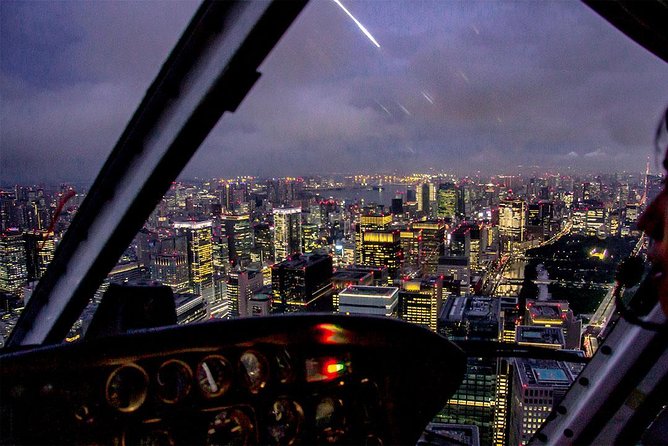
This is private by design, with a maximum of 3 people per booking. That small group size changes the vibe. You’re not sharing the experience with a busload. It can also make the boarding moment feel less chaotic.
The aircraft is air-conditioned, and that’s a practical win. Night helicopter rides can be loud and fast, but comfort lets you take it in instead of focusing on basic body discomfort.
Another thing I’d highlight is how smoothly people describe the process. The staff comes across as efficient and professional, and you’re treated with respect. That matters because you’re spending your money on a short window of time in the air—if the ground handling is messy, the experience suffers. Here, the tone seems organized and calm.
Price and Value for a Group Up to 3: Is It Worth $912.14?
The price is $912.14 per group (up to 3). If you book as a full group, the math works out to roughly $304 per person. If you book for fewer people, the per-person cost goes up fast, so this is best when you can split with friends or family.
What makes it potentially good value is the “how much you get per minute” concept. For 22 minutes, you’re not just getting one skyline view—you’re getting aerial glimpses tied to major landmarks that are specifically called out (Skytree, Asakusa, Tokyo Station Gallery). You also avoid the time sink of paying for and visiting an observation deck as your main nightlife plan.
That said, you are still paying for a premium mode of transport. Helicopter tours aren’t cheap by nature. If you’re the type who enjoys slow travel, museums, and long scenic walks, this won’t scratch the same itch. But if your travel style is “I want one unforgettable overhead view and I want it fast,” this can be a strong use of budget.
A simple local transport tip
Get to the meeting area by taxi if you’re coming from Funabashi Station. A helpful tip from recent experience: don’t attempt to walk. Night logistics + helicopter arrival timing can turn a simple trip into a stress test.
Timing, Weather, and the One Detail You Can’t Ignore
This experience requires good weather. If it can’t be conducted due to inclement weather or flight operation problems, you receive a full refund or an alternative date. If you’re planning to fly in about 5 days, check the weather forecast carefully, because bad conditions can trigger cancellation.
So what should you do with that info? Plan like someone who wants the ride, but also protects your schedule:
- If your Tokyo trip is flexible, this tour is easier to absorb if weather shifts.
- If your schedule is tight and you can’t move anything around, you risk losing a planned night.
Cancellation is free up to 24 hours in advance for a full refund, which helps. Still, the main challenge remains the same: weather decides whether the helicopter can fly.
Weight Limits: Know the Specs Before You Worry
If weight is a concern, double-check the limits before you assume you’re good to go. The information provided includes:
- Total weight per passenger: 265 lbs
- Weight limit: 220kg per flight total
- 120kg per passenger
These numbers are important. Helicopter space is limited, and tours like this can refuse boarding if limits aren’t met. If you’re anywhere near the upper end, confirm in advance rather than gambling.
Who This Helicopter Tour Fits Best
This tour is ideal if you want:
- City lights without a long sightseeing marathon
- A quick, high-impact way to see Skytree and Asakusa in relation to the rest of Tokyo
- A private experience for a small group (up to 3)
- Comfort built in through air-conditioning
It may not be ideal if you:
- Want ground time for shopping, strolling, or dining between views
- Have a rigid schedule where weather cancellations would create major problems
- Expect a slow, extended hover-style sightseeing experience
Should You Book This 22-Min Tokyo City Lights Helicopter Tour?
I’d book this if you’re the kind of traveler who likes big-picture perspective and you want one memorable Tokyo moment that doesn’t require hours of walking or lines. The combination of a short 22-minute flight, air-conditioned comfort, and clearly identified night-view landmarks makes it feel purpose-built.
I’d hesitate only if your trip dates are immovable or you’re likely to feel frustrated by weather changes. Since the flight can be canceled in poor conditions, this is best when you can shift plans or accept the possibility of a reschedule.
If you can line up a group of up to three and you’re staying in a pace that allows one flexible night, this is a strong value play for the experience level: you’re paying for access to a view most people can’t get at all—Tokyo’s lights from the air.
FAQ
How long is the Tokyo city lights helicopter tour?
The flight duration is about 22 minutes.
Where does the tour start and end?
It starts at Funabashi Heliport (1-chōme-44-2230 Kanasugi, Funabashi, Chiba 273-0853, Japan) and ends back at the meeting point.
What landmarks will we see during the flight?
The route highlights include Tokyo Skytree, the Asakusa district, and Tokyo Station Gallery.
Is this a private tour?
Yes. It’s a private activity, and only your group participates.
How many people can be in one booking?
A maximum of 3 people per booking.
Is the helicopter air-conditioned?
Yes, the helicopter is equipped with air-conditioning.
What happens if the weather is bad?
If the tour can’t be conducted due to inclement weather or flight operation issues, you will receive a full refund or you can choose an alternative date.
What are the weight limits?
The provided limits include 265 lbs per passenger, 220kg per flight total, and 120kg per passenger.
More Tour Reviews in Tokyo
- Mt Fuji and Hakone 1-Day Bus Tour Return by Bullet Train
★ 5.0 · 26,383 reviews - 1-Day Tokyo Bus Tour
★ 5.0 · 14,250 reviews - Tokyo: teamLab Planets TOKYO Digital Art Museum Entry Ticket
★ 4.6 · 9,779 reviews - Mt Fuji & Hakone Cruise, Drum Show Bullet Train 1 Day from Tokyo
★ 4.0 · 7,413 reviews - Tokyo: Shinjuku Food Tour (13 Dishes at 4 Local Eateries)
★ 5.0 · 6,603 reviews
More Skytree Entries
- Tokyo: Meiji Shrine, Asakusa, Skytree Bus Tour and Cruise
★ 4.7 · 1,986 reviews - Tokyo Panoramic 1 Day: Meiji Shrine, Asakusa, Odaiba and SKYTREE®
★ 4.5 · 1,222 reviews - Tokyo Go Kart: Asakusa, Skytree, and Akihabara **IDP MUST**
★ 5.0 · 988 reviews - Tokyo: Asakusa, Skytree & Akhihabara Go-Kart City Experience
★ 4.7 · 761 reviews - Tokyo Skytree Admission Ticket with Tembo Deck and Galleria
★ 4.0 · 589 reviews
More Mornings in Old Asakusa
- Tokyo: Japanese Dance Cabaret Theater Asakusa-Kaguwa Ticket
★ 4.8 · 2,270 reviews - Tokyo: Meiji Shrine, Asakusa, Skytree Bus Tour and Cruise
★ 4.7 · 1,986 reviews - Tokyo: Roll and Authentic Sushi Making Class in Asakusa
★ 4.9 · 1,957 reviews - Tokyo: Asakusa Walking Tour with Sensoji Temple Visit
★ 4.8 · 1,583 reviews - Tokyo Asakusa Rickshaw Tour
★ 5.0 · 1,375 reviews
Latest Tokyo reviews off our desk






Asakusa & Sensoji Tours, compared.
 ★ 4.8Japanese Dance Cabaret Theater Asakusa-Kaguwa TicketFrom $492,270 reviews
 ★ 4.7Meiji Shrine, Asakusa, Skytree Bus Tour and CruiseFrom $1221,986 reviews
 ★ 4.9Roll and Authentic Sushi Making Class in AsakusaFrom $581,957 reviews
 ★ 4.8Asakusa Walking Tour with Sensoji Temple VisitFrom $221,583 reviews
 ★ 5.0Tokyo Asakusa Rickshaw TourFrom $421,375 reviews
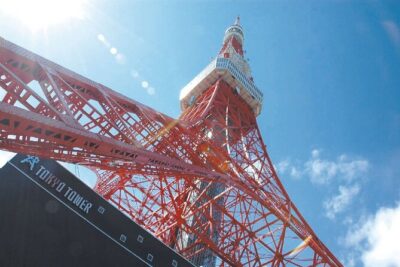 ★ 4.5Tokyo Panoramic 1 Day: Meiji Shrine, Asakusa, Odaiba and SKYTREE®From $851,222 reviews
 ★ 5.0Tokyo Go Kart: Asakusa, Skytree, and Akihabara **IDP MUST**From $99988 reviews
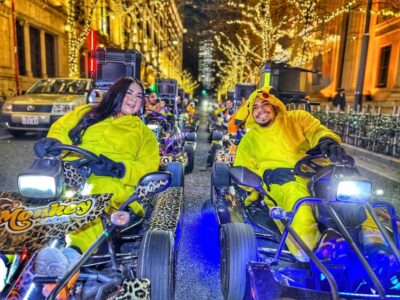 ★ 4.7Asakusa, Skytree & Akhihabara Go-Kart City ExperienceFrom $96761 reviews
Browse the lists this tour appears in