
Reviewed · ASAKUSA & SENSOJI TOURS
Tokyo Asakusa Rickshaw Tour
Asakusa rolls past at human speed. This rickshaw tour gives you an easy overview of the neighborhood, mixing Edo-era streets with places that feel very religious and very Tokyo all at once. I love that the route is customizable to your interests, so you can steer toward shrines, photo stops, or the quirky side of Asakusa. One thing to keep in mind: the rickshaw is a snug ride, and there’s a rule that rickshaws can’t enter the Sensoji/Asakusa Temple area, so you’ll still do some walking for those specific sights.
A big part of the charm here is how Asakusa shows multiple eras side by side. You’ll pedal past tree-lined streets in the right season (maples and cherries are mentioned), then swing toward landmark stops like Ushijima Shrine, Honryuin Matsuchiyama Shoden, and Imado Shrine. A possible drawback is simply timing: the duration can be as short as 30 minutes, and not every landmark may fit into the shorter options.
In This Review
- Key Points Before You Go
- Why Asakusa Changes When You Ride a Rickshaw
- Price and Time: Is $42.90 Worth It?
- Meeting Point and the Flow: From Asakusa Station to Your Finish
- The Snug Rickshaw Reality (So You Plan Comfortably)
- What Your Guide Can Customize (And How to Ask for It)
- Edo-Era Streets and the Neighborhood That Feels Like a Time Machine
- The Raccoon Street: A Fun Side Trip That Turns Heads
- An Old Amusement Park Moment
- Ushijima Shrine: The Three-Entrance Gate and What It Means
- From the Sumida River to Tokyo Skytree: A Photo Spot With Real Payoff
- Sensoji/Asakusa Area: The Gate Colors, Then Walk the Rest
- Honryuin Matsuchiyama Shoden: Why Radishes Show Up Everywhere
- Imado Shrine: Cats, Manekineko, and the Soft Power of Cute
- Beer Headquarters: Modern Tokyo Comes Knocking
- Rokku Street and the Entertainment District Feel
- Sumida Park: River Break, Cherry Blossoms, and a Final Look at Skytree
- Practical Considerations: Weather, Walking, and Where You’ll Actually Stand
- Who This Tour Fits Best (And Who Might Want a Different Plan)
- Should You Book the Tokyo Asakusa Rickshaw Tour?
- FAQ
- How long is the Asakusa rickshaw tour?
- Can I customize the route based on my interests?
- Where do I meet the tour?
- Where does the tour end?
- Is the tour private?
- Are admission tickets included for the shrines and temples?
- What’s the rickshaw capacity per ride?
- Can a child ride for free?
- Are food and drinks included?
- Can the rickshaw go inside the Sensoji/Asakusa Temple area?
Key Points Before You Go
- Custom route: Tell your guide what you want to see, and the route can adjust.
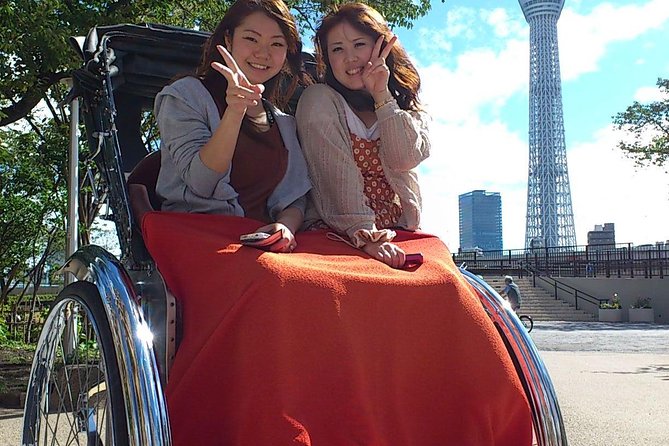
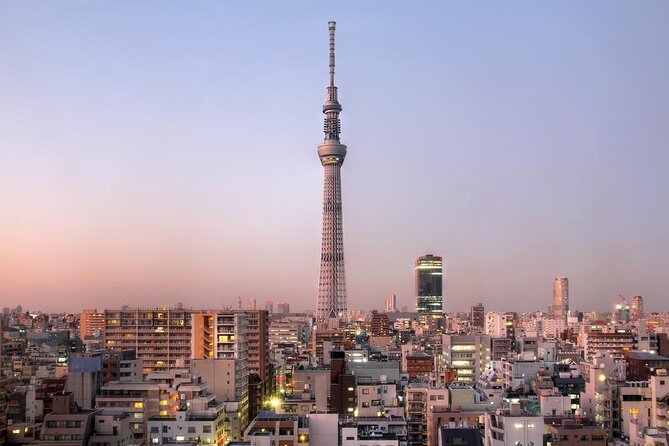
- Photo-friendly viewpoints: You get a clear chance to frame Tokyo Skytree from across the Sumida River.
- Quirky streets included: There’s a raccoon-themed street full of figurines along the way.
- Classic Asakusa anchors: Sensoji area gates, major shrines, and river views are part of the mix.
- Edo-era street facades: You’ll ride by historic storefront and house fronts that help you picture old Tokyo.
- Rough comfort reality: Two adults max per rickshaw can make larger groups want separate seats.
Why Asakusa Changes When You Ride a Rickshaw
Asakusa is one of those neighborhoods where it’s easy to get lost—on purpose. It’s old-school, layered, and busy in a very specific way: temples and shrines nearby, retro streets a few steps away, and modern Tokyo peeking in. A rickshaw slows your eyes down. Instead of scanning from a bus window, you look at doorways, small signs, and those tiny details you’d miss while walking fast.
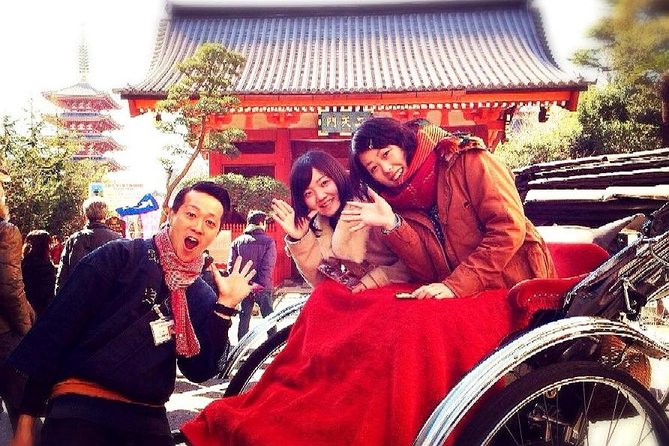
The second reason this works is pace and personality. Your guide can stop you where photos make sense or where a story clicks. Many guides seem to bring plenty of energy, and names like Issy, Micchy, Kei, Koko, Taisei, Buchi, and Takumi (with Mr T also mentioned) pop up in the experience descriptions you’ll hear from other visitors. You don’t need a guide who reads facts like a textbook—you want someone who explains what you’re seeing and helps you connect it to Tokyo life.
More temple mornings in old Asakusa
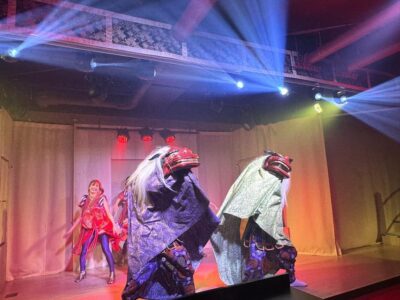
- Tokyo: Japanese Dance Cabaret Theater Asakusa-Kaguwa Ticket
★ 4.8 · 2,270 reviews - Tokyo: Meiji Shrine, Asakusa, Skytree Bus Tour and Cruise
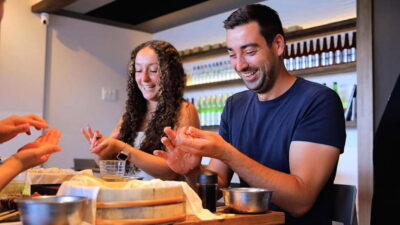
★ 4.7 · 1,986 reviews - Tokyo: Roll and Authentic Sushi Making Class in Asakusa
★ 4.9 · 1,957 reviews - Tokyo: Asakusa Walking Tour with Sensoji Temple Visit
★ 4.8 · 1,583 reviews
Price and Time: Is $42.90 Worth It?
At $42.90 per person, you’re paying for two things: (1) the rickshaw ride, and (2) the guide’s routing plus context as you move through the neighborhood. For many people, that’s the sweet spot. You get a condensed overview of Asakusa’s major themes without having to plan a full walking route and figure out how to cover it efficiently.
The duration range matters a lot. The tour can run from about 30 minutes to around 3 hours. If you’re on a tight schedule, the shorter option can still give you a focused hit of key stops and viewpoints. If you want more breathing room and fewer “we’ll just see it from outside” moments, the longer ride gives your guide time to include more of the neighborhood’s variety—shrines, cultural corners, and photo areas by the river.
Also note the practical value points: you get a mobile ticket, and there are group discounts. If you’re traveling with others, you may find it costs less than you expected per person compared with doing multiple separate tickets for transport and guided time.
Meeting Point and the Flow: From Asakusa Station to Your Finish
This is a do-it-yourself start in a simple way. You make your own way to the meeting spot outside Asakusa Station (1-chōme-1-4 Asakusa, Taito City, Tokyo). You’ll meet your guide there and head to your rickshaw stand.
The tour ends somewhere convenient for you: Kan’non-dōri 1-chōme-2-11 Asakusa is listed as the default finish area, but your final drop-off can be discussed with your guide. In practice, that matters because Asakusa is a maze—if you can end closer to your next activity, you lose less time zigzagging through streets.
One more real-world detail: this is private, so it’s just your group in the rickshaw experience. That usually means less waiting, more flexibility in your pace, and fewer “tour traffic” problems.
The Snug Rickshaw Reality (So You Plan Comfortably)
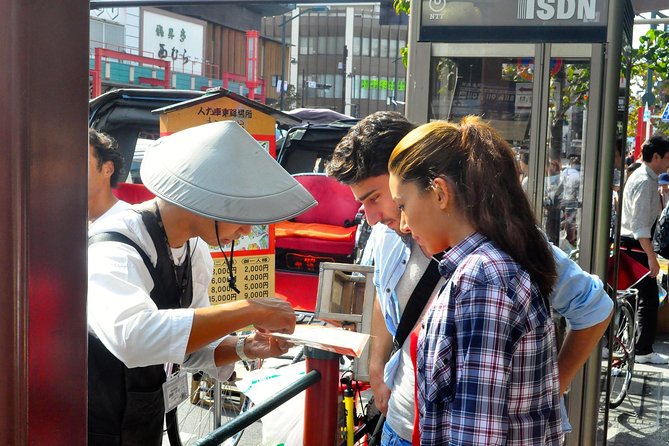
You can ride even if you’re not tiny. The cap is two adults per rickshaw, and small kids (age 5 and under) can ride free of charge on an adult’s lap. The listed guidance also says the rickshaw is about 74 cm wide (29.1 inches) and can feel snug for some body types.
If you’re traveling with someone who shares a seat with you, think about comfort before you assume it’ll be roomy. The advice given is to consider booking one rickshaw per participant if you’re larger or worried about fit. That reduces the chance your ride turns into an “I’m fine…ish” situation.
There’s also a rule that may affect your route: no rickshaw ride is allowed in the Sensoji Temple / Asakusa Temple area, including temple buildings, temple grounds, and the shopping street (Nakamise). So even if you’re stopping at the Sensoji gate area, you may still walk for the inner temple area because the rickshaw can’t go there.
What Your Guide Can Customize (And How to Ask for It)
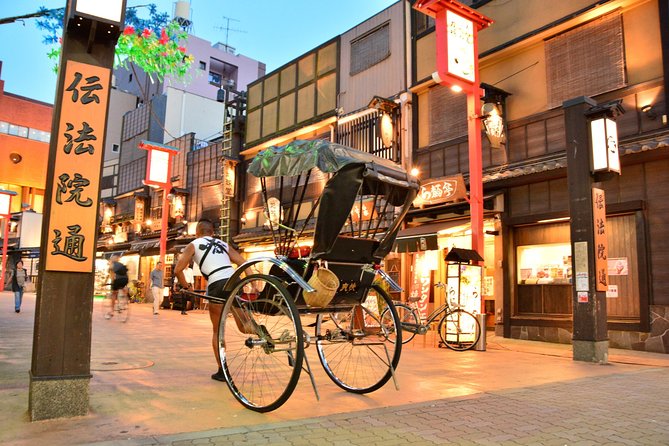
Customization is the heart of the experience. Your guide can adjust the route based on what you want to see most. When you meet, tell them your priorities in plain terms—example: shrine photos, family-friendly stops, river views, food-area vibes, or “only the best landmarks.”
This is also where guide personality comes in. Multiple names show up in others’ ride experiences—Kei, Koko, Taisei, Buchi, Micchy, Issy, Yusuke, and Takumi—and the common thread is that the guide is interactive. If you want to ask questions while you ride, you’ll probably get time for it. One of the perks mentioned is that some guides also help with practical photo moments (and in one account, even provided taxi tips and photos afterward).
More rickshaw runs through the old town
- Tokyo: Asakusa Sightseeing Tour by Rickshaw★ 4.9 · 195 reviews
- Asakusa, Tokyo: Rickshaw Experience and Highlights Walking tour★ 5.0 · 47 reviews
- Ride a rickshaw wearing a kimono in Asakusa! Enjoy authentic traditional culture!★ 5.0 · 14 reviews
- Sushi Making Tokyo with Traditional Rickshaw Ride Tour in Asakusa★ 5.0 · 12 reviews
- Tokyo: Asakusa tour by rickshaw★ 4.9 · 11 reviews
Edo-Era Streets and the Neighborhood That Feels Like a Time Machine
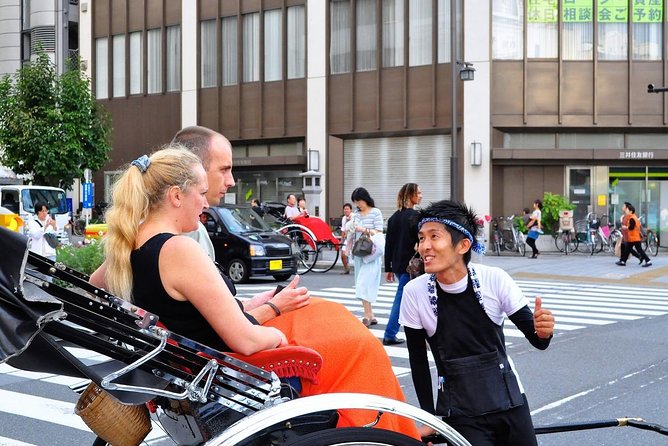
One of the best ways to understand Asakusa is to ride past the street fronts. You’ll go along a historic street with Edo-period housing facades—the kind of view that makes you picture how people lived before the area became a major tourist magnet. Even if you don’t know the exact dates, you can feel the texture of older Tokyo.
This section of the ride also helps you mentally sort the neighborhood. You start to see where the religious landmarks sit compared to entertainment corners and modern storefronts. That matters later, especially when you’re trying to follow the route on your own after the tour.
The Raccoon Street: A Fun Side Trip That Turns Heads
Then there’s the quirky side, and it’s not subtle. You’ll pass a street that’s themed around raccoons, with raccoon figurines placed along the way every few meters. This is the kind of stop that turns a standard sightseeing route into something more personal—especially if you like Japan’s character culture or just enjoy odd details.
It’s also an easy photo stop without needing a complicated plan. You can slow down, frame the figurines, and keep your eyes on the street rather than only on big monuments.
An Old Amusement Park Moment
One stop you might include is an old amusement park in Japan that’s still operating. The value here is not riding an attraction—it’s seeing that Asakusa tradition of entertainment and everyday fun that has lasted over time.
If you choose a shorter tour, this may be included or swapped based on timing. So if you specifically care about this stop, mention it early when you talk to your guide.
Ushijima Shrine: The Three-Entrance Gate and What It Means
Ushijima Shrine is a Shinto shrine stop, and it comes with a specific detail you’ll want to know when you arrive: it has a gate with three entrances instead of the standard one. That unusual layout is exactly the kind of fact that makes the stop worth leaving the ride for a moment and looking closely.
This shrine stop is listed at around 15 minutes, and admission tickets aren’t included. Plan a little extra time in your head for small queues or photo moments.
From the Sumida River to Tokyo Skytree: A Photo Spot With Real Payoff
The ride also gives you a chance for one of the easiest big-photo moments in Asakusa: a view of Tokyo Skytree from across the Sumida River. This is one of those “you don’t have to be a photographer” stops. Set your angle, grab your shot, and you’ll have a landmark in the background with the river as a natural divider.
If you’re traveling in cherry blossom season, the river area becomes even more attractive, since the Sumida Park portion includes spring blossoms.
Sensoji/Asakusa Area: The Gate Colors, Then Walk the Rest
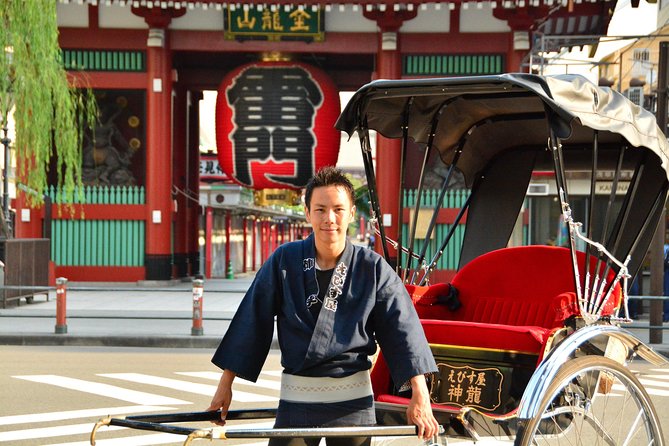
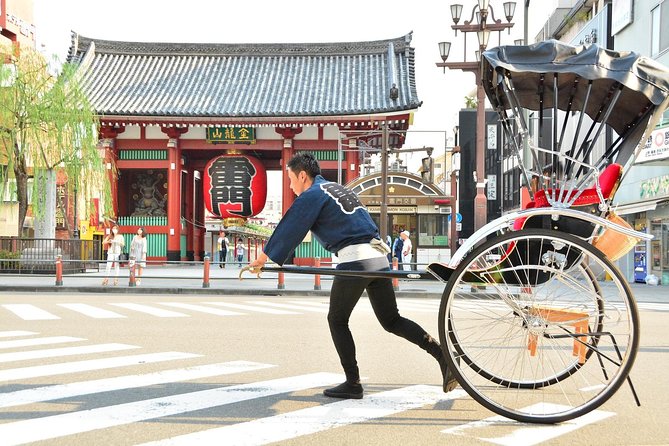
You’ll see a colorful and bright gate leading toward Sensoji Temple and Asakusa Shrine. It’s the kind of gateway that signals, quickly, where you are in Asakusa’s tourist and spiritual core.
Here’s the important part: the tour notes that no rickshaw ride is allowed in the Sensoji Temple/Asakusa Temple area, including the grounds and Nakamise shopping street. So while you can get a stop near the entrance, you’ll still have to walk through the area as you explore.
Also, you can expect stops that help you understand the relationship between Shinto and Buddhism—this area is where that becomes visible in how shrines and temples coexist.
Honryuin Matsuchiyama Shoden: Why Radishes Show Up Everywhere
Next is Honryuin Matsuchiyama Shoden, which is listed as a Buddhist temple and a constituent temple connected to Sensoji. This stop includes an intriguing detail: you’ll learn why there are so many radishes in the temple and even painted on lanterns.
That kind of specific local symbol is what you want from a short guided tour. It’s memorable, it’s different from the usual “this is old” explanation, and it helps you look around with more meaning.
Like other shrine stops listed under the schedule, admission tickets aren’t included, and the time window is about 15 minutes.
Imado Shrine: Cats, Manekineko, and the Soft Power of Cute
Imado Shrine is another Shinto shrine stop and includes a classic Japan detail: cat figurines, especially manekineko (the beckoning cat). It’s a comfortable stop because it’s both visually obvious and culturally easy to understand even if your Japanese is limited.
You’ll likely get about 15 minutes here. Admission tickets aren’t included, so it’s smart to treat the shrine like a pay-when-you-enter spot and not assume it’s included.
Beer Headquarters: Modern Tokyo Comes Knocking
One of the itinerary highlights is Asahi Beer Headquarters, recognized by the iconic golden flame on top of the building. This stop is a reminder that Asakusa isn’t frozen in time.
It also gives you a contrast shot: old street facades and religious landmarks on one side, then a modern corporate landmark on the other. If you like seeing how Japan blends eras instead of treating them as separate worlds, you’ll appreciate this moment.
Rokku Street and the Entertainment District Feel
Asakusa used to be a major entertainment area, and your route can include Rokku Street (now part of the retro district). This street ties to old movie theaters and popular entertainment before the war, and it’s also described as a place where you can experience Japanese comedy and shows.
Even if you don’t go inside a theater during your stop, walking through a street like this helps you understand Asakusa as a living entertainment district—not just a museum neighborhood.
Sumida Park: River Break, Cherry Blossoms, and a Final Look at Skytree
The ride can end with a calmer beat at Sumida Park, which lines the Sumida River. This is where the pacing changes again: you can take a break, look at the water, and still keep a strong view of Tokyo Skytree across the river.
In spring, this is also the cherry blossom viewing area, so it can be a double win: classic Tokyo river scenery plus a landmark background.
Practical Considerations: Weather, Walking, and Where You’ll Actually Stand
Weather matters. The tour is stated as requiring good weather, and if it’s canceled due to poor weather, you’ll be offered another date or a full refund. That makes sense because a lot of the experience depends on you moving through streets and stepping out for short shrine/temple stops.
Also, expect a mix of riding and walking. Since rickshaws can’t go into the Sensoji Temple/Asakusa Temple area grounds and shopping street, plan to walk there even if the ride takes you close. For many people, that’s not a downside—it’s part of how you can actually experience the places instead of just passing by them.
Who This Tour Fits Best (And Who Might Want a Different Plan)
This tour is a strong match if you:
- Want a short, high-impact overview of Asakusa without building a route from scratch.
- Like photo stops that combine neighborhood texture with major landmarks like Tokyo Skytree.
- Enjoy shrines and temples and don’t mind a bit of walking between them.
- Travel with kids who can handle short stops (and if needed, a child can ride free on an adult’s lap when age-5-or-under rules apply).
It might be less ideal if you:
- Want to spend most of your time deep inside Sensoji grounds by rickshaw (the rickshaw isn’t allowed there).
- Are expecting a wide-open space ride. The rickshaw can be snug, so comfort planning matters.
Should You Book the Tokyo Asakusa Rickshaw Tour?
Yes, if your goal is a guided, personal-feeling pass through Asakusa’s main themes: Edo-era streets, shrine details, cat-and-radish surprises, and the Skytree river view. It’s also a good choice when you want flexibility. The ability to tell your guide what you care about can turn the tour from “see a checklist” into “see what matters to you.”
If you’re tight on comfort (space) or you strongly prioritize being inside the busiest temple shopping streets, plan around the walking requirement near Sensoji/Asakusa Temple. Otherwise, this is one of those experiences where the value comes from the ride pace and the guide’s stop-and-explain style—so you leave with memories you can point to, not just photos you hope you’ll remember later.
FAQ
How long is the Asakusa rickshaw tour?
The tour duration is flexible, ranging from about 30 minutes up to around 3 hours, depending on the option you choose.
Can I customize the route based on my interests?
Yes. You can tell your guide what you’re most interested in seeing, and the tour can be customized accordingly.
Where do I meet the tour?
You meet outside Asakusa Station at 1-chōme-1-4 Asakusa, Taito City, Tokyo 111-0032. The tour start location is near public transportation.
Where does the tour end?
The tour ends at a nearby location of your choosing. The listed finishing point is Kan’non-dōri1-chōme-2-11 Asakusa, and your exact end location is decided on the day with your guide.
Is the tour private?
Yes. It’s private, so only your group participates.
Are admission tickets included for the shrines and temples?
Admission tickets are not included for the shrine/temple stops listed in the schedule (for example Ushijima Shrine, Honryuin Matsuchiyama Shoden, and Imado Shrine).
What’s the rickshaw capacity per ride?
The maximum is 2 adults per rickshaw. Up to 2 children age 5 and under can ride with 2 adults, but they must sit on an adult’s lap.
Can a child ride for free?
Children aged 5 years and under may ride free of charge, provided they sit on an adult’s lap.
Are food and drinks included?
No. Food and drinks are not included.
Can the rickshaw go inside the Sensoji/Asakusa Temple area?
No. Rickshaw rides are not allowed in the Sensoji Temple/Asakusa Temple area, including the temple buildings, temple grounds, and Nakamise shopping street.
More Tour Reviews in Tokyo
- Mt Fuji and Hakone 1-Day Bus Tour Return by Bullet Train
★ 5.0 · 26,383 reviews - 1-Day Tokyo Bus Tour
★ 5.0 · 14,250 reviews - Tokyo: teamLab Planets TOKYO Digital Art Museum Entry Ticket
★ 4.6 · 9,779 reviews - Mt Fuji & Hakone Cruise, Drum Show Bullet Train 1 Day from Tokyo
★ 4.0 · 7,413 reviews - Tokyo: Shinjuku Food Tour (13 Dishes at 4 Local Eateries)
★ 5.0 · 6,603 reviews
More Rickshaw Rides in Tokyo
- Tokyo: Asakusa Sightseeing Tour by Rickshaw
★ 4.9 · 195 reviews - Asakusa, Tokyo: Rickshaw Experience and Highlights Walking tour
★ 5.0 · 47 reviews - Ride a rickshaw wearing a kimono in Asakusa! Enjoy authentic traditional culture!
★ 5.0 · 14 reviews - Sushi Making Tokyo with Traditional Rickshaw Ride Tour in Asakusa
★ 5.0 · 12 reviews - Tokyo: Asakusa tour by rickshaw
★ 4.9 · 11 reviews
More Mornings in Old Asakusa
- Tokyo: Japanese Dance Cabaret Theater Asakusa-Kaguwa Ticket
★ 4.8 · 2,270 reviews - Tokyo: Meiji Shrine, Asakusa, Skytree Bus Tour and Cruise
★ 4.7 · 1,986 reviews - Tokyo: Roll and Authentic Sushi Making Class in Asakusa
★ 4.9 · 1,957 reviews - Tokyo: Asakusa Walking Tour with Sensoji Temple Visit
★ 4.8 · 1,583 reviews - Tokyo Panoramic 1 Day: Meiji Shrine, Asakusa, Odaiba and SKYTREE®
★ 4.5 · 1,222 reviews
Latest Tokyo reviews off our desk

Asakusa & Sensoji Tours, compared.
 ★ 4.8Japanese Dance Cabaret Theater Asakusa-Kaguwa TicketFrom $492,270 reviews
 ★ 4.7Meiji Shrine, Asakusa, Skytree Bus Tour and CruiseFrom $1221,986 reviews
 ★ 4.9Roll and Authentic Sushi Making Class in AsakusaFrom $581,957 reviews
 ★ 4.8Asakusa Walking Tour with Sensoji Temple VisitFrom $221,583 reviews
 ★ 4.5Tokyo Panoramic 1 Day: Meiji Shrine, Asakusa, Odaiba and SKYTREE®From $851,222 reviews
 ★ 5.0Tokyo Go Kart: Asakusa, Skytree, and Akihabara **IDP MUST**From $99988 reviews
 ★ 4.7Asakusa, Skytree & Akhihabara Go-Kart City ExperienceFrom $96761 reviews
 ★ 4.9Matcha Making Experience with Mochi Sweets in AsakusaFrom $22388 reviews
Browse the lists this tour appears in