
Reviewed · MOUNT FUJI TOURS
4 Day Tour – Mount. Fuji, Tokyo, Hakone, Kamakura and Yokohama
Tokyo to Mt. Fuji feels like a speed-run.
This private 4-day tour strings together Tokyo, Hakone, Kamakura, and Mt. Fuji with a comfortable air-conditioned car and an itinerary you can shape to your pace. You skip the stress of figuring out transfers and timetables, and you get someone to explain what you’re seeing while you stay seated.
I especially like the English-speaking driver approach, because it keeps your stops from feeling like a list. I also like that the day layout packs major highlights—temples, viewpoints, and waterfront scenes—without forcing you to bounce between trains on your own.
One consideration: some of the biggest wow-moments have ticketed add-ons (like Skytree, ropeways, museums, and parts of the Fuji plan), so you’ll want to budget for those extra admissions.
In This Review
- Key highlights to pay attention to
- The real win: a private car across Tokyo, Fuji, Hakone, and Yokohama
- Day 1 in Tokyo: Tsukiji to Skytree to Shibuya (plus an optional Odaiba stop)
- Day 2: Kamakura temples, then Yokohama’s Chinatown and gardens
- Day 3: Mt. Fuji viewpoints and the 5th station moment
- Day 4: Hakone’s Lake Ashi, Owakudani steam, and that 400-year tea break
- Price and value: what $3,000 for up to 5 really buys you
- Who this tour suits best (and who should think twice)
- The booking decision: should you book this 4-day Tokyo–Fuji–Hakone–Kamakura–Yokohama loop?
- FAQ
- How many people can be in a group?
- How much does the 4-day tour cost?
- Is this a private tour?
- Does the tour include accommodation?
- Is pickup offered?
- What time does the tour start?
- Is this a guided tour with a tour guide?
- Can the itinerary be customized?
- Are attraction tickets included?
- What’s the cancellation policy?
Key highlights to pay attention to
- Private car, no train puzzle: You keep your momentum from Tokyo to Hakone to Yokohama.
- A driver who handles the flow: The best part is how the day stays smooth when timing gets tight.
- Iconic sights, well-spaced by time: Each stop has a set window so you’re not rushing every photo.
- Fuji viewpoints stacked across the day: You get multiple angles, not just one “maybe it’s clear” moment.
- Hakone does steam and art: Ropeway views, volcanic Owakudani, and an open-air sculpture museum.
- Group up to 5: Sharing makes the price feel much more reasonable.
The real win: a private car across Tokyo, Fuji, Hakone, and Yokohama
In Japan, the hardest part of a short trip is often the travel time. This tour’s biggest advantage is simple: you ride in an air-conditioned private car, and you don’t have to coordinate trains, buses, and transfers between far-flung areas.
That matters because your schedule is packed in a good way. Tokyo alone includes old temples, shrine forests, shopping streets, and city viewpoints. Then you pivot to Kamakura and Yokohama. After that, you move into the Fuji region for the best photo circuits, and finish in Hakone with lakes, volcanic heat, and outdoor art.
You’re also not stuck in a rigid script. The tour is described as customizable, so you can adjust the pace and practical priorities (like how long you want at a viewpoint versus shopping time). The trade-off is that you’ll still be out most of the day—expect long sightseeing windows once commuting is included—so good shoes and a calm attitude help.
More Fuji day trips our readers rated highly
- Mt Fuji and Hakone 1-Day Bus Tour Return by Bullet Train
★ 5.0 · 26,383 reviews - Mt Fuji & Hakone Cruise, Drum Show Bullet Train 1 Day from Tokyo
★ 4.0 · 7,413 reviews - Tokyo Mt Fuji 5th St & Hakone Cruise Bus Tour w/Bullet Train
★ 4.4 · 5,024 reviews - From Tokyo: Mount Fuji Full-Day Sightseeing Trip
★ 4.5 · 4,970 reviews
Day 1 in Tokyo: Tsukiji to Skytree to Shibuya (plus an optional Odaiba stop)
Day 1 is where Tokyo’s personality shows up fast. You start at Tsukiji Fish Market for about 45 minutes. This is one of those places where the energy is the attraction: lots of food culture in a short time. The main drawback is simple—time is tight—so decide what you want most: a quick walk through the market vibe or a focused bite-and-photo plan.
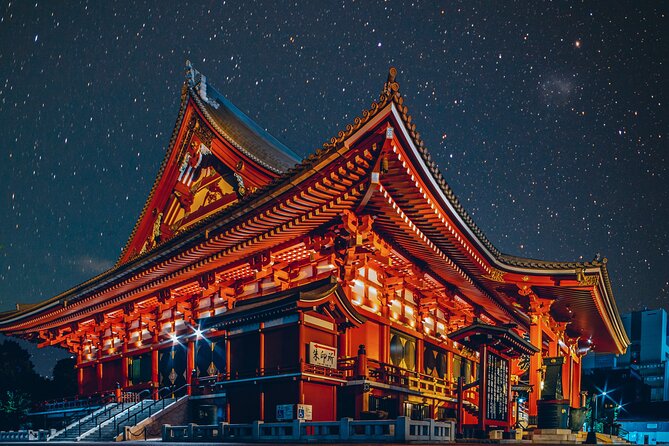
Next is Senso-ji Temple in Asakusa for about an hour. It’s Tokyo’s oldest religious site and it draws enormous crowds (about 20 million visitors a year). The upside is that it feels like a living neighborhood landmark, not just a museum stop. The downside is that you’ll be navigating people, so keep your head up and your plan flexible.
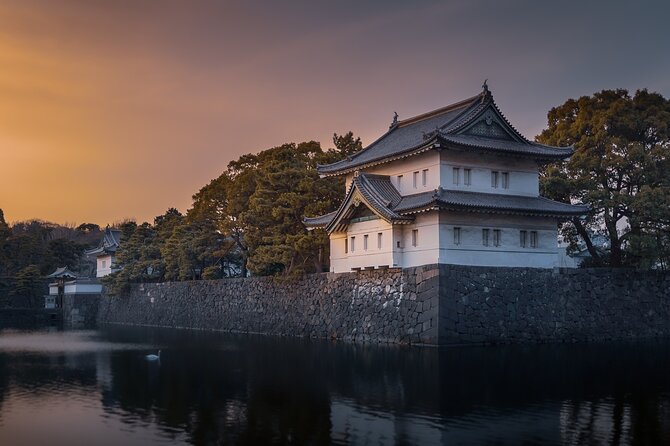
Then comes modern Tokyo altitude at Tokyo Skytree (about 1 hour, with admission not included). The decks sit at 202 meters above ground, and on a clear day you can pick out major landmarks from up high. After that you shift back into heritage mode with the Imperial Palace East Garden (about 45 minutes, free admission). The garden is the calmer side of central Tokyo.
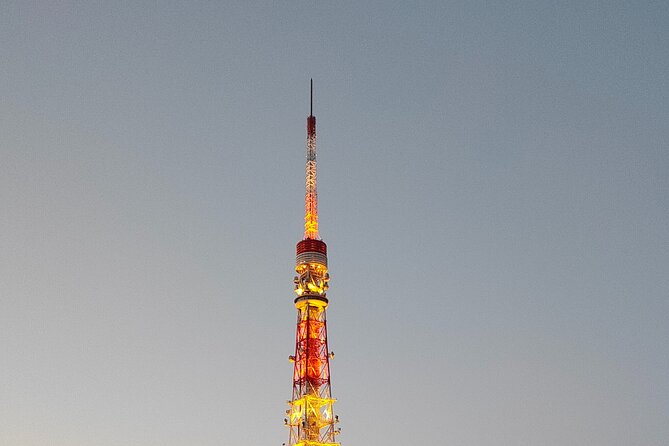
Afternoon moves into Tokyo’s themed districts: Akihabara for electronics and manga/anime culture (30 minutes), Meiji Jingu for a shrine tucked into a forest (30 minutes), and Takeshita Street in Harajuku for sugary snacks and youth fashion (about 1 hour). You then hit Shibuya Crossing for that classic scramble (about 20 minutes) and Tokyo Tower for a quick “there it is” moment (about 10 minutes).
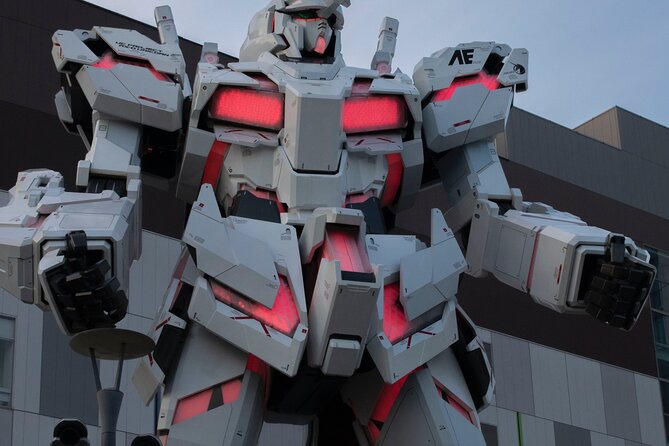
If time permits, you may add teamLab Planets TOKYO (admission not included) and/or the Statue of Liberty replica at Odaiba with Rainbow Bridge in the background (also optional). These are fun choices, but they’re the kind that can swing depending on how the day runs.
Day 2: Kamakura temples, then Yokohama’s Chinatown and gardens
Day 2 mixes Buddhist heritage with street-level energy and then slows down again near the water. You begin in Kamakura at Hōkoku-ji, also called Bamboo Temple, known for its bamboo garden (about 1 hour; admission not included). It’s a good opener because the atmosphere shifts right away from the busier city energy to something quieter and more natural.
Next is Hase-dera (about 45 minutes; admission not included), famous for housing a massive wooden statue of Kannon. Then you see Kotoku-in for the Great Buddha of Kamakura (about 30 minutes; admission not included). These temple visits are worth it for one reason: the scale is the story. Even with limited time, you’re getting a real sense of Kamakura’s spiritual weight.
You also stop at Tsurugaoka Hachimangu Shrine (about 1 hour; admission not included). A neat detail here is the symbolism built into the grounds: two ponds represent the Taira and Minamoto clans.
After the temples, the tour gives you a more casual, human-time break with Kamakura Komachidori (about 1.5 hours). This is the shopping-and-eating spine of the area, where souvenir hunting and snack runs make sense.
Then you relocate to Yokohama. Yokohama Chinatown takes about 1 hour and is known as one of Japan’s oldest, dating back roughly 160 years. It’s also a place with a clear identity—today it’s described as home mostly to people from Guangzhou, rather than a large community of Chinese residents overall.
You also have Sankeien Gardens as time allows (about 1 hour; admission not included). It opened in 1906 and was designed by Tomitaro Hara (Sankei Hara), a silk trader. The day ends with Minatomirai as an optional stop (about 30 minutes; free admission), a modern waterfront area where you can spot the Landmark Tower and Plaza.
Day 3: Mt. Fuji viewpoints and the 5th station moment
Day 3 is the “Fuji circuit,” and it’s designed to improve your odds. Even if the weather isn’t perfect, the plan spreads your viewpoint stops so you’re not betting everything on one single photo spot.
You start at Oshino Hakkai (about 30 minutes; free). These eight springs connect to Mount Fuji’s aquifer water. It’s the kind of place where the scenery feels gentle and natural, even though it’s a major tourist destination.
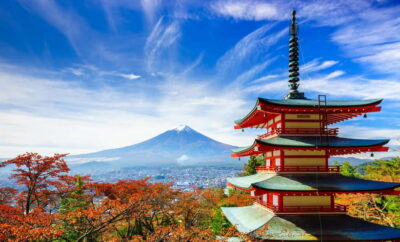
Next is Chureito Pagoda (about 30 minutes; free). The pagoda and Mt. Fuji view are famous for a reason, and this stop has added meaning because the park honors those lost from the First Sino-Japanese War in 1868.
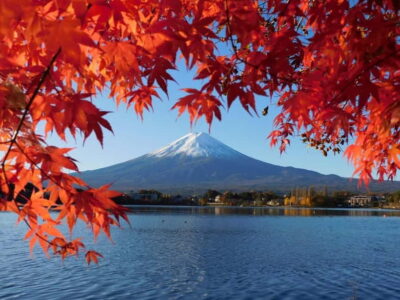
Then you reach Lake Kawaguchiko (about 30 minutes; free), the most accessible of the Fuji Five Lakes and known as a hot spring resort area. After that, you have an optional altitude jump with the Mt. Fuji Panoramic Ropeway (about 1 hour; admission not included). It ascends 400 meters to an observation deck near Mt. Tenjo.
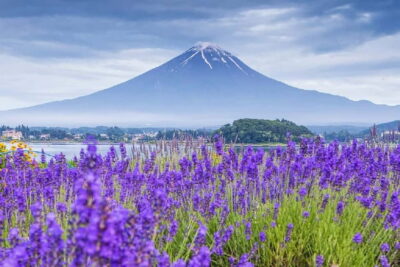
You then take in Oishi Park (about 30 minutes; free), known for a view where Mt. Fuji sits in the background, the lake sits in the mid ground, and seasonal flowers can fill the foreground. In the Fuji region, this stop is all about composition.
Saiko Iyashi no Sato Nemba follows (about 30 minutes; admission not included). It’s a recreated old Japanese village, and even if you’ve seen similar theme-style places elsewhere, this one fits the Fuji area theme well.
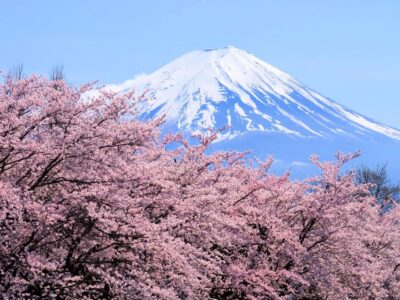
You finish the sightseeing circuit with Arakura Fuji Sengen Shrine (about 30 minutes; free). It’s famous for a wide panoramic view, and in spring it’s tied to cherry blossoms. Finally, you head to Mt. Fuji 5th station (about 2 hours; admission not included). This is the closest you’ll get to the mountain’s “start of the climb” atmosphere without hiking from scratch, and the air and views can feel different even on a day trip.
If you still have energy, the day closes with Gotemba Premium Outlets (about 2 hours; free admission). Gotemba is also described as a premium green tea growing area and the horseradish capital of Japan—so it’s a convenient shopping stop with a sense of place.
Day 4: Hakone’s Lake Ashi, Owakudani steam, and that 400-year tea break
Hakone is where the tour gets dramatic. Day 4 starts with Amazake-chaya Tea House, described as founded 400 years ago. You can rest there with amazake (sweet rice wine), made with a recipe that’s been unchanged since the shop opened. This is a smart opening because it gives you a buffer before the day’s volcano-and-lake hits.
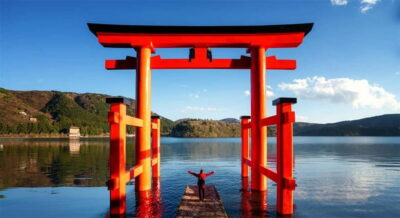
Then you move into classic Hakone scenery with Hakone Shrine / Kuzuryu Shrine at the foot of Mt. Hakone along Lake Ashi (about 1 hour; admission not included). The buildings are tucked in dense forest, so the vibe is quiet and tucked-away.
You next visit Lake Ashinoko (about 1 hour; admission not included). This crater lake formed after Hakone’s last eruption about 3,000 years ago, and its calm surface is a nice contrast to the volcanic stops later.
For views from above, you may take the Hakone Ropeway (about 1 hour; admission not included). It’s described as a funitel line linking Sōunzan to Tōgendai via Ōwakudani. The detail that it became funitel in 2002 gives you a sense that the area’s transport is modern even when the scenery feels ancient.
Next is Owaku-dani Valley (about 1 hour; admission listed as free). This is one of your most important stops because it’s volcanic and unmistakable. It’s known for sulfur springs and Kuro Tamago (black eggs). You don’t need a lecture—just show up and watch the steam.
After that you can slow down at Gora Park (about 30 minutes; admission not included). It’s a Western-style hillside botanical garden with a tea house, greenhouses, and a central fountain. Then you finish with The Hakone Open-Air Museum (about 1 hour; admission not included), an outdoor sculpture gallery spread across 70,000 square meters with views in every direction.
Other Hakone loops worth the fare
- Tokyo: Mt. Fuji Tour, Hakone Ropeway, Owakudani, Lake Ashi★ 4.7 · 4,002 reviews
- Private Tour to Mt. Fuji and Hakone (Fully Licenced Operator)★ 5.0 · 1,910 reviews
- Mt Fuji & Hakone Cruise, Drum Show Bus 1 Day from Tokyo★ 4.0 · 1,287 reviews
- From Tokyo: Mt. Fuji & Hakone Tour w/ Return by Bullet Train★ 4.2 · 1,278 reviews
- Mt Fuji and Hakone 1-Day Bus Tour Return by Bus★ 4.5 · 929 reviews
Price and value: what $3,000 for up to 5 really buys you
The price is $3,000 per group (up to 5), so the cost per person depends heavily on how you share the seats. At five people, you’re looking at $600 each for a full 4-day private car plan that covers a big geographic sweep.
What makes that value click is that you’re paying for time and hassle reduction. Rail and road transfers across Tokyo-to-Fuji-to-Hakone-to-Yokohama can be tiring, and it’s easy to lose half-days to transit work. Here, the driver’s role plus the private vehicle help keep your day coherent.
Admissions work a bit differently. Several stops list free admission, but the most “ticketed” attractions are marked as not included (examples include Tokyo Skytree, teamLab Planets, temple admissions in Kamakura, ropeways, the Open-Air Museum, and Mt. Fuji 5th station). So I’d treat this as a transportation-and-scheduling package with a lot of free sights, plus add-ons you choose.
A practical point: accommodation is not included, which is good for flexibility, but it does mean your overall trip cost depends on where you sleep in each area.
Who this tour suits best (and who should think twice)
I’d steer you toward this tour if you want high-impact sightseeing without doing a spreadsheet of train lines. It’s also a strong fit if your group includes different ages or energy levels. A private car helps everyone stay on the same rhythm.
This is also a great option for short-on-time trips where you still want old Tokyo, modern Tokyo, Fuji viewpoints, and Hakone nature. If your priority is “see the big stuff, safely and efficiently,” this format works.
Think twice if your travel style is slow wandering with lots of backtracking, or if you love building your own day from scratch. The itinerary is packed, and even with customization, you’ll still be following a route that aims to cover a lot.
Finally, factor in weather. The tour notes that good weather is required, so Mt. Fuji day and Hakone visibility can be a key variable.
The booking decision: should you book this 4-day Tokyo–Fuji–Hakone–Kamakura–Yokohama loop?
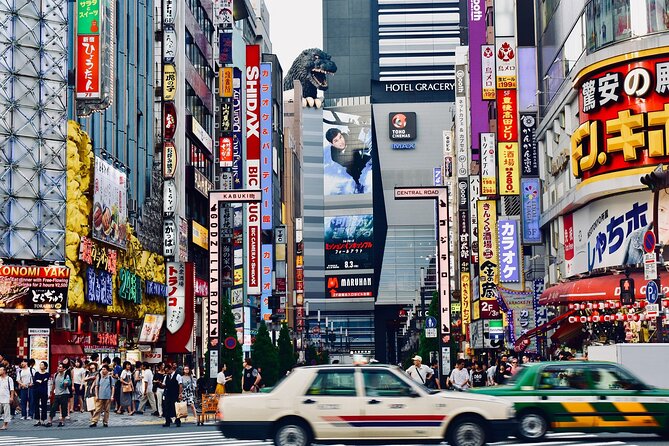
If you’re traveling with a group and you want maximum coverage with minimal stress, I think this is a very reasonable way to do the region. The standout theme is the smooth private-car flow and the chance to swap between Tokyo’s extremes and Hakone’s nature without doing transit math all day.
The human side matters too. In the feedback I saw reflected through the tour’s operation, the English-speaking driver attention is a real selling point, including standout names like Armad (helping with Tokyo timing and photos) and David (focusing on going the extra mile with the day’s pacing). That kind of hands-on attention is exactly what you’re paying for.
So I’d book if you can share the group seats, you’re okay adding some optional paid attractions, and you can be flexible with weather. I’d hesitate if you prefer solo independence and slow exploration over a tightly timed route.
FAQ
How many people can be in a group?
The tour is priced per group and supports up to 5 people.
How much does the 4-day tour cost?
It costs $3,000 per group.
Is this a private tour?
Yes. It’s a private tour/activity, and only your group participates.
Does the tour include accommodation?
No, accommodation is not included.
Is pickup offered?
Yes, pickup is offered.
What time does the tour start?
The start time is 8:00 am.
Is this a guided tour with a tour guide?
It’s not a guided tour by default, but an English-speaking driver provides information. A guided tour can be arranged on request for an additional cost.
Can the itinerary be customized?
Yes. It’s described as a customizable private tour.
Are attraction tickets included?
Some stops list free admission, but several attractions are marked as admission not included, meaning you may pay separately for those.
What’s the cancellation policy?
You can cancel for free up to 24 hours in advance for a full refund. The tour also requires good weather, and if it’s canceled due to poor weather, you’ll be offered a different date or a full refund.
More Kamakura and Enoshima Days
- Tokyo: Mt. Fuji, Kamakura, Big Buddha, & Lake Ashi Day Trip
★ 4.5 · 867 reviews - Tokyo:Sea of Mount Fuji, Hakone Ropeway, Ōwakudani, Enoshima
★ 4.9 · 84 reviews - Kamakura 8 hr Private Walking Tour with Licensed Guide from Tokyo
★ 5.0 · 80 reviews - Tokyo: Kamakura & Enoshima Day Tour with Pickup & Train Ride
★ 4.1 · 61 reviews - Kamakura Private & Customizable Tour – All-in-One Experience
★ 5.0 · 49 reviews
Hakone, A Few More Ways
- Mt Fuji and Hakone 1-Day Bus Tour Return by Bullet Train
★ 5.0 · 26,383 reviews - Mt Fuji & Hakone Cruise, Drum Show Bullet Train 1 Day from Tokyo
★ 4.0 · 7,413 reviews - Tokyo Mt Fuji 5th St & Hakone Cruise Bus Tour w/Bullet Train
★ 4.4 · 5,024 reviews - Tokyo: Mt. Fuji Tour, Hakone Ropeway, Owakudani, Lake Ashi
★ 4.7 · 4,002 reviews - Private Tour to Mt. Fuji and Hakone (Fully Licenced Operator)
★ 5.0 · 1,910 reviews
More Mount Fuji Days We Have Reviewed
- Mt Fuji and Hakone 1-Day Bus Tour Return by Bullet Train
★ 5.0 · 26,383 reviews - Mt Fuji & Hakone Cruise, Drum Show Bullet Train 1 Day from Tokyo
★ 4.0 · 7,413 reviews - Tokyo Mt Fuji 5th St & Hakone Cruise Bus Tour w/Bullet Train
★ 4.4 · 5,024 reviews - From Tokyo: Mount Fuji Full-Day Sightseeing Trip
★ 4.5 · 4,970 reviews - Tokyo: Mt. Fuji Tour, Hakone Ropeway, Owakudani, Lake Ashi
★ 4.7 · 4,002 reviews
Latest Tokyo reviews off our desk






Mount Fuji Tours, compared.
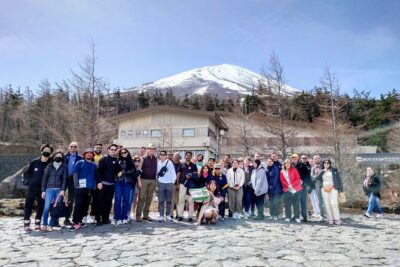 ★ 5.0Mt Fuji and Hakone 1-Day Bus Tour Return by Bullet TrainFrom $16326,383 reviews
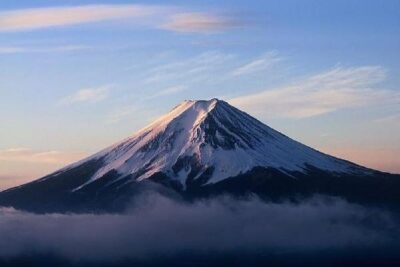 ★ 4.0Mt Fuji & Hakone Cruise, Drum Show Bullet Train 1 Day from TokyoFrom $1497,413 reviews
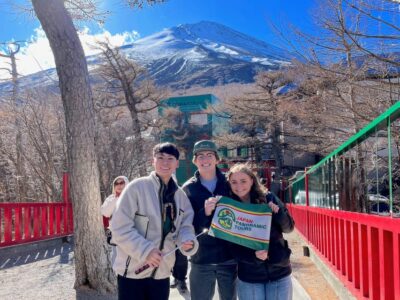 ★ 4.4Tokyo Mt Fuji 5th St & Hakone Cruise Bus Tour w/Bullet TrainFrom $1545,024 reviews
 ★ 4.5From Tokyo: Mount Fuji Full-Day Sightseeing TripFrom $684,970 reviews
 ★ 4.7Mt. Fuji Tour, Hakone Ropeway, Owakudani, Lake AshiFrom $544,002 reviews
 ★ 4.4Mt.Fuji,Kawaguchiko Oishi Park,Arakurayama Sengen ParkFrom $542,682 reviews
 ★ 4.2Mt. Fuji 5th Station & Hakone Cruise 1-Day Bus TourFrom $1292,381 reviews
 ★ 4.7Mt Fuji Top 5 Spots Day Tour: Arakurayama Park,Oshino HakkaiFrom $532,066 reviews
Browse the lists this tour appears in