
Reviewed · SUMO TOURNAMENTS & SHOWS
Experience the Sumo World in Tokyo
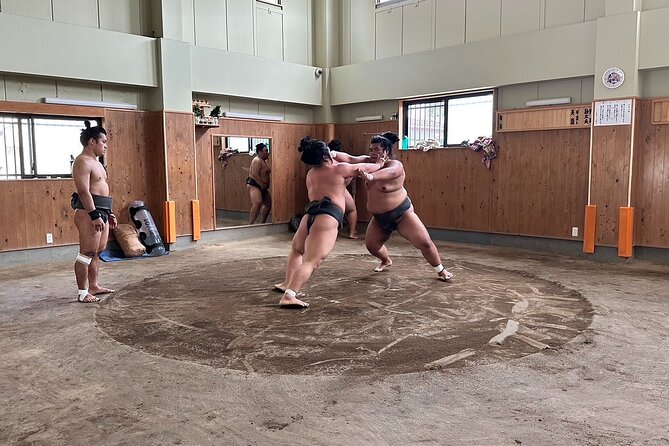
Sumo practice, minus the crowds. This half-day Tokyo tour gives you exclusive stable access and a proper look at how rikishi train, then lets you try pushing sumo wrestlers and take photos. I especially like the way lunch is built in with chanko nabe and vegetarian options.
The main catch is timing: you start early (7:45 AM at Ueno), and the trip includes train hops out to the stable. If you’re late or miss the meeting instructions, you can lose the best parts of the practice.
This is set up for small-group pacing, with a maximum of 26 people and a mobile ticket. You’ll meet up at Ueno Station, visit the stable for about two hours, share lunch, then head back to the meeting point (about 4 hours total).
In This Review
- Key highlights worth waking up for
- Ueno Station 7:45 AM: Where the sumo morning starts
- Matsudo and Kunugiyama train rides: Getting oriented before practice
- Asahiyama beya (朝日山部屋): Front-row practice and hands-on sumo
- After-practice lunch: Chanko nabe and vegetarian service
- Price and value: What you pay, what you’ll likely add
- Guides and group size: How it usually feels in practice
- Logistics that can make or break your morning
- Who should book Sumo World in Tokyo
- Should you book this sumo training stable tour?
- FAQ
- What’s included in the Sumo World in Tokyo tour?
- Do they offer vegetarian lunch?
- Where do I meet the guide and what time?
- How long does the tour last?
- Is the JR train fare included in the price?
- Is photography allowed during the training?
- Can I cancel for a full refund?
Key highlights worth waking up for
- Ueno Station start at 7:45 AM: easy to find, and the schedule is designed around morning training.
- Asahiyama beya (朝日山部屋) training access: you watch practice from comfortable chairs and get photos at the end.
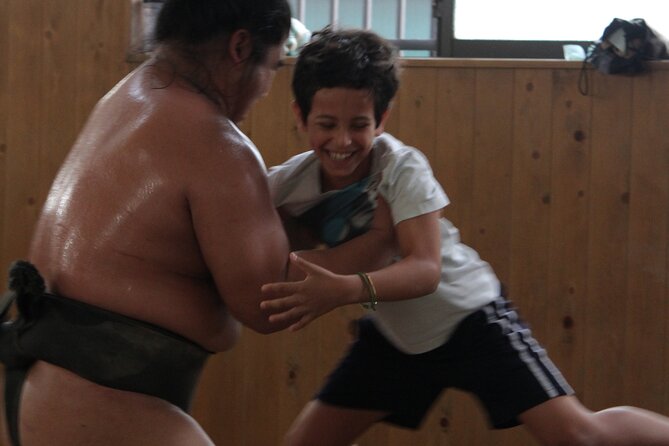
- Hands-on sumo time: you can try wrestling-style moves and pushing the wrestlers (in fun, with guidance).
- Chanko nabe lunch included: vegetarian service is available if you notify at least 3 days ahead.
- Small group feel (up to 26): more time to ask questions than typical big tours.
- Train route built in: you ride from Ueno area via Matsudo and Kunugiyama to reach the stable.
Ueno Station 7:45 AM: Where the sumo morning starts

You’ll meet at Ueno Station, JR Information at 7:45 AM. The start point is described as easy to find, which matters because sumo training is very schedule-driven.
The tour uses a mobile ticket, which is convenient if you like keeping everything on your phone. It also helps you avoid digging for paperwork while you’re getting to a train station early in the morning.
One practical note: because this is an early start, I’d treat the meeting like a train departure. Give yourself a buffer so you’re not rushing, scanning signs, and hoping you’re in the right place.
Other ringside bookings readers scored
- Tokyo: Sumo Show and Dining Experience
★ 4.8 · 2,742 reviews - the SUMO show
★ 5.0 · 1,960 reviews - Tokyo Shinjuku Sumo Show & Experience with Photo
★ 5.0 · 1,750 reviews - Tokyo: Sumo Show and Experience in Shinjuku
★ 4.8 · 1,001 reviews
Matsudo and Kunugiyama train rides: Getting oriented before practice
After Ueno, you’ll take the train to Matsudo Station (about 19 minutes) and then onward to Kunugiyama Station (about 15 minutes). This isn’t just transit; it’s part of the tour’s pacing.
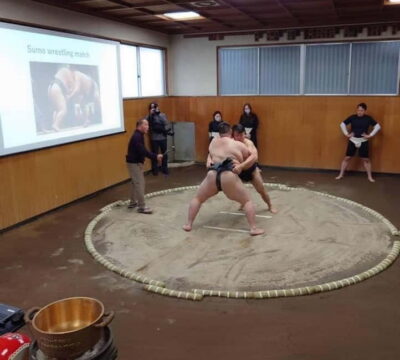
On the ride, guides are set up to explain what you’re about to see. Past groups have highlighted how guides break down sumo terms, rules, and history while you’re on the way, so the stable visit lands better.
You’ll also get a sense that this is a working routine, not a staged show. That mindset helps: you’re watching real practice culture, not just a performance for visitors.
Asahiyama beya (朝日山部屋): Front-row practice and hands-on sumo
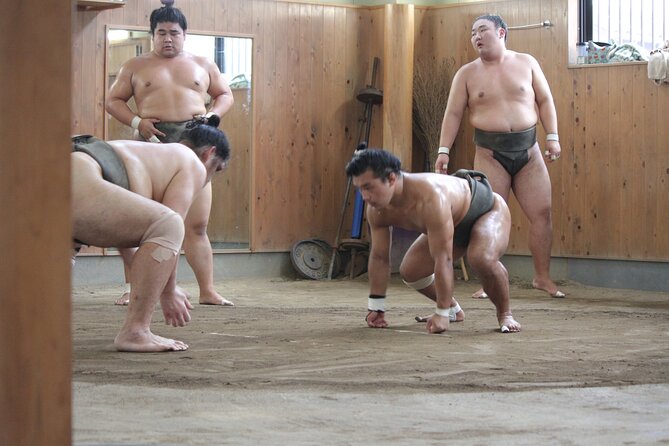
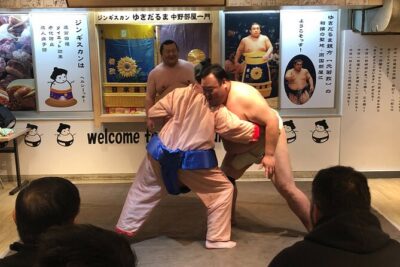
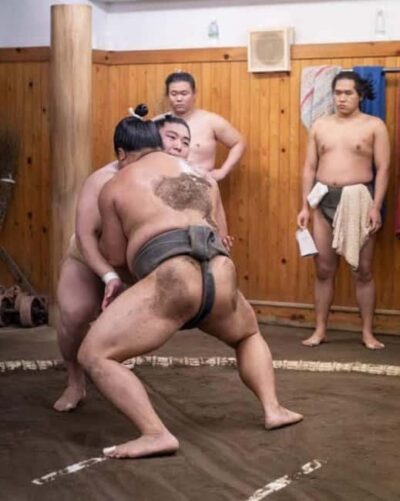
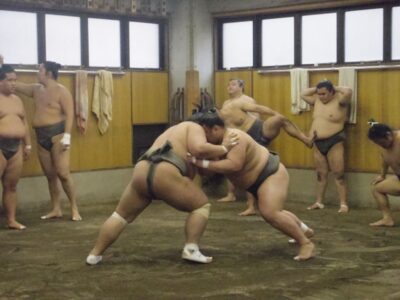
The heart of the experience is the Asahiyama beya visit for about two hours. You sit in chairs close enough to feel like you’re in the training area, which is exactly what you want for a sport built on balance, timing, and force.
Here’s what’s included during the stable time:
- You watch the practice session up close from comfortable seating.
- Photography is allowed at the end of the session.
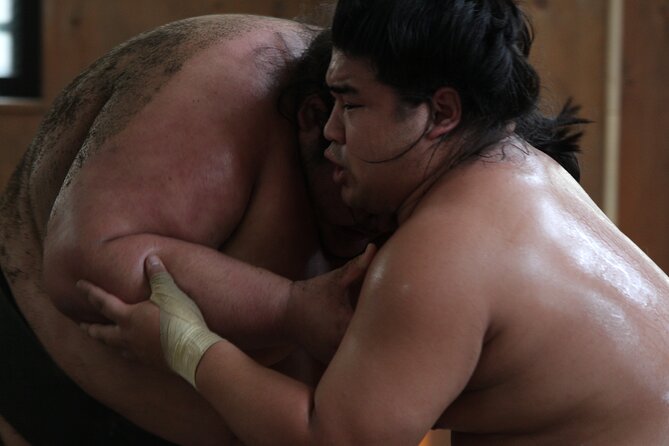
- You get a chance for interactive participation, including trying sumo wrestling firsthand against the wrestlers.
The best praise in the feedback focuses on the interaction. People talk about the wrestlers being friendly and approachable, plus the stable atmosphere feeling welcoming. And yes, several descriptions mention the funny reality that these guys are incredibly hard to move—so even when you’re “trying,” it’s still a great strength-and-technique lesson.
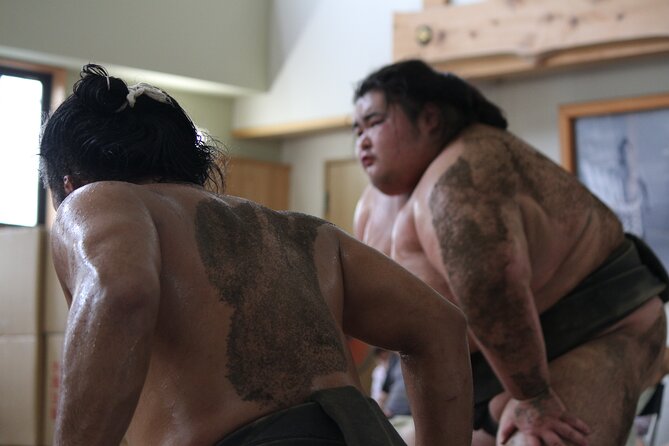
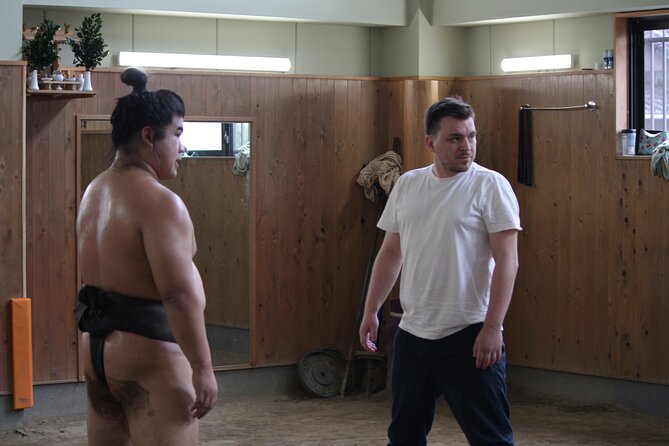
This part is also where the tour becomes more than watching sport. You’re learning how rikishi training works day to day, and you get context on rituals and lifestyle from your guide as things unfold.
After-practice lunch: Chanko nabe and vegetarian service
Lunch is included, and it centers on chanko nabe, the traditional hearty dish associated with sumo training. It’s meant to help provide the energy athletes need, so it fits the day’s theme.
Vegetarian options are available, but you have to plan ahead. The tour asks you to notify them at least 3 days in advance for vegetarian service, so don’t wait until you’re already in Japan.
What I like about including lunch here is simple: you’re not left hunting for food right after a morning that started early. You can decompress, refuel, and keep the rhythm of the experience without adding logistics.
Price and value: What you pay, what you’ll likely add
The price is $105.71 per person, and the tour lasts about 4 hours. Based on what’s included, you’re paying for real access: a stable practice session (not something the public usually strolls into), plus hands-on time and lunch.
Two things affect your final cost:
- Lunch is included, including vegetarian service if requested properly.
- The JR train cost is not included. The tour lists ¥1060 total (about $7) for round-trip by JR train.
So you’re basically budgeting around the tour price plus the local transit cost. For a half-day activity that includes both access and a meal, that structure can feel fair—especially if you care about sumo culture beyond TV matches.
- Tokyo: Shinjuku Food Tour (13 Dishes at 4 Local Eateries)★ 5.0 · 6,603 reviews
- Tokyo Mt Fuji 5th St & Hakone Cruise Bus Tour w/Bullet Train★ 4.4 · 5,024 reviews
- Flagship 2-Hours Official Street Go-Kart Tour – Tokyo Bay Shop★ 5.0 · 4,974 reviews
- From Tokyo: Mount Fuji Full-Day Sightseeing Trip★ 4.5 · 4,970 reviews
- Tokyo: Hop-On Hop-Off Sightseeing Bus Ticket★ 3.9 · 4,207 reviews
Guides and group size: How it usually feels in practice
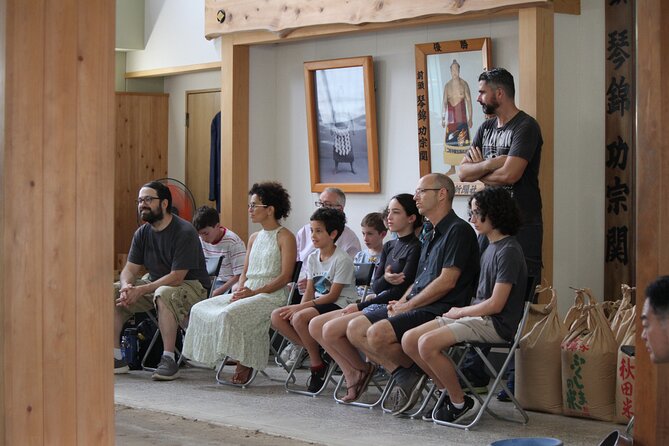
The experience is run by Omotenashi-Japan, and the group max is 26 people. That number matters because stable visits can’t scale like museum crowds. A smaller cap also makes it easier for your guide to manage questions and timing.
Across the descriptions, specific guide names show up often: Ryoko and Haru (and sometimes Ryoko Furutono), plus Tomer, Tammy, Haruko, and Yassmine. What repeats is not just friendliness, but the way guides connect sumo rules and daily training into something you can actually picture.
If your dream is to ask questions—about life in the stable, training rhythm, or how matches really work—this setup is built for that. The strong review theme is that the guides make the experience feel personal, not mechanical.
Logistics that can make or break your morning
This tour is straightforward on paper, but early-day tours reward calm planning. A couple of practical tips stand out from the experience details you’re given:
- Arrive before 7:45 AM at Ueno Station JR Information. Don’t treat this like a late-morning pickup.
- Keep your contact method ready. One write-up describes stress when WhatsApp messages weren’t received, which then caused late arrival to the stable. If the operator communicates by WhatsApp for your group, make sure you can see those updates.
Also keep an eye on weather and train timing. The tour notes the itinerary may have minor changes due to weather, transportation, or scheduling.
And finally: the stable visit is time-boxed. Since practice is the point, being early gives you the best chance of seeing the training uninterrupted.
Who should book Sumo World in Tokyo
I’d point you toward this tour if you want:
- A hands-on look at how sumo training works, not just a lesson about the sport.
- A morning activity that combines sport + culture + food in one package.
- Something that works for families, including kids (some feedback highlights families and children appreciating the ring-time experience).
You might think twice if:
- You don’t do well with very early starts.
- You hate train transfers. You’ll ride from Ueno toward Matsudo and then Kunugiyama before the stable time.
Should you book this sumo training stable tour?
If you’re on the fence, here’s my simple check:
- Book it if you want rare access, a real practice feel, and the chance to try sumo-style pushing and get photos at the end.
- Skip or choose a different option if early-morning logistics stress you out.
At around $105.71 with lunch included and front-row stable access, it’s priced like an experience, not a cheap activity. For many people, that’s exactly the point: Tokyo is full of sights, but this gives you a specific slice of Japanese sporting life you can’t replicate on your own.
FAQ
What’s included in the Sumo World in Tokyo tour?
The tour includes lunch (vegetarian service available with notice), a sumo wrestling experience, viewing the practice session from chairs, and photography allowed at the end of the session.
Do they offer vegetarian lunch?
Yes. Vegetarian service is available, but you need to notify them at least 3 days in advance.
Where do I meet the guide and what time?
You meet at Ueno Station, JR Information at 7:45 AM.
How long does the tour last?
The duration is approximately 4 hours.
Is the JR train fare included in the price?
No. The round trip by JR train costs ¥1060 total (about $7) and isn’t included.
Is photography allowed during the training?
Photography is allowed at the end of the session.
Can I cancel for a full refund?
Yes. You can cancel up to 24 hours in advance of the experience start time for a full refund.
More Tour Reviews in Tokyo
- Mt Fuji and Hakone 1-Day Bus Tour Return by Bullet Train
★ 5.0 · 26,383 reviews - 1-Day Tokyo Bus Tour
★ 5.0 · 14,250 reviews - Tokyo: teamLab Planets TOKYO Digital Art Museum Entry Ticket
★ 4.6 · 9,779 reviews - Mt Fuji & Hakone Cruise, Drum Show Bullet Train 1 Day from Tokyo
★ 4.0 · 7,413 reviews - Tokyo: Shinjuku Food Tour (13 Dishes at 4 Local Eateries)
★ 5.0 · 6,603 reviews
More Sumo, Ringside and Rated
- Tokyo: Sumo Show and Dining Experience
★ 4.8 · 2,742 reviews - the SUMO show
★ 5.0 · 1,960 reviews - Tokyo Shinjuku Sumo Show & Experience with Photo
★ 5.0 · 1,750 reviews - Tokyo: Sumo Show and Experience in Shinjuku
★ 4.8 · 1,001 reviews - Tokyo Grand Sumo Tournament Viewing Tour with Tickets
★ 5.0 · 692 reviews
Latest Tokyo reviews off our desk






Sumo Tournaments & Shows, compared.
 ★ 4.8Sumo Show and Dining ExperienceFrom $792,742 reviews
 ★ 5.0the SUMO showFrom $891,960 reviews
 ★ 5.0Tokyo Shinjuku Sumo Show & Experience with PhotoFrom $791,750 reviews
 ★ 4.8Sumo Show and Experience in ShinjukuFrom $691,001 reviews
 ★ 5.0Tokyo Grand Sumo Tournament Viewing Tour with TicketsFrom $124692 reviews
 ★ 5.0Tokyo Sumo Wrestling Tournament ExperienceFrom $124660 reviews
 ★ 4.7Luxury Sumo Show Experience & Japanese cuisine & DrinkFrom $103577 reviews
 ★ 4.8Sumo Morning Practice Viewing TourFrom $81570 reviews
Browse the lists this tour appears in